
Securing Your Aquarium: How to Prevent Moray Eels from Escaping

Welcome to Aquarium Mastery!
Ever wondered how to keep those slippery escape artists safely contained within your saltwater paradise? We understand! Dive into "Securing Your Aquarium: How to Prevent Moray Eels from Escaping" and discover proven techniques to safeguard your prized moray eels and ensure they stay where they belong – in the tank! Don't let your eel become a land-based explorer; keep reading to unlock the secrets of escape-proof aquarium design and maintenance.
- Understanding Moray Eel Escape Behavior
- Essential Moray Eel Escape Prevention Strategies
- Implementing Effective Moray Eel Escape Prevention Measures
- Monitoring Your Moray Eel and Aquarium for Escape Risks
- Dealing with a Moray Eel Escape: What to Do If It Happens
- Advanced Moray Eel Escape Prevention Techniques
- Choosing the Right Tank Mates to Minimize Moray Eel Stress and Escape Attempts
- Maintaining Optimal Water Quality to Prevent Moray Eel Escapes
- The Role of Diet and Feeding in Moray Eel Escape Prevention
- Case Study: Successful Moray Eel Containment in a Reef Tank with a Snowflake Moray
- DIY Moray Eel Escape Prevention Solutions: Using Egg Crates and Mesh
- Common Mistakes to Avoid When Preventing Moray Eel Escapes.
- Frequently Asked Questions
- Final Reflection: The Unyielding Pursuit of Containment
- Secure Your Reef: Start Protecting Your Tank Today!
Understanding Moray Eel Escape Behavior
Why Moray Eels Escape from Aquariums? Exploring the Reasons
Moray eels are naturally curious and highly exploratory creatures, driven by instinct to seek out new territories, find food, or locate potential mates. Their incredibly flexible, snake-like bodies allow them to navigate and squeeze through surprisingly small openings, often much smaller than their apparent body diameter. This inherent exploratory drive, combined with their powerful musculature, makes them formidable escape artists in an aquarium environment.
Beyond natural curiosity, stress is a significant factor contributing to moray eel escape attempts. Poor water quality, unsuitable tank mates that cause aggression or competition, insufficient hiding spots, or even inadequate feeding schedules can lead to a stressed eel. A stressed moray may actively try to leave what it perceives as an unfavorable environment, often relentlessly probing any perceived weakness in the tank's containment.
Recognizing the Signs of a Potential Moray Eel Escape Attempt
Observing your moray eel's behavior is crucial for early detection of potential escape attempts. Look for increased activity near the water surface, especially around the tank's edges or lid. An eel repeatedly attempting to wedge itself into small gaps, probing the lid with its snout, or trying to climb over rockwork to reach the surface are clear indicators of an impending escape attempt.
Other warning signs include persistent exploration of tank corners, filter intakes, or overflow boxes. Some morays might display sudden bursts of energy or unusual swimming patterns when stressed, leading them to test every boundary. A moray eel that is consistently testing the integrity of its enclosure, even if it hasn't found a weakness yet, requires immediate attention to prevent a successful escape.
Essential Moray Eel Escape Prevention Strategies
Choosing the Right Aquarium for Moray Eels: Size and Material Considerations
Selecting an appropriately sized aquarium is fundamental for moray eel escape prevention. While smaller species like the Snowflake Moray ( Echidna nebulosa) can be housed in tanks as small as 50-75 gallons, larger species require significantly more space, often 125 gallons or more. The tank's material, typically glass or acrylic, must be thick enough to ensure structural integrity and withstand the eel's powerful movements without compromise.
Beyond size, the quality of the tank's construction is paramount. Seamless joins, robust silicone work, and a sturdy, level stand are essential. Any weakness in the tank's structure, such as a slight crack or a poorly sealed seam, can be exploited by a persistent moray. Investing in a high-quality, well-constructed aquarium provides a strong foundation for effective moray eel containment.
Designing a Moray Eel-Proof Aquarium: Key Features
Lid Security: The Most Important Factor in Moray Eel Containment
Lid security stands as the single most critical factor in preventing moray eel escapes. Morays are incredibly strong and can lift surprisingly heavy objects. Therefore, the aquarium lid must be flat, heavy, and fit snugly against the tank rim. Flimsy or lightweight plastic lids are entirely inadequate and will be easily breached by a determined moray.
Beyond the main lid, all openings for equipment such as heaters, filters, powerheads, and protein skimmers must be meticulously covered. Even seemingly insignificant gaps around wires or tubing provide a potential escape route. Custom-cut lids or specialized aquarium covers designed for sumps and overflow boxes are often necessary to ensure complete enclosure.
Preventing Gaps and Openings: Sealing Potential Escape Routes
Moray eels possess an astonishing ability to squeeze through incredibly tight spaces. It is often cited that a moray can fit through an opening as small as 1/10th of its body's diameter. This means that any unsealed opening, no matter how small it appears, represents a significant moray eel escape prevention vulnerability.
Thoroughly inspect every inch of the tank's perimeter, including behind the overflow box, around return lines, and beneath the lip of the tank. Use materials like fine mesh, aquarium-safe foam, or custom-cut acrylic pieces to seal any and all gaps. Silicone aquarium sealant can be used for permanent fixtures, ensuring it is fully cured and fish-safe before the eel is introduced.
Reinforcing Tank Integrity: Preventing Damage and Weak Points
Maintaining the overall integrity of the aquarium is an often-overlooked aspect of moray eel escape prevention. Regular inspection for any signs of cracks, stress fractures, or compromised seals is vital. Improperly placed heavy rockwork or sharp decor can potentially stress the glass or acrylic, leading to weak points that could eventually fail.
Ensure that the tank's weight is evenly distributed on a sturdy, level stand to prevent undue stress on the tank's bottom or seams. Avoid using abrasive decor that could injure the eel or scratch the tank walls, potentially creating micro-fissures over time. A structurally sound tank is less likely to develop unexpected vulnerabilities that a moray could exploit.
Implementing Effective Moray Eel Escape Prevention Measures
Selecting a Secure Aquarium Lid: Materials, Mechanisms, and Locking Systems
For effective moray eel escape prevention, choose a lid made from heavy-duty materials like thick acrylic or sturdy glass. These materials offer the weight and rigidity necessary to resist an eel's attempts to push or lift. Avoid flimsy plastic canopy lids that often come with standard aquarium kits, as these are rarely sufficient for moray containment.
Consider lids with integrated locking mechanisms, such as robust clamps or latches that securely fasten the lid to the tank rim. For custom setups, a heavy, flat sheet of acrylic or glass can be used, ensuring it is cut precisely to fit the tank's dimensions with minimal gaps. Some aquarists opt for custom-built wooden frames with a heavy screen insert, designed specifically to lock into place.
Weighting Down the Lid: Adding Extra Security Against Moray Eels
Even a well-fitting lid can sometimes be lifted by a powerful moray eel if it isn't sufficiently heavy or secured. Strategically weighting down the lid adds an extra layer of moray eel escape prevention. Flat, heavy rocks, lead weights (encased in aquarium-safe epoxy), or even small bags of sand can be placed directly on top of the lid, particularly over corners or areas where the eel is observed probing.
When adding weights, ensure they are stable and do not slide off easily. Distribute the weight evenly to prevent bowing of the lid, which could create new gaps. The goal is to make the lid so heavy that the eel cannot generate enough leverage or force to push it open, even during a determined escape attempt.
Using Clips and Latches: Further Enhancing Lid Security
Beyond the inherent weight of the lid, external clips and latches provide crucial reinforcement. Aquarium-specific lid clips, robust C-clamps, or even specialized child-proof latches can be used to secure the lid firmly to the tank rim. These devices physically lock the lid in place, making it nearly impossible for a moray to dislodge it.
Position multiple clips or latches around the perimeter of the lid, especially if it's a large tank. For instance, on a 75-gallon tank, using four to six well-placed clamps can provide ample security. Ensure that the clips are strong enough to withstand the eel's force and are made from non-corrosive, aquarium-safe materials to prevent any chemical leaching into the water.
Creating a Tight Seal: Preventing Moray Eels from Slipping Through Gaps
The smallest oversight can lead to a successful moray eel escape. It's imperative to create a watertight (and eel-tight) seal around all equipment. Foam weather stripping designed for aquariums can be used to line the edges of lid cutouts, effectively sealing gaps around filters, heaters, and protein skimmers.
For larger, irregular openings, custom-cut acrylic sheets or fine-mesh netting can be precisely fitted and secured with aquarium-safe silicone. For example, a common escape point is the gap around an overflow box; this can be permanently sealed with custom acrylic baffles. Regularly check these seals, as wear and tear or minor shifts in equipment can create new vulnerabilities over time, compromising your moray eel escape prevention efforts.
Monitoring Your Moray Eel and Aquarium for Escape Risks
Regular Tank Inspections: Identifying Potential Weaknesses
Consistent and thorough tank inspections are a cornerstone of effective moray eel escape prevention. Dedicate time weekly or bi-weekly to meticulously examine every aspect of your aquarium. This includes checking the lid for any signs of shifting, warping, or damage, and inspecting all seals around equipment for new gaps or deterioration.
Beyond the lid, scrutinize the tank's silicone seams for any bubbling, peeling, or signs of stress. Ensure that the tank stand remains level and stable, as any tilt could put undue pressure on the glass or acrylic. Early detection of potential weaknesses allows for prompt intervention, preventing an escape before it happens.
Observing Moray Eel Behavior: Spotting Early Warning Signs
Your moray eel's behavior can provide crucial clues about its contentment and potential escape intentions. Pay close attention to any unusual activity, such as persistent exploration of the tank's upper corners, repeated attempts to push against the lid, or a sudden increase in nocturnal activity near the surface. These behaviors often indicate that the eel is actively seeking an exit.
Additionally, observe for signs of stress, which can motivate an eel to escape. These include rapid breathing, changes in appetite, increased aggression towards tank mates, or unusual lethargy. Addressing these underlying stress factors can be as important as physical barriers in comprehensive moray eel escape prevention.
Addressing Issues Promptly: Taking Action to Prevent Escapes
Once a potential weakness or an escape-oriented behavior is identified, immediate action is critical. Do not delay in repairing any discovered gaps or reinforcing compromised seals. A moray eel's persistence can quickly turn a minor oversight into a successful escape. For example, if you notice a small gap around a heater cord, seal it immediately with aquarium-safe silicone or a custom-cut piece of plastic.
If behavioral signs of stress are observed, promptly investigate the cause. Test water parameters (ammonia, nitrite, nitrate, pH, salinity, temperature) to rule out water quality issues. Evaluate tank mate compatibility and ensure adequate hiding spots are available. Addressing the root cause of discomfort is paramount for long-term moray eel escape prevention.
Dealing with a Moray Eel Escape: What to Do If It Happens
Safe Handling and Retrieval of Escaped Moray Eels
Despite the best moray eel escape prevention efforts, an escape can occasionally occur. If you find your moray eel out of the tank, immediate and calm action is essential. First, put on thick, protective gloves, such as heavy-duty leather gardening gloves, as morays have sharp teeth and can deliver a painful bite. Do not attempt to handle the eel with bare hands.
Gently scoop the eel using a wet towel or a large, wet plastic bag. The wetness will help protect its delicate slime coat and make it easier to handle. Avoid grabbing it directly, as this can cause injury to the eel or yourself. Quickly but carefully place the eel back into the aquarium, ensuring it lands gently in the water.
Assessing the Moray Eel's Condition After an Escape
Once the moray eel is safely back in the tank, closely assess its condition. Look for any visible injuries, such as cuts, abrasions, or dry patches on its skin, particularly if it was out of the water for an extended period. Observe its breathing rate and overall activity level. A moray that has been out of water for more than a few minutes may appear lethargic or disoriented.
Keep the tank lighting subdued for a few hours after retrieval to minimize stress. Monitor the eel closely over the next few days for any signs of infection (e.g., cloudy eyes, white spots) or continued stress (e.g., hiding excessively, refusing food). Minor injuries often heal well in clean, stable water, but severe dehydration or trauma may require more extensive care.
Identifying and Addressing the Cause of the Escape
After successfully retrieving your moray eel, the most critical step is to identify and immediately address the exact cause of the escape. Thoroughly inspect every inch of the tank, especially the lid, any equipment cutouts, and corners. Was a lid left ajar? Did a filter tube shift, creating a gap? Did the eel manage to push through a seemingly insignificant opening?
Once the escape route is identified, rectify it immediately. This might involve adding more lid clips, sealing a new gap with silicone or mesh, or reinforcing a weak point. Without addressing the root cause, the moray eel is highly likely to attempt another escape, potentially with more dire consequences. This proactive approach is fundamental to long-term moray eel escape prevention.
Advanced Moray Eel Escape Prevention Techniques
Using Overhanging Lips or Barriers: Adding an Extra Layer of Security
For particularly determined moray eels or for peace of mind, incorporating an overhanging lip or internal barrier can provide an almost impenetrable layer of moray eel escape prevention. This involves attaching a custom-cut acrylic strip, typically 2-3 inches wide, to the inside rim of the tank, extending inwards over the water surface.
This inward-facing lip creates an impossible obstacle for a climbing moray, as they cannot navigate the overhang. The acrylic strip can be securely bonded to the tank's top frame with aquarium-safe silicone, ensuring it is robust and permanent. This method effectively transforms the tank into a "top-heavy" prison for the eel, making upward escapes virtually impossible.
Implementing a Water Level Strategy: Discouraging Jumping
While moray eels are not typically known for jumping like some fish species, a slightly lower water level can serve as an additional buffer against accidental escapes or stress-induced leaps. Maintaining the water level at least 2-3 inches below the tank rim reduces the eel's ability to "launch" itself out of the water, even if it manages to get its head above the surface.
This strategy adds a margin of error to your moray eel escape prevention efforts. It provides a buffer against accidental splashes or a stressed eel thrashing near the surface. While not a primary defense, it complements a secure lid by making any upward trajectory more challenging for the eel.
Creating a Calm and Stress-Free Environment: Reducing Escape Motivation
One of the most effective long-term moray eel escape prevention strategies is to minimize the eel's motivation to escape in the first place. A calm, stable, and stress-free environment significantly reduces the likelihood of escape attempts. This involves providing ample hiding spots, appropriate lighting, and maintaining pristine, stable water parameters.
Ensure the aquascape includes multiple caves, crevices, and PVC pipes for the moray to retreat into. A secure and comfortable home reduces the eel's natural inclination to explore outside its perceived territory. A healthy, content moray eel is far less likely to exhibit the restless, exploratory behavior that often precedes an escape.
Choosing the Right Tank Mates to Minimize Moray Eel Stress and Escape Attempts
Selecting Compatible Species: Avoiding Aggression and Competition
The presence of incompatible tank mates can be a major source of stress for a moray eel, potentially driving it to escape. When selecting tank mates, choose species that are too large to be considered prey by the moray, but also not overly aggressive or competitive towards the eel itself. Avoid fin-nipping species or those that might constantly harass the moray, such as certain triggerfish or aggressive large angelfish.
Examples of potentially compatible tank mates, depending on the moray species and tank size, include larger, more robust angelfish, certain groupers, or even other large, peaceful eels. Thorough research into species-specific compatibility is crucial. A harmonious environment reduces the moray's anxiety and, consequently, its motivation for moray eel escape prevention attempts.
Providing Adequate Hiding Places: Reducing Stress and Anxiety
Moray eels are naturally reclusive and crepuscular, meaning they are most active at dawn and dusk. They require ample hiding places where they can feel secure and retreat from light or perceived threats. A lack of suitable hiding spots is a significant stressor that can compel an eel to seek refuge outside the aquarium.
Design your aquascape with numerous caves, rock crevices, and PVC pipe sections (sized appropriately for your eel) that offer secure, dark retreats. Ensure there are multiple options so the eel can choose its preferred spot. A well-structured environment with plenty of secure hiding places directly contributes to the eel's overall well-being and significantly reduces the likelihood of stress-induced moray eel escape attempts.
Maintaining Optimal Water Quality to Prevent Moray Eel Escapes
The Importance of Stable Water Parameters
Consistent and stable water parameters are paramount for the health and well-being of any marine inhabitant, especially moray eels. Fluctuations in salinity (e.g., ideal 1.023-1.025 specific gravity), temperature (e.g., 74-78°F or 23-26°C), and pH (e.g., 8.1-8.4) can cause significant stress to an eel. These stressors can manifest as erratic behavior, including attempts to escape a perceived unfavorable environment.
Regular testing with reliable aquarium test kits (e.g., for salinity, temperature, pH, ammonia, nitrite, nitrate) is essential to monitor these parameters. Maintaining them within optimal ranges minimizes physiological stress on the moray, which in turn reduces its motivation to seek an escape from the tank.
Preventing Ammonia and Nitrate Buildup
The accumulation of ammonia and nitrites, by-products of the nitrogen cycle, is highly toxic to marine fish. Even in trace amounts, these compounds can severely stress a moray eel, leading to weakened immunity, erratic behavior, and increased escape attempts. Nitrates, while less toxic, can also cause chronic stress if allowed to build up excessively (ideally below 20-40 ppm).
Effective biological filtration, achieved through a well-cycled tank and sufficient live rock or bio-media, is crucial for converting these harmful compounds. Proper stocking levels and careful feeding practices also help prevent their buildup. A clean, toxin-free environment is a critical component of moray eel escape prevention.
Regular Water Changes for a Healthy Environment
Consistent partial water changes are fundamental for maintaining pristine water quality and preventing the accumulation of pollutants and dissolved organic compounds. Performing weekly or bi-weekly water changes of 10-20% of the tank volume helps to replenish essential trace elements and dilute any accumulated toxins that filtration alone cannot remove.
This practice directly contributes to the moray eel's overall health and vitality. A healthy, unstressed eel is significantly less likely to exhibit the restless or exploratory behaviors that often precede an escape. Regular water changes are a simple yet highly effective measure in comprehensive moray eel escape prevention.
The Role of Diet and Feeding in Moray Eel Escape Prevention
Providing a Balanced and Nutritious Diet
A well-nourished moray eel is a content moray eel, and contentment is a key factor in moray eel escape prevention. Offer a varied and balanced diet consisting of high-quality meaty foods such as silversides, shrimp, squid, krill, and occasional pieces of marine fish flesh. Ensure the food is fresh or properly frozen and thawed to preserve its nutritional value.
Nutritional deficiencies can lead to a range of health issues, including lethargy, weakened immune systems, or, conversely, restless and agitated behavior. An eel that is not receiving adequate nutrition may become more active in searching for food, potentially leading to escape attempts out of hunger or discomfort.
Ensuring Adequate Food Supply: Preventing Hunger-Driven Escapes
Underfeeding your moray eel can directly contribute to escape attempts. Morays are opportunistic hunters, and if they are consistently hungry, their natural instincts will drive them to seek food outside their enclosure. Most moray eels should be fed 2-3 times per week, with portion sizes appropriate for their species and individual size.
Observe your eel's response to feeding. If it seems excessively active or appears to be constantly searching for food between feedings, you may need to adjust the frequency or quantity of food offered. A well-fed moray is less likely to feel the compulsive need to venture beyond the safety of its tank in search of sustenance.
Avoiding Overfeeding: Maintaining Water Quality
While ensuring adequate food supply is crucial, avoiding overfeeding is equally important for moray eel escape prevention. Overfeeding leads to excess uneaten food decaying in the tank, rapidly degrading water quality. This results in spikes in ammonia and nitrite, and a buildup of nitrates, all of which are highly detrimental to the eel's health.
Poor water quality causes significant stress to moray eels, making them more susceptible to disease and more likely to exhibit erratic behavior, including attempts to escape. Promptly remove any uneaten food from the tank after feeding to prevent it from fouling the water. A clean, healthy environment is paramount for keeping your moray content and securely in its home.
Case Study: Successful Moray Eel Containment in a Reef Tank with a Snowflake Moray
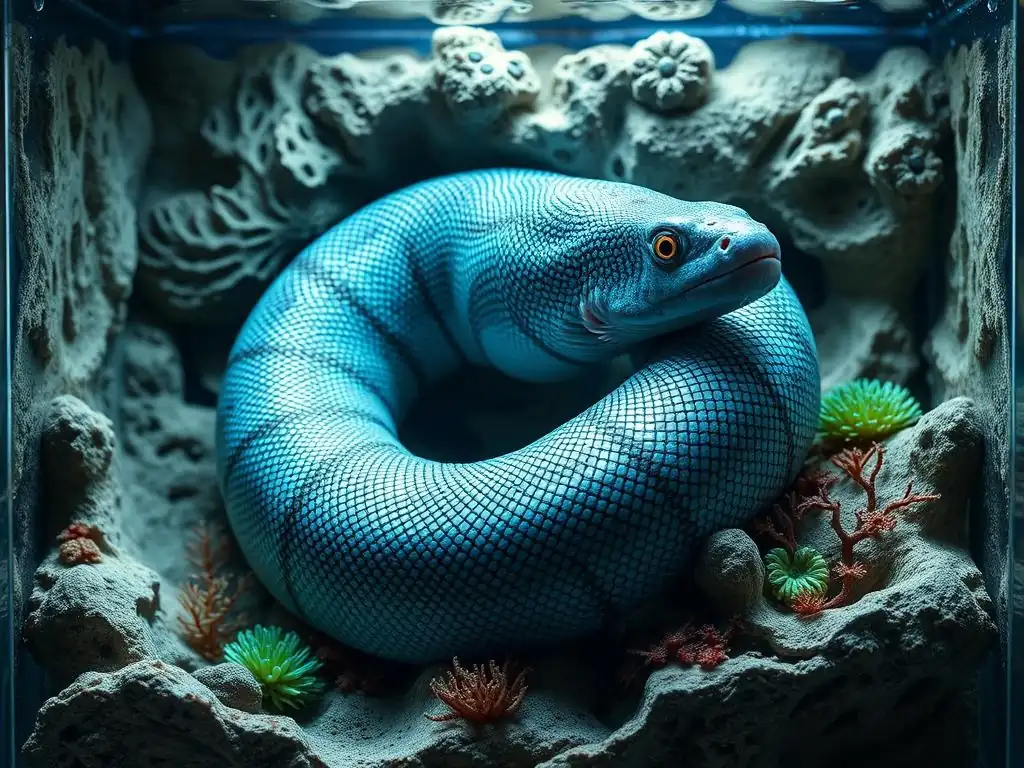
A notable example of successful moray eel containment involves a 75-gallon reef tank housing a 20-inch Snowflake Moray ( Echidna nebulosa). The owner implemented a custom-fabricated, heavy acrylic lid, 3/8-inch thick, designed with a 2-inch inward-facing lip around its entire perimeter. This lip effectively created an overhang that the moray could not navigate.
The lid was further secured with six robust, marine-grade plastic C-clamps evenly distributed around the tank's rim, ensuring it could not be pushed up or dislodged. All cutouts for the protein skimmer, return pump, and heater were meticulously sealed with custom-cut acrylic pieces bonded with aquarium-safe silicone, leaving no gaps larger than 1/4 inch.
Despite the Snowflake Moray's known exploratory nature and ability to squeeze through tight spaces, this multi-layered approach to moray eel escape prevention has successfully contained the eel for over three years without a single incident. The owner also maintains stable water chemistry (salinity 1.025, temperature 76°F, nitrates consistently below 10 ppm) and provides ample PVC pipe sections and carefully stacked live rock within the aquascape, significantly reducing any stress-induced escape motivations. The eel is fed a varied diet of silversides, shrimp, and squid three times a week, ensuring it is well-nourished and content within its secure environment.
DIY Moray Eel Escape Prevention Solutions: Using Egg Crates and Mesh
For budget-conscious aquarists or those seeking custom solutions, common household items can be adapted for effective moray eel escape prevention. Egg crate light diffusers, typically made from inert plastic grids, are an excellent material. They can be easily cut to size with simple tools, allowing you to create custom lid inserts, cover large filter openings, or construct a sturdy framework for a mesh lid. Their grid pattern allows for gas exchange while being too small for an eel to pass through.
Fine-mesh netting, such as pond netting or screen door mesh, provides another versatile option. This material can be siliconed directly over smaller gaps, around plumbing, or used as a secondary barrier beneath a main lid. Ensure that any mesh used is made from inert, non-toxic plastic and is securely attached to prevent the eel from pushing it aside. These DIY methods offer cost-effective and customizable solutions for enhancing your moray eel escape prevention strategy.
Common Mistakes to Avoid When Preventing Moray Eel Escapes.
Several common mistakes can undermine even the most diligent moray eel escape prevention efforts. Firstly, underestimating the incredible strength and flexibility of moray eels is a critical error; they can lift surprisingly heavy lids and squeeze through unbelievably small openings. Secondly, leaving even seemingly tiny gaps around equipment, such as heater cords or filter intakes, provides an easy escape route that will eventually be discovered.
Another frequent mistake is using lightweight, ill-fitting, or unlatched lids, which are easily breached by a determined moray. Neglecting regular tank inspections and failing to address minor weaknesses promptly also contributes to escape risks. Finally, assuming a moray won't escape because it hasn't yet, or failing to address underlying stress factors like poor water quality or incompatible tank mates, are significant oversights. Having a clear plan for safe retrieval if an escape occurs, and promptly identifying and rectifying the cause, are crucial for long-term success in moray eel escape prevention.
Frequently Asked Questions
How likely are moray eels to escape from an aquarium?
Moray eels are notorious escape artists. They are strong and flexible, and can squeeze through surprisingly small openings. Therefore, the risk of escape is high if proper precautions aren't taken.
What are the most common ways moray eels escape from aquariums?
They often exploit gaps in the aquarium lid or around equipment like filter tubes and heaters. Also, they may climb out if the water level is too close to the top of the tank.
What type of aquarium lid is best for preventing moray eel escapes?
A tight-fitting lid is essential. Opt for a solid, heavy lid with clips or latches to secure it firmly to the aquarium frame. Mesh lids are generally not recommended.
Besides the lid, what other measures can I take to prevent escapes?
Ensure all openings around equipment are sealed with aquarium-safe silicone. Also, maintain a safe water level, leaving several inches of space below the top of the tank.
What should I do if my moray eel escapes?
Immediately search the surrounding area. Moray eels can survive for a short time out of water, but swift action is crucial. Carefully reintroduce it to the aquarium as soon as possible, and re-evaluate your escape prevention measures.
Final Reflection: The Unyielding Pursuit of Containment
The detailed strategies outlined in this article, focused on moray eel escape prevention, are not merely about keeping a pet within the confines of a glass box. They represent a broader commitment to responsible animal husbandry and the delicate balance we strive for when bringing a piece of the wild into our homes. The consequences of neglecting these precautions extend beyond a simple inconvenience; they can lead to the suffering of the animal and potential disruption to local ecosystems.
The challenge of securing a moray eel highlights the ongoing responsibility we bear as caretakers. This responsibility extends beyond the initial purchase and setup, demanding constant vigilance and adaptation as our understanding of these fascinating creatures deepens. The greatness of a nation and its moral progress can be judged by the way its animals are treated.
- Mahatma Gandhi. This quote, though broad, resonates deeply when considering the ethical implications of keeping any animal, especially one as powerful and resourceful as a moray eel.
Ultimately, the success of any aquarium, and especially one housing a creature as determined as a moray eel, rests on our dedication to continuous learning and improvement. Let this article serve as a starting point, not an end. Embrace the challenge of providing a safe and enriching environment for your aquatic companions, and let the pursuit of perfect containment inspire a deeper appreciation for the wonders of the natural world and our role in protecting it.
Secure Your Reef: Start Protecting Your Tank Today!
Thanks for diving into the world of moray eel security! We hope this guide has provided valuable insights into keeping your slippery friends safe and sound. Now it's time to take action and create a truly escape-proof aquarium.
Here's how you can ensure your moray stays where it belongs:
- Immediately inspect your aquarium for any potential gaps or weaknesses, paying special attention to the lid and around any equipment. This is your primary defense!
- Share this article with fellow aquarium enthusiasts who might be facing similar challenges. Help them keep their eels happy and contained!
- Consider posting a photo of your modified, eel-proof aquarium lid in the comments below. Let's inspire each other with innovative solutions!
What unique methods have you used to secure your aquarium from escape artists?