
DIY Clownfish Fry Feeder: Simple Solutions for Tiny Appetites

Welcome to Aquarium Mastery!
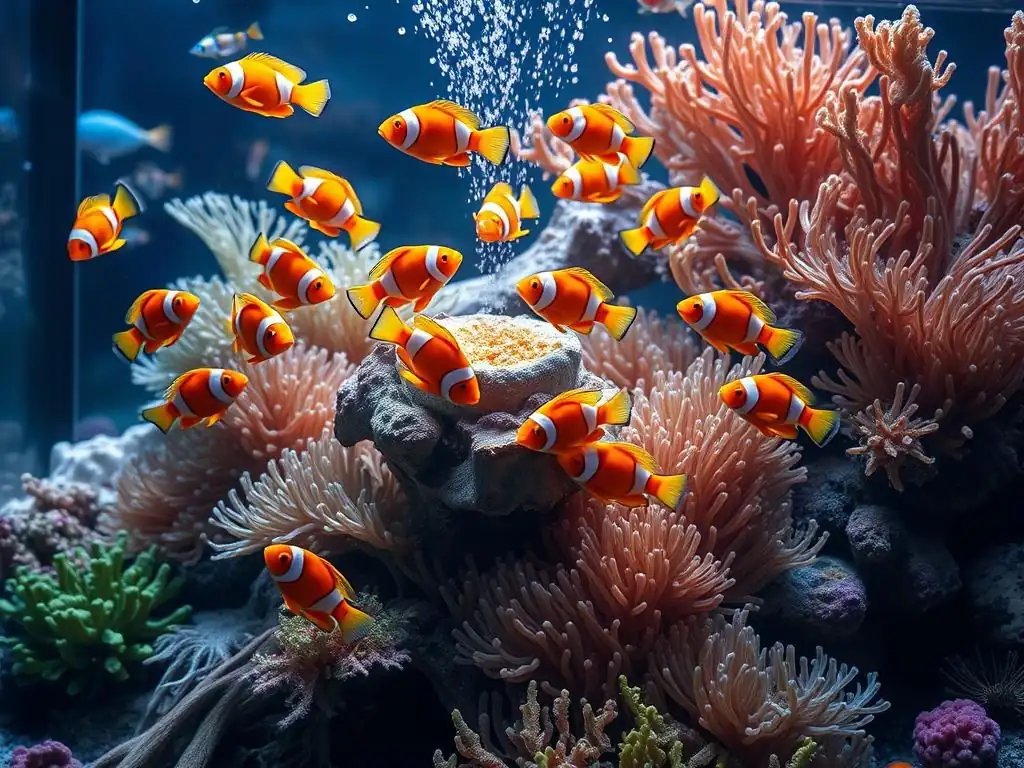
Ever dreamt of a vibrant reef teeming with life, including adorable clownfish families? We know the struggle: raising clownfish fry can be a delicate dance. Are you facing clownfish fry feeding problems? Don't despair! This guide dives into easy, DIY feeder solutions to ensure even the tiniest mouths get the nourishment they need. Unlock the secrets to successful clownfish breeding and watch your miniature Nemo's thrive – let's get started!
- Understanding Clownfish Fry Feeding Challenges
- DIY Clownfish Fry Feeder Options: Practical Solutions
- Optimizing Your DIY Clownfish Fry Feeding Strategy
- Troubleshooting Common Clownfish Fry Feeding Issues
- Frequently Asked Questions
- Final Reflection: Nurturing New Beginnings
- Nurture Your Tiny Treasures!
Understanding Clownfish Fry Feeding Challenges
The Challenge of Feeding Newly Hatched Clownfish
Feeding newly hatched clownfish presents one of the most significant hurdles in successful captive breeding, often leading to common clownfish fry feeding problems. At hatching, clownfish larvae are incredibly small, typically measuring only about 3 to 4 millimeters in length. Their tiny, undeveloped mouthparts are incapable of consuming anything larger than microscopic organisms, making the initial days critically important for their survival and growth. Without a consistent and appropriate food source, the high metabolic rate of these fry means they can quickly starve, leading to substantial mortality rates.
The "first feed" window is particularly crucial, often occurring within the first 24 to 48 hours post-hatch. During this period, the fry's yolk sac, their initial food reserve, is quickly depleted. If suitable live food is not available in sufficient quantities, the fry will rapidly weaken and perish. Many breeders report mortality rates exceeding 70% in the first week if proper nutrition and feeding strategies are not meticulously managed, highlighting the acute nature of these early feeding issues.
Why Commercial Fry Food Often Fails for Clownfish
Many commercially available dry fry foods, while convenient, frequently prove inadequate for newly hatched clownfish, contributing significantly to clownfish fry feeding problems. A primary reason for this failure is particle size; even the finest powdered foods are often too large for the fry's minuscule mouths. For instance, many commercial "fry powders" have particle sizes exceeding 50 microns, whereas newly hatched clownfish often require food particles in the 50-150 micron range, with optimal sizes closer to the lower end.
Beyond size, dry commercial foods also pose issues with buoyancy and water quality. Unlike live foods that remain suspended or swim in the water column, dry foods tend to settle quickly to the bottom of the tank, becoming inaccessible to the pelagic clownfish fry that mostly inhabit the upper water layers. Furthermore, uneaten dry food rapidly decomposes, leading to ammonia and nitrite spikes that are highly toxic to delicate fry, exacerbating the clownfish fry feeding problems by compromising the water quality essential for their survival.
Addressing Clownfish Fry's Nutritional Needs
Successfully addressing clownfish fry feeding problems hinges on understanding and meeting their specific nutritional demands. Newly hatched clownfish require a diet that is not only appropriately sized but also rich in highly digestible proteins, essential fatty acids (like DHA and EPA), and other vital micronutrients. Live foods are almost universally recognized as superior for initial feeding due to their natural movement, which stimulates the fry's feeding response, and their excellent nutritional profile.
The gold standard for initial feeding is typically rotifers, specifically Brachionus plicatilis. These microscopic organisms, typically ranging from 100 to 250 microns, are perfectly sized for newly hatched clownfish. As the fry grow, usually within 5-7 days, they can transition to larger live foods such as newly hatched Artemia nauplii (baby brine shrimp), which are around 400-500 microns. Crucially, these live foods can be "gut loaded" with nutrient-rich phytoplankton or enrichment diets, further boosting their nutritional value and ensuring the fry receive a comprehensive diet for robust growth and development, effectively mitigating early feeding challenges.
DIY Clownfish Fry Feeder Options: Practical Solutions
Option 1: The DIY Rotifer Culture Feeder
Setting up a Continuous Rotifer Culture for Clownfish Fry
Establishing a continuous rotifer culture is a cornerstone for mitigating clownfish fry feeding problems, ensuring a steady supply of appropriately sized live food. A basic setup typically involves a 5-gallon bucket or a similar translucent container, an air stone connected to an air pump for gentle aeration, and a light source to promote phytoplankton growth, which serves as the rotifers' food. Maintaining stable water parameters is crucial for a thriving culture; ideal temperatures range from 75-80°F (24-27°C) and salinity between 1.018-1.025 specific gravity.
For optimal production, the rotifer culture should be fed daily with a liquid phytoplankton concentrate (such as Nannochloropsis or Tetraselmis) or a commercial rotifer diet, aiming for a consistent "green water" appearance. A healthy rotifer population can double its biomass every 24 to 48 hours under ideal conditions, making daily harvesting and replenishment essential to maintain high densities. This consistent propagation ensures that you always have a fresh, live food source ready to address the tiny appetites of clownfish fry, directly tackling one of the major clownfish fry feeding problems.
Building a Simple Gravity-Fed Rotifer Drip Feeder
A gravity-fed rotifer drip feeder provides a continuous, slow release of live food, which is ideal for the constant feeding needs of clownfish fry and helps prevent overfeeding issues often encountered when addressing clownfish fry feeding problems. To construct one, you'll need a small plastic bottle (e.g., a 1-liter soda bottle), a length of airline tubing, and an airline control valve. Drill a small hole in the bottle cap, insert one end of the airline tubing through it, and secure it. The other end of the tubing, with the control valve attached, will go into the fry tank.
To use, fill the bottle with rotifer-rich water siphoned from your culture. Suspend the bottle above the fry tank, ensuring the tubing reaches into the water. Adjust the airline control valve to achieve a slow, consistent drip rate—for instance, one drip every 5-10 seconds. This method ensures that rotifers are introduced gradually over several hours, keeping them available in the water column for longer periods and reducing the risk of water quality degradation from sudden large introductions of food. A 1-liter bottle, properly adjusted, can drip feed for 6-8 hours, providing sustained nourishment.
Maintaining Optimal Rotifer Density for Fry Growth
Maintaining optimal rotifer density in the fry tank is paramount for ensuring consistent growth and overcoming typical clownfish fry feeding problems. For newly hatched clownfish fry, a target density of 5 to 10 rotifers per milliliter (mL) of water is often recommended. This density ensures that the fry constantly encounter food particles without the water becoming overly cloudy or fouled. While a microscope offers precise measurement, visual inspection—aiming for a slight green tint to the water without it being opaque—can serve as a practical approximation.
Regular monitoring of the fry's bellies is also a good indicator; if they appear full and rounded, the density is likely sufficient. If fry appear lethargic or have shrunken bellies, the density may be too low. It's crucial to balance sufficient food availability with maintaining pristine water quality. Overly dense feeding, while seemingly beneficial, can quickly lead to oxygen depletion and ammonia spikes if rotifers die or if the water's biological filtration is overwhelmed, creating new clownfish fry feeding problems related to water quality.
Option 2: The DIY Live Baby Brine Shrimp (BBS) Feeder
Hatching Baby Brine Shrimp Efficiently
Efficiently hatching baby brine shrimp (BBS) is a vital step for addressing clownfish fry feeding problems as fry grow and require larger food sources. A simple and effective hatchery can be constructed using a cone-shaped container (like an inverted 2-liter soda bottle with the bottom cut off), an air stone, and a strong light source. Fill the cone with saltwater at a specific gravity of 1.020-1.025 and maintain a temperature around 80°F (27°C) for optimal hatching.
Add 1 to 2 tablespoons of high-quality Artemia cysts per liter of saltwater. Continuous, vigorous aeration is critical to keep the cysts suspended and ensure uniform hatching. Place a light source near the bottom of the cone, as newly hatched nauplii are phototactic (attracted to light). Hatching typically occurs within 24-36 hours. Once hatched, turn off the aeration and allow the shells to float to the top and the nauplii to sink to the bottom. Siphon the concentrated nauplii from the bottom for feeding, leaving the shells behind, which can cause impaction if ingested by fry.
Designing a Slow-Release BBS Cone Feeder
A slow-release BBS cone feeder builds upon the principle of phototaxis to provide a continuous supply of live food, helping to mitigate the clownfish fry feeding problems associated with inconsistent food availability. To create this feeder, you'll need another clear, inverted plastic bottle (cone-shaped) and airline tubing with a control valve. Attach the airline tubing to the narrow end of the inverted bottle.
After harvesting your BBS, pour them into this cone feeder. Position a light source (even a small LED flashlight) at the very bottom of the cone, pointing upwards. The BBS will be attracted to the light and swim downwards towards the drip tube. Adjust the control valve on the airline tubing to allow a slow, steady drip of BBS-rich water into the fry tank. This method ensures that only live, active BBS are delivered, preventing large dumps of food that can quickly foul the water and ensuring a continuous food supply throughout the day.
Avoiding Overfeeding with the BBS Feeder
While BBS are an excellent food source, avoiding overfeeding is crucial to prevent new clownfish fry feeding problems related to water quality. Unlike rotifers, uneaten BBS die relatively quickly in the saltwater aquarium and begin to decompose, rapidly degrading water quality. The slow-release cone feeder helps significantly by delivering small, consistent quantities, but vigilant observation is still necessary.
Start with a very slow drip rate and observe the fry's consumption. Their bellies should appear full and rounded, indicating adequate feeding. If you notice a significant number of BBS accumulating on the bottom of the tank or swimming aimlessly without being consumed, reduce the drip rate immediately. Regularly siphoning the tank bottom to remove any dead BBS or detritus is also vital. This proactive approach ensures that the fry receive sufficient nutrition without compromising the delicate balance of their captive environment.
Option 3: The DIY Powdered Food Suspension Feeder
Creating a Fine Powdered Food Mix for Clownfish Fry
For slightly older clownfish fry or as a supplementary food source, a fine powdered food mix can be beneficial, addressing some clownfish fry feeding problems related to dietary diversity. The key is extreme fineness. Start with high-quality, protein-rich dry foods suitable for marine larvae, such as spirulina powder, specialized rotifer substitutes, or even finely processed egg yolk powder. Avoid standard flake foods unless they can be ground to an almost talcum-powder consistency.
Using a mortar and pestle or a small coffee grinder dedicated solely to aquarium use, meticulously grind your chosen ingredients until they are ultra-fine, ideally less than 75 microns. The goal is to create a powder that will remain suspended in the water column for an extended period rather than settling immediately. Before introducing it to the feeder, it's often beneficial to pre-mix a small amount of the powder with a few drops of tank water to create a slurry, which aids in even dispersion and prevents clumping.
Building a Simple Air Stone Suspension Feeder
A simple air stone suspension feeder can help distribute powdered food evenly and prevent it from settling too quickly, tackling common clownfish fry feeding problems with dry foods. To build this, you'll need a small, clear container (like a clean plastic specimen cup or a small bottle with a lid), an air stone, and airline tubing. Drill several very small holes (e.g., 1-2mm) around the bottom and sides of the container.
Place the air stone inside the container and run the airline tubing out through a hole in the lid or side. Fill the container with your finely powdered food mix. When the air stone is activated, the gentle bubbling will keep the powder suspended within the container. The small holes will allow a slow, controlled release of the fine food particles into the fry tank, ensuring they remain in the water column longer, accessible to the pelagic clownfish fry.
Ensuring Even Distribution of Powdered Food
Even with a suspension feeder, ensuring the uniform distribution of powdered food is crucial to prevent localized feeding areas and ensure all fry have access, thereby minimizing clownfish fry feeding problems related to uneven food availability. Position the suspension feeder near a gentle powerhead or in an area with subtle water flow. This helps circulate the released food particles throughout the entire fry tank, preventing them from clumping together or settling in one spot.
Observe the movement of the food particles in the water. They should appear as a fine, diffuse cloud rather than distinct clumps. If you notice significant settling, either the food is not fine enough, or the water flow is insufficient. It's often more effective to dispense very small amounts of powdered food frequently throughout the day rather than a large single dose. This strategy mimics the continuous feeding of live foods and helps maintain consistent food availability for the rapidly growing clownfish fry.
Optimizing Your DIY Clownfish Fry Feeding Strategy
Water Quality Management During Fry Feeding
Effective water quality management is paramount when addressing clownfish fry feeding problems, as the increased bioload from constant feeding and fry waste can rapidly degrade the aquatic environment. The delicate nature of clownfish fry means they are highly susceptible to even trace amounts of ammonia and nitrite. Therefore, frequent, small water changes are essential; a daily 10-20% water change is often recommended to dilute toxins and replenish essential minerals.
While a mature biological filter is beneficial, it may not be sufficient for the initial high-density feeding phase. Closely monitoring ammonia, nitrite, and nitrate levels daily using reliable test kits is non-negotiable. Any detectable levels of ammonia or nitrite should prompt an immediate and larger water change (e.g., 50%). For example, ammonia spikes as low as 0.25 ppm can be lethal to newly hatched fry, emphasizing the need for proactive and consistent water quality control.
Monitoring Fry Growth and Adjusting Feeding
Proactive monitoring of fry growth is key to optimizing your feeding strategy and overcoming potential clownfish fry feeding problems. Observe the fry daily for noticeable increases in size and changes in coloration, which are indicators of healthy development. As the fry grow, their mouths will enlarge, allowing them to consume larger food items. Typically, within 5-7 days, fry that were initially fed rotifers can begin to consume newly hatched baby brine shrimp.
Continue to observe their feeding response and adjust the quantity and type of food accordingly. If fry appear lethargic or exhibit slow growth rates across the batch, it may indicate insufficient food quantity or a need to transition to a more nutrient-dense or larger food source. For instance, well-fed clownfish fry should roughly double their size in the first two to three weeks of life, a benchmark that helps gauge the effectiveness of your feeding regimen.
Preventing Food Waste and Tank Contamination
Preventing food waste is critical not only for efficient resource use but also for mitigating clownfish fry feeding problems that arise from tank contamination. Uneaten food quickly decomposes, leading to dangerous ammonia spikes and bacterial blooms. The first step is to calibrate your DIY feeders to the actual consumption rate of your fry; if you see significant amounts of food accumulating, reduce the drip rate or feeding frequency.
Regular physical removal of uneaten food and detritus is also essential. Using a turkey baster or a fine-mesh net to siphon or scoop out any visible waste from the tank bottom several times a day can dramatically improve water quality. A bare-bottom tank design greatly simplifies this cleaning process compared to tanks with substrate. Consistent tank hygiene, combined with precise feeding, is paramount to maintaining a healthy environment for the delicate clownfish fry.
Troubleshooting Common Clownfish Fry Feeding Issues
Fry Not Eating: Identifying Potential Causes
When clownfish fry refuse to eat, it's a critical clownfish fry feeding problem that requires immediate attention. Several factors can contribute to this issue. The most common causes include incorrect food size (particles being too large or too small), insufficient food density (not enough food present in the water column for them to find), or poor water quality (elevated ammonia, nitrite, or improper salinity/temperature). Stress from handling, overly bright lighting, or aggressive water flow can also deter feeding.
To diagnose, first, test your water parameters immediately for any deviations from optimal ranges (e.g., ammonia > 0 ppm). Then, visually assess the food in the tank: is it readily available, suspended, and of an appropriate size? If rotifers or BBS are present but ignored, try increasing their density. If water quality is the culprit, a significant water change (e.g., 50%) should be performed at once. Sometimes, simply dimming the lights or reducing water flow can reduce stress and encourage feeding.
Addressing Slow Growth Rates in Clownfish Fry
Slow growth rates among clownfish fry are a clear indicator of persistent clownfish fry feeding problems or suboptimal environmental conditions. This issue can stem from several factors: insufficient food quantity (the fry aren't getting enough to eat), poor food quality (the food lacks essential nutrients), overcrowding in the grow-out tank, or a water temperature that is too low, slowing their metabolism.
To address this, first, ensure that you are feeding frequently enough and that the food density is consistently high. For example, if you're using rotifers, consider "gut-loading" them with more nutrient-rich phytoplankton or commercial enrichment products to boost their nutritional value. If the tank is overcrowded, consider separating the fry into multiple systems to reduce competition for food and space. Confirm that your tank temperature is within the optimal range (e.g., 78-80°F or 25.5-27°C), as slightly warmer temperatures can accelerate metabolism and growth.
Water quality degradation is arguably the most dangerous of all clownfish fry feeding problems, often resulting from overfeeding or inadequate waste removal. High levels of ammonia, nitrite, or even elevated nitrates can rapidly become toxic to sensitive clownfish fry, leading to stress, disease, and mortality. The tell-tale signs include lethargic fry, gasping at the surface, or cloudy water.
If water parameters (especially ammonia or nitrite) are detectable, immediate and significant action is required. Perform a large water change (e.g., 50% or more) using properly mixed and conditioned saltwater. Simultaneously, reduce your feeding amounts or frequency temporarily to ease the bioload on the system. Consider adding a small, gentle sponge filter to the fry tank if one isn't already present, as it provides additional biological filtration without creating strong currents. Regular siphoning of detritus from the tank bottom is also crucial to physically remove decomposing organic matter before it fouls the water.
Frequently Asked Questions
How often should I feed clownfish fry?
Clownfish fry require frequent feedings due to their rapid growth rate. Aim for feedings 4-6 times a day with small portions.
What is the best first food for newly hatched clownfish fry?
The ideal first foods are rotifers and copepods. These are small enough for the fry to consume easily and provide essential nutrients.
Why are my clownfish fry not eating the food I offer?
Several factors can contribute to this. Ensure the food is small enough, the water parameters are optimal, and there is sufficient light for the fry to locate the food.
Can I use commercially available fry food for clownfish?
Yes, commercially available fry foods can be used, but make sure they are specifically formulated for marine fish fry and appropriately sized.
How can I ensure my DIY clownfish fry feeder is effective?
Regularly observe your fry to ensure they are actively feeding. Monitor water quality carefully as uneaten food can quickly degrade the tank environment.
Final Reflection: Nurturing New Beginnings
The challenges of clownfish fry feeding problems are more relevant than ever, as the popularity of home aquariums and the desire to breed these vibrant fish continue to grow. The delicate dance of providing the right nutrition to these tiny creatures is not just a scientific endeavor, but a testament to our commitment to preserving and nurturing life in all its forms. This article has hopefully illuminated some simple, yet effective, solutions to overcome these hurdles.
This journey into the world of clownfish fry feeding has been profoundly impactful, highlighting the intricate connection between our actions and the survival of these fascinating creatures. The dedication and ingenuity displayed by aquarists in tackling these challenges are truly inspiring. The question is not, 'Can they reason?' nor, 'Can they talk?' but rather, 'Can they suffer?'
- Jeremy Bentham. This quote reminds us of the responsibility we bear towards all living beings in our care, especially the most vulnerable.
Now, consider how you can apply these lessons of patience, resourcefulness, and dedication to other areas of your life. Whether it's nurturing a new idea, supporting a loved one, or simply being more mindful of the delicate ecosystems around you, let the spirit of innovation and care that fuels the clownfish breeding community inspire you to cultivate growth and well-being in all that you do.
Nurture Your Tiny Treasures!
Thank you for diving into the world of clownfish fry feeding! We hope you've discovered some easy and effective methods to nourish your tiny aquatic friends. Now, let's put that knowledge into action!
Here are a few things you can do right now:
- Start building your own DIY fry feeder! Gather your materials and create a feeding solution tailored to your clownfish fry’s needs.
- Explore other creative fry-feeding methods. Research and experiment with different food types and delivery systems to optimize your fry's growth.
- Share your fry-feeding successes (and challenges!) with fellow aquarium enthusiasts in online forums or social media groups. Collaboration is key!
What innovative feeding technique will you try first to ensure your clownfish fry thrive?