
Kribensis Breeding Made Easy: Your Path to a Tank Full of Babies

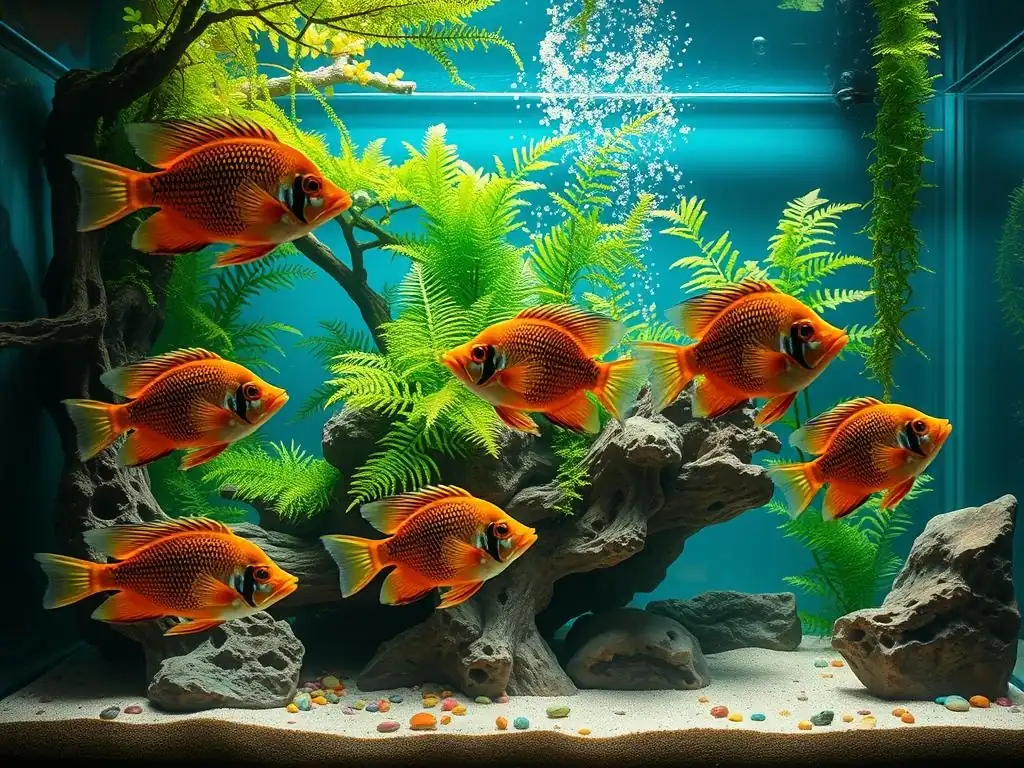
Welcome to Aquarium Mastery!
Ever dreamt of seeing tiny Kribensis fry exploring your tank? You've come to the right place! Unlock the secrets to Kribensis breeding success with our expert tips and tricks. Curious how to turn your aquarium into a baby Kribensis paradise? Dive in and discover the simple steps that can make it a reality!
- Kribensis Breeding: A Comprehensive Guide
- Understanding Kribensis Breeding Behavior
- Setting Up Your Kribensis Breeding Tank
- Triggering Kribensis Spawning
- The Kribensis Spawning Process
- Raising Kribensis Fry
- Kribensis Breeding Success Tips
- Troubleshooting Kribensis Breeding Problems
- Advanced Kribensis Breeding Techniques
- Frequently Asked Questions
- Final Reflection: Nurturing New Life and the Joy of Discovery
- Unlock the Secrets: Grow Your Kribensis Family Today!
Kribensis Breeding: A Comprehensive Guide
Understanding Kribensis Breeding Behavior
Identifying Male and Female Kribensis
Identifying the sex of Kribensis cichlids ( Pelvicachromis pulcher ) is a fundamental step towards achieving Kribensis breeding success tips. While subtle, distinct differences emerge as the fish mature, typically around 3-4 months of age. Males generally grow larger, reaching up to 4 inches (10 cm) in length, possess more pointed dorsal and anal fins, and exhibit brighter, more extensive coloration, especially on their caudal fin which often displays a pronounced red or purple edge. Their bodies tend to be more streamlined.
In contrast, female Kribensis are typically smaller, rarely exceeding 3 inches (7.5 cm), and have a more rounded, robust body shape, particularly when gravid (carrying eggs). Their most striking feature is a vivid, deep red or purplish patch on their belly, which intensifies significantly during breeding readiness. Their dorsal and anal fins are more rounded, and while colorful, their overall pattern is less flamboyant than the male's. Observing these characteristics carefully will greatly assist in forming a compatible breeding pair.
Creating the Ideal Breeding Environment
Establishing an environment that caters to the natural instincts of Kribensis is crucial for encouraging them to spawn. These dwarf cichlids are cave spawners, meaning they require secluded, dark spaces to lay their eggs and raise their fry. Providing an abundance of suitable caves, such as terracotta pots, coconut shells, or even carefully arranged rock formations, will make the fish feel secure and ready to breed. A general rule of thumb is to offer at least 2-3 caves per pair to allow for choice and reduce potential territorial disputes.
Beyond physical structures, the overall tank atmosphere plays a significant role. A peaceful environment, free from overly aggressive tank mates or constant disturbances, reduces stress and promotes natural breeding behaviors. Kribensis thrive in a well-planted tank, as plants offer additional hiding spots and a sense of security. The presence of fine substrate is also beneficial, as both sexes will often dig and rearrange the substrate around their chosen spawning site, a key part of their pre-spawning ritual.
Setting Up Your Kribensis Breeding Tank
Tank Size and Setup
For a dedicated Kribensis breeding pair, a tank size of 10 to 20 gallons (approximately 38 to 76 liters) is generally sufficient. While a 10-gallon tank can work, a 20-gallon long tank offers more swimming space and helps to diffuse aggression, especially if the pair is new or particularly territorial. The longer footprint of a 20-gallon long (typically 30 inches or 76 cm) provides more linear space for the male to establish his territory and the female to choose a preferred spawning site.
The setup should prioritize stability and ease of maintenance. A mature, cycled sponge filter is ideal, as it provides excellent biological filtration without creating strong currents that could disturb eggs or delicate fry. Heaters are essential to maintain stable temperatures, and a thermometer should be used to monitor the water precisely. Avoid excessive aeration or high flow rates, as Kribensis prefer calmer water conditions, particularly around their spawning cave.
Essential Water Parameters
Maintaining stable and appropriate water parameters is one of the most critical Kribensis breeding success tips. Kribensis are adaptable, but for breeding, specific ranges are optimal. The ideal water temperature for spawning is between 76-82°F (24-28°C), with many breeders noting that a slight increase to the higher end of this range can sometimes trigger spawning.
Regarding water chemistry, Kribensis prefer slightly acidic to neutral water with a pH range of 6.0 to 7.5. Soft to moderately hard water is also preferred, with a general hardness (GH) between 5-12 dGH (89-214 ppm). Regular testing of ammonia, nitrite, and nitrate levels is paramount; ammonia and nitrite should always be at 0 ppm, and nitrates kept below 20 ppm through consistent water changes. Fluctuations in these parameters can cause significant stress, inhibiting breeding behavior and compromising egg and fry health.
Choosing Substrate and Decorations
The choice of substrate and decorations directly impacts Kribensis breeding readiness and success. For substrate, a fine sand or very small gravel (e.g., 1-2 mm particle size) is highly recommended. Kribensis are known for their digging behavior, particularly when preparing a spawning site. A fine substrate allows them to excavate and rearrange the area around their chosen cave, fulfilling a natural instinct and providing optimal conditions for egg deposition. A substrate depth of at least 2-3 inches (5-7.5 cm) is advisable.
Decorations should focus on providing numerous hiding spots and potential spawning sites. Terracotta pots turned on their side, half coconut shells, small ceramic tubes, or even carefully arranged driftwood and rocks can serve as excellent caves. Ensure that the openings of these caves are appropriately sized for the Kribensis pair to enter comfortably but are small enough to provide a sense of security. Live plants, such as Java Fern, Anubias, or even floating plants, also contribute to a secure environment by breaking up lines of sight and offering additional cover for both parents and future fry.
Triggering Kribensis Spawning
Optimizing Water Temperature and Chemistry
Fine-tuning water temperature and chemistry can act as powerful triggers for Kribensis spawning. While maintaining stable parameters is generally recommended, a slight, gradual increase in water temperature within their preferred breeding range (e.g., from 78°F to 80°F or 25.5°C to 26.5°C) can often simulate the onset of a rainy season, a natural cue for many tropical fish to breed. This subtle change can signal to the fish that conditions are optimal for reproduction.
Similarly, performing a larger-than-usual water change (e.g., 30-40%) with water that is slightly cooler and softer than the tank water can mimic the influx of fresh rainwater. This sudden refresh of the environment, coupled with the potential for a slight drop in pH (if the source water is softer), can often stimulate Kribensis to begin their courtship rituals. Always ensure that any changes are gradual and that the new water is dechlorinated and conditioned properly to avoid shocking the fish.
Providing Caves and Spawning Sites
The provision of appropriate caves and spawning sites is not merely decorative; it is a fundamental requirement for Kribensis breeding. These fish are obligate cave spawners, meaning they must have a secure, enclosed space to lay their eggs. A single breeding pair should be provided with at least two or three potential caves. This allows the female to choose her preferred location, which is crucial for her comfort and willingness to spawn.
Ideal spawning sites include terracotta pots (often 3-4 inches or 7.5-10 cm in diameter, turned on their side), half coconut shells, or small PVC pipes. The opening should be just large enough for the Kribensis to enter and exit easily, creating a sense of privacy and security. Placing these caves in different areas of the tank, perhaps one in a more open space and another partially obscured by plants or driftwood, can give the pair options and reduce potential territorial disputes, leading to more successful spawning.
Conditioning Kribensis with Diet
A high-quality, varied diet is paramount for conditioning Kribensis and preparing them for breeding. Just like in nature, abundant food signals to the fish that resources are plentiful, making it a suitable time to reproduce. Feeding a diverse diet rich in protein and essential nutrients will boost their health, vitality, and reproductive readiness.
Incorporate a mix of live and frozen foods into their daily regimen. Excellent choices include:
- Live foods: Brine shrimp, daphnia, bloodworms, blackworms, or even small feeder guppy fry for larger males. Live foods are particularly effective at stimulating breeding instincts.
- Frozen foods: Bloodworms, brine shrimp, Mysis shrimp, and daphnia are readily accepted and provide essential nutrients.
- High-quality flakes or pellets: These should form the base of their diet but be supplemented regularly with live or frozen options.
Feeding small amounts several times a day, rather than one large meal, can also help maintain water quality while ensuring the fish receive continuous nourishment, further enhancing their condition for spawning.
The Kribensis Spawning Process
Kribensis Courtship Rituals
The courtship rituals of Kribensis are a fascinating display of their natural behavior, often signaling that Kribensis breeding success tips are being followed. Once a pair has bonded and the breeding environment is established, the male will begin to entice the female. This often involves elaborate fin flaring, displaying his vibrant colors, and performing a characteristic "shaking" or shimmying dance. He may also repeatedly lead the female towards the chosen spawning cave, attempting to coax her inside.
The female, in turn, will often respond by intensifying her belly coloration, which becomes a deep purplish-red, indicating her readiness to breed. She may also participate in the "shaking" behavior and will begin to inspect the male's chosen caves, sometimes even digging small pits or rearranging the substrate around the entrance. This period of courtship can last from several hours to a few days, culminating in the pair entering the cave together.
Egg Laying and Fertilization
Once the female has accepted a cave and the pair has fully bonded, the actual egg-laying process begins. The female will enter the chosen cave, often turning upside down or sideways to adhere her eggs to the ceiling or walls of the cave. She lays her eggs in small batches, typically 5 to 10 at a time, in neat rows. After each batch, the male will enter the cave to fertilize them. This process is repeated until all eggs are laid.
A single Kribensis female can lay anywhere from 30 to 300 eggs, though an average healthy spawn usually consists of 100-150 eggs. The eggs are small, typically around 1 mm in diameter, and are translucent to light amber in color. The entire egg-laying process can take several hours. Once complete, the female will typically remain inside the cave, meticulously fanning the eggs with her pectoral fins to ensure proper oxygenation and prevent fungal growth, while the male guards the immediate territory outside.
Parental Care
Kribensis are renowned for their exceptional parental care, a significant factor in their breeding success. After the eggs are laid, the female primarily takes on the role of guarding and tending to them inside the cave. She meticulously fans the eggs, removing any infertile or fungused ones to prevent the spread of decay to healthy eggs. She rarely leaves the cave during this period, which lasts approximately 3-4 days until the eggs hatch.
Once the fry hatch, they remain in the cave as wrigglers, absorbing their yolk sacs for another 4-6 days. During this time, the female may move them to different parts of the cave to keep them clean and safe. The male, meanwhile, fiercely defends the perimeter around the cave, chasing away any perceived threats. Once the fry are free-swimming, which typically occurs 7-10 days after spawning, both parents will actively lead them around the tank in a tight school, foraging for food and protecting them from other fish. This dedicated parental protection can dramatically increase fry survival rates.
Raising Kribensis Fry
Providing First Foods: Infusoria, Baby Brine Shrimp
Successfully raising Kribensis fry hinges on providing appropriate first foods as soon as they become free-swimming, typically 7-10 days post-spawn. Their mouths are incredibly small, so initial food sources must be microscopic.
- Infusoria: This is often the best first food. Infusoria are microscopic organisms that can be cultured at home using decaying plant matter or specialized kits. Feeding infusoria for the first 2-3 days ensures the fry receive adequate nutrition.
- Microworms: After infusoria, microworms are an excellent transition food. They are slightly larger but still small enough for the fry to consume. Microworm cultures are easy to maintain and provide a good protein source.
- Newly Hatched Brine Shrimp (Artemia nauplii): Within 3-5 days of becoming free-swimming, Kribensis fry are usually large enough to consume newly hatched brine shrimp. These are highly nutritious and stimulate rapid growth. Brine shrimp eggs can be hatched in a simple DIY setup.
It's crucial to feed the fry small amounts frequently throughout the day (4-6 times) to ensure constant access to food, as their tiny stomachs require continuous replenishment.
Maintaining Optimal Water Quality
Maintaining pristine water quality is paramount for the health and rapid growth of Kribensis fry. Their delicate systems are highly sensitive to even low levels of ammonia, nitrite, and nitrate. Daily small water changes are far more effective and less stressful than infrequent large ones.
- Daily Water Changes: Perform 10-15% water changes every day or every other day using a gravel vacuum to gently siphon detritus from the bottom of the tank without disturbing the fry. Ensure the replacement water is dechlorinated and temperature-matched.
- Gentle Filtration: Continue to use a mature sponge filter. Its gentle flow prevents fry from being sucked in and provides ample biological filtration. Avoid strong power filters that can create currents too powerful for the tiny fry.
- Monitor Parameters: Regularly test ammonia, nitrite, and nitrate levels. Ammonia and nitrite must remain at 0 ppm. Nitrate levels should be kept below 10 ppm for optimal fry health.
Overfeeding is a common cause of poor water quality, so ensure only enough food is offered that the fry can consume within a few minutes. Uneaten food quickly decomposes, leading to harmful spikes in toxins.
Preventing Common Diseases
Preventing diseases in Kribensis fry largely comes down to diligent husbandry and maintaining excellent water quality, which are crucial Kribensis breeding success tips. Fry are particularly vulnerable to common fish ailments due to their underdeveloped immune systems.
- Consistent Water Quality: As mentioned, stable and clean water is the primary defense against disease. Ammonia, nitrite, and high nitrates stress fry, making them susceptible to bacterial infections and parasitic infestations like Ich (white spot disease).
- Proper Nutrition: A varied and high-quality diet boosts the fry's immune system. Malnourished fry are weak and more prone to illness.
- Avoid Overcrowding: As fry grow, the tank can quickly become overcrowded. Overcrowding leads to increased waste, higher stress levels, and facilitates the rapid spread of disease. Be prepared to move larger batches of fry to grow-out tanks.
- Quarantine New Fish: If adding any new fish to the system (even if in a separate grow-out tank), always quarantine them for at least 2-4 weeks to prevent introducing pathogens to the vulnerable fry.
- Observe Daily: Daily observation allows for early detection of any signs of illness, such as clamped fins, lethargy, or white spots. Prompt action, often involving water changes, can prevent minor issues from becoming major outbreaks.
Kribensis Breeding Success Tips
Regularly Monitoring Water Parameters
Consistent and regular monitoring of water parameters is one of the most fundamental Kribensis breeding success tips. Stable water chemistry is critical not only for inducing spawning but also for the health and survival of eggs and fry. Fluctuations in pH, temperature, or the presence of ammonia/nitrite can quickly lead to stress, unfertilized eggs, or fry mortality.
It is highly recommended to test the water at least once a week, and more frequently during the breeding and fry-rearing phases. Key parameters to monitor include:
- pH: Keep it stable within 6.0-7.5.
- Ammonia (NH3/NH4+): Must be 0 ppm.
- Nitrite (NO2-): Must be 0 ppm.
- Nitrate (NO3-): Keep below 20 ppm, ideally below 10 ppm for fry.
- Temperature: Maintain a consistent 76-82°F (24-28°C).
- General Hardness (GH): Aim for 5-12 dGH.
Using a reliable liquid test kit provides more accurate results than test strips. Promptly address any deviations from ideal ranges through small, targeted water changes or adjustments to filtration.
Separating Fry from Parents (Optional)
The decision to separate Kribensis fry from their parents is an optional but often beneficial Kribensis breeding success tip for maximizing survival rates, especially for hobbyists aiming to raise a large number of offspring. While Kribensis are excellent parents, as the fry grow larger, typically around 3-4 weeks post-free-swimming, the parents' protective instincts may wane, or the fry may outgrow the capacity of the breeding tank.
- Pros of Separation: Higher survival rates due to reduced risk of accidental predation (from parents or other tank mates if in a community tank), better control over feeding, and easier maintenance of pristine water quality in a dedicated grow-out tank. It also allows the parents to rest and potentially prepare for another spawn.
- Cons of Separation: Can be stressful for both parents and fry during the transfer. Requires an additional cycled tank setup.
If separating, use a gentle method like a small net or a cup to transfer the fry to a well-established, sponge-filtered grow-out tank with identical water parameters. Ensure the grow-out tank is adequately sized for the number of fry. For example, a batch of 100 fry will quickly outgrow a 10-gallon tank and may require a 20-30 gallon tank for optimal growth.
Avoiding Common Breeding Mistakes
Avoiding common pitfalls is crucial for consistent Kribensis breeding success tips. Many issues arise from impatience or misunderstanding the fish's needs.
- Overfeeding: A common mistake, leading to poor water quality (ammonia/nitrite spikes) and potential health issues for both parents and fry. Feed small amounts multiple times a day that can be consumed within a few minutes.
- Incompatible Tank Mates: Placing Kribensis in a community tank with overly aggressive or large fish can stress them, prevent spawning, or lead to predation of fry. For breeding, a species-only tank or a very carefully selected community is best.
- Lack of Privacy/Caves: Kribensis are shy cave spawners. Insufficient or inappropriate hiding spots will prevent them from feeling secure enough to breed. Always provide multiple suitable caves.
- Unstable Water Parameters: Frequent or drastic changes in temperature, pH, or hardness stress the fish and can lead to failed spawns or unhealthy fry. Consistency is key.
- Removing Parents Too Soon: While separation is optional, removing parents immediately after spawning or hatching can stress them and may lead to them eating the eggs or abandoning the fry. Allow them to exhibit their natural parental care for at least the first 2-3 weeks of fry development.
- Impatience: Breeding can take time. Sometimes, a pair needs several weeks or even months to bond and feel comfortable enough to spawn. Don't give up after a few weeks.
Troubleshooting Kribensis Breeding Problems
Addressing Egg Fungus and Infertile Eggs
Egg fungus is a common issue that can plague Kribensis breeding attempts, directly impacting Kribensis breeding success tips. Fungus typically appears as a white, cottony growth on the eggs. It usually signifies either infertile eggs or poor water quality.
- Causes: Unfertilized eggs are prone to fungusing because they lack the protective enzymes present in viable eggs. Poor water circulation around the eggs, high bacterial counts in the water, or sudden temperature drops can also contribute.
- Solutions:
- Water Quality: Ensure pristine water parameters. Perform small, targeted water changes.
- Increased Circulation: Gently increase water flow near the cave opening (without disturbing the eggs) to improve oxygenation.
- Parental Care: Healthy parents will diligently fan and remove fungused eggs. If parents are neglecting eggs, investigate stress factors.
- Methylene Blue: In a separate container (if eggs are pulled), a very dilute solution of methylene blue can prevent fungus. However, this is rarely necessary if parents are tending the eggs.
- Remove Affected Eggs: If the parents are not removing them, carefully siphon out any fungused eggs to prevent the spread to healthy ones.
Infertile eggs are often a sign of an incompatible pair, an unconditioned male, or sub-optimal water parameters preventing proper fertilization. Ensure both parents are healthy and well-fed.
Dealing with Aggression
While Kribensis are generally peaceful dwarf cichlids, aggression can escalate during breeding, posing a challenge to Kribensis breeding success tips. The male, in particular, can become highly territorial, especially towards the female if she is not ready to spawn or if he perceives her as a threat to the eggs/fry.
- Causes: Incompatible pair, insufficient space, lack of hiding spots for the female, or other tank mates encroaching on the breeding territory.
- Solutions:
- Adequate Space: Ensure the breeding tank is at least 10-20 gallons. A larger tank provides more room for the female to retreat if the male becomes overly aggressive.
- Multiple Hiding Spots: Provide plenty of caves, dense plant cover, and driftwood. This allows the female to escape the male's attention if she needs a break or is not yet ready to breed.
- Species-Only Tank: For dedicated breeding, a species-only tank eliminates aggression from other fish. If in a community tank, ensure tank mates are truly peaceful and do not compete for territory.
- Observe Closely: Monitor the pair. If aggression is severe and persistent (e.g., constant chasing, fin nipping, or the female hiding constantly), consider separating the pair temporarily or providing a tank divider until they are ready to breed. Sometimes, simply rearranging the tank decor can reset territories.
- Consider a New Partner: If a specific pair consistently shows severe incompatibility and aggression, it might be necessary to try pairing one of the fish with a different partner.
Preventing Fry Loss
Preventing fry loss is a critical component of Kribensis breeding success tips, as numerous factors can contribute to it. Even with attentive parents, fry are vulnerable.
- Predation: The most common cause of fry loss. While Kribensis parents are usually excellent guardians, other fish in a community tank (even small ones) will view fry as food. Even the parents themselves might prey on fry if stressed, startled, or if they are not well-fed themselves.
- Solution: Breed Kribensis in a species-only tank or with very carefully chosen, non-predatory tank mates (e.g., small schooling tetras that don't venture near the substrate).
- Poor Water Quality: Fry are extremely sensitive to ammonia, nitrite, and high nitrates. These toxins can quickly lead to death.
- Solution: Implement daily small water changes (10-15%) using a gentle siphon to remove detritus and maintain pristine water. Use a mature sponge filter.
- Starvation: Fry have tiny mouths and require microscopic foods frequently.
- Solution: Provide infusoria for the first few days, transitioning to microworms and newly hatched brine shrimp. Feed small amounts 4-6 times a day.
- Lack of Hiding Spots: While parents protect them, additional plant cover or small crevices provide security for the fry to retreat.
- Solution: Ensure plenty of live plants or fine-leaved artificial plants.
- Filter Intake: Fry can easily be sucked into unprotected filter intakes.
- Solution: Use a sponge filter, or cover the intake of other filters with a sponge or mesh.
Advanced Kribensis Breeding Techniques
Selective Breeding
Selective breeding in Kribensis involves carefully choosing specific individuals to breed based on desirable traits, aiming to enhance those characteristics in subsequent generations. This is a key advanced Kribensis breeding success tip for hobbyists looking beyond just producing fry.
- Goals: Common goals include enhancing color vibrancy (e.g., more intense reds, blues, or yellows), improving finnage (e.g., larger, more flowing fins), increasing hardiness, or even cultivating specific behavioral traits like reduced aggression. For example, a breeder might select for pairs that consistently produce offspring with a particularly striking purple belly in females or vivid red caudal fin edges in males.
- Process:
- Identify Traits: Observe your Kribensis population closely and identify the specific traits you wish to improve.
- Isolate Breeders: Set up breeding tanks for only those individuals exhibiting the desired traits most strongly. For instance, if aiming for brighter coloration, pair the most intensely colored male and female.
- Line Breeding: Often, selective breeding involves a form of line breeding, where closely related individuals (e.g., parent-offspring or sibling-sibling) are bred together to fix desirable genes within the line. This can also bring out recessive traits.
- Record Keeping: Meticulous records of parentage, spawn size, fry survival, and the expression of desired traits in each generation are crucial for tracking progress and making informed breeding decisions. This data allows breeders to identify successful crosses and avoid perpetuating undesirable traits.
- Considerations: While selective breeding can produce stunning results, it can also lead to reduced genetic diversity and potential health issues if not managed carefully. Outcrossing with unrelated, healthy Kribensis from time to time can help maintain vigor.
Understanding Kribensis Genetics
A basic understanding of Kribensis genetics can significantly elevate Kribensis breeding success tips for those interested in predicting and influencing the traits of their offspring. While Kribensis genetics are not as extensively documented as some other popular fish, general principles of Mendelian inheritance apply.
- Dominant and Recessive Traits: Many traits, such as certain color patterns or fin shapes, are governed by dominant and recessive genes. For example, if a specific color variant is dominant, offspring will express that trait even if they inherit only one copy of the gene. Recessive traits only appear if two copies of the recessive gene are inherited.
- Sex-Linked Traits: Some traits may be sex-linked, meaning they are carried on the sex chromosomes (e.g., X and Y in humans, but different systems in fish). This can explain why certain colors or patterns appear more strongly in one sex. For example, some iridescent blue scales might be more pronounced in males due to a sex-linked gene.
- Polygenic Traits: Many complex traits, such as overall size or the intensity of a color, are polygenic, meaning they are influenced by multiple genes acting together, often in combination with environmental factors. This makes them harder to predict but allows for gradual improvement through selective breeding.
- Color Morphs: Kribensis are known for several color morphs (e.g., standard, yellow, albino). Understanding how these morphs are inherited (e.g., if yellow is a recessive trait) allows breeders to cross specific individuals to produce desired color variations. For instance, breeding two Kribensis that are heterozygous for the yellow trait (carrying one copy of the gene but not expressing it) could yield approximately 25% yellow offspring.
- Practical Application: By observing the traits of parent fish and their offspring over generations, breeders can infer genetic patterns. This knowledge allows for more precise pairing decisions, reducing guesswork and increasing the likelihood of producing fry with specific desired characteristics, making breeding a more scientific and rewarding endeavor.
Frequently Asked Questions
How do I know if my Kribensis are ready to breed?
Look for obvious signs of pairing such as staying close together and performing courtship displays. The female will also develop a bright pink or red belly indicating she's ready to spawn.
What are the ideal water parameters for Kribensis breeding?
Maintain a slightly acidic pH (around 6.0-7.0) and a temperature between 78-82°F (25-28°C). Soft water is also beneficial for optimal breeding conditions.
What kind of cave or spawning site should I provide?
Kribensis prefer enclosed spaces like small caves made from slate, coconut shells, or specialized breeding caves. Ensure the entrance is just large enough for them to enter and defend.
How often do Kribensis typically breed?
With proper care and suitable conditions, Kribensis can breed relatively frequently, sometimes every few weeks. However, allow the parents to raise the fry for a while before encouraging another spawn.
What should I feed the Kribensis fry?
Newly hatched fry can be fed infusoria, liquid fry food, or baby brine shrimp. Gradually introduce finely crushed flake food as they grow larger.
Final Reflection: Nurturing New Life and the Joy of Discovery
The journey of Kribensis breeding, as explored in this article, is more than just a technical guide; it's a testament to the inherent beauty and rewarding nature of nurturing life. The tips and techniques shared are not merely instructions, but pathways to witnessing the miracle of creation unfold within the confines of your own aquarium, a microcosm reflecting the larger wonders of the natural world.
The dedication required for successful Kribensis breeding mirrors the dedication needed in many aspects of life. Witnessing the parents' protective instincts and the fry's delicate development fosters a deeper appreciation for the interconnectedness of all living things. The best and most beautiful things in the world cannot be seen or even touched - they must be felt with the heart.
- Helen Keller. This quote resonates deeply when observing the subtle nuances of Kribensis behavior, a silent language of care and survival.
Now, as you embark on your own Kribensis breeding adventure, remember that patience and observation are your greatest allies. Let the knowledge shared here empower you to create a thriving aquatic ecosystem. Embrace the challenges, celebrate the successes, and allow the experience to deepen your connection with the natural world. May your tank soon be teeming with the vibrant energy of a new generation of Kribensis, a living testament to your dedication and care.
Unlock the Secrets: Grow Your Kribensis Family Today!
Thanks for diving into the world of Kribensis breeding with us! We hope you're feeling inspired to create the perfect environment for these fascinating fish to thrive and multiply. Now, let's turn that inspiration into action.
Here are a few things you can do right now:
- Set up that dedicated breeding tank! This is the most crucial step to witness the magic of Kribensis reproduction. Remember to mimic their natural habitat with plenty of hiding spots.
- Explore our forum on AquariumMastery.com and share your experiences or questions with fellow Kribensis enthusiasts – learn from each other!
- Record a short video showcasing your Kribensis pair's unique personalities and post it on social media using #AquariumMastery – let's spread the Kribensis love!
What fascinating behaviour have you observed in your Kribensis that you're excited to encourage through breeding? Share your thoughts in the comments below!