
Clown Triggerfish (Balistoides conspicillum): Beauty, Brawn, and Bold Behavior

Welcome to Aquarium Mastery!
Ever been captivated by the vibrant beauty and bold personality of a Clown Triggerfish? We understand the allure! This comprehensive guide dives deep into the world of Balistoides conspicillum, offering everything you need to know about Clown Triggerfish tank care, from setting up the perfect environment to understanding their unique needs. Prepare to unravel the secrets of keeping these stunning, yet demanding, fish thriving in your saltwater aquarium. Intrigued? Let's explore!
- Introduction to the Clown Triggerfish: A Striking Addition to Your Saltwater Aquarium
- Understanding the Clown Triggerfish: Species Profile and Natural Habitat
- Clown Triggerfish Tank Care Guide: Creating the Ideal Environment
- Clown Triggerfish Diet and Feeding: What to Feed Your Colorful Trigger
- Clown Triggerfish Behavior and Temperament: Understanding Their Bold Personality
- Choosing Tank Mates for Clown Triggerfish: Compatibility Considerations
- Clown Triggerfish Health and Disease: Prevention and Treatment
- Breeding Clown Triggerfish: Challenges and Possibilities
- Advanced Clown Triggerfish Care: Tips for Experienced Aquarists
- Is the Clown Triggerfish Right for You? Evaluating Your Experience and Resources
- Conclusion: Appreciating the Beauty and Complexity of the Clown Triggerfish
- Frequently Asked Questions
- Final Reflection: Embracing the Bold and Beautiful
- Dive Deeper: Claim Your Clown Triggerfish Mastery!
Introduction to the Clown Triggerfish: A Striking Addition to Your Saltwater Aquarium
The Clown Triggerfish, scientifically known as Balistoides conspicillum, stands out as one of the most visually stunning and charismatic inhabitants of the marine aquarium. Its unmistakable black body adorned with large, irregular white spots, a vibrant yellow mouth, and striking orange fin bases makes it an instant showstopper. However, this beauty comes with a reputation for intelligence, a bold personality, and a significant level of aggression, making it a fish exclusively for experienced aquarists.
While its captivating appearance draws many enthusiasts, understanding the unique requirements and temperament of the Clown Triggerfish is paramount for its successful integration into a home aquarium. This comprehensive article serves as a detailed Clown Triggerfish tank care guide, delving into everything from their natural habitat and specific environmental needs to their complex social behaviors and dietary preferences. It aims to equip dedicated aquarists with the knowledge necessary to provide an optimal environment for this magnificent, yet challenging, species.
Understanding the Clown Triggerfish: Species Profile and Natural Habitat
Origin and Distribution of Balistoides conspicillum
The Clown Triggerfish is native to the vast Indo-Pacific region, boasting a wide distribution that spans from the Red Sea and East Africa, across the Indian Ocean to the western Pacific, reaching as far north as southern Japan and as far south as New Caledonia and the Great Barrier Reef in Australia. These fish typically inhabit clear, outer reef slopes and lagoons, often found near caves and ledges at depths ranging from approximately 1 to 75 meters (3 to 246 feet).
Their natural environment is characterized by intricate coral structures and rocky outcrops that provide both shelter and hunting grounds.
In their natural habitat, Balistoides conspicillum are predominantly solitary creatures, exhibiting strong territorial instincts. They are often observed patrolling their chosen areas, rarely forming large schools. This inherent solitary nature and territoriality are crucial aspects to consider when planning their captive environment, as they directly influence Clown Triggerfish tank care and potential tank mate compatibility. Their preference for structured environments also highlights the need for ample rockwork and hiding spots within an aquarium setup.
Clown Triggerfish Appearance: Identifying Characteristics
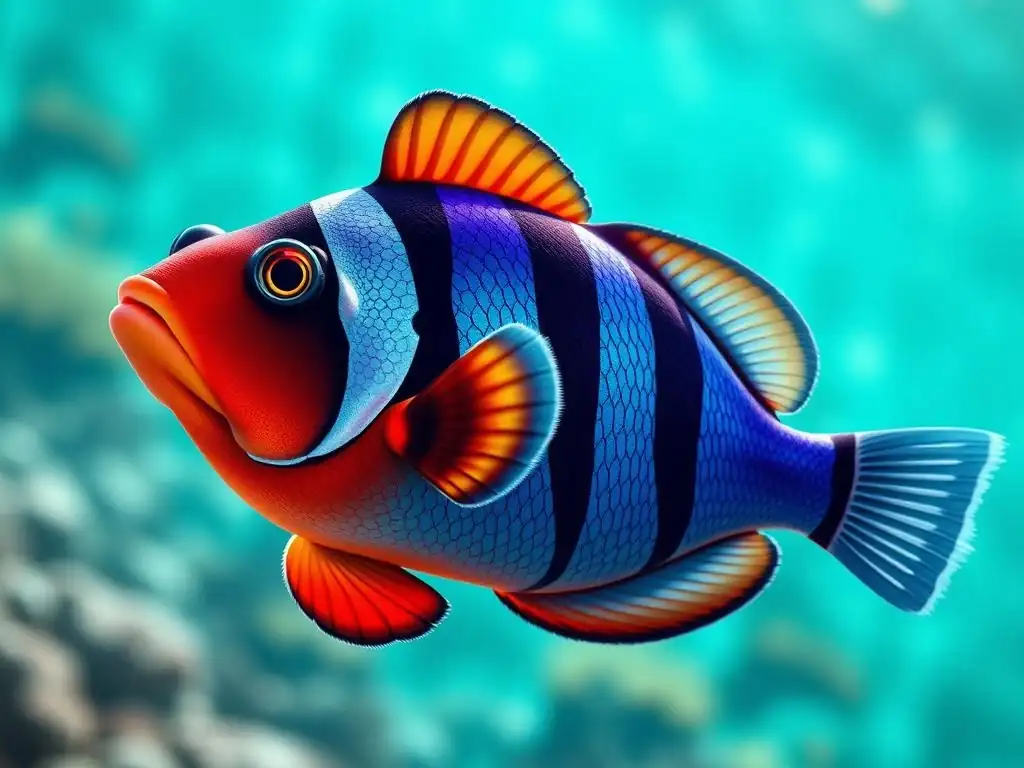
The most defining characteristic of the Clown Triggerfish is its spectacular coloration and pattern, which makes it one of the most easily recognizable fish in the marine aquarium trade. Adults feature a predominantly black body covered in large, irregular, and vividly contrasting white spots, particularly prominent on their lower flanks.
The area around their mouth is a striking yellow or orange, often extending to the base of their pectoral fins. Their dorsal and anal fins are typically black with a white or pale yellow margin, while the caudal fin often displays a black base with a broad, white or yellow band, tipped with black.
Juvenile Clown Triggerfish, while sharing the same underlying pattern, tend to have a more subdued coloration, with the white spots being smaller and more numerous, and the yellow on the mouth less intense. As they mature, their colors become more vibrant and the spots enlarge, developing into the iconic adult pattern.
Like all triggerfish, they possess a unique "trigger" mechanism: a large, lockable dorsal spine that can be erected and locked into place, allowing them to wedge themselves securely into rock crevices, making them difficult for predators (or aquarists) to extract. This physical defense mechanism is a testament to their robust and resilient nature.
Size and Lifespan of Clown Triggerfish in Captivity
In their natural reef environment, adult Clown Triggerfish can reach impressive sizes, often growing up to 20 inches (approximately 50 cm) in length. However, in the confines of a home aquarium, they typically attain a slightly smaller, though still substantial, size, usually ranging from 12 to 16 inches (30 to 40 cm). The ultimate size they reach in captivity is heavily influenced by factors such as tank size, diet quality, and overall water parameters. A spacious aquarium and a nutritious diet are essential for them to reach their full growth potential and maintain optimal health.
With proper Clown Triggerfish tank care, including stable water conditions, a high-quality diet, and a low-stress environment, these fish can live for a significant period. Their average lifespan in captivity ranges from 10 to 15 years, with some well-cared-for individuals reportedly living for up to 20 years or even longer. This long lifespan underscores the considerable commitment required from an aquarist, highlighting the importance of long-term planning and consistent, meticulous care for this species.
Clown Triggerfish Tank Care Guide: Creating the Ideal Environment
Clown Triggerfish Tank Size Requirements: How Big Should Your Aquarium Be?
Providing an adequately sized aquarium is arguably the most critical aspect of Clown Triggerfish tank care. Due to their potential adult size, active swimming nature, and highly territorial temperament, a very large tank is indispensable. While some sources suggest a minimum of 180 gallons (approximately 680 liters) for an adult, this is often considered the absolute bare minimum and may not allow the fish to thrive long-term. For optimal health, growth, and behavioral expression, a tank of 250 to 300 gallons (946 to 1135 liters) or larger is highly recommended for a single adult Clown Triggerfish.
The dimensions of the aquarium are as important as its volume. A longer tank is preferable to a taller one, as it provides more horizontal swimming space, which is crucial for an active fish like the Clown Triggerfish. A tank with a minimum length of 6 to 8 feet (1.8 to 2.4 meters) would be ideal. Ample swimming room, coupled with plenty of secure rockwork and caves for hiding and establishing territory, helps reduce stress and aggression, contributing significantly to a successful Clown Triggerfish tank care guide.
Water Parameters for Clown Triggerfish: Maintaining Optimal Water Quality
Maintaining pristine and stable water parameters is fundamental for the health and longevity of Clown Triggerfish. They thrive in standard saltwater aquarium conditions typical for most marine fish. The specific parameters to closely monitor include: salinity, which should be kept between 1.020 and 1.025 specific gravity (SG); water temperature, ideally maintained within a stable range of 76-82°F (24-28°C); and pH levels, which should consistently remain between 8.1 and 8.4. Sudden fluctuations in any of these parameters can cause significant stress and compromise the fish's immune system.
Beyond these primary parameters, it is crucial to ensure that ammonia and nitrite levels remain at an undetectable 0 ppm, as these compounds are highly toxic to marine life. Nitrate levels should be kept as low as possible, ideally below 20 ppm, and preferably under 10 ppm, through regular water changes and efficient filtration.
While Clown Triggerfish are not typically found in delicate reef setups, maintaining stable alkalinity (8-12 dKH), calcium (400-450 ppm), and magnesium (1250-1350 ppm) can contribute to overall water stability, especially if live rock is present. Consistent monitoring with reliable test kits is a cornerstone of effective Clown Triggerfish tank care.
Essential Equipment for a Clown Triggerfish Aquarium: Filtration, Lighting, and Heating
Given the Clown Triggerfish's significant bioload—the amount of waste produced—robust and efficient filtration is non-negotiable for their aquarium. A high-quality protein skimmer, rated for at least two to three times the actual tank volume, is essential for removing organic waste before it breaks down into harmful nitrates.
This should be complemented by a strong biological filtration system, typically achieved through a generous amount of cured live rock (1.5 to 2 pounds per gallon) and potentially bio-media in a sump or canister filter. Mechanical filtration, such as filter socks or sponges, should also be employed and cleaned or replaced frequently to remove particulate matter.
Adequate water movement is also important, providing oxygenation and preventing dead spots where detritus can accumulate. Powerheads or wavemakers should be used to create moderate to strong flow throughout the tank. Heating is straightforward; a reliable heater with a separate temperature controller is necessary to maintain the stable temperature range of 76-82°F.
While Clown Triggerfish do not have specific lighting requirements beyond what is needed for general observation and potential live rock health, moderate intensity LED or fluorescent lighting is generally sufficient. Finally, a very sturdy and secure tank lid is crucial, as triggerfish are known for their jumping capabilities when startled or stressed.
Clown Triggerfish Diet and Feeding: What to Feed Your Colorful Trigger
Natural Diet vs. Captive Diet: Replicating Their Wild Feeding Habits
In their natural reef environment, Clown Triggerfish are formidable predators with powerful jaws and specialized teeth designed for crushing. Their wild diet primarily consists of hard-shelled invertebrates such as crabs, snails, sea urchins, and various bivalves like clams and mussels. They also prey on smaller crustaceans and occasionally small fish. This natural diet provides them with the essential proteins, fats, and minerals needed for growth and health, and the hard shells help to naturally wear down their continuously growing teeth.
When formulating a Clown Triggerfish tank care guide, replicating this varied and robust diet in captivity is paramount. A captive diet should focus on meaty, high-protein foods, many of which should ideally be frozen to reduce the risk of introducing parasites. It is crucial to offer a diverse range of foods to ensure a complete nutritional profile and prevent deficiencies. Simply feeding one type of food, even if it's high quality, will not suffice for the long-term health of these intelligent and active fish.
Feeding Schedule for Clown Triggerfish: How Often to Feed
The feeding frequency for Clown Triggerfish depends largely on their age and size. Juvenile Clown Triggerfish, which are actively growing, benefit from more frequent feedings, typically two to three times per day. This consistent supply of nutrients supports their rapid development. As they mature into adults, their metabolic rate slows slightly, and their dietary needs can be met with one to two feedings per day. It's important to observe your individual fish and adjust the feeding schedule based on their activity levels and body condition.
Overfeeding should be avoided, as it can lead to water quality degradation, increased nitrate levels, and potential health issues for the fish, such as fatty liver disease. Feed only what the fish can consume within a few minutes, removing any uneaten food to maintain pristine water conditions. A consistent feeding routine, coupled with observation of their appetite and waste production, is a key component of effective Clown Triggerfish tank care.
Recommended Foods for Clown Triggerfish: A Balanced and Nutritious Diet
A balanced and nutritious diet is critical for the vibrant coloration, robust health, and long lifespan of a Clown Triggerfish. The primary components of their captive diet should be a variety of high-quality, meaty frozen foods. Excellent choices include: mysis shrimp, krill, silversides, squid, scallops, clams, mussels, and various forms of marine fish flesh. It is beneficial to offer these foods whole or in large chunks to encourage their natural ripping and tearing behaviors.
To ensure proper dental health and wear down their continuously growing teeth, periodically offer foods with hard shells, such as small whole crabs (e.g., fiddler crabs or small ghost crabs), snails, or clams in the shell. Vitamin-enriched frozen foods or those supplemented with spirulina are also beneficial for boosting their immune system and enhancing their colors. While not a primary food source, high-quality marine pellets or flakes can be offered occasionally as a dietary supplement, but they should not form the bulk of their diet. Variety is truly the spice of life for a healthy Clown Triggerfish.
Clown Triggerfish Behavior and Temperament: Understanding Their Bold Personality
The Clown Triggerfish is renowned for its bold and often aggressive temperament, making its social behavior a primary consideration in any Clown Triggerfish tank care guide. In the wild, they are largely solitary and highly territorial, and this characteristic translates directly to the aquarium environment. They are generally not considered a community fish in the traditional sense, as their aggressive nature can pose a significant threat to smaller, more docile, or similarly patterned tank mates. They are known to assert dominance and defend their chosen territory vigorously.
While a Clown Triggerfish can sometimes be housed with other large, robust, and equally aggressive fish in very spacious aquariums, success is never guaranteed. They are prone to picking on or even killing fish that they perceive as a threat, food, or simply an unwelcome presence in their territory. Introducing a Clown Triggerfish into an established tank should always be done with extreme caution, and it is generally advisable to introduce them last among potential tank mates, allowing other fish to establish their territories first.
Aggression Levels: Managing Potential Conflicts in a Community Tank
Clown Triggerfish exhibit high levels of aggression, which can manifest in fin-nipping, chasing, and outright attacks on tank mates. Their powerful jaws and sharp teeth are capable of inflicting serious injury. This aggression is particularly pronounced towards fish that are smaller, slower, have flowing fins, or share similar body shapes and color patterns that might be mistaken for rival triggers. They also pose a significant threat to invertebrates, including ornamental shrimp, crabs, and snails, which they view as natural prey.
Managing this aggression in a mixed-species tank requires careful planning and a deep understanding of their behavior. Providing ample rockwork with numerous hiding spots, caves, and visual barriers can help break up lines of sight and reduce territorial disputes. A very large aquarium also dilutes aggression by providing more space for each fish to establish its own territory. It is also crucial to ensure that the Clown Triggerfish is well-fed, as hunger can exacerbate aggressive tendencies. Regular observation for signs of stress or conflict among tank mates is essential.
Typical Clown Triggerfish Behaviors: Observation Tips for Aquarists
Clown Triggerfish are highly intelligent and curious fish, often observed actively exploring their environment. They are constantly on the move, patrolling their territory, and investigating new additions or changes within the tank. Aquarists often report that these fish can recognize their owners, sometimes even interacting with them by following movements outside the tank or 'begging' for food. Their eyes move independently, allowing them a broad field of vision.
Observing typical Clown Triggerfish behaviors can provide valuable insights into their health and well-being. A healthy triggerfish will be active, alert, and exhibit vibrant coloration. Signs of stress or illness might include clamped fins, faded colors, excessive hiding, erratic swimming, or rubbing against rocks. They also possess the characteristic triggerfish behavior of locking themselves into crevices using their dorsal spine when startled or resting. Pay attention to their interactions with tank mates; constant chasing, nipping, or monopolizing food are clear indicators of aggression that need to be addressed to ensure a harmonious environment and effective Clown Triggerfish tank care.
Choosing Tank Mates for Clown Triggerfish: Compatibility Considerations
Incompatible Tank Mates: Fish to Avoid
When planning a Clown Triggerfish tank, it is crucial to understand which fish are absolutely incompatible to prevent conflict, injury, or death. Avoid any small or docile fish species, such as gobies, blennies, damsels, cardinalfish, and most types of tangs or angelfish, as they will likely be seen as food or targets for aggression. Slow-moving fish or those with long, flowing fins (e.g., lionfish with delicate fins, certain large angels, or even puffers if they are too sluggish) are also poor choices, as their fins can be easily nipped or damaged.
Furthermore, Clown Triggerfish are obligate carnivores that prey on invertebrates in the wild. Therefore, all ornamental shrimp, crabs, snails, and other crustaceans should be excluded from their tank, as they will inevitably become expensive snacks. Even corals and other sessile invertebrates are at risk, as the triggerfish may nip at them or attempt to dislodge them. Housing them with other triggerfish species is generally not recommended unless in extraordinarily large aquariums (over 500 gallons), due to severe inter-species aggression.
Suitable Tank Mates: Creating a Harmonious Aquarium Environment
Despite their aggressive nature, Clown Triggerfish can be successfully housed with a select group of large, robust, and equally aggressive tank mates in appropriately sized aquariums. The key is to choose fish that can hold their own and are too large or too fast to be easily harassed or consumed. Good candidates include certain species of large groupers (e.g., larger species of Cephalopholis or Epinephelus), robust snappers, large moray eels (though caution is still advised as eels can be predatory), and certain large puffers (e.g., Dogface Puffers, Porcupine Puffers, if introduced carefully).
Other possibilities might include large predators like certain species of lionfish (e.g., Volitan Lionfish), provided they are well-fed and introduced carefully, as the triggerfish might still nip at their fins. The success of any pairing heavily relies on the tank size, the individual temperament of the triggerfish, and the order of introduction. Introducing potential tank mates before the Clown Triggerfish, or simultaneously in a very large setup, can sometimes help establish territories more peacefully.
Introducing New Fish: Minimizing Aggression and Stress
Introducing new fish into a tank with an established Clown Triggerfish requires careful planning to minimize aggression and stress. The golden rule is to always quarantine new fish in a separate tank for at least 4-6 weeks before introducing them to the main display. This allows for observation, prophylactic treatment for common diseases, and recovery from shipping stress. Once ready for introduction, there are several strategies to employ.
One effective method is to rearrange the rockwork in the main tank just before adding the new fish. This disrupts the Clown Triggerfish's established territories, making it feel less dominant and more preoccupied with re-establishing its own space, thus reducing immediate aggression towards the newcomers. Feeding the Clown Triggerfish a substantial meal just before introducing the new fish can also help, as a full belly often reduces predatory instincts.
Observe interactions closely for the first few hours and days, being prepared to remove any fish if severe aggression occurs. Patience and vigilance are key to successful Clown Triggerfish tank care when adding new inhabitants.
Clown Triggerfish Health and Disease: Prevention and Treatment
Common Diseases Affecting Clown Triggerfish
While Clown Triggerfish are generally robust fish when kept in optimal conditions, they are still susceptible to common marine aquarium diseases, particularly if stressed by poor water quality, inadequate diet, or incompatible tank mates. The most prevalent parasitic diseases include Marine Ich ( Cryptocaryon irritans) and Marine Velvet ( Amyloodinium ocellatum). These external parasites can cause significant distress and are highly contagious. Bacterial infections, often manifesting as fin rot, cloudy eyes, or body lesions, can also occur, usually as secondary infections to poor water conditions or physical injury.
Another concern for triggerfish, including the Clown Triggerfish, is Head and Lateral Line Erosion (HLLE). While the exact cause is not fully understood, it is often linked to poor water quality (especially high nitrates), inadequate nutrition (lack of essential vitamins, particularly Vitamin C), stray electrical currents, and stress. Recognizing these potential health issues is a crucial step in maintaining a healthy Clown Triggerfish tank care guide.
Recognizing Signs of Illness: Early Detection is Key
Early detection of illness is paramount for successful treatment and preventing the spread of disease within the aquarium. Aquarists should observe their Clown Triggerfish daily for any changes in behavior, appearance, or appetite. Signs of illness can include:
- Behavioral changes: Lethargy, erratic swimming, rapid breathing, excessive hiding, or scratching/flashing against rocks or substrate.
- Physical signs: White spots (Ich), dusty film (Velvet), cloudy eyes, fin clamping (fins held close to the body), frayed fins (fin rot), red streaks on the body, or visible lesions.
- Appetite loss: Refusal to eat or spitting out food.
- Coloration: Faded colors or unusual darkening, which can indicate stress or disease.
Any deviation from their normal vibrant appearance and active behavior warrants immediate investigation and, if necessary, isolation in a quarantine tank.
Quarantine Procedures: Protecting Your Aquarium from Disease
Implementing strict quarantine procedures for all new fish, including Clown Triggerfish, is the single most effective method for preventing the introduction and spread of diseases in your main display tank. A dedicated quarantine tank (QT), typically 30-50 gallons for a juvenile Clown Triggerfish, should be set up with basic filtration, a heater, and PVC pipes for hiding, but no substrate or elaborate rockwork, to facilitate observation and treatment.
New fish should reside in the QT for a minimum of 4 to 6 weeks. During this period, they can be observed for any signs of illness, treated prophylactically for common parasites (e.g., with copper-based medications or hyposalinity, if appropriate for the species), and allowed to recover from the stress of shipping. This crucial step not only protects your existing fish from potential pathogens but also allows the new Clown Triggerfish to acclimate to captive conditions in a less stressful environment before being introduced to the main display.
Treatment Options for Sick Clown Triggerfish
The appropriate treatment for a sick Clown Triggerfish depends entirely on an accurate diagnosis of the underlying illness. For parasitic infections like Ich and Marine Velvet, copper-based medications are a common and effective treatment in a quarantine tank. Alternatively, some aquarists opt for methods like hyposalinity (gradually reducing salinity to 1.008-1.010 SG) or the Tank Transfer Method, though these require careful monitoring and understanding. Always ensure the chosen treatment is safe for the specific fish and follow product instructions precisely.
Bacterial infections often require treatment with broad-spectrum antibiotics, which can be administered in the water or, ideally, through medicated foods to target internal infections. For HLLE, improving water quality (e.g., more frequent water changes, enhanced filtration) and ensuring a vitamin-rich diet (especially Vitamin C) are crucial. In all cases, maintaining pristine water parameters and a low-stress environment are vital supportive measures that aid in the fish's recovery. Consulting with experienced marine aquarists or a fish veterinarian can provide valuable guidance for complex cases.
Breeding Clown Triggerfish: Challenges and Possibilities
Breeding in Captivity: The Rarity of Success
Breeding Clown Triggerfish ( Balistoides conspicillum) in a home aquarium setting is exceedingly rare and has only been achieved by a handful of highly specialized public aquariums or dedicated research facilities. Most Clown Triggerfish available in the aquarium trade are wild-caught specimens. The challenges associated with their captive breeding are numerous, primarily stemming from their large size, aggressive nature, and the highly specific requirements of their larval stages.
Successful breeding requires not only a massive aquarium (often thousands of gallons) to accommodate a pair and allow for natural spawning behaviors but also a deep understanding of their reproductive biology. The sheer difficulty and resource intensity mean that captive breeding programs for Clown Triggerfish are largely confined to the realm of professional aquaculture, making it an ambitious, almost impossible, endeavor for the average home aquarist.
Understanding the Reproductive Cycle
In their natural environment, Clown Triggerfish exhibit distinct reproductive behaviors. Males typically prepare a nesting site, often a depression in the sand or a protected rocky crevice, which they guard fiercely. Spawning involves the female depositing eggs within this nest, which are then fertilized by the male. The eggs are pelagic, meaning they float in the water column, and are dispersed by currents. The male triggerfish is known to exhibit parental care, guarding the nest against intruders until the eggs hatch.
The larval stages of Clown Triggerfish are planktonic, meaning the tiny larvae drift freely in the ocean currents and feed on microscopic organisms. Rearing these delicate larvae in captivity presents the greatest hurdle. They require specific water parameters, extremely tiny live food sources (such as rotifers and copepods of precise sizes), and a highly controlled environment to survive and metamorphose into juvenile fish. This intricate and demanding larval rearing phase is the primary reason why commercial breeding of Clown Triggerfish remains largely unfeasible for the hobbyist.
Advanced Clown Triggerfish Care: Tips for Experienced Aquarists
Enhancing Coloration and Health
For experienced aquarists looking to truly make their Clown Triggerfish shine, several advanced Clown Triggerfish tank care strategies can enhance their vibrant coloration and overall health. A consistently high-quality and varied diet is paramount. Including foods rich in carotenoids, such as spirulina-enriched flakes or pellets, krill, and certain types of marine algae, can significantly intensify the yellow and orange hues around their mouth and fins. Fresh, vitamin-enriched frozen foods are also crucial for providing a full spectrum of nutrients.
Beyond diet, maintaining pristine water quality with undetectable levels of ammonia and nitrite, and very low nitrates (ideally below 10 ppm), is essential. A stable environment with minimal stress contributes directly to brighter, more vivid colors. Regular water changes (e.g., 20% bi-weekly or 10% weekly) and robust filtration ensure that the water remains clean and free of pollutants that can dull a fish's coloration and compromise its immune system.
Providing Enrichment Activities
Clown Triggerfish are highly intelligent and curious fish that benefit greatly from environmental enrichment. Providing mental stimulation can prevent boredom, reduce stress, and encourage natural behaviors. One simple form of enrichment is occasionally rearranging the rockwork within the aquarium. This creates new territories to explore and new hiding spots, mimicking the dynamic nature of their wild habitat. However, ensure any rockwork is extremely stable and secure to prevent collapses.
Target feeding, where food is offered directly to the fish using tongs, can also be an engaging activity that strengthens the bond between the aquarist and the fish. Some aquarists even report success with offering "food puzzles," such as hiding food within a small, fish-safe container that the triggerfish must manipulate to access. Providing strong, variable water flow with powerheads can also serve as enrichment, allowing the fish to actively swim against currents, mimicking the exercise they would get in the wild.
Long-Term Care Considerations
The long lifespan of Clown Triggerfish (10-15+ years) necessitates a long-term commitment and proactive planning for their care. Experienced aquarists understand that a single Clown Triggerfish tank care guide is not a static document but an evolving process. This includes planning for potential equipment upgrades as the fish grows, or as existing equipment ages. Regular preventative maintenance, such as cleaning protein skimmers, replacing filter media, and calibrating test kits, becomes even more critical over many years.
Furthermore, monitoring the fish's behavior and health over its entire lifespan is crucial. As they age, their dietary needs might change, or they might become more susceptible to certain conditions. Being prepared for potential aggression changes as they mature, or for the need to rehome tank mates if compatibility issues arise, is part of responsible long-term ownership. Continuous learning, staying updated on best practices, and being adaptable are hallmarks of advanced Clown Triggerfish care.
Is the Clown Triggerfish Right for You? Evaluating Your Experience and Resources
The Commitment Required for Clown Triggerfish Ownership
Deciding to bring a Clown Triggerfish into your home aquarium is a significant undertaking that demands a substantial commitment of time, resources, and expertise. This is not a fish for beginners or those with limited space. The initial investment in a suitably large aquarium (250-300+ gallons), robust filtration, and high-quality equipment can be considerable, often running into thousands of dollars. Beyond the initial setup, the ongoing operational costs for food, salt mix, test kits, and electricity for heating and pumps are also substantial.
More importantly, the daily care and monitoring required for optimal Clown Triggerfish tank care are demanding. This includes daily observation, frequent water testing, regular large water changes, and providing a diverse, high-quality diet. Their intelligence and potential for aggression mean that careful tank mate selection and continuous behavioral assessment are necessary. Owning a Clown Triggerfish is a long-term commitment, potentially spanning two decades, requiring dedication to providing a stable, enriching, and healthy environment for this magnificent, yet challenging, marine predator.
Resources for Further Research on Balistoides conspicillum
For those considering adding a Clown Triggerfish to their collection, or for existing owners seeking to deepen their knowledge, continuous research is highly recommended. Reputable online forums and communities dedicated to saltwater aquariums offer a wealth of collective experience from hobbyists who have successfully kept these fish. Websites specializing in marine fish profiles and care, such as AquariumMastery.com, provide detailed insights and practical advice.
Additionally, academic and scientific literature on marine fish biology and ecology can offer deeper understanding of Balistoides conspicillum's natural behaviors and physiological needs. Consulting with experienced marine aquarists at local fish stores or attending aquarium club meetings can also provide invaluable real-world advice and mentorship. Staying informed and continuously learning are crucial aspects of providing the best possible Clown Triggerfish tank care and ensuring the well-being of this remarkable species.
Conclusion: Appreciating the Beauty and Complexity of the Clown Triggerfish
The Clown Triggerfish, Balistoides conspicillum, is undeniably one of the most captivating and iconic fish in the saltwater aquarium hobby. Its striking coloration, intelligent demeanor, and bold personality make it a truly unique and rewarding species for the dedicated aquarist. However, its beauty is matched by its demanding care requirements, particularly its need for an exceptionally large tank, robust filtration, pristine water quality, and careful consideration of tank mates due to its aggressive nature.
Successfully keeping a Clown Triggerfish is a testament to an aquarist's commitment and experience. It requires a comprehensive understanding of their specific needs, from meticulous Clown Triggerfish tank care to a diverse and appropriate diet. While not a fish for the faint of heart or the beginner, for those prepared to meet its challenges, the Clown Triggerfish offers an unparalleled opportunity to observe a truly magnificent and complex creature thriving in a home aquarium, becoming the undisputed centerpiece of a large marine display.
Frequently Asked Questions
What size tank is required for a Clown Triggerfish?
A very large tank is essential. A minimum of 180 gallons is recommended, but ideally, you should aim for 250 gallons or more to accommodate their size and activity level.
What type of diet does a Clown Triggerfish need?
They require a varied diet consisting of meaty foods. Offer them a mix of high-quality marine pellets, chopped seafood, and frozen preparations to ensure they receive all the necessary nutrients.
Are Clown Triggerfish compatible with other fish?
Clown Triggerfish are known for their aggressive temperament and are best kept alone or with other equally aggressive species. Avoid keeping them with smaller, peaceful fish.
What are some common health problems associated with Clown Triggerfish?
They can be susceptible to common marine diseases like Ich (white spot disease) and marine velvet. Maintaining excellent water quality and a stress-free environment is crucial for prevention.
How often should I perform water changes in a Clown Triggerfish tank?
Regular water changes are vital for maintaining optimal water quality. A 10-20% water change should be performed every one to two weeks to keep nitrate levels low.
Final Reflection: Embracing the Bold and Beautiful
The vibrant colors and assertive nature of the Clown Triggerfish, as we've explored throughout this guide, are not just captivating in the wild, but also present a unique challenge and reward for aquarists today. Understanding their specific needs and behaviors is crucial for responsible ownership and ensuring their well-being in a captive environment. This commitment to informed care allows us to appreciate their beauty without compromising their health, a responsibility we must embrace wholeheartedly.
The allure of the Clown Triggerfish extends beyond its striking appearance; it represents a commitment to understanding and respecting the complexities of marine life. My own fascination with these creatures stems from their unapologetic individuality, a quality that resonates deeply in a world often striving for conformity. In the end, we will conserve only what we love; we will love only what we understand; and we will understand only what we are taught.
- Baba Dioum. This quote perfectly encapsulates the importance of education and responsible stewardship in preserving the wonders of the ocean, one Clown Triggerfish at a time.
Now, armed with the knowledge from this guide, I encourage you to reflect on your own role in the aquarium hobby. Are you prepared to provide the demanding, yet rewarding, environment that a Clown Triggerfish requires? Consider the commitment, the responsibility, and the sheer joy of witnessing such a magnificent creature thrive under your care. Let the bold beauty of the Clown Triggerfish inspire you to become a more informed, compassionate, and dedicated aquarist, ensuring a brighter future for these captivating inhabitants of our oceans.
Dive Deeper: Claim Your Clown Triggerfish Mastery!
Thanks for exploring the fascinating world of the Clown Triggerfish with us! We hope you've gained valuable insights into the unique care and captivating personality of this aquatic marvel. Now, it's time to translate that knowledge into action!
Here are some steps you can take to further your Clown Triggerfish journey:
- Critically evaluate your current aquarium setup and honestly assess if it meets the demanding needs of a Balistoides conspicillum.
- Explore unconventional enrichment methods, such as creating a "puzzle feeder" using rocks and PVC pipes to stimulate their natural foraging behavior.
- Share this article with fellow aquarium enthusiasts and spark a discussion about the ethical considerations of keeping demanding species like the Clown Triggerfish!
What specific question are you still pondering about Clown Triggerfish care, and what innovative solution are you considering to ensure their well-being in captivity?