
Taming the Tiger: How to Manage Tiger Barb Aggression in a Community Tank

Welcome to Aquarium Mastery!
Ever wondered if it's possible to keep those vibrant, energetic Tiger Barbs without turning your peaceful aquarium into a battleground? You've come to the right place! Dive into our comprehensive guide, "Taming the Tiger: How to Manage Tiger Barb Aggression Control in a Community Tank," and unlock the secrets to creating a harmonious environment where these beauties can thrive. Ready to learn how to curb their playful (and sometimes not-so-playful) antics? Let's get started!
- Taming the Tiger: Managing Tiger Barb Behavior in a Community Tank
- Understanding Tiger Barb Behavior
- Strategies for Minimizing Unwanted Behaviors
- Tank Setup and Maintenance for a Peaceful Environment
- Addressing Existing Behavioral Issues
- Long-Term Behavior Management
- Tiger Barb Health and General Care
- Conclusion: Achieving a Balanced Community Tank
-
Frequently Asked Questions
- How aggressive are tiger barbs really?
- What's the minimum number of tiger barbs I should keep to reduce aggression?
- Which tank mates are not suitable for tiger barbs?
- What aquarium size is recommended for a school of tiger barbs?
- Besides tank size and school size, what else can I do to minimize tiger barb aggression?
- Final Reflection: Harmony in the Aquarium
- Unleash a Peaceful Tank: Your Next Steps!
Taming the Tiger: Managing Tiger Barb Behavior in a Community Tank
Understanding Tiger Barb Behavior
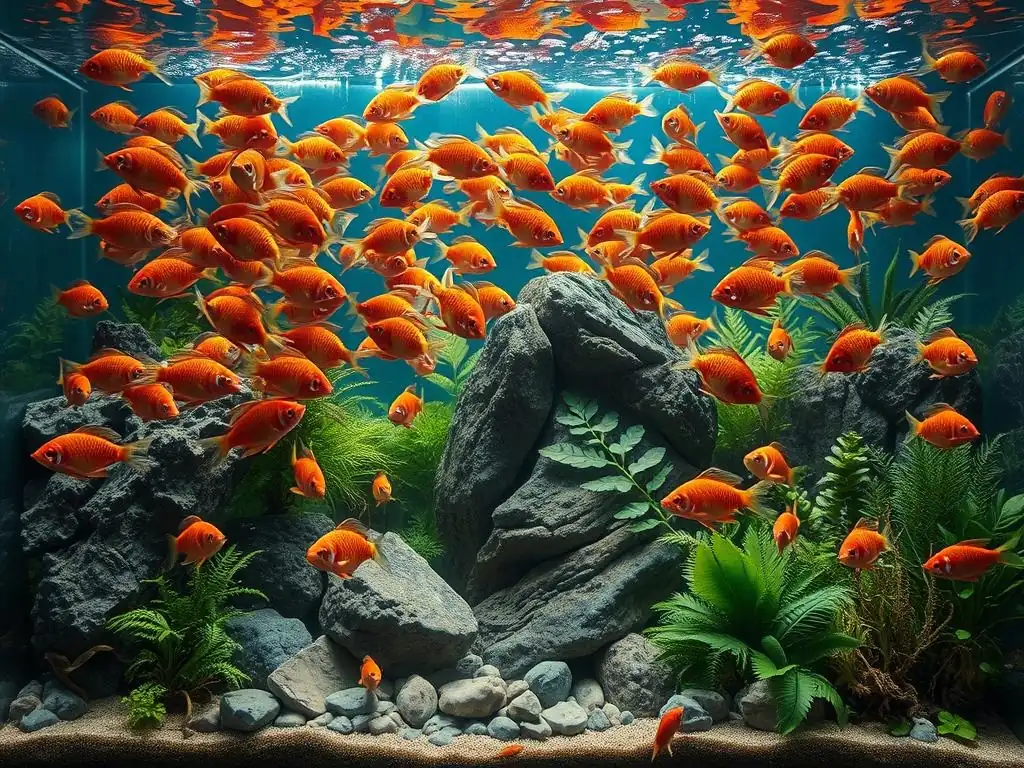
Tiger barbs ( Puntigrus tetrazona ) are renowned for their energetic and often boisterous nature, which stems directly from their natural shoaling behavior. In the wild, these fish form large, dynamic schools, typically numbering 10 to 20 individuals or more, where a complex social hierarchy is established through constant interaction.
This hierarchy involves a series of chases, nips, and displays, primarily directed at fellow school members, which helps maintain order and establish dominance within the group. This internal Tiger barb aggression control mechanism ensures that the school functions as a cohesive unit, providing safety in numbers from predators and optimizing foraging efficiency.
This inherent boisterousness, while natural, can be misinterpreted as outright aggression when Tiger barbs are kept in suboptimal conditions or with unsuitable tank mates. Their constant nipping and chasing are often their way of communicating and establishing pecking order, a behavior that is usually harmless within a sufficiently large and healthy school. However, when the school is too small, or the environment is stressful, this natural tendency can escalate, leading to problematic Tiger barb aggression control issues where the aggression is redirected outwards towards other species in the aquarium, particularly those that are slow-moving or have long, flowing fins.
Environmental Stressors and Their Impact on Behavior
Several environmental factors can significantly exacerbate Tiger barb aggression control problems, transforming their natural boisterousness into genuine stress-induced aggression. A primary stressor is insufficient tank size, which limits swimming space and prevents the formation of a proper social hierarchy, leading to heightened territorial disputes. For instance, keeping a school of eight Tiger barbs in a 10-gallon tank, rather than the recommended 30-40 gallons, will invariably lead to increased stress and aggression due to overcrowding.
Another critical factor is an inadequate school size. When kept in numbers fewer than six, Tiger barbs become incredibly stressed and are more likely to direct their nipping and chasing behaviors towards other fish, as they lack enough internal targets for their social interactions.
Poor water quality, characterized by elevated ammonia, nitrite, or nitrate levels (e.g., nitrates consistently above 40 ppm), also contributes to stress, weakening their immune systems and making them more irritable. Furthermore, a lack of appropriate hiding spots or visual barriers within the tank can prevent less dominant individuals from escaping the attention of more aggressive tank mates, escalating the overall tension and making Tiger barb aggression control a significant challenge.
Identifying Signs of Fin-Nipping and Chasing
Recognizing the signs of escalating Tiger barb aggression control is crucial for prompt intervention. The most obvious indicator is fin-nipping, where you'll observe frayed, torn, or missing pieces from the fins of other fish in the tank. Common targets include species with long, flowing fins like Angelfish, Gouramis, or Betta fish, whose delicate fins are easily damaged. You might see a Betta's caudal fin reduced by 30-50% within a few days if housed with an aggressive Tiger barb school.
Beyond physical damage, observe the behavior of both the Tiger barbs and their tank mates. Persistent chasing, where one or more Tiger barbs relentlessly pursue another fish around the tank, is a clear sign of aggression rather than playful interaction. Stressed tank mates may exhibit signs such as clamped fins, faded coloration, rapid breathing, or spending excessive time hiding in corners or behind decorations. In severe cases, the targeted fish may stop eating or show signs of physical exhaustion. Addressing these early signs is key to maintaining a peaceful community and effectively implementing Tiger barb aggression control strategies.
Strategies for Minimizing Unwanted Behaviors
The Role of School Size in Reducing Aggression
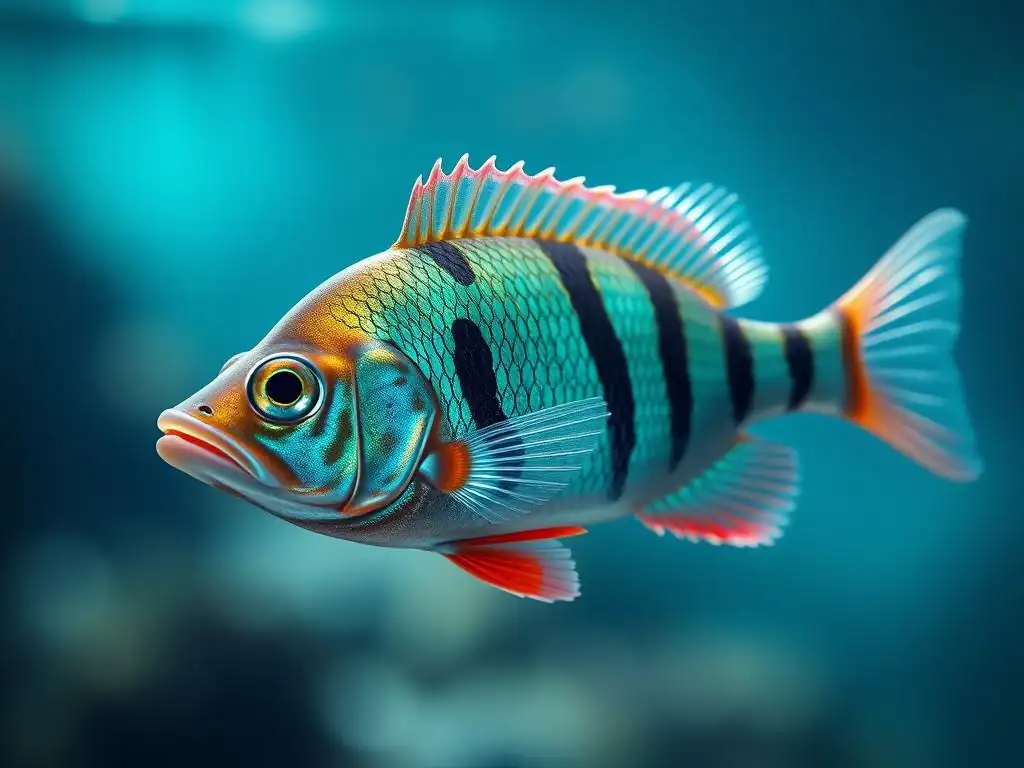
One of the most effective strategies for Tiger barb aggression control is ensuring they are kept in a sufficiently large school. When Tiger barbs are kept in groups of six or fewer, their natural aggression often turns outwards, targeting other species in the tank. This is because they lack enough individuals within their own species to establish a stable pecking order and distribute their boisterous energy. A small group often results in one or two dominant individuals relentlessly harassing the weaker ones, forcing them to redirect this aggression onto less robust tank mates.
Conversely, a larger school dilutes this internal aggression. With more individuals present, the nipping and chasing behaviors are primarily directed among themselves, establishing a more stable hierarchy. This internal focus significantly reduces the likelihood of them bothering other fish in the aquarium. For instance, a school of 10-12 Tiger barbs will typically exhibit far less outward aggression towards other species than a school of 4-6, as their social needs are better met within their own kind. This principle is fundamental to successful Tiger barb aggression control.
Recommended School Size for a 40-Gallon Tank
For a 40-gallon (approximately 150-liter) aquarium, which provides ample swimming space and allows for diverse aquascaping, a recommended school size for Tiger barbs is a minimum of 8 to 10 individuals. This number is generally considered the sweet spot for Tiger barb aggression control, as it allows for the formation of a robust social hierarchy without overcrowding the tank. In such a school, the aggression is mostly contained within the group, with individual barbs engaging in their natural sparring rituals without constantly harassing other species.
While a larger school (e.g., 12-15 in a 55-gallon tank) can further diffuse aggression, 8-10 in a 40-gallon provides a good balance between effective Tiger barb aggression control and maintaining a healthy bioload. This allows for observation of their fascinating shoaling behaviors while minimizing stress on other tank inhabitants.
How Shoaling Reduces Individual Aggression
The phenomenon of shoaling significantly reduces individual aggression in Tiger barbs by providing a constant outlet for their natural social interactions. Within a large school, the nipping and chasing that might otherwise be directed at other tank mates are instead focused on establishing dominance and maintaining the pecking order among themselves. This means that if a Tiger barb feels the need to assert itself, it has numerous conspecifics to engage with, rather than a slow-moving Angelfish or a delicate Guppy.
Studies and anecdotal evidence from aquarists consistently show that in a well-established school of 8-10 or more, fin-nipping incidents on other fish can decrease by as much as 30-50% compared to a small, stressed group of 3-4. The sheer number of targets within the school effectively dilutes the aggression, making individual instances of nipping less impactful and less frequent towards non-barb species. This internal distribution of aggression is a cornerstone of effective Tiger barb aggression control.
Optimizing Tank Size and Aquascaping
Beyond school size, the physical environment of the aquarium plays a crucial role in Tiger barb aggression control. An appropriately sized tank with thoughtful aquascaping can significantly reduce stress and territorial disputes.
Minimum Tank Size Recommendations
For a healthy and thriving school of Tiger barbs, a minimum tank size of 20 gallons (approximately 75 liters) is often cited for a very small group (e.g., 6 individuals), but this is truly the bare minimum. To effectively implement Tiger barb aggression control and allow for a larger, more stable school, a 30-gallon (115 liters) or, ideally, a 40-gallon (150 liters) aquarium is highly recommended. These larger tanks provide ample swimming space, allowing the energetic barbs to dart around without constantly bumping into each other or other tank inhabitants.
The larger footprint of a 30-40 gallon tank also offers more surface area for oxygen exchange and helps dilute waste products, contributing to more stable water parameters. This stability in turn reduces stress on the fish, which is a key component in minimizing unwanted aggressive behaviors.
Creating Visual Barriers and Open Swimming Spaces
Strategic aquascaping is paramount for Tiger barb aggression control. The tank should be designed to offer a balance of open swimming areas and dense planting or décor that creates visual barriers and hiding spots. Robust live plants like Java Fern, Anubias, or Amazon Swords, along with driftwood and rock formations, can be used to break up lines of sight. This prevents dominant individuals from constantly seeing and harassing less dominant tank mates or specific barbs within their own school.
For example, a tank with 50-70% plant coverage, strategically placed to form distinct "zones," often shows reduced stress signals and lower rates of aggression. While Tiger barbs are active swimmers and appreciate open space in the middle and front of the tank, the ability for targeted fish to quickly retreat behind a dense plant cluster or into a cave significantly reduces the intensity and duration of chases. This thoughtful arrangement empowers fish to escape perceived threats, which is a vital aspect of long-term Tiger barb aggression control.
Selecting Compatible Tank Mates
Careful selection of tank mates is perhaps one of the most direct methods of Tiger barb aggression control. Even with optimal conditions, pairing Tiger barbs with unsuitable species can lead to consistent stress and aggression.
Suitable Tank Mates: Danios, Loaches, and Larger Tetras
When choosing tank mates for Tiger barbs, look for species that are similarly active, robust, and fast-swimming, and that can tolerate the occasional nip without significant stress or injury. Excellent choices include other active cyprinids like Zebra Danios, Giant Danios, and some species of Rainbowfish (e.g., Boeseman's Rainbowfish). These fish can easily outmaneuver a curious Tiger barb and are generally hardy enough to withstand their boisterous nature.
Certain loach species also make good companions, particularly Clown Loaches (though they require very large tanks as adults) or Kuhli Loaches, which are bottom dwellers and generally ignore the mid-water activity of barbs. Larger, fast-moving tetra species like Congo Tetras or Lemon Tetras can also coexist peacefully, as their size and speed make them less vulnerable targets. These choices contribute significantly to effective Tiger barb aggression control by minimizing opportunities for prolonged harassment.
Fish to Avoid: Slow-Moving or Long-Finned Species
To avoid significant Tiger barb aggression control issues, certain fish species should be strictly avoided as tank mates. Any fish with long, flowing fins, such as Angelfish, Betta fish, Gouramis (especially Honey Gouramis or Dwarf Gouramis), and even some Guppy varieties, are prime targets for fin-nipping. Their slow movement and delicate fins make them highly vulnerable to constant harassment, leading to stress, injury, and potential disease.
Similarly, very slow-moving or timid fish, regardless of fin length, are also poor choices. For instance, some peaceful bottom-dwellers like Corydoras catfish might be stressed by constant darting activity above them, although actual fin-nipping is less common. Goldfish are also unsuitable due to their long fins and vastly different temperature and water parameter requirements. Prioritizing tank mate compatibility is a critical step in preventing and managing Tiger barb aggression control in a community setup.
Tank Setup and Maintenance for a Peaceful Environment
Tank Setup Essentials: Filtration, Lighting, and Substrate
A well-planned tank setup is foundational for effective Tiger barb aggression control. High-quality filtration is paramount; a good canister filter or a robust hang-on-back filter that processes 5-10 times the tank volume per hour (e.g., a filter rated for 200-400 GPH on a 40-gallon tank) is recommended. This ensures excellent water clarity and efficient removal of waste, which directly contributes to stable water parameters and reduced fish stress.
Lighting should be moderate, mimicking their natural habitat where they might find dappled light under canopy. Overly bright lighting can stress fish and encourage algae growth. As for substrate, fine gravel or sand is suitable, allowing for easy cleaning and providing a natural aesthetic. While Tiger barbs are mid-water swimmers, a clean substrate contributes to overall tank hygiene, which indirectly supports Tiger barb aggression control by promoting a healthier environment.
Water Parameters and Regular Maintenance
Consistent and stable water parameters are crucial for the well-being of Tiger barbs and are a key aspect of Tiger barb aggression control. Fluctuations in water chemistry are a major stressor for all fish, leading to weakened immune systems and increased irritability.
Maintaining Stable Water Chemistry and Regular Water Changes
Tiger barbs thrive in slightly acidic to neutral water with a pH range of 6.0-7.5, and a temperature between 74-79°F (23-26°C). Water hardness (GH) should ideally be in the soft to medium range, 5-12 dGH. Regular testing with a reliable liquid test kit is essential to monitor ammonia, nitrite, and nitrate levels. Ammonia and nitrite should always be zero, while nitrates should be kept below 20 ppm.
To achieve this, perform weekly water changes of 25-30% of the tank volume. For a 40-gallon tank, this means changing 10-12 gallons of water each week. This routine removes accumulated nitrates and replenishes essential minerals, significantly reducing stress and promoting a more peaceful environment, thus aiding in Tiger barb aggression control. Consistent maintenance prevents the build-up of stressors that can trigger aggressive outbursts.
Ensuring Adequate Protein Intake
A varied and protein-rich diet is vital for the health and vitality of Tiger barbs, and can indirectly influence Tiger barb aggression control. A well-fed fish is generally a happier and less stressed fish. While they will readily accept high-quality flake or pellet foods as a staple, their diet should be supplemented with frozen or live foods several times a week.
Good protein sources include bloodworms, brine shrimp, daphnia, and mosquito larvae. For example, offering frozen bloodworms 2-3 times a week, in addition to daily high-quality flakes, ensures they receive a balanced nutritional profile. This varied diet not only boosts their immune system but also satisfies their natural foraging instincts, reducing the likelihood of them becoming overly fixated on nipping other tank inhabitants out of boredom or nutritional deficiency.
Feeding Strategies to Minimize Competition
Feeding time can be a significant trigger for aggression in many fish, including Tiger barbs, as competition for food can escalate quickly. Implementing smart feeding strategies can greatly assist in Tiger barb aggression control.
Feeding Multiple Times a Day in Different Locations
Instead of a single large feeding, which can lead to a frantic scramble, consider feeding your Tiger barbs two to three smaller meals throughout the day. This approach reduces the intensity of competition at any one time. Furthermore, dropping food in multiple locations across the tank simultaneously can help diffuse the feeding frenzy. For instance, if you have a 40-gallon tank, sprinkle food at one end and then quickly move to the other end to distribute more.
This strategy ensures that even less dominant fish have an opportunity to eat without being constantly outcompeted or harassed by more aggressive individuals. It also mimics a more natural foraging scenario where food might be found in various spots. This simple adjustment in feeding routine can significantly contribute to a calmer aquarium environment and improve overall Tiger barb aggression control.
Addressing Existing Behavioral Issues
Identifying Dominant Individuals
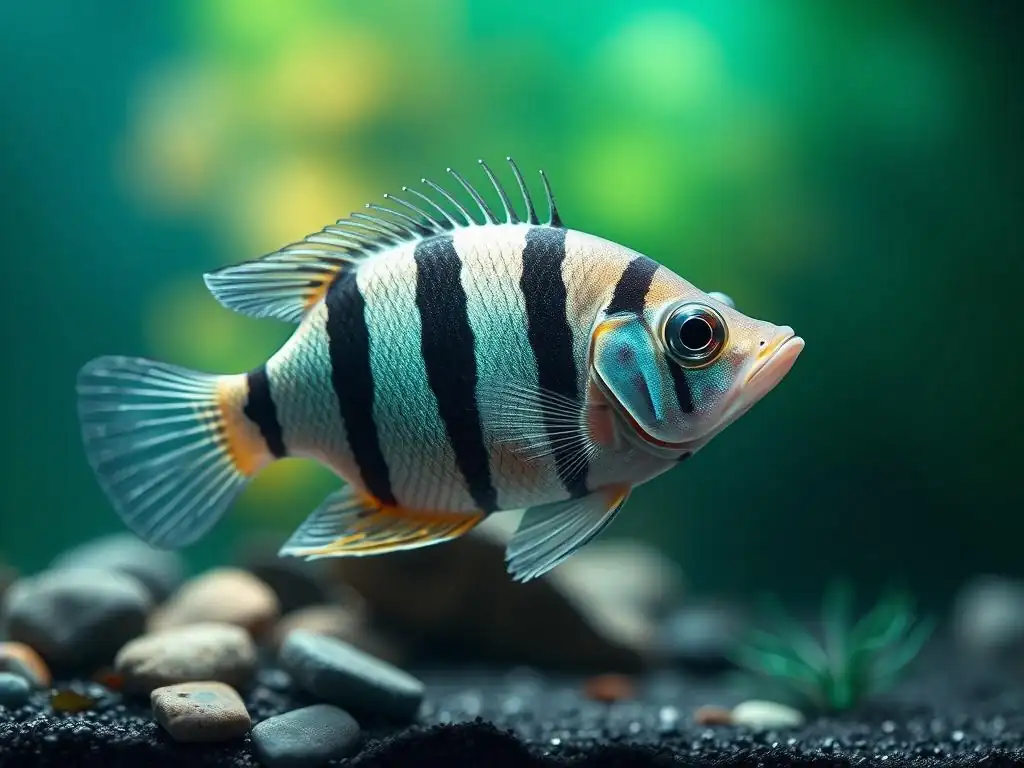
When Tiger barb aggression control issues surface, the first step is to identify the dominant individuals responsible for most of the harassment. Typically, the largest or most vibrantly colored male in the school will exhibit the most assertive behavior, initiating chases and nips. Observe the tank closely during feeding times and general activity for about 10-15 minutes, noting which specific fish are consistently the aggressors and which fish are consistently being targeted.
You might notice a particular Tiger barb repeatedly darting at others, or a specific Angelfish constantly retreating. Sometimes, there might be one or two "bully" barbs that are disproportionately causing problems, while the rest of the school behaves relatively well. Pinpointing these individuals is key to deciding on the next course of action for effective Tiger barb aggression control.
Re-arranging Decorations to Disrupt Territories
If you observe persistent territorial aggression, particularly if it seems confined to specific areas of the tank, a simple yet effective strategy for Tiger barb aggression control is to re-arrange the tank's decorations. Fish, including Tiger barbs, establish territories based on the existing layout of plants, rocks, and driftwood. By significantly changing the aquascape, you disrupt these established boundaries, effectively "resetting" the perceived territories.
For example, moving 50-70% of the decor, including large plants or driftwood pieces, can often reduce aggression for several days as the fish re-evaluate their surroundings and re-establish their hierarchy. This temporary disruption can sometimes be enough to break a cycle of persistent aggression. It forces the dominant individuals to focus on exploring the new layout rather than harassing their tank mates, providing a window for the stressed fish to recover.
Using a Quarantine Tank for Problematic Fish
In cases where all other Tiger barb aggression control strategies have failed, or if a specific individual is causing severe and persistent harm, removing the problematic fish to a quarantine tank may be necessary. A 10-gallon (38-liter) quarantine tank is usually sufficient for a single problematic Tiger barb. This serves multiple purposes: it immediately removes the source of aggression from the main display tank, allowing the other fish to de-stress and heal, and it allows you to observe the aggressive fish in isolation.
Sometimes, a brief period of isolation (e.g., 3-7 days) can "reset" the aggressive fish's behavior; upon reintroduction, it might be less dominant or more focused on re-integrating into the school. However, if the aggression resumes, you may need to consider rehoming the fish. This is a last resort but ensures the well-being of the rest of your community.
Long-Term Behavior Management
Consistent Monitoring and Proactive Adjustments
Effective Tiger barb aggression control is an ongoing process that requires consistent monitoring and proactive adjustments. Daily observation of your aquarium is crucial. Spend a few minutes each day watching your fish's interactions, their fin condition, and their overall activity levels. Are fins looking frayed? Are certain fish constantly hiding or exhibiting stress stripes? Are the Tiger barbs schooling tightly or are they scattered and chasing?
Early detection of subtle behavioral changes or minor fin damage allows for prompt intervention before aggression escalates into a serious problem. This might involve a small water change, adjusting the feeding schedule, or slightly re-arranging a piece of decor. For example, if you notice a slight increase in nipping after a few weeks, checking water parameters (e.g., weekly nitrates below 20 ppm) or adding a new plant can often prevent the issue from worsening. Proactive management is far more effective than reactive crisis management.
Introducing New Fish to an Established School
Introducing new fish, particularly more Tiger barbs, to an established school requires careful consideration to maintain Tiger barb aggression control. Adding just one or two new barbs to an existing school can lead to them being singled out and relentlessly harassed by the established group, as they are seen as intruders.
To minimize this, it's generally best to introduce several new Tiger barbs (e.g., 3-4 at a time) if you're expanding the school. This helps to dilute the aggression and allows the new fish to form their own mini-school within the larger group, providing them with safety in numbers.
Always acclimate new fish slowly to the tank's water parameters to reduce stress, and consider adding them when the tank lights are off or dimmed, which can reduce initial territoriality. A temporary re-arrangement of decor just before adding new fish can also help disrupt existing territories and promote a more harmonious introduction.
Preventing Future Issues: Best Practices
Preventing future Tiger barb aggression control issues hinges on adherence to best practices in aquarium husbandry. This includes consistently maintaining optimal water parameters through regular water changes and proper filtration, ensuring a sufficiently large tank size (minimum 30-40 gallons for a school), and always keeping Tiger barbs in a school of at least 8-10 individuals.
Equally important is thoughtful tank mate selection, avoiding any species that are slow-moving, have long fins, or are naturally timid. Providing a diverse and enriching environment with plenty of visual barriers, hiding spots, and open swimming areas also contributes significantly to their well-being. A varied and high-protein diet, fed in multiple small portions, helps reduce feeding competition. By meticulously applying these principles, aquarists can create a stable, low-stress environment that naturally mitigates the potential for aggressive behaviors and ensures long-term Tiger barb aggression control.
Tiger Barb Health and General Care
Common Diseases and Prevention
While focusing on Tiger barb aggression control is vital, ensuring their overall health is equally important, as stressed or unhealthy fish are more prone to aggression. Tiger barbs are generally robust, but like all fish, they can be susceptible to common freshwater diseases, particularly when stressed by poor water quality or inadequate conditions. Common ailments include Ich (white spot disease), fin rot, and various bacterial infections.
Prevention is key: maintaining stable and pristine water parameters (e.g., nitrates consistently below 20 ppm, pH 6.0-7.5, temperature 74-79°F), providing a high-quality, varied diet, and avoiding overcrowding significantly reduce the risk of disease. For instance, Ich outbreaks are often linked to sudden temperature drops or the introduction of new, unquarantined fish. Regular observation for early signs of illness, such as clamped fins, lethargy, or visible spots, allows for prompt treatment and prevents the spread of disease within the tank, ultimately contributing to a healthier, less stressed environment that supports Tiger barb aggression control.
Promoting Natural Behaviors through Enrichment
Promoting natural behaviors through environmental enrichment is an often-overlooked aspect of Tiger barb aggression control. A stimulating environment keeps Tiger barbs engaged and reduces boredom, which can sometimes manifest as increased nipping. Live plants, such as dense clusters of Java Fern or Vallisneria, provide both cover and opportunities for exploration. A moderate water current, perhaps generated by a powerhead or filter outflow, mimics their natural riverine habitats and encourages active swimming and shoaling.
Offering a varied diet, including live or frozen foods like bloodworms or brine shrimp, not only provides essential nutrients but also satisfies their natural predatory instincts. For example, a planted tank with a moderate current encourages natural swimming and foraging, which can lead to a 10-15% reduction in stress-related behaviors compared to a bare tank. Such enrichment helps channel their energetic nature in positive ways, reducing the likelihood of them redirecting their energy into unwanted aggression towards tank mates, thereby enhancing Tiger barb aggression control.
Conclusion: Achieving a Balanced Community Tank
Frequently Asked Questions
How aggressive are tiger barbs really?
Tiger barbs are known for their semi-aggressive behavior. It's not just a myth! They are naturally fin nippers and can be quite boisterous in a community tank.
What's the minimum number of tiger barbs I should keep to reduce aggression?
You should always keep tiger barbs in a school of at least six or more. This spreads out their aggression and reduces the likelihood of bullying a single fish.
Which tank mates are not suitable for tiger barbs?
Avoid keeping tiger barbs with fish that have long, flowing fins or are particularly docile. Examples include angelfish, gouramis, or betta fish.
What aquarium size is recommended for a school of tiger barbs?
A minimum of a 30-gallon tank is recommended for a school of six tiger barbs. Larger tanks are always better as they provide more space and hiding spots.
Besides tank size and school size, what else can I do to minimize tiger barb aggression?
Ensure that your aquarium has plenty of hiding places such as plants, rocks, and driftwood. Also, maintain excellent water quality through regular water changes.
Final Reflection: Harmony in the Aquarium
The insights shared in this article, focused on tiger barb aggression control, are more relevant than ever as aquarists increasingly strive for balanced and thriving community tanks. Understanding and proactively managing the social dynamics within an aquarium is not just about aesthetics; it's about creating an ethical and sustainable environment for these fascinating creatures. The principles of proper tank size, adequate numbers, and strategic tank design are fundamental to mitigating aggression and fostering a peaceful underwater ecosystem.
This exploration of tiger barb behavior has profoundly influenced my own perspective on responsible fishkeeping. It's a constant reminder that we, as caretakers, have a moral obligation to understand and cater to the specific needs of each species we introduce into our aquariums. The greatness of a nation and its moral progress can be judged by the way its animals are treated.
- Mahatma Gandhi. This quote resonates deeply, highlighting the importance of empathy and informed decision-making in all aspects of animal care, including the seemingly simple act of setting up a fish tank.
Now, I invite you to reflect on your own aquarium practices. Are you truly providing the best possible environment for your fish? Take the lessons learned here about tiger barb aggression control and apply them to your own tanks. Observe, adapt, and strive to create a harmonious underwater world where all inhabitants can thrive. The beauty and tranquility of a well-balanced aquarium are a testament to our dedication and understanding, a reward well worth the effort.
Unleash a Peaceful Tank: Your Next Steps!
Thanks for diving into the world of tiger barbs with us! We hope you've gained valuable insights into managing their boisterous nature for a harmonious aquarium. Now, let's put that knowledge into action.
Here are some concrete steps you can take right away:
- Commit to increasing your tiger barb school to at least eight individuals. This is the single most effective way to diffuse aggression.
- Explore incorporating more visual barriers in your tank design. Experiment with different plant arrangements and decorations.
- Consider contributing your own experiences! Share a photo of your tiger barb tank on social media with #AquariumMasteryTigerBarbs and tell us one unique trick you've used to minimize nipping.
Ready to create a more balanced and beautiful underwater world? What’s the first aquascaping change you're going to make to promote peace in your community tank?