
Betta Bliss: Selecting the Ideal Heater for Your Betta Fish's Comfort & Health (Top Picks)

Welcome to Aquarium Mastery!
Ever wondered if your betta's just a little chilly? You're in the right place! Dive in and discover the secrets to maintaining the best betta heater temperature for a happy and healthy fish. We'll guide you through selecting the perfect heater, ensuring your betta lives its best life. Ready to unlock the secrets to betta bliss? Let's get started!
- Understanding the Importance of Optimal Betta Heater Temperature
-
Choosing the Right Betta Fish Heater: Key Considerations
- Tank Size and Wattage: Selecting the Appropriate Heater Power
- Types of Betta Heaters: Submersible, and Adjustable Options
- Adjustable vs. Preset Heaters: Which is Best for Your Betta?
- Safety Features: Preventing Overheating and Electrical Hazards
- Heater Placement: Optimizing Heat Distribution in Your Betta Tank
-
Top Betta Heater Picks: Reviews and Recommendations
- Best Overall Betta Heater: Aqueon Pro Adjustable Heater - Review and Analysis
- Best Adjustable Betta Heater: Fluval E Series Electronic Heater - Review and Analysis
- Best Submersible Betta Heater: Hygger Mini Submersible Aquarium Heater - Review and Analysis
- Best Budget-Friendly Betta Heater: Tetra HT Submersible Aquarium Heater - Review and Analysis
- Best Betta Heater for Small Tanks: Marina Submersible Aquarium Heater - Review and Analysis
- Setting Up Your Betta Heater for Optimal Performance
- Maintaining a Consistent and Safe Betta Heater Temperature
- Achieving the Perfect Betta Fish Temperature: A Summary
-
Frequently Asked Questions
- What is the ideal water temperature for a betta fish?
- Why is a heater necessary for a betta fish, even in warmer climates?
- What factors should I consider when choosing the best betta heater?
- What are some common signs of a malfunctioning betta heater?
- How do I determine the appropriate wattage for my betta tank heater?
- Final Reflection: Nurturing Aquatic Harmony
- Ignite Your Betta's Joy: Discover the Perfect Warmth!
Understanding the Importance of Optimal Betta Heater Temperature
Why Temperature Matters for Betta Fish Health and Well-being
Maintaining a stable and appropriate water temperature is paramount for the health and longevity of your Betta fish. Bettas are tropical fish, naturally inhabiting warm, shallow waters in Southeast Asia, where temperatures typically range from 75 to 82 degrees Fahrenheit (24 to 28 degrees Celsius). Within this range, their metabolism functions optimally, allowing for efficient digestion, a robust immune system, and natural activity levels.
An optimal betta heater temperature ensures that these crucial biological processes are supported, leading to a vibrant, active, and disease-resistant fish. When the water is consistently within their preferred range, Bettas exhibit their brightest colors, engage in curious behaviors, and are less susceptible to common ailments.
Deviation from this ideal temperature range can significantly impact a Betta's well-being. For instance, a consistent temperature of around 78°F (25.5°C) is often cited as the sweet spot for general Betta health, promoting steady growth and reducing stress. Research in aquaculture has shown that fish kept within their ideal thermal comfort zone display higher growth rates and better feed conversion ratios, translating to a healthier, more robust Betta. Providing the best betta heater temperature is not just about comfort; it's about replicating their natural habitat to support their fundamental physiological needs.
The Dangers of Incorrect Water Temperature for Bettas
Incorrect water temperature poses significant risks to Betta fish, leading to a range of health issues and even mortality. If the water temperature drops below 75°F (24°C), Bettas become lethargic, their immune system weakens, and they become highly susceptible to diseases like Ich (white spot disease) and fin rot. A prolonged exposure to cold temperatures, for example, below 70°F (21°C), can drastically slow their metabolism, leading to a state of shock, inability to digest food, and eventually organ failure. This reduced metabolic rate means they burn fewer calories, become sluggish, and their vibrant colors fade, indicating severe stress.
Conversely, water temperatures exceeding 82°F (28°C) are also detrimental. While Bettas can tolerate brief periods of slightly higher temperatures, sustained exposure to, say, 85°F (29.5°C) or more, can be lethal. High temperatures reduce the dissolved oxygen content in the water, making it difficult for the Betta to breathe, which can be observed through rapid gill movements.
It also accelerates their metabolism excessively, leading to a shortened lifespan, increased aggression, and greater susceptibility to bacterial infections due to overexertion. Maintaining the best betta heater temperature is crucial to avoid these dangerous extremes and ensure the fish's long-term survival and quality of life.
Choosing the Right Betta Fish Heater: Key Considerations
Tank Size and Wattage: Selecting the Appropriate Heater Power
Selecting the correct wattage for your Betta fish heater is a critical first step to ensure stable water temperatures. A general rule of thumb suggests approximately 5 watts per gallon of water for tanks in typical room temperatures (around 70°F or 21°C). For a standard 5-gallon Betta tank, a 25-watt heater is usually sufficient.
However, if your room temperature is consistently lower, say below 65°F (18°C), or if the tank is in a drafty area, you might consider slightly more wattage, perhaps 50 watts for a 5-gallon tank, to adequately maintain the best betta heater temperature. Overpowering a tank can lead to rapid temperature fluctuations or overheating if the thermostat malfunctions, while underpowering will result in insufficient heating.
For smaller nano tanks, such as 2.5 gallons, a 10-watt or 15-watt heater is often adequate, provided the ambient room temperature is stable. It's essential to consider the difference between your room temperature and the desired tank temperature (e.g., 78°F or 25.5°C). A 10-degree Fahrenheit difference will require more heating power than a 5-degree difference. Always consult the heater manufacturer's recommendations for tank size and wattage, but be prepared to adjust based on your specific environmental conditions to achieve the consistent betta temperature needed for optimal health.
Types of Betta Heaters: Submersible, and Adjustable Options
When choosing a heater for your Betta, the primary types you'll encounter are fully submersible heaters. These heaters are designed to be completely submerged in the aquarium water, offering efficient heat transfer and often a more aesthetically pleasing setup as they can be hidden behind décor. Their full submersion also allows for more even heat distribution throughout the tank, as the water circulates around the heating element. Submersible heaters typically come with suction cups for secure attachment to the tank glass, either vertically or horizontally, depending on the tank size and desired heat flow.
Within the submersible category, you'll also find a distinction between adjustable and preset heaters. Adjustable submersible heaters allow you to manually set the desired temperature, offering precise control over your betta's environment. This flexibility is invaluable for fine-tuning the best betta heater temperature to match your fish's specific needs or adjusting for seasonal room temperature changes. Some advanced models include external temperature controllers or digital displays, enhancing user convenience and accuracy.
Adjustable vs. Preset Heaters: Which is Best for Your Betta?
The choice between an adjustable and a preset heater significantly impacts your ability to maintain the optimal betta heater temperature. Preset heaters, as their name suggests, are factory-set to a specific temperature, typically around 78°F (25.5°C). While they offer simplicity and are often more budget-friendly, their lack of adjustability means you cannot fine-tune the temperature.
If your room temperature fluctuates significantly, or if your Betta prefers a slightly warmer or cooler environment within the ideal range, a preset heater might not provide the precise control needed for the best betta heater temperature. They also assume that 78°F is the perfect temperature for your specific tank setup, which may not always be the case due to ambient room temperature or tank volume variations.
Adjustable heaters, on the other hand, provide the flexibility to set the temperature anywhere within a common range, usually from 68°F to 90°F (20°C to 32°C). This allows you to calibrate the heater to achieve the exact temperature required for your Betta, typically between 75-82°F (24-28°C), and adjust it as conditions change.
For serious aquarists or those with fluctuating room temperatures, an adjustable heater is highly recommended. It ensures you can consistently maintain the ideal betta temperature, adapting to the specific needs of your fish and environment, offering superior control and peace of mind regarding your Betta's comfort and health.
Safety Features: Preventing Overheating and Electrical Hazards
Modern Betta fish heaters incorporate several safety features designed to prevent common issues like overheating and electrical hazards, which are crucial for maintaining a safe and consistent betta temperature. Many quality heaters include an automatic shut-off mechanism that activates if the water temperature exceeds a dangerous threshold, typically around 90°F (32°C).
This prevents the water from becoming too hot, which can quickly harm or kill your Betta. Some heaters also feature low-water shut-off sensors, which automatically turn off the heating element if the water level drops below a safe point, preventing the heater from running dry and potentially shattering or causing a fire.
Furthermore, material construction plays a vital role in safety. Heaters made with shatter-resistant quartz glass or durable plastic casings are less likely to break if accidentally bumped or dropped during maintenance. Look for heaters with a robust power cord and a grounded plug to minimize electrical risks. Certifications such as UL (Underwriters Laboratories) indicate that the product has met rigorous safety standards for electrical equipment. Prioritizing these safety features ensures that your Betta's environment remains stable and secure, protecting both your fish and your home while striving for the best betta heater temperature.
Heater Placement: Optimizing Heat Distribution in Your Betta Tank
Proper placement of your Betta heater is essential for achieving optimal heat distribution and maintaining a consistent betta temperature throughout the aquarium. The most effective placement is typically near an area of good water circulation, such as near the filter output or an air stone. This allows the warmed water to be quickly dispersed throughout the tank, preventing hot or cold spots. If placed in an area with stagnant water, the heat will concentrate around the heater, leading to inaccurate readings on your thermometer and uneven temperatures for your fish.
For smaller Betta tanks (e.g., 2.5 to 5 gallons), placing the heater vertically in a corner or horizontally along the back wall, close to the substrate but not buried in it, often works well. In larger tanks, two smaller heaters placed at opposite ends might provide more even heat distribution than a single larger one, especially if there are significant obstructions. Always ensure the heater is fully submerged according to the manufacturer's instructions.
Avoid placing the heater directly under or too close to a thermometer, as this can give a falsely high reading of the overall tank temperature. Optimal placement directly contributes to achieving the best betta heater temperature for your aquatic friend.
Top Betta Heater Picks: Reviews and Recommendations
Best Overall Betta Heater: Aqueon Pro Adjustable Heater - Review and Analysis
The Aqueon Pro Adjustable Heater is widely regarded as a top contender for maintaining the ideal betta heater temperature, offering reliability and durability for various tank sizes. Its robust construction and precise temperature control make it a favorite among aquarists. This heater is fully submersible and features an electronic thermostat that automatically shuts off power if the water temperature exceeds the set point, preventing overheating. Its shatter-resistant design, often incorporating a thermal plastic casing, provides an extra layer of safety compared to traditional glass heaters.
Key Features of Aqueon Pro Adjustable Heater
- Shatter-Resistant Casing: Constructed from a durable, non-corrosive thermal plastic, making it virtually indestructible and safer than glass heaters.
- Electronic Thermostat: Provides accurate temperature control within +/- 1°F and automatically shuts off power to prevent overheating.
- Fully Submersible: Designed for complete immersion, allowing for versatile placement and efficient heat distribution.
- LED Indicator Light: Clearly shows when the heater is actively heating (red light) or in standby (green light).
- Various Wattages: Available in a range of wattages (e.g., 50W, 100W, 150W, 200W, 250W) to suit tanks from approximately 10 to 75 gallons, ensuring an appropriate match for your Betta's tank size.
Pros and Cons of Aqueon Pro Adjustable Heater
Pros:
- Exceptional Durability: The shatter-resistant casing significantly reduces the risk of breakage during maintenance or accidental impacts.
- Reliable Temperature Control: The electronic thermostat maintains a very stable and consistent betta temperature with high accuracy.
- Safety Features: Automatic shut-off and durable construction enhance overall safety.
- Easy to Install: Comes with strong suction cups for secure and straightforward placement.
- Good for Multiple Tank Sizes: A wide range of wattage options makes it suitable for various Betta tank setups, from a 5-gallon to larger community tanks where Bettas might reside.
Cons:
- Can Be Pricier: Generally costs more than basic preset or less durable glass heaters.
- Size: Some larger wattage models might be a bit bulky for very small, aesthetically focused nano Betta tanks.
Best Adjustable Betta Heater: Fluval E Series Electronic Heater - Review and Analysis
The Fluval E Series Electronic Heater stands out as an excellent choice for achieving the best betta heater temperature due to its advanced features and digital precision. This heater incorporates a digital display that shows real-time water temperature, providing unparalleled control and monitoring. Its innovative design includes a color-coded temperature alert system, making it incredibly easy to see at a glance if the water is too hot or too cold. This level of feedback is invaluable for maintaining consistent and optimal conditions for your Betta.
Key Features of Fluval E Series Electronic Heater
- Digital LCD Display: Provides a clear, real-time temperature readout, often accurate to +/- 0.5°F.
- Dual Temperature Sensors: Two sensors provide accurate and redundant readings for enhanced reliability.
- Color-Coded Temperature Alert: Changes color to indicate temperature status: blue (too cold), green (safe range), red (too hot).
- Integrated Fish Guard: Protects fish from direct contact with the heating element.
- Low-Water Shut-off: Automatically turns off the heater if water levels drop too low, preventing damage and ensuring safety.
- Shatter-Resistant Glass: Made with shock-resistant borosilicate glass for increased durability.
Pros and Cons of Fluval E Series Electronic Heater
Pros:
- Precision and Accuracy: The digital display and dual sensors offer superior accuracy in maintaining the ideal betta temperature.
- Visual Alerts: The color-coded system provides immediate visual feedback on temperature status, making monitoring effortless.
- Enhanced Safety: Fish guard and low-water shut-off features significantly improve safety for both fish and equipment.
- Durable Construction: Borosilicate glass offers good resistance to thermal shock and breakage.
- Ease of Use: Simple to set the desired temperature with clear digital feedback.
Cons:
- Higher Price Point: This is one of the more expensive Betta heater options on the market.
- Bulkier Design: The digital display and additional features can make it larger than some other submersible heaters, potentially impacting aesthetics in very small tanks.
Best Submersible Betta Heater: Hygger Mini Submersible Aquarium Heater - Review and Analysis
The Hygger Mini Submersible Aquarium Heater is an excellent option for Betta tanks, particularly those on the smaller side, due to its compact design and external temperature controller. It offers a reliable way to maintain the best betta heater temperature without taking up much space within the aquarium. The key advantage of this heater is its external thermostat, which allows users to adjust the temperature without getting their hands wet, enhancing convenience and reducing stress for the fish during adjustments.
Key Features of Hygger Mini Submersible Aquarium Heater
- External Temperature Controller: A separate controller allows for easy temperature adjustment outside the tank, typically ranging from 68°F to 90°F (20°C to 32°C).
- Compact Size: Its small footprint makes it ideal for nano tanks, typically 1 to 5 gallons, fitting discreetly into the aquarium.
- Fully Submersible: Designed for complete immersion, ensuring efficient and even heat distribution.
- Over-Temperature Protection: Features an automatic shut-off if the water temperature exceeds a preset safety limit, usually around 97°F (36°C).
- Durable Quartz Glass: Constructed with explosion-proof quartz glass for enhanced durability and safety.
Pros and Cons of Hygger Mini Submersible Aquarium Heater
Pros:
- Convenient External Control: Adjusting the temperature without reaching into the tank is a significant convenience feature.
- Space-Saving Design: Perfect for smaller Betta tanks where internal space is limited.
- Accurate Temperature Range: Generally maintains temperature within +/- 1°F of the set point, providing consistent betta temperature.
- Safety Features: Over-temperature protection adds a layer of security.
- Affordable: Often more budget-friendly than heaters with internal digital displays.
Cons:
- External Controller Placement: The controller needs to be placed where it's easily accessible but also away from water splashes.
- Wattage Limitations: Primarily designed for smaller tanks (e.g., 10W, 25W, 50W), so not suitable for larger Betta community tanks.
- No Digital Display on Heater: While the controller has a display, the heater itself doesn't show the temperature.
Best Budget-Friendly Betta Heater: Tetra HT Submersible Aquarium Heater - Review and Analysis
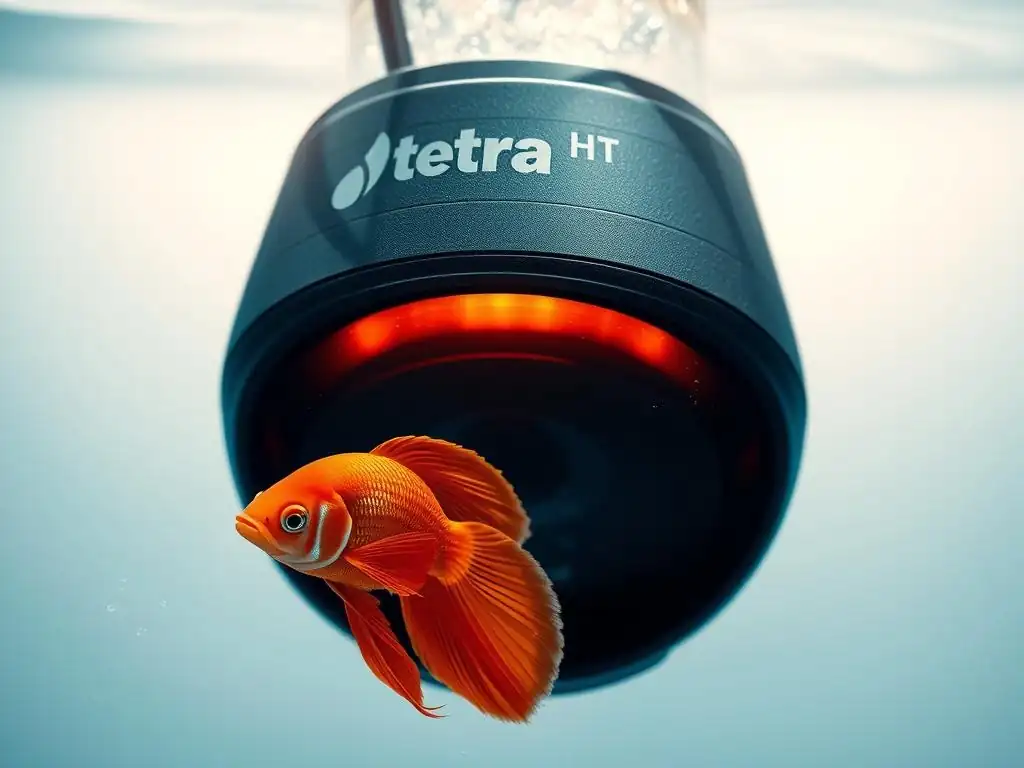
The Tetra HT Submersible Aquarium Heater is a popular choice for aquarists seeking a reliable and economical way to maintain a consistent betta temperature. Its simplicity and preset design make it incredibly easy to use, especially for beginners. While it lacks the adjustability of more advanced heaters, its fixed temperature setting is often perfectly suited for Betta fish, as it aims for the commonly recommended range.
Key Features of Tetra HT Submersible Aquarium Heater
- Preset Temperature: Factory-set to 78°F (25.5°C), an ideal temperature for most tropical fish, including Bettas.
- Automatic Electronic Thermostat: Turns on and off automatically to maintain the preset temperature.
- Indicator Light: A red light indicates when the heater is actively heating.
- Shatter-Resistant Glass: Constructed with strong glass for durability and safety.
- Compact Design: Available in various wattages (e.g., 50W, 100W) suitable for tanks up to approximately 30 gallons, with smaller versions (e.g., 50W) being perfect for 5-10 gallon Betta tanks.
Pros and Cons of Tetra HT Submersible Aquarium Heater
Pros:
- Affordable: One of the most cost-effective heaters on the market, making it accessible for all budgets.
- Extremely Easy to Use: Simply plug it in and submerge it; no temperature adjustments are needed.
- Reliable for Preset Temperature: Generally holds the 78°F temperature consistently, which is a good baseline for Betta health.
- Durable Construction: Shatter-resistant glass provides reasonable protection against accidental damage.
- Compact: Its slim design fits well into most Betta tanks without being obtrusive.
Cons:
- No Adjustability: The fixed temperature setting means you cannot fine-tune the best betta heater temperature if your fish prefers a slightly different range or if ambient room temperatures fluctuate significantly.
- No Low-Water Shut-off: Lacks some advanced safety features found in higher-end models.
- Less Precise: While generally accurate, it may not be as precise as digitally controlled adjustable heaters.
Best Betta Heater for Small Tanks: Marina Submersible Aquarium Heater - Review and Analysis
The Marina Submersible Aquarium Heater is specifically designed with smaller aquariums in mind, making it an excellent candidate for 1 to 3-gallon Betta tanks where space is at a premium. Its ultra-compact form factor allows it to fit discreetly without dominating the tank's interior. While typically a preset heater, its design is tailored to ensure the best betta heater temperature for these miniature environments, preventing the issues of bulkier heaters in tiny setups.
Key Features of Marina Submersible Aquarium Heater
- Ultra-Compact Design: Specifically designed for nano and small tanks, often just a few inches long, allowing for easy concealment.
- Preset Temperature: Typically set to 78°F (25.5°C), which is the widely accepted optimal temperature for Bettas.
- Automatic Operation: Features an internal thermostat that automatically regulates the heating element.
- Durable Glass Construction: Made with robust glass to withstand the aquarium environment.
- Indicator Light: A small light often illuminates when the heater is active.
- Low Wattage: Available in very low wattages (e.g., 8W, 10W, 15W) perfect for tanks up to 3-5 gallons.
Pros and Cons of Marina Submersible Aquarium Heater
Pros:
- Ideal for Nano Tanks: Its diminutive size is perfect for the popular 1 to 3-gallon Betta tanks, where larger heaters would be cumbersome.
- Simple to Use: Plug-and-play operation with no settings to adjust.
- Affordable Price Point: Very budget-friendly, making it an accessible option for new Betta keepers.
- Reliable for its Purpose: Effectively maintains a consistent betta temperature in small, stable environments.
- Discreet: Easy to hide behind decorations due to its small footprint.
Cons:
- No Adjustability: The fixed 78°F temperature means no customization for specific Betta preferences or fluctuating room conditions.
- Limited Wattage: Only suitable for very small tanks; will not adequately heat larger Betta setups.
- Lacks Advanced Safety Features: May not include auto-shutoff for overheating or low water levels found in more premium models.
- Less Precise Control: While generally effective, the accuracy might not match that of digitally controlled adjustable heaters.
Setting Up Your Betta Heater for Optimal Performance
Calibrating Your Betta Heater: Ensuring Accurate Temperature Control
Calibrating your Betta heater is a crucial step to ensure it accurately maintains the best betta heater temperature, especially for adjustable models. After installing your new heater and allowing it to acclimatize in the tank for about 15-30 minutes (unplugged), set it to your desired temperature, typically 78°F (25.5°C). Then, plug it in and wait a minimum of 24 hours for the water temperature to stabilize. During this period, the heater will cycle on and off to reach and maintain the set point.
After 24 hours, use a separate, reliable aquarium thermometer to measure the actual water temperature. Compare this reading to your heater's set temperature. If there's a discrepancy (e.g., the heater is set to 78°F but the thermometer reads 76°F), adjust the heater's dial or digital control slightly upwards by one or two degrees. Wait another 12-24 hours and re-check. Repeat this process until your independent thermometer consistently reads the optimal betta heater temperature you desire. This meticulous calibration ensures your Betta thrives in a perfectly stable environment.
Monitoring Water Temperature: Using a Reliable Thermometer
Even with the best betta heater temperature system in place, continuous monitoring with a reliable thermometer is non-negotiable for Betta health. Heaters can malfunction, and ambient room temperatures fluctuate, both of which can lead to dangerous shifts in tank temperature. Digital stick-on thermometers, floating glass thermometers, and submersible digital thermometers are all viable options. Digital stick-on thermometers are convenient and easy to read from outside the tank, but they measure the glass temperature, which can be slightly different from the actual water temperature, often by 1-2 degrees Fahrenheit.
For greater accuracy, a submersible digital thermometer or a traditional floating glass thermometer placed away from the heater is recommended. These provide direct water temperature readings. Check the temperature at least once daily, preferably at the same time, to catch any deviations quickly. Consistency in monitoring helps identify potential heater issues before they impact your Betta. For instance, if your thermometer consistently shows 72°F (22°C) while your heater is set to 78°F (25.5°C), it's a clear indication that your heater may be failing or is underpowered for your tank, prompting immediate investigation to restore the ideal betta temperature.
Troubleshooting Common Betta Heater Issues
Despite careful selection and setup, Betta heaters can sometimes present issues. One common problem is the heater not turning on at all. First, check if it's securely plugged into a working power outlet and if the outlet itself has power. Sometimes, a tripped circuit breaker is the culprit.
If the heater has an indicator light, check if it illuminates. If not, the heater might have failed internally. Another issue is the heater turning on but not adequately heating the water to the optimal betta heater temperature. This could indicate insufficient wattage for the tank size or room conditions, or a faulty thermostat that isn't accurately reading the water temperature.
Conversely, a heater might overheat the water, leading to dangerously high temperatures. This is often a sign of a stuck thermostat, where the heating element remains on continuously. Immediately unplug the heater and remove it from the tank if this occurs. For all troubleshooting, ensure the heater is fully submerged and that there's adequate water circulation around it. Algae or mineral buildup on the heating element can also impair efficiency. Regular cleaning and inspection of the heater and its connections can prevent many common malfunctions, helping maintain the best betta heater temperature.
Maintaining a Consistent and Safe Betta Heater Temperature
Regular Maintenance for Longevity and Reliability
Regular maintenance of your Betta heater is crucial for its longevity, reliability, and for consistently maintaining the best betta heater temperature. During weekly water changes, always unplug the heater before removing it from the water or before draining the tank below its minimum water level. Exposing a hot heater to air can cause it to shatter due to thermal shock, especially glass models.
While the heater is out of the water, gently wipe off any algae or mineral buildup on the heating element and glass/plastic casing using a soft cloth or sponge. This buildup can reduce the heater's efficiency and affect its ability to accurately sense water temperature.
Inspect the power cord for any fraying, kinks, or damage, and check the suction cups for wear. Worn suction cups can cause the heater to detach and potentially expose part of the heating element to air, leading to overheating or shattering. Replacing old suction cups periodically ensures the heater remains securely in place. Adhering to these simple maintenance steps not only prolongs the life of your heater but also ensures it continues to provide the stable, ideal betta temperature your fish needs to thrive, preventing unexpected failures and dangerous temperature swings.
Adjusting Heater Settings for Seasonal Temperature Changes
Maintaining the optimal betta heater temperature often requires minor adjustments throughout the year, especially with seasonal temperature changes in your home. During colder winter months, when ambient room temperatures drop significantly, your heater may need to work harder to keep the tank at the desired 78°F (25.5°C).
You might find it necessary to increase the heater's setting by a degree or two to compensate for the greater heat loss from the aquarium to the surrounding colder air. Conversely, in warmer summer months, particularly if your home is not air-conditioned, the ambient temperature might rise close to or even exceed your desired tank temperature.
In such cases, you might need to slightly lower the heater's setting or, if the room temperature consistently exceeds 82°F (28°C), consider passive cooling methods like floating ice packs (in a sealed bag) or directing a fan across the water surface. Always monitor your tank with a reliable thermometer after any significant room temperature shift or heater adjustment. Small, gradual adjustments are key to avoiding sudden temperature shocks to your Betta. Proactive adjustments ensure the best betta heater temperature is maintained year-round, adapting to environmental changes for your fish's continuous comfort.
What to Do if Your Betta Heater Malfunctions
A malfunctioning Betta heater can quickly become a critical situation, potentially causing rapid temperature swings that are highly detrimental to your fish. If you notice your heater is not working (e.g., no indicator light, water is cold) or is overheating the tank (water is too hot, Betta is gasping), immediate action is required. First, unplug the heater from the power source to prevent further damage or danger.
If the water is too cold, remove the faulty heater and replace it as soon as possible. In the interim, you can use temporary measures like placing the tank in a warmer room, wrapping it in towels for insulation, or floating sealed bottles of warm water in the tank (ensuring the water is not too hot and doesn't directly contact the fish).
If the water is too hot, unplug and remove the heater. You may need to perform small, gradual water changes with cooler (but not cold) dechlorinated water to slowly bring the temperature down. Never introduce a large amount of cold water quickly, as this can shock the fish. For a persistent issue, consider having a backup heater, especially if you live in an area with unpredictable temperatures. Prompt identification and resolution of heater malfunctions are crucial for maintaining the consistent betta temperature vital for your fish's survival and well-being.
Achieving the Perfect Betta Fish Temperature: A Summary
Maintaining a Healthy and Happy Betta with the Right Heater
Achieving and maintaining the perfect Betta fish temperature is fundamental to the health, vibrancy, and longevity of your aquatic companion. The ideal range of 75-82°F (24-28°C), with 78°F (25.5°C) often cited as the sweet spot, supports your Betta's metabolic functions, boosts its immune system, and encourages natural behavior. Selecting the best betta heater temperature involves a careful consideration of tank size and heater wattage, opting for fully submersible, adjustable models for precise control, and prioritizing safety features like automatic shut-off and durable construction.
Proper placement of the heater within the tank, near good water circulation, ensures even heat distribution, while meticulous calibration with an independent thermometer guarantees accuracy. Regular monitoring of the water temperature and proactive maintenance of the heater are essential to prevent malfunctions and adapt to seasonal changes. By understanding these principles and investing in a quality heater, you provide your Betta with a stable, comfortable, and healthy environment, leading to a truly blissful existence for your beautiful fish.
Frequently Asked Questions
What is the ideal water temperature for a betta fish?
The ideal water temperature for a betta fish is generally between 78°F and 82°F. Maintaining this range is crucial for their health and well-being.
Why is a heater necessary for a betta fish, even in warmer climates?
Even in warmer climates, ambient temperature fluctuations can stress a betta. A heater ensures a stable and consistent temperature, preventing illness.
What factors should I consider when choosing the best betta heater?
Consider the size of your tank, the heater's wattage, and whether it's submersible and adjustable. Look for reliable brands and positive reviews.
What are some common signs of a malfunctioning betta heater?
Signs include the water being consistently too hot or too cold, or the heater failing to turn on. Monitor your thermometer regularly.
How do I determine the appropriate wattage for my betta tank heater?
A general rule of thumb is 5 watts per gallon of water. However, consider your ambient room temperature and choose accordingly.
Final Reflection: Nurturing Aquatic Harmony
The quest for the best betta heater temperature is more than just a technical pursuit; it's an act of compassion, a commitment to creating an environment where these vibrant creatures can truly thrive. In a world often disconnected from the delicate ecosystems we house within our homes, understanding and providing optimal conditions for our betta fish becomes a powerful statement about our respect for life.
This journey into the world of betta care has underscored the profound impact we have on the well-being of these animals. It's a reminder that even seemingly small details, like water temperature, can dramatically influence their health and happiness. The greatness of a nation and its moral progress can be judged by the way its animals are treated.
- Mahatma Gandhi. This quote resonates deeply, highlighting the ethical responsibility we bear as caretakers.
As you consider the information presented here, I encourage you to reflect on your own role in creating a nurturing environment for your betta. Choose wisely, observe carefully, and remember that providing the best betta heater temperature is an investment in their comfort, their health, and ultimately, their vibrant life. Let's strive to be conscientious stewards of these beautiful creatures, ensuring they experience the "Betta Bliss" they deserve.
Ignite Your Betta's Joy: Discover the Perfect Warmth!
Thank you for diving into the world of Betta comfort! Now that you're equipped with the knowledge to choose the ideal heater, it's time to create the perfect aquatic haven for your finned friend. Let’s turn that knowledge into action!
- Prioritize Your Betta's Well-being: Select and install a reliable heater today! Consider our top picks from the article to ensure a consistent and safe temperature for your Betta's tank.
- Explore temperature monitoring beyond the heater:Investigate a reliable digital thermometer for precise and frequent temperature checks. It's all about precision!
- Share the Betta love: Spread the word about creating healthy Betta environments. Share this article with fellow Betta enthusiasts and help them elevate their fish-keeping game!
What's one small adjustment you'll make this week to further optimize your Betta's aquatic paradise?