
Advanced LED Programming: Mimicking Natural Sunrise, Sunset, and Lunar Cycles for SPS

Welcome to Aquarium Mastery!
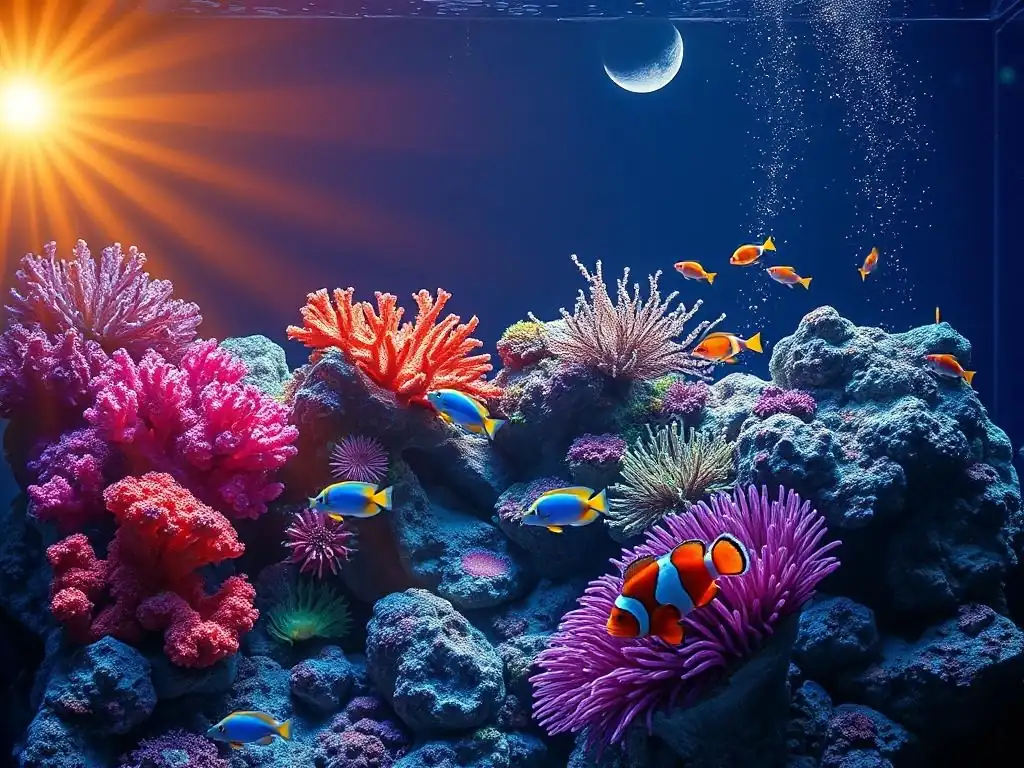
Ever wondered how to unlock the true potential of your SPS corals? This isn't just about turning on a light. We're diving deep into SPS coral lighting cycles, exploring how meticulously programmed LEDs can mimic the sun, moon, and everything in between to create an environment where your corals not only survive, but thrive. Intrigued? Let's illuminate the secrets to vibrant colors and unparalleled growth...
- Understanding the Importance of SPS Coral Lighting Cycles
- Programming LEDs for Realistic Sunrise and Sunset Simulations
- Simulating Lunar Cycles with LED Lighting for SPS
- Advanced Techniques for Optimizing SPS Coral Lighting
- Troubleshooting Common SPS Lighting Issues
- The Long-Term Benefits of Precise SPS Coral Lighting Control
-
Frequently Asked Questions
- How do SPS coral lighting cycles directly benefit their health and growth?
- What are the key components of an SPS coral lighting cycle that should be programmed into LED fixtures?
- Why is a sudden switch on/off of aquarium lights harmful to SPS corals?
- What is the role of lunar cycles in SPS coral lighting, and how can I simulate them with LEDs?
- How can I determine the optimal light intensity and spectrum for my specific SPS coral species?
- Final Reflection: Illuminating the Depths of Reef Ecosystems
- Transform Your SPS Tank: Simulate Nature's Rhythms!
Understanding the Importance of SPS Coral Lighting Cycles
The Role of Light Spectrum and Intensity for SPS Growth
The growth and vibrant coloration of Small Polyp Stony (SPS) corals are profoundly dependent on the quality of light they receive, particularly the Photosynthetically Active Radiation (PAR) levels and the specific light spectrum. PAR measures the intensity of light available for photosynthesis, which is crucial for the symbiotic zooxanthellae algae residing within coral tissue. For most SPS, a PAR range of 250 to 450 µmol·m⁻²·s⁻¹ is generally considered optimal in a mature reef tank, though acclimation often begins much lower, around 150-200 PAR, to prevent shocking the coral.
Beyond intensity, the light spectrum plays a vital role. Blue and violet wavelengths (400-470 nm) are particularly important as they are efficiently absorbed by chlorophyll a and c pigments in zooxanthellae, directly fueling photosynthesis and promoting robust skeletal growth. While blue light is dominant, a balanced spectrum including reds (620-700 nm) and greens (500-570 nm) contributes to the overall health and visual pop of SPS corals, enhancing the expression of accessory pigments that give corals their stunning array of colors. Precise control over these spectral components through advanced LED programming allows aquarists to fine-tune the light environment to meet the specific demands of various SPS species, optimizing their energy production and aesthetic appeal.
Why Replicating Natural Light Cycles Benefits SPS Corals
Replicating natural SPS coral lighting cycles, including sunrise, sunset, and lunar phases, offers significant benefits that extend beyond mere aesthetics, directly impacting coral health and longevity. In their natural habitats, corals experience gradual shifts in light intensity and spectrum throughout the day, a process that minimizes stress and allows their internal biological clocks to synchronize. Abrupt changes in lighting, such as a sudden "on" or "off", can shock corals, leading to stress, reduced polyp extension, and even tissue recession over time.
A well-programmed SPS coral lighting cycle, which slowly ramps up from a dim, red-tinged dawn to a bright, blue-dominant midday, and then gradually dims to a deep blue dusk, mimics this natural progression. This gradual transition allows zooxanthellae to acclimate to changing light levels, maximizing their photosynthetic efficiency without being overwhelmed. Furthermore, the inclusion of lunar cycles, even at very low intensities, can influence subtle nocturnal behaviors, potentially aiding in spawning synchronization for mature colonies and contributing to a more stable and less stressful environment for the entire reef ecosystem.
Programming LEDs for Realistic Sunrise and Sunset Simulations
Selecting the Right LED Fixture for SPS Lighting Needs
Choosing the appropriate LED fixture is the foundational step for successful SPS coral lighting cycles and natural simulations. For thriving SPS corals, an LED fixture must deliver sufficient Photosynthetically Active Radiation (PAR) across the entire tank, particularly at the depths where corals are placed. High-quality fixtures designed for reef aquariums typically feature multiple independently controllable channels (ideally six or more) to allow precise manipulation of individual color wavelengths, such as royal blue, deep blue, cool white, red, green, and UV.
Beyond raw power, consider the fixture's optics and spread. LEDs with well-designed lenses ensure even light distribution, minimizing hot spots and shaded areas that can stress SPS corals. Brands like EcoTech Marine Radion, Aqua Illumination Hydra, and Kessil are popular choices, known for their robust build quality, advanced control features, and proven track records in supporting SPS growth.
Ensure the fixture's cooling system is efficient to maintain LED longevity and consistent performance, as excessive heat can degrade light output over time. Investing in a capable fixture from the outset simplifies the complex task of programming realistic SPS coral lighting cycles.
Setting Up Sunrise/Sunset Schedules in Your LED Controller
Once you have a capable LED fixture, programming realistic sunrise and sunset simulations is achieved through its dedicated controller or accompanying software. The core principle is to create a gradual intensity ramp-up in the morning and a ramp-down in the evening, rather than an instantaneous on/off. For a typical SPS tank, a sunrise and sunset period of 1 to 2 hours each is generally effective, providing ample time for corals to acclimate.
Begin by defining your desired "peak" light period (e.g., 6-8 hours of high intensity). Then, set the start time for your sunrise (e.g., 8:00 AM) and program the channels to gradually increase from 0% intensity to their peak values by the time your main light period begins (e.g., 10:00 AM).
Conversely, for sunset, start ramping down the channels from their peak values (e.g., 6:00 PM) until they reach 0% (or a very low lunar intensity) by your desired "lights out" time (e.g., 8:00 PM). Most advanced LED controllers allow you to set multiple "points" throughout these ramps, enabling smooth transitions and precise control over the SPS coral lighting cycles.
Fine-Tuning Color Channels for a Natural Sunrise/Sunset Look
Achieving a natural sunrise and sunset look goes beyond simply ramping intensity; it involves carefully orchestrating the color channels. For sunrise, begin with very low intensities of red and orange channels (e.g., 5-10%) to simulate the warm glow of dawn, while blue and white channels remain off or at minimal levels (e.g., 0-1%). As the "sun" rises, gradually introduce deep blue and royal blue channels, followed by cool white, green, and UV channels, slowly increasing their intensities until all channels reach their midday peaks (e.g., 60-80% blue, 20-40% white, 5-15% red/green).
The sunset sequence is essentially the reverse: as evening approaches, gradually decrease the cool white, green, and UV channels first, followed by the blue channels. The red and orange channels can be maintained at low levels or even slightly increased for a brief period towards the very end to mimic the fiery hues of a natural sunset, before all channels eventually dim to zero or transition to a lunar setting.
This meticulous fine-tuning of each color channel throughout the daily SPS coral lighting cycles not only enhances the visual experience for the aquarist but also provides a more natural and less stressful light environment for the corals.
Simulating Lunar Cycles with LED Lighting for SPS
Understanding the Impact of Lunar Phases on SPS Coral Behavior
While the primary focus for SPS coral lighting cycles is often on the daytime spectrum and intensity, understanding and simulating lunar phases can offer subtle yet significant benefits to a reef aquarium's inhabitants. In nature, the moon's light, though dim, influences various marine organisms, including corals. One of the most well-documented impacts is on coral spawning events, particularly for broadcast-spawning SPS species like Acropora. Many species are known to synchronize their mass spawning with specific lunar phases, often around the full moon, as the increased moonlight provides a visual cue for synchronous gamete release, maximizing fertilization success.
Even outside of spawning, the presence of a natural lunar cycle can contribute to a more holistic and stable environment. It prevents corals from being plunged into absolute darkness for extended periods, which can be unnatural. Some aquarists observe subtle changes in nocturnal polyp extension or feeding behaviors under lunar illumination, suggesting that corals are responsive to these dim light cues. Incorporating lunar phases into your SPS coral lighting cycles helps to replicate the complete natural rhythm of their environment, potentially reducing stress and promoting more natural behaviors within the reef tank.
Creating a Lunar Cycle Program in Your LED Controller
Implementing a lunar cycle program in your LED controller involves setting up a very low-intensity, predominantly blue light period that mimics moonlight and varies in intensity over approximately 29.5 days, correlating with the moon's actual phases. Many advanced LED controllers offer built-in lunar cycle programs that can automatically sync with real-world lunar calendars, simplifying this process. If your controller doesn't have this feature, you can manually program it.
To manually create a lunar cycle for your SPS coral lighting cycles, establish a nightly "moonlight" period (e.g., 8 PM to 6 AM). For the new moon phase, set the intensity to near zero (e.g., 0.1% royal blue). Gradually increase this intensity daily over roughly 14 days until it reaches its peak during the full moon (e.g., 1-2% royal blue).
Then, gradually decrease the intensity over the next 15 days back to the new moon level. This slow, subtle change in intensity throughout the month simulates the waxing and waning of the moon, providing a natural nocturnal light pattern for your SPS corals.
Adjusting Light Intensity and Spectrum During Lunar Phases
The key to effective lunar simulation for SPS coral lighting cycles is extremely low intensity and a specific spectrum. Moonlight is predominantly blue due to atmospheric scattering, so your lunar program should primarily utilize the royal blue or deep blue channels of your LED fixture. Avoid using white, red, or green channels during lunar phases, as these can promote nuisance algae growth or disrupt the natural nocturnal behavior of corals and fish.
Typical lunar intensities should be incredibly dim, ranging from 0.1% during the new moon to a maximum of 1-2% of your LED fixture's total output during the full moon. This translates to a PAR level often below 0.5 µmol·m⁻²·s⁻¹, barely perceptible to the human eye but sufficient to mimic natural moonlight. The goal is not to provide photosynthetic light but rather a subtle visual cue that guides natural behaviors. Experiment with these low intensities, observing your SPS corals for any signs of stress or improved nocturnal polyp extension, to fine-tune your lunar SPS coral lighting cycles for optimal results.
Advanced Techniques for Optimizing SPS Coral Lighting
Implementing Cloud Cover Simulations for Dynamic Lighting
Beyond static sunrise, midday, and sunset ramps, incorporating dynamic elements like cloud cover simulations can further enhance the natural feel and potentially benefit SPS coral health. In the wild, corals are not exposed to perfectly consistent light; passing clouds periodically cause momentary dips in intensity. Simulating this in your aquarium adds visual interest and can provide brief periods of reduced PAR, which may alleviate stress from constant high-intensity lighting without significantly impacting photosynthesis.
To implement cloud cover, most advanced LED controllers allow you to program random or scheduled "dips" in light intensity. For instance, you could set up a parameter where, for 5-15 minutes, 2-4 times a day, the overall light intensity drops by 10-20%. This should be a smooth, quick ramp down and then ramp back up, mimicking a cloud passing overhead. Ensure these events are not too frequent or too drastic, as sudden large drops can be counterproductive. This dynamic aspect of SPS coral lighting cycles adds a layer of realism and can contribute to a more robust reef environment.
Using PAR Meters to Measure and Adjust Light Intensity
Accurately measuring Photosynthetically Active Radiation (PAR) is perhaps the most critical advanced technique for optimizing SPS coral lighting. While LED manufacturers provide PAR maps, these are often under ideal conditions and don't account for your specific tank dimensions, water clarity, or coral placement. A PAR meter provides real-time, objective data on the light intensity reaching your corals, allowing you to move beyond guesswork.
To effectively use a PAR meter, take readings at various depths and locations throughout your tank, especially where your SPS corals are situated. For example, a top-down reading directly under the light might show 500 PAR, but a coral placed 12 inches below might only receive 350 PAR, and one in a shaded area might receive 200 PAR. Use these readings to fine-tune your LED fixture's intensity settings and adjust coral placement accordingly.
If an Acropora species requires 300-450 PAR and your readings show only 200 PAR, you know to increase intensity or move the coral higher. This data-driven approach ensures your SPS coral lighting cycles are precisely tailored to the needs of your specific corals, preventing both bleaching from excessive light and browning from deficiency.
Monitoring Coral Coloration as an Indicator of Lighting Success
While PAR meters provide quantitative data, the qualitative assessment of your SPS coral's coloration is an indispensable indicator of lighting success. Healthy SPS corals display vibrant, rich colors specific to their species, a result of the balance between their zooxanthellae and their natural pigments. Observing changes in these colors provides immediate feedback on your SPS coral lighting cycles and overall tank parameters.
If SPS corals begin to look pale, bleached, or develop white patches, it often signifies excessive light intensity. The zooxanthellae may be expelling themselves to cope with the stress, leading to a loss of color. Conversely, if corals start to brown, lose their vibrant hues, or appear dull, it can indicate insufficient light, causing the zooxanthellae to overproduce chlorophyll to capture more light.
Regular observation of your coral's coloration, combined with PAR readings and growth rates, allows for continuous fine-tuning of your lighting schedule. For example, if a specific Montipora shows signs of browning, a slight increase in blue channel intensity over a week might be warranted, carefully adjusting the SPS coral lighting cycles until the desired coloration returns.
Troubleshooting Common SPS Lighting Issues
Addressing Coral Bleaching Due to Excessive Light
Coral bleaching, particularly in SPS corals, is a common issue often triggered by excessive light intensity or sudden changes in lighting. Symptoms include a dramatic loss of color, making the coral appear pale white, translucent, or even a stark white skeleton in severe cases. This occurs when the symbiotic zooxanthellae, overwhelmed by too much light, produce harmful reactive oxygen species and are expelled by the coral, leading to starvation if conditions don't improve.
To address bleaching caused by too much light from your SPS coral lighting cycles, immediate action is necessary. First, reduce the overall intensity of your LED fixture by 10-20%, or consider raising the light fixture by a few inches. If only specific corals are affected, move them to a lower, more shaded area of the tank.
It's crucial to make adjustments gradually over several days to avoid further stress. For instance, if your PAR meter reads 500 PAR at the coral's location and it's bleaching, aim to reduce it to 350-400 PAR over a week. Acclimation is key; always introduce new corals to lower light levels and gradually increase intensity over several weeks.
Recognizing and Correcting Light Deficiency in SPS Corals
Just as too much light can harm SPS corals, insufficient light (light deficiency) can also lead to significant problems, primarily characterized by browning and reduced growth. When SPS corals don't receive enough Photosynthetically Active Radiation (PAR), their zooxanthellae produce more chlorophyll in an attempt to capture what little light is available, leading to a darker, duller, or "browned out" appearance. Corals may also exhibit etiolation, where they "stretch" or grow in an elongated, spindly manner towards the light source, rather than developing a compact, robust structure.
To correct light deficiency in your SPS coral lighting cycles, assess your PAR levels with a meter; if they are consistently below 200-250 PAR for most SPS, an increase is warranted. Gradually raise the intensity of your LED fixture by 5-10% increments over several days, observing the coral's response. Alternatively, lower the light fixture by a few inches or move the affected corals to a higher position in the tank where PAR levels are greater.
Ensure your LED spectrum is balanced, with sufficient blue light. If your fixture is old, consider that LED output can degrade over time, warranting a replacement or addition of supplemental lighting to provide the necessary SPS coral lighting cycles.
Adapting Lighting Schedules for Different SPS Species
It's a common misconception that all SPS corals have identical lighting requirements. In reality, different SPS species, and even different morphs within the same species, can thrive under slightly varied light intensities and spectrums. For instance, many Acropora species, particularly those with deep coloration like blue or purple, generally prefer higher PAR levels, often thriving in the 350-450 PAR range. In contrast, some Montipora species or branching Seriatopora might be comfortable in slightly lower PAR, around 250-400, or prefer a slightly different spectrum emphasis.
Therefore, adapting your SPS coral lighting cycles requires understanding the specific needs of the corals you house. If you have a mixed SPS tank, strategically place higher-light demanding species closer to the surface or directly under the peak intensity zones, while placing lower-light demanding species further down or in slightly more shaded areas.
You might also consider subtly adjusting the blue-to-white ratio; for example, if you notice a specific red Montipora lacking vibrancy, a slight increase in red channel output (if available) might enhance its coloration, while maintaining overall PAR. Constant observation and careful adjustments based on species-specific responses are key to optimizing your SPS coral lighting cycles for a diverse reef.
The Long-Term Benefits of Precise SPS Coral Lighting Control
Enhanced Growth Rates and Coloration in SPS Corals
Precise control over SPS coral lighting cycles is a cornerstone for achieving exceptional growth rates and vibrant coloration, which are the hallmarks of a thriving SPS reef tank. When corals receive optimal Photosynthetically Active Radiation (PAR) levels tailored to their needs, coupled with a balanced spectrum that mimics natural sunlight, their symbiotic zooxanthellae can photosynthesize at peak efficiency. This translates directly into more energy for the coral host, fueling robust calcification and tissue development.
Under ideal SPS coral lighting cycles, Acropora species can exhibit impressive growth, often adding 1-2 inches of new growth per month, while faster-growing Montipora can encrust and spread even more rapidly. Furthermore, the precise manipulation of blue, violet, and even subtle red channels within the spectrum enhances the expression of fluorescent and non-fluorescent pigments within the coral tissue. This leads to richer blues, purples, greens, reds, and oranges that are more pronounced than under suboptimal lighting, showcasing the full genetic potential of the coral and creating a visually stunning display.
Improved Overall Health and Resilience of Your SPS Colony
Beyond aesthetics and growth, meticulous control of SPS coral lighting cycles significantly contributes to the overall health and resilience of your entire SPS colony. A stable and appropriate light environment minimizes stress on the corals, which is a critical factor in preventing common ailments and improving their ability to withstand other environmental fluctuations. Sudden changes in light intensity or prolonged periods of inadequate or excessive light can weaken a coral's immune response, making it more susceptible to diseases, pests, and tissue necrosis.
By providing natural sunrise, sunset, and lunar simulations, the corals' internal biological rhythms are maintained, allowing them to conserve energy and allocate resources effectively for growth and repair. This reduced stress translates to stronger, more robust coral tissue that is less prone to recession or infection. A healthy SPS colony, supported by optimized SPS coral lighting cycles, is more resilient to minor shifts in water parameters, temporary equipment malfunctions, or the introduction of new inhabitants, ensuring the long-term stability and success of your reef aquarium.
Creating a Thriving SPS Reef Aquarium Environment
Ultimately, the mastery of advanced LED programming and precise SPS coral lighting cycles is instrumental in creating not just a tank with living corals, but a truly thriving SPS reef aquarium environment. A well-lit tank, with corals exhibiting vibrant colors and healthy growth, becomes the centerpiece of any home or office, captivating observers with its dynamic beauty. The successful propagation of SPS corals, often indicated by fragging and sharing with other hobbyists, is a testament to the effectiveness of the lighting regimen.
Moreover, a thriving SPS environment extends beyond the corals themselves, influencing the entire ecosystem. Healthy corals contribute to stable water chemistry, provide shelter for fish and invertebrates, and create a balanced mini-reef that mimics natural conditions. The satisfaction derived from seeing your SPS colonies flourish, exhibiting natural behaviors and achieving their full genetic potential, is the ultimate reward for the dedication to mastering these complex yet essential SPS coral lighting cycles. It transforms the aquarium from a mere enclosure into a living, breathing, and evolving piece of art.
Frequently Asked Questions
How do SPS coral lighting cycles directly benefit their health and growth?
SPS (Small Polyp Stony) corals rely on zooxanthellae algae within their tissues for nutrition. Mimicking natural lighting cycles with proper intensity and spectrum, including sunrise and sunset, optimizes photosynthesis and promotes healthy growth and coloration.
What are the key components of an SPS coral lighting cycle that should be programmed into LED fixtures?
The core elements include a gradual sunrise, a period of peak intensity and spectrum mimicking midday sun, a gradual sunset, and potentially a lunar cycle simulation with low-intensity blue light. These components stimulate natural processes within the coral.
Why is a sudden switch on/off of aquarium lights harmful to SPS corals?
Sudden light changes can shock SPS corals, disrupting their photosynthetic processes and potentially causing stress or bleaching. Gradual transitions, like sunrise and sunset, allow the corals to adapt more smoothly.
What is the role of lunar cycles in SPS coral lighting, and how can I simulate them with LEDs?
Lunar cycles, simulated with low-intensity blue LEDs, can influence coral spawning and other biological processes. The intensity should be very low and follow a 29.5-day cycle mimicking the moon's phases.
How can I determine the optimal light intensity and spectrum for my specific SPS coral species?
Research the specific light requirements of your coral species. Start with a lower intensity and gradually increase it while monitoring the coral for signs of bleaching or stress. Observing coral coloration and growth is key.
Final Reflection: Illuminating the Depths of Reef Ecosystems
The intricate dance of light and shadow, so vital to the health of our planet, finds a compelling echo in the controlled environments we create for SPS corals. Understanding and replicating natural lighting cycles is no longer a mere technological feat, but a crucial step towards responsible reef keeping and a deeper appreciation for the delicate balance of marine ecosystems. By embracing advanced LED programming, we move beyond simple illumination and venture into the realm of bio-mimicry, fostering vibrant and thriving coral colonies.
This journey into the nuances of SPS coral lighting cycles has profoundly impacted my understanding of the interconnectedness of life. It's a reminder that even in our technologically advanced world, the most effective solutions often lie in mimicking the wisdom of nature. In nature, nothing is perfect and everything is perfect. Trees can be contorted, bent in weird ways, and they're still beautiful.
- Alice Walker. This quote encapsulates the beauty and resilience we strive to replicate in our reef tanks, embracing the subtle imperfections that contribute to a thriving ecosystem.
As you consider the information presented in this article, I invite you to reflect on your own role in preserving our planet's biodiversity. How can you apply the principles of bio-mimicry and sustainable practices in your own life, whether you're a seasoned reef keeper or simply an admirer of the natural world? Let us all strive to be mindful stewards, illuminating not only our coral reefs but also the path towards a more sustainable future.
Transform Your SPS Tank: Simulate Nature's Rhythms!
Thanks for exploring the world of advanced LED programming for your SPS aquarium! We hope you’ve gained valuable insights into creating a more natural and thriving environment for your corals. Now, let's take those insights and turn them into action.
- Start today: Begin programming a sunrise/sunset cycle using a ramp-up/ramp-down duration that mimics your local sunrise and sunset times.: This is your key action for a happier SPS tank.
- Dive deeper: Experiment with lunar cycle simulations using a very low intensity blue light at night and closely monitor coral behavior for improvements.
- Share your findings: Post your SPS tank lighting schedule and observed coral growth in our community forum to inspire others and learn from shared experiences.
What unique lighting "hack" will you implement to unlock your SPS tank's full potential?