
Small Tank, Big Personality: Why Shell Dwellers Are Perfect for Nano Cichlid Tanks

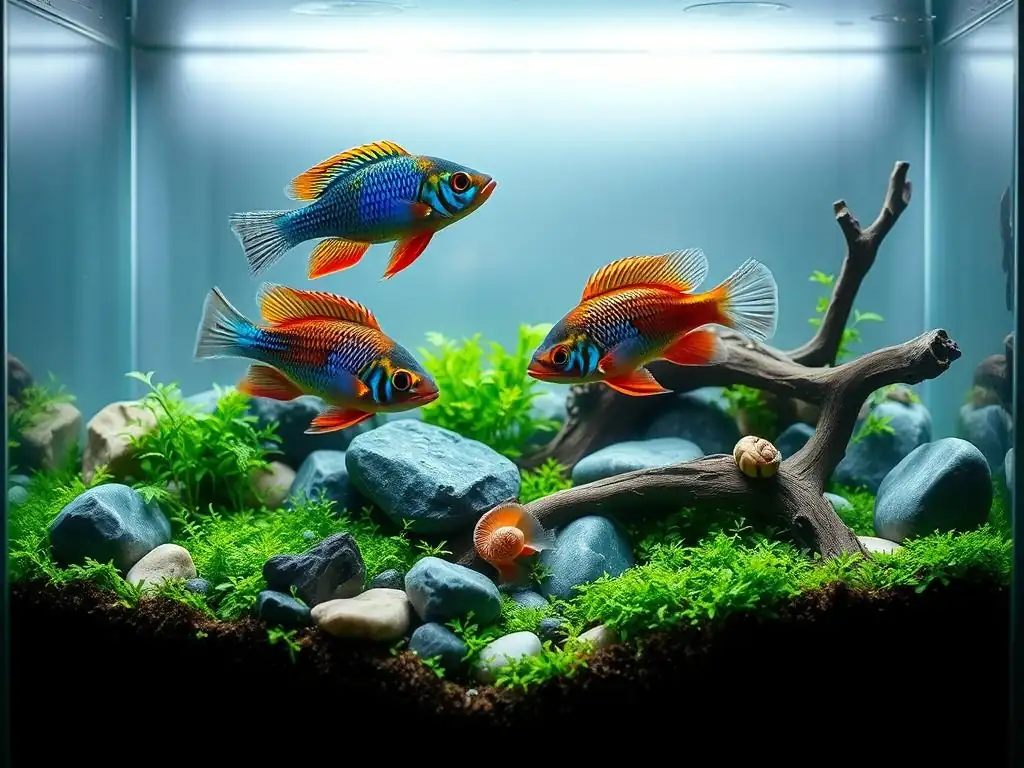
Welcome to Aquarium Mastery!
Ever dreamed of a vibrant cichlid tank but thought you didn't have the space? Think again! Discover the captivating world of nano cichlid tank setup and unlock the secrets to creating a thriving ecosystem in even the smallest of aquariums. Intrigued? Read on to find out why shell dwellers might just be the perfect pint-sized personalities for your next aquatic adventure.
- Introduction to Shell Dweller Cichlids for Nano Aquariums
- Understanding Shell Dweller Cichlids: A Beginner's Guide
-
Creating the Ideal Nano Cichlid Tank Environment for Shell Dwellers
- Tank Size and Dimensions for a Thriving Shell Dweller Colony
- Essential Substrate and Shell Selection for Shell Dweller Happiness
- Water Parameters: Maintaining Optimal Water Quality in Your Nano Tank
- Filtration and Water Changes for Small Cichlid Tanks
- Lighting and Plant Selection for a Natural and Functional Nano Cichlid Habitat
- Shell Dweller Cichlid Behavior and Social Dynamics in Nano Tanks
- Feeding Shell Dweller Cichlids in Nano Aquariums
- Breeding Shell Dweller Cichlids in a Nano Tank Environment
- Maintaining a Healthy Nano Cichlid Tank with Shell Dwellers
- Choosing Tank Mates for Shell Dwellers in Nano Aquariums
- The Benefits of a Nano Cichlid Tank with Shell Dwellers
- Conclusion: Embrace the World of Shell Dwellers in Nano Cichlid Tanks
-
Frequently Asked Questions
- How small is considered a "nano" cichlid tank, and are shell dwellers truly suitable for such a small space?
- What are the essential components for a successful nano cichlid tank setup focusing on shell dwellers?
- What are some key considerations for water chemistry when keeping shell dwellers in a nano tank?
- Can I keep other fish with shell dwellers in a nano tank, and if so, what are some compatible tank mates?
- What are some common problems that beginner shell dweller keepers might encounter in a nano tank, and how can they be prevented?
- Final Reflection: The Tiny Titans of Our Aquariums
- Unveil the Tiny Wonders: Ready to Start Your Shell Dweller Adventure?
Introduction to Shell Dweller Cichlids for Nano Aquariums
Discover the Allure of Shell Dwellers in Compact Aquariums
Shell dweller cichlids, often affectionately known as "shellies," offer a captivating glimpse into the intricate social dynamics and fascinating behaviors of African cichlids, all within the confines of a compact aquarium. Their unique interaction with discarded snail shells, using them as homes, breeding grounds, and defensive strongholds, provides endless entertainment and observation opportunities. This distinct characteristic, combined with their relatively small size, makes them an exceptional choice for aquarists seeking to create a vibrant nano cichlid tank setup without dedicating a large amount of space.
The allure of these miniature marvels lies in their ability to display complex behaviors typically associated with much larger cichlid species. From elaborate territorial displays and intricate breeding rituals to the diligent care of their offspring, shell dwellers bring a surprisingly big personality to a small aquatic footprint. For instance, a colony of Neolamprologus multifasciatus in a 10-gallon tank can exhibit a bustling community life, with individuals constantly interacting, digging, and defending their chosen shells, transforming a modest tank into a dynamic ecosystem.
Why Choose Shell Dwellers for Your Nano Cichlid Tank Setup?
Opting for shell dwellers for your nano cichlid tank setup presents several compelling advantages. Firstly, their diminutive stature means they require significantly less space than most other cichlid species, making them ideal for apartments, dorm rooms, or offices where larger aquariums are impractical. A pair of Lamprologus ocellatus, for example, can thrive in a tank as small as 5 gallons, provided the environment is properly configured with ample shells.
Secondly, shell dwellers offer a unique blend of ease of care and engaging behavior. While they demand stable water parameters typical of Lake Tanganyika cichlids, their small bioload makes maintaining water quality in a nano tank more manageable than with larger, messier fish. Furthermore, their fascinating shell-centric lives provide a constant source of observation, demonstrating intricate social structures and parental care that are both educational and deeply rewarding for any aquarist exploring a nano cichlid tank setup.
Understanding Shell Dweller Cichlids: A Beginner's Guide
Origin and Natural Habitat of Shell Dwelling Cichlids
Shell dwelling cichlids originate exclusively from the vast, ancient waters of Lake Tanganyika in East Africa, the second-largest freshwater lake in the world by volume and depth. This enormous Rift Valley lake is renowned for its unique biodiversity, with an estimated 98% of its cichlid species being endemic, meaning they are found nowhere else on Earth. Shell dwellers typically inhabit the sandy and rocky shallow areas of the lake, where they rely on the abundant empty shells of the endemic Neothauma tanganyicense snail for shelter, breeding, and protection from predators.
The natural environment of Lake Tanganyika is characterized by remarkably stable water parameters: high alkalinity (pH typically ranging from 7.8 to 9.0), high hardness (GH 10-20 dGH, KH 10-18 dKH), and a consistent temperature range of 76-80°F (24-27°C). These stable conditions have shaped the specific requirements of shell dwellers, making it crucial to replicate these parameters closely in any nano cichlid tank setup to ensure their long-term health and well-being. Their reliance on these specific shells and water conditions underscores the importance of a well-researched nano cichlid tank setup.
Key Characteristics of Shell Dweller Cichlids: Size, Behavior, and Appearance
Shell dweller cichlids are primarily characterized by their small size, typically ranging from 1 to 3 inches (2.5 to 7.5 cm) in adult length, with females often being smaller than males. For instance, male Neolamprologus multifasciatus rarely exceed 2 inches (5 cm), while females are generally around 1.5 inches (3.8 cm). Their most defining behavioral trait is their symbiotic relationship with empty snail shells, which they meticulously select, excavate around, and utilize as their primary dwelling and breeding site. This behavior is central to their survival and social structure.
Behaviorally, shell dwellers are highly territorial, especially around their chosen shells, and exhibit complex social dynamics ranging from colonial living (e.g., N. multifasciatus) to pair-bonding ( L. ocellatus). Their appearance often features subdued, earthy tones of beige, brown, and grey, sometimes with subtle stripes or spots, providing excellent camouflage against the sandy lakebed. Despite their modest coloration, their engaging behaviors, such as elaborate digging, aggressive posturing towards rivals, and diligent parental care, make them incredibly captivating inhabitants for any nano cichlid tank setup.
Popular Shell Dweller Species for Nano Tanks: Neolamprologus multifasciatus, Lamprologus ocellatus, and More
Among the various shell dweller species, Neolamprologus multifasciatus, commonly known as "Multies," stands out as the most popular and arguably the best choice for a nano cichlid tank setup. These are the smallest cichlids in the world, known for their distinctive vertical stripes and their tendency to form bustling, multi-generational colonies. A single pair of Multies can quickly establish a thriving community within a 10-gallon tank, producing numerous fry that contribute to the colony's dynamic social structure. Their prolific breeding and active digging make them incredibly engaging.
Another excellent choice is Lamprologus ocellatus, often called "Ocellatus" or "Ocellated Lamprologus." These fish are slightly larger than Multies, with males reaching up to 2.5 inches (6.3 cm), and are known for their striking iridescent blue or gold "ocellus" (eyespots) on their gill plates.
Unlike the colonial Multies, L. ocellatus typically forms strong pair bonds and is fiercely territorial around its chosen shell, which it often buries to create a customized entrance. Other suitable species for a nano cichlid tank setup include Neolamprologus brevis, which is a monogamous species that shares a single shell, and Neolamprologus similis, which is similar to Multies but with a more mottled pattern.
Creating the Ideal Nano Cichlid Tank Environment for Shell Dwellers
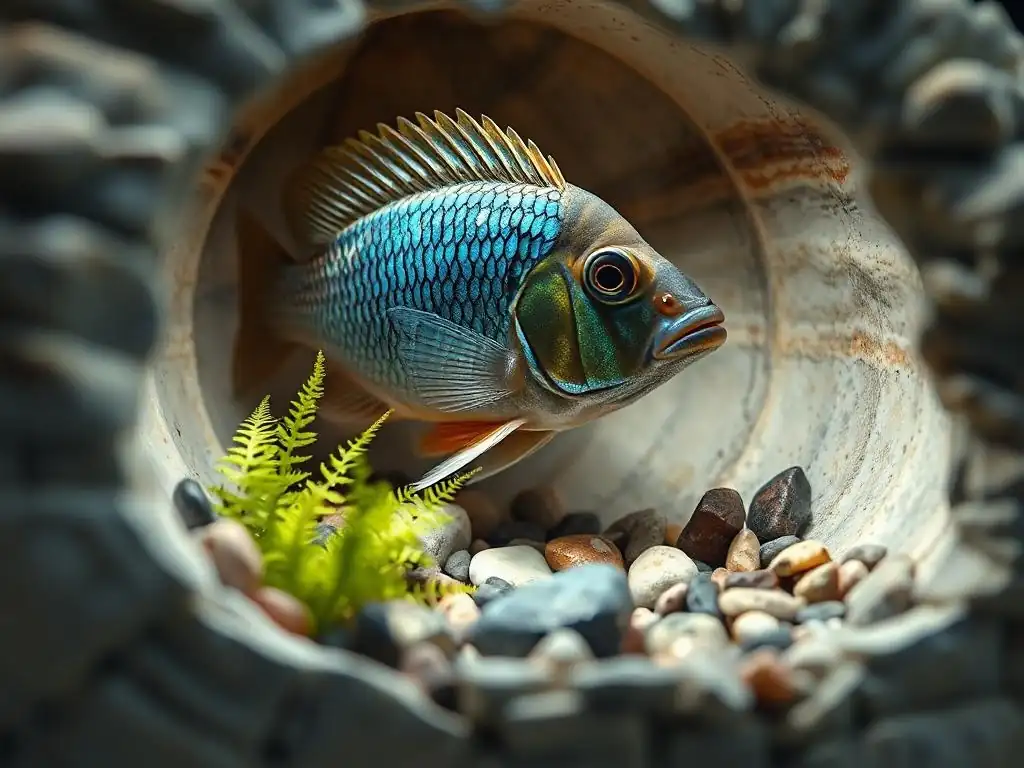
Tank Size and Dimensions for a Thriving Shell Dweller Colony
When planning a nano cichlid tank setup for shell dwellers, tank dimensions are often more critical than sheer volume. While a minimum of a 5-gallon (approximately 19-liter) tank can house a single pair of Lamprologus ocellatus or Neolamprologus brevis, a 10-gallon (38-liter) tank is generally considered the smallest practical size for a small colony of Neolamprologus multifasciatus. For a thriving colony of Multies or a mixed species setup, a 15 to 20-gallon (57-76 liter) long tank is highly recommended.
The emphasis on "long" rather than "tall" tanks is crucial because shell dwellers primarily inhabit the bottom of the aquarium. A tank with a larger footprint provides more surface area for the substrate and, consequently, more room for establishing individual territories and shell clusters. For example, a standard 20-gallon long tank, measuring approximately 30 inches (76 cm) in length, offers significantly more usable bottom space than a 20-gallon high tank, allowing for better dispersion of aggression and the natural expansion of a shell dweller colony within your nano cichlid tank setup.
Essential Substrate and Shell Selection for Shell Dweller Happiness
The cornerstone of any successful nano cichlid tank setup for shell dwellers is the correct substrate and an abundance of suitable shells. A fine, soft sand substrate is absolutely essential, as these fish are avid diggers. They will meticulously excavate around their chosen shells, burying them, creating tunnels, and rearranging the landscape to suit their preferences. Play sand, pool filter sand, or a specialized aquarium sand like aragonite sand (which also helps buffer pH) are excellent choices. The sand bed should be at least 2-3 inches (5-7.5 cm) deep to allow for their extensive digging behaviors.
For the shells themselves, clean, empty snail shells are paramount. Escargot shells, readily available online or in specialty food stores, are a popular and appropriate choice due to their size and durability. Turbo snail shells or even small, clean conch shells can also be used, provided their openings are large enough for the fish to enter comfortably.
It is crucial to offer a generous surplus of shells – ideally two to three times more shells than the number of fish – to minimize territorial disputes and provide ample housing options. For a 10-gallon nano cichlid tank setup with N. multifasciatus, providing 15-20 shells is a good starting point.
Water Parameters: Maintaining Optimal Water Quality in Your Nano Tank
Maintaining stable and appropriate water parameters is critical for the health and longevity of shell dwellers in a nano cichlid tank setup. Replicating their natural Lake Tanganyika environment means aiming for a consistent temperature between 76-80°F (24-27°C). The pH level should be alkaline, ideally ranging from 7.8 to 9.0. This high pH is vital, and buffering substrates like aragonite sand or crushed coral can help maintain it.
Furthermore, these cichlids thrive in hard water. Aim for a General Hardness (GH) of 10-20 dGH and a Carbonate Hardness (KH) of 10-18 dKH. Regular testing with a reliable liquid test kit is indispensable to monitor ammonia, nitrite, and nitrate levels, as well as pH and hardness. In a smaller nano cichlid tank setup, water parameters can fluctuate more rapidly than in larger systems, making diligent monitoring and prompt adjustments crucial for preventing stress and disease among your shell dwellers.
Filtration and Water Changes for Small Cichlid Tanks
Effective filtration and consistent water changes are non-negotiable for maintaining pristine water quality in a nano cichlid tank setup. While shell dwellers have a relatively low bioload compared to many other cichlids, the confined volume of a nano tank means that waste products can accumulate quickly. A gentle yet efficient filtration system is ideal. Sponge filters, driven by an air pump, are an excellent choice as they provide both mechanical and biological filtration without creating strong currents that can stress these bottom-dwelling fish. They are also gentle on fry.
Alternatively, a small hang-on-back (HOB) filter can be used, but it's often advisable to baffle the output to reduce flow, perhaps with a piece of filter sponge or a plastic bottle cut-out. Regular water changes are paramount. A weekly water change of 25-30% of the tank's volume is a good standard practice for most nano cichlid tank setups. This helps to dilute nitrates, replenish essential minerals, and maintain the stable water chemistry that shell dwellers require to thrive.
Lighting and Plant Selection for a Natural and Functional Nano Cichlid Habitat
For a nano cichlid tank setup housing shell dwellers, lighting requirements are generally modest. These fish do not have specific lighting needs beyond what is necessary to observe them and potentially support any live plants. Moderate lighting is usually sufficient; excessively bright illumination can sometimes stress fish or encourage undesirable algae growth. A standard LED aquarium light designed for nano tanks will provide ample light for viewing and is often sufficient for low-light plants.
While plants are not a dominant feature of their natural Lake Tanganyika habitat, certain hardy, low-light species can be incorporated into a nano cichlid tank setup to enhance aesthetics and provide additional cover. Anubias species, Java Fern, and various types of Vallisneria are excellent choices as they can tolerate the hard, alkaline water conditions. These plants can be anchored to rocks or driftwood (if used, ensure driftwood doesn't significantly lower pH) rather than planted directly in the sand, preventing them from being uprooted by the shell dwellers' enthusiastic digging. Plants can also contribute to water quality by absorbing nitrates.
Understanding Shell Dweller Hierarchy and Territoriality
Shell dwellers exhibit fascinating and distinct social structures that vary by species, making their behavior a key aspect of their appeal in a nano cichlid tank setup. Colonial species, such as Neolamprologus multifasciatus, form large, intricate societies centered around their shell territories. Within these colonies, a dominant male typically oversees multiple females, each with her own shell and brood. There's a clear hierarchy, with smaller, subordinate males and juvenile fish occupying the periphery. This dynamic allows for continuous interaction and observation as new shells are claimed and territories expand.
In contrast, species like Lamprologus ocellatus and Neolamprologus brevis tend to form monogamous pair bonds. Each pair will establish a highly defended territory around one or a few shells, aggressively warding off intruders. The male and female often share a single shell or occupy adjacent ones. Understanding these inherent social structures is crucial for successful fishkeeping in a nano cichlid tank setup, as it dictates how many fish can be housed together and how the tank should be aquascaped to minimize stress and aggression.
Minimizing Aggression in Your Nano Cichlid Tank: Tips and Tricks
Despite their small size, shell dwellers are cichlids and possess the territorial instincts characteristic of the family. In a confined nano cichlid tank setup, aggression can quickly become an issue if not managed properly. The most effective strategy to minimize aggression is to provide an abundance of shells – significantly more than the number of fish – and arrange them with ample space between clusters to create distinct territories. For instance, in a 10-gallon tank with a small N. multifasciatus colony, spreading shells across the entire sand bed, rather than piling them, allows for better territory delineation.
Another crucial tip is to ensure adequate visual breaks. While shell dwellers primarily use shells for cover, adding small rocks or driftwood pieces (that don't alter pH) can break up sightlines and provide additional hiding spots, allowing weaker fish to escape the attention of dominant individuals. Overcrowding, even with shells, can exacerbate aggression, so it's vital to consider the adult size and social structure of your chosen species when planning your nano cichlid tank setup and stocking levels.
Observing and Interpreting Shell Dweller Behavior
Observing shell dweller behavior is one of the most rewarding aspects of keeping these fish in a nano cichlid tank setup. Their daily activities provide a continuous source of fascination. You'll witness males displaying elaborate fin flaring and body trembling as they court females or ward off rivals. Females will meticulously clean their chosen shells before spawning and diligently guard their fry within the shell, sometimes even moving them to different shells if they perceive a threat.
Species like Lamprologus ocellatus are renowned for their shell-burying antics, using their mouths to excavate sand around their shells until only the entrance is visible, creating a perfectly customized fortress. Neolamprologus multifasciatus colonies will constantly rearrange their sandy landscape, creating networks of tunnels and shell clusters. Interpreting these behaviors – from subtle color changes indicating stress or excitement to aggressive chases and peaceful schooling – deepens the connection between aquarist and fish, making a nano cichlid tank setup a truly interactive experience.
Feeding Shell Dweller Cichlids in Nano Aquariums
Choosing the Right Food for Shell Dweller Nutrition
Providing a balanced and nutritious diet is fundamental for the health and vibrant coloration of shell dwellers in a nano cichlid tank setup. While they are primarily omnivores, their diet in the wild consists largely of small invertebrates and zooplankton. Therefore, a high-quality flake food or small pellet designed for cichlids should form the staple of their diet. Look for foods that list fish meal, shrimp meal, or spirulina as primary ingredients.
Supplementing their staple diet with frozen or live foods is highly beneficial and encourages natural foraging behaviors. Excellent choices include frozen brine shrimp, daphnia, cyclops, and Mysis shrimp, which are appropriately sized for their small mouths. For example, feeding frozen Mysis shrimp twice a week can significantly improve their condition and breeding readiness. Live foods like Grindal worms or newly hatched brine shrimp can also be offered periodically, providing essential nutrients and stimulating their predatory instincts within your nano cichlid tank setup.
Feeding Frequency and Portion Control in Small Tanks
Due to the limited water volume in a nano cichlid tank setup, meticulous attention to feeding frequency and portion control is crucial to prevent water quality issues. It is generally better to feed shell dwellers small amounts multiple times a day (e.g., 2-3 times daily) rather than one large meal. This approach ensures that all fish get enough to eat, minimizes uneaten food decaying in the tank, and mimics their natural foraging behavior.
When feeding, offer only what your fish can consume entirely within 1-2 minutes. Overfeeding is a common pitfall in nano tanks and can quickly lead to an increase in ammonia and nitrite, clouding of the water, and the proliferation of undesirable algae. For instance, for a small colony in a 10-gallon tank, a pinch of flake food or a small cube of frozen food might be sufficient for an entire day's feeding, split into two or three sessions. Always err on the side of underfeeding rather than overfeeding in a compact nano cichlid tank setup.
Preventing Overfeeding and Maintaining Water Quality
Preventing overfeeding is paramount for maintaining optimal water quality in any nano cichlid tank setup, especially with their sensitive inhabitants. Beyond portion control, regularly observe your fish during feeding time. If food remains on the substrate after a few minutes, you are likely feeding too much. Promptly remove any uneaten food using a small siphon or turkey baster to prevent it from decaying and polluting the water.
Implementing a consistent schedule of partial water changes is the most effective way to counteract the effects of any excess nutrients from feeding and to generally maintain pristine water conditions. As mentioned, a 25-30% weekly water change is recommended. Regularly test your water parameters (ammonia, nitrite, nitrate, pH, and hardness) to catch any issues early. If you notice consistently high nitrate levels, it might indicate that you are overfeeding or that your water change schedule needs to be more frequent for your specific nano cichlid tank setup.
Breeding Shell Dweller Cichlids in a Nano Tank Environment
Creating the Perfect Conditions for Breeding
One of the most rewarding aspects of keeping shell dwellers in a nano cichlid tank setup is their relatively straightforward breeding behavior. To encourage spawning, the primary requirements are stable, optimal water parameters (high pH, hard water, consistent temperature around 78-80°F or 25-27°C), a high-quality diet, and, most importantly, an abundance of suitable shells. A well-established and stress-free environment naturally encourages these fish to reproduce.
For colonial species like Neolamprologus multifasciatus, having a mature colony with a good male-to-female ratio and plenty of shells spread throughout the tank will almost guarantee breeding. For pair-bonding species such as Lamprologus ocellatus, a single male and female in a dedicated nano cichlid tank setup with a few preferred shells will typically form a pair and spawn. Providing a slightly varied diet with live or frozen foods can also act as a trigger, signaling to the fish that conditions are favorable for reproduction.
Identifying Breeding Behaviors and Fry Care
Identifying breeding behaviors in shell dwellers is often quite clear once you know what to look for. For instance, a female Neolamprologus multifasciatus will become increasingly possessive of a specific shell, meticulously cleaning its interior. The male will then repeatedly attempt to entice her into the shell for spawning. Once eggs are laid (often 10-30 eggs per spawn, though some reports indicate up to 80 for mature females), the female will remain inside the shell, diligently fanning and guarding them.
After approximately 3-4 days, the eggs will hatch, and the tiny fry will emerge from the shell a few days later, looking like miniature versions of their parents. For the first few days, they can feed on infusoria present in a mature tank. Subsequently, they can be fed newly hatched brine shrimp or high-quality powdered flake food. The parents, especially the mother, will continue to guard the fry diligently, often moving them between shells or leading them to foraging grounds within the nano cichlid tank setup.
Managing Population Growth in a Nano Cichlid Tank
While breeding shell dwellers in a nano cichlid tank setup is exciting, managing population growth, especially with prolific breeders like Neolamprologus multifasciatus, becomes a key consideration. A single Multie female can spawn every few weeks, and a colony can quickly outgrow a small tank if left unchecked. Natural culling often occurs, where larger, dominant fish may prey on smaller fry, but this may not be sufficient to control numbers.
Aquarists have several options for managing the population. One approach is to allow natural selection to take its course within the colony, which helps maintain a manageable size. Another is to regularly remove excess fry and juveniles. These can be rehomed to other aquarists, sold to local fish stores, or if space permits, moved to a separate grow-out tank. Failing to manage population growth can lead to overcrowding, increased aggression, and deteriorating water quality, ultimately compromising the health of your entire nano cichlid tank setup.
Maintaining a Healthy Nano Cichlid Tank with Shell Dwellers
Regular Maintenance Tasks for Optimal Tank Health
Consistent and diligent maintenance is the cornerstone of a healthy nano cichlid tank setup for shell dwellers. Daily tasks should include observing your fish for any signs of stress, disease, or unusual behavior, checking the water temperature, and feeding small, appropriate portions. Weekly maintenance is crucial and should involve a 25-30% partial water change, along with light gravel vacuuming of the visible sand surface to remove detritus and uneaten food. When cleaning filter media, always rinse it in old tank water removed during the water change, never tap water, to preserve beneficial bacterial colonies.
Monthly, a more thorough check of equipment, such as heaters and filters, is advisable. Ensure filter intakes are clear and flow is adequate. It's also a good time to do a deeper, albeit gentle, substrate stir to release any trapped gas pockets, being careful not to disturb the shell dwellers' carefully constructed homes. This disciplined routine for your nano cichlid tank setup will prevent common issues and keep your shell dwellers thriving.
Common Shell Dweller Health Issues and Prevention
Shell dwellers, when kept in optimal conditions, are generally robust fish. However, like all aquarium inhabitants, they can be susceptible to common health issues, especially if water quality declines or stress levels are high in a nano cichlid tank setup. Ich (White Spot Disease), characterized by small white spots resembling salt grains on the body and fins, is often a sign of stress or sudden temperature fluctuations. Prevention involves maintaining stable water parameters and avoiding rapid changes.
Bloat, often indicated by a swollen abdomen and loss of appetite, can be caused by improper diet, overfeeding, or poor water quality. Preventing bloat involves feeding a varied, high-quality diet, avoiding overfeeding, and ensuring consistent water changes. Fin rot, manifesting as frayed or decaying fins, is typically a bacterial infection triggered by poor water conditions. The primary prevention for all these ailments in a nano cichlid tank setup is maintaining pristine water quality through regular testing and diligent water changes, coupled with a proper diet.
Troubleshooting Common Nano Tank Problems
Even with the best intentions, problems can arise in a nano cichlid tank setup. One common issue is persistent algae blooms, often caused by excessive lighting or high nutrient levels (from overfeeding or insufficient water changes). Troubleshooting involves reducing lighting duration (e.g., to 8 hours daily) and increasing the frequency or volume of water changes. Cloudy water, another frequent complaint, can signal a bacterial bloom (especially in new tanks), overfeeding, or inadequate filtration. Solutions include increasing water changes, reducing feeding, and ensuring your filter is functioning correctly.
If your shell dwellers are hiding excessively or exhibiting increased aggression, it could indicate stress from poor water quality, insufficient shells/territory, or an unsuitable tank mate. Check all water parameters immediately. If the parameters are good, consider adding more shells or rearranging the existing ones to create more distinct territories. Addressing these issues promptly is crucial for the well-being of your shell dwellers and the success of your nano cichlid tank setup.
Choosing Tank Mates for Shell Dwellers in Nano Aquariums
Compatible Species for a Peaceful Community Tank
While a species-only nano cichlid tank setup is often the ideal choice for shell dwellers, especially for smaller tanks, it is possible to introduce compatible tank mates in larger nano aquariums (15 gallons or more). The key is to select species that occupy different levels of the water column, tolerate similar hard, alkaline water conditions, and are not overly aggressive or large enough to prey on shell dwellers.
For instance, in a 20-gallon long nano cichlid tank setup, a small group of peaceful Tanganyikan species that prefer the upper or middle water column might work. Good candidates include certain types of Synodontis catfish, such as the dwarf featherfin catfish ( Synodontis petricola), which are bottom dwellers but generally non-aggressive towards cichlids. Some aquarists have also successfully kept small groups of Cyprichromis leptosoma "Jumbo" (small, peaceful Tanganyikan cichlids that inhabit the open water) in larger nano setups, provided there is ample swimming space. Always introduce new tank mates cautiously and monitor interactions closely.
Species to Avoid: Aggressive or Predatory Fish
When planning your nano cichlid tank setup, it is crucial to avoid introducing tank mates that are either too aggressive, too large, or have vastly different environmental requirements. Most other cichlid species, particularly those from Lake Malawi (e.g., Mbuna), are generally too aggressive and territorial for shell dwellers, even if they share similar water parameters. Their bullying behavior would quickly stress and likely kill the smaller shell dwellers.
Similarly, avoid any predatory fish that could view your shell dwellers as food. Even seemingly peaceful community fish that grow too large, such as larger Gouramis or certain Tetras, might intimidate or harass shell dwellers in a confined space. Fish that require soft, acidic water, such as many Amazonian species, are also unsuitable as their needs directly conflict with the hard, alkaline environment essential for your nano cichlid tank setup.
Considerations for Invertebrate Tank Mates
Introducing invertebrates into a nano cichlid tank setup with shell dwellers requires careful consideration, as many are not compatible. Most ornamental shrimp species, such as Cherry Shrimp or Amano Shrimp, are likely to be viewed as food by shell dwellers, especially by larger species like Lamprologus ocellatus. While some aquarists report success with very large Amano shrimp in heavily planted tanks, it is generally not recommended for a dedicated shell dweller setup.
Snails, particularly Nerite snails, are sometimes considered for algae control. However, shell dwellers, especially those that use shells for breeding, may view other snails as competitors for their precious shell resources. They might harass or even attempt to consume smaller snails. Therefore, while not strictly impossible, it's generally safer to keep shell dwellers in a species-only tank or with carefully selected fish tank mates to ensure the peaceful coexistence and well-being of all inhabitants in your nano cichlid tank setup.
The Benefits of a Nano Cichlid Tank with Shell Dwellers
Space-Saving Aquarium Keeping
One of the most significant benefits of a nano cichlid tank setup featuring shell dwellers is its incredible space-saving advantage. Unlike most cichlid species that demand large aquariums of 50 gallons or more, shell dwellers allow enthusiasts to experience the captivating world of cichlid behavior in a compact footprint. A 10-gallon tank, measuring roughly 20 inches by 10 inches, can house a thriving colony of Neolamprologus multifasciatus, making it an ideal choice for apartments, dorm rooms, offices, or any space where real estate is at a premium.
This accessibility means that individuals who previously thought cichlid keeping was out of reach due to space constraints can now embark on this rewarding hobby. The minimal space requirement doesn't translate to a minimal experience; instead, it allows for a focused, intimate observation of these unique fish. For example, a small 5-gallon tank housing a pair of Lamprologus ocellatus can easily fit on a bedside table or a small desk, bringing a slice of Lake Tanganyika's fascinating ecosystem into even the smallest living areas.
Engaging and Unique Fishkeeping Experience
A nano cichlid tank setup with shell dwellers offers an exceptionally engaging and unique fishkeeping experience that stands apart from typical community tanks. Their intricate social structures, territorial displays, and fascinating shell-centric behaviors provide endless opportunities for observation. Watching Lamprologus ocellatus meticulously bury its shell, or a colony of Neolamprologus multifasciatus expanding its network of shell homes, is far more dynamic than simply observing fish swim around.
Furthermore, the relatively straightforward breeding of many shell dweller species adds another layer of engagement. Witnessing parental care and the emergence of tiny fry from their shell hideouts is deeply rewarding. This active participation in their life cycle, combined with the challenge of creating a perfect biotope, transforms the hobby from passive observation into an interactive and deeply fulfilling endeavor. It's a niche within the aquarium world that offers a distinct and memorable experience.
Educational Opportunities and Conservation Awareness
Setting up and maintaining a nano cichlid tank setup with shell dwellers provides valuable educational opportunities. It encourages aquarists to delve into the specific environmental conditions of Lake Tanganyika, learning about its unique geology, water chemistry, and the biodiversity it supports. Understanding the intricate adaptations of shell dwellers to their specific habitat, such as their reliance on snail shells, deepens one's appreciation for evolutionary biology and ecological niches.
Beyond the immediate educational benefits, keeping endemic species like shell dwellers can foster an awareness of aquatic conservation. Lake Tanganyika faces various environmental challenges, including overfishing and pollution. By keeping these fish, aquarists become part of a global community that values and appreciates these unique species, indirectly contributing to their preservation through responsible husbandry and, in some cases, captive breeding efforts that reduce pressure on wild populations.
Conclusion: Embrace the World of Shell Dwellers in Nano Cichlid Tanks
A Rewarding and Fulfilling Aquarium Hobby
Embracing the world of shell dwellers in a nano cichlid tank setup is a uniquely rewarding and fulfilling aquarium hobby. These captivating fish, with their surprisingly big personalities and intricate behaviors, prove that you don't need a massive aquarium to experience the full wonder of cichlid keeping. From the bustling colonies of Neolamprologus multifasciatus to the fiercely territorial pairs of Lamprologus ocellatus, each species offers a distinct and engaging challenge.
The relative ease of their care, combined with their fascinating natural instincts for shell dwelling and breeding, makes them an ideal choice for both novice and experienced aquarists looking to explore the cichlid family in a compact form. The diligent effort put into creating an optimal nano cichlid tank setup with the right substrate, shells, and water parameters will be richly repaid by the endless hours of observation and the sheer joy of watching these miniature marvels thrive and interact in their meticulously crafted micro-ecosystem.
Frequently Asked Questions
How small is considered a "nano" cichlid tank, and are shell dwellers truly suitable for such a small space?
A nano tank for cichlids typically refers to tanks under 20 gallons. Shell dwellers, specifically Neolamprologus multifasciatus and similar species, are well-suited due to their small size and territorial behavior centered around shells.
What are the essential components for a successful nano cichlid tank setup focusing on shell dwellers?
Essential components include appropriate substrate (sand), numerous empty shells (snail shells are ideal), a reliable filter, a heater, and proper lighting. Regular water changes are also crucial.
What are some key considerations for water chemistry when keeping shell dwellers in a nano tank?
Maintaining stable water parameters is vital. Shell dwellers prefer hard, alkaline water, so buffering the pH around 7.8-8.6 is important. Regular testing and water changes help prevent ammonia and nitrite spikes.
Can I keep other fish with shell dwellers in a nano tank, and if so, what are some compatible tank mates?
Generally, it's best to keep a species-only tank for shell dwellers in a nano setting. The limited space can lead to aggression with other species. If you must add tank mates, consider small, peaceful surface dwellers that won't compete for shell space.
What are some common problems that beginner shell dweller keepers might encounter in a nano tank, and how can they be prevented?
Common problems include overcrowding, aggression, and poor water quality. Prevention involves proper tank setup, regular maintenance, and careful monitoring of water parameters. Ensure adequate shells are available to minimize territorial disputes.
Final Reflection: The Tiny Titans of Our Aquariums
The journey into the world of shell dwellers, as we've explored, reveals that size is no measure of personality or complexity in the aquarium hobby. The appeal of these miniature cichlids lies not just in their suitability for nano cichlid tank setups, but in the captivating behaviors and intricate social dynamics they bring to a small space. Their existence challenges the notion that grand displays are necessary for a rewarding aquascaping experience, proving that even the smallest ecosystems can teem with life and intrigue.
The influence of shell dwellers extends beyond the confines of the aquarium, prompting a re-evaluation of our approach to fishkeeping and conservation. Their unique adaptations and specialized needs underscore the importance of responsible sourcing and meticulous care, reminding us that even seemingly insignificant creatures play a vital role in the larger ecological tapestry. In nature, there are no rewards or punishments, only consequences.
- Robert Ingersoll. This quote resonates deeply when considering the delicate balance within a nano cichlid tank and the responsibility we bear as stewards of these miniature ecosystems.
Now, as you contemplate your own nano cichlid tank setup, consider the profound impact these small creatures can have. Embrace the challenge of creating a thriving environment for shell dwellers, and allow their captivating behaviors to inspire a deeper appreciation for the intricate beauty and resilience of life, no matter how small. Let their story be a reminder that even in the most confined spaces, extraordinary lives can flourish, enriching our own in unexpected ways.
Unveil the Tiny Wonders: Ready to Start Your Shell Dweller Adventure?
Thank you for diving into the fascinating world of shell dwellers! We hope you’re inspired by their unique behaviors and suitability for nano tanks. Now, let's turn that inspiration into action!
Here are a few things you can do next:
- Dive deeper: Plan your ideal shell dweller setup.: Research specific shell dweller species and create a blueprint for their dream nano habitat, including appropriate shells and substrate.
- Share your newfound knowledge! Spread the word about the wonders of shell dwellers by sharing this article with fellow aquarium enthusiasts.
- Explore the Aquarium Mastery community. Post your questions, tank setup ideas, or any shell dweller success stories.
What's the first tiny detail you'll focus on when creating your shell dweller paradise?