
The Ideal Crayfish Tank: Setup, Substrate, and Essential Hiding Spots

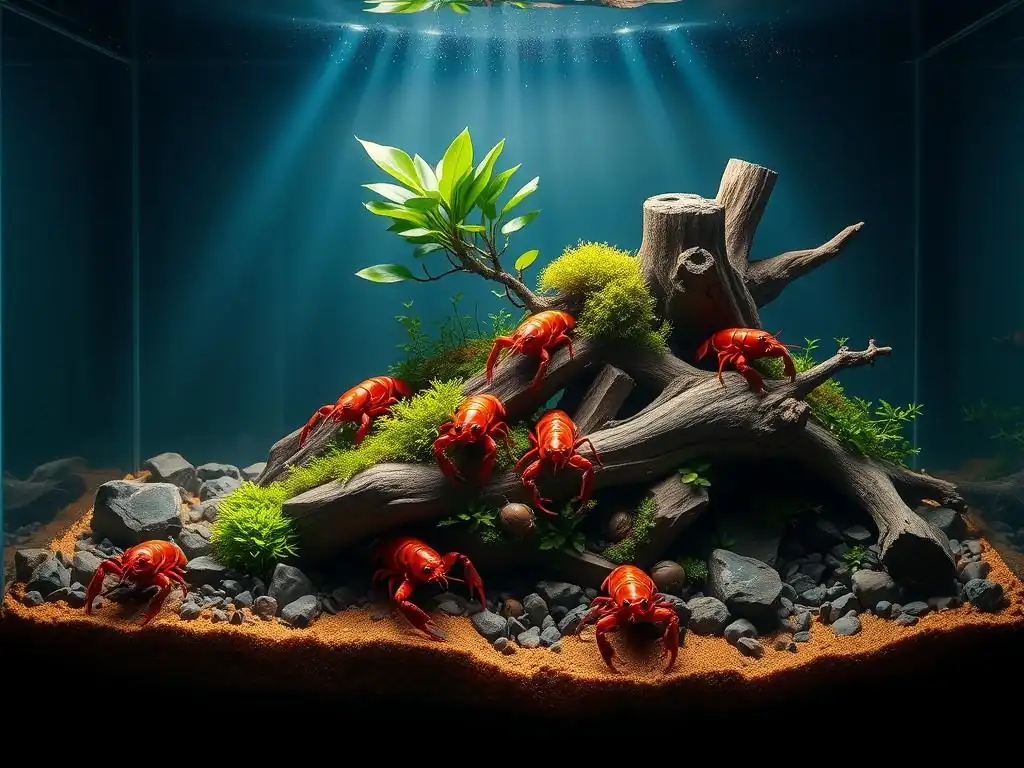
Welcome to Aquarium Mastery!
Ever wondered how to create the perfect underwater haven for your crayfish? You're in the right place! Dive in and discover everything you need to know about crayfish tank substrate setup, from choosing the right materials to creating a stimulating and enriching environment for your shelled friend. Curious about the secret to a thriving crayfish tank? Let's get started!
- Setting Up Your Crayfish Tank: A Complete Guide
- Crayfish Tank Substrate Setup: Creating a Natural Environment
- Essential Hiding Spots for Crayfish: Providing Security and Comfort
- Maintaining Your Crayfish Tank: Water Parameters and Cleaning
- Choosing Tank Mates for Crayfish: Compatibility and Considerations
- Troubleshooting Common Crayfish Tank Issues
- Frequently Asked Questions
- Final Reflection: Cultivating Crayfish Habitats
- Embark on Your Crayfish Adventure!
Setting Up Your Crayfish Tank: A Complete Guide
Choosing the Right Size Tank for Your Crayfish
Selecting the appropriate tank size is paramount for the health and well-being of your crayfish. For dwarf crayfish species, such as the popular Mexican Dwarf Crayfish ( Cambarellus patzcuarensis), a 5-gallon (approximately 19 liters) aquarium can be sufficient for a single specimen. However, for larger and more common species like the Electric Blue Crayfish ( Procambarus alleni) or Red Swamp Crayfish ( Procambarus clarkii), a 10-gallon (38 liters) tank is considered the absolute minimum for one adult, with a 20-gallon (76 liters) long tank being highly recommended to provide ample space for territory and movement.
The specific species and the number of crayfish you plan to house directly influence the required tank dimensions. For instance, a pair of medium-sized crayfish, such as the Marbled Crayfish ( Procambarus fallax f. virginalis), would ideally need a 20-gallon long (76 liters) tank or larger to minimize aggression and provide individual territories, especially during vulnerable molting periods. Overcrowding in a crayfish tank substrate setup leads to increased stress, heightened territorial disputes, and rapid deterioration of water quality, making proper sizing a foundational step for a thriving habitat.
Essential Equipment for a Crayfish Aquarium
Beyond the aquarium itself, several key pieces of equipment are essential for establishing and maintaining a healthy environment for your crayfish. These include a reliable filtration system, a heater (depending on the specific crayfish species and ambient room temperature), appropriate lighting, and an accurate thermometer. Each component plays a vital role in creating a stable, naturalistic habitat that mimics the crayfish's indigenous environment and supports the overall crayfish tank substrate setup.
These components work synergistically to ensure optimal conditions. A robust filter removes physical waste and processes harmful nitrogenous compounds, while a heater maintains a consistent water temperature, crucial for the crayfish's metabolism and immune system. Appropriate lighting supports any live plants in the tank and establishes a natural day/night cycle. A thermometer provides continuous monitoring, ensuring the water temperature remains within the ideal range, which for many common crayfish species is typically between 65-78°F (18-26°C).
Filtration Systems for Crayfish Tanks: Keeping the Water Clean
Effective filtration is critical for a crayfish aquarium due to their relatively messy eating habits and significant waste production. Hang-on-back (HOB) filters or canister filters are widely recommended for their efficiency in providing mechanical, chemical, and biological filtration. HOB filters are suitable for smaller to medium tanks, while canister filters offer superior capacity and flow for larger setups. Sponge filters can also be utilized, particularly in breeding tanks or for very young crayfish, but may require more frequent manual cleaning.
The chosen filter should be rated for at least twice the volume of your tank (e.g., a filter designed for a 40-gallon tank used on a 20-gallon tank) to ensure excellent water clarity and maintain pristine water parameters. This robust filtration minimizes the accumulation of toxic ammonia and nitrite, which are highly detrimental to invertebrates. While providing strong filtration, ensure the flow is not overly turbulent, as crayfish generally prefer calmer water conditions within their crayfish tank substrate setup.
Heaters and Temperature Control: Maintaining Optimal Crayfish Conditions
While some crayfish species can tolerate a broad range of temperatures, most common aquarium crayfish, such as the Electric Blue Crayfish, thrive in stable water conditions, ideally between 68-75°F (20-24°C). A high-quality submersible heater equipped with an adjustable thermostat is recommended to maintain this consistency, especially in environments where room temperatures fluctuate throughout the day or seasons.
Consistent temperature is vital for the crayfish's metabolic processes, successful molting, and overall activity levels. Rapid or significant temperature swings can induce stress, weaken the crayfish's immune system, and increase susceptibility to disease. Therefore, regular monitoring with a reliable aquarium thermometer is indispensable to ensure the heater is accurately maintaining the desired temperature within the crayfish tank substrate setup.
Lighting for Crayfish: Needs and Considerations
Crayfish themselves do not possess specific lighting requirements beyond a regular day/night cycle, which helps regulate their natural behaviors. Standard aquarium LED lights are generally adequate for this purpose. The primary function of lighting in a crayfish tank is often to support the growth of live aquatic plants, if included, and to allow for proper observation of the crayfish and the overall tank environment. A typical photoperiod of 8-10 hours per day is usually sufficient.
It's important to note that while lighting is necessary, excessive or continuous illumination can be stressful for crayfish, as many species are more active during dimmer periods or at night. Therefore, providing ample shaded areas within the crayfish tank substrate setup through dense plant cover, driftwood, or strategically placed decor is often more crucial for the crayfish's comfort and security than the specific intensity of the light itself.
Crayfish Tank Substrate Setup: Creating a Natural Environment

Understanding the Importance of Substrate for Crayfish
The substrate forms the foundation of your aquarium, serving as the bottom layer, and plays a profoundly important role in a crayfish's habitat. It contributes to the naturalistic aesthetic of the tank, provides a vast surface area for the colonization of beneficial nitrifying bacteria crucial for the nitrogen cycle, and, most critically for crayfish, offers the necessary material for burrowing, digging, and creating secure shelters. A well-chosen and properly installed crayfish tank substrate setup directly impacts their comfort, security, and overall health.
Crayfish are inherently burrowing creatures, utilizing the substrate to construct intricate tunnels and hiding spots, especially during their vulnerable molting phases. A suitable substrate satisfies this innate behavioral need, reducing stress and providing essential protection. Furthermore, the substrate helps anchor live plants, if used, and provides a surface for biofilm development, which can serve as a supplemental food source for juvenile crayfish. An inadequate or inappropriate substrate can lead to stressed, exposed crayfish, increasing their susceptibility to aggression, illness, or failed molts.
Best Substrate Options for Crayfish Tanks
When planning your crayfish tank substrate setup, aquarists typically consider three main options: gravel, sand, or specialized planted tank substrates. Each type presents distinct advantages and disadvantages regarding aesthetics, ease of maintenance, and suitability for accommodating the crayfish's natural behaviors. The ultimate choice often hinges on the specific crayfish species you intend to keep, your desired tank aesthetics, and your willingness to perform specific maintenance routines.
Regardless of the choice, the ideal substrate should be non-abrasive to prevent injury to the crayfish's delicate undersides and antennae. It should also be inert, meaning it will not significantly alter the water chemistry (pH, GH, KH). Furthermore, the particle size should be fine enough to allow for effective burrowing, but not so fine that it excessively compacts, which can lead to anaerobic pockets. A substrate depth of at least 2-3 inches (5-7.5 cm) is generally recommended to allow for adequate digging and burrowing behavior, particularly for larger species.
Gravel Substrate for Crayfish: Pros and Cons
Gravel is a perennial favorite among aquarists due to its widespread availability, diverse range of colors, and relative ease of cleaning using a gravel vacuum. Its larger particle size promotes good water circulation within the substrate bed, which helps prevent the formation of stagnant or anaerobic zones. For a crayfish tank substrate setup, smooth, rounded gravel with a particle size between 2-5mm is highly recommended to minimize the risk of injury to the crayfish.
However, gravel does present some drawbacks for crayfish. Its larger particle size can make it challenging for crayfish to effectively burrow and create stable tunnels, especially if the pieces are too large or angular. While they will still attempt to dig, it might not fully satisfy their burrowing instinct as effectively as a finer substrate. Additionally, waste and detritus can accumulate between the pebbles, necessitating regular and thorough vacuuming to maintain water quality. While acceptable, gravel might not be the optimal choice for species with a strong burrowing drive.
Sand Substrate for Crayfish: A Natural Choice
Sand is often considered the most natural and beneficial substrate option for a crayfish tank substrate setup. Its fine, soft texture allows crayfish to effortlessly dig, burrow, and construct intricate tunnel systems, perfectly satisfying their innate behavioral needs. Sand also provides an expansive surface area for beneficial bacteria to colonize, contributing significantly to biological filtration, and can create a very aesthetically pleasing environment, closely mimicking natural riverbeds or lake bottoms where many crayfish originate.
Despite its numerous advantages, sand requires careful management. It can compact over time, potentially leading to anaerobic pockets if not regularly disturbed or if the tank lacks sufficient water circulation through the substrate. Cleaning sand requires a gentle touch; a light siphon or spot cleaning is recommended to remove detritus without excessively disturbing the beneficial bacterial layer. Furthermore, very fine sand can occasionally pose a risk of clogging certain types of filters if appropriate precautions, such as using a pre-filter sponge over the intake, are not taken.
Planted Tank Substrate for Crayfish: Benefits and Challenges
Specialized planted tank substrates, often rich in nutrients derived from clay, peat, or volcanic rock, are superb for cultivating lush live aquatic plants. Incorporating live plants into a crayfish tank substrate setup offers multifaceted benefits, including natural filtration (absorbing nitrates), oxygenation, and providing additional cover and foraging opportunities, all of which contribute to a more stable and biologically diverse ecosystem.
The primary challenge with using planted tank substrates in a crayfish aquarium lies in the crayfish's natural behavior. They are notorious for digging, burrowing, and potentially uprooting plants, which can quickly disrupt a meticulously aquascaped layout. If you choose a nutrient-rich substrate, it is highly advisable to cap it with a layer of inert sand or fine gravel, at least 1-2 inches (2.5-5 cm) deep.
This capping layer prevents the crayfish from digging into and dispersing the nutrient-rich material into the water column, which could lead to undesirable algae blooms. Selecting hardy, fast-growing plants that can be securely anchored or are less prone to uprooting is also crucial.
How to Prepare Your Crayfish Tank Substrate
Rinsing and Cleaning the Substrate Before Installation
Regardless of the type of substrate chosen for your crayfish tank substrate setup, thorough rinsing and cleaning before installation is an absolutely critical step. New substrates, particularly gravel and sand, often contain significant amounts of dust, fine particulate matter, and manufacturing residues. Failing to rinse adequately can lead to severely cloudy water, introduce unwanted chemicals into the aquarium, and potentially harm your aquatic inhabitants. Proper rinsing ensures a clear, healthy, and safe start for your new aquarium.
To effectively rinse your substrate, place small batches (e.g., 1-2 pounds or approximately 0.5-1 kg) into a clean, dedicated bucket. Run cool tap water over the substrate, stirring it vigorously with your hand or a clean utensil. Carefully pour out the cloudy water, ensuring you don't lose the substrate in the process. Repeat this procedure multiple times—it may take anywhere from 5 to 15 rinses per batch, depending on the substrate's initial cleanliness—until the water running off appears completely clear. This meticulous step is vital for immediate water quality and long-term tank health.
Layering the Substrate for Optimal Tank Health
For an optimal crayfish tank substrate setup, aiming for a substrate depth of at least 2-4 inches (5-10 cm) is generally recommended. This depth provides ample material for crayfish to engage in their natural burrowing behaviors, allowing them to construct secure tunnels and hiding spots, which is particularly vital during their vulnerable molting periods. A deeper substrate also offers a significantly larger surface area for beneficial nitrifying bacteria to colonize, thereby enhancing the biological filtration capacity of the aquarium.
While a uniform substrate depth is acceptable, introducing slight variations or slopes can add visual interest to your aquascape and provide diverse digging opportunities for your crayfish. For instance, you might create a deeper section at the back of the tank to encourage more extensive burrowing, gradually tapering to a shallower depth towards the front.
If incorporating a nutrient-rich layer for live plants, it is imperative to cap it with at least 1-2 inches (2.5-5 cm) of inert gravel or sand. This capping layer prevents the crayfish from disturbing the nutrient-rich material and releasing nutrients into the water column, which could otherwise trigger undesirable algae blooms.
Essential Hiding Spots for Crayfish: Providing Security and Comfort
Why Hiding Spots are Crucial for Crayfish
Hiding spots are not merely an aesthetic addition to a crayfish aquarium; they are an indispensable necessity, deeply rooted in the crayfish's natural instincts and survival behaviors. Crayfish are often nocturnal or crepuscular (active during dawn and dusk) and are prey animals in their natural habitats. Having secure and accessible retreats allows them to feel safe, significantly reduces stress levels, and enables them to express their natural behaviors without constant vigilance.
The most critical function of ample hiding spots is during the molting process. When a crayfish sheds its old exoskeleton to grow, it becomes incredibly vulnerable and soft-bodied for several days, making it highly susceptible to aggression from tank mates (including other crayfish) or environmental stress. A secure, private hiding spot is absolutely vital for them to recuperate safely and allow their new shell to harden without disturbance. Without adequate cover, a molting crayfish faces a significantly increased risk of injury, predation, or even death.
Natural Hiding Places for Crayfish
Rocks and Caves: Creating a Natural Landscape
Rocks and natural caves are excellent components for creating effective and aesthetically pleasing hiding places within a crayfish tank substrate setup. They provide sturdy, immovable shelters that crayfish can readily retreat into for security. When selecting rocks, opt for smooth, inert types such as slate, lava rock, or river stones. These materials will not alter your water chemistry and lack sharp edges that could potentially injure the crayfish's delicate exoskeleton or antennae.
Arrange the rocks to form stable caves, crevices, or overhangs that are just large enough for your crayfish to comfortably enter, turn around, and feel secure within. It is crucial to place rocks directly on the bottom glass of the tank before adding any substrate to prevent them from toppling over if the crayfish digs underneath them. Consider incorporating several smaller rock formations to create multiple distinct hiding options, providing your crayfish with choices and reducing potential territorial disputes if housing more than one.
Driftwood and Branches: Adding Texture and Shelter
Driftwood and various aquarium-safe branches not only enhance the natural aesthetics of a crayfish tank substrate setup but also provide superb hiding opportunities. Their irregular shapes, numerous crevices, and natural nooks offer perfect retreats for crayfish to explore, forage, and hide within. Certain types of driftwood, such as Malaysian or Mopani wood, can also release beneficial tannins into the water, which may slightly lower the pH and possess mild antibacterial properties, further mimicking the crayfish's natural aquatic environments.
Before introducing any driftwood, ensure it is specifically aquarium-safe, thoroughly pre-soaked to remove excess tannins and make it sink, and weighted down if necessary to prevent it from floating. Placing driftwood directly on the substrate or partially burying it allows crayfish to integrate it into their burrowing activities. Multiple pieces can be arranged to create a complex network of shelter, which is particularly advantageous in tanks housing more than one crayfish to help delineate territories and reduce aggression.
Live Plants: Offering Cover and Oxygenation
Live aquatic plants contribute significantly to the overall health, stability, and visual appeal of a crayfish tank substrate setup. They actively absorb nitrates, produce vital oxygen through photosynthesis, and offer natural cover, visual barriers, and additional foraging surfaces for crayfish. Densely planted areas, especially those featuring broad-leaved or bushy plant species, provide excellent visual security and physical hiding spots, making the crayfish feel more at ease.
While highly beneficial, it's important to acknowledge that crayfish can be notorious for uprooting plants and, on occasion, may even attempt to consume them. Therefore, select hardy, fast-growing plant species that can tolerate some disturbance, such as Anubias (which can be attached to driftwood or rocks), Java Fern, or certain robust Cryptocoryne species. Anchoring plants securely or choosing species that thrive when floated or attached to decor can mitigate issues. Creating dense thickets in specific areas of the tank can be particularly effective for providing secluded hiding spots.
Artificial Hiding Places for Crayfish
Crayfish Caves and Tunnels: Ready-Made Shelters
A wide variety of commercially available artificial crayfish caves and tunnels are specifically designed for aquarium use. These ready-made shelters are typically crafted from aquarium-safe ceramic, resin, or plastic and come in diverse shapes, sizes, and designs, often mimicking natural rock formations, hollow logs, or even more decorative structures. They offer a convenient, pre-fabricated solution for providing immediate and secure hiding spots within a crayfish tank substrate setup.
When selecting artificial hides, always ensure they are clearly labeled as aquarium-safe, have no sharp edges that could injure your crayfish, and are appropriately sized for your specific species to comfortably enter, turn around, and feel secure. Strategically placing several different types of hides throughout the tank, particularly in close proximity to the substrate, provides the crayfish with multiple options for refuge and helps to distribute potential territorial claims, thereby reducing aggression among tank inhabitants.
PVC Pipes: A Simple and Effective Solution
PVC pipes represent an incredibly simple, highly cost-effective, and remarkably effective solution for creating artificial hiding spots in a crayfish tank substrate setup. They are completely inert, non-toxic to aquatic life, and available in a wide range of diameters, making it easy to select a size perfectly suited for any crayfish species, from small dwarfs to large adults. Their smooth interior surfaces are also particularly safe for molting crayfish, preventing damage to their soft new exoskeletons.
To utilize PVC pipes, simply cut them into short sections, typically 4-6 inches (10-15 cm) in length, and place them directly on the substrate or partially bury them. You can even construct a more complex network of tunnels by connecting multiple pieces using PVC elbows or T-joints, thereby offering a labyrinthine structure for the crayfish to explore and hide within. Always ensure the pipes are thoroughly cleaned before introducing them into the aquarium. While their appearance is plain, PVC pipes can be easily disguised and integrated into your aquascape using creative placement of plants, rocks, or other decor.
Maintaining Your Crayfish Tank: Water Parameters and Cleaning
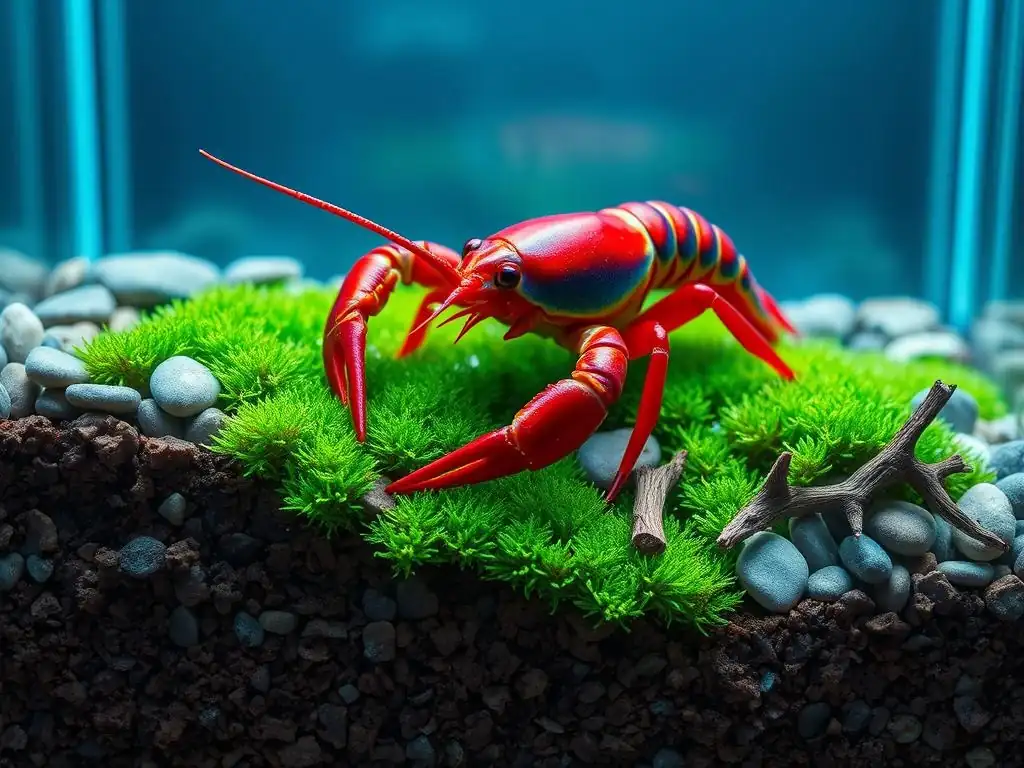
Water Chemistry for Crayfish: pH, Ammonia, Nitrite, and Nitrate
Maintaining stable and appropriate water parameters is absolutely critical for the long-term health and vitality of your crayfish. Most common aquarium crayfish species thrive within a pH range of 6.5 to 8.0. Furthermore, a general hardness (GH) of 5-15 dGH and carbonate hardness (KH) of 3-10 dKH are generally ideal. Regular and accurate testing using a reliable liquid test kit is indispensable for monitoring these parameters. Crucially, ammonia and nitrite levels must always be at 0 ppm, as even minute concentrations of these nitrogenous compounds are highly toxic to invertebrates.
While less acutely toxic than ammonia and nitrite, nitrate levels should still be kept below 20 ppm, and ideally below 10 ppm, to prevent stress and potential long-term health issues for your crayfish. Elevated nitrate levels are a common indicator of accumulated organic waste. Regular partial water changes, combined with a robust and well-maintained biological filter system supported by a healthy crayfish tank substrate setup, are the primary methods for effectively controlling and reducing nitrate concentrations in the aquarium water.
Regular Water Changes: Keeping Your Crayfish Healthy
Regular partial water changes are a fundamental cornerstone of effective aquarium maintenance and are especially vital for a crayfish tank. This routine practice removes accumulated nitrates, phosphates, dissolved organic compounds, and other metabolic byproducts that filtration systems alone cannot eliminate. Concurrently, water changes replenish essential minerals and trace elements that are gradually depleted from the water column, thereby maintaining overall water quality and directly contributing to the crayfish's robust health, vibrant coloration, and successful molting.
For most established crayfish aquariums, a weekly or bi-weekly water change, typically involving 20-30% of the tank's total volume, is highly recommended. Always ensure that the replacement water is thoroughly dechlorinated and temperature-matched to the aquarium water to prevent thermal shock to your crayfish. During these water changes, it is also an opportune moment to gently vacuum the substrate to remove any accumulated detritus and uneaten food, a particularly important step in a crayfish tank substrate setup where waste can easily settle and decompose.
Cleaning the Substrate: Removing Waste and Debris
The substrate in a crayfish tank, regardless of its type, inevitably accumulates uneaten food particles, crayfish waste, and decaying plant matter over time. If this organic debris is left to decompose unchecked, it can significantly degrade water quality, release harmful toxins such as ammonia and nitrites, and contribute to dangerously high nitrate levels. Therefore, regular and thorough cleaning of the crayfish tank substrate setup is an essential maintenance task for preventing these detrimental issues and ensuring a healthy environment.
A gravel vacuum, also known as an aquarium siphon, is the most effective tool for cleaning the substrate. For gravel, gently push the wide end of the vacuum into the substrate, allowing the suction to lift and remove debris while the heavier gravel particles fall back down. For sand substrates, hover the vacuum just slightly above the sand surface to draw up detritus without excessively disturbing or removing the sand itself. Aim to clean approximately half of the substrate area during each water change to avoid overly disrupting the beneficial bacterial colonies that reside within the substrate bed.
Choosing Tank Mates for Crayfish: Compatibility and Considerations
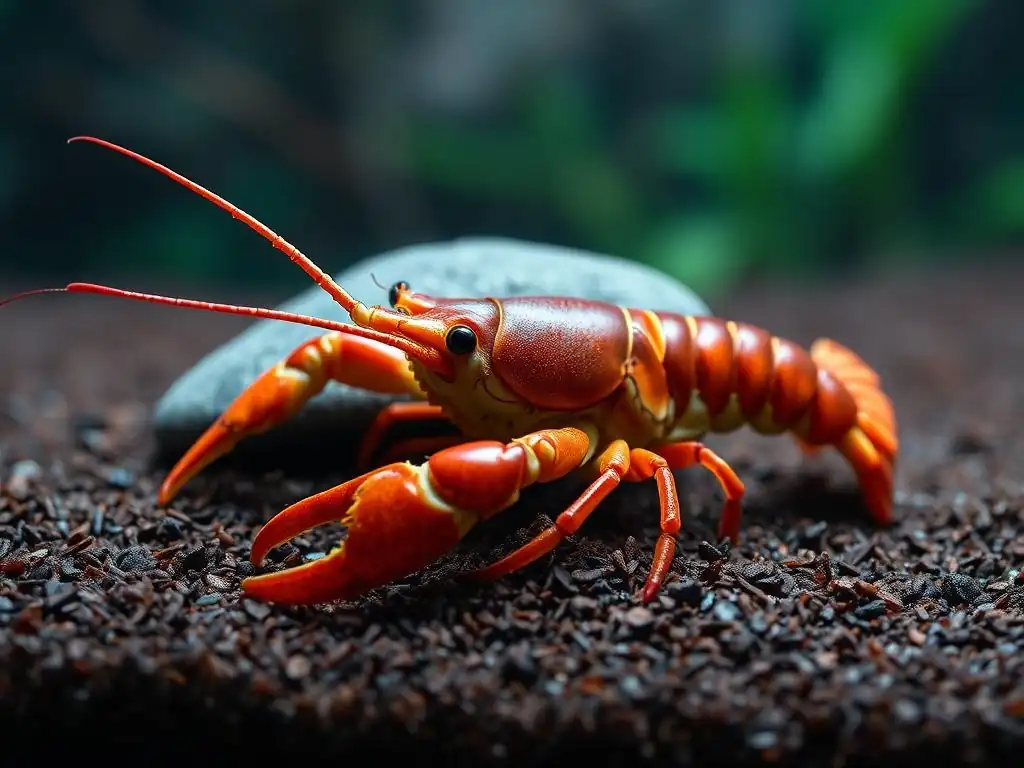
Safe Tank Mates for Crayfish
Selecting appropriate tank mates for crayfish requires careful consideration due to their opportunistic and often territorial nature. While many crayfish species are best kept in species-only tanks, if you choose to introduce tank mates, opt for fast-moving, top-dwelling fish that are too quick for the crayfish to catch and are not prone to nipping fins. Examples of potentially compatible fish include certain types of Danios (e.g., Zebra Danios), larger Rasboras, or fast-swimming Tetras that occupy the upper and middle water columns.
It's important to note that dwarf crayfish species ( Cambarellus species) are generally less aggressive and can be housed with a wider variety of small, peaceful fish and even some smaller shrimp, though caution is still advised as individual temperaments vary. For larger, more aggressive crayfish (such as Procambarus clarkii or Cherax species), the risk of keeping tank mates increases significantly.
While large, hard-shelled snails might be considered, even they are not entirely immune to a determined crayfish. Providing ample hiding spots within the crayfish tank substrate setup is crucial for the safety of both the crayfish and any potential tank mates.
Fish to Avoid Keeping with Crayfish
When considering tank mates for crayfish, it is crucial to avoid any slow-moving, bottom-dwelling, or long-finned fish, as these are easy targets for a crayfish's claws. Examples of fish to avoid include Bettas, Guppies, Angelfish, and many species of Corydoras catfish. Crayfish are opportunistic predators and will actively attempt to catch and consume anything they can, especially if it is slow-moving or spends significant time resting on the substrate, where the crayfish primarily operates.
Fish that naturally occupy the same bottom territory as the crayfish, such as many types of plecos, loaches, or other bottom feeders, are generally not recommended. This overlap in territory can lead to direct competition for resources, territorial disputes, and potential injury or even death to the fish. Even seemingly larger fish can suffer fin nips or more severe injuries from a determined crayfish, particularly if they venture too close to the crayfish's hiding spots or during feeding times. For larger, more aggressive crayfish species, keeping them in a species-only tank is often the safest and most stress-free option.
Troubleshooting Common Crayfish Tank Issues
Crayfish Escaping the Tank: Prevention Tips
Crayfish are remarkably agile and possess an inherent exploratory drive, making them adept climbers and potential escape artists. They can easily scale silicone seams, filter tubes, heater cords, and any other convenient textured surface, especially if the water level is too high or there are accessible footholds near the rim of the tank. An escaped crayfish, particularly a terrestrial species, will quickly dehydrate and perish outside the aquatic environment, making escape prevention a top priority for responsible aquarists.
The most effective measure to prevent crayfish escapes is to ensure your aquarium has a tight-fitting, secure lid with no discernible gaps. Carefully cover or seal any openings for filters, heaters, or other wires to prevent them from becoming escape routes. Additionally, maintain the water level at least 2-3 inches (5-7.5 cm) below the top rim of the tank to make it significantly harder for the crayfish to reach the edge. Regularly inspect the entire tank perimeter for any potential weaknesses or new escape routes, especially after adding new equipment or adjusting decor within the crayfish tank substrate setup.
Molting Problems in Crayfish: Causes and Solutions
Molting, or ecdysis, is a natural and absolutely essential biological process for crayfish growth, where they shed their old, restrictive exoskeleton. However, it is also an incredibly vulnerable and energy-intensive period. Problems can arise if the crayfish struggles to shed its old shell, leading to incomplete molts or becoming "stuck" within the old exoskeleton, which can be fatal if not promptly addressed.
Common underlying causes of molting problems include poor water quality (especially persistently high nitrates or fluctuating parameters), insufficient levels of calcium and other essential minerals in the water, or a lack of secure, private hiding spots where the crayfish feels safe during this sensitive time. To mitigate these issues, ensure your water parameters are consistently stable and within the ideal range for your specific crayfish species.
Consider supplementing the water with calcium (e.g., a piece of cuttlebone, specialized invertebrate mineral supplements, or calcium-rich foods). Most importantly, provide an abundance of secure, secluded hiding spots within the crayfish tank substrate setup so the crayfish can retreat, molt, and recover without stress or interference from tank mates.
Aggression in Crayfish: Managing Territorial Behavior
Crayfish are inherently territorial creatures and can exhibit varying degrees of aggression towards other crayfish, other tank mates, and sometimes even their own reflections. This aggressive behavior is often exacerbated by factors such as insufficient tank size, a lack of adequate hiding spots, and competition for food resources. Aggression can lead to physical injuries, the loss of limbs, or even the death of weaker individuals, particularly during vulnerable molting periods.
The most effective strategies for managing aggression in crayfish involve providing ample space and a complex environment. Ensure your tank is sufficiently large for the number and species of crayfish you house. Create a richly structured crayfish tank substrate setup with numerous secure hiding spots, utilizing rocks, caves, PVC pipes, and dense live plants.
Distribute food widely during feeding times to reduce competition. If keeping multiple crayfish, especially of the same sex or species, the tank must be large enough to support multiple distinct territories. In cases where severe aggression persists despite these measures, separating the individuals into their own dedicated tanks may become the only viable solution to ensure their safety and well-being.
Frequently Asked Questions
What is the best substrate for a crayfish tank?
The best substrate is typically sand or small gravel, as it allows crayfish to dig and forage naturally. Avoid sharp or large gravel that could damage their delicate bodies.
How deep should the substrate layer be in a crayfish tank?
Aim for a substrate depth of around 2-3 inches. This provides enough depth for burrowing without making the tank too difficult to clean.
Why is substrate important for crayfish in an aquarium?
Substrate is important for crayfish because it allows them to exhibit natural behaviors like digging and foraging. It also provides a surface for beneficial bacteria to colonize, aiding in water quality.
Besides substrate, what else should I include in my crayfish tank setup?
Essential additions include hiding spots like caves, rocks, and driftwood. These provide security and reduce stress for your crayfish, promoting overall health.
How often should I clean the substrate in my crayfish tank?
Perform partial water changes and substrate vacuuming approximately every 1-2 weeks. This removes debris and maintains optimal water quality for your crayfish.
Final Reflection: Cultivating Crayfish Habitats
The detailed exploration of crayfish tank substrate setup underscores a growing awareness of the intricate needs of these fascinating crustaceans. What began as a niche hobby is rapidly evolving into a more informed and responsible approach to aquatic pet keeping, highlighting the importance of mimicking natural environments for optimal animal welfare. This shift signifies a broader trend towards understanding and respecting the complexities of the ecosystems we bring into our homes.
The impact of creating suitable crayfish habitats extends beyond the individual tank. It fosters a deeper appreciation for biodiversity and the interconnectedness of life, encouraging responsible pet ownership and a commitment to conservation. In the end, we will conserve only what we love; we will love only what we understand; and we will understand only what we are taught.
- Baba Dioum. This quote resonates deeply, reminding us that knowledge and understanding are the cornerstones of responsible stewardship.
As you consider the information presented in this article, I invite you to reflect on your own relationship with the natural world. How can you apply these principles of thoughtful habitat creation to other aspects of your life, fostering environments that nurture growth, well-being, and a deeper connection to the living world around you? Let's strive to be conscientious custodians, creating spaces where life, in all its diverse forms, can thrive.
Embark on Your Crayfish Adventure!
Thank you for diving into the fascinating world of crayfish! We hope this article has illuminated the path to creating a thriving habitat for these captivating creatures. Now, let's put that knowledge into action!
- Start planning your ideal crayfish tank today! Research tank dimensions, substrate options, and décor that mimics their natural environment.
- Share your newfound crayfish knowledge with fellow aquarium enthusiasts! Spread the word and inspire others to explore the unique joys of keeping these fascinating invertebrates.
- Explore local aquarium stores and online communities to find the perfect crayfish companion. Observe their behavior in different setups and learn from experienced keepers.
What kind of hiding spot do you think your future crayfish will appreciate the most? Let us know in the comments!