
Illuminating Larval Rearing: Optimal Photoperiods & Intensity for Healthy Development

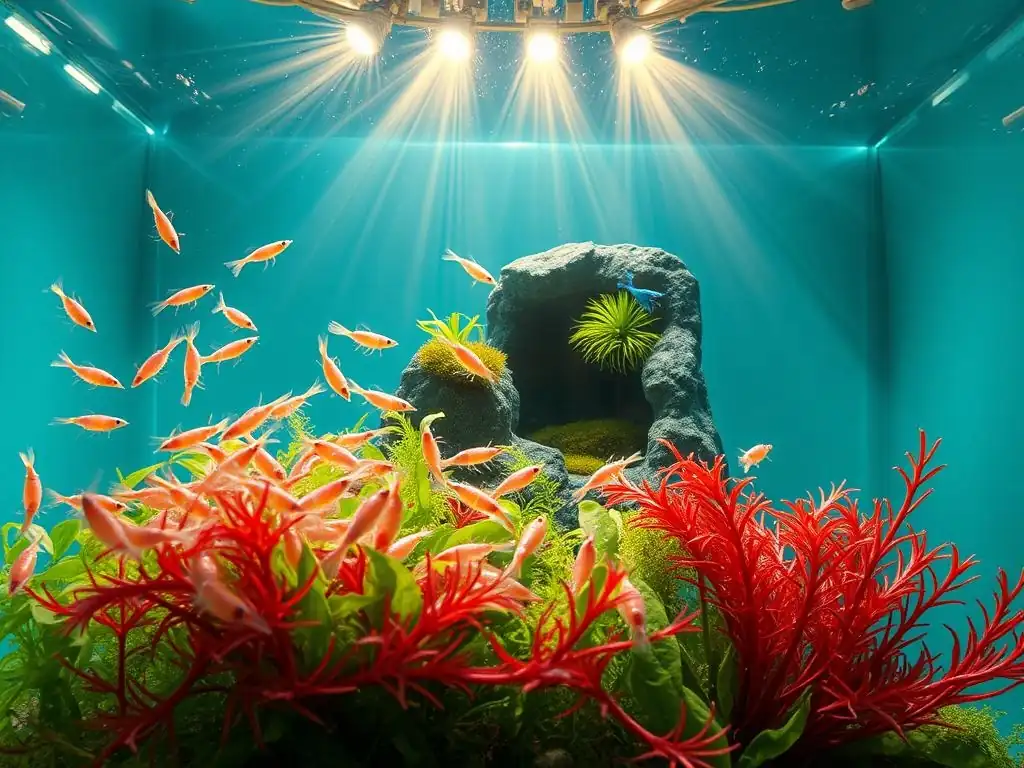
Welcome to Aquarium Mastery, your ultimate guide to thriving aquatic ecosystems!
Ever wondered if your tiny saltwater fish larvae are getting exactly the right light? Dive into our latest article, "Illuminating Larval Rearing: Optimal Photoperiods & Intensity for Healthy Development," where we unlock the secrets to optimal larval rearing photoperiods. Discover how light dramatically impacts their growth and survival, and learn simple adjustments that can make all the difference. Ready to shine a light on success? Let's explore!
- Introduction: The Critical Role of Light in Larval Fish Development
- Understanding Photoperiod and Light Intensity in Larval Rearing
- Optimal Photoperiod Regimes for Larval Rearing
- Light Intensity Recommendations for Different Larval Stages
- Selecting the Right Lighting for Larval Rearing Tanks
- The Impact of Light Spectrum on Larval Development
- Practical Considerations for Implementing Optimal Lighting
- Troubleshooting Lighting Issues in Larval Rearing
- Case Studies: Successful Larval Rearing with Optimized Lighting
- Conclusion: Achieving Healthy Larval Development Through Light Management
-
Frequently Asked Questions
- What is the importance of photoperiod in larval rearing for aquarium fish?
- How does light intensity affect the development of aquarium fish larvae?
- What are the general recommended photoperiods for rearing aquarium fish larvae?
- How can I determine the ideal photoperiod for a specific species of aquarium fish larvae?
- What are some common mistakes to avoid when managing photoperiod during larval rearing?
- Final Reflection: Cultivating Growth Through Light
- Unveil Thriving Fry: Take Control of Your Larval Rearing Today!
Introduction: The Critical Role of Light in Larval Fish Development
Light plays an indispensable role in the delicate process of saltwater fish larval development, extending far beyond mere illumination. It acts as a fundamental environmental cue, orchestrating a cascade of physiological and behavioral responses that dictate a larva's survival, growth, and successful metamorphosis. From the moment of hatching, the presence, duration, intensity, and even the spectrum of light significantly influence everything from visual acuity and feeding efficiency to skeletal formation and stress response.
Without precise control over lighting parameters, even the most meticulously managed larval rearing systems can falter. Suboptimal lighting can lead to developmental abnormalities, reduced growth rates, increased susceptibility to disease, and ultimately, high mortality. Therefore, understanding and implementing the optimal larval rearing photoperiod and light intensity is paramount for any aquarist or aquaculture professional aiming to achieve consistent success in breeding marine fish.
Understanding Photoperiod and Light Intensity in Larval Rearing
Defining Photoperiod: Hours of Light and Dark
Photoperiod refers to the duration of light and dark periods within a 24-hour cycle, expressed typically as L:D (Light:Dark) hours. For instance, a 16L:8D photoperiod signifies 16 hours of light followed by 8 hours of darkness. This rhythmic change acts as a powerful zeitgeber, or "time giver," influencing the larvae's circadian rhythms, which are crucial for regulating internal biological processes such as hormone production, metabolic rates, and feeding schedules.
The correct photoperiod is essential for establishing natural behavioral patterns, including periods of active foraging and necessary rest. An inappropriate photoperiod, such as continuous light or excessive darkness, can disrupt these rhythms, leading to chronic stress, exhaustion, and reduced feeding efficiency. Consequently, carefully managed photoperiods are a cornerstone of optimal larval rearing photoperiod strategies, directly impacting the overall health and developmental trajectory of marine fish larvae.
Understanding Light Intensity: Measuring Lux and PAR for Larvae
Light intensity quantifies the brightness of light received by the larvae. In aquaculture, two primary units are commonly used: lux and PAR (Photosynthetically Active Radiation). Lux measures illuminance, which is the perceived brightness to the human eye, while PAR measures the light available for photosynthesis (400-700 nm wavelengths) and is often expressed in micromoles per square meter per second (µmol/m²/s). For aquatic environments, PAR is generally more relevant as it directly relates to the energy available for biological processes and algal growth.
The appropriate light intensity is critical for larval vision and prey capture. Too low an intensity can hinder a larva's ability to locate and consume microscopic prey, leading to starvation. Conversely, excessively high intensity can cause photostress, damage delicate larval eyes, induce erratic swimming behavior, and even lead to photo-inhibition of critical enzymes. For first-feeding larvae, intensities typically range from 50-200 lux (or 10-40 µmol/m²/s PAR), gradually increasing as larvae grow and their visual systems develop.
Why is Light Crucial for Saltwater Fish Larvae?
Light is crucial for saltwater fish larvae primarily due to its profound impact on their visual development and feeding behavior. Most marine fish larvae are visual feeders, relying on their developing eyes to detect, track, and capture microscopic prey such as rotifers and copepods. The correct light conditions ensure that their retina and other visual structures develop properly, allowing for efficient foraging and nutrient uptake, which are directly correlated with growth and survival.
Beyond vision, light influences a myriad of other vital processes. It plays a role in the development of pigmentation, which is crucial for camouflage and protection in later life stages. Furthermore, light exposure can affect skeletal development, swim bladder inflation, and even the regulation of stress hormones. For instance, inappropriate light has been linked to higher incidences of skeletal deformities in some species. Therefore, carefully managed light conditions are fundamental for the holistic physiological well-being and successful development of marine fish larvae, forming a key component of the optimal larval rearing photoperiod strategy.
Optimal Photoperiod Regimes for Larval Rearing
24-Hour Light Cycle: Pros, Cons, and Suitable Species
A 24-hour light cycle (24L:0D), or continuous illumination, is sometimes considered in larval rearing with the rationale that it maximizes feeding opportunities and potentially accelerates growth by eliminating dark periods where feeding ceases. In very specific commercial aquaculture scenarios, for rapidly growing species or during initial stages where larvae are extremely small and need constant access to food, it might yield a marginal increase in initial growth rates, sometimes reported as a 10-15% acceleration in biomass accumulation in the first few days for certain pelagic species.
However, the cons of continuous light typically outweigh the benefits for most species. Prolonged exposure without a dark period for rest can induce chronic stress, disrupt natural circadian rhythms, and lead to physiological exhaustion.
Studies on species like gilthead seabream ( Sparus aurata) have shown that continuous light can significantly increase the incidence of skeletal deformities, such as scoliosis and lordosis, with rates sometimes reaching 20-30% compared to less than 5% in larvae reared under cycled light. This stress and developmental impairment often result in lower overall survival rates and reduced quality of juveniles, making 24L generally unsuitable for achieving an optimal larval rearing photoperiod.
16L:8D Photoperiod: A Commonly Used Strategy
The 16L:8D photoperiod, consisting of 16 hours of light and 8 hours of darkness, is one of the most widely adopted and successful strategies in marine larval aquaculture. This regime strikes a balance between providing ample light for active feeding and allowing sufficient dark periods for rest, metabolic recovery, and the regulation of critical physiological processes. It mimics the longer daylight hours experienced in tropical and subtropical regions during warmer seasons, aligning with the natural environmental cues for many commonly cultured marine species.
This photoperiod has consistently demonstrated improved growth rates and higher survival percentages compared to continuous light or shorter light cycles for a broad range of species. For instance, in the rearing of ocellaris clownfish ( Amphiprion ocellaris), a 16L:8D cycle is standard practice, promoting consistent feeding behavior and robust development, leading to high survival rates often exceeding 70% to metamorphosis. Similarly, research on European sea bass ( Dicentrarchus labrax) has shown that a 16L:8D photoperiod significantly enhances larval growth and reduces stress markers, making it a cornerstone for achieving an optimal larval rearing photoperiod.
14L:10D Photoperiod: Balancing Growth and Rest
The 14L:10D photoperiod, comprising 14 hours of light and 10 hours of darkness, offers a slightly longer dark period than the 16L:8D cycle, providing an extended rest phase for larvae. This regime can be particularly beneficial for species that might be more sensitive to prolonged light exposure or those that require a longer period of darkness for specific physiological processes, such as melatonin synthesis and metabolic recovery. While still providing ample time for active feeding, the increased dark period can contribute to reduced stress levels and potentially better overall health.
For species that originate from temperate zones or those that exhibit more nocturnal tendencies in their juvenile or adult stages, a 14L:10D cycle can more closely mimic their natural environmental cues. Studies on turbot ( Scophthalmus maximus) larvae, for example, have explored similar photoperiods, finding benefits in terms of reduced stress and optimized growth under specific conditions, especially when transitioning between developmental stages. This photoperiod provides an alternative for aquarists seeking an optimal larval rearing photoperiod that prioritizes physiological recovery and stress mitigation.
Photoperiod Variations for Specific Species
It is critical to recognize that there is no universal "one size fits all" optimal larval rearing photoperiod; requirements vary significantly between species, and sometimes even between different developmental stages of the same species. The natural habitat and behavior of the adult fish often provide clues to the larval needs. For instance, species that are naturally found in deeper, dimmer waters or those with nocturnal adult behaviors might benefit from shorter light periods or even complete darkness during very early larval stages to minimize stress and promote proper development.
Conversely, highly active, visual pelagic feeders might thrive under longer light durations to maximize their feeding opportunities. For example, some studies suggest that certain grouper species ( Epinephelus coioides) may show optimal growth with photoperiods ranging from 15L:9D to 18L:6D depending on the specific larval stage. Conversely, species like seahorses ( Hippocampus reidi) might prefer a more balanced 12L:12D cycle to reduce stress, especially in their early, delicate stages. Successful aquarists consistently rely on detailed species-specific research, careful observation of larval behavior, and iterative adjustments to fine-tune photoperiods for peak performance.
Light Intensity Recommendations for Different Larval Stages
First Feeding Larvae: Low Light Intensity for Optimal Prey Capture
For first-feeding larvae, which are typically very small (e.g., 2-5 mm) and possess underdeveloped visual systems, maintaining a low light intensity is paramount. At this critical stage, larvae are learning to capture microscopic prey like rotifers, which are themselves tiny and often slow-moving. High light intensity can overwhelm their delicate eyes, cause photostress, or make the prey harder to discern against a bright background, leading to reduced feeding efficiency and potential starvation.
Optimal light intensity for this stage usually falls within the range of 50 to 200 lux (approximately 10-40 µmol/m²/s PAR). For instance, in the rearing of Amphiprion ocellaris (clownfish) larvae, an intensity of 100-200 lux is commonly recommended for the first 3-5 days post-hatch. Research on gilthead seabream ( Sparus aurata) larvae has shown that feeding rates are highest at intensities around 50-150 lux during initial feeding, highlighting that a subdued environment is key for successful prey detection and ingestion in the earliest developmental phases. This low intensity is a critical aspect of achieving an optimal larval rearing photoperiod.
Mid-Stage Larvae: Increasing Light Intensity for Growth
As larvae progress into their mid-stage development (typically from day 5-15 post-hatch), their visual acuity significantly improves, and they often transition to consuming larger, more active prey such as Artemia nauplii or copepods. At this point, gradually increasing the light intensity becomes beneficial. Higher light levels facilitate better visual tracking and capture of these faster-moving food items, supporting continued rapid growth and development.
The recommended light intensity for mid-stage larvae generally ranges from 200 to 800 lux (approximately 40-160 µmol/m²/s PAR). For marine angelfish larvae ( Pomacanthidae), increasing light to 300-500 lux by day 10 can significantly enhance their foraging success. Similarly, studies on red drum ( Sciaenops ocellatus) larvae have indicated that boosting light intensity from 100 lux to 500 lux as they grow can improve their growth rates by up to 25%, demonstrating the positive correlation between appropriate light and developmental progress in this crucial phase.
Late-Stage Larvae: Light Acclimation for Metamorphosis
During the late larval stages, as larvae approach metamorphosis and prepare to transition into their juvenile form, a further increase in light intensity is often beneficial. This serves to acclimate them to the brighter conditions they will typically encounter in their natural juvenile habitats, which are often shallower or more exposed than their early pelagic environments. Proper light acclimation during this phase is crucial for ensuring a smooth transition and reducing post-metamorphosis stress.
Light intensities for late-stage larvae can range from 500 to over 1500 lux (approximately 100-300+ µmol/m²/s PAR), depending on the species. For species like barramundi ( Lates calcarifer), increasing light to 800-1000 lux during the metamorphosis phase can promote proper pigmentation and overall development. Research on common sole ( Solea solea) larvae found that higher light intensities, specifically around 700-1200 lux, during the final stages of metamorphosis led to better-developed and more robust juveniles, underscoring the importance of this light acclimation for successful transition.
Selecting the Right Lighting for Larval Rearing Tanks
LED Lighting for Larval Culture: Efficiency and Spectrum Control
LED (Light Emitting Diode) lighting has become the preferred choice for modern larval culture due to its numerous advantages. LEDs are remarkably energy-efficient, often consuming up to 70% less energy than traditional fluorescent lamps, leading to significant cost savings over time. Their exceptionally long lifespan, typically exceeding 50,000 hours, drastically reduces maintenance and replacement frequencies.
Crucially, LEDs offer unparalleled control over the light spectrum and intensity. Modern LED fixtures allow aquarists to precisely tune specific wavelengths (e.g., blue, red, green) and dim the output, enabling dynamic adjustments to meet the evolving needs of larvae at different developmental stages. For instance, a common setup might utilize a combination of 450-470nm blue LEDs and 6500K white LEDs, allowing for fine-tuning of the optimal larval rearing photoperiod and intensity. This precise control helps optimize feeding behavior, reduce stress, and promote healthier development, making LEDs an invaluable tool for advanced larval rearing.
Fluorescent Lighting Options: Considerations for Larval Sensitivity
Fluorescent lighting, particularly T5 and T8 lamps, remains a viable and often more affordable initial option for larval rearing, though it comes with certain considerations. These lights are widely available and relatively inexpensive to purchase upfront. They can provide a broad spectrum, with common choices like 6500K "daylight" bulbs mimicking natural sunlight to some extent.
However, fluorescent lights are less energy-efficient than LEDs, typically operating at 20-30% lower efficiency, and have a shorter operational lifespan, usually between 10,000 to 20,000 hours, necessitating more frequent replacements. A significant consideration for larval sensitivity is the potential for flicker, which can be stressful for highly delicate and developing larvae. Furthermore, their fixed spectrum offers less flexibility for precise wavelength adjustments compared to tunable LED systems, making it more challenging to meet the exact, evolving light requirements for an optimal larval rearing photoperiod.
Avoiding Overheating: Managing Light-Generated Heat
One critical consideration when selecting and implementing lighting for larval rearing tanks is the management of heat generated by the light source. Even seemingly minor temperature increases can have detrimental effects on delicate larval fish, as they are highly sensitive to thermal fluctuations. Elevated water temperatures can increase metabolic stress, reduce dissolved oxygen levels, and promote the proliferation of pathogenic bacteria, leading to increased mortality rates. A temperature increase of even 1-2°C above the optimal range can significantly impact larval health.
Modern LED fixtures typically generate less heat than traditional fluorescent or incandescent lights, making them a safer choice. However, in small larval rearing volumes, even LEDs can raise water temperatures if not properly managed. Practical solutions include ensuring adequate air circulation around the light fixture and the tank, maintaining a sufficient distance between the light source and the water surface (e.g., 6-12 inches depending on intensity), and for higher intensity setups, considering the use of a chiller or fan to maintain precise temperature control.
The Impact of Light Spectrum on Larval Development
The Role of Blue Light in Larval Vision and Development
Blue light, typically within the 450-490 nm wavelength range, plays a uniquely critical role in the vision and overall development of marine fish larvae. In natural marine environments, blue light penetrates water most deeply, making it the dominant wavelength available for vision in many aquatic organisms. Marine fish larvae have visual pigments highly sensitive to these blue wavelengths (often peaking around 480 nm), which are essential for accurately detecting and capturing their microscopic prey in the water column.
Beyond vision, appropriate levels of blue light have been linked to enhanced pigmentation and even improved phototaxis (movement towards or away from light), which can influence feeding efficiency and spatial distribution within the rearing tank. Research indicates that a lack of sufficient blue light can impair visual system development. For instance, some studies suggest that a higher proportion of blue light in the overall spectrum can lead to a 10-15% increase in feeding efficiency in certain snapper larvae, highlighting its importance for an optimal larval rearing photoperiod.
Red Light and its Effects on Larval Growth and Pigmentation
Red light, generally within the 600-700 nm wavelength range, penetrates water very poorly compared to blue or green light and is therefore less relevant for the primary visual processes of most marine fish larvae in their natural pelagic environments. High levels of red light in larval rearing have often been associated with negative effects, including increased stress, abnormal pigmentation, and in some cases, reduced growth rates, as it can disrupt natural photoperiodic cues.
However, the role of red light is nuanced and species-specific. While generally avoided as a dominant spectral component, very low levels or specific narrow bands of red light might have subtle influences on physiological processes not directly related to vision, such as the regulation of circadian rhythms or stress responses in certain species. For example, some limited research on freshwater species suggests that a minimal red component might aid in stress reduction, a principle that may warrant further exploration in marine aquaculture for specific applications or species where an optimal larval rearing photoperiod is sought.
Full Spectrum Lighting: Replicating Natural Sunlight
Full spectrum lighting aims to replicate the broad range of wavelengths present in natural sunlight, typically covering the visible spectrum from ultraviolet (UV) to infrared (IR), though for practical aquarium use, it primarily focuses on a balanced visible light spectrum (e.g., 6500K-10000K white light). This holistic approach provides a comprehensive range of wavelengths that can support a wider array of biological processes beyond just vision, contributing to more robust and natural larval development.
The benefits of full spectrum lighting include promoting better overall physiological well-being, enhancing immune response, and ensuring more natural and complete development of pigmentation and skeletal structures. Larvae reared under a balanced full spectrum (often achieved with tunable LEDs that combine white, blue, and sometimes red components) tend to exhibit lower stress markers and more consistent growth trajectories compared to those under monochromatic or unbalanced lighting. This approach is highly valued for achieving an optimal larval rearing photoperiod that closely mimics natural conditions.
Practical Considerations for Implementing Optimal Lighting
Light Meter Calibration and Monitoring
Accurate measurement and consistent monitoring of light levels are non-negotiable for successful larval rearing. Relying solely on subjective assessment or manufacturer specifications for light fixtures can lead to significant discrepancies in actual tank conditions. A calibrated PAR (Photosynthetically Active Radiation) meter is the preferred tool for aquatic environments, as it measures the light wavelengths relevant for biological processes (µmol/m²/s PAR). Alternatively, a lux meter can provide useful comparative data.
Regular measurements, ideally daily or at least weekly, should be taken at the water surface and at mid-depth within the larval rearing tank. This ensures that the desired light intensity is consistently reaching the larvae. Meticulous record-keeping of these readings, alongside observations of larval behavior, feeding success, and developmental stages, is invaluable. This data allows aquarists to refine their lighting protocols, make informed adjustments as larvae grow, and establish repeatable, successful strategies for achieving an optimal larval rearing photoperoperiod.
Gradual Acclimation to Light Changes
Sudden and abrupt changes in light intensity or photoperiod can be highly stressful and detrimental to delicate fish larvae. In their natural environment, light levels transition gradually from dawn to dusk. Replicating this natural progression is crucial for minimizing stress, promoting stable behavior, and ensuring optimal development. Abrupt shifts can induce "light shock," manifesting as erratic swimming, reduced feeding, and increased mortality.
To avoid this, it is highly recommended to use dimmable light fixtures connected to timers that offer ramp-up and ramp-down functions. Implementing a gradual "sunrise" and "sunset" period, typically lasting 30-60 minutes, allows larvae to slowly acclimate to increasing or decreasing light levels. This smooth transition reduces stress, encourages more natural feeding behavior, and helps maintain the physiological equilibrium of the larvae, contributing significantly to the success of an optimal larval rearing photoperiod strategy.
Preventing Algae Growth in Larval Tanks
While light is essential for larval development, it also fuels the growth of algae, which can become a significant problem in larval rearing tanks. The combination of ample light, high nutrient loads from larval feeds, and fish waste creates ideal conditions for rapid algal blooms, particularly diatoms and green algae. Excessive algae can compete with larvae for dissolved oxygen, foul tank surfaces and equipment, obscure visibility, and even interfere with larval feeding by making prey harder to see.
Effective strategies for preventing excessive algae growth include maintaining appropriate light intensity (avoiding over-lighting), implementing a well-managed optimal larval rearing photoperiod, and rigorously controlling nutrient levels. This involves frequent and substantial water changes (e.g., 20-30% daily), efficient mechanical and biological filtration, and careful management of feeding rates to minimize uneaten food. Manual removal of algae from tank walls and equipment, along with ensuring proper water circulation, are also vital steps in keeping larval tanks clean and conducive to healthy larval development.
Troubleshooting Lighting Issues in Larval Rearing
Identifying and Addressing Light Shock in Larvae
Light shock is a common and serious issue in larval rearing, often caused by sudden, drastic changes in light intensity or photoperiod. Symptoms of light shock are typically evident in the larvae's behavior: they may exhibit frantic, erratic swimming, darting uncontrollably around the tank, or crashing into the tank walls. Other signs include attempting to hide in shaded areas, huddling together in corners, or a noticeable reduction in feeding activity. These behaviors indicate acute stress and discomfort.
If light shock is observed, immediate action is required. The first step is to reduce the light intensity to a lower, more comfortable level (e.g., by 30-50%) and maintain it for a few hours while observing the larvae. Going forward, all adjustments to light intensity or photoperiod must be made gradually, over several hours or even days, using dimmers and ramp-up/down functions on timers. This incremental approach allows the larvae to acclimate slowly, minimizing stress and ensuring the stability of the optimal larval rearing photoperiod.
Dealing with Excessive Algae Blooms Due to Lighting
Excessive algae blooms are a frequent challenge in larval rearing, often exacerbated by imbalanced lighting. Symptoms include a visible green or brown film accumulating on tank surfaces, equipment, and sometimes even the larvae themselves. The water may appear cloudy or tinted, significantly reducing visibility within the tank. The primary causes are typically high light intensity or prolonged photoperiod combined with elevated nutrient levels from feeding and waste.
To address an excessive algae bloom, a multi-pronged approach is necessary. First, slightly reduce the light intensity or shorten the photoperiod by an hour or two, carefully observing larval behavior for any signs of stress. Simultaneously, increase the frequency and volume of water changes (e.g., 50% daily) to rapidly remove excess nutrients.
Manual scrubbing of tank walls and equipment is essential, as is ensuring that mechanical filtration is clean and functioning efficiently. In some cases, a short blackout period (e.g., 24-48 hours, if larvae can tolerate it without feeding issues) can help reset the tank, followed by re-establishing an optimal larval rearing photoperiod.
Adjusting Lighting for Different Species and Water Conditions
A fundamental principle in larval rearing is that there is no universal "optimal" lighting formula; adjustments must be tailored to specific species and prevailing water conditions. Different marine fish species originate from diverse natural habitats, ranging from bright, shallow reefs to deeper, dimmer waters, and their larval stages reflect these adaptations. For example, the larvae of a pelagic, visual feeder like a tuna will have vastly different light requirements compared to a benthic, cryptic species like a gobies.
Furthermore, water conditions such as clarity and turbidity significantly influence the effective light reaching the larvae. Turbid water, for instance, will require higher external light intensity to achieve the same effective illumination within the tank. Aquarists must engage in continuous observation of larval behavior (feeding vigor, stress signs, distribution in the tank), consult scientific literature for species-specific guidelines, and be prepared to make iterative, small adjustments to both photoperiod and intensity. This dynamic and responsive approach is key to achieving the optimal larval rearing photoperiod for diverse marine fish species.
Case Studies: Successful Larval Rearing with Optimized Lighting
Case Study 1: Atlantic Cod ( Gadus morhua) - Improved Survival Rates with Specific Photoperiod
Atlantic Cod ( Gadus morhua) larval rearing historically presented significant challenges for commercial aquaculture, often plagued by high mortality rates and developmental deformities. Early attempts frequently employed continuous illumination (24L:0D) with the aim of maximizing feeding time and growth. However, extensive research conducted in the early 2000s, particularly by Norwegian aquaculture scientists, revealed that this strategy was detrimental, leading to chronic stress, disrupted swim bladder inflation, and a high incidence of skeletal deformities, severely compromising larval quality and survival.
A pivotal shift in methodology involved transitioning from continuous light to a specific, cycled photoperiod, often 12L:12D or 16L:8D, combined with relatively low light intensities (e.g., 100-300 lux). This optimized larval rearing photoperiod dramatically improved results. Survival rates, which were frequently below 5% under continuous light, saw increases to 15-20% or even higher for some batches. Additionally, the incidence of jaw deformities and swim bladder inflation issues significantly decreased, demonstrating that providing a crucial dark period for rest and physiological regulation was paramount for the successful and healthy development of Atlantic Cod larvae.
Case Study 2: Clownfish ( Amphiprioninae) - Enhanced Growth Using Targeted Light Intensity
Clownfish ( Amphiprioninae), particularly species like the ocellaris clownfish ( Amphiprion ocellaris), are among the most popular marine ornamental fish and are widely bred in captivity. While relatively robust, optimizing their larval development is key to achieving high survival rates and producing healthy, market-ready juveniles efficiently. Many novice breeders initially use a static light intensity throughout the larval phase, which, while functional, often falls short of maximizing growth and vitality.
Experienced breeders and research have refined lighting protocols for clownfish larvae, employing a targeted, staged increase in light intensity. For first-feeding Amphiprion ocellaris larvae (days 1-3 post-hatch), an intensity of 100-200 lux is commonly applied.
This is then gradually increased to 300-500 lux by day 5-7, and further to 600-800 lux by day 10-14 as they approach metamorphosis. This precise, increasing light intensity, coupled with a consistent 16L:8D optimal larval rearing photoperiod, has been shown to result in larvae reaching metamorphosis size (e.g., 10-12 mm) several days earlier and with significantly higher survival rates, often exceeding 70-90% from hatch to juvenile stage.
Conclusion: Achieving Healthy Larval Development Through Light Management
Key Takeaways: Photoperiod and Light Intensity for Success
The successful rearing of saltwater fish larvae hinges critically on the precise management of light. It is unequivocally clear that light is not merely a background element but a paramount environmental cue that dictates every facet of larval development, from visual acuity and feeding efficiency to growth rates, skeletal integrity, and stress response. The precise control over both photoperiod – the duration of light and dark cycles – and light intensity, measured in lux or PAR, directly influences the physiological and behavioral well-being of these delicate organisms.
Therefore, aquarists must approach lighting as a dynamic and highly influential variable within their rearing systems. Success demands continuous observation, meticulous record-keeping, and a deep understanding of species-specific requirements. By implementing carefully considered lighting strategies that include appropriate photoperiods, staged intensity adjustments, and suitable spectral qualities, breeders can significantly enhance survival rates, produce healthier and more robust juveniles, and ultimately contribute to more sustainable and productive aquaculture practices. Mastering the optimal larval rearing photoperiod is a cornerstone for consistent success.
Frequently Asked Questions
What is the importance of photoperiod in larval rearing for aquarium fish?
Photoperiod, the duration of light exposure, significantly impacts larval development. It influences feeding behavior, growth rates, and overall survival in early life stages.
How does light intensity affect the development of aquarium fish larvae?
Light intensity is crucial; too little light hinders feeding efficiency, while too much can cause stress and damage developing eyes. Finding the optimal balance is key for healthy growth.
What are the general recommended photoperiods for rearing aquarium fish larvae?
While species-specific, common practices involve longer photoperiods, such as 16 hours of light and 8 hours of darkness (16L:8D), to maximize feeding opportunities. However, careful observation is crucial.
How can I determine the ideal photoperiod for a specific species of aquarium fish larvae?
Research the species' natural habitat and spawning behavior to understand their light requirements. Observe larval behavior under different photoperiods and adjust accordingly.
What are some common mistakes to avoid when managing photoperiod during larval rearing?
Avoid sudden changes in photoperiod or intensity, which can shock the larvae. Also, ensure the light source is appropriate for aquatic environments and doesn't overheat the water.
Final Reflection: Cultivating Growth Through Light
The insights shared throughout this article underscore the critical role of light in optimizing larval rearing, a practice with profound implications for aquaculture and species conservation. Understanding and implementing optimal photoperiods and intensities is no longer a niche concern, but a vital necessity for ensuring the healthy development and sustainable production of aquatic life, especially as we face increasing demands on our marine resources.
This journey into the science of light and larval development has highlighted the delicate balance required to nurture life in its earliest stages. The meticulous attention to detail, the careful calibration of light, and the unwavering commitment to understanding the needs of these tiny creatures resonate deeply with the broader human endeavor to cultivate growth and foster well-being. Give me a fish, and I eat for a day. Teach me to fish, and I eat for a lifetime.
This ancient proverb reminds us that investing in knowledge and sustainable practices, like optimal larval rearing, is an investment in the future.
Now, as you step away from this exploration of optimal larval rearing photoperiods, consider how the principles of careful observation, precise application, and unwavering dedication to nurturing growth can be applied in your own life. Whether you are a researcher, a farmer, or simply someone who cares about the future of our planet, let the lessons learned here inspire you to seek out the optimal conditions for growth and flourishing, both within yourself and in the world around you.
Unveil Thriving Fry: Take Control of Your Larval Rearing Today!
Thank you for diving deep into the world of larval rearing and photoperiods! Now that you're armed with the knowledge to optimize light for healthy fry development, it's time to put that knowledge into practice and witness the difference it makes.
Here are a few actions you can take right now to enhance your larval rearing success:
- Implement a controlled lighting schedule: Start experimenting with the optimal photoperiods discussed in the article, closely monitoring your fry's growth and behavior for signs of improvement.
- Share your rearing setups: Post photos and details of your larval rearing setup, including lighting, on aquarium-related forums or social media groups, sharing your own experiences.
- Research specific lighting needs: Investigate the ideal light intensity range for the specific species of fry you are raising, tailoring your approach for maximum health.
What photoperiod will you experiment with first, and what indicators will you use to assess improved fry health?