
Photographing Your Barbs: Tips for Capturing Their Speed and Beauty

Welcome to Aquarium Mastery, your ultimate guide to thriving aquatic ecosystems!
Ever tried capturing the electric energy of your barbs in a photograph? It's trickier than it looks! This article dives deep into Barbs aquarium photography tips, revealing the secrets to capturing their vibrant colors and lightning-fast movements. Get ready to unlock stunning visuals and truly showcase the beauty of your finned friends – let's make some magic happen!
- Photographing Tiger Barbs: Capturing Their Stripes and Energy
- Mastering Tiger Barb Aquarium Photography: Introduction
- Essential Equipment for Tiger Barb Photography
- Tiger Barb Photography Techniques: Capturing the Action
- Post-Processing Tiger Barb Aquarium Photos
- Advanced Tiger Barb Photography Techniques
- Troubleshooting Common Tiger Barb Photography Problems
- Conclusion: Elevating Your Tiger Barb Aquarium Photography Skills
-
Frequently Asked Questions
- How can I get sharp photos of my fast-moving Barbs in my aquarium?
- What lighting techniques work best for photographing Barbs in an aquarium?
- What camera settings are recommended for aquarium photography, especially for active fish like Barbs?
- How can I minimize distractions and clutter in my Barb aquarium photos?
- What are some creative composition ideas for photographing Barbs?
- Final Reflection: Capturing Fleeting Beauty
- Capture the Spark: Start Your Barb Photo Album Today!
Photographing Tiger Barbs: Capturing Their Stripes and Energy
Mastering Tiger Barb Aquarium Photography: Introduction
Tiger Barb Color Variations and Fin Types for Photography
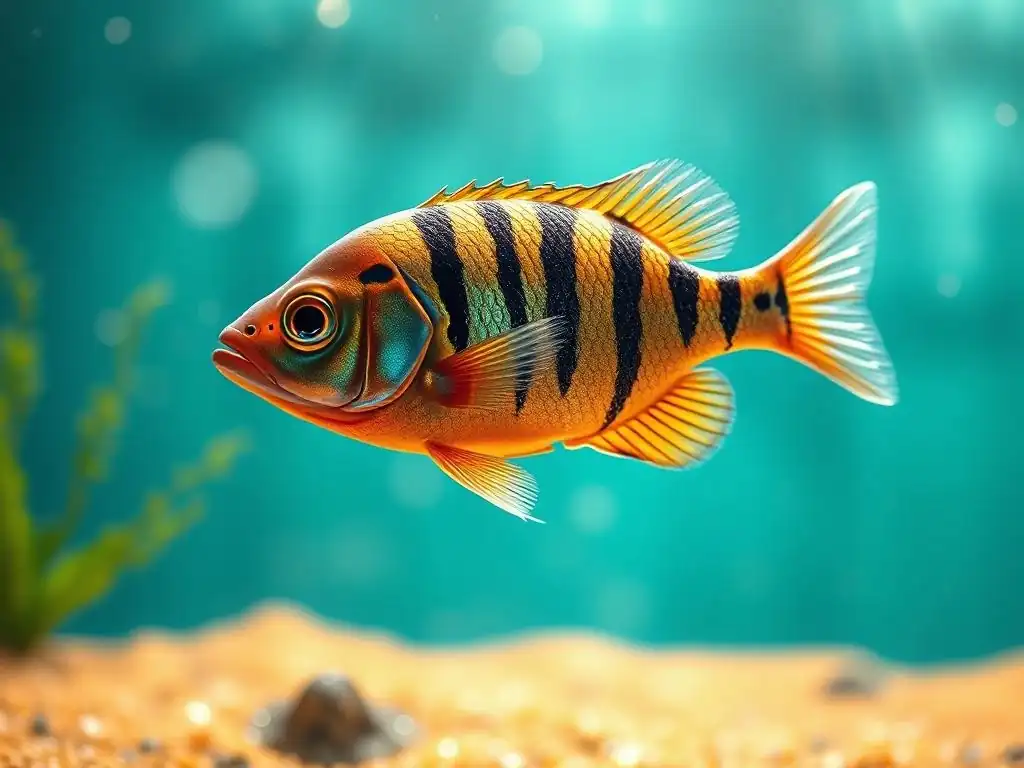
Tiger barbs, scientifically known as Puntigrus tetrazona, are renowned for their striking orange and black striped patterns. However, aquarists often encounter variations like the green tiger barb, which has a deeper, almost metallic green hue, or the albino tiger barb, displaying a more subtle orange on a creamy white body.
Each variation presents unique photographic opportunities and challenges; for instance, capturing the delicate orange of an albino barb might require softer lighting to prevent overexposure, while the vibrant green of its counterpart can pop against a simple background. Understanding these specific colorations is vital for effective barbs aquarium photography tips, allowing you to adjust your camera settings and lighting to highlight their distinct beauty.
Beyond color, the fin types of tiger barbs also influence photographic outcomes. The standard tiger barb possesses short, compact fins that contribute to its agile, darting movements. In contrast, the long-fin tiger barb, a selectively bred variant, sports flowing, elongated fins that add a graceful, almost ethereal quality to its appearance.
Capturing these longer fins in motion requires even faster shutter speeds to prevent blurring, yet when frozen, they can create a stunning visual impact. Emphasizing the translucency and delicate structure of their fins, especially when subtly backlit, can add an artistic dimension to your tiger barb photos, making them stand out.
Predicting Tiger Barb Shoaling Behavior: Key to Successful Shots
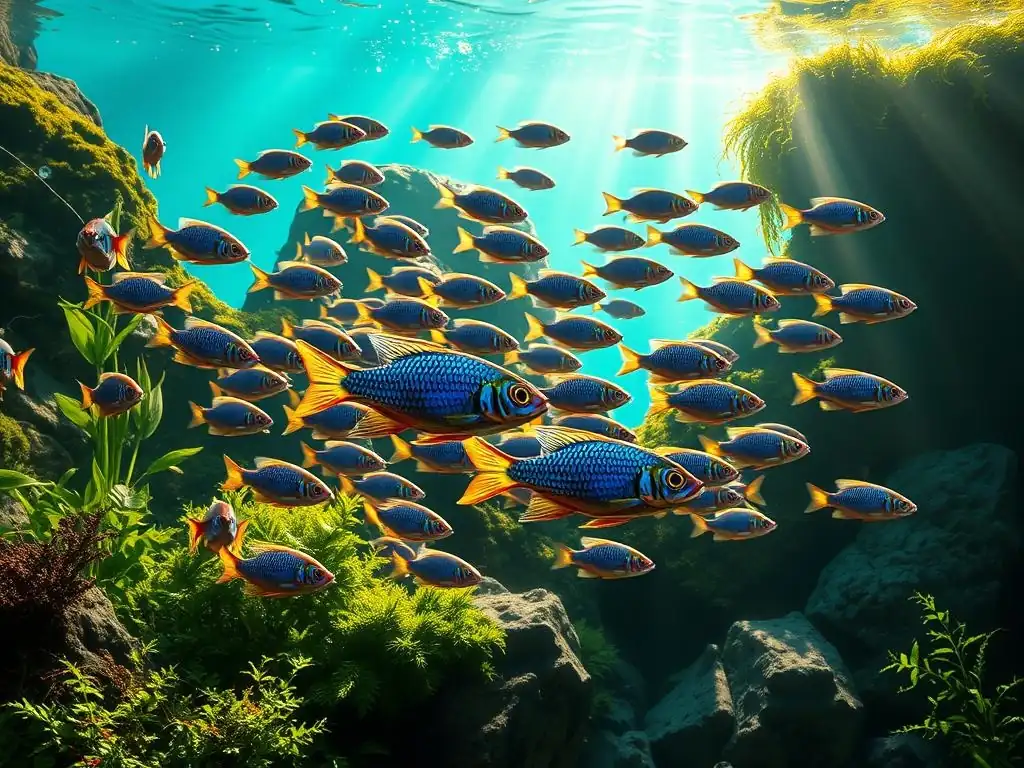
Tiger barbs are quintessential schooling fish, typically moving in dynamic groups of five to ten or more individuals. Their erratic, rapid swimming patterns are both a hallmark of their species and a significant challenge for aquarium photography. Successful barbs aquarium photography tips often involve observing their routine behavior: they might dart through plant thickets, gather in open water, or briefly pause near a piece of driftwood.
For example, they often exhibit heightened activity shortly after feeding, making this a prime window for capturing energetic group shots. Patience and anticipation are paramount; waiting for those fleeting moments when the school briefly congregates or an individual pauses can yield remarkably sharp and well-composed images.
Their tendency to make sudden, unpredictable bursts of speed necessitates a responsive photographic approach. Instead of trying to chase them with your camera, identify areas in your tank where they frequently pass or linger. You might notice they often circle a particular plant or use a specific rock as a temporary resting spot.
By anticipating these movements, you can pre-focus on a likely spot and be ready to press the shutter as they enter the frame. Capturing the entire school in a cohesive shot, rather than just isolated individuals, truly highlights their natural behavior and the vibrant energy they bring to an aquarium.
Optimizing Your Aquarium Environment for Tiger Barb Photography
The clarity and cleanliness of your aquarium are foundational to successful barbs aquarium photography. Dust, fingerprints, and water spots on the outside glass, or algae and detritus on the inside, can severely degrade image quality, appearing as distracting blurs or spots in your photos.
A thorough cleaning of both the interior and exterior glass surfaces immediately before a photography session is non-negotiable. Furthermore, pristine water quality is crucial; water that is clear, free of suspended particles, and maintained within optimal parameters (e.g., pH 6.0-7.0, GH 5-12 dGH) not only makes for sharper images but also ensures the tiger barbs display their most vibrant colors and healthy fins, which are essential for compelling photographs.
Strategic placement of aquarium decor and choice of substrate can significantly enhance your tiger barb photos. A simple, uncluttered background, such as a plain black or dark blue backdrop, allows the vivid orange and black stripes of the barbs to truly stand out. Avoid overly busy backgrounds that can distract from your subjects.
For substrate, fine sand or dark gravel can offer excellent contrast. Incorporating natural elements like smooth river stones, carefully placed driftwood, or lush, hardy plants such as Anubias barteri or Java Fern can provide visual interest, leading lines, or natural framing for your fish, elevating the aesthetic appeal of your barbs aquarium photography.
Essential Equipment for Tiger Barb Photography
Choosing a DSLR or Mirrorless Camera for Aquarium Photography
When it comes to barbs aquarium photography, a DSLR (Digital Single-Lens Reflex) or a mirrorless camera offers significant advantages over smartphone cameras, primarily due to their larger sensors and the flexibility of interchangeable lenses. These cameras provide superior low-light performance, crucial for capturing fast-moving fish in an often dimly lit tank environment, and boast a greater dynamic range, allowing you to capture detail in both the bright highlights of a barb's scales and the darker shadows of the tank.
Entry-level to mid-range models, such as a Canon Rebel series (e.g., T7i or SL3) or a Sony Alpha a6000 series, are excellent starting points, offering manual controls and good image quality without a prohibitive price tag.
The choice between an APS-C (cropped sensor) and a full-frame sensor camera also impacts your photography. APS-C cameras, like the Nikon D5600 or Fujifilm X-T30, have a crop factor that effectively extends the reach of your lenses, which can be beneficial for getting closer shots of smaller fish without needing to physically move closer to the tank.
Full-frame cameras, such as a Canon EOS R or Sony Alpha a7 III, excel in low light due to their larger pixels and typically produce a shallower depth of field, ideal for isolating a single tiger barb with a beautifully blurred background. While full-frame options are often more expensive, their performance in challenging lighting conditions can be a game-changer for serious aquarium photography.
Best Macro Lenses for Capturing Tiger Barb Details
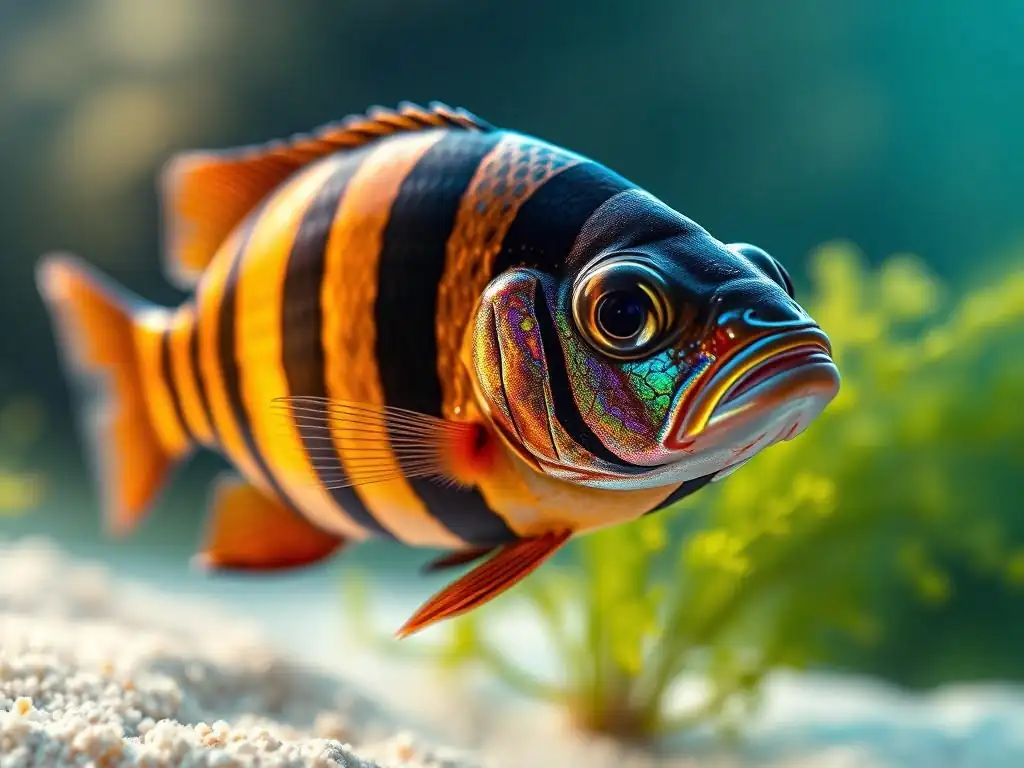
For capturing the intricate details of tiger barbs, from the texture of their scales to the delicate structure of their fins, a macro lens is an indispensable tool. These specialized lenses allow for much closer focusing distances and higher magnification ratios than standard lenses, enabling you to fill the frame with a single fish and reveal details often invisible to the naked eye.
Common focal lengths for macro lenses suitable for aquarium photography range from 60mm to 100mm. A 100mm macro lens, for instance, provides a comfortable working distance from the tank, minimizing the risk of startling the fish while still achieving stunning close-ups.
Examples of highly regarded macro lenses include the Canon EF 100mm f/2.8L Macro IS USM, the Nikon AF-S VR Micro-Nikkor 105mm f/2.8G IF-ED, or the Tamron SP 90mm f/2.8 Di Macro. These lenses are renowned for their exceptional sharpness and often include image stabilization, which can be beneficial even when using a tripod.
For smaller tanks or when working in tighter spaces, a shorter macro lens like a 60mm (e.g., Nikon AF-S DX Micro NIKKOR 40mm f/2.8G for DX-format cameras or dedicated mirrorless macro lenses) can be more practical. Investing in a quality macro lens is one of the best barbs aquarium photography tips for elevating the detail and artistry of your shots.
LED Lighting Techniques for Stunning Tiger Barb Photos
Proper lighting is paramount for stunning barbs aquarium photography, and LED aquarium lights offer excellent control and versatility. While natural sunlight can be effective, it's often inconsistent and can introduce unwanted glare. Full-spectrum LED lighting designed for aquariums not only supports plant growth but also enhances the natural colors of your tiger barbs, making their orange and black stripes truly pop. For photography, consider supplementing your tank's built-in LEDs with external light sources, such as small LED video panels or even ring lights, positioned strategically to illuminate the fish without creating harsh reflections on the glass.
Effective LED lighting techniques involve positioning. Aim to position your external lights at a 45-degree angle from the front of the tank and slightly above to minimize glare and create more natural-looking shadows and highlights on the fish. Experiment with the intensity; too bright can wash out colors, while too dim will necessitate higher ISO settings, leading to noise.
For a typical 20-gallon tank, a 30W LED panel might provide sufficient illumination. Using diffusers or softboxes over your external LEDs can soften the light, reducing harsh shadows and reflections, and providing a more even, flattering illumination for your tiger barbs.
Polarizing Filters for Avoiding Reflections and Glare
One of the most frustrating aspects of barbs aquarium photography is dealing with reflections and glare from the tank glass. A circular polarizing filter (CPL) is an essential accessory that attaches to the front of your camera lens and can dramatically mitigate these issues. By rotating the outer ring of the CPL, you can effectively cut down reflections from ambient room light, windows, or even your own reflection, allowing the camera to "see through" the glass and capture the fish more clearly.
A CPL can reduce reflections by 50-70%, revealing the vibrant colors and intricate details of your tiger barbs that would otherwise be obscured. This simple yet powerful tool is a cornerstone of professional aquarium photography.
Tripods and Remote Shutter Release for Sharp Images
Achieving tack-sharp images in barbs aquarium photography, especially of fast-moving subjects, often requires absolute camera stability. A sturdy tripod is indispensable for this purpose. It eliminates camera shake, which can cause blur, particularly when using slower shutter speeds or in lower light conditions. A tripod allows you to precisely frame your shot and maintain that composition consistently, which is invaluable when waiting for a tiger barb to swim into the perfect position. For instance, a robust carbon fiber tripod can significantly reduce minute vibrations, leading to noticeably sharper details in your fish portraits.
To further enhance sharpness and completely eliminate any camera movement caused by pressing the shutter button, a remote shutter release is highly recommended. This device, whether wired or wireless, triggers the camera without you physically touching it. Many modern cameras also offer built-in Wi-Fi capabilities, allowing you to use a smartphone app as a remote trigger.
This level of control is critical for maximizing sharpness, especially when employing longer exposures or when trying to capture a precise moment of stillness in your tiger barb subjects. Using both a tripod and a remote release is a fundamental piece of barbs aquarium photography tips for professional-looking results.
Tiger Barb Photography Techniques: Capturing the Action
Shutter Speeds of 1/250s or Faster for Freezing Movement
Tiger barbs are known for their incredibly active and often erratic swimming. To freeze their rapid movements and prevent motion blur in your barbs aquarium photography, a fast shutter speed is absolutely essential. A minimum shutter speed of 1/250s is generally recommended to capture their fin movements without blur. However, for truly sharp images of a tiger barb mid-dart or during a quick turn, shutter speeds of 1/500s or even 1/1000s might be necessary. The faster the shutter speed, the more effectively you can "stop" the action, capturing every detail of their dynamic presence.
The trade-off for using such fast shutter speeds is the increased demand for light. If your aquarium lighting is insufficient, you will need to compensate by increasing your camera's ISO sensitivity or widening your lens's aperture. For example, in a well-lit 30-gallon tank with healthy tiger barbs, a shutter speed of 1/400s can often be achieved while maintaining an acceptable ISO level, ensuring both sharpness and minimal digital noise. Experimentation with different shutter speeds in your specific lighting conditions will help you find the optimal balance for freezing the vibrant energy of your tiger barbs.
Aperture Settings Between f/2.8 and f/5.6 for Depth of Field
Aperture plays a crucial role in controlling the depth of field (DoF), which determines how much of your image is in focus. For barbs aquarium photography, an aperture setting between f/2.8 and f/5.6 is often ideal. A wider aperture (smaller f-number like f/2.8 or f/4) creates a shallower DoF, which means only a narrow plane of your image will be in sharp focus, effectively blurring the background and foreground.
This technique is excellent for isolating a single tiger barb, making it stand out vividly against a soft, dreamy backdrop and drawing the viewer's eye directly to your subject. For instance, an f/4 aperture on a 100mm macro lens can create a beautiful separation between the fish and the tank's interior.
When photographing a small school of tiger barbs, you might opt for a slightly narrower aperture, such as f/5.6, to ensure that more of the fish within the group are in focus. While this will result in a slightly deeper DoF and a less blurred background, it ensures that multiple subjects remain sharp.
The challenge with a very shallow DoF and fast-moving fish is the extremely narrow margin for error in focusing. Balancing the desire for background blur with the need for sharpness across your subjects is a key consideration for effective barbs aquarium photography tips, requiring careful attention to your aperture choice.
For capturing sharp images of erratic and fast-moving subjects like tiger barbs, mastering back-button focusing can significantly improve your hit rate. This technique separates the autofocus activation from the shutter button, typically assigning autofocus to a dedicated button on the back of your camera (e.g., AF-ON button).
This allows you to focus once, release the back button, and then recompose your shot or wait for the perfect moment to press the shutter without the camera continuously refocusing. For tiger barbs, this means you can pre-focus on a specific spot in the tank where you anticipate the fish will swim, then simply press the shutter when they enter that plane of focus.
This method provides greater control and precision compared to the traditional half-press of the shutter button for focusing. With back-button focus, you can acquire focus on a piece of decor or a plant, then wait for a tiger barb to swim into that sharply focused area, allowing you to fire off a burst of shots at precisely the right moment. This ensures that your focus point remains locked, even if the fish moves slightly off-center, giving you a better chance of nailing critical focus on these agile subjects, a valuable skill in barbs aquarium photography.
Manual Focus for Precise Control Over Focus
While autofocus systems in modern cameras are highly capable, manual focus (MF) offers ultimate precision and control, especially in challenging aquarium photography conditions like low light, through reflections, or when focusing on very specific details. For barbs aquarium photography, MF can be particularly useful when your camera is mounted on a tripod and you're aiming for a static composition. You can manually set your focus on a precise point within the tank, such as a particular plant leaf or a piece of driftwood, and then patiently wait for a tiger barb to swim into that exact plane of focus.
This technique removes any potential "hunting" by the autofocus system, which can struggle with fast-moving subjects or through glass and water distortions. By using MF, you dictate exactly what is sharp, ensuring that your chosen subject is perfectly rendered. Many cameras offer focus peaking or magnification aids in live view mode, which highlight in-focus areas, making manual focusing easier and more accurate for critical shots of your tiger barbs.
Composition Tips for Visually Appealing Tiger Barb Photos
Effective composition transforms a simple snapshot into a visually appealing image in barbs aquarium photography. Avoid simply centering your tiger barb; instead, consider using leading lines created by plants, rocks, or driftwood to guide the viewer's eye towards your subject. Look for opportunities to utilize negative space around the fish, giving the subject room to "breathe" within the frame and preventing a cluttered feel. The goal is to ensure the tiger barb is the undisputed focal point of the image, free from distracting elements.
Experiment with different angles and perspectives to add variety to your tiger barb photos. Shooting slightly from above can highlight the unique dorsal patterns and schooling behavior of a group of barbs. Conversely, getting down to eye-level with the fish creates a more intimate and engaging portrait, making the viewer feel as if they are part of the aquatic world. Don't be afraid to fill the frame with your subject for striking close-ups, or pull back slightly to capture the fish within its natural habitat, showcasing the beauty of your overall tank setup.
Rule of Thirds for Dynamic Composition
The Rule of Thirds is a fundamental compositional guideline that can dramatically improve the visual appeal of your barbs aquarium photography. Imagine dividing your camera's frame into nine equal sections using two equally spaced horizontal lines and two equally spaced vertical lines. Instead of placing your tiger barb directly in the center, position your main subject or key elements of a schooling group along these lines or at their intersections (often called "power points"). This off-center placement creates a more dynamic, balanced, and engaging image that is more pleasing to the eye than a centrally located subject.
For example, when photographing a single tiger barb, try placing its eye on one of the upper-left or upper-right intersections. When capturing a school, position the leading edge of the group along one of the vertical lines. This technique adds depth and interest, encouraging the viewer's eye to explore the entire frame rather than settling on a static center point. Applying the Rule of Thirds is one of the most impactful barbs aquarium photography tips for creating professional-looking images.
Utilizing Substrate and Plants as Backgrounds
The substrate and live plants within your aquarium are not just functional elements; they can serve as crucial components for creating visually appealing backgrounds in your barbs aquarium photography. A plain, dark-colored substrate, such as fine black sand or dark gravel, provides a clean and contrasting backdrop that makes the vibrant orange and black stripes of tiger barbs truly pop. This simplicity ensures that the fish remains the primary focus of the image without any visual competition.
Alternatively, lush green plants like Java Fern, Anubias, or Cryptocoryne can add natural texture, depth, and a sense of habitat to your photos. When using plants as a background, consider a shallow depth of field (wide aperture) to blur the foliage into a pleasing, soft green backdrop, allowing the tiger barb to stand out sharply against it. Ensure that the background elements do not distract from the fish but rather complement its colors and form, creating a harmonious and aesthetically pleasing composition.
Post-Processing Tiger Barb Aquarium Photos
Cropping and Leveling for Improved Composition
Even with careful in-camera composition, post-processing offers invaluable tools to refine your barbs aquarium photography. Cropping is essential for improving composition by removing distracting elements from the edges of the frame, tightening the focus on your tiger barb, or adjusting the aspect ratio. For instance, if you captured a wide shot but only a small portion contains the ideal subject, cropping can bring the fish closer to the viewer and eliminate unnecessary empty space. This allows you to refine the Rule of Thirds application or create a more impactful portrait of your tiger barb.
Leveling ensures that your images appear balanced and professional. It's common for shots to be slightly tilted, especially when photographing a moving subject through glass. A slightly off-kilter horizon (or the substrate line in your aquarium) can make an otherwise excellent photo feel amateurish. Most photo editing software provides simple, intuitive tools for both cropping and leveling, allowing you to easily rotate and straighten your image. This step is crucial for achieving a polished final product in your barbs aquarium photography.
Enhancing Contrast and Clarity for Vibrant Images
Tiger barbs possess striking colors that can appear somewhat muted or flat directly out of the camera, especially when shooting through water and glass. Enhancing contrast and clarity in post-processing can significantly boost the vibrancy and detail of your images.
Adjusting the "contrast" slider increases the difference between the light and dark areas, making the black stripes of the tiger barb appear deeper and the orange tones more vivid. The "clarity" slider, often found in editing software, subtly increases mid-tone contrast, which can make textures and fine details, like individual scales, appear sharper and more defined without over-sharpening the entire image.
Beyond general contrast, fine-tuning color saturation and vibrance is key. "Vibrance" specifically targets and enhances less saturated colors, boosting them without overdoing already vibrant tones. This is particularly useful for the orange hues of tiger barbs, preventing them from becoming oversaturated and unnatural. "Saturation," on the other hand, boosts all colors equally. A judicious increase in both vibrance and saturation can bring out the full spectrum of their coloration, making your tiger barbs truly pop off the screen or print, elevating your barbs aquarium photography to a new level.
Removing Dust Particles and Scratches
Despite meticulous cleaning of your aquarium glass, tiny dust particles, water spots, or even microscopic scratches on the tank surface can inevitably appear as distracting blemishes in your photographs. These imperfections, often invisible to the naked eye during shooting, become glaringly obvious on a large screen. Fortunately, most photo editing software, such as Adobe Lightroom, Photoshop, or GIMP, offers powerful tools like the "spot removal," "healing brush," or "clone stamp" to seamlessly eliminate these unwanted elements.
The process typically involves zooming in to 100% or even 200% on your image to meticulously scan for any distracting spots. Once identified, select the appropriate tool, adjust its size to cover the particle, and click. The software intelligently samples surrounding pixels to fill in the spot, making it disappear as if it were never there. This meticulous clean-up step, though time-consuming, significantly improves the overall cleanliness, professionalism, and visual impact of your barbs aquarium photography, ensuring your tiger barbs are the sole focus.
Advanced Tiger Barb Photography Techniques
Capturing Tiger Barb Schools in Motion with Burst Mode
Tiger barbs are incredibly dynamic schooling fish, constantly darting and weaving through the water. Capturing a sharp, well-composed image of an entire school in motion is one of the most challenging yet rewarding aspects of barbs aquarium photography. Burst mode, also known as continuous shooting mode, is your most powerful tool for this.
This feature allows your camera to take multiple photos per second (e.g., 5-10 frames per second on many DSLRs and mirrorless cameras) with a single press and hold of the shutter button. This dramatically increases your chances of capturing that perfect, fleeting moment when all the fish are in focus and beautifully arranged.
To effectively use burst mode, set your camera to its highest continuous shooting speed. Anticipate the school's movement, perhaps as they turn a corner or swim across an open space, and then hold down the shutter button as they enter your desired frame. You might end up with dozens of photos from a single burst, but among them, there will likely be several gems where all fish are sharp, well-exposed, and perfectly composed. This technique is essential for conveying the vibrant energy and synchronized beauty of tiger barb schools.
Photographing Tiger Barb Fin Displays [Adjust Header if Inapplicable]
While tiger barbs don't exhibit elaborate fin displays like some betta fish, they do show specific fin behaviors during normal swimming, territorial interactions, or courtship rituals. Capturing these moments where their fins are fully extended adds a dynamic and detailed dimension to your barbs aquarium photography. When tiger barbs are healthy and active, their fins are often spread wide as they navigate the tank. Using fast shutter speeds (e.g., 1/500s or faster) is critical to freeze these delicate, often translucent structures, ensuring every ray and membrane is rendered with sharp clarity.
Beyond general swimming, male tiger barbs occasionally engage in brief, non-aggressive flaring at each other during mild territorial disputes or during courtship. These fleeting moments are excellent opportunities to capture their fins fully spread and their colors intensified due to excitement. Such interactions are unpredictable and quick, requiring a very responsive trigger finger, ideally in burst mode, to catch the precise instant of maximum fin extension and vibrant coloration. Patience and a keen eye for their subtle behaviors are key to capturing these unique "fin displays."
Creating Black and White Tiger Barb Portraits
While the vibrant orange and black stripes are a hallmark of tiger barbs, converting your photographs to black and white can offer a unique artistic perspective. This approach strips away the distraction of color, allowing the viewer to focus entirely on the striking striped patterns, the intricate forms of the fish, and the interplay of light and shadow on their bodies. Black and white photography emphasizes texture, composition, and the essence of the subject, giving your tiger barb portraits a timeless, classic, and often more dramatic feel.
In post-processing, use the dedicated black and white conversion tools available in most editing software. Rather than simply desaturating the image, utilize the individual color sliders (e.g., red, orange, yellow, green, blue, purple) within the black and white mixer. By adjusting the luminosity of these original colors, you can control how light or dark specific areas appear in the monochrome image. For instance, darkening the orange channel can make the black stripes appear even more prominent against the lighter body, enhancing the contrast and impact of your black and white barbs aquarium photography.
Troubleshooting Common Tiger Barb Photography Problems
Increasing ISO to Compensate for Low Light
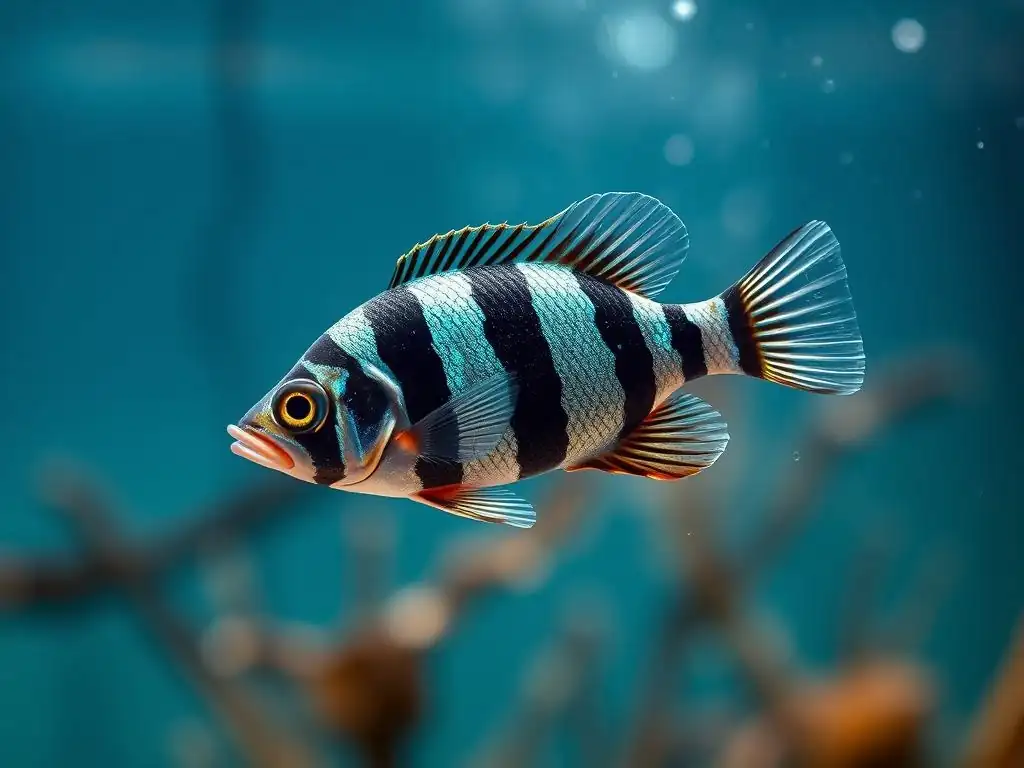
One of the most common challenges in barbs aquarium photography is dealing with insufficient light, especially when trying to use fast shutter speeds to freeze movement. When your tank lighting is dim or when you need to use a very fast shutter speed (e.g., 1/800s) and a relatively narrow aperture (e.g., f/8) to get multiple fish in focus, increasing your camera's ISO sensitivity becomes necessary to achieve a properly exposed image.
ISO controls how sensitive your camera's sensor is to light; a higher ISO setting means the sensor can capture more light in a shorter amount of time. For example, going from ISO 400 to ISO 1600 might be the only way to maintain a fast shutter speed in a dimly lit room without introducing blur.
However, increasing ISO comes with a trade-off: digital noise, which appears as graininess in your photos. Modern cameras handle higher ISOs much better than older models. A full-frame camera might produce clean images up to ISO 6400 or even higher, while an APS-C camera might start showing noticeable noise around ISO 1600-3200. It's a balance between a sharp, slightly noisy image and a blurry, noise-free one. Often, a slightly noisy but sharp image of a tiger barb is preferable to a clean but blurry one, making ISO adjustment a crucial troubleshooting step in barbs aquarium photography.
Using Noise Reduction Software
When shooting in low light conditions or when fast shutter speeds necessitate higher ISO settings, digital noise can become a prominent issue in your barbs aquarium photography. Noise reduction software is designed to mitigate this graininess, improving the overall clarity and smoothness of your images. Programs like Adobe Lightroom, DxO PhotoLab, or specialized plugins such as Topaz DeNoise AI offer sophisticated algorithms that can intelligently reduce both luminance noise (the grainy appearance) and color noise (discolored pixels) while striving to preserve fine details.
After importing your high-ISO images, apply noise reduction judiciously. Over-applying noise reduction can make your tiger barbs look plasticky or remove subtle details like scales and fin rays. Start with a moderate amount and gradually increase it until the noise is acceptably reduced without sacrificing too much sharpness or texture. This post-processing step is vital for achieving professional-looking results from challenging lighting situations, ensuring your barbs aquarium photography remains crisp and visually appealing despite high ISO settings.
Adjusting White Balance for Accurate Colors
Different light sources, whether natural daylight from a window, fluorescent aquarium lights, or external LEDs, emit light at varying color temperatures. This can lead to your barbs aquarium photography having an undesirable color cast – appearing too blue, too yellow, or too green. Correct white balance ensures that white objects in your photo appear truly white, and consequently, all other colors, especially the vibrant orange and black of your tiger barbs, are rendered accurately and naturally. An incorrect white balance can make your fish look washed out or unnaturally colored.
To troubleshoot color casts, you can set your camera's white balance manually to match your lighting conditions (e.g., "Fluorescent" or "Daylight"). For ultimate accuracy, use a custom white balance setting by photographing a white or grey card placed inside your tank under the actual lighting conditions. In post-processing, most editing software provides a white balance dropper tool. By clicking this tool on a neutral part of your image (like clear glass, a white substrate, or a grey rock), the software will automatically correct any color casts, ensuring the tiger barbs' natural coloration is faithfully represented, showcasing their true beauty.
Conclusion: Elevating Your Tiger Barb Aquarium Photography Skills
Frequently Asked Questions
How can I get sharp photos of my fast-moving Barbs in my aquarium?
To capture sharp photos, use a fast shutter speed (1/200th of a second or faster) and consider increasing your ISO settings to compensate for the reduced light. Also, try using burst mode to take multiple shots in quick succession.
What lighting techniques work best for photographing Barbs in an aquarium?
Avoid using your camera's built-in flash, as it can create harsh reflections. Instead, use natural light when possible, or invest in external aquarium lighting. Adjust the lighting to minimize glare and shadows.
What camera settings are recommended for aquarium photography, especially for active fish like Barbs?
Prioritize shutter speed and aperture. Use a wide aperture (low f-number) to let in more light and create a shallow depth of field, which can help isolate your subject. A fast shutter speed will freeze the movement of the Barbs.
How can I minimize distractions and clutter in my Barb aquarium photos?
Before photographing, clean the glass of your aquarium. Choose a simple background, and remove any algae or debris that might be distracting. Use a shallow depth of field to blur the background.
What are some creative composition ideas for photographing Barbs?
Experiment with different angles and perspectives. Capture the Barbs interacting with each other or with aquarium plants. Focus on close-up shots to highlight their unique features and vibrant colors.
Final Reflection: Capturing Fleeting Beauty
The art of capturing the vibrant energy of Barbs in photographs, as we've explored, is more than just pointing and shooting; it's about patience, understanding, and a deep appreciation for their dynamic nature. This pursuit of photographic excellence, however, mirrors a broader need in our lives to truly see and appreciate the beauty that often flashes by unnoticed. Just as we strive to freeze the fleeting movements of these fish, we should also endeavor to pause and savor the ephemeral moments that make up our own experiences.
This journey into Barb aquarium photography has underscored the importance of observation and adaptation. It's reminded me that even in the seemingly controlled environment of an aquarium, capturing true beauty requires embracing the unpredictable. The best and most beautiful things in the world cannot be seen or even touched - they must be felt with the heart.
- Helen Keller. This sentiment resonates deeply when considering the challenge of photographing Barbs; it's not just about technical skill, but about connecting with their energy and translating that feeling into a visual narrative.
Now, I invite you to consider how you can apply these principles of patience, observation, and appreciation to your own life. Just as we've learned to anticipate the movements of Barbs, can you anticipate the needs of those around you? Just as we've strived to capture their beauty, can you strive to see the beauty in the everyday? Let us all take a moment to reflect on the fleeting moments that make life so rich and vibrant, and find ways to capture and cherish them, not just in photographs, but in our hearts.
Capture the Spark: Start Your Barb Photo Album Today!
Thank you for diving into the world of barb photography! We hope you’ve unlocked some new techniques to showcase the vibrant energy of these little dynamos. Now, let's turn that knowledge into action.
Here's how you can keep the momentum going:
- Commit to a "Barb Photo Day" this week. Dedicate even just 30 minutes to experimenting with different settings and angles on your camera. You'll be surprised what you discover!
- Share your best shot on social media using #AquariumMasteryBarbs. Let's build a gallery of stunning barb photos together.
- Explore other fish photography tutorials on AquariumMastery.com. There's always more to learn!
What's the first new technique you're going to try with your barbs? Share your plans in the comments below!