
Observing Dominance Hierarchies in Danio and Rasbora Schools: Is it Normal?


Welcome to Aquarium Mastery!
Ever wondered what's really going on beneath the shimmering surface of your aquarium? Delve into the fascinating world of Danio Rasbora schooling behavior and discover the secrets behind their social dynamics. Is that subtle chasing just play, or is something more complex at work? Explore this article and unlock the keys to understanding dominance hierarchies in these captivating fish, and ensure a thriving, harmonious community in your freshwater haven. Let's dive in!
- Observing Dominance Hierarchies in Zebra Danios and Harlequin Rasboras: Is it Normal?
- Understanding Zebra Danio and Harlequin Rasbora Schooling Behavior in Aquariums
- Establishing a Dominance Hierarchy: The Dynamics of Schooling Fish
- Is Dominance Hierarchy Normal in Zebra Danio and Harlequin Rasbora Aquariums?
- Factors Influencing Dominance in Zebra Danio and Harlequin Rasbora Schools
- Managing and Mitigating Aggression in Zebra Danio and Harlequin Rasbora Schools
- Choosing Compatible Tank Mates to Minimize Stress
- Recognizing and Addressing Health Issues Related to Stress
- Maintaining a Healthy School Dynamic: Proactive Measures
- Case Studies: Observing Real-World Zebra Danio and Harlequin Rasbora Schooling Dynamics
- Conclusion: Embracing the Natural Behavior of Your Schooling Fish
-
Frequently Asked Questions
- What is schooling behavior and why is it important to observe in Danio and Rasbora species?
- How can I identify dominance hierarchies within a school of Danio or Rasbora?
- Is it normal to see some aggression or conflict within a Danio or Rasbora school?
- What are some signs that aggression within a Danio or Rasbora school is becoming a problem?
- How can I help to mitigate aggressive behavior within my Danio and Rasbora school?
- Final Reflection: Unveiling the Subtle Dance of Dominance
- Uncover Your Fish's Social Secrets!
Observing Dominance Hierarchies in Zebra Danios and Harlequin Rasboras: Is it Normal?
Understanding Zebra Danio and Harlequin Rasbora Schooling Behavior in Aquariums
The Natural Schooling Instinct of Cyprinids: Zebra Danios and Harlequin Rasboras
The inherent tendency to form schools is a fundamental survival strategy for many cyprinids, including Danio rerio (Zebra Danios) and Trigonostigma heteromorpha (Harlequin Rasboras). In their native environments, such as the fast-flowing streams of the Ganges region for Danios or the calm, densely vegetated blackwater swamps of Southeast Asia for Rasboras, forming large groups offers significant protection against predators. This "safety in numbers" strategy dilutes the individual risk of being targeted, as a predator is more likely to become confused by the synchronized movements of a large group, making it harder to single out a prey item.
Beyond predator evasion, Danio Rasbora schooling behavior also enhances foraging efficiency and social cohesion. Within a school, fish can collectively locate food sources more effectively, and the presence of conspecifics can reduce individual stress levels. For instance, studies on various schooling fish have shown that individuals in larger, cohesive groups exhibit lower physiological stress responses, indicated by reduced cortisol levels, compared to isolated or small groups, highlighting the importance of this innate behavior for their well-being.
Why Zebra Danios and Harlequin Rasboras Form Schools in Captivity
Even in the controlled environment of an aquarium, the fundamental drivers for Danio Rasbora schooling behavior persist. The instinct to school is not simply a response to immediate threats but a hardwired social requirement for these species. Without the presence of a sufficient number of their own kind, these fish can become stressed, withdrawn, and more susceptible to disease. A minimum school size of at least six individuals is generally recommended for both Zebra Danios and Harlequin Rasboras to allow them to exhibit natural behaviors and feel secure within their artificial habitat.
In a home aquarium, schooling provides a sense of security that mimics their natural habitat, even if no actual predators are present. It allows for complex social interactions, including subtle communication and collective exploration. For example, a group of 8-10 Harlequin Rasboras will often move together in a loose, synchronized formation, exploring different areas of the tank as a unit. This collective movement, rarely seen in solitary individuals or pairs which tend to be more timid, demonstrates the intrinsic value of schooling for their psychological well-being and overall vitality.
Establishing a Dominance Hierarchy: The Dynamics of Schooling Fish
Defining Dominance Hierarchies in Zebra Danio and Harlequin Rasbora Schools
A dominance hierarchy, often referred to as a "pecking order," is a common social structure among many schooling fish, including Zebra Danios and Harlequin Rasboras. It involves a ranking system where certain individuals exert influence or control over others, typically in access to vital resources such as food, preferred resting spots, or potential mates. This hierarchy is not always characterized by overt aggression but rather by subtle behavioral cues and interactions that establish which fish are more assertive and which are more submissive within the group.
While both species exhibit social structures, the manifestation of dominance can differ. Zebra Danios, known for their high activity levels and rapid movements, might show more visible chasing or nipping during feeding times. In contrast, Harlequin Rasboras tend to have a more subtle, less confrontational hierarchy, often relying on body posturing or nudging. For instance, in a school of 10 Zebra Danios, a dominant individual might consistently be the first to reach food or occupy a prime swimming lane, with others yielding. This Danio Rasbora schooling behavior involving social ranking is a natural part of their group dynamics.
Identifying Dominant and Submissive Behaviors in Your Aquarium
Common Signs of Dominance in Zebra Danios
In Zebra Danio schools, dominant individuals often exhibit behaviors designed to assert their position. These can include actively chasing other, smaller, or less assertive Danios for short bursts, especially around feeding time. They might also frequently occupy preferred swimming lanes or the highest points in the water column, signaling their claim to these areas. Anecdotal observations suggest that in a tank with 12 Zebra Danios, one or two individuals might consistently dart ahead of the others when food is introduced, ensuring they get the first and often largest share.
Another common sign of dominance is subtle fin-nipping, particularly on the caudal or dorsal fins, which is usually brief and serves as a warning rather than causing serious injury. A dominant Zebra Danio might also display more vibrant coloration, especially during breeding attempts, and be more active and exploratory within the tank, confidently navigating all areas without hesitation. This assertive Danio Rasbora schooling behavior helps establish the social order, typically without causing undue stress in an appropriate environment.
Common Signs of Submissiveness in Harlequin Rasboras
Submissive Harlequin Rasboras, on the other hand, often display behaviors indicative of their lower social standing. They might exhibit faded or duller coloration compared to their more dominant counterparts; their distinctive "harlequin" triangle marking might appear less vivid. When approached by a dominant Rasbora, a submissive individual will typically retreat quickly, darting into plants or behind decor to avoid confrontation.
These fish may also spend more time hiding in dense plant cover or in less exposed areas of the tank, such as near the substrate or in corners, rather than swimming freely in open water. During feeding, submissive Harlequin Rasboras might wait until the dominant fish have eaten their fill before venturing out for food, or they might attempt to snatch food quickly and retreat. In a group of 8 Harlequin Rasboras, it's common to see 2-3 individuals consistently exhibiting these more withdrawn behaviors, demonstrating the natural Danio Rasbora schooling behavior of social stratification.
Is Dominance Hierarchy Normal in Zebra Danio and Harlequin Rasbora Aquariums?
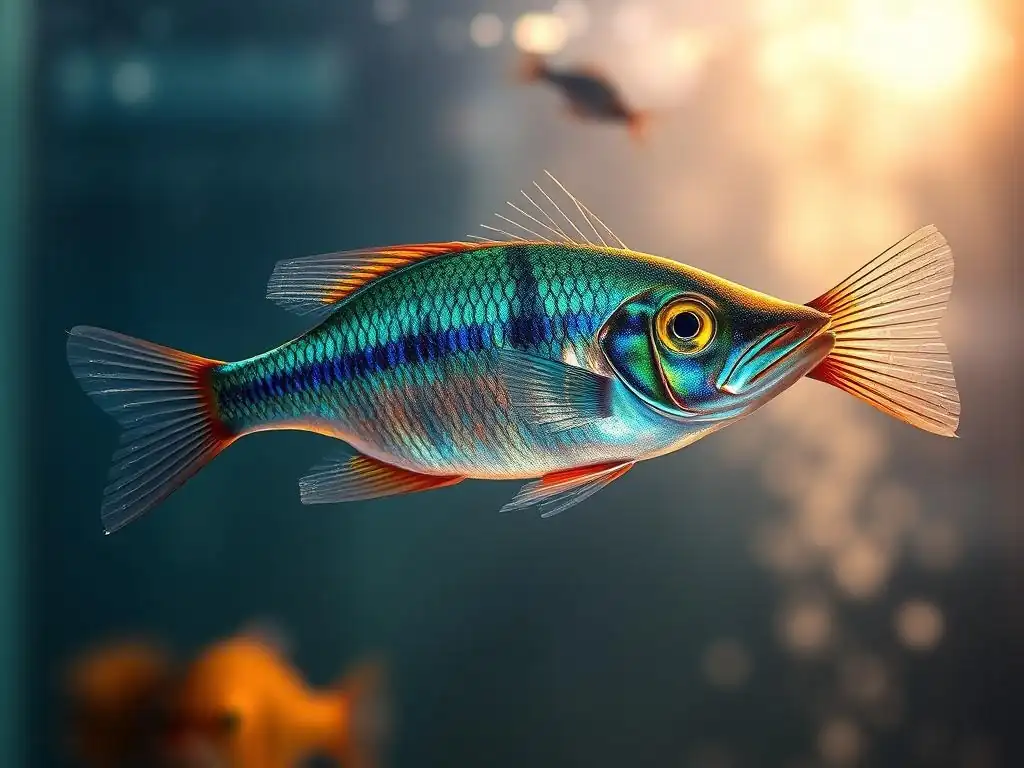
The size of the aquarium plays a crucial role in how dominance hierarchies manifest and are perceived as "normal" or problematic. In appropriately sized tanks, such as a 20-gallon long (approximately 75 liters) or larger for a school of 6-8 Zebra Danios or Harlequin Rasboras, fish have ample space to establish territories, retreat from confrontation, and disperse aggression. This allows for a more fluid and less intense hierarchy, where interactions are generally subtle and rarely result in harm.
Conversely, in smaller tanks, the limited space can intensify social interactions. For example, housing 10 Zebra Danios in a 10-gallon (approximately 38 liters) tank will inevitably lead to more frequent and concentrated encounters, making it difficult for submissive individuals to escape the attention of dominant ones. This can turn a natural Danio Rasbora schooling behavior into a source of chronic stress, leading to more overt aggression and potential harm for the entire school.
Overcrowding and Increased Aggression in Small Aquariums
Overcrowding is a primary catalyst for transforming normal dominance displays into detrimental aggression. When too many Zebra Danios or Harlequin Rasboras are housed in a small aquarium, the lack of adequate swimming space and hiding spots forces constant proximity among all individuals. This eliminates the "flight" option for submissive fish, trapping them in continuous interaction with dominant members of the school.
For instance, a 5-gallon tank housing even a small school of 4-5 Danios, which is already below the recommended minimum school size, will likely result in persistent chasing and fin-nipping, far beyond what is considered typical Danio Rasbora schooling behavior. The constant stress from this intensified aggression can lead to weakened immune systems, chronic stress, and even death for the most harassed individuals, highlighting the severe consequences of inadequate space.
Normal vs. Problematic Dominance: Knowing the Difference
Differentiating between normal dominance and problematic aggression is crucial for maintaining a healthy aquarium. Normal dominance within Danio Rasbora schooling behavior is characterized by brief, non-injurious chases, minor squabbles over food, and all fish appearing active, eating well, and displaying vibrant coloration. You might observe a dominant individual asserting itself, but the target fish should be able to easily escape and resume normal activities within seconds.
Problematic dominance, however, involves sustained harassment, frequent and aggressive fin-nipping leading to visible damage (e.g., torn fins, missing scales), individuals constantly hiding or showing faded colors, and a noticeable reduction in appetite. If you observe one or two fish consistently being singled out, chased relentlessly, or showing signs of physical injury over several days, this indicates that the social dynamic has become unhealthy and requires immediate intervention.
Factors Influencing Dominance in Zebra Danio and Harlequin Rasbora Schools
Species-Specific Behavior: Zebra Danio vs. Harlequin Rasbora Dominance
While both are schooling cyprinids, the expression of dominance differs between Zebra Danios and Harlequin Rasboras due to their inherent species-specific behaviors. Zebra Danios ( Danio rerio), originating from fast-flowing streams, are naturally more energetic and prone to zipping around the tank. Their dominance displays often involve quick, darting chases and brief nips, which are part of their high-energy Danio Rasbora schooling behavior. These interactions are usually fleeting and rarely cause lasting harm in an adequately sized tank.
Harlequin Rasboras ( Trigonostigma heteromorpha), preferring calmer, densely planted blackwater environments, tend to exhibit a more subdued form of social hierarchy. Their dominance is often expressed through subtle body posturing, nudging, or occupying prime positions without overt aggression. For instance, a dominant Harlequin Rasbora might simply position itself in the best feeding spot, and others will defer, rather than being actively chased away. Understanding these nuances helps interpret their social dynamics correctly and manage their environment effectively.
In both Zebra Danio and Harlequin Rasbora schools, age and size significantly influence an individual's social standing. Larger and older fish typically assume more dominant roles within the hierarchy. This is a common biological principle, as larger individuals often have a competitive advantage in terms of strength, access to food, and reproductive opportunities. For example, introducing a group of juvenile Zebra Danios to a tank with established, mature adults might result in the juveniles being consistently outcompeted for food and space.
Conversely, if all fish are roughly the same age and size, the hierarchy might be less pronounced and more fluid, with dominance shifting occasionally. When adding new fish to an existing school, it's often advisable to add several individuals of a similar size to the existing group to help diffuse aggression and prevent a single new fish from becoming an immediate target for established dominant members. This approach fosters a more stable and healthier Danio Rasbora schooling behavior within the community.
Environmental Factors: Water Parameters and Tank Decor
The aquarium environment itself plays a critical role in shaping Danio Rasbora schooling behavior and the intensity of dominance displays. Suboptimal water parameters, such as fluctuating temperatures, incorrect pH, or elevated ammonia/nitrite levels, can cause chronic stress in fish, making them more irritable and prone to aggression. For instance, a pH swing from 7.0 to 8.0 or a sudden temperature drop can stress fish, leading to an increase in nipping behaviors that are not typically seen under stable conditions.
Tank decor and layout are equally important. A sparsely decorated tank with large, open swimming spaces and few hiding spots leaves submissive fish vulnerable to constant harassment. Conversely, a tank rich in live plants, driftwood, and rocks provides ample visual barriers and escape routes, allowing less dominant individuals to retreat and feel secure. In a 20-gallon tank densely planted with Anubias and Java Fern, even a strong Zebra Danio hierarchy will likely result in less physical harm because submissive fish can easily find refuge.
Managing and Mitigating Aggression in Zebra Danio and Harlequin Rasbora Schools
Increasing Tank Size to Reduce Competition
One of the most effective strategies for mitigating aggression and promoting healthy Danio Rasbora schooling behavior is to provide an adequately sized aquarium. For a school of 6-8 Zebra Danios or Harlequin Rasboras, a minimum tank size of 20 gallons (approximately 75 liters) is generally recommended. This allows for sufficient swimming space, reduces the frequency of unwanted encounters, and provides ample room for submissive fish to escape dominant individuals.
In larger tanks, such as a 30-gallon (approximately 113 liters) or 40-gallon (approximately 151 liters) breeder tank, a school of 10-15 individuals can spread out more effectively, diffusing the intensity of any hierarchical interactions. This increased volume also helps maintain more stable water parameters, further reducing overall stress levels that can contribute to aggression and ensuring a more harmonious social dynamic.
Adding More Hiding Places and Visual Barriers
Providing abundant hiding places and visual barriers is crucial for creating a secure environment for all fish within a school. Dense plantings of live or realistic artificial plants, such as Java Fern, Anubias, or Amazon Swords, offer excellent cover. Driftwood, rock formations, and even ceramic decor can also serve as effective retreats, breaking up lines of sight and allowing submissive fish to escape the continuous attention of dominant individuals.
For instance, in a 20-gallon tank with only a few sparse plants, a dominant Zebra Danio might relentlessly chase a submissive one. However, by adding several clusters of tall plants like Vallisneria or installing a large piece of branching driftwood, the submissive fish can easily disappear from view, effectively "resetting" the interaction and reducing chronic stress. This strategic placement of decor directly influences Danio Rasbora schooling behavior by providing safe zones.
Adjusting Feeding Strategies to Ensure Equal Access
Feeding time can often be a flashpoint for dominance displays, as resources are concentrated. To ensure all fish receive adequate nutrition and to minimize aggression, adjust your feeding strategy. Instead of dropping all food in one spot, try scattering flakes or pellets across the entire surface of the water. This forces dominant fish to spread out and allows more timid individuals to access food without direct competition.
Alternatively, you can feed small amounts in multiple locations simultaneously, or even use a feeding ring to contain some food while scattering the rest. For a school of 10 Harlequin Rasboras, feeding a small pinch of high-quality flakes at one end of the tank, then immediately another pinch at the opposite end, can significantly reduce the scramble and ensure that even the most submissive individuals get their share, promoting healthier Danio Rasbora schooling behavior.
Choosing Compatible Tank Mates to Minimize Stress
Selecting Peaceful Community Fish for Zebra Danio and Harlequin Rasbora Tanks
Choosing compatible tank mates is essential for minimizing stress and maintaining a peaceful community aquarium. Zebra Danios and Harlequin Rasboras thrive with other peaceful, similarly sized community fish that do not compete excessively for food or space. Excellent choices include bottom-dwelling fish like Corydoras catfish, algae eaters such as Otocinclus, and other small, non-aggressive schooling fish like Neon Tetras or Ember Tetras.
It is also important to select tank mates that share similar water parameter requirements to ensure overall tank health. For example, both Danios and Rasboras prefer slightly acidic to neutral water (pH 6.0-7.5) and temperatures between 72-78°F (22-26°C), making them suitable companions for many popular community species. Integrating such companions can sometimes even diffuse Danio Rasbora schooling behavior aggression by providing additional distractions or shared foraging opportunities.
Avoiding Aggressive or Bullying Tank Mates
To prevent stress and aggression, it is crucial to avoid housing Zebra Danios and Harlequin Rasboras with fish known for aggressive or bullying tendencies. Larger, predatory fish such as many cichlid species (e.g., Convict Cichlids) or even some larger Gouramis can view these small schooling fish as prey or competitors, leading to constant harassment and potential injury or death.
Similarly, known fin-nippers like certain types of Barbs (e.g., Tiger Barbs, unless kept in very large schools of their own) can relentlessly target the flowing fins of Danios and Rasboras, causing stress and susceptibility to disease. Even slightly more boisterous fish that are significantly larger than Danios or Rasboras can inadvertently intimidate them, disrupting their natural Danio Rasbora schooling behavior and causing them to hide more frequently.
The Link Between Stress and Disease in Schooling Fish
Chronic stress, often a byproduct of an unhealthy dominance hierarchy or unsuitable tank conditions, significantly weakens the immune systems of Zebra Danios and Harlequin Rasboras. When fish are constantly on edge, subjected to continuous harassment, or living in poor water quality, their bodies divert energy from immune function to stress responses. This makes them far more susceptible to common aquarium diseases that they might otherwise easily fight off.
For instance, a stressed fish might be unable to fend off parasitic infections like Ich (white spot disease) or bacterial infections like fin rot, even if these pathogens are present in low levels in the water. The sustained physiological response to stress, including elevated cortisol levels, can lead to a compromised ability to produce antibodies and fight off pathogens, making the link between stress and disease undeniable for Danio Rasbora schooling behavior and overall health.
Recognizing the signs of stress-related illnesses early is vital for intervention. Common indicators in Zebra Danios and Harlequin Rasboras include persistent fin nipping (either by or to the stressed fish), clamped fins, or a general dulling of their natural coloration. Stressed fish will often exhibit unusual Danio Rasbora schooling behavior, such as isolating themselves from the school, constantly hiding in corners or behind decor, or appearing lethargic and listless.
A significant loss of appetite or refusal to eat is another serious symptom, indicating severe stress or illness. Other signs might include rapid gill movements, labored breathing, or visible physical injuries like torn fins or body lesions that don't heal. If multiple fish in your school begin to display these symptoms, it's a strong indication that the tank environment or social dynamics need immediate attention to prevent further health decline.
Maintaining a Healthy School Dynamic: Proactive Measures
Regular Water Changes and Monitoring Water Quality
Proactive aquarium maintenance is the cornerstone of a healthy and stress-free environment for Zebra Danios and Harlequin Rasboras. Regular partial water changes (e.g., 25-30% weekly) are essential for diluting nitrates, replenishing essential minerals, and maintaining stable water parameters. Consistent water quality directly reduces physiological stress, allowing fish to exhibit natural Danio Rasbora schooling behavior without undue anxiety.
Equally important is routine monitoring of key water parameters using a reliable test kit. Ammonia and nitrite should always be at 0 ppm, nitrates below 20 ppm, and pH and temperature kept within their ideal ranges (e.g., pH 6.0-7.5, 72-78°F or 22-26°C). Deviations from these optimal levels can quickly lead to stress and compromised health, exacerbating any existing dominance issues within the school.
Observing Your Fish Regularly for Signs of Distress
Daily, attentive observation of your Zebra Danios and Harlequin Rasboras is one of the most effective proactive measures. Take a few minutes each day to watch their Danio Rasbora schooling behavior, how they interact, their swimming patterns, and their appetite. Look for any subtle changes in coloration, fin condition, or activity levels. Early detection of issues like persistent chasing, isolation, or fading colors can prompt timely intervention before problems escalate.
Pay particular attention during feeding times, as this is often when social dynamics are most visible. Are all fish getting enough food? Are some constantly being pushed away? Consistent observation allows you to catch minor imbalances in the hierarchy or early signs of illness, enabling you to adjust tank conditions or intervene before stress becomes chronic and impacts the health of your entire school.
Quarantine New Fish Before Introducing Them to the Main Tank
Quarantining all new fish before introducing them to your main display tank is a critical proactive step for preventing the introduction of diseases and minimizing stress on established inhabitants. A separate, smaller quarantine tank (e.g., 5-10 gallons, 19-38 liters) allows you to observe new Zebra Danios or Harlequin Rasboras for signs of illness or unusual Danio Rasbora schooling behavior without risking the health of your existing school.
A quarantine period of at least 2-4 weeks is generally recommended. During this time, you can treat any potential parasites or bacterial infections that the new fish might carry, ensuring they are healthy before joining the main community. This also allows new fish to acclimate to your water parameters gradually and reduces the sudden disruption to the existing social hierarchy, which can sometimes trigger aggression.
Case Studies: Observing Real-World Zebra Danio and Harlequin Rasbora Schooling Dynamics
Case Study 1: 20 Gallon Long Tank with 6 Zebra Danios and 8 Harlequin Rasboras, Heavy Planting. Dominance observed in Zebra Danios during feeding.
In a 20-gallon long (approximately 75 liters) aquarium, a school of 6 Zebra Danios and 8 Harlequin Rasboras was housed. The tank was heavily planted with a mix of tall stem plants (e.g., Rotala, Ludwigia) and dense foreground cover (e.g., Monte Carlo, Dwarf Hairgrass), along with a central piece of driftwood.
Daily observations revealed a clear, albeit mild, dominance hierarchy among the Zebra Danios, particularly evident during feeding times. One or two larger Danios would consistently be the first to dart for food flakes, briefly chasing away other Danios for a second or two before they dispersed to find their own share.
Despite these brief displays of dominance, no physical injuries were observed on any of the Danios. The submissive Danios easily retreated into the dense plant cover, breaking the line of sight and diffusing any potential prolonged harassment. The Harlequin Rasboras, in contrast, exhibited very little overt dominance, preferring to school loosely and forage calmly among the plants. This case demonstrates that a well-planted, appropriately sized tank can allow for normal Danio Rasbora schooling behavior and hierarchy without leading to harmful aggression.
Case Study 2: 29 Gallon Tank with 10 Zebra Danios and 12 Harlequin Rasboras, Open Swimming Space. Minimal aggression observed.
A 29-gallon (approximately 110 liters) aquarium housed a larger community of 10 Zebra Danios and 12 Harlequin Rasboras. This tank featured a significant open swimming space in the middle, flanked by moderate planting along the back and sides, and a few smooth river stones. Despite the larger numbers of fish, observations over several months showed remarkably minimal aggression or intense dominance displays among both species. The ample swimming room allowed the schools to spread out naturally.
During feeding, the food was scattered across the surface, and while the Danios still exhibited their characteristic energetic dash, no single individual monopolized the food, and chasing was virtually non-existent. The Harlequin Rasboras maintained a cohesive school, moving gracefully without any apparent internal conflict. This example illustrates that providing generous tank volume and maintaining appropriate school sizes are crucial factors in fostering healthy and harmonious Danio Rasbora schooling behavior, where natural social dynamics exist without escalating into problematic aggression.
Conclusion: Embracing the Natural Behavior of Your Schooling Fish
Understanding and Appreciating Zebra Danio and Harlequin Rasbora Schooling Behavior
Observing dominance hierarchies within your Zebra Danio and Harlequin Rasbora schools is a completely normal and inherent aspect of their Danio Rasbora schooling behavior. These social structures are a natural adaptation for cyprinids, providing security, aiding foraging, and facilitating social interaction. While dominance is a part of their natural dynamic, it is crucial for aquarists to understand the difference between healthy, subtle interactions and problematic, stress-inducing aggression.
By providing appropriately sized tanks, ample hiding places, stable water parameters, and compatible tank mates, you can foster an environment where your fish thrive and express their natural behaviors without succumbing to chronic stress or injury. Embracing and understanding these intricate social dynamics allows you to create a truly enriching and healthy habitat for these fascinating small schooling cyprinids, ensuring their long-term well-being and allowing you to appreciate the full spectrum of their captivating interactions.
Frequently Asked Questions
What is schooling behavior and why is it important to observe in Danio and Rasbora species?
Schooling behavior refers to the coordinated movement of a group of fish. Observing this behavior in Danio and Rasbora species helps determine their overall health and social dynamics within the aquarium environment.
How can I identify dominance hierarchies within a school of Danio or Rasbora?
Look for distinct behaviors like chasing, fin nipping, or preferential access to food. The fish displaying these actions are often higher in the dominance hierarchy, while those avoiding them are lower.
Is it normal to see some aggression or conflict within a Danio or Rasbora school?
Yes, some level of aggression is normal as fish establish their social ranking. However, excessive aggression that leads to injury or stress should be addressed to maintain a healthy school.
What are some signs that aggression within a Danio or Rasbora school is becoming a problem?
Signs include constant chasing, visible injuries like torn fins, or individuals hiding and refusing to eat. These indicate that the social dynamic is unbalanced and intervention may be needed.
How can I help to mitigate aggressive behavior within my Danio and Rasbora school?
Ensure adequate tank size and provide plenty of hiding places like plants or decorations. Increasing the school size can also help to distribute aggression more evenly.
Final Reflection: Unveiling the Subtle Dance of Dominance
The observations detailed in this article, focusing on Danio and Rasbora schooling behavior, highlight a fundamental truth about social structures, even within the seemingly simple world of aquarium fish. While we've explored the nuances of dominance hierarchies within these species, it's crucial to recognize that these dynamics mirror, in a scaled-down way, the complexities of social interactions across the animal kingdom, including our own. The presence of these hierarchies, whether overt or subtle, underscores the inherent drive for resource acquisition and social standing that shapes behavior.
This exploration of Danio and Rasbora schooling behavior has profoundly influenced my understanding of the interconnectedness of life. It's fascinating to consider that even these small creatures engage in intricate social dances, reminding us that dominance and submission are not uniquely human traits. This understanding fosters a deeper appreciation for the delicate balance within ecosystems and the subtle cues that govern behavior. The only true wisdom is in knowing you know nothing.
- Socrates. This quote resonates deeply, reminding us that there is always more to learn and observe, especially when it comes to the intricate workings of the natural world.
As you observe your own Danio and Rasbora schools, or even reflect on the dynamics within your own social circles, I invite you to consider the subtle power plays and the underlying motivations that drive behavior. Question the established hierarchies, challenge assumptions, and strive to create environments that foster cooperation and minimize unnecessary conflict. By understanding the nuances of dominance, we can work towards building more equitable and harmonious communities, both in our aquariums and in the world beyond.
Thanks for diving into the fascinating world of danio and rasbora social dynamics! Now that you've learned about dominance hierarchies, it's time to put that knowledge to use and improve the lives of your finned friends. Ready to take action?
- Actively observe your danio or rasbora school for signs of dominance and submission, noting any aggressive behaviors or changes in coloration. This focused observation will allow you to proactively manage their environment.
- Share your observations and experiences with other aquarists on online forums or social media groups, contributing to a better understanding of these fish species.
- Consider introducing more plants and hiding places to your aquarium to provide subordinate fish with refuge, reducing stress and promoting a more balanced social environment.
What specific behaviors have you noticed in your danio or rasbora school that indicate a dominance hierarchy, and what changes are you planning to implement based on these observations?