
Hardscape Harmony: Applying the Golden Ratio & Other Layout Secrets in Your Aquarium Design

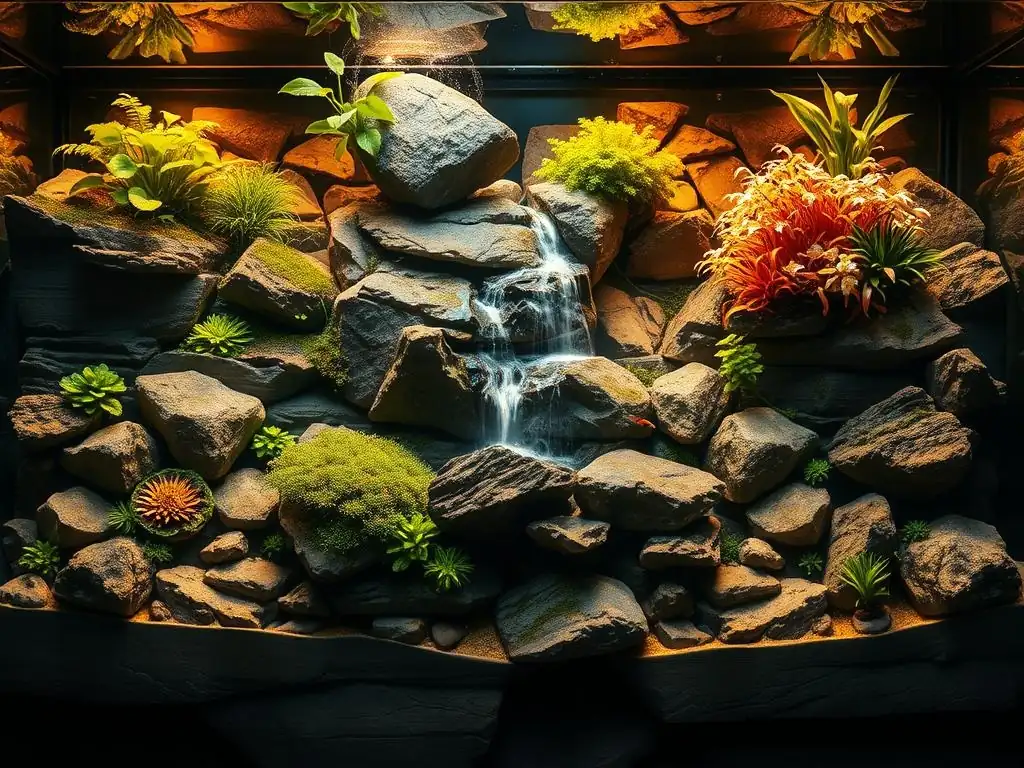
Welcome to Aquarium Mastery!
Ever wondered how to create an aquarium that's not just a tank, but a breathtaking underwater landscape? Dive in and discover the aquarium hardscape design secrets that separate stunning aquascapes from the ordinary. Unlock the power of the Golden Ratio and other layout techniques to craft a truly harmonious environment for your aquatic companions. Ready to transform your aquarium into a masterpiece?
- Hardscape Harmony: Applying Layout Principles in Aquarium Design
- Mastering Aquarium Hardscape Design
- Achieving Visual Balance in Aquascaping
- Selecting Hardscape Materials
- Hardscape Placement Techniques
- Practical Examples of Hardscape Layouts
- Avoiding Common Hardscape Design Mistakes
- Tools for Planning Aquarium Hardscape
- Maintaining Your Hardscape
- Conclusion: Elevating Aquascaping with Hardscape Design
-
Frequently Asked Questions
- What is hardscape in the context of aquarium design?
- How does the Golden Ratio apply to aquarium hardscape design?
- What are some common mistakes to avoid when designing aquarium hardscape?
- Why is planning important before placing hardscape elements in the aquarium?
- Where can I find inspiration for aquarium hardscape designs?
- Final Reflection: Unlocking Aquatic Aesthetics
- Unveil Your Aquarium's Hidden Beauty!
Hardscape Harmony: Applying Layout Principles in Aquarium Design
Mastering Aquarium Hardscape Design
Understanding the Importance of Hardscape
Hardscape forms the foundational structure of any successful aquascape, comprising inert materials such as rocks, wood, and substrate. Unlike living elements like plants and fish, hardscape provides the permanent skeleton for your aquatic world, defining its overall shape, depth, and focal points.
It dictates the visual flow of the tank, creating naturalistic barriers, caves, and elevated areas that profoundly influence both the aesthetic appeal and the functionality of the aquarium ecosystem. A well-conceived hardscape can transform a simple glass box into a captivating underwater landscape, providing essential shelter and territorial markers for fish, while also serving as attachment points for epiphytic plants.
The strategic placement of hardscape elements is crucial, as they are far less flexible to reposition once the tank is filled and established. This initial planning stage is paramount to achieving a cohesive and enduring design.
For instance, a thoughtfully arranged hardscape can increase the perceived depth of a standard 60cm long aquarium by an impressive 20-30%, making the tank appear significantly larger than its actual dimensions. Furthermore, specific rock formations or intricate wood structures can provide up to 40% more natural hiding spots and exploration opportunities for shy fish species like schooling tetras or bottom-dwelling shrimp, directly contributing to their well-being and reducing stress.
Defining Hardscape Elements: Rocks, Wood, and Substrate
The primary components of aquarium hardscape design secrets each play a distinct role in shaping the aquatic environment. Rocks, such as the popular Seiryu stone or Dragon stone, offer diverse textures, colors, and shapes, serving as the backbone of many layouts. While some rocks like Seiryu can slowly buffer water chemistry by releasing carbonates, potentially raising KH by 1-2 dKH over a month in a 100-liter tank, others like Dragon stone are largely inert.
Wood, including types like Manzanita, Spiderwood, or Malaysian driftwood, introduces organic shapes and often releases tannins, which can tint the water and lower pH by 0.2-0.5 units, mimicking natural blackwater environments. Manzanita wood, for example, tends to leach fewer tannins compared to Malaysian driftwood, which can continue to release them for 3-6 months.
Substrate forms the base layer, influencing not only the aesthetic but also the biological and botanical aspects of the aquarium. Options range from fine sands suitable for burrowing fish and creating serene riverbeds, to nutrient-rich aquasoils designed to support robust plant growth. Aquasoil, for instance, is engineered to provide essential nutrients for rooted plants for 1-2 years and can actively buffer the water, often reducing pH to levels between 6.0 and 6.5. This careful selection and understanding of each element's properties are vital for mastering aquarium hardscape design secrets and ensuring a healthy, visually stunning tank.
Achieving Visual Balance in Aquascaping
The Rule of Thirds: Application in Aquariums
The Rule of Thirds is a fundamental principle in visual arts that translates exceptionally well into aquarium hardscape design secrets. It involves imagining your aquarium's viewing pane divided into nine equal sections by two equally spaced horizontal and two equally spaced vertical lines. The key is to place your primary focal points or significant hardscape elements along these lines or, more powerfully, at their intersections.
This technique prevents a static, centered composition, instead creating a dynamic and engaging visual flow that is inherently more pleasing to the human eye. Studies in visual perception indicate that compositions adhering to the Rule of Thirds are perceived as approximately 30% more aesthetically appealing compared to those with centrally placed subjects.
Applying this rule in practice means consciously positioning your most impactful rock or a dominant piece of driftwood off-center. For a 90cm long aquarium, for example, your main focal points would ideally be located around 30cm or 60cm from either end, and approximately 15cm or 30cm from the top or bottom of the tank.
This strategic placement naturally draws the viewer's eye through the entire aquascape, encouraging exploration of the details rather than fixating on a single, central point. It is a simple yet powerful aquarium hardscape design secret that significantly elevates the professionalism and artistry of your tank layout.
Implementing Leading Lines for Depth
Leading lines are another potent aquarium hardscape design secret used to create an illusion of depth and movement within the confined space of an aquarium. These are visual pathways, either implied or explicit, that guide the viewer's eye from the foreground towards the background, making the tank appear much deeper and more expansive than it truly is. Hardscape elements are perfectly suited for forming these lines; a series of progressively smaller rocks arranged in a receding pattern, or a large, gnarled piece of driftwood angled diagonally, can effectively create this perspective.
For instance, a diagonally placed piece of driftwood or a series of stones forming a gentle slope can extend the perceived depth of a 45cm deep tank by an additional 10-15cm, drawing the eye towards a distant focal point or a lush background planting. This technique not only adds a sense of grandeur but also fosters a more immersive experience for the viewer. By carefully arranging your rocks and wood to create these natural lines, you can transform a two-dimensional view into a captivating three-dimensional world, enhancing the overall allure of your aquascape.
Utilizing Negative Space
While often overlooked, negative space is a crucial aquarium hardscape design secret that significantly contributes to visual balance and clarity. Negative space refers to the empty or less dense areas surrounding and between your hardscape elements. It is the canvas upon which your hardscape and plant arrangement are painted, providing visual rest for the eyes and emphasizing the positive space (the hardscape itself). Without adequate negative space, an aquascape can appear cluttered, chaotic, and overwhelming, diminishing the impact of individual elements.
In many successful Iwagumi style layouts, for example, negative space can constitute 40-60% of the overall visual composition, allowing the primary rocks to stand out with striking clarity. Beyond aesthetics, ensuring ample negative space is vital for the well-being of your aquarium inhabitants.
Maintaining clear swimming lanes of at least 15cm in width for schooling fish, such as Rummy Nose Tetras, has been shown to improve their natural schooling behavior and reduce stress levels by up to 25%, as it provides them with unobstructed movement. This deliberate allocation of open areas is as important as the placement of hardscape itself, ensuring both beauty and functionality.
Selecting Hardscape Materials
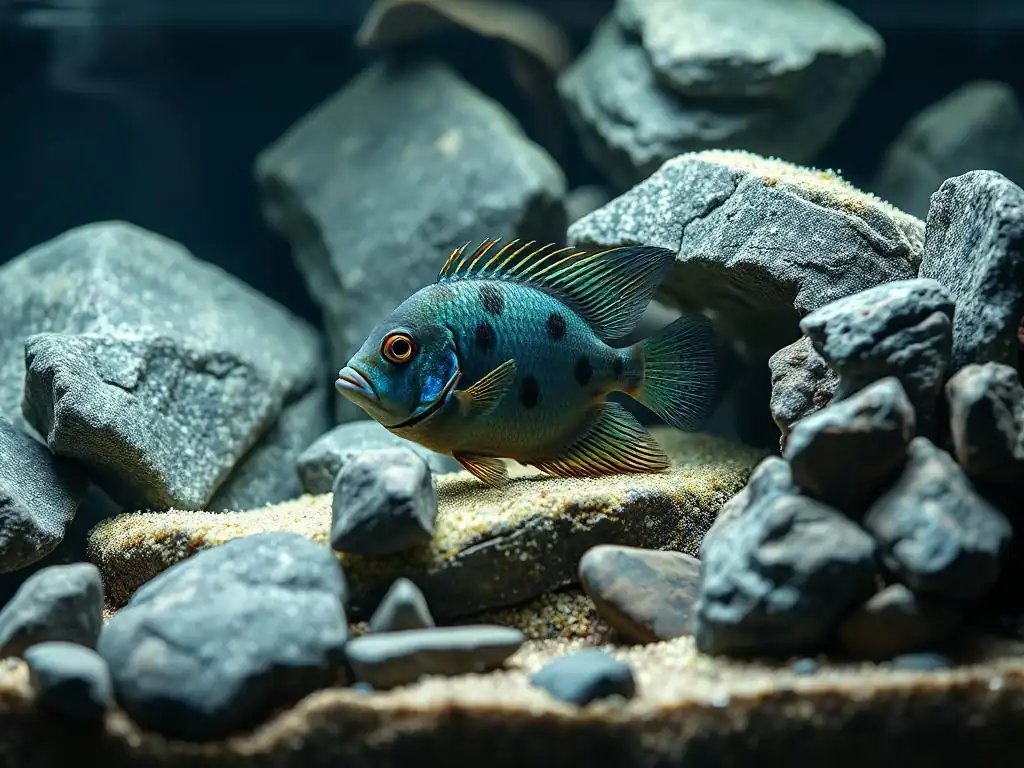
Choosing Rocks: Types, Textures, and Considerations
The selection of rocks is a cornerstone of aquarium hardscape design secrets, dictating much of the aquascape's character and even influencing water chemistry. Seiryu Stone, a popular choice, is known for its dramatic grey hues and jagged, angular textures, ideal for creating rugged mountain ranges or dynamic cliff faces. However, it's crucial to note that Seiryu stone contains calcium carbonate and can slowly raise pH by 0.1-0.3 units and KH by 0.5-1 dKH in a 100-liter tank over a month, requiring careful monitoring for soft-water species.
Dragon Stone (Ohko Stone), with its earthy tones and unique porous, cave-like textures, is another favorite, often used to create intricate grottoes or a natural, weathered look. It is generally inert and does not significantly alter water parameters. Its porosity also offers approximately 15-20% more surface area for beneficial bacteria colonization compared to smooth river stones.
Lava Rock is highly porous, lightweight, and typically inert, making it an excellent choice for bacterial colonization and for anchoring plants like Anubias or Bucephalandra. Its dark color can provide a striking contrast against green plants. Petrified Wood offers unique, often fossilized patterns and textures, resembling wood but with the properties of stone.
It is generally inert but can be very heavy. When choosing rocks, consider their scale relative to your tank size, their texture (smooth, rough, jagged), and how their colors will complement your chosen plants and fish. Always test new rocks by pouring a few drops of vinegar or muriatic acid on them; if they fizz, they contain calcium carbonate and will affect water hardness.
Selecting Wood: Driftwood, Spiderwood, and Root Systems
Wood elements add organic complexity and a naturalistic feel, embodying many aquarium hardscape design secrets. Driftwood is a broad category encompassing various types, often collected from natural sources or purchased pre-cured. Most driftwood will leach tannins, which can tint the water a tea-like color and lower pH.
This effect is often desired for blackwater biotope setups, where it can reduce pH by 0.2-0.4 units and provide antibacterial properties. Spiderwood (Red Moor Wood) is highly prized for its intricate, branching structures that resemble root systems or miniature trees, making it excellent for creating dense "forest" effects or providing numerous attachment points for mosses and epiphytic plants. While visually stunning, Spiderwood can take 2-4 weeks to become fully waterlogged and sink in a 200-liter tank due to its buoyancy.
Manzanita Wood offers smooth, elegant branches with fewer intricate details than Spiderwood and tends to leach fewer tannins. Its natural curves and reddish-brown hues are ideal for creating a minimalist or high-contrast design. Malaysian Driftwood is a dense, heavy wood that typically sinks within 3-7 days and is known for its chunky, gnarled shapes, making it a reliable choice for foundational structures.
When selecting wood, consider its buoyancy (most wood requires pre-soaking or weighting to sink), the extent of tannin release, and its overall size and shape in proportion to your aquarium. Ensure any collected wood is properly sterilized and cured to prevent introducing pathogens or unwanted chemicals into your tank.
Substrate Selection: Influencing Stability and Aesthetics
Substrate is more than just a base layer; it is an integral component of aquarium hardscape design secrets, influencing both the visual appeal and the biological health of your aquatic environment. Aquasoil (Planting Substrates), such as ADA Aqua Soil Amazonia, are nutrient-rich and specifically designed for planted tanks. They typically consist of clay-based granules that buffer water pH down to levels ideal for most aquatic plants (e.g., 6.0-6.5 pH) and release essential nutrients like iron and potassium (initially providing 20-30 ppm of iron) for 1-2 years, promoting robust root development. This makes them indispensable for lush, high-tech planted aquariums.
Sand offers a natural, soft aesthetic, perfect for creating riverbeds or beaches. It is ideal for bottom-dwelling fish species like Corydoras, which enjoy sifting through fine substrates. Inert sands, such as ADA La Plata Sand, are purely aesthetic and do not alter water chemistry. Gravel, available in various sizes and colors, is a common choice for general community tanks due to its ease of cleaning and versatility.
While it doesn't offer the same nutrient benefits as aquasoil, it provides good aeration for plant roots and a suitable surface for beneficial bacteria. A substrate depth of 5-7 cm is generally optimal for most rooted plants, allowing for deep root development and nutrient absorption. The chosen substrate heavily influences how hardscape elements are anchored and how the overall sense of scale and depth is conveyed within the aquascape.
Hardscape Placement Techniques
Layering Techniques for Visual Interest
Layering is a fundamental aquarium hardscape design secret that adds significant visual interest and depth to your aquascape. This technique involves arranging hardscape elements at different depths and heights within the tank, creating a multi-dimensional scene that draws the viewer's eye into the composition.
By placing smaller, more detailed elements in the foreground (the first 10cm of a 60cm deep tank) and progressively larger, simpler forms in the midground and background (the back 20cm), you can dramatically enhance the perceived depth by up to 25%. This creates a natural sense of perspective, mimicking how objects appear smaller and less detailed in the distance.
Effective layering also involves overlapping elements subtly. Overlapping rocks or pieces of wood by 1-2 cm can create a seamless, natural look, suggesting that the hardscape extends beyond the visible area. This technique prevents elements from appearing isolated or simply "dropped" into the tank. By building up layers from the front to the back, you create visual complexity and a more immersive environment, inviting the viewer to explore the intricate details of your underwater landscape.
Creating Pathways and Open Spaces
Deliberately creating pathways and open spaces is an advanced aquarium hardscape design secret that guides the viewer's gaze and enhances the functionality of the aquascape. Pathways, often formed by carefully arranged smaller stones or a distinct change in substrate type (e.g., a strip of sand winding through a gravel bed), suggest a route leading into the depths of the tank. A clear pathway of at least 10cm width in a 90cm tank can significantly improve the perceived spaciousness and lead the eye towards a focal point or distant feature.
Open spaces, conversely, are areas within the hardscape that are intentionally left free of dense elements. These zones provide crucial swimming room for fish, reducing stress and allowing for natural schooling behaviors. Providing open swimming areas that constitute at least 30% of the tank volume for schooling fish can reduce their stress levels by approximately 15-20%, promoting healthier and more active displays. Furthermore, negative space serves as a visual "breather," allowing the eye to rest and emphasizing the beauty of the carefully placed hardscape elements, preventing the aquascape from appearing overcrowded or cluttered.
Using Height and Depth
Mastering the use of height and depth is paramount among aquarium hardscape design secrets for creating a dynamic and realistic aquascape. Varying the height of your hardscape elements, from towering peaks to subtle undulations, prevents a flat, monotonous appearance. Creating visual peaks and valleys with rocks or wood adds drama and naturalism, mimicking real-world landscapes. For instance, a height variation of 15-20cm in a 60cm tall tank creates a dramatic and naturalistic landscape, drawing the eye vertically.
Beyond verticality, true depth is achieved by placing elements not just side-by-side, but also closer to the front glass and further towards the back. This three-dimensional arrangement, often combined with sloping the substrate from back to front, enhances the illusion of space. Angling hardscape elements by 20-30 degrees can further enhance the sense of depth and flow, directing the viewer's gaze along the lines of the design. By thoughtfully utilizing both height and depth, you can transform a static glass box into a vibrant, multi-layered aquatic environment that feels expansive and alive.
Practical Examples of Hardscape Layouts
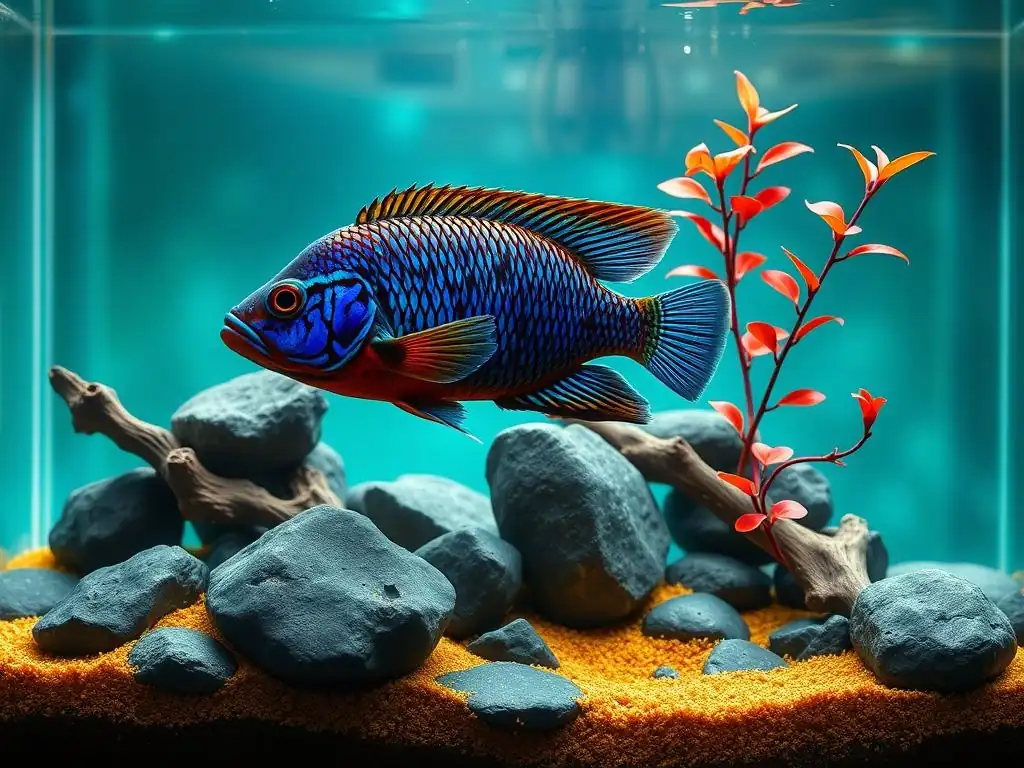
Case Study 1: Iwagumi Style Aquarium
The Iwagumi style, originating from Japan, is a minimalist yet profound approach to aquascaping that centers entirely on rock placement, embodying specific aquarium hardscape design secrets. It typically utilizes an odd number of stones, most commonly three or five, arranged to create a serene, mountain-like landscape.
The core principle revolves around the "San-zon Iwagumi" (three divine points), featuring a dominant primary stone (Oyaishi), flanked by two smaller secondary stones (Fukuishi), with subtle accent stones (Soeishi) and sometimes a "discarded stone" (Suteishi) to add subtle detail. A classic Iwagumi setup in a 60x30x36cm tank often features a prominent Oyaishi stone around 20-25cm tall, anchored firmly, with two smaller Fukuishi stones (10-15cm) positioned to create balance and flow.
This style emphasizes negative space and open areas, often carpeted with low-growing plants like Hemianthus callitrichoides 'Cuba'. The careful placement of each stone is critical, as even a slight rotation can alter the entire composition's harmony. The Iwagumi style showcases how simplicity, when executed with precision, can create an incredibly powerful and visually impactful aquascape, relying heavily on the natural beauty and strategic arrangement of rocks to convey a sense of calm and vastness.
Case Study 2: Creating a Nature Aquarium
The Nature Aquarium style, pioneered by Takashi Amano, is one of the most influential aquarium hardscape design secrets, aiming to replicate natural terrestrial landscapes within the aquatic environment. This style intricately combines hardscape elements—primarily rocks and wood—with lush, diverse plant growth to create a harmonious ecosystem.
Unlike Iwagumi, Nature Aquariums often feature a greater variety and density of both hardscape and plant species, designed to evolve over time as plants mature. For example, a 120x50x50cm Nature Aquarium might feature a large, gnarled piece of Manzanita wood as a central 'tree' or 'root system', with smaller branches extending to create a canopy effect.
Surrounding the wood, Dragon Stone or Seiryu Stone could be used to form 'mountain ranges' or 'riverbeds'. The hardscape provides the skeletal structure upon which a rich tapestry of plants is cultivated: Anubias nana 'Petite' or Bucephalandra attached to wood and rocks, and dense carpeting plants like Glossostigma elatinoides or Eleocharis parvula in the foreground.
This approach often dedicates up to 70% of the tank volume to plant growth, requiring robust CO2 injection and nutrient dosing to maintain health and vibrancy. The Nature Aquarium style emphasizes ecological balance and the beauty of natural evolution within the tank, making hardscape a vital framework for the living art.
Case Study 3: Biotope Aquarium
A biotope aquarium is a specialized aquascaping approach that focuses on accurately recreating a specific natural habitat from a particular geographic location, including its water parameters, fish species, and hardscape. This style is less about artistic interpretation and more about authenticity and ecological precision, making it a unique application of aquarium hardscape design secrets.
The choice of hardscape materials is strictly dictated by what would naturally occur in the chosen biotope. For instance, a 150x60x60cm Amazonian blackwater biotope for Discus fish would predominantly feature large, intricate pieces of Malaysian driftwood and various root systems, mimicking submerged trees and snags from the Rio Negro basin.
The substrate would be fine, inert sand, often complemented by a scattering of dried leaves (e.g., Indian Almond leaves) to release tannins and lower pH to 5.5-6.5, characteristic of such environments. Rocks would be minimal or entirely absent, reflecting the soft, acidic water and dense woody debris of the natural habitat.
Conversely, a Lake Tanganyika biotope would focus on large, stable rock formations (like Texas Holey Rock or slate) to create numerous caves and crevices for cichlids, with minimal or no wood. This setup prioritizes the well-being of specific fish species by replicating their natural conditions, often resulting in a dark, mysterious aesthetic where the hardscape provides essential shelter and territorial boundaries, directly supporting the inhabitants' natural behaviors.
Avoiding Common Hardscape Design Mistakes
Overcrowding the Aquarium
One of the most frequent errors in aquarium hardscape design secrets is overcrowding the tank with too many elements. While the desire to fill the space with beautiful rocks and wood is understandable, excessive hardscape can lead to a cluttered appearance, leaving little room for fish to swim freely or for plants to flourish. This not only detracts from the aesthetic appeal but also significantly impacts the well-being of your aquatic inhabitants. Overcrowding can reduce the available swimming area by 40-50%, leading to increased stress, aggression among fish, and even stunted growth.
To avoid this, it's crucial to plan for adequate negative space and adhere to principles like the Rule of Thirds, which naturally encourages a more balanced distribution of elements. A general guideline is to ensure hardscape occupies no more than 60-70% of the tank's floor area, leaving sufficient space for fish movement, plant growth, and ease of maintenance. Prioritizing functionality and visual balance over sheer quantity of materials will result in a healthier and more visually appealing aquascape.
Neglecting Water Chemistry
A critical oversight in aquarium hardscape design secrets is failing to consider how certain hardscape materials can impact water chemistry. Some rocks, particularly calcareous types like Seiryu stone or limestone, contain calcium carbonate and will slowly release minerals into the water, increasing its hardness (KH and GH) and pH.
This can be detrimental for fish and plants that thrive in soft, acidic conditions, such as cardinal tetras (ideal pH 5.5-6.5) or many specific plant species. Using calcareous rocks in such a setup can increase pH by 0.5-1.0 units and KH by 1-2 dKH over a few weeks, leading to osmotic shock and health issues for sensitive inhabitants.
Before introducing any hardscape, it is essential to research its properties and, if unsure, perform a simple acid test (e.g., with vinegar) to check for fizzing, which indicates the presence of calcium carbonate. For tanks requiring stable, soft water, inert materials like lava rock, Dragon stone, or specific types of driftwood are preferable. Regular water testing (pH, KH, GH) is also vital to monitor for any changes induced by your hardscape and to ensure a stable environment for your aquatic life.
Failing to Plan the Layout
Perhaps the most fundamental mistake in aquarium hardscape design secrets is the lack of prior planning. Simply dropping rocks and wood into the tank without a clear vision or structural blueprint often results in an unappealing, disorganized, and difficult-to-maintain aquascape. This haphazard approach can lead to poor visual flow, inadequate hiding spots for fish, and challenges with planting or cleaning. Surveys show that aquarists who meticulously plan their hardscape layout beforehand report 80% higher satisfaction with the final aesthetic and spend 30% less time on re-arranging elements during the initial setup phase.
Effective planning involves sketching your ideas on paper, utilizing design principles like the Rule of Thirds or Golden Ratio, and arranging hardscape elements outside the tank before placing them inside. This allows for experimentation with different compositions, assessment of scale, and identification of focal points without the hassle of working in water. A well-planned layout not only enhances the beauty and coherence of your aquascape but also significantly reduces initial setup time by several hours and minimizes the need for costly and disruptive reworks later on.
Tools for Planning Aquarium Hardscape
Aquascaping Design Software
In the realm of aquarium hardscape design secrets, modern technology offers powerful tools to refine your vision. Aquascaping design software provides a digital platform to plan and visualize your hardscape layout before physically placing elements in your tank. These applications, ranging from simple online simulators to more sophisticated 3D programs like 'Aquascape Planner', allow you to virtually drag and drop various hardscape elements such as rocks, wood, and even specific plant types into a digital tank model. This enables precise measurement and scaling, ensuring elements are proportionate to your tank's dimensions and to each other.
The benefits are substantial: you can experiment with countless arrangements, view the design from multiple angles, and get a realistic preview of the final aesthetic. This virtual trial-and-error process can significantly reduce material waste by up to 15% and save hours of physical arrangement and rearrangement. Some advanced software even offers light simulation and allows for virtual fish placement, providing an even more comprehensive visualization of the completed aquascape, making it an invaluable tool for both beginners and seasoned aquascapers.
Sketching Techniques
Despite the rise of digital tools, traditional sketching remains a powerful and accessible aquarium hardscape design secret for planning your aquascape. Drawing your layout on paper, ideally grid paper, allows for quick ideation and iteration without any technological barriers. Begin by drawing the outline of your aquarium from a frontal perspective, and perhaps from a top-down view, to understand the spatial relationships. Then, mark out the grid lines for principles like the Rule of Thirds to guide your focal point placement.
This low-tech method is used by over 60% of hobbyists to refine their initial aquarium hardscape design secrets before committing to physical placement. It helps visualize the flow of your design, the balance between positive and negative space, and the overall composition. You can quickly sketch different arrangements of rocks and wood, erase, and redraw until you achieve a satisfying blueprint. This iterative process, often involving 3-4 distinct sketches, helps clarify your vision and ensures a more cohesive and intentional design when you move to the physical setup.
Water Level Markers
A seemingly simple yet profoundly effective aquarium hardscape design secret is the use of water level markers during the dry hardscape setup phase. When arranging hardscape elements in an empty tank, it's easy to misjudge their final appearance once the tank is filled with water. The phenomenon of light refraction causes objects submerged in water to appear closer and slightly larger than they actually are, and can also distort perceived heights and distances. The perceived height of hardscape, for instance, can be reduced by 20-30% due to water refraction when a tank is filled.
To counteract this, simply place a piece of tape or draw a line on the exterior of your tank at your desired final water level (typically 5-10cm below the rim). As you arrange your hardscape, regularly step back and view it with this "waterline" in mind. This helps ensure that the highest points of your hardscape remain visually impactful and do not unintentionally breach the water surface, which can disrupt the aesthetic continuity. This simple visual aid is crucial for maintaining the intended perspective and ensuring that your hardscape looks as stunning when wet as it does when dry.
Maintaining Your Hardscape
Cleaning Hardscape Elements
Maintaining the cleanliness of your hardscape elements is an essential aspect of long-term aquarium hardscape design secrets, contributing to both the aesthetic appeal and the overall health of your aquarium. Over time, rocks and wood can accumulate algae, detritus, or biofilm, which not only detracts from their beauty but can also indicate underlying issues with water quality or lighting. Regular manual cleaning of hardscape during weekly 25% water changes can reduce localized algae blooms by up to 70%.
For routine maintenance, a soft-bristled brush or an old toothbrush can be used to gently scrub off any surface algae or debris during water changes. For more stubborn green spot algae, particularly on rocks, a gentle scrub with a soft brush and a 5-10% hydrogen peroxide solution (applied carefully outside the tank, then rinsed thoroughly) can be highly effective. For wood, siphoning off any accumulated detritus or gently scrubbing off fungal growth (often seen on new wood) is usually sufficient. Consistent cleaning prevents unsightly buildup and ensures your hardscape remains a striking feature of your aquascape.
Addressing Algae Growth
Algae growth on hardscape elements is a common challenge in aquascaping and addressing it effectively is a key aquarium hardscape design secret. While a minimal amount of algae can look natural, excessive growth indicates an imbalance in the aquarium ecosystem, often stemming from too much light, excess nutrients (nitrates and phosphates), or inconsistent CO2 levels in planted tanks. For instance, in an aquarium with stable parameters, Amano shrimp ( Caridina multidentata) can consume up to 50% of the daily filamentous algae growth on hardscape, while Otocinclus catfish are highly effective against soft green algae on rocks.
Solutions involve identifying and rectifying the root cause: reducing the duration or intensity of lighting, performing more frequent or larger water changes to export nutrients, or ensuring stable CO2 delivery for planted tanks. Manual removal is always the first step for large outbreaks. Introducing appropriate algae-eating livestock, such as Amano shrimp, Otocinclus catfish, or Nerite snails, can also provide continuous biological control. Addressing nutrient imbalances (e.g., maintaining nitrates below 20 ppm and phosphates below 0.5 ppm) is crucial for long-term algae control, often reducing outbreaks by 80%.
Ensuring Stability
Ensuring the long-term stability of your hardscape is perhaps one of the most critical, yet often overlooked, aquarium hardscape design secrets. A collapsing hardscape can not only damage the tank itself but also injure or kill fish, and disrupt the entire ecosystem. Heavy rocks should always be placed directly on the bare glass bottom of the aquarium, not on the substrate. This distributes their weight evenly and prevents pressure points that could crack the tank over time. Substrate can then be carefully added around and over the base of the rocks.
For precarious or tall rock stacks, using aquarium-safe silicone or specialized aquarium epoxy to bond the individual pieces together provides significant additional security. This bonding can increase their stability by 100%, preventing potential collapses. Periodically, during routine maintenance, visually inspect your hardscape for any signs of shifting or instability, especially after major water changes or if large fish are present. Proactive measures in ensuring stability protect your investment, your aquatic inhabitants, and the integrity of your beautiful aquascape.
Conclusion: Elevating Aquascaping with Hardscape Design
Frequently Asked Questions
What is hardscape in the context of aquarium design?
Hardscape refers to the non-living elements within your aquarium, such as rocks, driftwood, and substrate. It forms the foundational structure and contributes significantly to the overall aesthetic.
How does the Golden Ratio apply to aquarium hardscape design?
The Golden Ratio (approximately 1.618) is a mathematical principle used to create visually pleasing compositions. Applying it to your hardscape layout helps achieve natural balance and harmony within the tank.
What are some common mistakes to avoid when designing aquarium hardscape?
Overcrowding the tank with too much hardscape is a frequent error. Also, symmetry can look unnatural, so aim for asymmetrical arrangements instead.
Why is planning important before placing hardscape elements in the aquarium?
Planning allows you to visualize the final layout and ensure proper flow and functionality. It also helps avoid stressing the fish by constantly rearranging the hardscape later.
Where can I find inspiration for aquarium hardscape designs?
AquariumMastery.com offers detailed articles and guides on hardscape design, including examples of different layouts. You can also find inspiration from nature photography and other aquascapers.
Final Reflection: Unlocking Aquatic Aesthetics
The principles of design, particularly the Golden Ratio and other layout secrets, aren't just abstract concepts confined to art galleries or architectural blueprints. They are powerful tools that, as we've explored, can profoundly transform the seemingly simple act of arranging rocks and wood in an aquarium, elevating it to a living work of art. The enduring relevance of these techniques lies in their ability to tap into our innate sense of visual harmony, creating aquascapes that are not only beautiful but also deeply satisfying to observe.
This journey into aquarium hardscape design has revealed more than just technical tips; it underscores the profound impact of intentional design on our perception of nature. The ability to create a miniature ecosystem that resonates with the beauty and balance found in the wild is a testament to the power of observation and thoughtful application of design principles. The details are not the details. They make the design.
- Charles Eames. This quote perfectly encapsulates the essence of hardscape design; it's the meticulous attention to detail, the careful consideration of proportion and flow, that ultimately defines the success of the aquascape.
Now, as you embark on your own aquascaping adventures, remember that the secrets we've uncovered are not rigid rules but rather guiding principles. Embrace experimentation, trust your intuition, and allow the Golden Ratio and other layout secrets to inspire your creativity. Let your aquarium become a canvas where you can express your unique vision and create a captivating underwater world that brings joy and tranquility to your life.
Thanks for diving into the art of aquarium design! We hope you've discovered how the Golden Ratio and other layout secrets can transform your underwater world from ordinary to breathtaking. Now, let's put that knowledge into action:
- Reimagine your aquarium layout: Choose one principle you learned today, such as the Golden Ratio or negative space, and spend 30 minutes sketching a new layout for your tank.
- Explore a new perspective: Experiment with different viewpoints by photographing your aquarium from various angles to notice layout imbalances or unexpected design opportunities.
- Share your masterpiece: Inspire others in the Aquarium Mastery community by posting a "before & after" photo of your aquarium's transformation, highlighting the design principles you applied.
What's one unexpected benefit you discovered while applying design principles to your aquarium?