
The Soul of Your Scape: Choosing & Placing Rocks and Wood for Maximum Impact

Welcome to Aquarium Mastery!
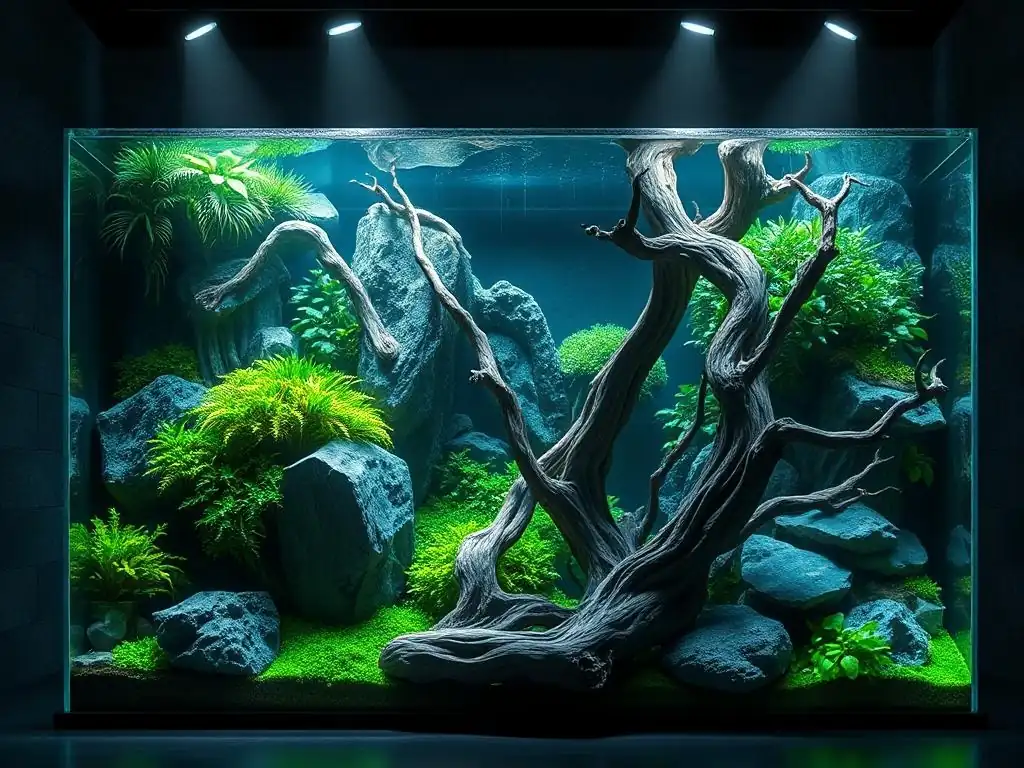
Ever wondered how some aquariums seem to breathe with life, drawing you into an underwater world? The secret often lies in the artful arrangement of hardscape. Dive in and discover how to unlock the soul of your scape with our guide to rocks wood aquarium design. We'll show you how to choose and place these elements for maximum visual impact, creating a breathtaking focal point that will captivate both you and your aquatic inhabitants. Ready to transform your aquarium from ordinary to extraordinary? Let's get started!
- Understanding the Importance of Hardscape in Aquarium Design
-
Selecting the Right Rocks for Your Aquarium: A Comprehensive Guide
- Identifying Different Types of Aquarium Rocks: Seiryu Stone, Lava Rock, Dragon Stone
- Compatibility of Rocks with Water Chemistry: pH and Hardness Considerations
- Choosing Rocks Based on Aquarium Style: Iwagumi, Dutch, Nature Aquarium
- Sizing and Quantity: Determining the Appropriate Rock Volume for Your Tank
- Choosing the Right Wood for Your Aquarium: A Detailed Overview
- Principles of Hardscape Placement in Aquarium Design
- Practical Tips for Placing Rocks and Wood in Your Aquarium
- Enhancing Your Aquascape with Rocks and Wood: Advanced Techniques
- Maintaining Your Hardscape: Ensuring Long-Term Stability and Beauty
- Inspiring Examples of Aquascapes Featuring Rocks and Wood
-
Frequently Asked Questions
- How do rocks and wood contribute to the overall aesthetic of an aquarium?
- What types of rocks and wood are safe to use in an aquarium?
- How do I prepare rocks and wood before adding them to my aquarium?
- How should I arrange rocks and wood to create a visually appealing aquascape?
- How does the type of aquarium (freshwater vs. saltwater) influence the choice of rocks and wood?
- Final Reflection: Sculpting Aquatic Harmony
- Sculpt Your Dream Aquascape Today!
Understanding the Importance of Hardscape in Aquarium Design
The Role of Rocks and Wood in Creating a Natural Aquarium Environment
Rocks and wood are the fundamental building blocks of any compelling aquascape, serving as the skeletal structure that defines the entire underwater landscape. Much like mountains, valleys, and forests shape terrestrial environments, hardscape elements like carefully selected rocks and intricate pieces of wood mimic these natural formations within the confined space of an aquarium. This replication of natural geology and botany not only provides visual interest but also creates a more authentic and stimulating habitat for your aquatic inhabitants.
Beyond mere aesthetics, these natural elements ground the aquascape, giving it a sense of permanence and age. A well-chosen piece of spiderwood, resembling a gnarled root system, or a cluster of Seiryu stones, evoking a rugged mountain range, can transport the viewer to a serene riverbed or a dense jungle floor. This naturalistic approach, central to effective rocks wood aquarium design, ensures that the aquascape feels less like a sterile glass box and more like a vibrant, living ecosystem.
Hardscape as the Foundation of Your Aquascape: Stability and Aesthetics
The hardscape serves as the undeniable foundation upon which the entire aquascape is built, dictating not only its visual appeal but also its structural integrity. When planning your rocks wood aquarium design, these elements establish the primary lines, focal points, and overall flow of the layout. Large, stable rocks or dense pieces of driftwood provide the necessary weight to hold down substrates and prevent floating, especially important in new setups where plants are not yet rooted.
Furthermore, the strategic placement of hardscape elements creates the framework for future planting, influencing where different plant types will thrive and how they will interact with the environment. For instance, a tall piece of wood might serve as an anchor for epiphytic plants like Anubias or Bucephalandra, while a series of stacked rocks can define terraced planting areas. The careful consideration of hardscape in your rocks wood aquarium design ensures both a visually stunning display and a robust, stable environment.
Rocks and Wood: Providing Shelter and Territory for Aquarium Inhabitants
Beyond their aesthetic contribution, rocks and wood are indispensable for the well-being and natural behavior of aquarium inhabitants. They provide crucial shelter, offering numerous hiding spots, caves, and crevices that fish, shrimp, and other invertebrates can retreat into when feeling stressed or threatened. This sense of security is vital for reducing anxiety in many species, particularly shy or nocturnal ones, allowing them to exhibit more natural behaviors.
Moreover, these hardscape elements define territories, which is especially important for cichlids and other semi-aggressive or breeding fish. A well-designed aquascape with ample rock formations and intricate wood structures can help mitigate aggression by providing clear boundaries and multiple escape routes. For example, a Pleco might claim a specific hollow log as its home, while a pair of Apistogramma could establish a breeding territory around a particular rock cave, enhancing both their comfort and your overall rocks wood aquarium design.
Selecting the Right Rocks for Your Aquarium: A Comprehensive Guide
Identifying Different Types of Aquarium Rocks: Seiryu Stone, Lava Rock, Dragon Stone
The world of aquarium rocks offers a diverse palette for aquascapers, each type possessing unique characteristics that influence both aesthetics and water chemistry. Seiryu Stone, often recognized for its striking blue-grey hues and sharp, angular edges, is a staple in Iwagumi and Nature Aquarium designs. While visually stunning, it's important to note that Seiryu can subtly raise the pH and hardness of the water over time due to its calcium carbonate content, a factor to consider for soft-water demanding species.
Lava Rock, identifiable by its porous, often reddish-brown or black appearance, is highly popular due to its inert nature and excellent surface area for beneficial bacteria colonization. Its lightweight, open structure makes it easy to stack and provides numerous nooks for plants to attach to.
Dragon Stone, also known as Ohko Stone, is characterized by its unique, pitted, and earthy texture, resembling ancient dragon scales. This type of rock is generally inert and will not significantly impact water parameters, making it a versatile choice for a wide range of aquatic setups and an excellent component in any rocks wood aquarium design.
Compatibility of Rocks with Water Chemistry: pH and Hardness Considerations
The chemical composition of your chosen rocks plays a critical role in maintaining stable water parameters, particularly pH and hardness (GH/KH). Calcareous rocks, such as limestone, marble, or certain types of slate, are primarily composed of calcium carbonate and will slowly dissolve in acidic water, thereby increasing the pH, general hardness (GH), and carbonate hardness (KH) of your aquarium. This can be beneficial for African cichlid tanks that thrive in hard, alkaline conditions, but detrimental for species that require soft, acidic water, such as many South American tetras or discus.
To test if a rock will affect water chemistry, a simple method is to place a few drops of vinegar (acetic acid) or muriatic acid on a small, inconspicuous part of the rock. If it fizzes or bubbles, it indicates the presence of calcium carbonate and suggests it will likely raise your water's pH and hardness. For sensitive setups or those aiming for soft, acidic conditions, inert rocks like lava rock, dragon stone, or quartz-based stones are preferred as they have minimal to no impact on water chemistry, ensuring the desired stability for your rocks wood aquarium design.
Choosing Rocks Based on Aquarium Style: Iwagumi, Dutch, Nature Aquarium
The selection of rocks is intrinsically linked to the aquascaping style you aim to achieve, with each style having distinct preferences for hardscape elements. In an Iwagumi layout, rocks are the sole hardscape focus, meticulously arranged to create a minimalistic, mountain-range aesthetic. Seiryu Stone is almost exclusively used here due to its sharp lines and commanding presence, with a dominant "Oyaishi" (main stone) establishing the visual anchor for the entire rocks wood aquarium design.
The Dutch aquascape, conversely, prioritizes lush plant growth and vibrant color contrasts, often sidelining hardscape. Rocks, if used at all, are typically small, subtle accent pieces like small river stones or inert pebbles, intended not to detract from the intricate plant arrangements. For a Nature Aquarium, the goal is to replicate natural landscapes, often incorporating a harmonious blend of both rocks and wood. Here, rocks like Dragon Stone, with their organic textures, or large, stratified stones are used to create realistic cliffs, riverbeds, or rocky outcrops, often intertwined with driftwood to form a cohesive, naturalistic rocks wood aquarium design.
Sizing and Quantity: Determining the Appropriate Rock Volume for Your Tank
Determining the appropriate size and quantity of rocks is crucial for creating a balanced and impactful aquascape without overwhelming the tank. A common guideline suggests that the total volume of hardscape (rocks and wood combined) should ideally occupy between 25% to 40% of the visual space within your aquarium, though this can vary based on style. For instance, an Iwagumi might lean towards the higher end, while a heavily planted Dutch tank would be much lower.
When selecting individual rocks, aim for a variety of sizes to create depth and natural realism. A good rule of thumb is to have a few larger, dominant pieces that serve as focal points, complemented by several medium-sized rocks that bridge the gap, and numerous smaller pieces or pebbles to fill in gaps and add detail.
For a 60-liter (approximately 15-gallon) tank, you might start with 3-5 primary rocks ranging from 10-20 cm (4-8 inches), plus a handful of smaller accent stones. Over-stuffing the tank with too many or uniformly sized rocks can make the aquascape look cluttered and unnatural, detracting from the overall rocks wood aquarium design.
Choosing the Right Wood for Your Aquarium: A Detailed Overview
Exploring Different Types of Aquarium Wood: Driftwood, Spiderwood, Mopani Wood
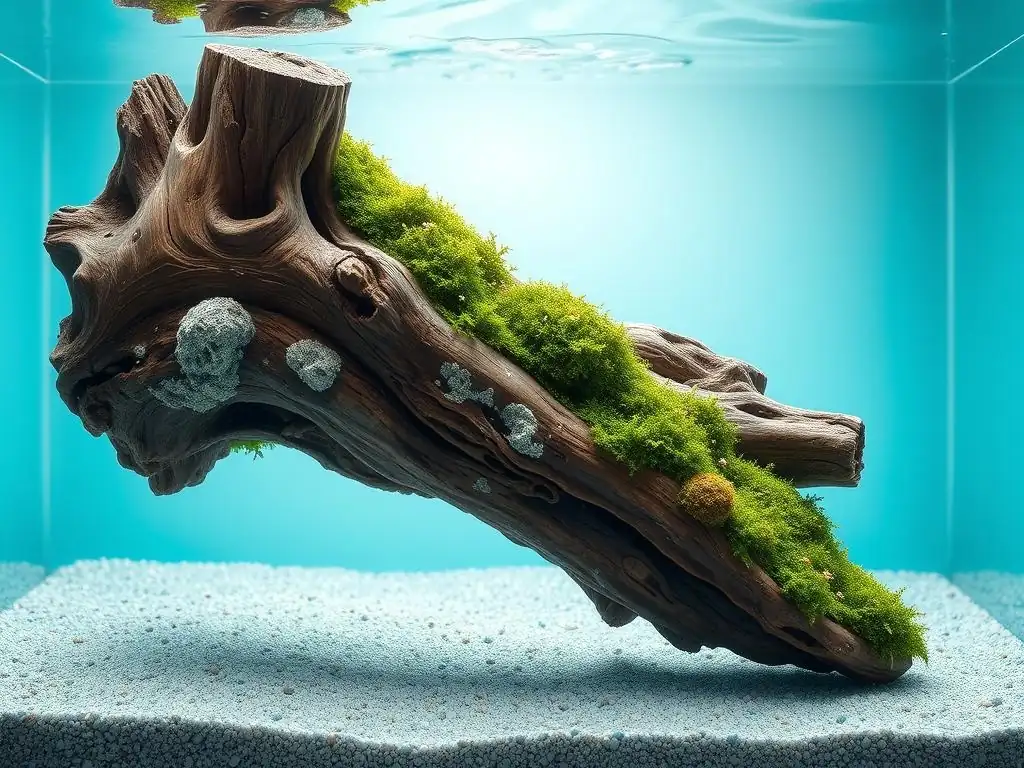
Aquarium wood, often referred to as driftwood, encompasses a variety of natural branches and roots, each bringing unique aesthetic and functional qualities to your aquascape. Driftwood is a general term often referring to various types of water-logged wood, commonly collected from rivers or purchased from suppliers. These pieces are highly variable in shape and size, often releasing tannins that tint the water amber, which can be beneficial for certain fish species and create a natural blackwater effect.
Spiderwood, also known as Redmoor Root, is characterized by its intricate, branching structure, resembling a spider's web or an ancient root system. It is relatively lightweight and releases fewer tannins than other types, making it popular for designs that require delicate, interwoven elements. Mopani Wood is a dense, heavy wood often recognized by its two-toned appearance, ranging from dark brown to light beige.
It sinks readily and releases significant amounts of tannins initially, but these leach out over time. Its robustness makes it excellent for creating stable structures and providing substantial hiding spots, making it a versatile choice for any rocks wood aquarium design.
Preparing Wood for Aquarium Use: Soaking, Boiling, and Removing Tannins
Proper preparation of aquarium wood is crucial to prevent issues like buoyancy, excessive tannin leaching, and the introduction of unwanted organisms or chemicals into your tank. The primary step for any new piece of wood is soaking. This process, which can take anywhere from a few days to several weeks or even months depending on the wood's density, allows the wood to become fully waterlogged, ensuring it sinks without the need for external weights. Regular water changes during soaking help to leach out initial tannins.
Boiling wood is another effective preparation method, especially for smaller to medium-sized pieces. Boiling for several hours, or even multiple times with fresh water, serves several purposes: it sterilizes the wood by killing off any potential bacteria, fungi, or pests, and it significantly accelerates the release of tannins. While tannins (which cause the "tea-stained" water) are harmless and even beneficial for some fish, excessive amounts can obscure visibility. If a clear water look is desired, continued soaking and boiling, or using activated carbon in your filter, will help reduce the discoloration, contributing to a cleaner rocks wood aquarium design.
Selecting Wood Based on Aquarium Style: Creating Natural Root Structures
The type and configuration of wood chosen can profoundly influence the overall aesthetic and authenticity of your aquascape, directly aligning with specific design styles. For a Nature Aquarium, the objective is to emulate natural landscapes, and wood often plays a central role in creating realistic root structures or fallen branches. Large, gnarled pieces of driftwood or intricate spiderwood are ideal for mimicking submerged trees, providing dramatic vertical elements and leading lines that draw the eye through the aquascape.
In a Biotope Aquarium, the selection of wood is even more specific, aiming to replicate a particular natural habitat from a geographic region, such as a South American blackwater river. Here, wood that naturally occurs in those regions, like specific types of large, tannin-rich driftwood, would be chosen to accurately reflect the environment. Conversely, in a highly structured Dutch Aquascape, wood might be minimal or absent, as the focus is predominantly on plant arrangements. However, in any style aiming for naturalism, the strategic placement of wood contributes immensely to the realism and depth of the rocks wood aquarium design.
Wood Placement for Optimal Visual Appeal and Fish Health
Effective wood placement is an art that balances aesthetic principles with the practical needs of your aquarium inhabitants. From a visual standpoint, wood can be used to create strong focal points, define pathways, or establish a sense of depth. Tall, branching pieces can be positioned to lead the eye upwards, mimicking towering trees, while horizontally laid pieces can suggest fallen logs or river debris, enhancing the natural flow of the aquascape. The "Rule of Thirds" or the "Golden Ratio" can be applied to position dominant wood pieces off-center, creating a more dynamic and engaging composition.
Crucially, wood placement also significantly impacts fish health and behavior. Intricate wood structures provide abundant hiding spots, which are essential for shy species or for reducing stress in a community tank. For example, a network of spiderwood branches can offer numerous safe havens for small tetras or shrimp.
Ensure that the wood creates secure crevices and caves without trapping fish, and that ample open swimming space remains. Additionally, the surface of the wood provides an ideal substrate for the growth of biofilm, a valuable food source for many invertebrates and grazing fish, making thoughtful wood placement integral to a thriving rocks wood aquarium design.
Principles of Hardscape Placement in Aquarium Design
The Golden Ratio and the Rule of Thirds in Aquascaping
Applying established artistic principles like the Golden Ratio and the Rule of Thirds can elevate your rocks wood aquarium design from good to exceptional. The Golden Ratio, approximately 1.618 to 1, is often found in natural patterns and is believed to be inherently pleasing to the human eye.
In aquascaping, this principle suggests placing your primary focal point – whether a dominant rock or a striking piece of wood – at a point that divides the tank's length or height according to this ratio. For instance, in a 90cm long tank, the focal point might be around 34.4cm or 55.6cm from an end, rather than dead center.
Similarly, the Rule of Thirds involves dividing your aquarium's visual space into a 3x3 grid, creating nine equal sections and four intersecting points. The most impactful elements of your hardscape, such as your main rock or the most visually interesting part of your wood, should ideally be positioned along these lines or, even better, at the intersection points. This off-center placement creates a more dynamic and balanced composition compared to a perfectly symmetrical layout, guiding the viewer's eye naturally through the aquascape and enhancing the overall impact of your rocks wood aquarium design.
Creating Depth and Perspective Using Rocks and Wood
One of the most challenging yet rewarding aspects of aquascaping is creating a convincing illusion of depth and perspective within a confined glass box. Rocks and wood are indispensable tools for achieving this. By strategically placing larger hardscape elements in the foreground and progressively smaller ones towards the back, you can simulate distance, making the tank appear much deeper than it actually is. This technique, often referred to as forced perspective, effectively compresses the visual space.
Furthermore, using converging lines with your hardscape can enhance this illusion. For instance, arranging pieces of wood or rock formations that appear to narrow as they recede towards the background can draw the viewer's eye deep into the aquascape, mimicking a winding river or a distant mountain range. Creating distinct foreground, midground, and background zones with varying sizes and types of hardscape also contributes to this layered effect, giving your rocks wood aquarium design a three-dimensional quality that captivates observers.
Achieving Balance and Harmony in Your Aquarium Layout
Balance and harmony are paramount to a visually appealing aquascape, ensuring that no single element overwhelms the others and that the entire composition feels cohesive. While perfect symmetry can appear static and unnatural, an asymmetrical balance often creates a more dynamic and organic feel. This involves distributing visual weight evenly across the tank, even if the elements on either side are not identical. For example, a large piece of wood on one side might be balanced by a cluster of smaller rocks and dense planting on the opposite side.
Consider the interplay between positive space (the hardscape elements themselves) and negative space (the open areas around them). Ample negative space allows the eye to rest and appreciate individual elements, preventing the aquascape from looking cluttered. The lines and forms created by your rocks and wood should flow naturally, guiding the viewer's gaze without abrupt interruptions. Achieving this harmonious blend of elements is key to a successful rocks wood aquarium design, creating a serene and aesthetically pleasing underwater world.
Avoiding Common Aquascaping Mistakes: Symmetry and Overcrowding
While the pursuit of aesthetic perfection in rocks wood aquarium design is admirable, certain common pitfalls can detract significantly from the final result. One frequent mistake is creating a perfectly symmetrical layout, often by placing a dominant hardscape element dead center. While seemingly balanced, true symmetry in nature is rare, and such designs often appear static and unnatural, lacking the dynamic flow that makes an aquascape engaging. Instead, aim for asymmetrical balance, using principles like the Rule of Thirds to create more visual interest.
Another pervasive error is overcrowding the tank with too much hardscape. While rocks and wood are crucial, excessive quantities can leave insufficient swimming space for fish, make maintenance challenging, and create a cluttered, unappealing look. It's often better to use fewer, well-chosen pieces that make a significant impact rather than filling every available space. Additionally, neglecting to properly secure hardscape elements can lead to instability, posing a risk to both the tank's structure and its inhabitants. Thoughtful planning and restraint are key to avoiding these issues in your rocks wood aquarium design.
Practical Tips for Placing Rocks and Wood in Your Aquarium
Securing Rocks and Wood: Preventing Shifting and Instability
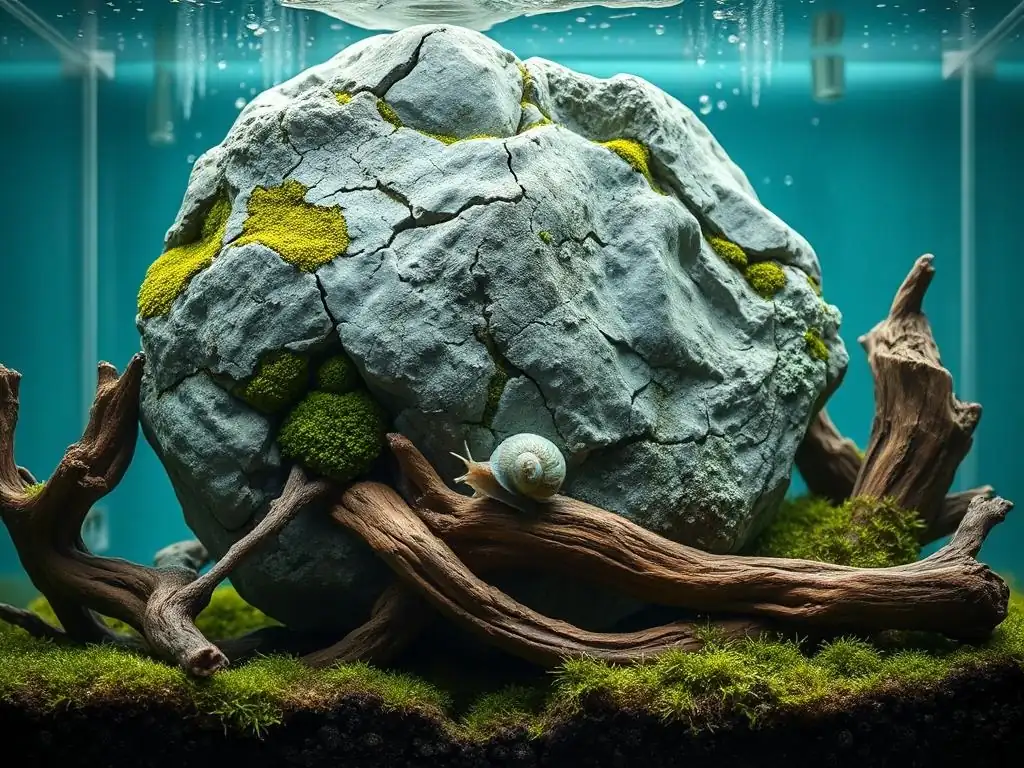
Ensuring the stability of your rocks and wood is paramount for the long-term safety of your aquarium inhabitants and the integrity of your aquascape. Large, heavy rocks should always be placed directly on the bottom glass of the tank, before adding substrate. This prevents the substrate from shifting over time and undermining the rock's base, which could lead to collapses, especially if burrowing fish are present. If stacking multiple rocks, consider using aquarium-safe silicone or specialized epoxy to bond them together, creating a solid, unmovable structure.
For wood that is not yet fully waterlogged and tends to float, various methods can be employed to secure it. You can wedge it firmly under heavier rocks, or use small pieces of inert rock to weigh it down until it sinks naturally.
Alternatively, some aquascapers attach suction cups to the base of the wood using fishing line or zip ties, adhering them to the tank bottom. For more complex structures in your rocks wood aquarium design, drilling and inserting acrylic rods or using zip ties to bind pieces together can create a robust and stable framework that will not shift during water changes or fish activity.
Creating Caves and Crevices for Fish and Invertebrates
Thoughtfully designed caves and crevices within your hardscape are not just aesthetic enhancements but vital functional elements for many aquarium inhabitants. These secluded spots provide essential hiding places where fish can retreat from perceived threats, rest, or establish territories. For example, a stack of flat rocks can be arranged to form a secure cave for a shy Pleco or a breeding pair of cichlids, offering them privacy and a sense of security.
When constructing these hideaways, ensure they are stable and cannot collapse. Use aquarium-safe silicone to bond rocks if necessary, and make sure openings are large enough for your fish to enter and exit comfortably without getting stuck, but small enough to provide a sense of enclosure. Shrimp and smaller invertebrates also benefit immensely from intricate nooks and crannies within wood and rock formations, providing safe havens from larger tank mates and areas for foraging. The inclusion of diverse hiding spots significantly contributes to the well-being and natural behavior of your aquatic pets in any rocks wood aquarium design.
Using Substrate to Enhance the Natural Look of Your Hardscape
The strategic use of substrate is a powerful tool for seamlessly integrating your rocks and wood into the aquascape, creating a more natural and established appearance. Instead of simply scattering substrate evenly, mound it up around the bases of your hardscape elements. This technique makes rocks appear as if they are partially buried or emerging from the earth, mimicking natural geological formations. Sloping the substrate from back to front, or creating undulating hills and valleys, can also add significant depth and dimension to your rocks wood aquarium design.
Consider using different types or colors of substrate to further enhance realism. For instance, a fine sand patch at the front can simulate a clear riverbed, transitioning to a darker, nutrient-rich soil around planted areas and hardscape. Gravel of varying sizes can be used to create natural transitions around large rocks, making them look more organic. The careful manipulation of substrate around your hardscape can transform a collection of individual elements into a cohesive, living landscape, significantly elevating the overall aesthetic of your aquarium.
Integrating Plants with Your Rocks and Wood: A Symbiotic Relationship
The true magic of aquascaping often lies in the symbiotic relationship between hardscape and plants, where each element enhances the other to create a vibrant, living ecosystem. Rocks and wood provide ideal anchoring points for epiphytic plants such as Anubias, Bucephalandra, and various types of Java Fern or mosses. These plants naturally attach their rhizomes to surfaces, creating a lush, organic covering that softens the hard edges of rocks and wood, giving them an aged, natural appearance.
Beyond epiphytes, stem plants and carpeting plants can be strategically positioned to complement the hardscape. Tall stem plants planted behind large pieces of wood can create a dense, green backdrop, emphasizing the hardscape's form. Carpeting plants like Monte Carlo or Glossostigma can be grown around the base of rocks, making them appear firmly rooted in the landscape. This integration not only boosts the aesthetic appeal of your rocks wood aquarium design but also contributes to water quality and provides additional hiding spots and foraging areas for your tank inhabitants, making the aquascape a truly harmonious environment.
Enhancing Your Aquascape with Rocks and Wood: Advanced Techniques
Using Multiple Rock Types for Visual Interest
While a cohesive aquascape often benefits from a dominant rock type, incorporating a secondary, complementary rock can add significant visual interest and texture. This advanced technique requires careful consideration to avoid a cluttered or mismatched appearance. For example, if your primary hardscape consists of large, angular Seiryu stones forming a mountain range, scattering a few smaller, smoother river pebbles at their base can simulate natural erosion and add a subtle contrast in texture and form.
Another approach is to use a rock type with a distinct color or pattern as an accent. Imagine a primary layout of dark, porous lava rock providing a rugged, volcanic feel. Introducing a few pieces of reddish Petrified Wood or a light-colored quartz stone can create a striking focal point or a pathway, drawing the eye to specific areas. The key is to ensure that the chosen rock types share some underlying characteristic, such as color tone or general shape, to maintain a sense of harmony in your rocks wood aquarium design while providing captivating visual diversity.
Creating a Focal Point with a Large, Dominant Rock or Piece of Wood
Every compelling aquascape benefits from a clear focal point, an element that immediately captures the viewer's attention and anchors the entire composition. Often, this is achieved by selecting a single, exceptionally large or uniquely shaped rock or a dramatic piece of driftwood. This dominant element should be positioned strategically, ideally adhering to the Golden Ratio or Rule of Thirds, to maximize its visual impact and guide the eye through the rest of the layout.
The chosen focal point should possess inherent aesthetic appeal – perhaps a rock with a particularly interesting texture, striation, or a piece of wood with an intricate, gnarled branch structure. Surrounding elements, including smaller rocks, wood pieces, and plants, should then be arranged to draw attention towards this central feature, creating a sense of hierarchy and depth. This deliberate emphasis on a single, powerful element is a cornerstone of sophisticated rocks wood aquarium design, ensuring your aquascape has a clear narrative and artistic direction.
Adding Details and Texture with Smaller Rocks and Pebbles
While large rocks and dominant wood pieces form the backbone of your aquascape, it's the meticulous addition of smaller rocks and pebbles that truly brings realism and intricate detail to the forefront. These diminutive elements can be scattered around the base of larger hardscape, mimicking natural scree slopes or erosion patterns, effectively blending the hardscape into the substrate. For instance, a cluster of fine river pebbles at the foot of a large Seiryu stone can create the impression of a natural stream bed.
Furthermore, smaller stones can be used to delineate pathways, define subtle elevation changes, or provide additional texture in open substrate areas. Varying the size of these smaller elements, from fine gravel to pea-sized pebbles, enhances the naturalistic feel. They can also serve as attachment points for delicate mosses, adding a soft, verdant layer to the hardscape. This attention to minute detail, often overlooked, is crucial for creating a truly immersive and believable rocks wood aquarium design that rewards close inspection.
Considering the Impact of Lighting on Your Hardscape
The lighting scheme chosen for your aquarium profoundly influences how your rocks and wood are perceived, dramatically affecting the mood and visual depth of your aquascape. Directional lighting, for example, can create striking shadows and highlights, emphasizing the textures and contours of your hardscape elements. A strong light source angled from the front or side can make the intricate details of a Dragon Stone or the gnarled branches of a Mopani wood piece truly pop, adding a three-dimensional quality that flat, overhead lighting might miss.
Moreover, the color temperature of your lighting can alter the perceived hues of your rocks and wood. Cooler white or blue-toned lights (e.g., 6500K-8000K) can accentuate the blue-grey tones of Seiryu stone, giving the aquascape a crisp, clear appearance. Warmer lights (e.g., 4000K-5500K) can bring out the reddish-browns of lava rock or the earthy tones of driftwood, creating a more natural, inviting ambiance. Understanding how light interacts with your rocks wood aquarium design is essential for manipulating the visual experience and achieving your desired aesthetic effect.
Maintaining Your Hardscape: Ensuring Long-Term Stability and Beauty
Cleaning Rocks and Wood: Removing Algae and Debris
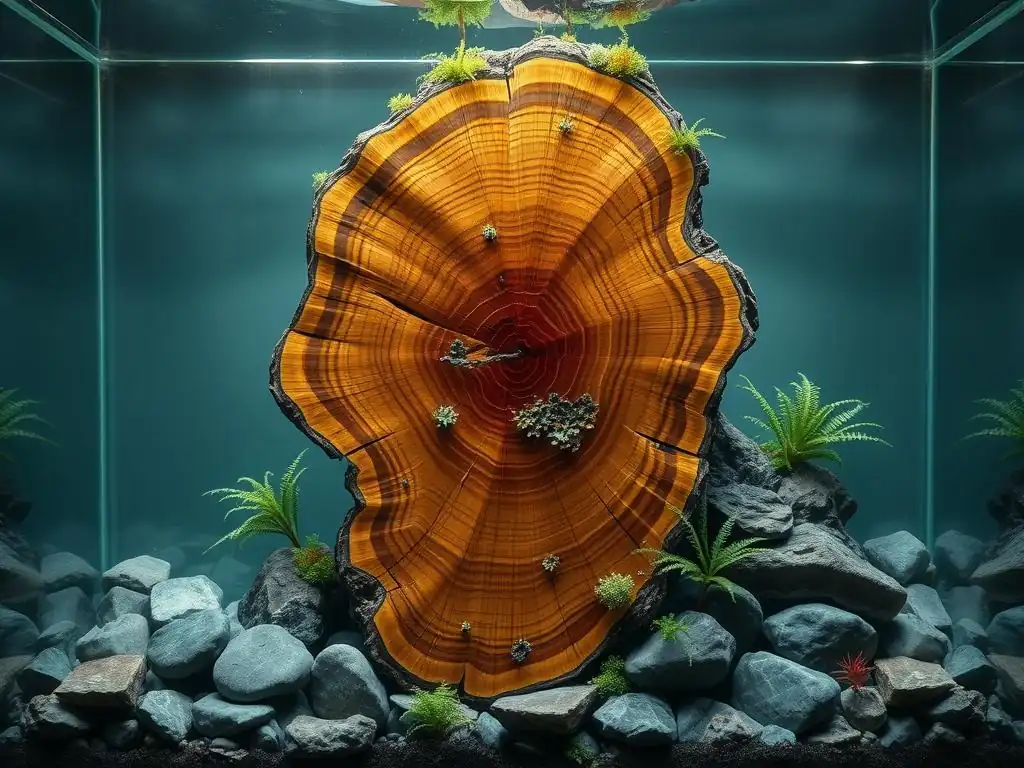
Maintaining the pristine appearance of your rocks and wood is crucial for the long-term beauty and health of your aquascape. Over time, hardscape elements can become covered in various types of algae, such as green spot algae, green hair algae, or even stubborn black beard algae (BBA). Regular manual cleaning during routine water changes is the most effective method: using a soft brush, an old toothbrush, or even a specialized algae scraper can gently remove most surface growth without disrupting the aquascape.
For more persistent algae, certain algae-eating species like Nerite snails or Otocinclus catfish can be invaluable members of your clean-up crew, constantly grazing on biofilm and algae. In severe cases, or during major tank overhauls, hardscape can be temporarily removed and treated outside the tank. A dilute solution of hydrogen peroxide or a very weak bleach solution (followed by thorough rinsing and dechlorination) can effectively kill off stubborn algae, restoring the original beauty of your rocks wood aquarium design.
While many popular hardscape choices are inert, some rocks and types of wood can influence your aquarium's water chemistry, necessitating regular monitoring and potential adjustments. Calcareous rocks, for example, will gradually leach minerals that increase pH, general hardness (GH), and carbonate hardness (KH). If your desired aquatic inhabitants require soft, acidic water, and your chosen hardscape contributes to hardness, you may need to perform more frequent partial water changes with RO (Reverse Osmosis) or distilled water, or utilize buffering substrates that counteract the hardening effect.
Similarly, most types of driftwood, particularly new pieces, will release tannins, which tint the water amber. While tannins are generally harmless and beneficial for blackwater fish species, excessive amounts can lower pH slightly and reduce water clarity. If a crystal-clear appearance is desired, regular water changes, the use of activated carbon in your filter, or prolonged pre-soaking/boiling of the wood can help manage tannin levels. Understanding and actively managing these potential chemical interactions ensures the stability and health of your rocks wood aquarium design.
Replacing Rocks and Wood as Needed: Maintaining the Health of Your Aquarium
While hardscape elements are generally long-lasting, there may come a time when replacing or adjusting certain pieces of rocks or wood becomes necessary to maintain the health, stability, or aesthetic appeal of your aquarium. Over many years, some softer types of wood may begin to slowly degrade, becoming brittle or developing excessive biofilm that is difficult to manage. Similarly, if a rock develops significant structural weaknesses or becomes perpetually covered in an intractable algae problem, it might be time for a replacement.
Furthermore, as your understanding of aquascaping evolves or if your tank inhabitants' needs change, you might decide to refresh your rocks wood aquarium design. This could involve swapping out a dominant piece of wood for one with a more intricate shape, or rearranging rock formations to create new hiding spots or planting areas. Any new hardscape introduced should undergo the same rigorous preparation (soaking, boiling if wood) as initial pieces to ensure it doesn't introduce unwanted elements or instability into your established aquatic environment.
Inspiring Examples of Aquascapes Featuring Rocks and Wood
Showcase of successful aquarium designs using varied hardscape
Imagine a stunning Iwagumi aquascape in a 60-liter (approx. 15-gallon) tank, dominated by three meticulously placed Seiryu stones. The largest, the "Oyaishi" or main stone, stands tall on the left, its sharp angles providing a strong vertical line. A slightly smaller "Fukuishi" or secondary stone, lies to its right, creating a sense of balance, while a smaller "Suteishi" or sacrificial stone, completes the triad, subtly leading the eye. The remaining space is carpeted with lush, vibrant Monte Carlo, creating an open, serene, and minimalist mountain landscape. This rocks wood aquarium design exemplifies purity and precision.
Consider another example: a captivating Nature Aquarium in a 90cm (approx. 3-foot) tank, featuring a large, gnarled piece of Mopani wood stretching diagonally from the back left to the front right, mimicking a fallen tree trunk. Its intricate branches provide numerous attachment points for Anubias nana and Java Fern.
At the base of the wood, a cluster of Dragon Stones with their unique pitted textures creates a rocky outcrop, seamlessly blending into a fine sand substrate. Lush stem plants like Rotala 'H'ra' and Ludwigia 'Super Red' are planted behind and around the hardscape, adding depth and vibrant color, while a foreground of Cryptocoryne parva completes this immersive rocks wood aquarium design.
Analysis of the rock and wood placement in each example
In the Iwagumi example, the strength of the design lies in its simplicity and adherence to classical principles. The three primary Seiryu stones are not placed symmetrically but rather follow an asymmetrical balance, often influenced by the Rule of Thirds. The dominant Oyaishi is positioned off-center, drawing the viewer's eye, while the Fukuishi and Suteishi create a natural visual flow, often forming a triangular composition that leads the gaze. The negative space around the rocks, filled only by the carpet plant, is as important as the rocks themselves, emphasizing their form and creating a sense of vastness.
For the Nature Aquarium example, the Mopani wood acts as the primary leading line, guiding the eye from the foreground to the background, thus enhancing the illusion of depth. Its diagonal placement breaks the monotony of a straight tank, creating dynamic movement. The Dragon Stones are clustered at the wood's base, anchoring it visually and providing a natural transition from the hardscape to the substrate.
The choice of wood and rocks complements each other in texture and color, creating a cohesive natural scene. The strategic planting around and on the hardscape softens its edges, making it appear seamlessly integrated into the living environment, showcasing sophisticated rocks wood aquarium design.
Replicating and Adapting these techniques for your own aquarium
Replicating successful aquascaping techniques, particularly those involving intricate rocks wood aquarium design, is an excellent way to learn and develop your own style. Begin by studying photographs or videos of designs that resonate with you, paying close attention to the placement of each hardscape element, the interplay between rocks and wood, and how plants are integrated. Don't be afraid to sketch out your ideas on paper first, experimenting with different layouts and compositions before committing to placing elements in your tank.
While direct replication can be a starting point, the true mastery comes from adapting these techniques to your specific tank dimensions, budget, and the needs of your chosen aquatic inhabitants. For instance, if you admire a large Nature Aquarium design, consider how its core principles – like creating depth with varying hardscape sizes or using leading lines with wood – can be scaled down to fit a smaller nano tank.
Experiment with different arrangements, moving rocks and wood until you achieve a balance and flow that feels natural and visually appealing. Patience and a willingness to iterate are key to developing a unique and successful rocks wood aquarium design that is truly your own.
Frequently Asked Questions
How do rocks and wood contribute to the overall aesthetic of an aquarium?
Rocks and wood are essential elements of aquarium design, creating a natural and visually appealing environment. They provide hiding places for fish and can support the growth of beneficial bacteria.
What types of rocks and wood are safe to use in an aquarium?
It's crucial to use aquarium-safe materials to avoid contaminating the water. Common safe choices include driftwood, slate, and lava rock. Avoid anything that might leach harmful chemicals.
How do I prepare rocks and wood before adding them to my aquarium?
Thorough preparation is key. Scrub rocks and wood to remove dirt and algae, and boil or soak wood to help it sink and release tannins gradually.
How should I arrange rocks and wood to create a visually appealing aquascape?
Consider the rule of thirds and create a focal point. Vary the size and shapes of the rocks and wood, and leave open spaces for fish to swim.
How does the type of aquarium (freshwater vs. saltwater) influence the choice of rocks and wood?
Saltwater aquariums often use live rock, which provides a biological filter. While driftwood is common in freshwater, certain woods can alter water parameters, requiring careful selection for both types.
Final Reflection: Sculpting Aquatic Harmony
The principles of Rocks wood aquarium design extend far beyond mere aesthetics; they represent a conscious effort to recreate miniature ecosystems, fostering a sense of tranquility and connection with nature within our own homes. This understanding is particularly relevant today, as urban living often disconnects us from the natural world, making the creation of these aquatic landscapes a vital source of serenity and inspiration.
The art of aquascaping, especially the careful selection and placement of rocks and wood, has profoundly influenced the way we perceive and interact with aquatic environments. It's a reminder that even in a controlled setting, nature's inherent beauty and balance can thrive, offering a constant source of wonder and learning. The best and most beautiful things in the world cannot be seen or even touched - they must be felt with the heart.
- Helen Keller. This quote resonates deeply with the aquascaping process, as the true impact of a well-designed scape lies in the emotional connection it fosters.
Now, consider the lessons learned from crafting your own aquatic haven. How can you apply the principles of balance, harmony, and naturalism to other aspects of your life? Let the patience and observation required for successful aquascaping inspire you to cultivate a deeper appreciation for the beauty and complexity of the world around you, and to create spaces, both physical and mental, that nurture growth and well-being.
Sculpt Your Dream Aquascape Today!
Thank you for exploring the art of aquascaping with us! We hope this guide has sparked your creativity and given you the confidence to design a truly captivating underwater world. Now, it's time to bring your vision to life.
Here are a few next steps you can take:
- Gather your rocks and wood and begin experimenting with layouts. Don't be afraid to try unusual arrangements and trust your artistic instincts!
- Share your initial aquascaping sketches or photos of your rock and wood arrangements on social media using #AquariumMastery for feedback and inspiration.
- Dive deeper into advanced aquascaping techniques by researching the "golden ratio" and its application in creating balanced and harmonious layouts.
Ready to transform your aquarium into a breathtaking underwater masterpiece? What unexpected element are you excited to incorporate into your next aquascape design?