
Unveiling the Secrets: Master 5 Popular Aquascaping Styles for a Breathtaking Tank

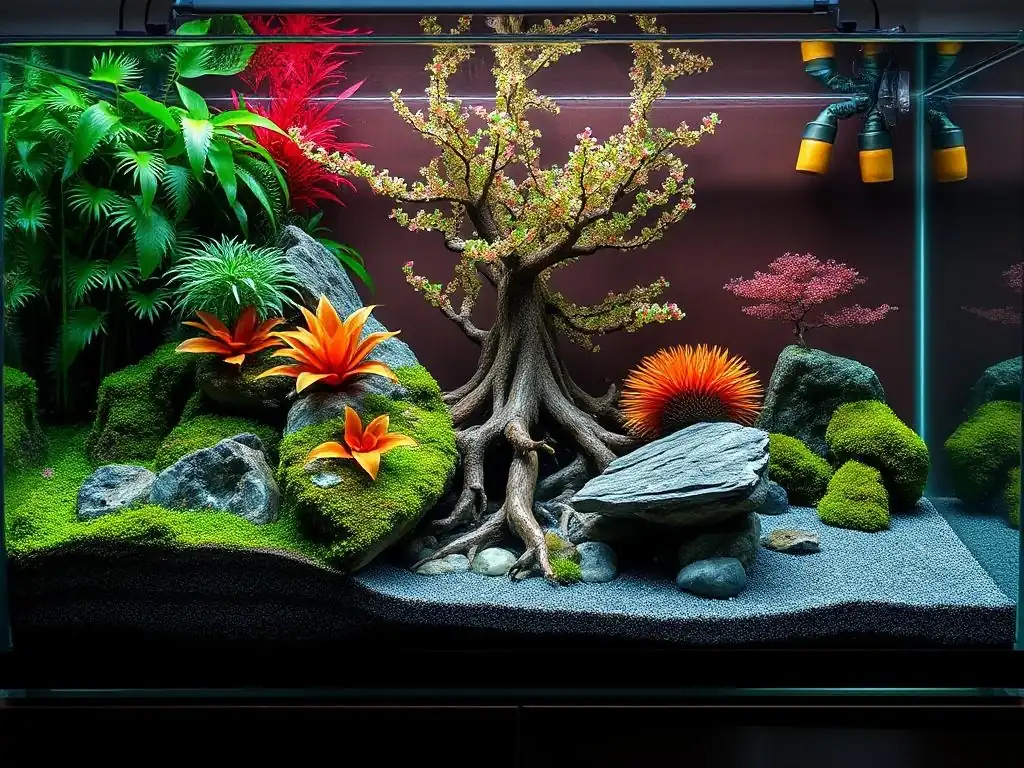
Welcome to Aquarium Mastery!
Ever dreamt of transforming your beginner aquarium into a living masterpiece? Dive in and discover the secrets to breathtaking underwater landscapes! This article unveils 5 popular aquascaping styles perfect for beginner aquariums, offering a pathway to creating a truly stunning aquatic world. Intrigued? Let's unlock the artistry together!
- Iwagumi Style: The Art of Rock Arrangement
-
Frequently Asked Questions
- What exactly is aquascaping, and why is it important for a beginner aquarium?
- Which aquascaping style is easiest for beginners to implement?
- How much does it typically cost to set up an aquascape in a beginner aquarium?
- What are some common mistakes beginners make when aquascaping?
- Where can I find inspiration and guidance for aquascaping my first aquarium?
- Final Reflection: Cultivating Underwater Beauty
- Transform Your Aquarium: Create Your Dreamscape Now!
Iwagumi Style: The Art of Rock Arrangement
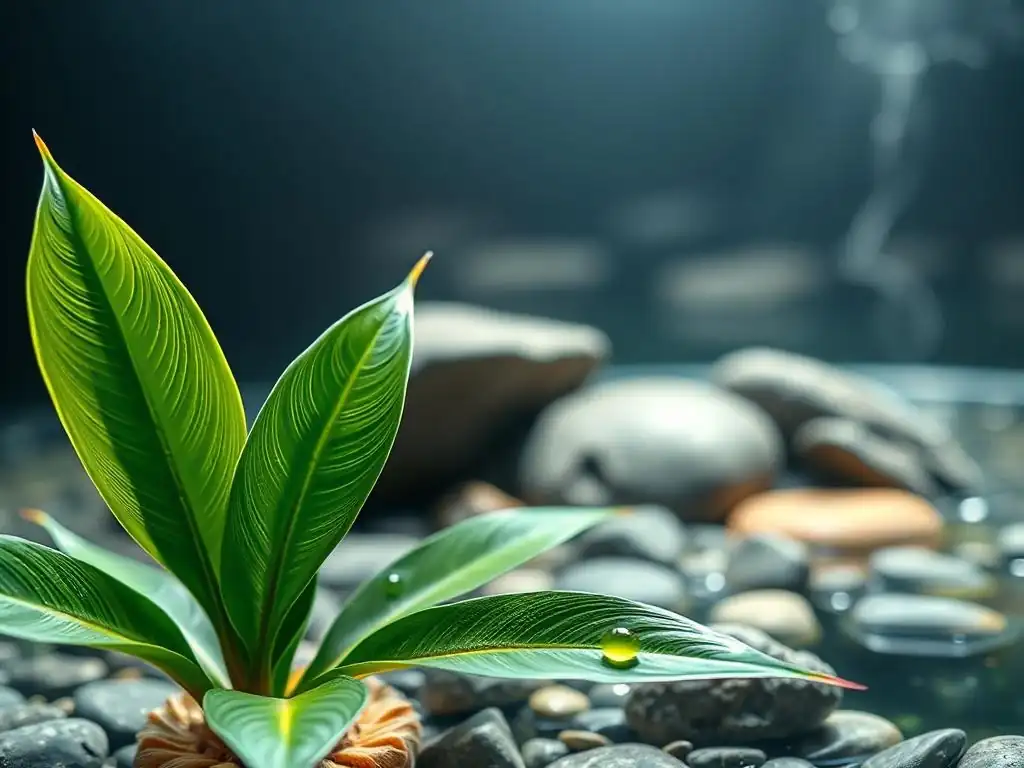
Key Elements: Stone Selection, Placement, and Substrate
The Iwagumi style, originating from Japan, is a minimalist aquascaping approach that focuses primarily on the arrangement of rocks, complemented by simple, low-growing plants. Its beauty lies in its simplicity and the powerful visual impact created by carefully selected and positioned stones. The fundamental principle revolves around a main stone, or Oyaishi, which dominates the composition, supported by two or more subordinate stones.
Popular choices for Iwagumi include Seiryu stones, known for their sharp, intricate textures, and Dragon stones (Ohko stones), which offer a more porous, cave-like appearance. For a typical 60cm (24-inch) aquarium, the Oyaishi might stand approximately 15-20cm tall, with supporting stones proportionately smaller to maintain visual hierarchy. Consistency in stone type is crucial to ensure a cohesive and natural aesthetic, making it a foundational concept for those exploring various aquascaping styles beginner aquariums.
The placement of these stones follows classical artistic principles, often utilizing the Golden Ratio or the Rule of Thirds to position the Oyaishi off-center, creating a dynamic focal point. The supporting stones, known as Fukuishi (secondary stone) and Suteishi (sacrificial stone), are arranged to lead the viewer's eye towards the main stone, suggesting flow and direction. It’s common practice to use an odd number of stones (e.g., three, five, or seven) to create a more natural and balanced composition.
Furthermore, stones are often partially buried in the substrate to mimic the appearance of natural erosion and integration with the landscape. The substrate itself is usually a fine-grained, nutrient-rich aqua soil, such as ADA Aqua Soil Amazonia, which supports plant growth and allows for the creation of a subtle slope from the back to the front of the tank, further enhancing the sense of depth.
Achieving Depth and Perspective with Minimalist Design
The genius of the Iwagumi style lies in its ability to create profound depth and perspective using a remarkably minimalist approach. Unlike other aquascaping styles beginner aquariums might attempt, Iwagumi relies heavily on negative space and the strategic positioning of its few elements. The varying sizes of stones, from the towering Oyaishi to the smaller, more subtle Suteishi, are arranged to suggest distance and scale.
For instance, in a 90cm (36-inch) tank, placing the Oyaishi around the 0.618 mark (Golden Ratio) from one side and having the Fukuishi and Suteishi fan out slightly can create a powerful illusion of a vast, open landscape, even within a confined space. This careful manipulation of scale and placement tricks the eye into perceiving greater distance than is actually present.
The sloping substrate, typically higher at the back and gently descending towards the front, also contributes significantly to this illusion of depth. This technique, combined with the strategic placement of stones, creates a natural vanishing point that draws the viewer's gaze into the background. The minimalist nature of Iwagumi ensures that every element serves a purpose, eliminating visual clutter and allowing the subtle details of the hardscape to shine.
This clean, uncluttered look is particularly appealing for aquascaping styles beginner aquariums as it teaches the importance of intentionality in design. The negative space around the rocks and plants is just as important as the elements themselves, providing visual resting points and emphasizing the beauty of the carefully chosen hardscape.
Suitable Plants and Fish: Low-Growing Carpeting Plants and Small Schooling Fish
To maintain the minimalist aesthetic and emphasize the hardscape, plant selection in Iwagumi aquascapes is highly specific, focusing primarily on low-growing carpeting plants. Species like Hemianthus callitrichoides 'Cuba' (HC Cuba), Glossostigma elatinoides, and Micranthemum 'Monte Carlo' are quintessential choices. These plants typically grow to heights of only 1-3 cm (0.4-1.2 inches), forming a dense, lush green carpet that highlights the contours of the rocks without obscuring them.
Their compact growth habit ensures that the carefully arranged stones remain the focal point. Occasionally, a small patch of Eleocharis parvula (Dwarf Hairgrass) might be used in the midground or background to add a different texture, but the emphasis always remains on foreground coverage. This simplicity in planting makes it one of the more manageable aquascaping styles beginner aquariums can successfully undertake.
When it comes to fish, the Iwagumi style calls for small, schooling species that will complement the serene, open landscape without overwhelming it. The ideal inhabitants are those that swim in tight, coordinated groups, adding dynamic movement and a splash of color while maintaining the sense of scale. Popular choices include Neon Tetras ( Paracheirodon innesi), Cardinal Tetras ( Paracheirodon axelrodi), Rummy-Nose Tetras ( Hemigrammus bleheri), and Harlequin Rasboras ( Trigonostigma heteromorpha).
For smaller tanks, micro-species like Chili Rasboras ( Boraras brigittae) are excellent. These fish enhance the natural feel of the aquascape by moving as a single unit, mimicking the behavior of fish in natural streams and rivers. It is crucial to avoid large, boisterous, or bottom-sifting fish that could disrupt the carefully manicured carpet or dislodge the stones, ensuring the long-term stability and beauty of this distinctive aquascaping style.
Frequently Asked Questions
What exactly is aquascaping, and why is it important for a beginner aquarium?
Aquascaping is the art of arranging aquatic plants, rocks, driftwood, and substrate in an aquarium to create an aesthetically pleasing underwater landscape. It's important for beginner aquariums because it enhances visual appeal and provides natural habitats for fish.
Which aquascaping style is easiest for beginners to implement?
The Dutch style is often considered easier for beginners. It focuses on creating lush, layered plant arrangements without requiring intricate rock or driftwood placement, making it more forgiving for those new to aquascaping.
How much does it typically cost to set up an aquascape in a beginner aquarium?
The cost varies greatly depending on the size of the tank and materials used. However, a basic aquascape can be achieved for around $50-$150, focusing on affordable plants and readily available rocks or driftwood.
What are some common mistakes beginners make when aquascaping?
Overcrowding the tank with too many elements is a frequent mistake. Beginners should also avoid using untreated materials that can alter water chemistry and harm their fish.
Where can I find inspiration and guidance for aquascaping my first aquarium?
AquariumMastery.com provides detailed articles on various aquascaping styles, plant selection, and tank maintenance. You can also find inspiration from online communities and forums dedicated to aquascaping.
Final Reflection: Cultivating Underwater Beauty
The journey through the diverse world of aquascaping styles, as explored in this article, highlights the enduring power of nature to inspire and transform our living spaces. The ability to create miniature underwater ecosystems, accessible even to beginners, speaks volumes about our innate desire to connect with the natural world. This connection is more vital than ever in our increasingly urbanized lives, offering a tangible and calming escape within the confines of our own homes.
This exploration of aquascaping styles has not only provided practical knowledge but has also underscored the profound impact a well-designed aquarium can have on our well-being and aesthetic sensibilities. Witnessing the growth and evolution of an aquascape is a deeply rewarding experience, fostering patience, creativity, and a greater appreciation for the delicate balance of life. The best time to plant a tree was 20 years ago. The second best time is now.
This ancient proverb perfectly encapsulates the spirit of aquascaping – the sooner you begin, the sooner you'll reap the rewards of its beauty and tranquility.
Now, armed with the knowledge of these five popular aquascaping styles, I invite you to embark on your own underwater adventure. Don't be intimidated by the perceived complexity; embrace the learning process, experiment with different layouts, and allow your creativity to flourish. Let your aquarium become a living canvas, a testament to your artistic vision, and a source of endless wonder and serenity in your life. The secrets are unveiled; the breathtaking tank awaits.
Transform Your Aquarium: Create Your Dreamscape Now!
Thanks for diving into the world of aquascaping! We hope you’ve found inspiration and gained valuable insights to elevate your aquarium design. Now, it's time to turn that knowledge into action and craft a stunning underwater world.
Here are a few ideas to get you started:
- Experiment with one of the five aquascaping styles discussed, focusing on creating a miniature 'nature aquarium' using the Iwagumi style to highlight minimalist beauty.
- Share your favorite aquascaping inspiration on social media using #AquariumMastery – let's build a community of passionate aquascapers!
- Dive deeper! Research advanced techniques like dry starting or CO2 injection to push your aquascaping skills to the next level.
Ready to grab your substrate and hardscape and begin building? What specific element from the Iwagumi style are you most eager to try in your next scape?