
Advanced Carpeting Techniques: Layering and Texturing Your Foreground

Welcome to Aquarium Mastery!
Ever dreamt of transforming your aquarium floor into a lush, vibrant carpet? Get ready to dive deep into Advanced Carpeting Techniques, where we reveal the secrets to creating stunning foregrounds. Discover how layering and texturing can elevate your aquascape from simple to spectacular. Are you ready to master the art of carpeting aquarium foreground techniques and achieve the aquascape of your dreams? Let's get started!
- Introduction to Carpeting Aquarium Foreground Techniques
- Selecting the Right Carpeting Plants
- Layering Carpeting Plants for Depth and Dimension
- Texturing Your Aquarium Foreground: Beyond the Carpet
- Advanced Planting Techniques for Carpeting Plants
- Maintaining Your Carpeting Aquarium Foreground
- Troubleshooting Common Issues with Carpeting Plants
- Examples of Layered and Textured Aquarium Foregrounds
- Conclusion: Mastering Carpeting Aquarium Foreground Techniques
-
Frequently Asked Questions
- What are the key benefits of using advanced carpeting techniques in a planted aquarium?
- What are some popular plant species suitable for advanced carpeting techniques?
- How does layering contribute to a more dynamic aquarium foreground?
- What role does CO2 injection play in successful carpeting aquarium foregrounds?
- What are some common mistakes to avoid when implementing advanced carpeting techniques?
- Final Reflection: Cultivating Underwater Landscapes
- Unveil Your Dream Aquarium Now!
Introduction to Carpeting Aquarium Foreground Techniques
The Importance of Foreground Plants in Aquascaping
Foreground plants are the cornerstone of a captivating aquascape, serving as the visual foundation that anchors the entire composition. They create a sense of depth and scale, making the aquarium appear larger and more expansive than its actual dimensions. Beyond aesthetics, these plants contribute significantly to the aquarium's ecosystem by providing essential biological filtration, consuming nitrates, and offering shelter and foraging grounds for small fish and invertebrates. A well-executed carpet defines the aquascape's style, whether it's the minimalist elegance of an Iwagumi or the lush density of a Dutch layout.
Moreover, the meticulous placement and growth of foreground plants demonstrate the aquascaper's skill and patience. They guide the viewer's eye, leading it from the front to the back of the tank, enhancing the perceived naturalness of the aquatic environment. Without a strong foreground, an aquascape can often appear incomplete or lack the visual weight necessary to create a truly immersive underwater landscape, making the mastery of carpeting aquarium foreground techniques crucial for any serious aquarist.
Why Layering and Texturing Elevate Your Aquarium Design
While a simple, uniform carpet can be appealing, layering and texturing are advanced carpeting aquarium foreground techniques that elevate an aquascape from good to exceptional. Layering involves strategically placing plants of varying heights and growth habits to create a visual gradient, giving the illusion of greater depth and distance. For instance, placing slightly taller foreground plants like Eleocharis parvula behind the ultra-short Hemianthus callitrichoides 'Cuba' creates a subtle rise that mimics natural terrain, making the scape feel more dynamic and less flat.
Texturing, on the other hand, goes beyond mere height differences. It incorporates plants with distinct leaf shapes, sizes, and colors, along with hardscape elements like rocks and wood, to break up monotony and add intricate detail. A foreground featuring the fine, delicate leaves of Dwarf Baby Tears alongside the slightly broader, clover-like leaves of Marsilea hirsuta, interspersed with small, naturally placed stones, offers a rich tapestry of visual interest. These advanced carpeting aquarium foreground techniques not only enhance realism but also provide focal points that draw the eye, preventing the foreground from becoming a uniform, uninteresting green expanse.
Selecting the Right Carpeting Plants
Considerations for Plant Choice: Light, CO2, and Substrate
Choosing the appropriate carpeting plants is paramount for success, and several environmental factors must be carefully considered: light, CO2, and substrate. Most popular carpeting plants are high-light demanders, typically requiring a Photosynthetically Active Radiation (PAR) value ranging from 50 to 80 µmol/m²/s at the substrate level, which translates to a high-power LED fixture or approximately 2-3 watts per gallon for traditional lighting. Insufficient light often leads to leggy growth as plants stretch to reach the light, or even melting.
Equally critical for dense, lush growth is a consistent supply of carbon dioxide (CO2). For optimal health and spread, CO2 levels should be maintained at approximately 20-30 parts per million (ppm) during the photoperiod. Without adequate CO2, even high-light plants will struggle to photosynthesize efficiently, resulting in slow growth, poor color, and susceptibility to algae.
Finally, the substrate plays a vital role. Nutrient-rich aquatic soils (e.g., aqua soil) are highly recommended as they provide essential macro and micronutrients directly to the roots, fostering robust growth and dense carpeting. While some plants can manage in inert substrates with root tabs, the difference in growth rate and health with a dedicated aquatic soil is substantial.
Popular Carpeting Plant Species: A Detailed Overview
Numerous plant species are favored for creating vibrant carpets in freshwater aquariums, each with unique characteristics that influence their suitability for specific aquascapes and carpeting aquarium foreground techniques. Understanding their individual needs is crucial for successful cultivation.
Glossostigma elatinoides (Glosso)
Often referred to as Glosso, Glossostigma elatinoides is a very popular, fast-growing carpeting plant known for its bright green, small, spatulate leaves. It demands high light and consistent CO2 injection to thrive and spread horizontally. Under optimal conditions, Glosso can spread rapidly, covering an area of 1-2 inches per week by sending out runners that root readily.
If light is insufficient or CO2 is lacking, it tends to grow vertically, becoming leggy and losing its carpeting habit. It benefits significantly from a nutrient-rich substrate and regular trimming to encourage dense, horizontal growth. Its rapid growth makes it an excellent choice for quickly establishing a foreground carpet, provided its demanding requirements are met.
Hemianthus callitrichoides 'Cuba' (Dwarf Baby Tears)
Hemianthus callitrichoides 'Cuba', affectionately known as HC Cuba or Dwarf Baby Tears, is renowned as the smallest and one of the most challenging carpeting plants. Its tiny, bright green leaves create an incredibly fine, dense, and lush carpet that closely resembles a miniature lawn. HC Cuba requires very high light intensity and precise, stable CO2 levels (ideally 25-30 ppm) to flourish.
Its growth rate is slower than Glosso, typically spreading about 0.5-1 inch per week under perfect conditions, but it forms an exceptionally tight mat. Due to its delicate nature, it is prone to melting if conditions are not optimal, particularly if CO2 fluctuates or light is insufficient. Patience and consistent care are key to successfully carpeting an aquarium foreground with this exquisite plant.
Eleocharis parvula (Dwarf Hairgrass)
Eleocharis parvula, or Dwarf Hairgrass, offers a distinct grassy texture, creating a natural meadow-like effect in the foreground. It consists of thin, blade-like leaves that grow upwards, typically reaching heights of 2-4 inches, though shorter varieties exist. Dwarf Hairgrass spreads effectively through runners, forming a dense network over time.
It is less demanding than HC Cuba or Glosso, tolerating moderate to high light, and while CO2 injection is not strictly necessary for survival, it significantly enhances its growth rate and density, allowing runners to spread several inches monthly. Its ability to grow slightly taller than other carpets makes it excellent for creating a layered effect and adding visual depth, particularly when placed behind shorter plants or around hardscape elements.
Marsilea hirsuta
Marsilea hirsuta is a versatile and relatively undemanding carpeting plant that resembles a four-leaf clover. Its leaves can vary in shape and size depending on light intensity; under high light, it tends to grow very low with small, single-lobed leaves, while in lower light, it may produce larger, four-lobed leaves that grow taller. Marsilea hirsuta spreads via runners, forming a dense carpet over time, though its growth rate is slower than Glosso or HC Cuba, typically spreading about 0.5 inches per week.
It is quite hardy and can thrive in a wider range of conditions, including moderate light and without CO2 injection, although CO2 will accelerate its growth. Its unique texture and adaptability make it an excellent choice for aquarists seeking a robust and distinct foreground carpet.
Layering Carpeting Plants for Depth and Dimension
Understanding Plant Growth Habits for Effective Layering
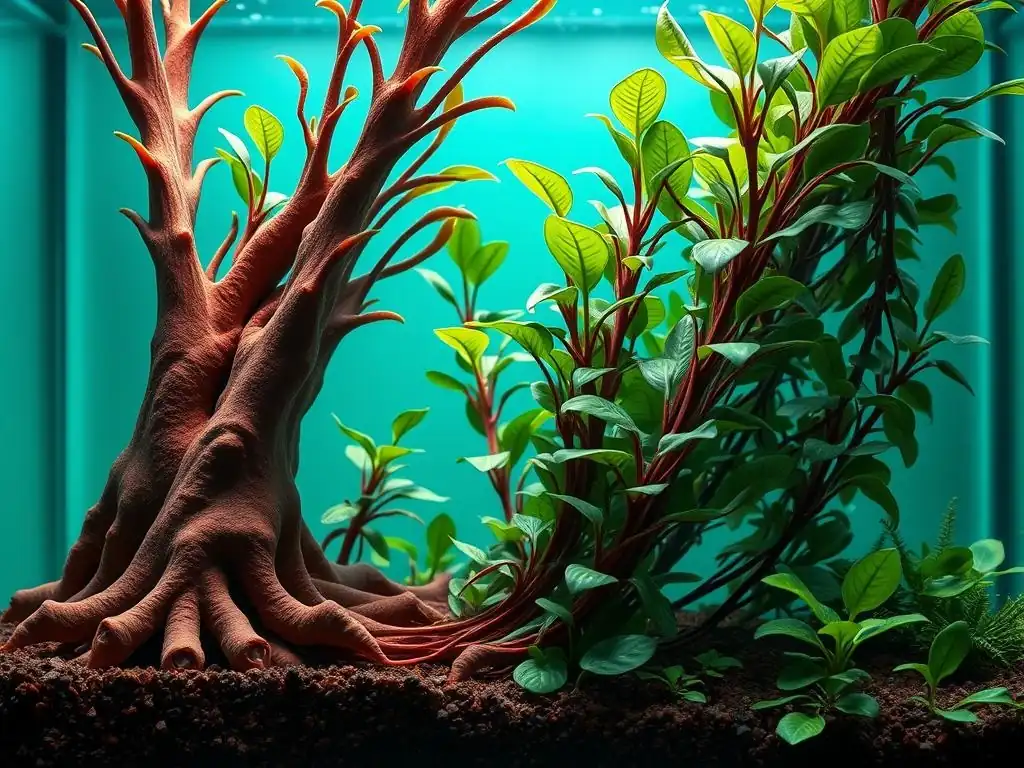
Effective layering in your aquarium foreground hinges on a deep understanding of different carpeting plants' growth habits and mature sizes. The goal is to create a gradual increase in height from the very front of the tank towards the midground, mimicking natural landscapes and enhancing perceived depth.
For instance, ultra-short plants like Hemianthus callitrichoides 'Cuba' (often staying below 1 inch) are ideal for the absolute forefront. Behind them, one might place a slightly taller carpet, such as Glossostigma elatinoides, which can reach 1-2 inches in height if not aggressively trimmed, or even Marsilea hirsuta which offers a different texture and similar low growth.
Further back, plants like Eleocharis parvula (Dwarf Hairgrass), which can grow 2-4 inches tall, are excellent for creating a "hazy" or "meadow" effect that transitions smoothly into midground plants. By strategically placing plants that spread via runners (like Dwarf Hairgrass and Glosso) versus those that form dense clumps (like HC Cuba), you can control the texture and density of each layer. Planning is essential; consider the mature size and spread of each species to prevent taller plants from overshadowing shorter ones or creating an unnatural, abrupt height change, ensuring a harmonious and visually appealing layered foreground.
Creating a Natural Slope for Visual Appeal
One of the most impactful carpeting aquarium foreground techniques for enhancing depth and dimension is creating a natural slope with your substrate. This involves building up the substrate material towards the back of the tank, gradually decreasing its depth towards the front pane. A typical slope might see the substrate being 2-3 inches deep at the very front, gradually increasing to 5-8 inches at the midground line. This incline immediately tricks the eye into perceiving greater distance and scale, making the aquascape appear much larger and more expansive.
To achieve this slope effectively without using an excessive amount of expensive aquatic soil, inert materials like lava rock, pumice, or even filter media bags can be used to build up the base layers at the back. These materials provide elevation while remaining lightweight and porous, which can also contribute to beneficial bacterial colonization.
The aquatic soil is then layered on top, ensuring adequate depth for plant roots throughout the sloped area. This intentional contouring not only enhances visual appeal but also facilitates better plant growth by providing ample substrate for root development in the deeper sections, further optimizing your foreground carpeting efforts.
Combining Different Textures and Leaf Sizes
To truly elevate your aquarium foreground beyond a simple green carpet, master the art of combining different textures and leaf sizes. This advanced carpeting aquarium foreground technique introduces visual complexity and prevents the foreground from appearing monotonous.
For example, the incredibly fine, delicate texture of Hemianthus callitrichoides 'Cuba' (leaves often less than 2mm wide) can be beautifully contrasted with the slightly larger, rounded leaves of Glossostigma elatinoides (leaves typically 5-10mm long) or the distinct, clover-like appearance of Marsilea hirsuta. The slender, upright blades of Eleocharis parvula offer yet another textural element, creating a soft, grassy feel that differs significantly from the compact growth of other carpets.
Beyond just leaf size, consider the overall growth habit. Pairing a plant that forms a dense, tight mat with one that spreads more openly or has a slightly more "wild" appearance adds natural variation. For instance, a pristine patch of HC Cuba could transition into a more rugged area of Dwarf Hairgrass, subtly defining different zones within the foreground.
Furthermore, incorporating plants with subtle variations in green hues can add another layer of visual interest, preventing a single, uniform shade of green from dominating. This thoughtful combination of textures and leaf sizes is crucial for creating a dynamic, engaging, and realistic underwater landscape.
Texturing Your Aquarium Foreground: Beyond the Carpet
Incorporating Rocks and Wood for Natural Variation
Integrating hardscape elements like rocks and wood is a fundamental carpeting aquarium foreground technique that breaks the visual monotony of a uniform plant carpet and adds immense natural variation. Small, aesthetically pleasing stones, such as Seiryu Stone or Dragon Stone, can be partially buried within the carpet or strategically placed to create natural crevices and pathways.
These elements provide visual anchors, guiding the eye and offering a stark textural contrast to the soft green of the plants. For instance, the intricate, craggy texture of Dragon Stone beautifully complements the fine leaves of Hemianthus callitrichoides 'Cuba', creating a captivating interplay between organic and inorganic forms.
Similarly, small pieces of driftwood or root structures can be artfully placed to emerge from the carpet, mimicking fallen branches or exposed roots in a natural riverbed. These hardscape elements not only add visual interest but also provide additional surface area for beneficial bacteria and offer microhabitats for small aquarium inhabitants. When incorporating them, aim for natural, asymmetrical arrangements, ensuring they enhance rather than overwhelm the plant carpet. The key is to blend them seamlessly, making them appear as if they have been there for ages, naturally integrating into the foreground landscape.
Utilizing Different Substrates for Visual Contrast
Another advanced carpeting aquarium foreground technique involves utilizing different substrates to create visual contrast and define specific areas within your foreground. While the main carpet will typically reside on a nutrient-rich aquatic soil, introducing patches of different substrate types can create stunning effects. For example, a "dry riverbed" effect can be achieved by laying a winding path of fine, light-colored sand (e.g., cosmetic sand) through a dense green carpet. This stark contrast in color and texture immediately draws the eye and adds a sense of depth and movement to the aquascape.
Alternatively, small, localized areas of slightly coarser gravel or darker-colored sand can be used around hardscape elements or to delineate specific zones where different plant species might transition. This technique is particularly effective in larger tanks or Nature Aquariums where a highly detailed foreground is desired. When implementing this, ensure the different substrates are well-separated to prevent mixing over time, often achieved with thin, nearly invisible barriers or careful mounding. The interplay of varying substrate textures and colors provides a sophisticated layer of detail, enhancing the realism and aesthetic appeal of your foreground.
Adding Small Decorative Elements for Detail
Beyond plants and major hardscape, the subtle inclusion of small decorative elements is a nuanced carpeting aquarium foreground technique that adds intricate detail and a touch of realism. These elements should be natural and unobtrusive, enhancing the scene without cluttering it. Tiny, smooth pebbles or river stones, no larger than a pea, can be scattered sparingly within the carpet or along the edges of hardscape to mimic natural debris or create a sense of scale. Their varied shapes and colors provide subtle visual breaks and textural interest against the uniform green.
Another effective element is the strategic placement of botanicals, such as small Indian Almond leaves (catappa leaves) or tiny Alder cones. These not only add a rustic, naturalistic touch but also release beneficial tannins that can tint the water slightly, contributing to a more natural blackwater effect and offering antimicrobial properties. They also provide micro-habitats for beneficial bacteria and small invertebrates.
When adding these elements, less is often more; the goal is to enhance the natural feel, not to create a cluttered or artificial look. These fine details are what truly differentiate a good aquascape from an exceptional one, demonstrating meticulous attention to every aspect of the foreground.
Advanced Planting Techniques for Carpeting Plants
Dry Start Method for Faster Coverage
The Dry Start Method (DSM) is an advanced carpeting aquarium foreground technique widely favored for achieving rapid and dense coverage, particularly with demanding carpeting plants like Hemianthus callitrichoides 'Cuba' and Glossostigma elatinoides. In this method, the aquarium is set up with substrate and hardscape, and plants are planted in a damp, but not flooded, environment. The tank is then covered to maintain extremely high humidity (approaching 100%), creating a terrarium-like condition. Plants can access abundant atmospheric CO2, which is significantly more concentrated than dissolved CO2 in water, leading to explosive growth and strong root development.
Typically, the DSM is maintained for 4 to 8 weeks, or until the carpet has achieved significant coverage, often 70-90%. During this period, the substrate is kept moist through misting every few days, but never waterlogged to prevent rot. Benefits include virtually no algae during the crucial initial growth phase, stronger root systems that prevent plants from uprooting after flooding, and faster overall carpeting compared to traditional submerged planting. Once sufficient growth is achieved, the tank is slowly flooded, and the plants transition to submerged growth, often with minimal melting due to their well-established roots.
CO2 Injection: Maximizing Growth and Density
CO2 injection is an indispensable advanced carpeting aquarium foreground technique for maximizing the growth rate and density of most popular carpeting plants. Carbon dioxide is a primary nutrient for photosynthesis, and its consistent supply significantly boosts plant metabolism, leading to faster, more robust growth and a much denser carpet. For optimal results, CO2 levels should be maintained at a stable concentration of approximately 20-30 parts per million (ppm) throughout the photoperiod. This is typically achieved using a pressurized CO2 system, which includes a CO2 cylinder, regulator, solenoid valve, and a diffuser.
A stable CO2 supply prevents the plants from struggling for carbon, allowing them to fully utilize the available light and nutrients. Without adequate CO2, even high-light plants will exhibit stunted growth, pale coloration, and become highly susceptible to algae outbreaks, as algae are more efficient at utilizing fluctuating CO2 levels.
Monitoring CO2 levels with a drop checker (which changes color based on CO2 concentration) is crucial for maintaining consistency and ensuring the health of both plants and fish. Investing in a reliable CO2 system is arguably the single most impactful step an aquarist can take to achieve a truly lush and vibrant foreground carpet.
Fertilization Strategies for Healthy Carpeting Plants
Achieving a dense and vibrant carpet requires a comprehensive fertilization strategy that addresses both macro and micronutrient needs. Plants absorb nutrients primarily through their roots from the substrate and from the water column through their leaves. A balanced approach typically involves a combination of substrate and liquid fertilizers.
Liquid Fertilizers vs. Substrate Fertilizers
Liquid fertilizers are dosed directly into the water column and primarily supply macronutrients (Nitrogen, Phosphorus, Potassium - NPK) and micronutrients (Iron, Manganese, Zinc, etc.) to plants that absorb nutrients through their leaves. For carpeting plants, which are often root-feeders but also benefit from water column nutrients, liquid fertilizers ensure that elements like iron, crucial for vibrant green coloration and preventing chlorosis, are readily available. Dosing protocols vary, but a common approach is to dose a comprehensive liquid fertilizer daily or every other day, adjusting based on plant mass and observed deficiencies.
Substrate fertilizers come in the form of nutrient-rich aquatic soils (like aqua soil) or root tabs. These are designed to provide a slow-release source of essential nutrients directly to the roots of plants, which is particularly vital for heavy root feeders like many carpeting species. Aqua soils are excellent as a base layer, gradually releasing nutrients over many months.
Root tabs can be inserted directly into the substrate near plant roots to replenish depleted nutrient zones, typically every 2-4 months depending on the brand and plant density. A combination of both liquid and substrate fertilization strategies is often recommended for the most robust and healthy carpeting plant growth, ensuring all nutritional pathways are covered.
Understanding Macronutrient and Micronutrient Needs
For healthy carpeting plants, it is crucial to understand their specific needs for both macronutrients and micronutrients. Macronutrients are required in larger quantities and include Nitrogen (N), Phosphorus (P), and Potassium (K). Nitrogen is essential for overall plant growth and leaf development; a deficiency often manifests as yellowing or pale leaves (chlorosis).
Phosphorus is vital for energy transfer and root development; low levels can lead to stunted growth and dark green leaves. Potassium is crucial for enzyme activation and overall plant health; a deficiency might show as pinholes or melting leaves. Maintaining an appropriate NPK balance (e.g., ratios like 10:1:13 ppm for N:P:K) is key for robust growth.
Micronutrients, though needed in smaller amounts, are equally critical for specific metabolic processes and preventing various deficiencies. Key micronutrients include Iron (Fe), Manganese (Mn), Zinc (Zn), Boron (B), Copper (Cu), and Molybdenum (Mo). Iron is particularly important for chlorophyll production, and a deficiency often causes new leaves to appear pale yellow or white.
Manganese aids in photosynthesis, while Zinc is involved in enzyme activity. Most comprehensive liquid fertilizers provide a balanced blend of micronutrients. Regular observation of your plants for specific deficiency symptoms and adjusting your dosing accordingly, often through daily micro-dosing, is essential for maintaining a lush and healthy foreground carpet.
Maintaining Your Carpeting Aquarium Foreground
Trimming Techniques for Dense Growth
Regular and proper trimming is an indispensable carpeting aquarium foreground technique for maintaining a dense, lush, and low-growing carpet. Without consistent trimming, many carpeting plants, especially fast-growing ones like Glossostigma elatinoides, will grow too tall, shade out lower leaves, and eventually detach from the substrate. For plants like Hemianthus callitrichoides 'Cuba' and Glosso, a "haircut" approach is best. Once the carpet reaches your desired height or starts to show signs of vertical growth (typically every 2-4 weeks for fast growers), use long-handled, sharp aquascaping scissors to trim approximately 30-50% of the plant height.
This aggressive trimming encourages horizontal growth and branching, leading to a much denser mat. For plants like Dwarf Hairgrass, trimming involves cutting the blades to a uniform height, which encourages new, healthy growth from the runners below.
After trimming, it's crucial to remove as much of the trimmed plant material as possible, as decaying leaves can contribute to nutrient spikes and algae growth. Regular trimming not only maintains the aesthetic appeal of your foreground but also promotes healthier, more robust plant growth by ensuring light penetration to the lower layers and preventing the carpet from becoming too thick and unhealthy at its base.
Preventing Algae Growth in the Foreground
Preventing algae growth in the foreground is a critical aspect of maintaining a pristine carpet, as algae can quickly smother delicate carpeting plants. The primary strategies revolve around achieving a stable balance of light, CO2, and nutrients. Ensure your lighting duration is appropriate, typically 6-8 hours daily for high-light plants; excessive light can trigger algae blooms. Implementing a siesta period (a 2-3 hour lights-off interval in the middle of the photoperiod) can also help by disrupting algae's photosynthetic cycle while still allowing plants to recover.
Consistent CO2 injection is paramount; fluctuating or insufficient CO2 levels (below 20 ppm) often lead to green spot algae or black beard algae. Aim for a stable 25-30 ppm. Nutrient imbalances, particularly too much phosphate or nitrate relative to other nutrients, can also fuel algae.
Regular water changes (e.g., 30-50% weekly) help export excess nutrients. Introducing algae-eating inhabitants like Amano shrimp (typically 1 per 2-3 gallons for moderate algae control) or Nerite snails can provide a natural clean-up crew. By maintaining stable water parameters, consistent CO2, and balanced lighting and nutrients, you can significantly reduce the likelihood of algae outbreaks in your delicate foreground carpet.
Dealing with Common Carpeting Plant Problems
Even with careful planning, carpeting plants can encounter issues. Knowing how to identify and address common problems is an essential carpeting aquarium foreground technique.
Lifting and Uprooting
Lifting and uprooting are frequent frustrations, especially with newly planted carpets. Causes include vigorous fish activity (e.g., Cories, larger tetras), strong water currents, or gas pockets forming in the substrate. To mitigate this, ensure plants are deeply rooted during initial planting, often using planting tweezers to push them firmly into the substrate.
For plants like Dwarf Baby Tears, planting small, dense clumps rather than individual stems helps them anchor better. Reducing strong direct flow over the carpet area can also help. If gas pockets are forming, gently agitate the substrate with a skewer or chopstick to release the trapped gas, preventing the carpet from bubbling up and detaching.
Nutrient Deficiencies
Nutrient deficiencies manifest in various ways, impacting plant health and appearance. Yellowing or pale leaves, particularly on older growth, often indicate a Nitrogen deficiency. Stunted growth or very dark green leaves can point to a Phosphorus deficiency. Pinholes, melting, or yellowing edges on older leaves suggest a Potassium deficiency. Pale new growth or white tips on leaves frequently signals an Iron deficiency, crucial for chlorophyll production. The solution involves carefully adjusting your liquid or substrate fertilization regimen based on the observed symptoms, often through precise daily dosing of the deficient nutrient until symptoms resolve, typically within 1-2 weeks.
Lighting Issues
Lighting issues can severely impact carpeting plant health. Too little light causes plants to "stretch" or become etiolated, growing tall and leggy as they desperately reach for light, losing their compact carpeting habit. The solution is to increase light intensity (e.g., upgrade your fixture or raise its power) or extend the photoperiod gradually. Conversely, too much light can lead to stress, melting, and severe algae outbreaks.
Symptoms often include plants looking "bleached" or developing excessive green dust algae. The remedy here is to reduce light intensity (e.g., use a dimmer or raise the light fixture) or shorten the photoperiod, potentially incorporating a siesta. Finding the optimal light balance is critical for dense, healthy carpet growth without fueling algae.
Troubleshooting Common Issues with Carpeting Plants
Identifying and Addressing Plant Health Problems
Effectively troubleshooting plant health problems in your foreground carpet requires keen observation and a systematic approach. Beyond the specific nutrient deficiencies and lighting issues mentioned previously, general symptoms like widespread melting, browning, or stunted growth across multiple species often point to fundamental imbalances. The first step is always to check your CO2 levels: inconsistent or insufficient CO2 (below the target 20-30 ppm) is the most common culprit for poor growth and algae. Use a reliable drop checker and ensure your CO2 system is delivering a steady supply.
Next, assess your lighting: ensure it's appropriate for your plant species in terms of intensity and duration (typically 6-8 hours for high-light carpets). Then, review your fertilization regimen: are you providing a balanced supply of macro and micronutrients? Are root tabs still effective? Finally, check your water parameters: sudden shifts in pH, GH, or KH, or the presence of ammonia/nitrite, can stress plants. Keeping a detailed log of your dosing, water test results, and observations can help pinpoint patterns and effectively diagnose issues, leading to quicker resolutions for your carpeting aquarium foreground techniques.
Preventing and Treating Algae Outbreaks
Algae outbreaks are a common bane for aquarists aiming for lush carpeting plants, but they are largely preventable through consistent maintenance and stable parameters. Prevention is always easier than treatment. Ensure your CO2 levels are stable and adequate (25-30 ppm), as fluctuating CO2 often favors algae. Maintain a consistent lighting schedule of 6-8 hours, avoiding excessive intensity. Perform regular weekly water changes of 30-50% to export excess nutrients that could fuel algae growth. A balanced fertilization routine, avoiding over-dosing of any single nutrient, is also critical.
When an outbreak occurs, manual removal is the first line of defense. Use a siphon or toothbrush to remove as much algae as possible. For persistent issues, a 2-3 day blackout (covering the tank completely to block all light) can significantly reduce most algae types, though some delicate plants might show minor stress.
Introducing a robust clean-up crew, such as Amano shrimp (e.g., 1 shrimp per 2 gallons) or Nerite snails, can help graze on developing algae. In severe cases, targeted algaecides can be used, but with extreme caution and following instructions precisely, as they can sometimes harm sensitive plants or invertebrates.
Maintaining Optimal Water Parameters
Maintaining optimal and stable water parameters is foundational for the health and vigorous growth of your carpeting plants. While specific requirements can vary slightly between species, most common freshwater carpeting plants thrive within a relatively narrow range. The pH should generally be kept between 6.0 and 7.5, which also helps ensure CO2 solubility.
General Hardness (GH), representing the concentration of calcium and magnesium, is ideally maintained between 3 and 8 dGH, providing essential minerals for plant structure. Carbonate Hardness (KH), which buffers pH, is often targeted between 3 and 6 dKH to ensure pH stability without excessively reducing CO2 availability.
Temperature is also crucial, typically ranging from 72-78°F (22-26°C) for most tropical carpeting species. Consistent monitoring of these parameters using reliable liquid test kits (e.g., an API Master Test Kit) is essential. Sudden fluctuations in pH, temperature, or nutrient levels can severely stress plants, leading to melting, stunted growth, and increased susceptibility to algae. Regular water changes not only replenish essential trace elements but also help stabilize parameters by diluting accumulated waste products. Stability, more than any single parameter value, is the key to a thriving foreground carpet.
Examples of Layered and Textured Aquarium Foregrounds
Case Study 1: Iwagumi Style with Hemianthus callitrichoides and Dragon Stone
A classic example of advanced carpeting aquarium foreground techniques is the Iwagumi aquascape, often featuring a pristine carpet of Hemianthus callitrichoides 'Cuba' (Dwarf Baby Tears) combined with Dragon Stone. In a typical Iwagumi layout, the hardscape consists of a carefully arranged group of 3-5 major stones, usually following the "rule of odds" for visual balance. Dragon Stone is particularly favored for its intricate, porous texture and natural crevices, which provide excellent anchors for planting and create visual interest.
The foreground is then densely planted with HC Cuba, which, due to its minute leaf size (typically 2-3mm), forms an incredibly fine and uniform carpet. This stark contrast between the rough, detailed texture of the Dragon Stone and the delicate, uniform green of the HC Cuba creates a powerful visual impact. The small scale of the HC Cuba also enhances the perceived size of the stones and the overall scape, making it appear vast and expansive.
The crevices of the Dragon Stone can be subtly planted with small clumps of HC Cuba, creating a natural flow and integrating the hardscape seamlessly into the carpet. This combination highlights the purity and minimalist beauty characteristic of the Iwagumi style, while showcasing exceptional foreground carpeting techniques.
Case Study 2: Dutch Aquarium with Glossostigma elatinoides and Terracotta
While Dutch aquariums are known for their dense planting and lack of hardscape, sophisticated foreground carpeting techniques can still be applied, as exemplified by a layout featuring Glossostigma elatinoides and subtle terracotta elements. In a Dutch scape, the foreground acts as a vibrant green base, often comprising a fast-growing, bright carpet like Glosso. Glossostigma elatinoides is chosen for its rapid spread and intense green color, quickly filling the foreground area with a dense, low-lying mat.
To introduce texture and a subtle point of interest without disrupting the plant-focused nature of the Dutch style, small, strategically placed terracotta elements can be used. These might include miniature terracotta pots partially buried within the Glosso carpet, or even small, broken pieces of terracotta artfully arranged.
The warm, earthy tones and slightly coarse texture of the terracotta provide a pleasing contrast to the vibrant green and fine texture of the Glosso. This not only adds a unique visual dimension to the foreground but also offers a subtle nod to traditional gardening elements, creating a harmonious blend of natural and cultivated beauty within the highly structured Dutch aquascape, demonstrating versatility in foreground carpeting techniques.
Conclusion: Mastering Carpeting Aquarium Foreground Techniques
The Art of Aquascaping: Continuous Learning and Experimentation
Mastering carpeting aquarium foreground techniques is an ongoing journey that embodies the very essence of aquascaping as an art form. It's a discipline that demands not only technical proficiency in plant care, lighting, and CO2 management but also an artistic eye for composition, depth, and texture.
Each aquarium presents a unique set of challenges and opportunities, and success often comes from continuous learning, adapting, and experimenting with different plant species, planting methods, and hardscape integrations. There is no single "right" way to create a perfect carpet; rather, it's about understanding the principles and applying them creatively to achieve your desired aesthetic vision.
Patience is perhaps the most crucial virtue in this endeavor. Carpeting plants, especially the more demanding varieties, require time to establish and fill in. Observing your plants closely, understanding their responses to changes in parameters, and making precise adjustments are key skills developed over time. Embrace the learning process, celebrate small victories, and view any setbacks as opportunities for growth. The aquascaping community, with its wealth of shared knowledge and experiences, serves as an invaluable resource for further exploration and refinement of your foreground carpeting skills, constantly pushing the boundaries of what's possible in an aquatic landscape.
Resources for Further Exploration of Carpeting Plants and Aquascaping
For those eager to delve deeper into advanced carpeting aquarium foreground techniques and the broader world of aquascaping, a wealth of resources is available. Engaging with online aquascaping forums and communities can provide direct access to experienced aquarists, offering practical advice, troubleshooting tips, and inspiration from countless setups. These platforms often feature detailed build threads and plant-specific discussions that are invaluable for understanding nuanced care requirements.
Furthermore, exploring reputable aquascaping websites and dedicated aquatic plant databases offers comprehensive profiles on various carpeting species, detailing their ideal parameters, growth habits, and propagation methods. While specific links cannot be provided here, a simple search for "aquatic plant profiles" or "aquascaping guides" will yield numerous reliable sources.
Watching tutorials from established aquascapers can also offer visual guidance on planting techniques, trimming methods, and layout principles. By consistently seeking out new information and applying it to your own tank, you can continually refine your skills and achieve increasingly stunning and natural-looking foreground carpets, transforming your aquarium into a living work of art.
Frequently Asked Questions
What are the key benefits of using advanced carpeting techniques in a planted aquarium?
Advanced carpeting techniques, like layering and texturing, create a more natural and visually appealing aquarium landscape. They also encourage better root development for carpeting plants and can help prevent algae growth by shading the substrate.
What are some popular plant species suitable for advanced carpeting techniques?
Popular choices include Hemianthus callitrichoides ('HC'), Glossostigma elatinoides, and Eleocharis acicularis (dwarf hairgrass). These plants are known for their low growth habit and ability to spread quickly across the aquarium floor.
How does layering contribute to a more dynamic aquarium foreground?
Layering involves using different substrates and plant heights to create depth and dimension. This technique makes the foreground visually more interesting and mimics the natural stratification of aquatic ecosystems.
What role does CO2 injection play in successful carpeting aquarium foregrounds?
CO2 injection is often crucial for achieving dense, healthy carpeting. It provides the necessary carbon for plants to photosynthesize efficiently, leading to faster growth and improved coloration.
What are some common mistakes to avoid when implementing advanced carpeting techniques?
Avoid overcrowding plants initially, as this can hinder their spread. Also, ensure proper lighting and nutrient levels, as deficiencies can lead to stunted growth and algae problems which can ruin your carpet.
Final Reflection: Cultivating Underwater Landscapes
The techniques we've explored in this article, focusing on layering and texturing aquarium foregrounds, are more than just aesthetic choices; they represent a commitment to creating truly immersive and naturalistic aquatic environments. In a world increasingly disconnected from nature, the ability to build a miniature ecosystem within our homes offers a powerful connection to the beauty and complexity of the natural world.
This journey into advanced carpeting techniques has, I hope, illuminated the potential for aquascaping to transcend mere decoration. It's about fostering a deeper appreciation for the delicate balance of aquatic life and the artistry involved in replicating its beauty. The best and most beautiful things in the world cannot be seen or even touched - they must be felt with the heart.
- Helen Keller. This quote resonates deeply with the aquascaper's pursuit, as the true reward lies not just in the visual spectacle, but in the emotional connection forged with the living art we create.
Now, I invite you to consider how you can apply these principles in your own aquariums. Don't be afraid to experiment with different plant species, substrate textures, and hardscape arrangements. Embrace the challenge of creating a thriving and visually stunning foreground that not only enhances the beauty of your aquarium but also serves as a constant reminder of the intricate beauty and fragility of the natural world. Let your aquarium be a canvas, and your plants, the vibrant colors that bring it to life.
Unveil Your Dream Aquarium Now!
Thanks for diving into the world of advanced carpeting! We hope you've gained some inspiration and practical tips to elevate your aquascaping game. Now, let's turn that knowledge into a stunning reality.
Here are a few things you can do right away:
- Immediately start sketching your new foreground layout! Even a rough plan will help you visualize your dream scape.
- Explore unconventional carpeting plants like Dwarf Hairgrass "Mini" or Monte Carlo for unique textures.
- Share your "before and after" pics with the Aquarium Mastery community to inspire other aquascapers.
Ready to transform your aquarium from ordinary to extraordinary? What's the very first texture you'll be layering into your new foreground?