
Anubias Barteri: Indestructible Rhizome Beauty for All Tanks

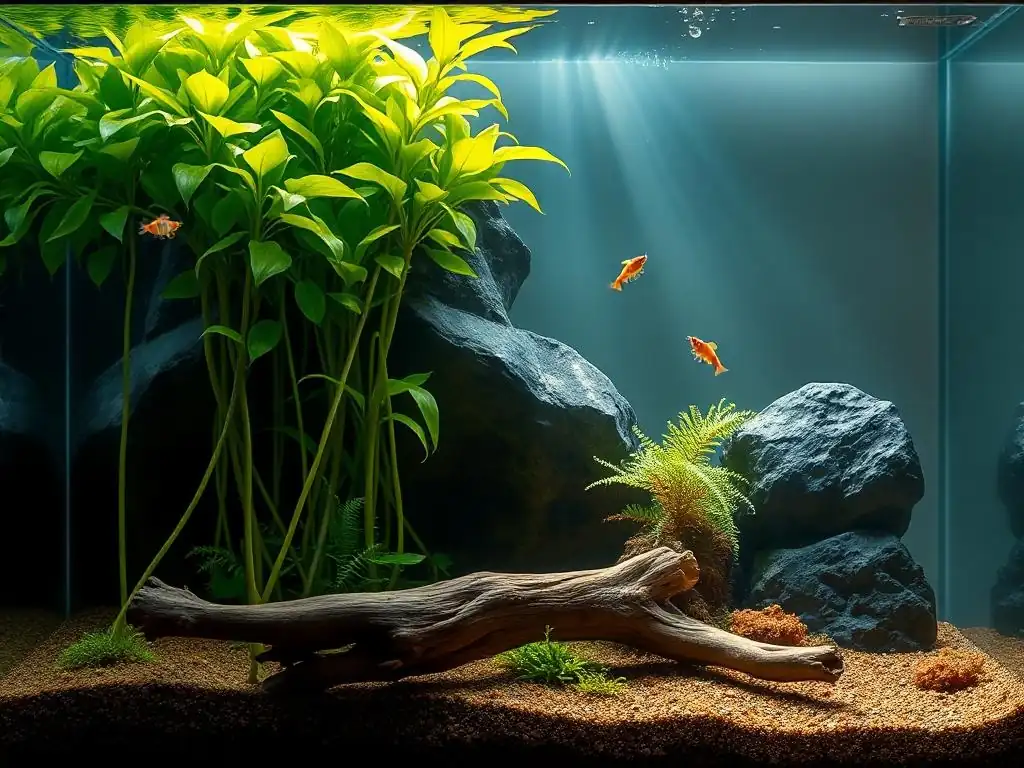
Welcome to Aquarium Mastery!
Intrigued by the idea of a nearly indestructible, beautiful plant gracing your aquarium? Then you've come to the right place. Dive into our definitive Anubias Barteri care guide and unlock the secrets to thriving Anubias in any tank, from beginner setups to advanced aquascapes. Ready to discover why this rhizome beauty is a favorite among aquarists? Let's get started!
- Understanding Anubias Barteri: The Beginner-Friendly Aquarium Plant
- Anubias Barteri Care Guide: Essential Tips for a Thriving Plant
- Planting and Propagation of Anubias Barteri
- Anubias Barteri Varieties: Exploring Different Leaf Shapes and Sizes
- Troubleshooting Common Anubias Barteri Problems
- Anubias Barteri and Tank Mates: Compatibility and Considerations
- Anubias Barteri: A Versatile Plant for Aquascaping
- Maintaining a Healthy Anubias Barteri Plant: A Summary of Key Points
-
Frequently Asked Questions
- How much light does Anubias Barteri need in an aquarium?
- What are the ideal water parameters for Anubias Barteri?
- How should I plant Anubias Barteri in my aquarium?
- What are some common problems encountered with Anubias Barteri, and how can I fix them?
- Can Anubias Barteri be grown in both freshwater and saltwater aquariums?
- Final Reflection: The Enduring Allure of Anubias
- Cultivate Your Own Underwater Paradise!
Understanding Anubias Barteri: The Beginner-Friendly Aquarium Plant
What is Anubias Barteri? A Profile of This Hardy Aquatic Plant
Anubias barteri is a remarkably resilient aquatic plant originating from West Africa, commonly found growing along riverbanks and streams, often submerged or partially submerged. It belongs to the Araceae family and is characterized by its distinctive rhizome structure, which is a thick, horizontal stem from which leaves and roots sprout. Unlike many other aquatic plants, Anubias Barteri is an epiphyte, meaning it naturally attaches itself to surfaces like rocks and driftwood rather than rooting deeply in the substrate.
This plant is celebrated for its robust, dark green leaves and extremely slow growth rate, typically producing one new leaf every 1 to 2 months under average aquarium conditions. Its tough leaf texture makes it resistant to damage from herbivorous fish and detritus buildup. The plant's adaptability to a wide range of water conditions and its minimal requirements for lighting and CO2 make it an ideal choice for both novice and experienced aquarists seeking a low-maintenance yet visually appealing addition to their freshwater tanks.
Why Choose Anubias Barteri for Your Freshwater Aquarium?
Choosing Anubias Barteri offers a multitude of benefits, making it one of the most recommended plants for freshwater aquariums, especially for those new to the hobby. Its unparalleled hardiness means it can tolerate a broad spectrum of water parameters, including varying pH levels (from 6.0 to 7.5) and water hardness (from soft to moderately hard, typically 3-10 dGH). This resilience significantly reduces the complexity of maintaining specific tank conditions, a common challenge for beginners.
Beyond its durability, Anubias Barteri contributes significantly to the aquarium ecosystem. Its broad leaves provide excellent hiding spots and shade for shy fish, fry, and invertebrates like shrimp, fostering a more secure environment. Furthermore, like all live plants, Anubias Barteri aids in improving water quality by absorbing excess nitrates and other waste compounds, potentially reducing nitrate levels by 5-10 mg/L per week in a moderately planted tank, thus helping to inhibit nuisance algae growth and promoting a healthier, more stable aquatic environment.
Anubias Barteri Care Guide: Essential Tips for a Thriving Plant
Optimal Water Parameters for Anubias Barteri Growth
Maintaining stable water parameters is crucial for the long-term health of Anubias Barteri, though the plant is remarkably forgiving. The ideal temperature range for this plant is between 72-82°F (22-28°C), aligning well with most tropical community fish tanks. A pH level between 6.0 and 7.5 is generally suitable, and while it thrives in soft to moderately hard water, it can adapt to slightly harder conditions up to 10 dGH.
Consistency in these parameters is more important than hitting exact numbers. Regular partial water changes, for instance, a 25% weekly water change, are beneficial not only for the overall health of the aquarium but also for replenishing essential trace elements that Anubias Barteri absorbs from the water column. This consistent replenishment supports the plant's slow but steady growth and helps prevent nutrient deficiencies, forming a core part of any comprehensive Anubias Barteri care guide.
Lighting Requirements for Anubias Barteri: Avoiding Algae Issues
One of the most critical aspects of Anubias Barteri care is understanding its specific lighting needs. This plant thrives under low to moderate light conditions, typically requiring a PAR (Photosynthetically Active Radiation) level of 10-20. High light intensity is detrimental and is the primary cause of unsightly algae growth on its broad, slow-growing leaves. An ideal photoperiod for Anubias Barteri is around 6-8 hours per day; exceeding this duration, especially with intense lighting, significantly increases the risk of algae outbreaks such as green spot algae or black beard algae.
To prevent algae issues, consider placing Anubias Barteri in shaded areas of the tank, perhaps beneath taller plants or under the cover of driftwood. Utilizing a light timer is highly recommended to ensure a consistent photoperiod, which contributes to plant health and discourages algae proliferation. If algae does appear, it's a strong indicator that lighting conditions need adjustment, making light management a key component of an effective Anubias Barteri care guide.
Fertilization for Anubias Barteri: Nutrients and Supplements
Anubias Barteri, being an epiphyte, primarily absorbs nutrients directly from the water column through its leaves and rhizome, rather than heavily relying on the substrate. Therefore, comprehensive liquid fertilizers are generally more effective than root tabs for this plant. A good liquid fertilizer should contain essential macronutrients like Nitrogen, Phosphorus, and Potassium (NPK), along with vital micronutrients such as Iron, Manganese, and Boron.
Dosing a general liquid fertilizer weekly, following the manufacturer's recommendations (e.g., 5ml per 10 gallons), is usually sufficient to meet its nutritional needs. While Anubias Barteri is not a heavy feeder due to its slow growth, a deficiency in iron can manifest as yellowing or chlorotic leaves, indicating the need for a supplement rich in chelated iron. Consistent, moderate fertilization is a key practice in providing excellent Anubias Barteri care.
CO2 Injection and Anubias Barteri: Is it Necessary?
For Anubias Barteri, CO2 injection is emphatically not necessary for healthy growth. This plant is perfectly capable of thriving and growing without supplemental carbon dioxide, thanks to its very slow metabolic rate and efficient carbon assimilation processes. Many aquarists successfully cultivate lush Anubias Barteri plants in low-tech setups that do not feature CO2 injection systems.
While CO2 can slightly accelerate its growth rate (e.g., from one new leaf every 6-8 weeks to one every 4-5 weeks), it also introduces a higher level of complexity and potential for imbalance in the aquarium. In a CO2-injected tank, if other parameters like lighting and nutrients are not perfectly balanced, the increased CO2 can paradoxically lead to more aggressive algae growth on Anubias leaves. For this reason, especially for beginners or those seeking a low-maintenance Anubias Barteri care guide, avoiding CO2 injection is often the recommended approach.
Planting and Propagation of Anubias Barteri
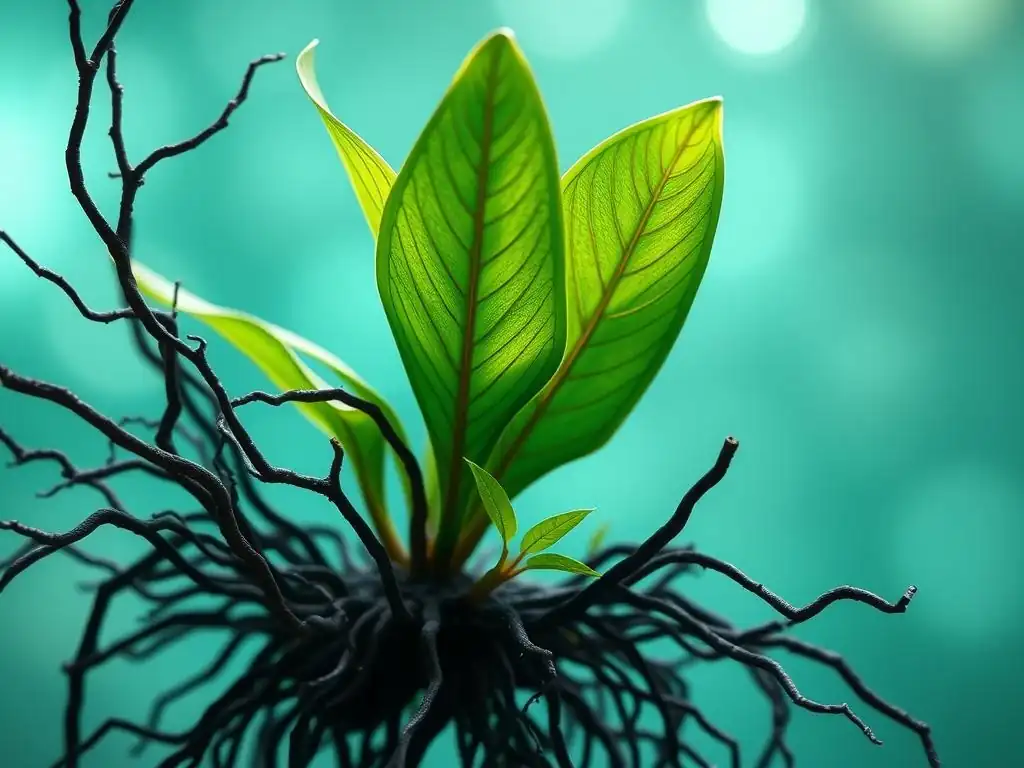
How to Plant Anubias Barteri: Attaching to Substrates and Decor
The most crucial rule when planting Anubias Barteri is to never bury its rhizome in the substrate. The rhizome, which is the thick, horizontal stem from which leaves and roots emerge, requires exposure to water flow to prevent rot. Burying it is the most common cause of Anubias Barteri melting or dying in an aquarium.
Instead, Anubias Barteri should be attached to hardscape elements like driftwood, rocks, or even resin decor. Common methods include using fishing line, cotton thread, or a small dab of cyanoacrylate gel (super glue, aquarium-safe) to secure the plant. For instance, you might gently tie a small Anubias Nana to a piece of lava rock, allowing its roots to eventually anchor themselves naturally. This method ensures the rhizome remains exposed and healthy, a fundamental step in proper Anubias Barteri care.
Propagating Anubias Barteri: Rhizome Division Explained
Propagating Anubias Barteri is a straightforward process achieved through rhizome division. When your Anubias plant has grown sufficiently large and has a healthy, elongated rhizome, you can divide it to create new plants. Identify a section of the rhizome that has at least 3-4 leaves and a few healthy roots attached.
Using a sharp, sterilized razor blade or a pair of aquarium scissors, carefully cut the rhizome into separate pieces. Each piece should be a viable new plant. For example, if you have a 6-inch long rhizome with 12 leaves, you could potentially cut it into three 2-inch pieces, each with 4 leaves. These newly divided sections can then be attached to other hardscape elements in your aquarium, effectively multiplying your Anubias Barteri collection.
Common Mistakes to Avoid When Planting Anubias
The most prevalent error when planting Anubias Barteri, leading to widespread issues, is burying the rhizome in the substrate. This suffocates the rhizome, causing it to rot and the entire plant to decline. Always ensure the rhizome is exposed to the water column.
Other common mistakes include placing Anubias Barteri under excessively high lighting, which inevitably leads to severe algae growth on its leaves, hindering photosynthesis and overall health. Furthermore, planting it in areas with poor water circulation can allow detritus to settle on its leaves, contributing to algae and potential decay. Always consider water flow and light intensity when deciding where to place this resilient plant to ensure optimal Anubias Barteri care.
Anubias Barteri Varieties: Exploring Different Leaf Shapes and Sizes
Anubias Barteri var. Nana: The Popular Dwarf Variety
Anubias barteri var. Nana is perhaps the most popular and widely available variety, cherished for its compact size and charming appearance. It typically grows to a height of 2-4 inches, featuring small, oval-shaped, dark green leaves. Its diminutive stature makes it an excellent choice for nano aquariums, foreground, or midground placement in larger tanks.
This dwarf variety is particularly versatile for aquascaping, often seen attached to small pieces of driftwood or rocks to create miniature tree-like structures or textured accents. Its popularity stems not only from its size but also its incredible hardiness, making it an ideal candidate for beginners looking for an easy-to-care-for plant that still offers significant visual appeal.
Anubias Barteri var. Angustifolia: The Narrow Leaf Anubias
Anubias barteri var. Angustifolia stands out with its distinctively long, narrow, and lance-shaped leaves, offering a different aesthetic compared to the broader-leafed varieties. This variety typically grows taller, reaching heights of 6-10 inches, making it suitable for midground or background placement in an aquarium.
The slender foliage of Anubias Barteri var. Angustifolia provides a unique texture and a more upright growth habit, which can add a sense of verticality and movement to an aquascape. It pairs well with other plants by offering a contrasting leaf shape, contributing to a more diverse and visually interesting planted tank composition.
Anubias Barteri var. Caladiifolia: Heart-Shaped Leaf Beauty
Anubias barteri var. Caladiifolia is admired for its striking, large, heart-shaped leaves that can grow significantly broader than other Anubias varieties. These lush, vibrant green leaves can create a powerful focal point in an aquarium, often reaching heights of 8-12 inches, providing a dense, tropical feel.
The impressive size and unique leaf shape of Anubias Barteri var. Caladiifolia make it an excellent choice for larger tanks where it can truly showcase its beauty. It contributes a rich, full appearance, and its robust nature ensures it maintains its impressive form with minimal effort, making it a favorite for those seeking a substantial and easy-to-maintain Anubias.
Anubias Barteri var. Coffeefolia: The Bronze Leaf Anubias
Anubias barteri var. Coffeefolia is a captivating variety known for its distinctive new growth, which emerges with a beautiful bronze or reddish-brown hue before maturing into a deep, dark green. Its leaves also possess a unique textured, somewhat crinkled or "hammered" appearance, adding another layer of visual interest. This variety typically grows to a moderate height of 4-8 inches.
The unique coloration and texture of Anubias Barteri var. Coffeefolia make it an excellent plant for adding subtle color contrast and intricate detail to an aquascape. It provides a warm tone that complements the standard green of other plants, creating a more dynamic and visually appealing planted environment.
Troubleshooting Common Anubias Barteri Problems
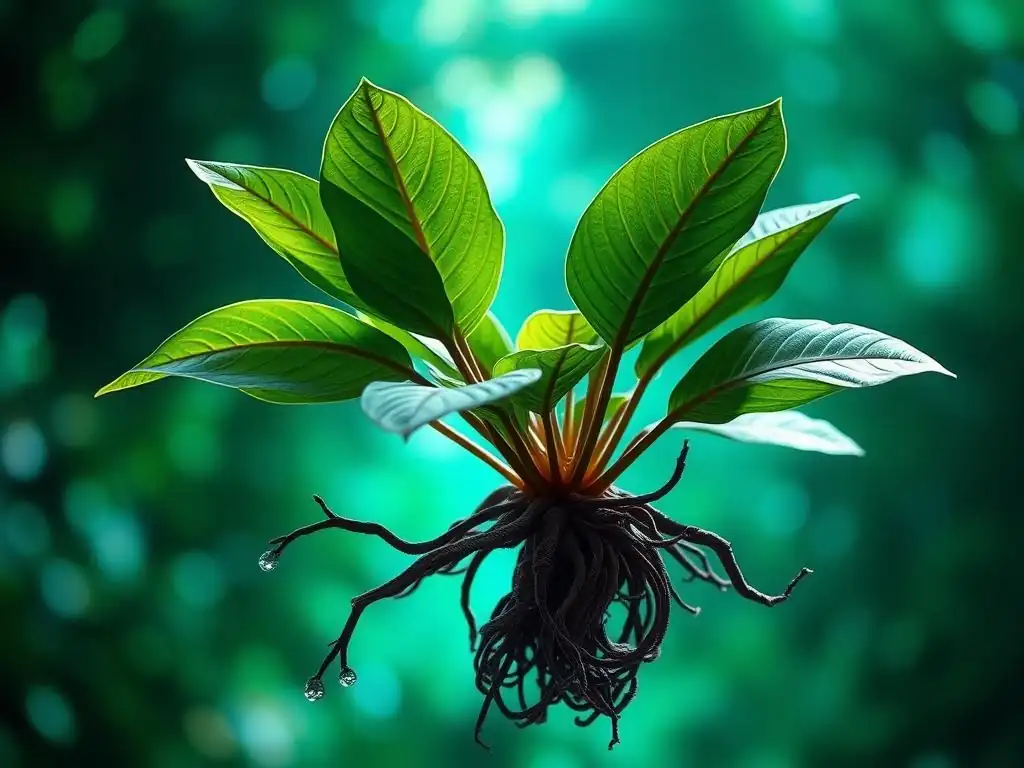
Algae Growth on Anubias Leaves: Prevention and Treatment
Algae growth on Anubias leaves is a very common issue, primarily caused by excessive light intensity or duration, or an imbalance in nutrients. Green spot algae often appears as small, hard green dots, while black beard algae (BBA) forms fuzzy, dark tufts. Both thrive when light is too strong or kept on for too long, or if nitrates and phosphates are out of balance.
To prevent and treat algae, first reduce your photoperiod to 6-7 hours daily and ensure your light intensity is appropriate for low-light plants (e.g., 10-20 PAR). Increase the frequency of water changes (e.g., 30% twice a week for a couple of weeks) to dilute excess nutrients. Manual removal can be done gently rubbing the leaves or using a soft toothbrush. Introducing algae-eating snails like Nerite snails (typically 1 per 5-10 gallons) can also be highly effective in keeping leaves clean, making this a crucial part of an Anubias Barteri care guide.
Anubias Melting: Identifying Causes and Solutions
Anubias melting, characterized by leaves turning translucent, mushy, or disintegrating, is often a sign of significant stress or environmental shock. This can occur when plants are transitioned from emersed (grown above water) to submersed (underwater) conditions, or due to sudden drastic changes in water parameters like temperature or pH. Nutrient shock or poor water quality can also be culprits.
To address melting, ensure stable water parameters and consistent fertilization. If the plant is newly introduced, allow it time to acclimate; Anubias is hardy and often recovers once adapted to its new environment. Promptly prune any affected, decaying leaves to prevent them from fouling the water and to encourage new, healthy growth. Maintaining a stable environment is key to preventing this issue in your Anubias Barteri care routine.
Slow Growth of Anubias Barteri: Possible Reasons and Remedies
While Anubias Barteri is naturally a slow-growing plant, unusually stunted or extremely slow growth can indicate underlying issues. Common reasons include insufficient light, which, despite its low-light preference, can still be too little if the plant is heavily shaded. Nutrient deficiencies, particularly of macronutrients (Nitrogen, Phosphorus, Potassium) or micronutrients like Iron, can also inhibit growth.
To remedy slow growth, first ensure the plant receives adequate, but not excessive, low-to-moderate light. Consider repositioning it if it's heavily shadowed. Confirm that you are dosing a comprehensive liquid fertilizer regularly, as Anubias relies on water column nutrients. While CO2 is not necessary, providing it can slightly boost growth; however, focus on light and nutrient balance first for effective Anubias Barteri care.
Rhizome Rot: Identifying and Addressing the Issue
Rhizome rot is a serious and unfortunately common problem for Anubias Barteri, almost exclusively caused by burying the plant's rhizome in the substrate. Symptoms include the rhizome becoming soft, mushy, and discolored (often brown or black), eventually leading to the death of the plant. The roots and leaves may also detach easily.
If you observe rhizome rot, immediately remove the plant from the aquarium. Using a sharp, sterilized blade, carefully cut away all affected, soft portions of the rhizome until only firm, healthy tissue remains. Any leaves or roots attached to the rotten parts should also be removed. Reattach the healthy portion of the Anubias to a piece of driftwood or rock, ensuring the entire rhizome is exposed to the water flow. Timely intervention is critical for saving the plant and is a vital aspect of Anubias Barteri care.
Anubias Barteri and Tank Mates: Compatibility and Considerations
Choosing the Right Fish for Your Anubias Tank
Anubias Barteri's tough, leathery leaves make it an excellent choice for a wide variety of freshwater aquariums, as it is generally ignored by most fish. Peaceful community fish are ideal tank mates, as they pose no threat to the plant's integrity. Examples include small schooling fish like Neon Tetras (a group of 10-15 in a 20-gallon tank), Rasboras, Guppies, Mollies, and most peaceful dwarf cichlids such as German Blue Rams. Bottom dwellers like Corydoras catfish and Otocinclus catfish are also excellent companions.
It is advisable to avoid large, highly herbivorous fish or notorious plant destroyers. While Anubias is robust, species like Silver Dollars, some larger Cichlids (e.g., Oscars), or certain large Plecos (e.g., Common Plecos) that are known to rasp on plants, might cause damage. Most common aquarium fish, however, will coexist peacefully with Anubias Barteri, making it a versatile plant for many setups.
Preventing Fish from Damaging Anubias Plants
Due to its robust leaf structure, Anubias Barteri is one of the most durable plants against fish damage. Unlike plants with tender leaves, Anubias is rarely a target for herbivorous fish to eat. However, some fish might occasionally nip at new growth or pick at algae that has settled on the leaves.
To further minimize any potential interaction, ensure all fish in the aquarium are well-fed with a varied and appropriate diet. A well-nourished fish is less likely to graze on aquarium plants. Providing ample space, hiding spots, and enrichment within the tank can also reduce stress and prevent any unusual behaviors that might lead to plant disturbance. Overall, Anubias Barteri's inherent toughness makes extensive preventative measures against fish damage largely unnecessary in most community tank settings.
Anubias Barteri: A Versatile Plant for Aquascaping
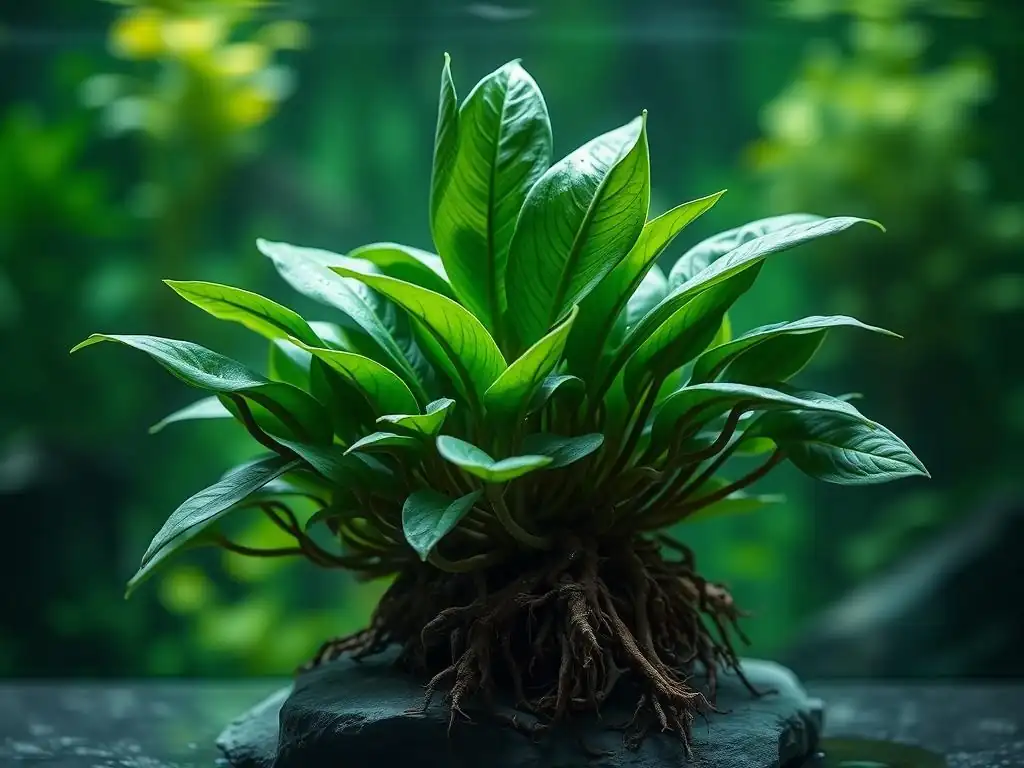
Creative Aquascaping Ideas with Anubias Barteri
Anubias Barteri's ability to thrive when attached to hardscape makes it incredibly versatile for aquascaping. It can be used to create stunning visual effects, such as a "tree" by attaching Anubias Nana to the branches of driftwood, mimicking miniature terrestrial trees. Larger varieties like Anubias Barteri var. Caladiifolia can be affixed to central rocks to form a lush, green focal point, providing a sense of maturity and depth.
Another creative application involves using multiple smaller Anubias plants, like Anubias Nana or Anubias Petite, to carpet areas of rocks or even the tops of submerged tank equipment, effectively concealing them while adding natural beauty. Its slow growth means these arrangements require minimal maintenance, making Anubias Barteri a favored choice for intricate and lasting aquascapes that are easy to maintain following an Anubias Barteri care guide.
Combining Anubias with Other Aquatic Plants
Anubias Barteri integrates seamlessly with a wide array of other aquatic plants, enhancing the diversity and visual appeal of an aquarium. It pairs exceptionally well with other low-light epiphytes, such as various species of Java Fern (Microsorum pteropus) and Bucephalandra, creating a rich, textured, and low-maintenance planted environment. These combinations often form the backbone of successful "low-tech" planted tanks.
In more high-tech setups, Anubias Barteri can provide a striking contrast in leaf shape and texture when placed alongside stem plants like Rotala or Ludwigia, or carpeting plants such as Monte Carlo or Dwarf Hairgrass. Its robust nature and distinct appearance allow it to stand out while complementing the growth patterns of other species, adding structure and depth without demanding intense lighting conditions for the entire tank.
Maintaining a Healthy Anubias Barteri Plant: A Summary of Key Points
Regular Maintenance for Long-Term Success
Long-term success with Anubias Barteri hinges on consistent, yet minimal, maintenance. Key practices include performing regular partial water changes, typically 25% weekly, to maintain stable water parameters and replenish trace elements. Periodically, gently wipe or brush the leaves to remove any accumulated detritus or minor algae growth, ensuring the leaves can photosynthesize effectively.
While Anubias Barteri is slow-growing, occasional pruning of old, yellowing, or damaged leaves is beneficial for the plant's health and aesthetic. Always remember the fundamental rule: never bury the rhizome. By adhering to these simple yet crucial steps, you ensure your Anubias Barteri remains vibrant and healthy, a testament to effective Anubias Barteri care.
The Benefits of Adding Anubias Barteri to Your Aquarium
Adding Anubias Barteri to your aquarium brings a host of benefits, making it an invaluable addition for aquarists of all experience levels. Its extreme hardiness and low maintenance requirements make it an ideal choice for beginners, significantly reducing the learning curve associated with planted tanks. This plant actively contributes to water quality by absorbing excess nitrates and other pollutants, potentially reducing nitrate levels by up to 20 mg/L in densely planted areas over a month, thus promoting a healthier aquatic environment.
Aesthetically, Anubias Barteri provides excellent visual appeal, offering lush green foliage that creates natural hiding spots and a sense of security for fish and invertebrates. Its versatility in aquascaping, allowing it to be attached to various decors, enables creative and dynamic tank designs. Ultimately, Anubias Barteri is more than just a plant; it's a foundation for a stable, beautiful, and thriving freshwater aquarium ecosystem, solidifying its status as a staple for any comprehensive Anubias Barteri care guide.
Frequently Asked Questions
How much light does Anubias Barteri need in an aquarium?
Anubias Barteri is a low-light plant and thrives best with indirect lighting. Excessive light can promote algae growth on its leaves, so moderate to low light levels are ideal.
What are the ideal water parameters for Anubias Barteri?
This plant is highly adaptable to a range of water parameters. Generally, a temperature of 72-82°F (22-28°C) and a pH between 6.0 and 7.5 are suitable for healthy growth.
How should I plant Anubias Barteri in my aquarium?
Never bury the rhizome! The rhizome should be attached to rocks, driftwood, or other decorations using fishing line or aquarium-safe glue. Burying it will cause the rhizome to rot and kill the plant.
What are some common problems encountered with Anubias Barteri, and how can I fix them?
The most common issue is algae growth, usually caused by excessive light. Reduce lighting and consider adding algae eaters. Another issue can be nutrient deficiencies, which can be addressed with aquarium fertilizers.
Can Anubias Barteri be grown in both freshwater and saltwater aquariums?
While Anubias Barteri is primarily a freshwater plant, it can tolerate slightly brackish conditions. However, it will not survive in a full saltwater environment long-term.
Final Reflection: The Enduring Allure of Anubias
The journey through the world of Anubias barteri reveals more than just a care guide; it unveils a testament to resilience and adaptability, qualities that resonate deeply in our fast-paced world. The enduring popularity of this plant, even amidst ever-changing trends in aquascaping, speaks volumes about its inherent value and the ease with which it brings natural beauty into our lives. Its low-maintenance nature, highlighted throughout this guide, offers a tranquil escape, a small piece of the wild that thrives even in the most demanding environments.
This seemingly simple plant has profoundly influenced the aquascaping hobby, democratizing the art of underwater gardening. The ability for even a novice to cultivate a thriving Anubias is a powerful reminder that beauty and complexity don't always require immense effort. Its presence in countless aquariums underscores its versatility and enduring appeal. The best things in life are often the simplest.
This sentiment perfectly encapsulates the essence of Anubias barteri; its understated elegance and unwavering hardiness make it a timeless treasure for aquarists of all levels.
Now, as you embark on your own journey with Anubias barteri, consider not just the practical tips shared, but also the deeper lessons this plant offers. Let its resilience inspire you to persevere through challenges, its adaptability encourage you to embrace change, and its simple beauty remind you to find joy in the small wonders that surround you. Cultivate not only a thriving aquarium, but also a thriving spirit, one that appreciates the enduring power of nature's gifts.
Cultivate Your Own Underwater Paradise!
Thank you for exploring the captivating world of Anubias barteri with us. Now that you’ve learned about this hardy and beautiful plant, it’s time to bring that knowledge to life! Here’s how you can take the next step and create a stunning, thriving aquarium environment:
- Immediately add Anubias barteri to your aquascape! Observe how it enhances your aquarium's aesthetics and provides shelter for your aquatic friends.
- Dive deeper: Research companion plants that complement Anubias barteri in terms of growth requirements and visual appeal, perhaps exploring Cryptocoryne species.
- Share your Anubias journey! Post a photo of your aquascape with Anubias on social media using #AquariumMastery, inspiring others to create their own underwater havens.
What unique aquascaping ideas do you have for showcasing your Anubias barteri?