
Lighting Secrets for Vibrant Red Stem Plants: Beyond the Basics

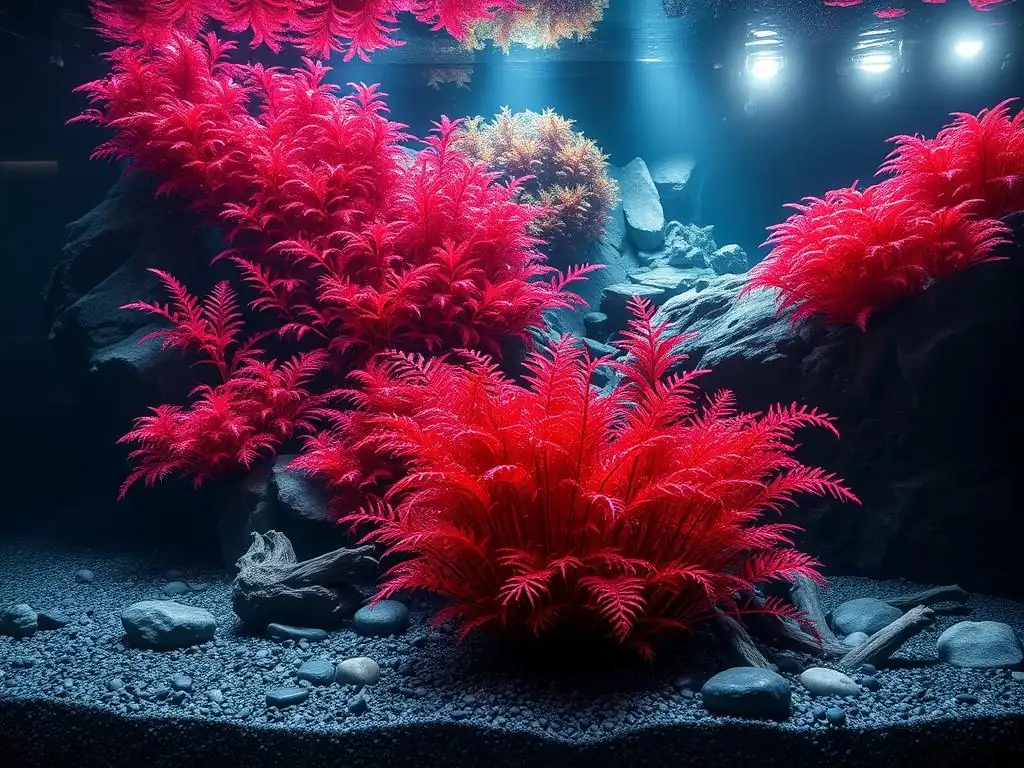
Welcome to Aquarium Mastery, where we unlock the secrets to a thriving underwater world!
Ever wondered why your red stem plants aren't quite living up to their vibrant potential? You're not alone! Dive into our latest article, " Lighting Secrets for Vibrant Red Stem Plants: Beyond the Basics," and discover the crucial elements that will transform your aquarium into a dazzling display. This is more than just turning on a light; it's about understanding the science that fuels their fiery hues. Ready to see your red stem plants flourish? Let's get started!
- Understanding Red Stem Plant Lighting Requirements for Optimal Growth
- Key Lighting Technologies for Cultivating Red Stem Plants
- Optimizing Lighting Duration and Intensity for Red Stem Plants
- Advanced Techniques for Enhancing Red Coloration in Stem Plants
- Troubleshooting Common Lighting Issues with Red Stem Plants
- Choosing the Right Light for Specific Red Stem Plant Species
- DIY Lighting Solutions for Red Stem Plant Aquariums
-
Frequently Asked Questions
- ### What type of lighting is best for achieving vibrant red colors in red stem plants?
- ### How long should I keep the lights on each day to maximize red coloration in my aquarium plants?
- ### Besides lighting, what other factors contribute to the redness of my aquarium plants?
- ### What are some common mistakes aquarists make when trying to grow red stem plants?
- ### Are there specific types of red stem plants that are easier to grow under less intense lighting conditions?
- Final Reflection: Illuminating the Potential of Red
- Ignite Your Aquarium: Cultivate a Sea of Scarlet!
Understanding Red Stem Plant Lighting Requirements for Optimal Growth
The Crucial Role of Light Spectrum in Red Stem Plant Coloration
The vibrant red hues in aquatic plants, especially red stem plants, are primarily due to pigments called anthocyanins. Unlike chlorophyll, which absorbs blue and red light for photosynthesis, anthocyanin production is significantly stimulated by specific wavelengths, particularly in the blue (400-500 nm) and red (600-700 nm) regions of the light spectrum. While green light (500-600 nm) is largely reflected by chlorophyll, contributing to the perception of green, a balanced spectrum that includes ample blue and red light is paramount for triggering the synthesis of these red pigments.
For optimal red coloration in species like Ludwigia repens 'Rubin' or Rotala macrandra, a light fixture that emphasizes these specific wavelengths is more effective than a generic full-spectrum white light. For instance, an LED light with a higher proportion of deep red (around 660 nm) and royal blue (around 450 nm) diodes will yield far more intense reds compared to a fixture dominated by green or yellow wavelengths. This targeted red stem plant lighting ensures that the plant receives the specific signals needed to produce the pigments responsible for its striking appearance.
PAR (Photosynthetically Active Radiation): Measuring Light Intensity for Red Plants
PAR, or Photosynthetically Active Radiation, measures the amount of light within the visible spectrum (400-700 nm) that plants can actually use for photosynthesis. Unlike lumens, which measure light perceived by the human eye, PAR directly quantifies the light energy available to plants. For demanding red stem plants, high PAR levels are crucial; typically, a PAR of 50-100 µmol/m²/s at the plant level is considered high light, with some very demanding species thriving at 100-150 µmol/m²/s or even higher.
The intensity of light diminishes significantly with water depth due to absorption and scattering, a phenomenon described by the inverse square law. This means a light fixture providing 80 µmol/m²/s PAR at the surface of a 12-inch deep tank might only deliver 50-60 µmol/m²/s at the substrate.
For deeper tanks (e.g., 24 inches), the light intensity at the bottom can be drastically reduced, potentially falling to 30-40% of the surface PAR. Therefore, when planning red stem plant lighting, it's essential to consider the PAR reaching the plants, not just the fixture's output, especially for plants placed at the bottom of the aquarium.
Red Stem Plants: Balancing Light Intensity with CO2 and Nutrients
Achieving vibrant red coloration in stem plants is not solely about intense light; it's about balance. High light levels drive a high rate of photosynthesis, which in turn creates a significant demand for carbon dioxide (CO2) and essential nutrients. If CO2 levels are insufficient (e.g., below 20 ppm) or nutrients are lacking, the plants cannot efficiently utilize the abundant light energy. This imbalance leads to stunted growth, pale colors, and often, an explosion of algae, as algae are more efficient at scavenging limited resources under high light.
For example, providing 80 µmol/m²/s PAR to Alternanthera reineckii 'Mini' without sufficient CO2 (aim for 25-30 ppm) and regular nutrient dosing (especially iron and nitrates) will likely result in a dull, brownish plant or even melting. Conversely, providing ample CO2 and nutrients but insufficient red stem plant lighting (e.g., less than 50 µmol/m²/s for demanding species) will result in leggy, green growth. The synergy between high light, consistent CO2 injection, and comprehensive nutrient management is the cornerstone for cultivating truly vibrant red stem plants.
Key Lighting Technologies for Cultivating Red Stem Plants
LED Lighting for Red Stem Plants: Advantages and Spectrum Control
LED (Light Emitting Diode) lighting has become the gold standard for planted aquariums, particularly for those cultivating red stem plants. Their primary advantages include exceptional energy efficiency, a remarkably long lifespan (often exceeding 50,000 hours), and minimal heat output compared to older technologies. Crucially, many high-end LED fixtures offer unparalleled spectrum tunability, allowing aquarists to precisely adjust the output of red, blue, green, and white diodes.
This spectrum control is invaluable for red stem plant lighting. By increasing the intensity of red (e.g., 660nm deep red) and blue (e.g., 450nm royal blue) wavelengths, growers can significantly enhance the production of anthocyanins, leading to deeper, more saturated red hues. Some specialized LED fixtures designed for planted tanks incorporate a higher proportion of these specific color diodes, with ratios often favoring red and blue over green and white, specifically to maximize red coloration in demanding species.
Metal Halide Lighting: High Intensity and Heat Management
Metal halide (MH) lights are renowned for their extremely high intensity and excellent PAR penetration, making them suitable for very deep aquariums (e.g., 24 inches or more) or setups with exceptionally light-demanding plants. They provide a very powerful, full-spectrum light that can drive vigorous growth and intense coloration in red stem plants. However, their most significant drawback is the substantial amount of heat they generate.
This heat often necessitates the use of aquarium chillers or robust ventilation systems, especially in smaller or enclosed tanks, to prevent overheating the water. A 150W metal halide fixture can easily raise the tank temperature by several degrees Fahrenheit, increasing energy consumption not only for the light itself but also for cooling. While MH lamps offer powerful red stem plant lighting, their high operational costs and heat management challenges often lead aquarists to opt for more energy-efficient and cooler LED alternatives.
Fluorescent Lighting (T5/T8): Spectrum Limitations and Efficiency
Fluorescent lighting, particularly T5 High Output (T5HO) fixtures, were once a popular choice for planted aquariums due to their good intensity-to-cost ratio. T8 fluorescent tubes, while less intense, are still found in many starter kits. These lights are more energy-efficient than traditional incandescent bulbs but fall short of modern LEDs in terms of overall efficiency and lifespan.
The primary limitation of fluorescent lighting for optimal red stem plant lighting lies in their fixed spectrum, determined by the specific tube chosen. While various "plant grow" tubes are available (e.g., tubes with enhanced red and blue peaks), fine-tuning the spectrum to specifically boost anthocyanin production is less precise than with tunable LEDs. Additionally, fluorescent tubes degrade over time, losing intensity and shifting spectrum, typically requiring replacement every 6 to 12 months to maintain consistent light quality, adding to the ongoing maintenance costs.
Optimizing Lighting Duration and Intensity for Red Stem Plants
Photoperiod: Balancing Growth and Algae Prevention
The photoperiod, or the duration of light exposure each day, is a critical factor for the health and coloration of red stem plants. A standard recommendation for planted aquariums is an 8- to 10-hour photoperiod. Exceeding this duration, particularly with high-intensity red stem plant lighting, can lead to excessive algae growth without a proportional increase in plant growth. Plants have a saturation point for light; beyond a certain duration, they cannot process additional light energy, but algae can continue to proliferate.
Maintaining a consistent photoperiod is more beneficial than a fluctuating one. For instance, a regular 8-hour light cycle (e.g., 10 AM to 6 PM) often yields better results for plant health and algae prevention than an inconsistent 10-hour cycle. Some advanced aquarists even employ a "siesta" period (e.g., 4 hours on, 2-4 hours off, 4 hours on) to replenish CO2 levels and further mitigate algae issues, especially in high-light setups where CO2 can be depleted rapidly.
Adjusting Light Intensity Based on Red Plant Species and Tank Depth
Not all red stem plants demand the same light intensity to achieve their vibrant coloration. For example, Rotala rotundifolia can develop reddish tips under moderate light (40-60 PAR), while Alternanthera reineckii 'Mini' often requires very high light (80-120 PAR) to display its characteristic deep red-purple leaves. Therefore, red stem plant lighting must be tailored to the specific species being grown.
Tank depth also significantly influences the effective light intensity reaching the plants. A light fixture that provides excellent PAR at 12 inches deep will deliver considerably less PAR at 24 inches. For deeper tanks, either more powerful lights are necessary, or light-demanding red plants should be strategically placed in the upper regions of the aquascape. When introducing new high-light plants or upgrading lighting, it's advisable to start with a lower intensity and gradually increase it over several weeks to allow plants to adapt and prevent an immediate algae outbreak.
Avoiding Algae Blooms: The Importance of Balanced Lighting
Algae blooms are a common frustration in planted tanks, and unbalanced lighting is frequently a primary culprit. While it's often assumed that "too much light" directly causes algae, the underlying issue is usually an imbalance between light intensity, available CO2, and nutrient levels. If red stem plant lighting is intense but plants are CO2 or nutrient deficient, they cannot efficiently utilize the light energy, leaving excess resources for algae to exploit.
To prevent algae, ensure that light intensity and duration are appropriate for the plant mass, CO2 injection is stable (25-30 ppm), and nutrients are consistently dosed. Starting with a moderate light intensity and gradually increasing it allows the aquatic ecosystem to adapt. Regular maintenance, including weekly 30-50% water changes to remove excess nutrients, and manual removal of any nascent algae, also contributes significantly to a clean and vibrant tank where red stem plants can flourish.
Advanced Techniques for Enhancing Red Coloration in Stem Plants
CO2 Injection and Its Impact on Red Pigment Development
Carbon dioxide (CO2) is an indispensable nutrient for aquatic plants, particularly in high-light setups. It serves as the primary carbon source for photosynthesis, the process by which plants convert light energy into sugars for growth. For red stem plants, robust CO2 injection (maintaining 25-30 ppm throughout the light cycle) is not just about growth; it directly impacts the intensity of their red coloration. When plants have ample CO2, they can efficiently process the high light energy, leading to vigorous growth and the production of secondary metabolites like anthocyanins.
Without sufficient CO2, even under intense red stem plant lighting, plants become carbon-limited. This stress hinders their metabolic processes, leading to stunted growth, pale green or brown coloration, and a failure to develop vibrant reds. For example, Rotala macrandra will remain a dull green or orange if CO2 is low, but with optimal CO2 levels, it transforms into a striking deep red. The availability of CO2 allows the plant to allocate energy towards synthesizing these visually appealing pigments, rather than struggling for basic survival.
Nutrient Management: Iron and Trace Elements for Vibrant Reds
While macronutrients (Nitrogen, Phosphorus, Potassium) are essential for overall plant growth, specific micronutrients play a crucial role in enhancing red coloration in stem plants. Iron (Fe) is perhaps the most critical. It is vital for chlorophyll synthesis and various enzymatic processes, and its deficiency often manifests as chlorosis (yellowing) of new growth, which can severely impede red pigment development. Other trace elements like manganese and boron also contribute to overall plant health, indirectly supporting vibrant colors.
For optimal red stem plant lighting and coloration, ensuring adequate iron availability is key. Many aquarists aim for an iron concentration of 0.1-0.5 ppm, dosed regularly, often daily or every other day, to prevent deficiencies. Using a chelated iron source helps maintain its availability in the water column. However, it's important to avoid overdosing, as excessive iron can contribute to algae growth or become toxic to certain aquatic life. Regular testing and observation of plant health are crucial for fine-tuning nutrient dosing.
Water Parameters: Maintaining Ideal Conditions for Red Stem Plant Growth
Beyond light, CO2, and specific nutrients, stable and appropriate water parameters are foundational for healthy growth and vibrant coloration in red stem plants. Most popular red stem species thrive in soft to moderately hard water (General Hardness, GH, between 3-8 dGH) and a slightly acidic to neutral pH (6.0-7.2). These parameters not only support general plant health but also influence the solubility and bioavailability of essential nutrients, including iron and other trace elements.
Fluctuations in water parameters, particularly sudden shifts in pH or temperature, can stress plants, leading to stunted growth, leaf melt, or a loss of vibrant coloration. For example, a sudden drop in pH below 6.0 can make iron less accessible to plants, even if it's present in the water, thereby hindering anthocyanin production and dulling the red hues. Consistent water changes, regular monitoring of GH, KH, and pH, and maintaining stable temperatures (typically 72-78°F or 22-26°C) are crucial for providing the stable environment where red stem plant lighting can truly shine.
Troubleshooting Common Lighting Issues with Red Stem Plants
Pale or Fading Red Colors: Identifying the Cause
When red stem plants exhibit pale, dull, or fading red colors, it's a clear indication that something in their environment is suboptimal. The most common culprit is insufficient red stem plant lighting, either in terms of intensity (PAR) or spectrum. If a plant known for intense reds, like Ludwigia super red, appears orange, brownish, or even greenish, the light might be too weak (e.g., below 60 PAR for high-demanding species) or lack sufficient red and blue wavelengths necessary for anthocyanin production.
However, lighting is not the only factor. Pale colors can also signal a deficiency in essential nutrients, particularly iron, which is critical for vibrant reds, or a lack of sufficient CO2. If CO2 levels are consistently below 20 ppm, plants cannot efficiently utilize the light they receive, leading to stress and reduced pigment synthesis. To troubleshoot, first verify light intensity and spectrum. If those seem adequate, assess CO2 levels with a drop checker and ensure a comprehensive nutrient dosing regimen, with particular attention to iron.
Leggy Growth and Lack of Color: Addressing Insufficient Light
Leggy growth is a classic and unmistakable symptom of insufficient red stem plant lighting. When light is too weak or does not penetrate effectively to the lower parts of the plant, stem plants will "stretch" towards the light source. This results in elongated internodes (the spaces between leaf nodes), smaller and often paler leaves, and sometimes, the shedding of lower leaves as the plant tries to conserve energy. The plant expends its energy on vertical growth rather than dense, colorful foliage.
To remedy leggy growth, the primary action is to increase light intensity or duration. If using an adjustable LED fixture, gradually increase the power output. For fluorescent lights, consider adding more bulbs, upgrading to T5HO, or replacing older tubes. For very deep tanks, consider a more powerful light fixture or placing the light-demanding red plants closer to the surface. Trimming the leggy tops and replanting them can also help reshape the plant while the lighting issues are addressed, encouraging bushier growth.
Algae Overgrowth on Red Stem Plants: Prevention and Treatment
Algae overgrowth is a common and frustrating problem often linked to imbalances in the aquarium, with red stem plant lighting playing a significant role. While excessive light duration or intensity can trigger algae, the fundamental issue is usually an imbalance where plants cannot outcompete algae for available resources. This often occurs when high light is provided without adequate CO2, insufficient nutrients, or inconsistent photoperiods. Green spot algae, hair algae, and black beard algae are common indicators of such imbalances.
To prevent and treat algae, a multi-pronged approach is necessary. First, evaluate light intensity and duration; if too high, reduce it by 1-2 hours or dim the fixture. Second, ensure CO2 levels are stable and optimal (25-30 ppm) throughout the light cycle. Third, confirm that macro and micronutrients are being dosed consistently and adequately. Manual removal of algae is crucial. For severe cases, a 2-3 day blackout can help, but this should be followed by a re-evaluation of the tank's parameters. Introducing algae-eating inhabitants like Amano shrimp ( Caridina multidentata) can also provide biological control.
Choosing the Right Light for Specific Red Stem Plant Species
Lighting Recommendations for Rotala Rotundifolia
Rotala rotundifolia is a highly popular and relatively easy-to-grow red stem plant, known for its ability to show varying degrees of red coloration. For vibrant red tips and upper leaves, it requires moderate to high red stem plant lighting. A PAR range of 40-70 µmol/m²/s at the plant level is generally sufficient to encourage its characteristic pink-red hues. In lower light conditions (e.g., 20-30 PAR), Rotala rotundifolia will remain predominantly green, with only a hint of red on the very tips.
To truly bring out its best reds, providing a full-spectrum light with a strong emphasis on the red (600-700 nm) and blue (400-500 nm) wavelengths is beneficial. Alongside adequate light, consistent CO2 injection (20-25 ppm) and sufficient iron dosing will significantly intensify its coloration. For instance, an LED fixture providing 50 PAR with a balanced red/blue spectrum will yield much more vibrant red tips than a generic white LED at the same PAR, making it a stunning midground or background plant.
Lighting Recommendations for Ludwigia Palustris 'Red'
Ludwigia palustris 'Red' is another beautiful and widely cultivated red stem plant that demands moderate to high red stem plant lighting to achieve its deep, rich red coloration. A PAR value of 60-90 µmol/m²/s is typically recommended for this species to develop its most intense hues. Without sufficient light, Ludwigia palustris 'Red' tends to retain a greenish or brownish tone, lacking the striking crimson it's known for.
Beyond light, strong CO2 injection (25-30 ppm) and ample iron supplementation are crucial for maximizing its red pigment production. When grown under optimal conditions, its leaves can turn a deep, almost burgundy red. For example, a quality 75W LED fixture over a 20-gallon long tank (12 inches deep), providing approximately 80 PAR at the substrate, can transform Ludwigia palustris 'Red' into a stunning focal point. Regular trimming also encourages bushier growth and denser coloration.
Lighting Recommendations for Alternanthera Reineckii 'Mini'
Alternanthera reineckii 'Mini' (AR Mini) is arguably one of the most demanding red stem plants when it comes to light intensity, making it a true indicator of a high-tech planted tank. To achieve its characteristic intense red-purple to almost black coloration, AR Mini absolutely requires very high red stem plant lighting. A PAR range of 80-120 µmol/m²/s, or even higher in some setups, is often necessary to unlock its full potential, especially for the compact 'Mini' variant.
This plant thrives under powerful LED fixtures with tunable red and blue channels, which can specifically target the wavelengths that promote anthocyanin synthesis. Along with intense light, robust CO2 injection (consistently above 30 ppm) and meticulous nutrient management, particularly consistent iron dosing, are paramount. If any of these factors are lacking, AR Mini will typically remain green, melt, or exhibit severely stunted growth, highlighting its sensitivity and high requirements for dazzling reds.
DIY Lighting Solutions for Red Stem Plant Aquariums
Building a Custom LED Fixture for Enhanced Red Plant Growth
Building a custom LED fixture offers unparalleled control over the spectrum and intensity, making it an excellent solution for aquarists aiming for optimal red stem plant lighting. DIY setups typically involve high-power LEDs (e.g., Cree, Luxeon, Bridgelux), appropriate heatsinks for thermal management, constant current drivers, and sometimes optics to focus the light. A common LED ratio for enhancing red plants might include a higher proportion of 660nm deep red and 450nm royal blue diodes, alongside cool white and a touch of green.
Key design considerations include ensuring adequate heat dissipation (e.g., using large aluminum heatsinks or active cooling fans), waterproofing components, and correctly wiring the LEDs in series/parallel with the appropriate drivers. For a 20-gallon long tank, a DIY fixture might incorporate 10-15 high-power 3W LEDs, strategically spaced for even light distribution. This approach can be more cost-effective than high-end commercial units while offering the precise spectral tuning necessary for cultivating the most vibrant red stem plants.
Reflectors and Light Distribution: Maximizing Light Efficiency
While less critical for modern LED fixtures that often incorporate integrated optics, high-quality reflectors play a crucial role in maximizing the efficiency of traditional fluorescent or metal halide red stem plant lighting. Reflectors are designed to capture and redirect scattered light back into the aquarium, significantly increasing the effective PAR reaching the plants and ensuring a more uniform distribution of light across the aquascape.
Parabolic or highly polished specular aluminum reflectors can boost the light output into the tank by 20-40% compared to bare bulbs. They help concentrate the light downwards, minimizing light spill and ensuring that the light energy is delivered where it's most needed by the plants. This is particularly beneficial in deeper tanks where light penetration is a challenge, as reflectors can help maintain higher PAR levels at the substrate, promoting better growth and coloration in red stem plants throughout the entire aquascape.
Cost-Effective Lighting Upgrades for Red Plant Aquariums
Achieving excellent red stem plant lighting doesn't always require purchasing the most expensive, top-tier fixture. Several cost-effective upgrades can significantly improve coloration and growth. For aquarists using fluorescent fixtures, simply upgrading to new T5HO bulbs with specific plant spectra (e.g., tubes with enhanced red and blue peaks designed for plant growth) can make a noticeable difference. Another budget-friendly option is to add a supplemental LED strip light with a strong red spectrum (often marketed as "grow lights") alongside an existing white light fixture to boost anthocyanin production.
Beyond hardware, optimizing the placement of the existing light fixture can yield significant improvements. Adjusting the light's height (typically 6-12 inches above the water surface, depending on its power) ensures maximum light penetration without causing excessive algae. Regular cleaning of the light fixture's cover and the tank lid to remove mineral deposits, dust, or condensation also ensures maximum light transmission, potentially increasing effective PAR by 5-10% without any additional cost.
Frequently Asked Questions
### What type of lighting is best for achieving vibrant red colors in red stem plants?
The best lighting for red stem plants involves providing high intensity light, typically in the red and blue spectrum. This encourages the plant to produce anthocyanins, which are responsible for the red coloration.
### How long should I keep the lights on each day to maximize red coloration in my aquarium plants?
A photoperiod of 8-10 hours per day is generally recommended. Too much light can lead to algae growth, while too little might inhibit the development of red pigments.
### Besides lighting, what other factors contribute to the redness of my aquarium plants?
Iron and nutrient levels play a crucial role. Ensuring your plants have sufficient iron fertilization and a balanced nutrient profile will support the production of vibrant red hues.
### What are some common mistakes aquarists make when trying to grow red stem plants?
Often, aquarists use insufficient lighting or fail to provide adequate nutrients. Inadequate light and nutrient deficiencies are significant obstacles to achieving the desired red coloration.
### Are there specific types of red stem plants that are easier to grow under less intense lighting conditions?
Yes, Ludwigia repens and Rotala rotundifolia are often more forgiving and can exhibit some red coloration even under moderate lighting. However, they will display more intense red with stronger light.
Final Reflection: Illuminating the Potential of Red
The journey into red stem plant lighting reveals more than just technical specifications; it unveils the artistry of recreating natural environments within our own spaces. Understanding the nuances of light spectrum, intensity, and duration is not merely about plant survival, but about unlocking the vibrant potential hidden within these botanical gems, allowing them to flourish in a symphony of color.
This exploration has profoundly influenced my understanding of the interconnectedness between light and life, highlighting the delicate balance required to nurture thriving ecosystems. Witnessing the transformation of a dull, lackluster red stem plant into a fiery spectacle under the right lighting is a testament to the power of informed care. The best and most beautiful things in the world cannot be seen or even touched - they must be felt with the heart.
- Helen Keller. This quote resonates deeply, reminding us that the true beauty of these plants lies not just in their visual appeal, but in the feeling of connection and wonder they evoke.
Now, armed with this knowledge, I invite you to reflect on your own relationship with light and its impact on the living world around you. Consider how you can apply these principles to not only cultivate vibrant red stem plants, but also to foster a deeper appreciation for the delicate dance between light and life in all its forms. Let the lessons learned here illuminate your path towards creating a more vibrant and fulfilling environment, both for your plants and for yourself.
Ignite Your Aquarium: Cultivate a Sea of Scarlet!
Thank you for diving into the secrets of vibrant red stem plants! You've unlocked key insights to transforming your aquarium into a stunning underwater masterpiece. Now, let’s turn that knowledge into action and bring those fiery reds to life.
Here's how to start:
- Commit to a consistent lighting schedule. This single action is the key to unlocking the full potential of your red stem plants.
- Experiment with slightly different light spectrums. Most don't do that: See how your red plants react to subtle changes in your lighting. You might uncover an unexpected growth surge!
- Share your progress! Post photos of your red stem plants on your favorite aquarium forum and inspire other aquascapers with your newfound expertise.
What specific lighting adjustments are you most excited to test in your aquarium this week?