
Choosing the Perfect Photoperiod for Explosive SPS Growth and Dazzling Color

Welcome to Aquarium Mastery!
Ever wondered how to unlock the secret to vibrant colors and explosive growth in your SPS coral? You've come to the right place! Dive in and discover everything you need to know about choosing the perfect SPS coral photoperiod schedule and watch your reef flourish. Curious how much light is too much, or not enough? Let's find out!
- Optimizing Lighting for SPS Coral Growth and Coloration
- Understanding the Importance of Light for SPS Coral Health
- Establishing an Effective SPS Coral Lighting Schedule
- Optimizing Your SPS Coral Lighting Setup
- Troubleshooting Common Issues Related to SPS Coral Lighting
- Advanced Techniques for Fine-Tuning Your SPS Lighting
- Maintaining Stable Lighting for Long-Term SPS Success
- Conclusion: Achieving SPS Growth and Color with Optimized Lighting
-
Frequently Asked Questions
- What exactly is a photoperiod and why is it so important for SPS corals?
- What is a generally recommended photoperiod schedule for SPS corals?
- How does water depth affect the ideal photoperiod for SPS corals?
- Can I change the photoperiod suddenly, or should I adjust it gradually?
- What are the signs that my SPS coral's photoperiod is incorrect?
- Final Reflection: Illuminating the Path to Vibrant Reefs
- Ignite Your SPS Reef: Take the Next Step!
Optimizing Lighting for SPS Coral Growth and Coloration
Understanding the Importance of Light for SPS Coral Health
What is Photoperiod and Why Does it Matter for SPS?
Photoperiod, in the context of reef aquariums, refers to the duration of light exposure your corals receive daily. It is a critical environmental factor that mimics the natural day-night cycles found on tropical reefs. For SPS (Small Polyp Stony) corals, this consistent daily rhythm of light is fundamental because it directly drives the photosynthetic processes of the symbiotic algae, known as zooxanthellae, living within their tissues. Without a proper SPS coral photoperiod schedule, corals cannot efficiently produce the energy needed for growth, tissue repair, and overall health.
The significance of photoperiod for SPS corals cannot be overstated. These corals are highly dependent on light due to their rapid growth rates and high metabolic demands. In their natural habitat, they are exposed to intense sunlight for roughly 10-12 hours, with gradual transitions at dawn and dusk. Replicating this consistent cycle in a home aquarium is vital. Inconsistent or incorrect photoperiods can lead to significant stress, manifest as slow growth, dull coloration, or even irreversible tissue damage and mortality, particularly in sensitive species like Acropora.
The Symbiotic Relationship Between Light, Zooxanthellae, and SPS
The vibrant life of an SPS coral is largely sustained by a remarkable symbiotic relationship with microscopic dinoflagellates called zooxanthellae. These algae reside within the coral's polyps and perform photosynthesis, converting light energy into essential nutrients such as sugars, amino acids, and fatty acids. In return for a protected environment and access to the coral's metabolic waste products (like carbon dioxide), zooxanthellae can provide up to 90% of the coral's daily energy requirements, making light the ultimate fuel for SPS growth.
Optimal light conditions allow zooxanthellae to thrive and produce an abundance of these vital nutrients, directly fueling the coral's calcification process and tissue development. Conversely, insufficient light starves the coral, leading to diminished growth and vitality. Too much light, however, can cause oxidative stress to the zooxanthellae, leading to their expulsion from the coral tissue—a phenomenon known as coral bleaching. While some SPS species, such as Acropora millepora, may tolerate higher light levels than others like Montipora digitata, the delicate balance of light intensity and the SPS coral photoperiod schedule is crucial for maintaining this life-sustaining symbiosis.
How Light Influences SPS Coral Coloration
Beyond fueling growth, light plays a pivotal role in dictating the stunning array of colors seen in SPS corals. Corals produce various colorful pigments, primarily chromoproteins and fluorescent proteins, which serve multiple functions, including acting as natural sunscreens to protect zooxanthellae from excessive light and managing light energy for photosynthesis. The specific wavelengths (spectrum) and intensity of light exposure directly influence the production and expression of these pigments. For instance, strong blue light (around 450-470 nm) is particularly effective at stimulating the production of blue and purple pigments, enhancing the iridescence of many Acropora and Seriatopora species.
An optimized SPS coral photoperiod schedule, combined with a well-balanced light spectrum, encourages corals to display their most vibrant hues. When corals are stressed by incorrect lighting – either too much or too little – they may alter their zooxanthellae density or pigment production, often resulting in a dulling or browning of their colors.
For example, a coral that appears brown might be increasing its zooxanthellae population to capture more light if it's underexposed, or conversely, reducing pigment production due to stress from excessive light. Achieving the ideal balance is key to unlocking the full chromatic potential of your SPS specimens.
Establishing an Effective SPS Coral Lighting Schedule
Factors Affecting Your SPS Coral Lighting Needs
Species-Specific Light Requirements for SPS Corals
It's crucial to understand that not all SPS corals have identical light requirements. Their natural habitat dictates their light needs, with some thriving in intense, shallow-water conditions and others preferring deeper, more shaded areas. For example, many Acropora species, such as Acropora valida or Acropora tenuis, are considered high-light demand corals, typically requiring Photosynthetically Active Radiation (PAR) levels often exceeding 350-450 µmol·m⁻²·s⁻² at the coral's surface. These species are commonly found on reef crests where sunlight is most direct and powerful.
In contrast, other SPS corals, like certain Montipora species (e.g., Montipora capricornis) or Stylophora pistillata, are more tolerant of, or even prefer, lower light conditions, often thriving in PAR ranges of 150-300 µmol·m⁻²·s⁻². Placing a high-light Acropora in a perpetually shaded, low-PAR area will typically result in slow growth, browning, and a decline in health. Conversely, exposing a lower-light Montipora to excessive PAR can quickly lead to bleaching and tissue necrosis. Understanding these species-specific needs is the first step in crafting an effective SPS coral photoperiod schedule.
Tank Depth and Light Penetration Considerations
The depth of your aquarium significantly impacts the amount of light that reaches your corals. Water, even crystal-clear aquarium water, absorbs and scatters light, leading to a substantial reduction in PAR as depth increases. For instance, a light fixture that produces 500 PAR at the water's surface might only deliver 200-250 PAR at a depth of 18 inches in a typical reef tank, due to this natural attenuation. This effect is compounded by any suspended particulates or yellowing organic compounds in the water.
This attenuation means that corals placed higher in the tank, closer to the light source, will receive considerably more PAR than those on the sand bed. High-light demanding SPS corals should therefore be positioned in the upper half of the tank, while more moderate-light species or those undergoing acclimation can be placed lower. Strategically arranging your aquascape to create varying light zones is essential for accommodating a diverse collection of SPS corals and ensuring each receives its ideal SPS coral photoperiod schedule and intensity.
Water Clarity and its Impact on Light Availability
The clarity of your aquarium water has a direct and profound impact on the penetration and availability of light for your SPS corals. Turbid water, caused by suspended particulates (such as detritus, uneaten food, or fine sand), microalgae blooms, or yellowing organic compounds (YOCs), acts as a barrier, absorbing and scattering light before it reaches your corals. Even a subtle haze, imperceptible to the naked eye, can significantly diminish the effective PAR levels throughout the tank.
Maintaining pristine water quality is therefore paramount for optimal light delivery and the success of your SPS coral photoperiod schedule. This requires consistent and effective mechanical filtration (e.g., filter socks, roller filters), regular protein skimming to remove organic waste, and consistent partial water changes to replenish trace elements and remove YOCs. For example, a tank experiencing a persistent diatom bloom might see a 15-20% reduction in PAR compared to a system with crystal-clear water, necessitating either an increase in light intensity or a longer photoperiod to compensate.
Recommended SPS Coral Lighting Schedule: A Starting Point
Initial Acclimation Period for New SPS Corals
When introducing new SPS corals to your aquarium, particularly those that have been shipped or come from a different lighting environment, a crucial acclimation period is necessary. Corals are highly sensitive to sudden changes in light intensity. Starting with a significantly reduced intensity (e.g., 30-50% of your target peak PAR) and a shorter SPS coral photoperiod schedule (e.g., 6-8 hours of total illumination) is vital to prevent shock and bleaching. This allows the coral's zooxanthellae to gradually adjust to the new light conditions without being overwhelmed.
This initial acclimation phase typically lasts for 2 to 4 weeks, depending on the coral's resilience and the magnitude of the light difference. During this time, closely monitor your corals for any signs of stress, such as paling, bleaching, or tissue recession. Placing new corals lower in the tank, perhaps on the sand bed, or even temporarily using a piece of screen or shade cloth, can further aid this gradual transition. Patience during this period is key to ensuring the long-term health and success of your new SPS additions.
Gradually Increasing Light Intensity and Duration for Optimal Growth
Once the initial acclimation period is complete and your new SPS corals show no signs of stress, you can begin the process of gradually increasing both light intensity and duration to reach your target SPS coral photoperiod schedule. This slow, incremental approach is critical to prevent shocking the corals. A common strategy is to increase light intensity by 5-10% each week, and/or add 30-60 minutes to the overall photoperiod every 1-2 weeks. This allows the zooxanthellae to slowly adapt and multiply to the new light levels, optimizing their photosynthetic efficiency.
The ultimate goal is to find the "sweet spot" where your corals exhibit robust growth and vibrant coloration without any signs of stress. A typical full SPS coral photoperiod schedule for a mature reef tank might involve a 1-hour dawn simulation, followed by 9-10 hours of peak lighting, and then a 1-hour dusk simulation, totaling 11-12 hours of active illumination. This extended peak period provides ample energy for the rapid calcification rates characteristic of healthy SPS corals, such as Acropora species, which can exhibit growth rates of 0.5 to 1.5 inches per month under ideal conditions.
Implementing a Proper Lighting Schedule: Step-by-Step
Using a Timer for Consistent Light Cycles
Consistency is paramount when establishing an SPS coral photoperiod schedule. Manual control of your aquarium lights is highly impractical and often leads to inconsistent light cycles, which can stress corals and hinder their growth. Therefore, investing in reliable automated timers or, even better, an aquarium controller (such as an Apex or GHL Profilux system) is essential. These devices offer precise control over on/off times, allowing you to set specific start and end times for your main light cycle, as well as enabling sophisticated features like dawn/dusk ramping.
The biological rhythms of SPS corals are finely tuned to predictable light cycles. A fixed and consistent SPS coral photoperiod schedule helps corals and their symbiotic zooxanthellae establish a stable metabolic rhythm, optimizing photosynthesis and energy allocation for growth. Even minor daily fluctuations of just 15-30 minutes in light exposure can reduce growth rates by several percentage points over time, as corals expend energy adjusting to unpredictable changes rather than directing it towards calcification and tissue repair.
Monitoring Your SPS Coral's Response to Lighting
The most reliable indicator of whether your SPS coral photoperiod schedule and intensity are correct is the health and appearance of the corals themselves. Regular, diligent observation is crucial. Healthy SPS corals will display vibrant, stable coloration, excellent polyp extension (PE) throughout the day (except perhaps during the dark cycle or just after the lights come on), and visible signs of new growth, often seen as lighter-colored tips on branches. For example, a thriving Acropora tenuis will show bright, distinct growth tips and fuzzy polyp extension.
Conversely, unhealthy or stressed corals will exhibit clear signs of improper lighting. Overexposure often leads to paling, bleaching (turning white or translucent), or tissue recession. Underexposure typically results in browning (due to an increased density of zooxanthellae trying to capture more light), dull coloration, and significantly slower or stalled growth. Daily visual checks and weekly close inspections will allow you to catch these subtle cues early and make necessary adjustments to your lighting parameters.
Optimizing Your SPS Coral Lighting Setup
Light Intensity (PAR) and its Relationship with Photoperiod
Photosynthetically Active Radiation (PAR) is the most critical metric for coral lighting, measuring the amount of light within the 400-700 nanometer spectrum that corals can use for photosynthesis. While PAR measures light quantity, it's intrinsically linked with photoperiod (duration). A higher PAR intensity might allow for a slightly shorter photoperiod, and vice-versa, within biological limits. For instance, an Acropora thriving at 350 PAR for 10 hours might also do well at 300 PAR for 11 hours, but it will likely struggle at 150 PAR, even for an extended 14-hour photoperiod.
The goal is to find the optimal balance where corals receive sufficient energy without being stressed. For many SPS species, a PAR range of 250-450 µmol·m⁻²·s⁻² at the coral's surface during peak photoperiod is often ideal. However, excessively high PAR for too long can lead to oxidative stress in zooxanthellae, potentially causing bleaching even if the coral's other needs are met. Conversely, very low PAR, even over an extended SPS coral photoperiod schedule, will result in coral starvation and decline due to insufficient energy production.
Spectrum Considerations: Choosing the Right Light Spectrum for SPS Coloration
While PAR quantifies the amount of usable light, the light spectrum dictates its quality and profoundly influences SPS coral coloration and health. Blue light, specifically in the royal blue range (450-470 nm), is particularly vital for SPS corals. This wavelength is highly absorbed by the photosynthetic pigments in zooxanthellae and also stimulates the production of many of the coral's own fluorescent proteins, leading to the vibrant blues, purples, and pinks that aquarists highly covet. Many successful SPS tanks utilize a high blue-to-white light ratio, often 4:1 or 5:1, from their LED fixtures.
However, a broader spectrum, including wavelengths from violet, green, yellow, and red, also plays a role in overall coral health and pigment expression. While blue light is dominant, other wavelengths contribute to the production of different chromoproteins; for example, some pink and red pigments are stimulated by green light. A balanced full-spectrum light, often achieved with modern multi-channel LED fixtures, provides the comprehensive light energy required for diverse pigment production, robust growth, and overall coral vitality throughout the chosen SPS coral photoperiod schedule.
The Role of Light Acclimation in Preventing Coral Bleaching
Light acclimation is an absolute necessity for preventing coral bleaching, especially with SPS corals. These corals are incredibly sensitive to abrupt changes in light intensity. Introducing a coral from a lower-light environment directly into a high-intensity reef tank can shock its symbiotic zooxanthellae, causing them to produce harmful reactive oxygen species. In response, the coral expels these stressed algae, leading to bleaching, where the coral loses its color and often its primary food source.
To prevent this, always implement a gradual acclimation strategy. When introducing new corals or upgrading your lighting system, begin with significantly lower light intensity (e.g., 30-50% of the target PAR) and gradually ramp it up over several weeks, typically 4-6 weeks. Monitor your corals closely for any signs of paling, bleaching, or tissue recession. If stress is observed, immediately reduce intensity. This careful, patient approach to adjusting your SPS coral photoperiod schedule and intensity is paramount for ensuring coral survival and long-term success.
Signs of Overexposure: Coral Bleaching and Tissue Recession
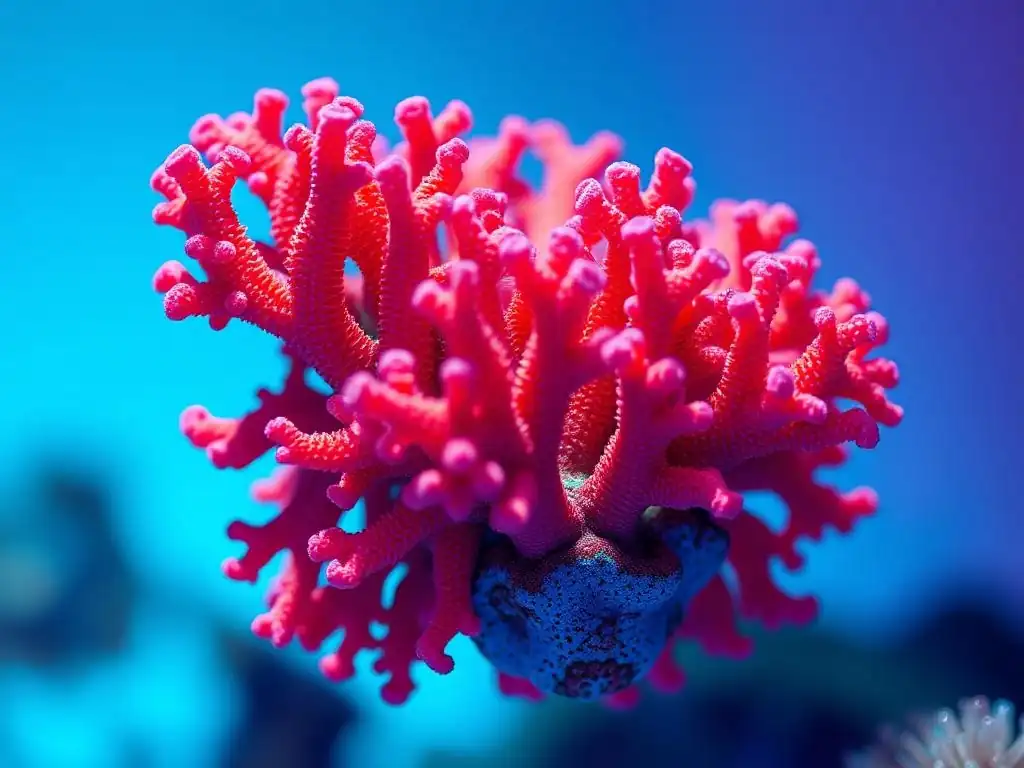
Overexposure to light is a common issue in reef tanks, particularly with powerful LED fixtures. The most prominent and alarming sign of overexposure in SPS corals is coral bleaching. This occurs when the coral expels its zooxanthellae, causing it to turn pale white or translucent. Bleaching can happen rapidly, sometimes within days of a sudden increase in light intensity or duration. Another severe indicator is tissue recession, which typically starts from the base or tips of the coral and progresses inwards, indicating that the coral is literally "burning" or starving after losing its symbiotic algae.
If coral bleaching is observed, immediate action is required. Reduce the light intensity by 20-30% or shorten the SPS coral photoperiod schedule by 2-3 hours. Alternatively, move the affected coral to a lower-light area of the tank or provide temporary shading. While bleaching can be reversible if caught early, prolonged bleaching for more than 2-3 weeks often leads to irreversible tissue damage, starvation, and eventual coral death. For example, a bleached Acropora colony that remains white for several weeks has a significantly poor prognosis for recovery.
Signs of Underexposure: Loss of Color and Slow Growth
Conversely, insufficient light, or underexposure, presents a different set of symptoms in SPS corals. Corals that are not receiving enough light will often appear dull, brown, or olive-colored. This browning is a direct result of the coral increasing the density of its zooxanthellae within its tissues, in an attempt to maximize the capture of the limited available light. Another key indicator is significantly slowed or completely stalled growth, with little to no visible new tip growth on branching species. Polyp extension might also be diminished or inconsistent.
If these signs of underexposure are observed, a gradual increase in light intensity or an extension of the SPS coral photoperiod schedule is warranted. For instance, increase the PAR by 25-50 µmol·m⁻²·s⁻² or add an hour to the total photoperiod over the course of a week, then monitor the coral's response for another week before making further adjustments. Consistent observation over several weeks is necessary to confirm improvement in coloration and growth rates. A healthy Montipora capricornis, for example, should exhibit vibrant colors and consistent plate or encrusting growth, not a uniform brown hue.
Adjusting Your Lighting Based on Coral Health Indicators
The health and appearance of your SPS corals are the ultimate, real-time indicators of whether your SPS coral photoperiod schedule and light intensity are correctly dialed in. A proactive, observational approach is essential. Regularly observe details such as polyp extension, the vibrancy and stability of coral colors, and the rate of new growth. Healthy SPS should exhibit good polyp extension throughout the day, often appearing "fuzzy," except perhaps during the darkest hours or immediately after lights-on.
Based on these observations, be prepared to make minor, incremental adjustments. If corals appear too pale, are bleaching, or show signs of tissue recession, reduce your peak light intensity by 10-20% and/or shorten the photoperiod by 1-2 hours. Conversely, if corals are browning out, dull, or growing slowly, gradually increase intensity by 10-20% or extend the photoperiod by 1-2 hours.
Always make changes slowly, typically over a week, and then monitor for at least another week before considering further modifications. For example, if a Seriatopora hystrix is browning, try increasing its PAR from 200 to 250 µmol·m⁻²·s⁻² and assess its color over two weeks.
Advanced Techniques for Fine-Tuning Your SPS Lighting
Using a PAR Meter to Measure Light Intensity
A PAR (Photosynthetically Active Radiation) meter is an indispensable tool for any serious SPS coral aquarist. It provides accurate, real-time measurements of light intensity (in µmol·m⁻²·s⁻²) at various depths and locations within your aquarium. This allows you to precisely map the light levels across your aquascape, ensuring that specific corals receive their target PAR range. For instance, you can confirm that your prized Acropora microclados frag positioned 6 inches from the surface is indeed receiving its desired 400 PAR, rather than relying on guesswork or manufacturer specifications.
By systematically using a PAR meter, you can identify "hot spots" where light might be excessively intense and potentially stressing corals, or "dead spots" where light is too low, hindering growth. This data-driven approach enables precise adjustments to your light fixture's height, individual LED channel intensities, or the strategic placement of corals, moving beyond subjective visual assessments. A PAR meter is crucial for fine-tuning your SPS coral photoperiod schedule to maximize growth and coloration while minimizing stress.
Utilizing Spectral Analysis for Targeted Color Enhancement
While a PAR meter quantifies the amount of usable light, spectral analysis delves into the quality of that light, examining the specific wavelengths emitted by your light source. Modern LED lighting systems often feature multiple independently controllable color channels (e.g., royal blue, cool white, red, green, UV), which allows aquarists to fine-tune the spectral output. Understanding and manipulating these specific wavelengths can significantly impact the health and, more notably, the coloration of SPS corals.
By adjusting the ratios of these spectral channels, particularly emphasizing blue and UV wavelengths, you can stimulate the production of specific fluorescent and chromoproteins within SPS corals. This targeted approach leads to more vivid blues, purples, and pinks, enhancing the natural beauty of your reef. For example, a common recommendation for maximizing Acropora coloration is to run royal blue channels at 80-100% and white channels at 30-50% of their maximum intensity during the peak SPS coral photoperiod schedule, often supplemented with small amounts of violet and UV.
The Benefits of Dawn/Dusk Simulation for SPS Corals
Dawn/dusk simulation, also known as ramping, involves gradually increasing light intensity in the morning and slowly decreasing it in the evening, mimicking natural sunrise and sunset. Most advanced LED fixtures and aquarium controllers offer this feature, allowing for customizable ramp times, typically ranging from 30 minutes to 2 hours for each transition. This gradual change in light intensity contrasts sharply with the abrupt on/off cycles of older lighting systems.
The primary benefit of dawn/dusk simulation is the significant reduction of stress on both corals and fish. A sudden blast of intense light can startle fish and shock corals, disrupting their biological rhythms.
A gradual transition allows corals to slowly adjust their zooxanthellae's photosynthetic machinery, preventing oxidative stress and promoting more consistent polyp extension throughout the day. For example, a 1-hour dawn ramp from 0% to 100% intensity, followed by a 10-hour peak, and a 1-hour dusk ramp down, creates a total 12-hour SPS coral photoperiod schedule that provides a more natural and less stressful environment for your entire reef ecosystem.
Maintaining Stable Lighting for Long-Term SPS Success
The Importance of Consistency in Lighting
Once an optimal SPS coral photoperiod schedule and intensity have been meticulously established, maintaining unwavering consistency is paramount for long-term SPS success. Any significant or frequent fluctuations in light duration or intensity can disrupt the delicate metabolic processes of corals and their symbiotic zooxanthellae. This instability forces corals to constantly expend energy adapting to changing conditions rather than directing it towards calcification and growth. Relying on highly reliable automated timers or advanced aquarium controllers is non-negotiable to ensure precise, repeatable light cycles day after day.
Corals, like all living organisms, thrive on predictable environmental cues. A stable and consistent SPS coral photoperiod schedule allows zooxanthellae to maintain optimal photosynthetic rates, ensuring a steady supply of nutrients to the coral host. This predictability fosters robust health, consistent growth, and enhanced resilience against environmental stressors or disease. Erratic lighting, even seemingly minor deviations, can lead to chronic stress, manifesting as reduced growth rates, dull coloration, and increased susceptibility to common coral ailments.
Regular Monitoring and Adjustments Based on Coral Health
The aquarium environment is a dynamic system, and the needs of your SPS corals can evolve over time due to their growth, the addition of new specimens, or subtle shifts in water parameters. Therefore, regular and diligent monitoring of your SPS corals is an ongoing process, not a one-time setup. Daily visual inspections for overall appearance, polyp extension, and color vibrancy, coupled with weekly close-up examinations for signs of new growth or stress, are essential to identify any issues early.
Based on these observations, be prepared to make minor, incremental adjustments to your SPS coral photoperiod schedule or intensity. If a coral begins to pale, brown, or shows signs of slowed growth, a slight modification to its light exposure might be necessary. For instance, if a Montipora platypus is growing vigorously but exhibits slight paling at its tips, a small reduction in peak intensity by 5% might be warranted. Proactive, adaptive management of your lighting based on the real-time health indicators of your corals is crucial for preventing major problems and ensuring long-term success.
Integrating Lighting with Water Chemistry (Alkalinity, Calcium, Magnesium)
Optimal lighting, particularly for SPS corals, directly drives rapid calcification and explosive growth. However, this accelerated growth significantly increases the coral's consumption of essential elements, primarily alkalinity, calcium, and magnesium. For example, a thriving, fast-growing Acropora colony in a heavily stocked tank can consume alkalinity at rates of 0.5-1.0 dKH per day, and calcium at similar rates. Therefore, as your lighting promotes vigorous growth, the demand for these crucial elements in your water chemistry will increase proportionally.
An ideal SPS coral photoperiod schedule will only yield its full potential for explosive growth and dazzling color if water parameters are consistently maintained within optimal ranges (e.g., Alkalinity 7-9 dKH, Calcium 400-450 ppm, Magnesium 1300-1400 ppm). Neglecting water chemistry while solely focusing on lighting will inevitably lead to stunted growth, skeletal deformities, and ultimately, coral decline. Automated dosing systems for two-part solutions or calcium reactors are often necessary to keep up with the high demands of a thriving SPS reef, ensuring that the light-driven growth has the necessary building blocks.
Conclusion: Achieving SPS Growth and Color with Optimized Lighting
Key Takeaways for Optimizing Your SPS Coral Lighting
Optimizing lighting for SPS corals is a cornerstone of successful reef keeping, directly influencing both their explosive growth and dazzling coloration. The core principles involve understanding that photoperiod (duration) and intensity (PAR) are intrinsically linked and must be tailored to species-specific needs. Crucially, new corals and lighting upgrades necessitate a meticulous acclimation period to prevent stress and bleaching, allowing zooxanthellae to adapt gradually. Above all, consistency in your SPS coral photoperiod schedule, maintained through reliable automation, is paramount for establishing stable biological rhythms and fostering sustained coral health.
Beyond these fundamentals, continuous monitoring of your corals' health and appearance serves as the ultimate guide for fine-tuning your lighting parameters. Signs of overexposure (bleaching, tissue recession) or underexposure (browning, slow growth) demand immediate, albeit incremental, adjustments. Finally, it is vital to recognize that lighting does not exist in isolation; its success is inextricably tied to maintaining pristine water quality, stable water chemistry (alkalinity, calcium, magnesium), and appropriate water flow. A holistic, integrated approach to SPS care, centered around a meticulously planned and consistently delivered SPS coral photoperiod schedule, will unlock the full potential of your reef aquarium.
Further Resources for SPS Coral Care and Lighting
For those seeking to delve deeper into the nuanced world of SPS coral care and lighting, several avenues for further research are highly recommended. Explore detailed profiles of specific SPS coral species to understand their unique light requirements, optimal placement within the tank, and preferred water parameters. Resources such as comprehensive coral databases and experienced aquarist forums often provide invaluable real-world data and insights into the specific needs of Acropora, Montipora, and Seriatopora varieties.
Additionally, invest time in researching advanced aquarium controllers and PAR meters. Understanding how to interpret PAR readings and effectively utilize multi-channel LED fixtures for spectral analysis will empower you to precisely manage your light environment. Many online communities and dedicated reefing websites offer tutorials and case studies on how experienced aquarists fine-tune their SPS coral photoperiod schedule and spectrum for the most vibrant growth and coloration. Continuous learning and adaptation based on your tank's specific needs will be your greatest asset in achieving long-term SPS success.
Frequently Asked Questions
What exactly is a photoperiod and why is it so important for SPS corals?
A photoperiod refers to the duration of light exposure a coral receives daily. It's crucial because SPS corals rely on photosynthesis by symbiotic algae (zooxanthellae) within their tissues for energy and growth.
What is a generally recommended photoperiod schedule for SPS corals?
While it can vary, a common starting point is 10-12 hours of light per day. This provides adequate energy for the coral while allowing for a period of darkness which is essential for other biological processes.
How does water depth affect the ideal photoperiod for SPS corals?
Deeper tanks generally require longer photoperiods or more intense lighting to compensate for light attenuation. Shallower tanks may need shorter periods or less intense light to prevent bleaching.
Can I change the photoperiod suddenly, or should I adjust it gradually?
Abrupt changes in the photoperiod can stress SPS corals. It’s best to adjust the photoperiod gradually, increasing or decreasing it by no more than an hour per week to allow the corals to acclimate.
What are the signs that my SPS coral's photoperiod is incorrect?
Signs of an incorrect photoperiod include bleaching (loss of color) which indicates too much light, or browning which suggests insufficient light. Slower growth and reduced polyp extension may also be indicators.
Final Reflection: Illuminating the Path to Vibrant Reefs
The journey to achieving explosive SPS growth and dazzling color is not merely a scientific endeavor, but an art form that demands patience, observation, and a deep understanding of the delicate balance within our reef aquariums. The optimal SPS coral photoperiod schedule, as we've explored, is a crucial element in unlocking the full potential of these captivating creatures, and its relevance today is amplified by the increasing accessibility of advanced lighting technologies and the growing passion for reef keeping worldwide.
This pursuit of the perfect photoperiod schedule has profoundly influenced the way we approach reef keeping, shifting from a simplistic "on/off" approach to a nuanced understanding of light spectrum, intensity, and duration. My own journey in reef keeping has been deeply enriched by this understanding, witnessing firsthand the transformative power of a well-tuned lighting system. The best and most beautiful things in the world cannot be seen or even touched - they must be felt with the heart.
- Helen Keller. This sentiment perfectly encapsulates the connection we forge with our reefs, a connection nurtured by the dedication to providing the optimal environment for their flourishing.
As we conclude, I urge you to reflect on the lessons learned and consider how you can apply them to your own reef keeping journey. Don't be afraid to experiment, observe, and adapt your SPS coral photoperiod schedule to the unique needs of your reef. Embrace the challenge, and you will be rewarded with a vibrant, thriving ecosystem that reflects your dedication and passion. Let the light guide you, and may your reefs continue to dazzle and inspire for years to come.
Ignite Your SPS Reef: Take the Next Step!
Thank you for diving deep into the world of SPS photoperiods! Now that you're armed with the knowledge to optimize your lighting schedule, it's time to put that understanding into action. Let's transform your reef tank into a vibrant paradise.
Here are a few things you can do right now:
- Critically evaluate your current photoperiod. Start by making small, incremental adjustments based on your observations.
- Share your progress! Join our thriving community forum at Aquarium Mastery and document your SPS growth and color changes over the next few weeks.
- Dive deeper! Research specific lighting requirements for each SPS coral species in your aquarium for a truly customized approach.
What's the first small tweak you're planning to make to your photoperiod, and why? Let's discuss in the comments!