
Montipora Lighting Solutions: From HighTech LEDs to Proven T5/MH Setups

Welcome to Aquarium Mastery!
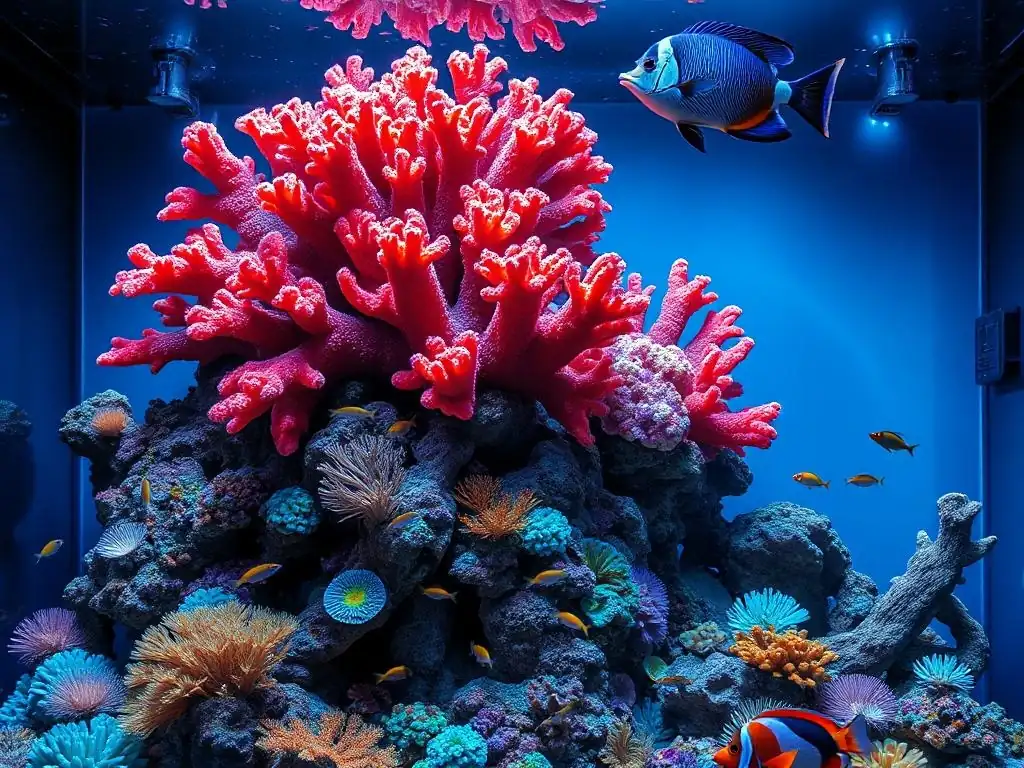
Ever wondered how to unlock the vibrant colors and explosive growth potential of your Montipora coral? This guide dives deep into the world of Montipora LED lighting, revealing the secrets to choosing the right setup for your reef tank. Are you ready to discover how to provide the perfect illumination and watch your Montipora thrive? Let's explore!
- Montipora Lighting: Achieving Vibrant Colors & Growth
- Understanding Montipora Lighting Needs for Optimal Growth
- High-Tech LED Lighting for Montipora: A Comprehensive Guide
- Proven T5 and Metal Halide (MH) Setups for Montipora
- Comparing LED, T5, and MH Lighting for Montipora: Pros and Cons
- Achieving Optimal Montipora Coloration Through Lighting
- Fine-Tuning Montipora Lighting: PAR, PUR, and Light Acclimation
- Troubleshooting Common Montipora Lighting Issues
- Advanced Montipora Lighting Techniques
-
Frequently Asked Questions
- What are the key lighting requirements for Montipora corals?
- Why is LED lighting often recommended for Montipora corals?
- Can I successfully keep Montipora corals under T5 or Metal Halide (MH) lighting?
- How do I determine the appropriate PAR (Photosynthetically Active Radiation) for my Montipora?
- What are some signs that my Montipora is receiving too much or too little light?
- Final Reflection: Illuminating the Future of Montipora
- Ignite Your Reef: Start Thriving, Today!
Montipora Lighting: Achieving Vibrant Colors & Growth
Understanding Montipora Lighting Needs for Optimal Growth
The Importance of Proper Lighting for Montipora Coral Health
Proper lighting is the single most critical environmental factor for the health, growth, and vibrant coloration of Montipora corals. Like most stony corals, Montipora are photosynthetic organisms, relying heavily on symbiotic dinoflagellates called zooxanthellae that live within their tissues. These zooxanthellae convert light energy into sugars through photosynthesis, providing up to 90% of the coral's energy needs. Without adequate and appropriate light, Montipora cannot sustain their metabolic processes, leading to starvation and eventual demise.
Insufficient or incorrect lighting directly impacts Montipora's ability to thrive. Under-lighting can cause Montipora to brown out, as the zooxanthellae increase their density to try and capture more light, or lead to stunted growth. Conversely, excessive lighting can cause bleaching, where the coral expels its zooxanthellae, turning pale or white, due to stress from high light or heat. Finding the right balance, guided by a comprehensive Montipora LED lighting guide, is paramount for long-term success.
Key Light Spectrum and Intensity Considerations for Montipora
For optimal Montipora health, the light spectrum must be carefully considered. The most crucial wavelengths for zooxanthellae photosynthesis fall within the blue spectrum, specifically royal blue (around 450-470nm). These wavelengths penetrate water most effectively and are highly absorbed by photosynthetic pigments. Additionally, ultraviolet (UV-A) and violet wavelengths (380-420nm) are vital for stimulating the production of fluorescent proteins within the coral, which contribute significantly to their vibrant coloration and offer some protection from intense light. A broader spectrum, including some green and red light, also contributes to overall coral health and aesthetic appeal.
Light intensity, commonly measured in PAR (Photosynthetically Active Radiation), is equally important. Montipora corals, being Small Polyp Stony (SPS) corals, generally require high PAR levels. A suitable PAR range for most Montipora species is typically between 200 and 450 PAR at the coral's surface. While some highly demanding species or specific growth goals might push these numbers higher, it's crucial to acclimate corals gradually to prevent bleaching. For instance, a Montipora capricornis might thrive at 250 PAR, while a Montipora digitata could comfortably handle 350-400 PAR.
High-Tech LED Lighting for Montipora: A Comprehensive Guide
Selecting the Right LED Fixture for Your Montipora Tank
Choosing the right LED fixture for Montipora involves considering several factors, including spectral control, programmability, coverage, and intensity. High-quality LED fixtures designed for reef aquariums offer multiple controllable channels (e.g., royal blue, blue, violet, UV, white, red, green) allowing aquarists to fine-tune the spectrum for optimal Montipora LED lighting guide settings.
Look for fixtures with good PAR output and even spread to prevent hot spots or shadowed areas in your tank. For a standard 48-inch long, 24-inch deep reef tank, two mid-to-high-end LED fixtures or a single large array fixture would typically be required to provide adequate and even PAR levels across the entire Montipora colony.
Coverage and penetration are critical, especially in deeper tanks. Some LED fixtures use specialized lenses (e.g., TIR or HEI optics) to focus light and improve penetration, ensuring that Montipora placed lower in the water column still receive sufficient PAR.
For example, a single compact LED unit like an AI Prime 16HD might cover a 20x20 inch footprint effectively, delivering 200-300 PAR at 18 inches deep, making it suitable for smaller Montipora tanks. For larger tanks, multiple units or more powerful fixtures like EcoTech Marine Radions or Kessil A500X are necessary to achieve optimal and consistent light across the entire Montipora landscape.
Programming LED Lighting for Optimal Montipora Coloration and Growth
Effective programming of Montipora LED lighting is essential for mimicking natural light cycles and optimizing coral health. A typical photoperiod for Montipora ranges from 8 to 12 hours of intense light, preceded and followed by gradual ramp-up and ramp-down periods.
A "sunrise" and "sunset" effect, lasting 1-2 hours each, helps reduce stress on corals by slowly increasing and decreasing light intensity, mimicking natural dawn and dusk. For instance, blues might come on at 7 AM, followed by whites and other colors peaking from 9 AM to 5 PM, then gradually dimming back to blues by 7 PM, and off by 8 PM.
Spectral control allows for precise manipulation of Montipora coloration. For Montipora, a heavy emphasis on blue and royal blue channels (often 80-100% intensity at peak) is crucial for photosynthesis and fluorescence. White channels are typically run at lower intensities (e.g., 20-40%) to provide a balanced visual spectrum and some additional PAR. Red and green channels are usually kept at very low percentages (e.g., 1-5%) as they contribute less to coral photosynthesis and can promote nuisance algae if overused. Experimenting with these percentages while monitoring coral response is key to unlocking the most vibrant Montipora colors.
Radion, AI Prime, and Kessil LEDs for Montipora
EcoTech Marine Radion LED fixtures are highly popular for Montipora tanks due to their advanced control, wide spectrum, and excellent light spread via HEI optics. Models like the Radion XR15 or XR30 are frequently chosen. For instance, an XR30 Gen 5 Blue can effectively light a 30x30 inch area, delivering over 400 PAR at 18 inches deep, making it suitable for a diverse Montipora collection. Users often utilize pre-set programs like SPS AB+ or Coral Lab AB, which are optimized for SPS growth and coloration, or create custom Montipora LED lighting guide profiles by adjusting individual diode channels.
AquaIllumination (AI) Prime and Kessil LEDs also offer compelling options for Montipora. The AI Prime 16HD is an excellent choice for smaller Montipora tanks, such as nano reefs up to 20-40 gallons, providing a good balance of power and spectral control in a compact form factor.
Kessil LED pendants, like the A360X or A500X, are renowned for their dense matrix LED arrays which create a distinctive "shimmer" effect, mimicking natural sunlight. A single Kessil A360X can provide sufficient PAR for Montipora in a 24x24 inch footprint, often used in pairs for larger tanks (e.g., two A360X for a 48-inch tank) to ensure even coverage.
Proven T5 and Metal Halide (MH) Setups for Montipora
T5 Lighting for Montipora: Ballasts, Bulbs, and Placement
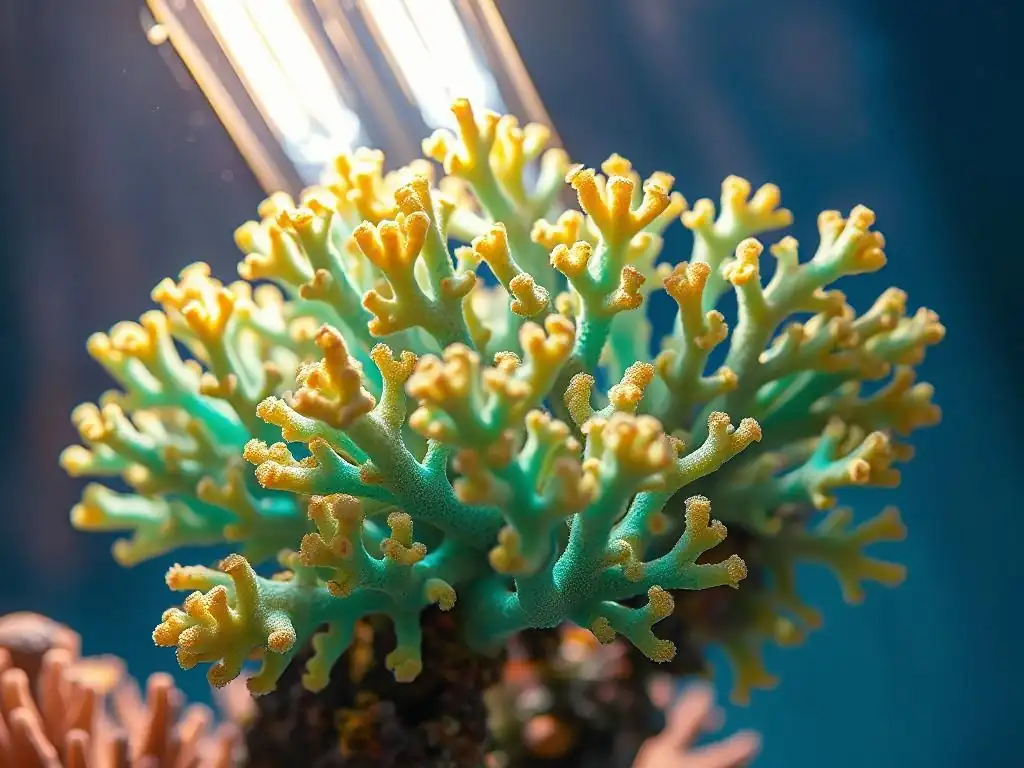
T5 High Output (HO) fluorescent lighting has long been a staple in the reefing hobby for growing SPS corals, including Montipora. T5 setups are known for their incredibly even light spread and excellent color rendition. A typical Montipora T5 setup utilizes a multi-bulb fixture with individual reflectors and an electronic ballast for efficient power delivery.
Common bulb combinations for Montipora include a mix of blue/actinic bulbs (e.g., ATI Blue Plus, KZ Super Blue) for photosynthetic efficiency and coral fluorescence, combined with daylight or coral-specific bulbs (e.g., ATI Coral Plus, KZ New Generation) to provide a broader spectrum and visual appeal. For example, a 6-bulb T5 fixture for a 48-inch tank might run 4x Blue Plus, 1x Coral Plus, and 1x Actinic.
The number and placement of T5 bulbs are crucial for achieving optimal PAR for Montipora. For a 24-inch deep tank with a high concentration of Montipora, 6-8 T5HO bulbs are often recommended to achieve sufficient PAR values (e.g., 250-400 PAR at coral level). Bulbs typically need replacement every 9-12 months, as their intensity and spectral output degrade by approximately 30% over this period. While T5s produce less focused light than point-source LEDs or MH, their wide, even spread minimizes shadowing and ensures all areas of a Montipora colony receive consistent illumination.
Metal Halide Lighting for Montipora: Benefits and Challenges
Metal Halide (MH) lighting has a long-standing reputation as a powerhouse for growing SPS corals, including Montipora, offering unparalleled intensity and deep light penetration. MH fixtures are known for their natural "shimmer" effect, which closely mimics sunlight on the ocean floor.
A single 250W or 400W MH bulb can deliver very high PAR values (e.g., 400-800 PAR directly under the bulb) and effectively light a significant footprint, making them highly effective for large Montipora colonies. Popular bulb choices for Montipora include 14,000K (e.g., Phoenix) or 20,000K (e.g., Radium) bulbs, which provide a good balance of growth-promoting spectrum and vibrant coral coloration.
Despite their proven effectiveness, Metal Halide lights present several challenges. They generate substantial heat, often requiring the use of a chiller to maintain stable tank temperatures (ideally 77-78°F), which can add significant cost ($300-$800) and energy consumption. MH bulbs also have a relatively short lifespan, requiring replacement every 6-12 months, with noticeable output degradation occurring after about 6 months. Their high energy consumption compared to modern LEDs can also result in higher electricity bills, making them a more demanding option in terms of both initial setup and ongoing maintenance.
Combining T5 and Metal Halide for a Balanced Spectrum
Many advanced aquarists choose to combine Metal Halide and T5 lighting to leverage the best of both worlds for their Montipora corals. This hybrid approach allows for the intense, penetrating power and "shimmer" of MH lights, complemented by the broad, even spectrum and color-enhancing capabilities of T5 fluorescents. The MH provides the core PAR and deep penetration, while the T5s fill in any spectral gaps, reduce shadowing, and enhance the overall visual pop of the corals.
A common hybrid setup might feature a central 250W or 400W Metal Halide pendant, flanked by 2-4 T5HO bulbs on either side. For example, a 48-inch tank could have a 250W 14,000K MH bulb in the center, with two ATI Blue Plus and two ATI Coral Plus T5 bulbs surrounding it. This combination ensures extremely high PAR levels across the entire tank, promoting rapid Montipora growth, while the T5s provide a comprehensive and balanced spectrum that brings out the most vibrant colors in diverse Montipora species.
Comparing LED, T5, and MH Lighting for Montipora: Pros and Cons
LED vs. T5: Which is Better for Montipora Growth and Color?
When comparing LED and T5 lighting for Montipora, both have distinct advantages. LEDs offer unparalleled control over spectrum and intensity, allowing aquarists to fine-tune light output for specific Montipora coloration and growth needs, as outlined in any Montipora LED lighting guide. They are also significantly more energy-efficient, potentially reducing electricity consumption by 30-50% compared to T5s, and have a much longer lifespan (50,000+ hours vs. 9-12 months for T5 bulbs), leading to lower long-term running costs. LEDs also produce less heat, potentially reducing the need for chillers.
However, T5s are often praised for their incredibly even light spread, which minimizes shadowing and ensures consistent PAR across a large area, making them very forgiving. They also have a proven track record for achieving excellent Montipora growth and color, with many hobbyists finding them simpler to set up and manage without the complexities of LED programming. While the upfront cost of a high-end LED fixture (e.g., $700-$1500 for a 48-inch tank) can be higher than a T5 fixture with bulbs ($400-$800), the recurring cost of T5 bulb replacement (approx. $100-$200 annually) can add up over time.
LED vs. Metal Halide: Considering Heat, PAR, and Spectrum
The comparison between LED and Metal Halide for Montipora often boils down to intensity, heat, and control. Metal Halides are renowned for their raw power and deep penetration, often delivering higher PAR values directly under the fixture than many LEDs, making them excellent for extremely demanding Montipora species or very deep tanks. Their distinctive "shimmer" effect is also highly valued by many aquarists for its natural appearance.
However, Metal Halides generate significantly more heat, necessitating active cooling solutions like chillers in most setups to prevent temperature fluctuations that stress Montipora (e.g., preventing tank temperatures from exceeding 80°F). This adds to both the initial cost and ongoing energy consumption.
LEDs, on the other hand, produce considerably less heat and offer superior spectral control, allowing aquarists to precisely adjust individual color channels to target specific Montipora pigments for enhanced coloration. While the upfront cost of high-end Montipora LED lighting guide fixtures can be substantial, their energy efficiency and longer lifespan often make them more economical in the long run compared to the higher running costs and bulb replacement frequency of MH.
T5 vs. Metal Halide: Affordability, Maintenance, and Performance
Comparing T5 and Metal Halide for Montipora reveals trade-offs in affordability, maintenance, and performance. T5 fixtures are generally more affordable upfront than comparable MH setups. For example, a quality 4-bulb T5 fixture might cost $250-$400, whereas a 250W MH pendant could range from $300-$600, not including the potential need for a chiller. However, T5s require regular bulb replacement every 9-12 months, incurring ongoing costs (e.g., $15-$30 per bulb). MH bulbs also need replacement, typically every 6-12 months, and are generally more expensive per bulb (e.g., $50-$100+).
In terms of performance, Metal Halides typically offer superior intensity and penetration, often resulting in faster and more robust Montipora growth, particularly in very deep tanks. Their powerful, broad spectrum is highly effective for photosynthesis. T5s, while not as intensely powerful at a single point, provide a remarkably even light spread, reducing shadowing and ensuring uniform growth across a Montipora colony. Both are proven technologies for thriving Montipora, but MH demands more rigorous temperature management due to its significant heat output.
Achieving Optimal Montipora Coloration Through Lighting
Understanding Montipora Pigments and Their Light Requirements
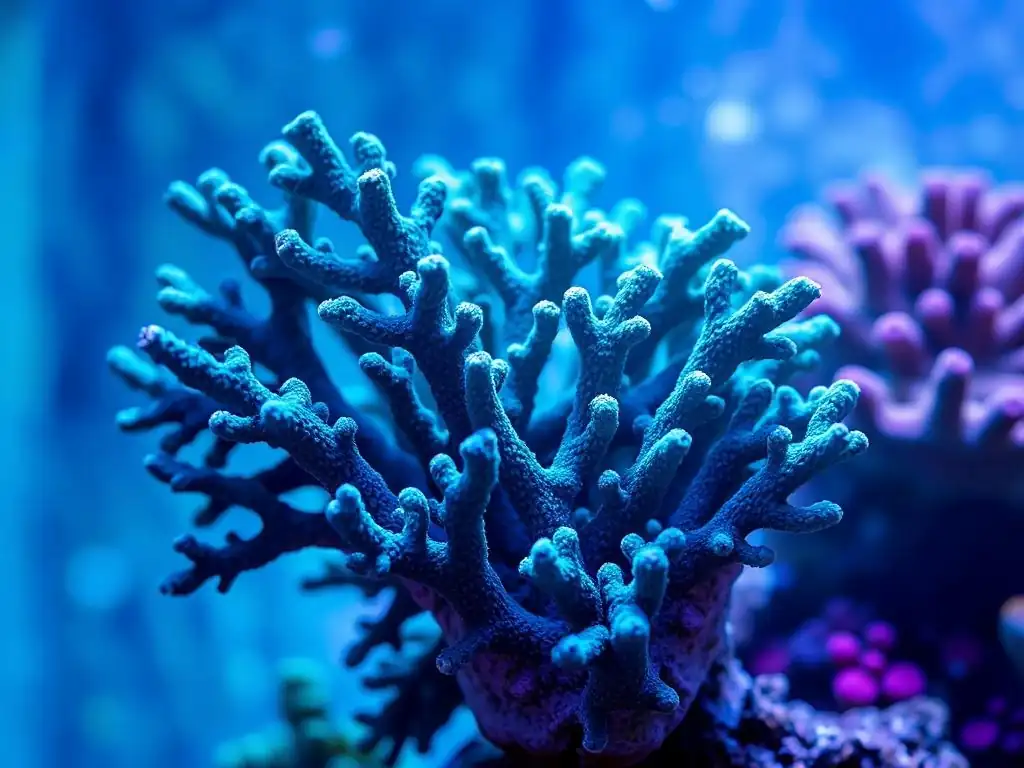
Montipora corals exhibit a stunning array of colors, which are primarily a result of two factors: the symbiotic zooxanthellae within their tissues and the production of host fluorescent proteins (FPs) or chromoproteins. Zooxanthellae themselves contain photosynthetic pigments like chlorophyll, which give corals a brownish hue if they are too dense or under insufficient light.
However, the vibrant reds, greens, oranges, and purples seen in Montipora are largely due to the coral's own genetic ability to produce these specialized proteins. These proteins absorb light at specific wavelengths and re-emit it at different, visible wavelengths (fluorescence) or simply reflect specific colors (chromoproteins).
The light spectrum plays a critical role in stimulating the production and expression of these colorful proteins. While blue light (450-470nm) is essential for zooxanthellae photosynthesis, specific wavelengths in the UV-A and violet range (380-420nm) are particularly effective at triggering the production of many fluorescent proteins, enhancing the coral's natural "pop." Therefore, a balanced Montipora LED lighting guide will emphasize a strong blue and royal blue component, complemented by violet/UV, to maximize both photosynthetic efficiency and the coral's inherent beauty.
Adjusting Lighting to Enhance Specific Montipora Colors (e.g., Red, Green, Orange)
To enhance specific Montipora colors, targeted adjustments to the light spectrum can be highly effective with modern LED fixtures. For red and orange Montipora species (e.g., Montipora undata 'Red', Montipora danae 'Orange'), a spectrum that emphasizes blue and royal blue wavelengths is crucial, as these wavelengths stimulate the chromoproteins responsible for these hues. While some aquarists experiment with very low percentages of red or amber diodes (e.g., 1-5%), the primary driver for red/orange coloration remains the specific blue light interaction with the coral's inherent proteins.
For green Montipora (e.g., Montipora digitata 'Green', Montipora capricornis 'Green'), maximizing the blue and royal blue channels (often 90-100% intensity) is key. Green fluorescent proteins (GFPs) in corals absorb blue light and re-emit green light, making them appear incredibly vibrant under actinic-heavy lighting. The goal is to provide sufficient PAR from the blue spectrum to drive both photosynthesis and the production of these fluorescent pigments without over-stressing the coral.
The Role of Light in Montipora Fluorescence
Fluorescence is a fascinating phenomenon where Montipora corals absorb light at one wavelength (typically blue or ultraviolet) and re-emit it at a longer, visible wavelength (e.g., green, yellow, orange, red). This process is not just for show; it serves as a protective mechanism, converting potentially harmful high-energy UV light into less damaging visible light. It also contributes significantly to the visual appeal of Montipora under aquarium lighting.
Optimizing for Montipora fluorescence primarily involves providing strong blue and UV-A light. Many modern Montipora LED lighting guide fixtures include dedicated UV or violet channels (380-420nm) specifically to maximize this effect. By providing these specific wavelengths in addition to the primary royal blue (450-470nm), aquarists can enhance the vivid glow of their Montipora colonies, making them truly stand out under actinic-heavy lighting schedules, particularly during "moonlight" or "blue-only" viewing periods.
Fine-Tuning Montipora Lighting: PAR, PUR, and Light Acclimation
Measuring PAR (Photosynthetically Active Radiation) in Your Montipora Tank
PAR, or Photosynthetically Active Radiation, is a crucial metric for assessing the light intensity available to your Montipora corals. It measures the amount of light in the 400-700nm wavelength range that is usable for photosynthesis. For Montipora, understanding PAR levels at different locations and depths within your tank is essential for optimal placement and growth. While general guidelines exist (e.g., 200-450 PAR for Montipora), actual PAR can vary significantly based on light fixture, water clarity, and depth.
To accurately measure PAR, a dedicated PAR meter (such as an Apogee MQ-510) is indispensable. These meters can often be rented from local fish stores for a nominal fee (e.g., $50-$100 per week) or purchased for more serious hobbyists ($400-$700).
Take multiple readings at various points and depths – at the top of the rockwork, mid-level, near the sandbed, and in corners – to create a PAR map of your tank. This map will help identify hot spots (areas of excessive light) and shadowed areas, allowing for strategic placement of Montipora colonies to ensure each receives its ideal light intensity.
Understanding PUR (Photosynthetically Usable Radiation) for Montipora
While PAR measures all light within the photosynthetic range, PUR (Photosynthetically Usable Radiation) takes it a step further by focusing on the specific wavelengths that are most efficiently absorbed by the zooxanthellae within Montipora corals. Zooxanthellae primarily utilize blue light (around 450-470nm) and, to a lesser extent, red light. A light source might have a high PAR reading, but if a significant portion of that PAR is in wavelengths not efficiently used by corals (e.g., green or yellow light), its PUR will be lower, making it less effective for coral photosynthesis.
For Montipora, a light source with a high PUR value, meaning a strong concentration of its output in the blue spectrum, is generally more beneficial than a broad-spectrum light with the same overall PAR but less efficient wavelengths. This is why a well-designed Montipora LED lighting guide often emphasizes fixtures with robust blue and royal blue channels. These specific wavelengths drive optimal photosynthetic efficiency, leading to better Montipora growth and coloration, even if the overall PAR reading isn't the absolute highest compared to a less spectrally optimized light.
Acclimating Montipora to New Lighting Conditions
Acclimating Montipora to new or significantly stronger lighting conditions is a critical step to prevent stress, bleaching, or even tissue necrosis. When introducing new frags, especially those from lower-light environments (e.g., a frag tank or a different display tank), or when upgrading your lighting system, sudden exposure to high PAR can be detrimental. Montipora are sensitive to abrupt changes in light intensity, and failure to acclimate can lead to rapid degradation of their health.
There are several effective methods for acclimating Montipora. One common approach is to initially place new corals in lower-light areas of the tank, such as on the sandbed or lower rockwork, and gradually move them up over several weeks. Alternatively, if using LED lighting, you can reduce the overall intensity (e.g., start at 30-50% of full power) and gradually increase it by 5-10% weekly over a period of 4-8 weeks.
Using shade cloth or mesh over the tank for the first few weeks can also provide a temporary reduction in light intensity. Closely observe your Montipora for signs of stress (bleaching, polyp retraction) or improvement as you adjust the light.
Troubleshooting Common Montipora Lighting Issues
Identifying Signs of Insufficient or Excessive Lighting
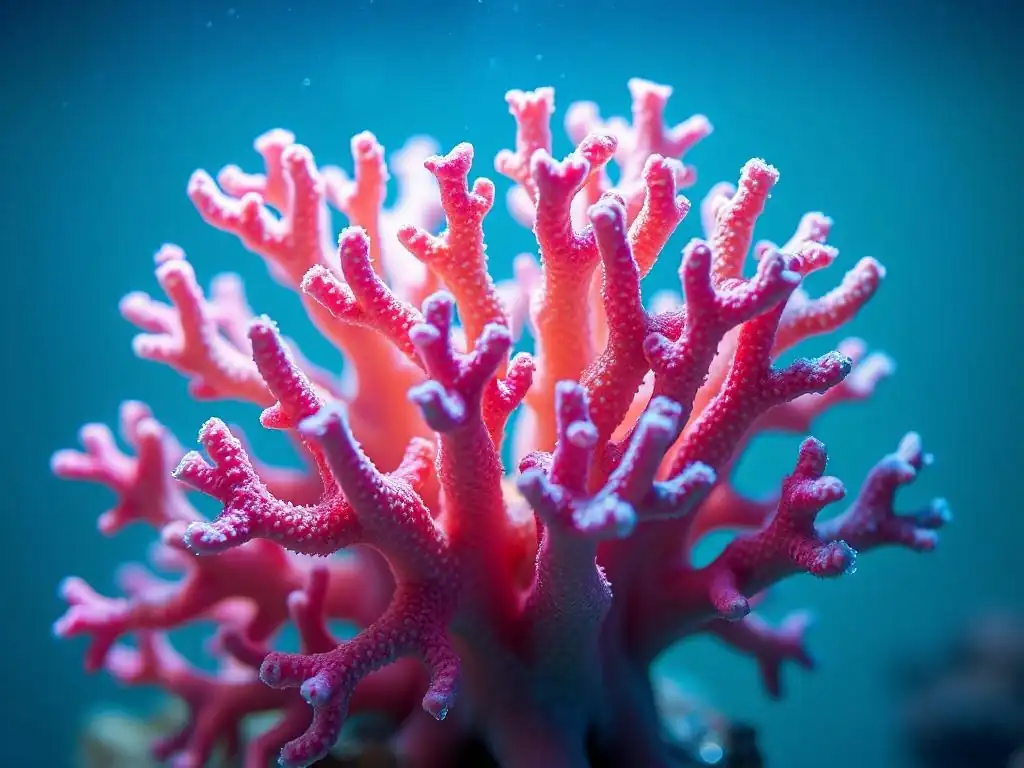
Recognizing the signs of improper lighting is crucial for maintaining healthy Montipora. Insufficient lighting often manifests as browning or darkening of the coral tissue. This occurs because the zooxanthellae within the coral's tissue increase in density to try and capture more light, leading to a duller appearance. Other signs include slow or stunted growth, lack of vibrant coloration, and polyps that appear "reaching" or overly extended as they try to maximize light exposure. Over time, severe under-lighting can lead to tissue recession starting from the base.
Conversely, excessive lighting typically causes bleaching, where the Montipora turns pale white or translucent due to the expulsion of its zooxanthellae. This is a severe stress response. Other signs include tissue recession, a "burnt" appearance, or polyps that remain tightly retracted even during the day. If these symptoms appear, immediately reduce light intensity or move the affected Montipora to a more shaded area of the tank. A well-calibrated Montipora LED lighting guide helps prevent these extremes.
Nuisance algae growth, such as green hair algae, diatoms, or cyanobacteria, can often be exacerbated by improper lighting, particularly when combined with elevated nutrient levels. While algae require nutrients, they also thrive under certain light conditions that may not be optimal for corals, such as excessive light in the red and green spectrums or an overly long photoperiod. An imbalance in the light spectrum can favor the growth of undesirable algae over the more light-demanding Montipora corals.
To address algae growth related to lighting, first, ensure your nutrient levels (nitrate, phosphate) are under control through regular water changes, proper filtration, and reduced feeding. Simultaneously, adjust your lighting schedule: reduce the total photoperiod to 6-8 hours for intense lighting, and specifically decrease the intensity or duration of red and green channels on LED fixtures. Increasing the proportion of blue light can also help, as blue light is more efficiently utilized by corals and less by many types of nuisance algae. Consider implementing a brief "siesta" period of 1-2 hours of darkness in the middle of the day.
Addressing Bleaching, Stunted Growth, and Color Loss in Montipora
Bleaching in Montipora, characterized by a pale white or translucent appearance, is most commonly caused by excessive light, but can also be triggered by rapid changes in water parameters, high water temperatures (above 82°F), or disease. If light is suspected, immediately reduce the intensity (e.g., dim LEDs by 20-30%) or move the Montipora to a lower-light area. Ensure stable water parameters, especially alkalinity (8-10 dKH), calcium (400-450 ppm), and magnesium (1300-1400 ppm), as fluctuations can also cause bleaching. Prompt action can often allow bleached Montipora to recover.
Stunted growth and color loss (other than bleaching) are often indicators of insufficient light or, more broadly, unstable or inadequate water chemistry. If Montipora are browning and not growing, increase the PAR levels to the recommended range (200-450 PAR) or move them to a brighter spot. If light is confirmed adequate, meticulously check your water parameters: ensure nitrates are below 10 ppm and phosphates below 0.05 ppm, as elevated nutrients can inhibit growth and dull colors. Consistent water changes and proper dosing of alkalinity, calcium, and magnesium are critical for sustained Montipora health and vibrant coloration.
Advanced Montipora Lighting Techniques
Using Light Meters to Optimize Montipora Placement
Using a PAR (Photosynthetically Active Radiation) meter is an advanced technique that allows for the precise optimization of Montipora placement within your aquarium. Instead of relying on guesswork, a PAR meter provides quantitative data on light intensity at various points. By mapping the PAR levels across your rockwork and sandbed, you can identify areas that are ideal for high-light demanding Montipora species (e.g., Montipora digitata at 300-400 PAR) versus those suitable for more moderate-light species (e.g., Montipora capricornis at 200-300 PAR).
This detailed PAR mapping helps prevent common lighting issues such as hot spots, where a coral receives excessively high light and bleaches, or shadowed areas, where a coral receives insufficient light and browns out. For instance, if your PAR meter shows 500 PAR at the top of your rockwork but only 100 PAR at the bottom, you know to place your most light-demanding Montipora near the top and your less demanding corals lower down. This precision ensures every Montipora colony thrives in its optimal light environment, a key element of any effective Montipora LED lighting guide.
Implementing a Lighting Schedule for Maximum Growth and Coloration
Implementing a precise lighting schedule is fundamental for maximizing both the growth and coloration of Montipora corals. A well-structured schedule mimics the natural sunrise and sunset, reducing stress and optimizing photosynthetic periods. A common approach for Montipora LED lighting guide setups involves a gradual ramp-up of actinic/blue channels over 1-2 hours, followed by the introduction of white and other spectrums for the main photoperiod, and then a gradual ramp-down back to blues before turning off.
For example, a 10-hour total photoperiod might look like this:
- 7:00 AM - 8:00 AM: Blues gradually increase from 10% to 40%, other colors remain off or at very low percentages (e.g., 1-5%).
- 8:00 AM - 4:00 PM: Blues ramp up to 80-100%, Whites to 20-40%, Reds/Greens to 5-10%. This 8-hour window is the peak PAR period.
- 4:00 PM - 5:00 PM: Blues gradually decrease from 40% to 10%, other colors turn off.
- 5:00 PM onwards: Lights off, or very low intensity moonlight (e.g., 1-2% blue) for visual appeal.
This schedule provides consistent, high-intensity light during the crucial photosynthetic period while offering gentle transitions.
Utilizing Spectral Controllers for Targeted Montipora Color Enhancement
Modern high-end LED fixtures, such as those from EcoTech Marine, AquaIllumination, and Kessil, offer sophisticated spectral controllers that allow aquarists to precisely adjust individual color channels (e.g., UV, violet, royal blue, blue, green, red, cool white, warm white). This granular control is an advanced technique for targeted Montipora color enhancement, going beyond simply providing sufficient PAR.
By fine-tuning specific channels, aquarists can experiment to bring out the most vibrant expressions of their Montipora's inherent pigments. For instance, slightly increasing the UV or violet channels (e.g., 380-420nm) can significantly enhance the fluorescence of green and red Montipora, making them glow more intensely. Adjusting the balance between royal blue and blue can also influence the depth and saturation of coloration. This level of customization, often detailed in an advanced Montipora LED lighting guide, allows experienced hobbyists to truly optimize their coral's appearance and health by providing the exact wavelengths they need.
Frequently Asked Questions
What are the key lighting requirements for Montipora corals?
Montipora corals generally require moderate to high intensity lighting. Choosing the right light spectrum and intensity is crucial for their growth and coloration. Insufficient lighting can lead to bleaching.
Why is LED lighting often recommended for Montipora corals?
LEDs offer significant advantages including energy efficiency, controllability over spectrum, and long lifespan. They allow aquarists to fine-tune the light to meet the specific needs of Montipora, which is vital for success.
Can I successfully keep Montipora corals under T5 or Metal Halide (MH) lighting?
Yes, absolutely! While LEDs are popular, many experienced aquarists achieve excellent results with T5 and MH lighting. The key is to provide the correct PAR levels and maintain stable water parameters.
How do I determine the appropriate PAR (Photosynthetically Active Radiation) for my Montipora?
PAR is a measure of the light available for photosynthesis. Start with a PAR level of around 150-250 µmol/m²/s for lower-light Montipora species and gradually increase up to 300-400 µmol/m²/s for high-light species. Observe your coral's response and adjust accordingly.
What are some signs that my Montipora is receiving too much or too little light?
Too much light can cause bleaching (loss of color), while too little light can lead to browning or slow growth. Monitor your Montipora's color and growth rate, and adjust your lighting accordingly to ensure optimal health and coloration.
Final Reflection: Illuminating the Future of Montipora
The journey through the world of Montipora lighting, from the cutting-edge advancements of high-tech LEDs to the reliability of established T5/MH setups, reveals more than just optimal growth parameters. It highlights a commitment to understanding and nurturing these delicate corals, a commitment that resonates deeply within the reefing community today. This exploration underscores the importance of informed decision-making, ensuring the vibrant health and longevity of our underwater ecosystems.
This quest for the perfect light has profoundly shaped, and continues to shape, the reefing landscape. It's a testament to our dedication as hobbyists, constantly striving to replicate the natural conditions that allow Montipora to thrive. The best way to predict the future is to create it.
- Peter Drucker. This quote encapsulates the spirit of innovation and experimentation that drives us to refine our lighting techniques and push the boundaries of what's possible in reef aquariums.
Now, as you consider the information presented, I encourage you to reflect on your own approach to Montipora care. Are you embracing the latest technology, or relying on proven methods? Regardless of your choice, remember that informed observation and continuous learning are key. Let this guide inspire you to further refine your lighting strategy, ensuring that your Montipora not only survives, but flourishes, contributing to the beauty and resilience of your reef for years to come.
Ignite Your Reef: Start Thriving, Today!
Thank you for exploring the world of Montipora lighting! We hope this article has illuminated the path to a vibrant and healthy reef. Now, let's transform knowledge into action.
Here are a few ways to get started:
- Immediately assess your current lighting setup. Are you meeting the needs of your Montipora? Don't wait, even small adjustments can make a huge difference.
- Share this guide with fellow reef keepers! Let's spread the knowledge and help everyone achieve success with Montipora corals.
- Consider experimenting with a new lighting schedule. Small tweaks in photoperiod can drastically improve coral coloration and growth.
Ready to witness your Montipora truly flourish? What specific lighting change will you implement this week?