
The Magic of Betta Bubble Nests: Understanding Their Purpose

Welcome to Aquarium Mastery!
Ever wondered about those fascinating bubble nests your Betta builds? Unravel the mystery behind this captivating behavior with our detailed Betta nest building tutorial. Dive in to understand the purpose of these delicate structures and learn how to create the perfect environment for your Betta to thrive. Get ready to witness the magic!
- Understanding Betta Fish Bubble Nests: An Introduction to Betta Nest Building
- The Biology Behind Betta Bubble Nests: A Deep Dive
- Betta Nest Building Behavior: Exploring the Reasons
- A Complete Betta Nest Building Tutorial: Encouraging Nest Construction
- Male Betta Fish and Bubble Nests: The Parental Role
- What To Do After Your Betta Builds a Bubble Nest: A Guide for Breeders
- Troubleshooting Betta Nest Building: Addressing Common Concerns
- Debunking Myths About Betta Bubble Nests
- Beyond the Basics: Advanced Betta Nesting Insights
-
Frequently Asked Questions
- What exactly is a Betta bubble nest, and why do they build them?
- What are the ideal water conditions to encourage bubble nest building in Bettas?
- If my Betta builds a bubble nest, does that automatically mean he's ready to breed?
- My Betta built a nest, but it disappeared. What could have caused this?
- Is it necessary to provide a female Betta if my male is building a bubble nest?
- Final Reflection: The Whispers of Creation
- Unveil the Secrets: Build a Thriving Betta Paradise!
Understanding Betta Fish Bubble Nests: An Introduction to Betta Nest Building
What is a Betta Bubble Nest?
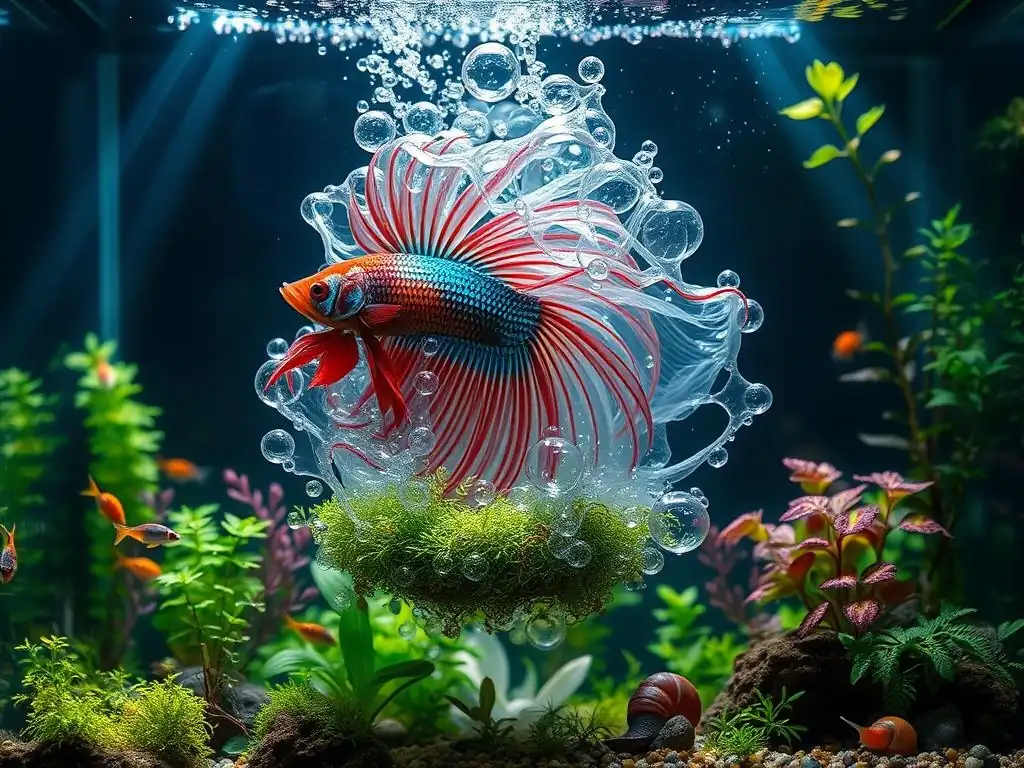
A Betta bubble nest is a remarkable structure created by male Betta fish, primarily as a safe haven for their eggs and fry. It consists of a cluster of small, adhesive air bubbles, often found floating at the water's surface, typically concentrated near a piece of decor, a broad leaf, or a corner of the aquarium. These nests can vary in size, from a small patch of a few bubbles to a substantial, intricate raft spanning several inches across the water's surface, depending on the male's dedication and environmental conditions.
The construction of these nests involves the male Betta repeatedly gulping air from the surface, coating it with a special mucus or saliva, and then releasing the coated bubbles. This salivary coating is crucial as it provides structural integrity, preventing the bubbles from popping prematurely and allowing them to adhere to each other, forming a stable, buoyant platform. This process is an inherent instinct for male Betta fish, deeply rooted in their natural breeding behaviors, making the presence of a bubble nest a common and fascinating sight for aquarists.
Why Do Betta Fish Build Bubble Nests? Unveiling the Mystery
The primary purpose behind a male Betta fish constructing a bubble nest is reproductive. In their natural habitats, such as stagnant rice paddies and slow-moving streams in Southeast Asia, Betta fish face challenges like low oxygen levels and predation. The bubble nest serves as a crucial incubator, providing a secure and oxygen-rich environment for the delicate eggs and newly hatched fry. By placing the eggs within this buoyant structure at the water's surface, the male ensures they are suspended in the most oxygenated layer of the water column, away from potential bottom-dwelling predators.
Furthermore, the bubble nest acts as a protective nursery. After spawning, the male Betta meticulously collects the fertilized eggs and places them within the nest. He then vigilantly guards the nest, retrieving any eggs that fall out and ensuring the integrity of the structure. This dedicated parental care significantly increases the survival rate of the offspring, highlighting the evolutionary importance of this elaborate nest-building behavior in the Betta's life cycle.
The Biology Behind Betta Bubble Nests: A Deep Dive
How Betta Fish Create Bubble Nests: The Step-by-Step Process
The creation of a Betta bubble nest is a fascinating, instinctual process performed exclusively by the male. It begins with the male Betta frequently swimming to the water's surface, where he gulps a mouthful of atmospheric air. Unlike many fish, Betta fish possess a labyrinth organ, allowing them to breathe air directly from the surface, which is essential for this process. Once the air is ingested, it is then coated with a special, sticky mucus secreted from glands in the male's mouth.
After coating the air with this adhesive saliva, the male gently releases individual bubbles, one by one, typically in a chosen, sheltered spot at the water's surface. These bubbles, now more durable due to the mucous coating, stick together to form a cohesive raft. The male tirelessly repeats this action, sometimes for hours or even days, until a sufficiently large and robust nest is constructed. The completed nest can range from a sparse cluster to a dense, foam-like structure covering several square inches, a testament to the male's readiness and dedication to potential breeding.
The Role of Saliva in Betta Bubble Nest Construction
The saliva produced by the male Betta fish plays an indispensable role in the structural integrity and longevity of the bubble nest. This specialized secretion is not merely a lubricant; it's a bio-adhesive that coats each air bubble, significantly increasing its surface tension and preventing it from bursting prematurely. Without this mucous coating, the air bubbles would quickly dissipate upon contact with water, rendering a stable nest impossible.
This sticky saliva allows the individual bubbles to adhere to one another, forming a unified, resilient raft capable of holding eggs and delicate fry. Its composition likely includes proteins and glycoproteins that provide both elasticity and stickiness, ensuring the nest remains intact even with minor disturbances or the movement of eggs within it. The quality and quantity of saliva produced can also influence the size and durability of the nest, underscoring its biological importance in the male Betta's reproductive strategy.
Betta Nest Building Behavior: Exploring the Reasons
Betta Nest Building as a Sign of Sexual Maturity and Readiness
For male Betta fish, the act of building a bubble nest is a strong indicator of sexual maturity and a readiness to breed. This behavior typically begins when a male Betta reaches approximately 4 to 6 months of age, assuming he is in a healthy environment. It is an innate, hormonal response, signaling that the male's reproductive system is fully developed and he is prepared to court a female and oversee the next generation.
Even in the absence of a female Betta, a healthy, mature male will often construct a bubble nest. This demonstrates that the behavior is primarily driven by internal biological cues rather than solely by the immediate presence of a mate. For aquarists observing a male Betta creating a robust bubble nest, it's generally a positive sign that the fish is comfortable, healthy, and thriving in its environment, reflecting its natural instincts.
Environmental Factors Influencing Betta Nest Construction
Several environmental factors significantly influence a male Betta's inclination to build a bubble nest. Optimal water parameters are paramount: a stable water temperature, ideally between 78°F and 82°F (25.5°C to 27.8°C), is crucial, as cooler temperatures can inhibit breeding instincts. Water quality, including low levels of nitrates and ammonia, and a neutral to slightly acidic pH (around 6.5 to 7.5), also play a vital role in promoting overall health and encouraging natural behaviors like Betta nest building.
Beyond water chemistry, the physical setup of the tank is important. Male Bettas prefer calm water surfaces for nest construction; strong filtration output causing surface agitation can deter them. The presence of floating plants like Anacharis, Frogbit, or even broad-leafed artificial plants or leaves from Indian Almond trees (Catappa leaves) provides a sense of security and a stable anchor for the nest, mimicking their natural habitat's dense vegetation. A quiet, low-stress environment also contributes significantly to a male Betta's comfort and willingness to engage in this instinctual activity.
Betta Nest Building: Is it Always About Breeding?
While the primary biological purpose of Betta bubble nests is indeed reproduction, their construction is not always an immediate precursor to a breeding event. As previously mentioned, a healthy, sexually mature male Betta will often build a nest even when housed alone, without a female present. In these instances, the behavior is more a reflection of the male's general well-being and comfort in its environment.
For many aquarists, observing a male Betta creating a bubble nest is simply a reassuring sign that the fish is content and stress-free. It indicates that the water parameters are likely suitable, the temperature is appropriate, and the Betta feels secure enough to engage in such an energy-intensive, instinctual behavior. Therefore, while it signals readiness to breed, it also serves as a general indicator of a happy and healthy Betta fish.
A Complete Betta Nest Building Tutorial: Encouraging Nest Construction
Optimizing Tank Conditions for Betta Nest Building
To encourage your male Betta to engage in bubble nest building, optimizing its tank conditions is paramount. Start by ensuring a stable water temperature within the ideal range of 78°F to 82°F (approximately 25.5°C to 27.8°C). A reliable aquarium heater is essential for maintaining this consistency. Beyond temperature, pristine water quality is vital. Perform regular partial water changes, typically 25% weekly, to keep ammonia and nitrite levels at zero and nitrates below 20 ppm.
Furthermore, minimize surface agitation. Strong filters with high outflow can disrupt the water surface, making it difficult for the male Betta to construct and maintain a stable nest. Consider using a sponge filter or a baffled filter output to create calmer conditions. Providing a calm, stable environment is the first step in a successful Betta nest building tutorial.
The Ideal Betta Tank Setup for Bubble Nest Creation
The physical setup of the Betta's tank significantly influences its propensity for bubble nest construction. A tank size of at least 5 gallons is recommended, providing ample space for the fish and stable water parameters. Incorporate floating plants such as Amazon Frogbit, Dwarf Water Lettuce, or even artificial broad-leafed plants. These plants offer natural anchors and sheltered spots for the male to initiate and secure his nest, mimicking the dense vegetation found in their native habitats.
Additionally, consider placing a small, flat object at the water's surface, such as a piece of clean plastic or a large leaf, providing a stable platform for the nest. Ensure the tank is located in a quiet area of your home, away from constant vibrations or sudden movements, as a peaceful environment contributes to the Betta's sense of security and willingness to engage in complex behaviors like Betta nest building.
Water Parameters and Their Impact on Betta Nesting
Specific water parameters are critical for stimulating and sustaining Betta nest building behavior. As mentioned, a consistent temperature between 78°F and 82°F (25.5°C-27.8°C) is key, as it mimics tropical breeding conditions. The pH level should ideally be neutral to slightly acidic, ranging from 6.5 to 7.5, although Bettas can tolerate a slightly wider range. However, stability is more important than hitting an exact number.
Water hardness (GH and KH) should also be considered; soft to moderately hard water (GH 3-10 dGH, KH 3-8 dKH) is generally preferred. High levels of dissolved solids or extreme fluctuations in any of these parameters can stress the fish, diverting energy away from reproductive behaviors. Regular testing with a reliable aquarium test kit is essential to monitor these parameters and ensure they remain within the optimal range for successful Betta nest building.
Male Betta Fish and Bubble Nests: The Parental Role
The Male Betta's Role in Protecting the Bubble Nest
Once a male Betta successfully constructs a bubble nest, his role shifts to that of a vigilant guardian. After the spawning process, where eggs are fertilized and collected, the male meticulously places each egg into the safety of the bubble nest. From this point onward, he assumes full responsibility for the care and protection of the eggs. He will tirelessly patrol the area beneath and around the nest, chasing away any perceived threats, whether they are tank mates or even the female Betta herself, who is typically removed after spawning to prevent her from consuming the eggs.
His protective duties extend beyond merely guarding. The male Betta consistently maintains the integrity of the nest, adding new bubbles as needed and carefully retrieving any eggs that might fall out. He uses his mouth to gently scoop fallen eggs and reinsert them into the buoyant structure. This dedicated parental care continues until the fry are free-swimming, typically a few days after hatching, showcasing an impressive level of commitment to his offspring.
Fertilization and Egg Care Within the Bubble Nest
The process of fertilization and subsequent egg care within the bubble nest is a remarkable display of Betta breeding. Following a courtship ritual, the male and female engage in a "nuptial embrace," where the male wraps his body around the female, gently squeezing out her eggs. As the eggs are released, the male simultaneously releases milt to fertilize them externally. These eggs, being non-adhesive and slightly denser than water, begin to sink.
Immediately after fertilization, the male Betta springs into action, diligently collecting the sinking eggs in his mouth, sometimes with assistance from the female, though she is often more focused on eating them. He then carefully transports each egg to the meticulously constructed bubble nest, gently inserting them into the bubbles. The sticky nature of the bubbles helps to hold the eggs securely in place, suspended near the surface where oxygen levels are highest. This ensures the developing embryos receive adequate oxygen until they hatch, typically within 24 to 48 hours, depending on water temperature.
What To Do After Your Betta Builds a Bubble Nest: A Guide for Breeders
Preparing for Betta Fry: What Happens After the Bubble Nest?
Observing a robust bubble nest is the first step in a Betta breeding project, indicating the male's readiness. If you have introduced a female and witnessed spawning, the next phase involves preparing for the arrival of fry. After the eggs have been laid and placed in the nest, it is crucial to remove the female from the breeding tank. Her presence can stress the male, and she may consume the eggs or newly hatched fry. The male will then take over sole parental duties, diligently guarding and maintaining the nest.
The eggs will typically hatch within 24 to 48 hours, depending on the water temperature; warmer temperatures (around 80°F or 26.7°C) can accelerate this. Upon hatching, the fry will be incredibly tiny, appearing as minuscule specks with visible yolk sacs. They will initially remain within the bubble nest, nourished by their yolk sacs, and the male will continue to retrieve any that fall. They will become free-swimming within another 2-3 days, at which point the male should also be removed to prevent him from potentially viewing them as food.
Caring for Betta Fry Hatched from the Bubble Nest
Caring for Betta fry requires specific attention to their delicate needs, especially regarding feeding and water quality. Once the fry become free-swimming and their yolk sacs are absorbed, they need microscopic food. Infusoria, which can be cultured or purchased, is an ideal first food due to their tiny size. As the fry grow, typically after a few days, they can be transitioned to slightly larger live foods such as microworms or newly hatched brine shrimp nauplii. Feeding should be done multiple times a day, in very small quantities, to prevent water fouling.
Maintaining pristine water quality in the fry tank is paramount. Perform small, daily water changes (around 10-15%) using a rigid air line tube to gently siphon debris from the bottom without disturbing the fry. The water temperature should remain stable at 78-80°F (25.5-26.7°C). Ensure no strong filtration is present that could suck in the fry; sponge filters with gentle airflow are ideal. This diligent care is essential for raising healthy Betta fry from a successful Betta nest building endeavor.
Troubleshooting Betta Nest Building: Addressing Common Concerns
Why Isn't My Betta Building a Bubble Nest? Possible Reasons
If your male Betta isn't building a bubble nest, several factors could be at play, and it's not always a cause for immediate concern. One common reason is age; very young or very old Bettas may not exhibit this behavior as frequently or at all. Environmental stress is another significant deterrent. This could stem from fluctuating water temperatures, poor water quality (high ammonia, nitrites, or nitrates), or excessive water current from a strong filter.
Lack of proper stimulation or a sense of security can also inhibit nesting. If the tank lacks floating plants or sheltered areas, the male may not feel secure enough to build a nest. Additionally, some individual Bettas simply have a lower drive for nesting or may only build nests sporadically. It's important to assess the overall health and environment of your fish before concluding there's an issue.
Is My Betta Sick if He's Not Building a Bubble Nest?
A lack of bubble nest building alone is generally not a definitive sign of sickness in a Betta fish. As discussed, many factors unrelated to disease can influence this behavior, such as age, environmental conditions, or individual personality. However, if the absence of nesting is accompanied by other concerning symptoms, it could indicate an underlying health issue.
Look for additional signs like lethargy, clamped fins, loss of appetite, changes in coloration, visible spots or growths, or unusual swimming patterns. If your Betta exhibits any of these symptoms in conjunction with a lack of nesting, it's advisable to check your water parameters immediately and observe your fish closely for signs of common Betta diseases. A healthy Betta, in optimal conditions, is more likely to engage in the Betta nest building behavior.
Maintaining a Healthy Environment for Betta Nesting
Maintaining a consistently healthy environment is crucial for encouraging natural behaviors, including Betta nest building. This involves a multi-faceted approach. Regular water changes are fundamental; perform 25% water changes weekly, or more frequently if needed, to keep the water pristine. Use a reliable liquid test kit to monitor ammonia, nitrite (both should be 0 ppm), and nitrate levels (below 20 ppm).
Ensure the tank temperature remains stable between 78°F and 82°F (25.5°C-27.8°C) using a properly sized and calibrated heater. Provide a calm water surface by adjusting filter outflow or using sponge filters. Offer plenty of hiding spots and floating plants to make your Betta feel secure. A well-maintained, stress-free environment is the best Betta nest building tutorial you can provide for your fish.
Debunking Myths About Betta Bubble Nests
Myth: Bubble Nests Mean My Betta is Unhappy
A common misconception among new aquarists is that a Betta fish building a bubble nest indicates it is unhappy or stressed, perhaps due to loneliness. This is entirely false. In reality, the opposite is true. When a male Betta constructs a bubble nest, it is a strong indicator that he is healthy, comfortable, and feeling secure in his environment. This behavior is a natural, instinctual drive linked to reproduction.
A stressed or unhealthy Betta is far less likely to expend the energy required for bubble nest construction. Such fish would typically exhibit symptoms like clamped fins, lethargy, loss of appetite, or hiding. Therefore, observing a bubble nest should be a source of reassurance, signifying that your Betta is thriving and displaying a natural, positive behavior.
Reality: Bubble Nests Are a Natural Betta Behavior
The simple reality is that bubble nest building is an inherent, natural behavior for healthy, sexually mature male Betta fish. It is deeply ingrained in their biology and evolutionary history as a strategy for successful reproduction in their unique natural habitats. These habitats often feature shallow, stagnant waters with low oxygen levels, making a floating nest crucial for egg and fry survival.
This behavior is not a sign of boredom, stress, or a desire for a mate, although it does indicate readiness to breed if a female were present. It is simply what male Bettas do when they feel secure and their basic needs are met. Recognizing this fundamental aspect of Betta biology helps aquarists understand their fish better and appreciate the complex natural instincts at play.
Myth: All Betta Fish Build Bubble Nests
While bubble nest building is a common and natural behavior for male Betta fish, it is a myth to assume that all male Bettas will build them. Several factors can influence whether a male Betta constructs a nest, and not every individual will exhibit this behavior with the same frequency or intensity. Some males, due to individual personality, genetic predisposition, or age, may simply have a weaker drive to build nests.
Furthermore, environmental conditions play a significant role. A Betta housed in an unsuitable environment, such as a tank with strong water currents, unstable temperatures, or poor water quality, may never build a nest, even if he is otherwise healthy. Therefore, while it's a positive sign, the absence of a bubble nest doesn't automatically mean your Betta is unhealthy or unhappy, especially if all other health indicators are positive.
Beyond the Basics: Advanced Betta Nesting Insights
Observing and Understanding Betta Nest Building Patterns
Observing a male Betta's bubble nest building patterns can offer deeper insights into its health and readiness. Some males will build small, sporadic nests, while others create large, elaborate structures almost constantly. The frequency and size of the nest can sometimes correlate with the male's perceived security and comfort in its environment. A consistently large, well-maintained nest often signifies a highly content and robust male.
Aquarists might notice that nesting behavior increases after a water change, as the fresh water can mimic the onset of the rainy season in their natural habitat, which is a cue for breeding. Also, the presence of a female Betta in an adjacent tank (visual stimulation only) might stimulate more frequent or larger nest construction, as the male senses a potential mate. Understanding these patterns allows for a more nuanced appreciation of your Betta's natural rhythms.
The Evolutionary Significance of Betta Bubble Nests
The Betta bubble nest is not just a quirky behavior; it holds profound evolutionary significance for the species. As anabantids, or labyrinth fish, Bettas are adapted to survive in low-oxygen, often stagnant waters. The bubble nest is a brilliant adaptation that addresses the challenge of oxygenating delicate eggs and fry in such environments. By suspending the eggs at the water's surface, where atmospheric oxygen is readily available, the male ensures optimal conditions for development.
This parental care strategy significantly increases offspring survival rates in challenging environments where predators are abundant and water conditions can be harsh. The male's dedication to guarding and maintaining the nest, retrieving fallen eggs, and protecting the fry until they are free-swimming highlights a highly evolved reproductive strategy that has allowed Betta fish to thrive in their specific ecological niche. It is a testament to the power of natural selection in shaping complex behaviors for species survival.
Frequently Asked Questions
What exactly is a Betta bubble nest, and why do they build them?
A Betta bubble nest is a collection of bubbles created by male Bettas at the water's surface. They build them as part of their breeding ritual, serving as a safe haven for fertilized eggs. The nest protects the eggs until they hatch.
What are the ideal water conditions to encourage bubble nest building in Bettas?
Ideal conditions include a temperature of around 80°F (27°C), calm water with minimal current, and a clean tank. Stable water parameters are crucial, with minimal ammonia and nitrites. Provide floating plants for anchorage.
If my Betta builds a bubble nest, does that automatically mean he's ready to breed?
Not necessarily. While bubble nests are a sign of sexual maturity and readiness to breed, it doesn't guarantee immediate breeding success. It simply indicates a comfortable and suitable environment.
My Betta built a nest, but it disappeared. What could have caused this?
Several factors can cause nest disappearance, including strong water flow, changes in water parameters, or disturbance from other tank inhabitants. Poor water quality or stress can also lead to nest destruction.
Is it necessary to provide a female Betta if my male is building a bubble nest?
No, it is not necessary. A male Betta will build a bubble nest even if there is no female present. However, if your goal is breeding, the presence of a healthy and compatible female is essential after the nest is constructed.
Final Reflection: The Whispers of Creation
The intricate dance of the Betta, culminating in the delicate architecture of a bubble nest, is more than just a biological imperative; it's a testament to the enduring power of instinct and the drive to nurture. In a world increasingly disconnected from the natural rhythms, observing this behavior reminds us of the fundamental forces that shape life itself, offering a tangible connection to the primal urge to create and protect.
The dedication a Betta displays in building its nest resonates deeply, reminding us of the inherent beauty and complexity found even in the smallest of creatures. Witnessing this process has not only deepened my appreciation for these magnificent fish but also highlighted the importance of understanding and respecting the natural world around us. The greatness of a nation and its moral progress can be judged by the way its animals are treated.
- Mahatma Gandhi. This quote, while broad, speaks to the responsibility we have to understand and appreciate the lives of all creatures, including the humble Betta.
Now, as you've learned the secrets of the Betta's bubble nest, I encourage you to carry this newfound knowledge with you. Observe, appreciate, and strive to create environments, both literal and metaphorical, where life can flourish. Let the Betta's dedication inspire you to build your own "nests" of creativity, compassion, and care, enriching not only your own life but the lives of those around you.
Unveil the Secrets: Build a Thriving Betta Paradise!
Thank you for diving into the fascinating world of betta bubble nests! We hope this article has sparked a deeper appreciation for these intricate creations and the complex behaviors of your betta. Now, let’s turn this knowledge into action!
Here are a few things you can do to further explore this topic:
- Create the Ultimate Bubble Nest Environment: Assess your tank setup and make one small change today to improve the water quality or add floating plants. Even a minor tweak can make a big difference!
- Share Your Discovery: Tell 3 friends about your discoveries, and see what they know about Betta Bubbles, or the article.
- Record your betta's spawning ritual if it is occurring and share it on social media and comment about it on your favorite aquarium forum.
What small change will you make to your betta's environment to encourage bubble nest building?