
Advanced Invertebrates: Challenges and Rewards for the Experienced Aquarist

Welcome to Aquarium Mastery!
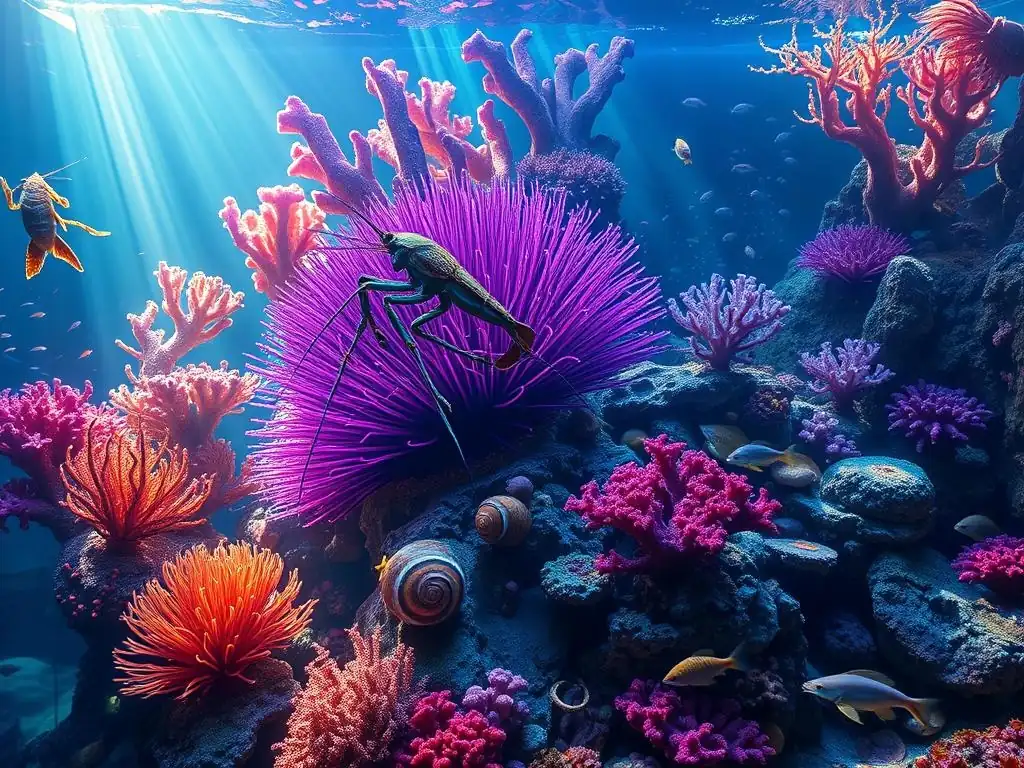
Curious about taking your reef tank to the next level? Dive into the captivating world of saltwater invertebrates, but be warned – mastering their care presents unique challenges. Are you ready to unlock the secrets to thriving corals, crustaceans, and more? Let's explore the rewarding, yet complex, aspects of saltwater invertebrate care challenges, and discover how to create a thriving ecosystem that will amaze and inspire. Read on to learn more!
- Introduction to Advanced Saltwater Invertebrate Care
- Understanding the Challenges of Advanced Saltwater Invertebrate Care
- The Rewards of Successfully Keeping Advanced Invertebrates
- Top Advanced Saltwater Invertebrate Species (and Their Specific Needs)
- Essential Equipment for Advanced Invertebrate Keeping
- Tips for Success in Advanced Invertebrate Keeping
- Conclusion: Embracing the Challenge and Enjoying the Rewards of Saltwater Invertebrate Care.
-
Frequently Asked Questions
- What makes saltwater invertebrate care particularly challenging for advanced aquarists?
- Which water chemistry parameters are most crucial for successful saltwater invertebrate keeping?
- What are some common signs that a saltwater invertebrate is stressed or unhealthy?
- How does lighting impact the health and growth of saltwater invertebrates, especially corals?
- What are some effective strategies for managing pests and diseases in a saltwater invertebrate aquarium?
- Final Reflection: Embracing the Complexity of Marine Life
- Ignite Your Reef: Master the Advanced Invertebrate Challenge!
Introduction to Advanced Saltwater Invertebrate Care
Why Keep Advanced Invertebrates in Your Saltwater Aquarium?
Keeping advanced invertebrates in a saltwater aquarium offers a profoundly rewarding experience, transforming a simple fish tank into a vibrant, dynamic underwater ecosystem. These sophisticated organisms, ranging from delicate Small Polyp Stony (SPS) corals to mesmerizing Tridacna clams, introduce an unparalleled level of beauty and biological complexity. Their diverse forms, brilliant colors, and intricate behaviors, such as the rhythmic pulsing of a Goniopora or the slow, majestic opening of a clam, create a living art piece that continuously evolves and captivates.
Beyond the aesthetic appeal, successfully maintaining advanced invertebrates presents a significant intellectual challenge and a deep sense of accomplishment. It demands a meticulous understanding of water chemistry, marine biology, and the specific needs of each species. This journey pushes aquarists to refine their skills, transforming them from basic tank keepers into true stewards of a miniature reef, fostering a deeper appreciation for the fragile balance of natural coral ecosystems.
Defining "Advanced" Invertebrates: What Makes Them Challenging?
"Advanced" invertebrates are typically defined by their narrow tolerance ranges for water parameters, highly specific environmental needs, or intricate dietary requirements, making them less forgiving than their hardier counterparts. This category often includes species such as most SPS corals (e.g., Acropora, Montipora), delicate non-photosynthetic gorgonians, and certain species of Tridacna clams. Unlike many fish or soft corals, these invertebrates cannot easily adapt to fluctuations or suboptimal conditions, often leading to rapid decline.
The primary saltwater invertebrate care challenges associated with these species stem from their inherent sensitivity. They demand ultra-stable water chemistry, precise lighting intensity and spectrum, specific water flow patterns, and often targeted feeding regimens that go beyond general tank maintenance. Their vulnerability to common tank imbalances, pests, and competition means that even minor oversight can have severe consequences, requiring a proactive and highly dedicated approach from the aquarist.
Understanding the Challenges of Advanced Saltwater Invertebrate Care
Water Parameter Sensitivity: A Critical Factor in Invertebrate Health
Water parameter sensitivity stands as one of the most critical saltwater invertebrate care challenges for advanced species. Unlike many fish that can tolerate a range of conditions, delicate invertebrates, particularly calcifying corals and clams, require incredibly stable and precise water chemistry to thrive. Even slight, prolonged deviations or rapid fluctuations in parameters can induce significant stress, leading to tissue necrosis, bleaching, or failure to grow. This demands diligent monitoring and consistent maintenance protocols.
The emphasis shifts from merely achieving target numbers to maintaining unwavering stability over time. For instance, a pH swing of 0.2 units within a day, or a sudden drop in alkalinity, can be far more damaging to an SPS coral than a consistently slightly lower (but stable) alkalinity reading. This relentless need for consistency necessitates robust equipment and a dedicated testing regimen, making it a cornerstone of successful advanced invertebrate keeping.
Maintaining Stable Alkalinity, Calcium, and Magnesium Levels
Alkalinity, calcium, and magnesium are the fundamental building blocks for all calcifying invertebrates, including corals and clams. Calcium (Ca) is essential for skeletal growth, with target levels typically ranging from 400-450 ppm. Alkalinity (KH), representing the water's buffering capacity, is crucial for pH stability and provides the carbonate ions necessary for calcification, ideally maintained between 7-9 dKH. Magnesium (Mg) plays a vital role in the calcification process by preventing calcium carbonate precipitation and facilitating the uptake of calcium and alkalinity, with optimal levels between 1250-1350 ppm.
Maintaining these parameters within their narrow optimal ranges, and more importantly, preventing daily or weekly fluctuations, is paramount. Many experienced aquarists utilize automated dosing pumps to add balanced solutions of these elements or employ calcium reactors for larger, high-demand systems. Failure to keep these parameters stable can result in stunted growth, tissue recession, or even complete loss of corals, highlighting a significant saltwater invertebrate care challenge.
The Importance of Nitrate and Phosphate Control for Delicate Invertebrates
For delicate advanced invertebrates, particularly SPS corals, stringent control of nitrate (NO3) and phosphate (PO4) is absolutely critical. While some levels are tolerable for fish and soft corals, even slightly elevated concentrations can inhibit calcification, lead to detrimental algae growth on coral skeletons, and stress the zooxanthellae within the coral tissue. Ideally, nitrates should be kept below 5-10 ppm, and phosphates at trace levels, often below 0.03-0.05 ppm, for the most sensitive species.
High nutrient levels can also encourage the growth of nuisance algae and cyanobacteria, which can directly compete with and smother slow-growing corals. To mitigate this saltwater invertebrate care challenge, advanced aquarists often employ a multi-faceted approach including robust protein skimming, regular small water changes, careful feeding practices, and the use of specialized media reactors such as GFO (granular ferric oxide) for phosphate removal or biopellets for nitrate reduction.
Specific Invertebrate Needs: Diet, Lighting, and Flow
Beyond general water parameters, advanced invertebrates often possess highly specific requirements regarding their diet, lighting, and water flow, which must be precisely met for their long-term health. A "one-size-fits-all" approach to reef tank setup often falls short when attempting to cultivate these demanding species. Understanding and tailoring these environmental factors to the unique biology of each invertebrate is crucial for success.
For instance, a coral's natural habitat dictates its need for specific light intensity and spectrum, while its feeding mechanism determines the type and frequency of food it requires. Similarly, the structure and health of sessile invertebrates are heavily influenced by the movement of water around them. Neglecting these species-specific needs is a common pitfall and a major saltwater invertebrate care challenge for aspiring advanced aquarists.
Dietary Requirements for Filter Feeders: Acropora spp.
While Acropora species are primarily photosynthetic, deriving most of their energy from the symbiotic zooxanthellae within their tissues, they are also active filter feeders that benefit significantly from supplemental nutrition. In a captive environment, where natural zooplankton levels are often insufficient, target feeding with very fine particulate foods is often necessary to achieve optimal growth rates, vibrant coloration, and robust health. This includes specialized coral foods, phytoplankton, and small zooplankton like rotifers or copepods.
Feeding typically occurs after the main lights are off, when Acropora polyps are more extended to capture prey. The challenge lies in delivering these microscopic foods effectively to the corals without excessively polluting the entire water column, which could lead to elevated nutrient levels. Regular, small feedings several times a week are often preferred over infrequent large feedings, addressing a key saltwater invertebrate care challenge in nutrient management.
Lighting Considerations for Photosynthetic Invertebrates: Small Polyp Stony (SPS) Corals
Small Polyp Stony (SPS) corals, such as Acropora and Montipora, are among the most demanding photosynthetic invertebrates regarding lighting. They require high light intensity, often measured in PAR (Photosynthetically Active Radiation), with levels frequently needing to be between 300-500 PAR, and sometimes even higher for certain species or in shallow-water placements. Beyond intensity, the correct light spectrum, particularly strong blue and violet wavelengths, is crucial for optimal zooxanthellae health and coral coloration.
Choosing the right lighting system (LEDs, T5s, or Metal Halides) and properly acclimating new corals to intense light are critical steps. Rapid increases in light intensity can cause coral bleaching, where the coral expels its zooxanthellae, leading to a loss of color and potentially death. Gradual increases in photoperiod or light intensity over several weeks are essential to mitigate this saltwater invertebrate care challenge.
Flow Requirements for Sessile Invertebrates: Sea Fans
Sessile invertebrates, particularly many species of gorgonians (often referred to as sea fans), have specific and often demanding water flow requirements. Unlike corals that may prefer laminar or turbulent flow, many gorgonians, especially those that filter feed, thrive in strong, turbulent, and varied water movement. This flow pattern is essential for several reasons: it brings food particles directly to their polyps, prevents detritus from settling on their delicate tissues, and facilitates gas exchange.
Inadequate water flow can lead to a myriad of problems for sea fans, including tissue necrosis from detritus accumulation, starvation due to insufficient food delivery, or inhibited gas exchange. Replicating the strong, chaotic flow found in their natural reef environments requires careful placement of powerheads and often multiple flow devices, making precise flow management a significant saltwater invertebrate care challenge.
Predation and Compatibility Issues in a Reef Tank
The intricate ecosystem of a reef tank, while beautiful, can also be a minefield of potential conflicts, especially when introducing advanced invertebrates. Not all marine fish or even other invertebrates are suitable tank mates, and careful consideration of compatibility is paramount to prevent stress, injury, or death to delicate species. Predation and allelopathy (chemical warfare) are significant saltwater invertebrate care challenges that must be actively managed.
A seemingly peaceful fish might develop a taste for coral polyps, or a new invertebrate addition could outcompete or sting established residents. Understanding the natural behaviors and aggression levels of each species before introduction is crucial. This proactive approach minimizes the risk of costly losses and maintains the harmonious balance of the reef environment.
Identifying Potential Predators: Fish and Invertebrates
A key saltwater invertebrate care challenge is identifying and avoiding potential predators that can decimate advanced invertebrate populations. Certain fish species, while beautiful, are known coral or clam nippers. Examples include some angelfish (e.g., Pomacanthus species, Holacanthus species), certain butterflyfish (e.g., Chaetodon species), and triggerfish, which can quickly destroy corals or clams. Even seemingly docile fish like tangs can occasionally nip at corals if not well-fed or if they lack sufficient algae to graze on.
Invertebrate predators also pose a threat. Specific types of crabs, such as gorilla crabs ( Eriphia squamosa), or certain predatory snails like Pyramid Snails ( Pyramidellidae family), are notorious for preying on corals and clams, respectively. Thorough inspection and quarantine of all new additions, both fish and invertebrates, are vital to prevent the introduction of these destructive organisms.
Ensuring Compatibility Between Different Invertebrate Species
Compatibility between different invertebrate species, particularly corals, is a complex saltwater invertebrate care challenge. Many corals employ chemical warfare (allelopathy) or stinging nematocysts to defend their territory against encroaching neighbors. For example, aggressive Large Polyp Stony (LPS) corals like Euphyllia species can extend long sweeper tentacles capable of stinging and damaging nearby SPS corals or other LPS.
Proper spacing is essential, ensuring that each coral has ample room to grow without coming into contact with a potentially aggressive neighbor. Understanding the growth habits and aggression levels of each species is crucial for strategic placement within the reef aquascape. Additionally, maintaining pristine water quality can help mitigate the effects of allelopathy by diluting harmful chemicals released by corals.
Disease Prevention and Treatment in Saltwater Invertebrates
Disease prevention and treatment in saltwater invertebrates present unique saltwater invertebrate care challenges due to the limited diagnostic tools and treatment options available compared to fish. Invertebrates are often more susceptible to stress-induced ailments, and once a disease takes hold, it can progress rapidly, leading to significant tissue loss or complete mortality. Proactive measures are therefore far more effective than reactive treatments.
Many invertebrate ailments are not caused by specific pathogens but rather by poor water quality, inadequate flow, incorrect lighting, or nutrient deficiencies. This means that addressing underlying environmental stressors is often the primary form of "treatment." Recognizing the early warning signs of distress is paramount, as prompt intervention can often reverse the decline before it becomes irreversible.
Recognizing Common Invertebrate Diseases: Coral Bleaching
Coral bleaching is one of the most widely recognized and devastating "diseases" in both natural reefs and home aquariums. It occurs when corals expel their symbiotic zooxanthellae, often in response to environmental stressors such as rapid temperature fluctuations (e.g., above 84°F or below 72°F), excessive light intensity, or prolonged poor water quality (high nitrates/phosphates). The coral appears white or pale as it loses its color-giving algae, and if conditions are not corrected, it will eventually starve and die.
Other common issues include Brown Jelly Disease, a highly contagious and rapidly progressing bacterial infection that manifests as a brown, slimy coating on the coral tissue, leading to rapid tissue necrosis. Tissue recession, where coral tissue slowly pulls away from the skeleton, can be caused by various factors including pests, starvation, or ongoing stress. Early detection of these symptoms is crucial for any chance of recovery, highlighting a significant saltwater invertebrate care challenge.
Quarantine Procedures for New Invertebrates: Minimizing Risk
Quarantine procedures are absolutely critical for minimizing the risk of introducing pests, parasites, and diseases into an established advanced invertebrate reef tank. A dedicated quarantine tank (QT) allows new additions to be observed in isolation for several weeks (typically 4-6 weeks) before being introduced to the main display. This period allows time for any latent issues to manifest and for proactive treatment without endangering the entire system.
During quarantine, new corals should be dipped in an appropriate coral dip solution (e.g., iodine-based dips or commercial pest control solutions) to remove external parasites like flatworms, predatory snails ( Montipora eating nudibranchs, Acropora eating flatworms), or other unwanted hitchhikers. Regular observation in the QT allows aquarists to identify any signs of stress, disease, or pests that might otherwise go unnoticed, preventing a major saltwater invertebrate care challenge from entering the main display.
The Rewards of Successfully Keeping Advanced Invertebrates
Enhanced Reef Tank Aesthetics: Beauty and Diversity
The most immediate and profound reward of successfully keeping advanced invertebrates is the spectacular enhancement of the reef tank's aesthetics. A thriving tank filled with healthy SPS corals, vibrant LPS, and majestic clams transforms into a breathtaking underwater landscape, brimming with an unparalleled diversity of shapes, textures, and colors. The intricate branching structures of Acropora, the large fleshy polyps of Euphyllia, and the iridescent mantle of a Tridacna clam create a dynamic, living artwork that constantly changes and captivates.
This rich biodiversity not only makes the aquarium visually stunning but also provides endless opportunities for observation and appreciation. The subtle shifts in coral coloration, the extension of polyps, and the symbiotic relationships between various organisms contribute to a sense of wonder and bring a piece of the natural reef's grandeur directly into one's home.
Understanding Complex Reef Ecosystems Through Observation
Successfully maintaining advanced invertebrates offers a unique window into the complex and delicate balance of natural reef ecosystems. Through daily observation, aquarists gain a deeper understanding of the intricate biological processes at play: the symbiotic relationship between corals and zooxanthellae, the calcification process, nutrient cycling, and the subtle interactions between different species. This hands-on experience provides invaluable insight into the environmental factors that govern reef health.
The journey of troubleshooting issues, adjusting parameters, and witnessing the recovery and growth of these sensitive organisms fosters a profound appreciation for their resilience and fragility. It transforms the aquarist from a passive observer into an active participant in a miniature ecosystem, deepening their knowledge of marine biology and the interconnectedness of life on a coral reef.
Contributing to Reef Conservation Through Responsible Aquariums
Responsible advanced invertebrate keeping can play a meaningful role in broader reef conservation efforts. By mastering the care of these sensitive species, aquarists contribute to maintaining healthy captive populations, which can reduce the demand for wild-caught specimens and support sustainable aquaculture initiatives. Many advanced corals are now propagated through fragging (fragmentation) by hobbyists and commercial facilities, easing pressure on natural reefs.
Furthermore, successful reef aquariums serve as powerful educational tools, raising awareness about the beauty and vulnerability of coral reefs. They inspire others to learn about marine conservation and the impacts of climate change and pollution on these vital ecosystems. Through careful stewardship, advanced aquarists demonstrate that it is possible to cultivate and appreciate these complex creatures responsibly, fostering a greater collective commitment to protecting our oceans.
Top Advanced Saltwater Invertebrate Species (and Their Specific Needs)
SPS Corals: The Pinnacle of Reef Keeping
Small Polyp Stony (SPS) corals are widely considered the pinnacle of reef keeping due to their demanding care requirements and spectacular results. Characterized by their small polyps and hard, calcified skeletons, SPS corals include iconic genera such as Acropora, Montipora, Seriatopora, and Stylophora. They exhibit a vast array of growth forms, from delicate branching structures to plating and encrusting colonies, and come in an astonishing spectrum of vibrant colors, often driven by specific lighting and water parameters.
Successfully keeping SPS corals signifies a high level of mastery in saltwater aquarism. They demand exceptionally stable water chemistry, intense and appropriate lighting, and strong, turbulent water flow to thrive. Their rapid growth rates, when conditions are optimal, and their ability to form dense, colorful colonies make them highly coveted by experienced aquarists, despite the significant saltwater invertebrate care challenges they present.
Acropora spp. Care: Mastering Stability and Lighting
Acropora species are the quintessential SPS corals, known for their diverse branching, plating, and bushy forms, and their incredible range of vibrant colors. They are extremely sensitive to fluctuations and require pristine water quality. For optimal growth and coloration, Acropora demand high and stable alkalinity (8.0-8.5 dKH), calcium (420-450 ppm), and magnesium (1300-1350 ppm). Any significant deviation can lead to tissue recession or "burnt tips."
Lighting is another critical factor; Acropora thrive under very high PAR levels, often ranging from 400-600 PAR, with a strong emphasis on blue spectrum light. Intense, turbulent, and random water flow is also essential to prevent detritus buildup and facilitate nutrient uptake. Maintaining these precise conditions consistently is the primary saltwater invertebrate care challenge for Acropora, but the reward is stunning growth and color.
Montipora spp. Care: Balancing Flow and Nutrients
Montipora species are another popular group of SPS corals, often considered slightly less demanding than Acropora, making them a good stepping stone for aquarists entering advanced SPS keeping. They exhibit various growth forms, including plating ( Montipora capricornis), encrusting ( Montipora digitata), and branching. While still requiring excellent water quality, their tolerance for slight variations in parameters can be a bit wider than Acropora.
Montipora prefer moderate to high light levels and strong, turbulent water flow, which is crucial to prevent detritus from settling on their flat or encrusting surfaces. They are particularly sensitive to elevated nutrient levels (nitrates and phosphates), which can cause them to "brown out" and lose their vibrant coloration. Consistent nutrient export methods are key to maintaining their brilliant hues, addressing a common saltwater invertebrate care challenge.
LPS Corals: Adding Color and Movement
Large Polyp Stony (LPS) corals are highly sought after for their large, fleshy polyps, vibrant fluorescent colors, and often mesmerizing movement in the current. Genera like Euphyllia (Torch, Hammer, Frogspawn), Acanthastrea, Scolymia, and Blastomussa fall into this category. While generally less demanding than SPS corals in terms of water flow and light intensity, they still require stable water parameters and often benefit from direct feeding.
LPS corals contribute significantly to the aesthetic diversity of a reef tank, offering a stark contrast to the finer textures of SPS. Their predatory nature, with many species extending feeding tentacles at night, adds an engaging dynamic to the aquarium. However, their often aggressive stinging capabilities necessitate careful placement to prevent damage to neighboring corals, presenting a unique saltwater invertebrate care challenge.
Acanthastrea lordhowensis Care: Feeding and Placement Strategies
Acanthastrea lordhowensis, commonly known as "Acans," are highly prized LPS corals due to their vibrant, often multi-colored patterns and relatively compact growth. While they possess symbiotic zooxanthellae, they are voracious eaters and benefit immensely from regular target feeding. Offering meaty foods such as mysis shrimp, chopped krill, or specialized coral pellets a few times a week, ideally after the lights are off, will promote rapid growth and intense coloration.
Placement is crucial for Acanthastrea. They prefer moderate light and moderate, indirect water flow. More importantly, they are semi-aggressive and can extend mesenterial filaments to digest nearby corals if placed too close. Allowing ample space (several inches) around them, especially from other LPS or soft corals, is essential to prevent chemical warfare and stinging, mitigating a significant saltwater invertebrate care challenge.
Scolymia australis Care: Addressing Fading and Recession
Scolymia australis, or "Scoly," are single-polyp LPS corals highly coveted for their stunning, often kaleidoscopic coloration and large, rounded polyps. Their care is less about high demands and more about finding the "sweet spot" for their specific needs, which can be a delicate balance. They are particularly sensitive to excessive light and strong, direct water flow, which can cause their vibrant colors to fade or, worse, lead to tissue recession.
To prevent fading or recession, Scolymia should be placed in areas of low to moderate light (e.g., 50-150 PAR) and gentle, indirect water flow. They also benefit from target feeding of meaty foods like fine mysis shrimp or copepods a few times a week. Consistent water parameters are important, but avoiding sudden changes and providing a stable, low-stress environment is key to maintaining their health and brilliant hues, addressing a subtle saltwater invertebrate care challenge.
Clams: Filter Feeders with Unique Requirements
Tridacna clams are magnificent filter feeders that add significant beauty and biological function to an advanced reef tank. These bivalves host symbiotic zooxanthellae in their mantle tissue, much like corals, deriving a substantial portion of their energy from light. Species like Tridacna crocea (crocea clam), Tridacna maxima (maxima clam), and Tridacna derasa (derasa clam) are popular choices, each with slight variations in size and care.
Their unique requirements, particularly for intense lighting and stable water chemistry, make them an advanced invertebrate to keep. They are also vulnerable to specific pests and predators, demanding careful attention to placement and tank inhabitants. Successfully keeping Tridacna clams is a testament to an aquarist's ability to maintain a pristine and well-balanced reef environment.
Tridacna spp. Clam Care: Lighting, Placement, and Shell Health
Tridacna clams, especially T. crocea and T. maxima, are extremely light-demanding, requiring high PAR levels often comparable to SPS corals (e.g., 300-500 PAR) to thrive, as their zooxanthellae provide most of their nutrition. They should be placed high in the tank or directly under intense lighting, ensuring their entire mantle is exposed. Stable alkalinity (8-9 dKH) and calcium (420-450 ppm) are crucial for robust shell growth and overall health.
Proper placement on a stable rock or in a depression in the sand is vital, allowing their byssal gland to attach securely. Failure to attach can cause stress and inhibit feeding. Monitoring for pests like Pyramid Snails, which prey on clams, is essential. Any signs of the clam not opening fully, "pinching" its mantle, or receding tissue are critical warning signs that need immediate investigation, highlighting a specific saltwater invertebrate care challenge.
Gorgonians: Elegant Filter Feeders
Gorgonians, often referred to as sea fans or sea whips, are elegant and diverse members of the soft coral family (though some are stony). They come in a wide array of colors and growth forms, from branching trees to delicate fans. Gorgonians are primarily filter feeders, extending numerous small polyps to capture microscopic food particles from the water column. Their care requirements vary significantly depending on whether they are photosynthetic or non-photosynthetic.
All gorgonians, however, share a common need for strong, turbulent, and often alternating water flow. This vigorous movement prevents detritus from settling on their delicate branches, ensures efficient gas exchange, and constantly brings new food particles to their polyps. Their graceful sway in the current adds a unique aesthetic and dynamic movement to an advanced reef tank.
Photosynthetic Gorgonian Care: Light and Flow Requirements
Photosynthetic gorgonians, such as species from the genera Plexaura, Muriceopsis, or Briareum, contain symbiotic zooxanthellae and derive energy from light, similar to stony corals. They generally require moderate to high light intensity, comparable to many LPS corals, but are less demanding than SPS. A PAR range of 100-250 is often suitable, depending on the species.
Crucially, all gorgonians, including photosynthetic ones, demand strong, turbulent, and varied water flow. This high flow is essential for keeping their polyps extended, preventing detritus from accumulating on their branches, and facilitating gas exchange. Inadequate flow can lead to tissue necrosis and starvation. Acclimation to new lighting and flow conditions should be gradual to prevent stress, addressing a critical saltwater invertebrate care challenge.
Non-Photosynthetic Gorgonian Care: Targeted Feeding Strategies
Non-photosynthetic gorgonians (NPS), such as Diodogorgia, Swiftia, or many Muricella species, are among the most challenging invertebrates to keep in a home aquarium. They completely lack symbiotic zooxanthellae and rely entirely on external feeding for their energy and nutrition. This means they must be fed frequently and precisely, often multiple times a day, with a varied diet of very fine particulate foods.
Their diet must consist of microscopic planktonic foods like phytoplankton, zooplankton (e.g., rotifers, copepods nauplii), marine snow, and specialized powdered coral foods. This constant feeding requirement makes maintaining water quality extremely difficult and poses a major saltwater invertebrate care challenge. Automated dosing of liquid foods or manual target feeding several times daily is often necessary, requiring significant dedication and advanced nutrient management techniques.
Essential Equipment for Advanced Invertebrate Keeping
High-Quality Lighting Systems: LEDs, Metal Halides, and T5s
For advanced invertebrate keeping, particularly with photosynthetic corals like SPS and Tridacna clams, a high-quality lighting system is paramount. The choice often comes down to three main technologies: LEDs, Metal Halides, and T5 fluorescent fixtures. LEDs offer unparalleled control over spectrum and intensity, allowing aquarists to fine-tune light for specific coral coloration and growth, and are energy-efficient. Modern LED fixtures can provide the intense PAR levels required by the most demanding corals.
Metal Halides, while generating significant heat and consuming more power, provide intense, broad-spectrum light that many SPS corals thrive under, often leading to excellent growth and "pop" in colors. T5 fixtures, used in conjunction with reflectors, offer excellent light spread and uniform PAR distribution across the tank, which can be beneficial for large SPS colonies. Often, a hybrid approach combining T5s with LEDs is favored to leverage the strengths of both, ensuring optimal light for a diverse range of advanced invertebrates.
Protein Skimmers: Removing Organic Waste and Improving Water Quality
A robust and efficiently operating protein skimmer is an absolute non-negotiable piece of equipment for any advanced reef tank. Protein skimmers work by removing dissolved organic compounds (DOCs) from the water before they break down into nitrates and phosphates. These DOCs, if left unchecked, can quickly elevate nutrient levels, leading to nuisance algae outbreaks and inhibiting the health and growth of delicate corals.
For advanced invertebrate systems, particularly those with high bioloads or demanding SPS corals, it is often recommended to "oversize" the skimmer (i.e., use one rated for a larger tank volume than your actual tank). A high-quality skimmer effectively extracts waste, significantly contributes to maintaining the ultra-low nutrient environment essential for sensitive species, and helps reduce the frequency of large water changes, mitigating a major saltwater invertebrate care challenge.
Reactors: Calcium, Nitrate, and Phosphate Control
Reactors are specialized pieces of equipment that provide precise control over critical water parameters, significantly easing the saltwater invertebrate care challenges associated with maintaining stability. Calcium reactors are indispensable for large, heavily stocked SPS tanks, as they automate the replenishment of calcium and alkalinity by dissolving a calcium carbonate media with CO2. This method provides a consistent, balanced supply of these vital elements, preventing the daily fluctuations that can stress corals.
Similarly, media reactors are used to house various chemical filtration media. GFO (granular ferric oxide) reactors are highly effective at removing phosphates, while biopellet reactors promote the growth of beneficial bacteria that consume nitrates and phosphates. These reactors offer a highly efficient and controlled way to maintain the ultra-low nutrient environment necessary for the health and vibrant coloration of sensitive advanced invertebrates.
Dosing Pumps: Maintaining Stable Water Parameters
Dosing pumps are invaluable tools for advanced invertebrate keeping, automating the precise addition of essential elements like alkalinity, calcium, magnesium, and trace elements to the aquarium water. In a heavily stocked reef tank with calcifying corals and clams, these elements are rapidly depleted, and manual dosing can lead to inconsistent levels and daily parameter swings.
By programming dosing pumps to deliver small, precise amounts of solutions throughout the day, aquarists can maintain incredibly stable water parameters, mimicking the consistent conditions of a natural reef. This stability is absolutely critical for the long-term health and growth of sensitive advanced invertebrates, preventing the stress and decline often associated with fluctuating chemistry, thereby simplifying a significant saltwater invertebrate care challenge.
Controllers: Automating and Monitoring Critical Parameters
Aquarium controllers represent the pinnacle of automation and monitoring for advanced reef systems, providing peace of mind and significantly reducing the manual burden of maintenance. These sophisticated devices act as the central nervous system of the aquarium, continuously monitoring critical parameters such as temperature, pH, salinity, and ORP (Oxidation-Reduction Potential). They can also control various equipment, including heaters, chillers, protein skimmers, dosing pumps, and lighting.
Many controllers offer features like automatic top-off (ATO), leak detection, and email/SMS alerts for out-of-range parameters, allowing aquarists to react quickly to potential issues, even when away from home. By automating routine tasks and providing real-time data, controllers ensure a highly stable and optimized environment, making the complex saltwater invertebrate care challenges much more manageable and increasing the likelihood of long-term success.
Tips for Success in Advanced Invertebrate Keeping
Gradual Acclimation: Minimizing Stress
One of the most critical steps for success in advanced invertebrate keeping is the meticulous and gradual acclimation of all new additions. Rapid changes in salinity, temperature, or lighting can induce severe stress, leading to tissue recession, bleaching, or death, particularly in sensitive SPS corals and Tridacna clams. Drip acclimation, slowly introducing tank water to the bag over 30-60 minutes, is essential for matching salinity and temperature.
For photosynthetic corals, light acclimation is equally vital. New corals should initially be placed in lower light areas of the tank or under reduced intensity for several days to weeks, gradually moving them to their final, higher-light positions. This slow adjustment allows their zooxanthellae to adapt to the new light levels without being shocked, preventing common saltwater invertebrate care challenges like bleaching.
Regular Water Testing: Monitoring Parameters Closely
Consistent and accurate water testing is the backbone of successful advanced invertebrate keeping. Parameters such as alkalinity, calcium, magnesium, pH, salinity, nitrates, and phosphates must be monitored regularly, often daily or several times a week for alkalinity and calcium in high-demand tanks. Using reliable, high-quality test kits or automated testing systems is crucial for obtaining precise data.
Beyond just getting a reading, it's essential to track these parameters over time to identify trends and make proactive adjustments before issues arise. For instance, if alkalinity consistently drops, it indicates a need to increase dosing. This vigilant monitoring allows aquarists to maintain the ultra-stable environment that delicate invertebrates demand, directly addressing a core saltwater invertebrate care challenge.
Consistent Feeding: Providing Essential Nutrients
For many advanced invertebrates, particularly LPS corals, non-photosynthetic gorgonians, and even SPS corals, consistent and appropriate feeding is vital for their long-term health, growth, and vibrant coloration. While photosynthetic species derive energy from light, supplemental feeding provides essential nutrients, amino acids, and fatty acids that may be lacking in a captive environment.
The key is to provide the right type of food (e.g., fine zooplankton for Acropora, meaty foods for Acanthastrea) and to target feed effectively, often after the main lights are off when polyps are extended. The saltwater invertebrate care challenge lies in balancing sufficient feeding with preventing overfeeding, which can lead to elevated nutrient levels and water quality issues. Small, frequent feedings are often more beneficial than large, infrequent ones.
Observational Skills: Recognizing Early Warning Signs
Developing keen observational skills is perhaps one of the most underrated yet crucial tips for success in advanced invertebrate keeping. Daily, diligent observation of your invertebrates can provide early warning signs of stress, disease, or pest infestation long before the problem becomes critical. Look for subtle changes in behavior, color, polyp extension, tissue integrity, or growth patterns.
For example, an SPS coral that is not fully extending its polyps, a clam that is not fully opening, or an LPS coral that shows signs of tissue recession are all indicators that something is amiss. Early detection allows for prompt investigation and intervention, often preventing minor issues from escalating into irreversible damage. This proactive approach significantly reduces the impact of unforeseen saltwater invertebrate care challenges.
Continuous Learning: Staying Updated on Best Practices
The field of reef keeping is constantly evolving, with new research, technologies, and best practices emerging regularly. Successful advanced aquarists are perpetual learners, continuously seeking out new information, engaging with experienced hobbyists, and staying updated on the latest advancements. This commitment to continuous learning is vital for navigating the complex and dynamic nature of advanced invertebrate care.
Reading scientific articles, participating in online forums, attending local club meetings, and visiting reputable fish stores can all contribute to expanding one's knowledge base. Embracing this mindset ensures that aquarists are equipped with the most current information and techniques, allowing them to adapt their strategies, troubleshoot effectively, and ultimately overcome the inevitable saltwater invertebrate care challenges that arise, leading to greater long-term success.
Conclusion: Embracing the Challenge and Enjoying the Rewards of Saltwater Invertebrate Care.
Frequently Asked Questions
What makes saltwater invertebrate care particularly challenging for advanced aquarists?
Saltwater invertebrate care presents challenges due to the stringent water parameters required, the sensitivity of invertebrates to changes, and the need for specific lighting and feeding regimens.
Which water chemistry parameters are most crucial for successful saltwater invertebrate keeping?
Maintaining stable alkalinity, calcium, and magnesium levels is critical. Consistent salinity and pH are also vital for invertebrate health and survival.
What are some common signs that a saltwater invertebrate is stressed or unhealthy?
Signs of stress include tissue recession, loss of color, and abnormal behavior such as retracted polyps or sluggish movement.
How does lighting impact the health and growth of saltwater invertebrates, especially corals?
Many invertebrates, particularly corals, require specific lighting to support photosynthesis by their symbiotic algae. Inadequate or incorrect lighting can lead to bleaching and eventual death.
What are some effective strategies for managing pests and diseases in a saltwater invertebrate aquarium?
Quarantine new additions, maintain excellent water quality, and use reef-safe treatments cautiously. Early detection and intervention are crucial for preventing outbreaks.
Final Reflection: Embracing the Complexity of Marine Life
The journey into advanced saltwater invertebrate care, as we've explored, is not without its hurdles. The delicate balance required to maintain a thriving ecosystem demands dedication, knowledge, and a willingness to adapt. But the rewards, the vibrant displays of life and the profound understanding of these complex creatures, are immeasurable and deeply enriching.
This exploration of saltwater invertebrate care challenges has underscored the ongoing need for responsible and informed practices within the aquarist community. The health and well-being of these animals depend on our commitment to learning and adapting. In the end, we will conserve only what we love; we will love only what we understand; and we will understand only what we are taught.
- Baba Dioum's words resonate deeply, reminding us that education and empathy are crucial for the preservation of marine life, even within our own aquariums.
As you consider the information presented, I invite you to reflect on your own role in the saltwater aquarium hobby. Are you prepared to embrace the challenges and commit to providing the best possible care for these fascinating creatures? Let the knowledge gained here inspire you to continue learning, to share your experiences, and to contribute to a future where the beauty and complexity of marine invertebrates are cherished and protected.
Ignite Your Reef: Master the Advanced Invertebrate Challenge!
Thank you for diving deep into the world of advanced invertebrates! We hope you've gained a newfound appreciation for the delicate beauty and unique demands of these captivating creatures. Ready to elevate your aquarium game?
Here's how to take the next step:
- Commit to meticulous research! Before introducing any new invertebrate, dedicate at least one week to studying its specific needs, including diet, water parameters, and compatible tank mates.
- Share your experiences! Document your journey with photos and observations on our community forum at Aquarium Mastery. Your insights could be invaluable to other aquarists.
- Consider a less common invertebrate, such as a Feather Duster Worm, or a Flame Scallop to diversify your reef and test your skills.
What fascinating invertebrate are you most inspired to care for next, and what unique challenge does it present to your aquarium setup?