
Beyond Algae: The Diverse Roles of Snails in a Saltwater Ecosystem

Welcome to Aquarium Mastery!
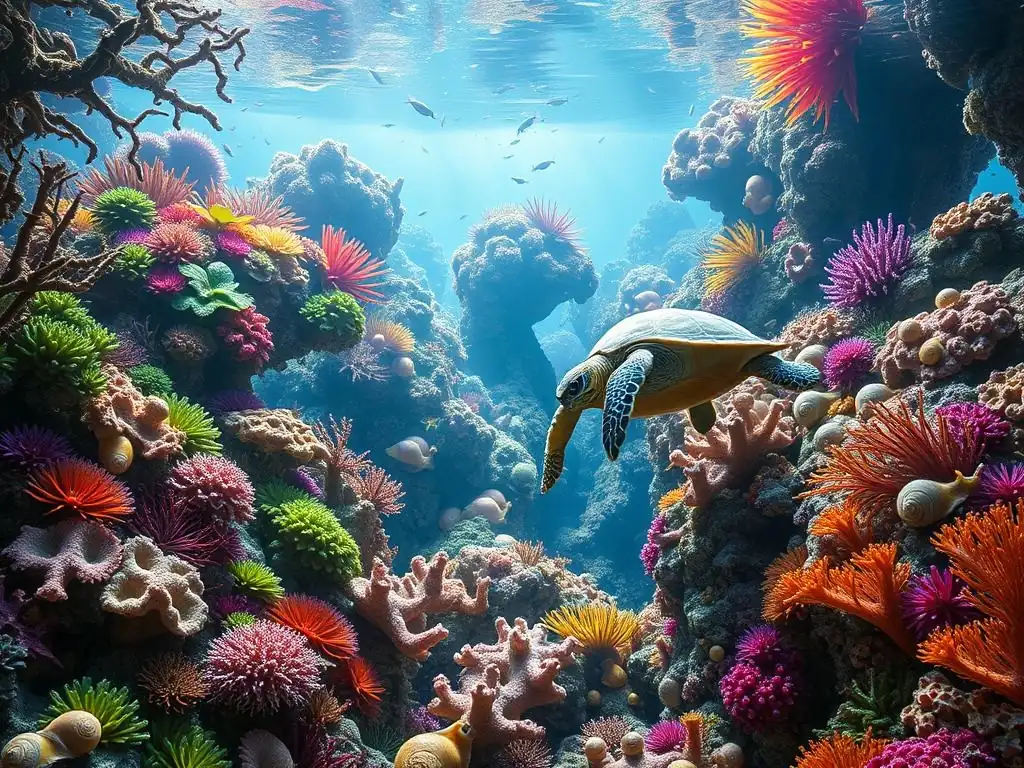
Ever wondered how those tiny, unassuming snails could be secret superheroes in your saltwater aquarium? Dive in and discover the fascinating world of Saltwater Snail Ecosystem Benefits. It's more than just algae control; prepare to unravel the surprisingly diverse and crucial roles these little guys play in creating a thriving, balanced marine environment. Intrigued? Let's explore!
- Introduction to Saltwater Snails and Their Ecosystem Importance
- Algae Control and Grazing: The Primary Role of Snails
- Detritus Removal: Snails as Decomposers in Marine Environments
- Aeration and Substrate Health: Indirect Benefits of Snail Activity
- Predation and Food Web Dynamics: Snails as a Food Source
- Bioturbation and Nutrient Cycling: Snails and the Nitrogen Cycle
- Species Spotlight: Examples of Saltwater Snails and Their Specific Ecosystem Roles
- Maintaining a Healthy Snail Population in Your Reef Tank
- Conclusion: Maximizing Saltwater Snail Ecosystem Benefits in Your Reef Tank
-
Frequently Asked Questions
- What are the primary benefits of introducing snails to a saltwater aquarium ecosystem?
- How do different types of saltwater snails contribute to the ecosystem differently?
- What factors should I consider when choosing snails to maximize their ecosystem benefits in my specific saltwater aquarium?
- Can snails help stabilize the water chemistry in a saltwater aquarium?
- What are some potential drawbacks to adding snails to a saltwater aquarium, and how can they be mitigated to ensure the ecosystem benefits outweigh the risks?
- Final Reflection: Unveiling the Silent Guardians
- Dive Deeper: Transform Your Aquarium Today!
Introduction to Saltwater Snails and Their Ecosystem Importance
The Unsung Heroes of the Reef Tank: A Brief Overview
Saltwater snails are often perceived solely as diligent algae eaters, yet their contributions to a thriving marine aquarium extend far beyond simple grazing. These fascinating invertebrates encompass an incredible diversity of species, each playing specialized roles that are fundamental to the stability and health of a reef tank. From the microscopic processes occurring within the substrate to the visible eradication of nuisance organisms, snails are integral components of a balanced marine ecosystem.
Their collective actions create a more self-sustaining environment, significantly reducing the workload for aquarists and mitigating common tank problems. Without these often-overlooked invertebrates, many reef tanks would struggle with nutrient imbalances, persistent algae issues, and unhealthy substrate conditions, underscoring their quiet but profound impact on the overall vitality of the aquarium.
Understanding the Saltwater Snail Ecosystem Benefits
The multifaceted saltwater snail ecosystem benefits are crucial for maintaining a pristine and biologically active reef tank. These benefits encompass a broad spectrum, including the primary role of algae control, efficient detritus removal, vital substrate aeration, and indirect contributions to nutrient cycling and the overall food web dynamics. Each of these functions helps create a resilient and balanced biological system within the confines of the aquarium.
By actively participating in these essential processes, snails contribute to a healthier, more stable reef environment. Their continuous activity helps prevent the accumulation of harmful organic waste, maintains optimal water parameters, and fosters the growth of beneficial microbial communities, thereby reducing the need for constant manual intervention and supporting the long-term success of the marine aquarium.
Algae Control and Grazing: The Primary Role of Snails
Algae Consumption Habits of Different Saltwater Snail Species
Different species of saltwater snails exhibit distinct preferences and efficiencies in their algae consumption habits, making a diverse clean-up crew highly advantageous. For instance, species like Turbo snails are renowned for their voracious appetite for film algae and certain types of hair algae that grow on rocks and glass, often clearing several square inches of surface area daily. In contrast, smaller Nerite snails excel at grazing diatoms and green spot algae from smooth surfaces like aquarium glass, leaving characteristic trails as they work.
Other species, such as Cerith snails, are more generalist grazers, consuming various algae types found on both rockwork and the sand bed, often ingesting detritus along with the algae. This specialization means that a mix of species can provide comprehensive algae control across all tank surfaces, addressing different types of algal growth that might otherwise proliferate. For example, a single large Turbo snail can consume an amount of algae equivalent to its body weight over several days, making them highly effective.
Selecting the Right Snails for Effective Algae Control in Your Reef Tank
Effective algae control hinges on selecting the appropriate snail species for your specific tank size and algae challenges. For a general clean-up crew in a 50-gallon reef tank, a common recommendation might include 5-7 Turbo snails for heavy film algae, 10-15 Cerith snails for detritus-bound algae and general grazing, and 5-8 Nerite snails for glass and hardscape surfaces. This diversity ensures that various types of algae are targeted across different tank zones.
It is crucial to consider the compatibility of snails with other tank inhabitants, as some fish or crabs may prey on snails. Overstocking should also be avoided, as it can lead to starvation once the primary algae sources are depleted. A general guideline for light algae loads is often one snail per 1-2 gallons, but this can be adjusted based on the individual tank's needs and the observed algae growth, maximizing the saltwater snail ecosystem benefits for algae management.
Managing Algae Blooms with a Saltwater Snail Clean-Up Crew
While a robust snail clean-up crew is excellent for preventing and managing routine algae growth, they are not a panacea for severe algae blooms. Algae blooms, such as rampant diatom or hair algae outbreaks, typically indicate underlying nutrient imbalances (e.g., high nitrates or phosphates) that snails alone cannot fully resolve. However, snails can significantly aid in the physical removal of the bloom while the aquarist addresses the root cause.
For instance, in a newly set up tank experiencing a common diatom bloom that covers approximately 20-30% of surfaces, introducing 3-5 Nerite snails per 10 gallons can visibly reduce the diatoms within 1-2 weeks. Similarly, a moderate hair algae outbreak might be significantly curtailed by a group of Turbo snails, which can clear up to 50% of the affected area over several days. This demonstrates how snails act as an effective biological tool, supporting efforts to restore water quality and maintain the saltwater snail ecosystem benefits.
Detritus Removal: Snails as Decomposers in Marine Environments
Detritivorous Snails: Scavengers of Organic Waste
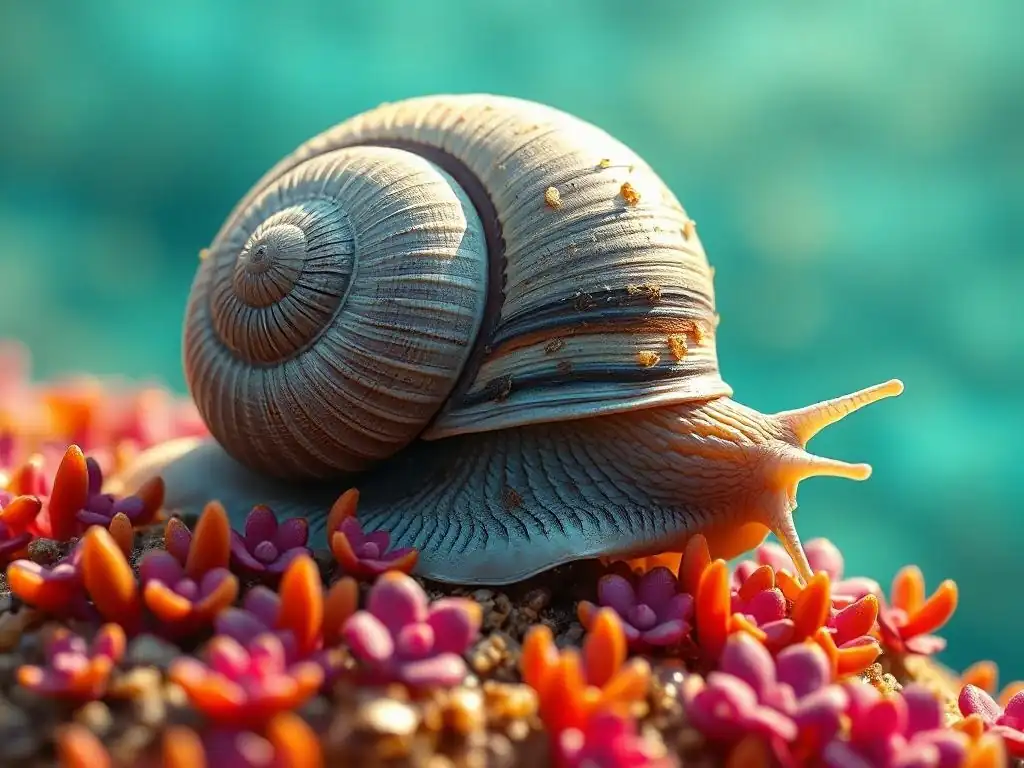
Detritivorous snails are invaluable scavengers in the marine environment, specializing in the consumption of decaying organic matter, uneaten food, and fish waste. Species like Nassarius snails are prime examples, rapidly emerging from the sand bed when food is present to consume any organic debris before it can break down and pollute the water. Cerith snails also play a significant role, actively grazing on detritus that accumulates on rockwork and within the substrate.
By consuming this organic waste, these snails prevent its decomposition into harmful compounds like ammonia and nitrites, which can elevate nitrate levels and fuel nuisance algae growth. A healthy population of detritivorous snails can effectively reduce the overall organic load in an aquarium by an estimated 20-30%, contributing to cleaner water and a more stable environment.
How Snails Contribute to a Healthier Reef Tank Environment
The continuous consumption of detritus by snails directly contributes to a healthier reef tank environment by mitigating the build-up of pollutants. When organic waste is left to decompose, it releases nutrients that can lead to elevated nitrate and phosphate levels, fostering aggressive algae growth and stressing sensitive corals and fish. Snails act as a natural clean-up crew, converting this waste into their own biomass, which is then processed through the tank's biological filtration.
For example, in a moderately fed 75-gallon tank, without sufficient detritivores, nitrate levels might steadily climb from a desirable 5-10 ppm to over 20-30 ppm within a week. Conversely, a tank with a robust population of detritivorous snails (e.g., 10-15 Nassarius snails and 20-30 Cerith snails) can help maintain nitrate levels below 15 ppm, even with occasional overfeeding, showcasing a significant saltwater snail ecosystem benefit.
Preventing Detritus Build-Up with a Balanced Snail Population
Preventing detritus build-up is a key aspect of maintaining long-term water quality, and a balanced snail population is instrumental in this effort. For a typical reef tank, a general guideline for detritivores might be 1 Nassarius snail per 5-10 gallons and 1-2 Cerith snails per gallon, depending on the bioload and feeding habits. This density ensures that organic waste is efficiently consumed before it can settle and decompose.
While snails are highly effective, they should be part of a comprehensive maintenance strategy that also includes adequate water flow, regular water changes, and careful feeding practices. However, the continuous activity of these snails can reduce the visible accumulation of detritus on the substrate by up to 70-80% in well-circulated areas, significantly diminishing the potential for nutrient spikes and promoting a cleaner aesthetic.
Aeration and Substrate Health: Indirect Benefits of Snail Activity
Snails' Role in Turning Over Substrate and Preventing Anaerobic Zones
Many marine snails, particularly sand-dwelling species like Nassarius snails, are expert bioturbators. Bioturbation refers to the disturbance of sediment by living organisms, and in an aquarium, this means snails constantly burrowing and moving through the sand bed. This activity is crucial for preventing the formation of anaerobic (oxygen-depleted) zones within the substrate.
Anaerobic pockets can lead to the production of toxic hydrogen sulfide gas, which is highly detrimental to marine life. By continually turning over the substrate, snails introduce oxygen into deeper layers of the sand bed, preventing these dangerous conditions. Research suggests that active bioturbation can increase oxygen penetration into the top 2-3 cm of sand by as much as 50%, fostering a healthier environment for beneficial bacteria.
Enhancing Oxygen Levels Through Snail Movement
While snails do not directly oxygenate the water like an air pump or powerhead, their constant movement across the substrate and rockwork contributes indirectly to overall oxygen levels. As they graze and burrow, they gently stir the water at the substrate-water interface, facilitating gas exchange. This subtle but continuous agitation helps to prevent stagnant areas where oxygen might become depleted.
In a tank with good flow, the additional, localized water movement created by a thriving snail population (e.g., 20-30 snails in a 100-gallon tank) can contribute to a more uniform distribution of dissolved oxygen throughout the water column and within the upper layers of the sand bed. This enhances the overall health of the ecosystem and showcases another facet of saltwater snail ecosystem benefits.
Promoting Beneficial Bacteria Growth in Reef Tanks
The aeration provided by snail activity is vital for promoting the growth and efficiency of beneficial aerobic bacteria, which are the cornerstone of the nitrogen cycle in an aquarium. These bacteria, residing predominantly in the substrate and biological filter media, convert toxic ammonia into less harmful nitrite, and then nitrite into nitrate. Optimal oxygen levels are critical for their metabolic processes.
By preventing anaerobic zones and ensuring oxygen penetration into the sand bed, snails create an ideal environment for these nitrifying bacteria to thrive. A well-aerated sand bed, partly maintained by snail bioturbation, can support bacterial colonies capable of processing significant amounts of ammonia and nitrite daily, sometimes exceeding 0.5 mg/L of ammonia in a mature system, thereby ensuring efficient waste processing.
Predation and Food Web Dynamics: Snails as a Food Source
Snails as Prey: Their Place in the Reef Tank Food Chain
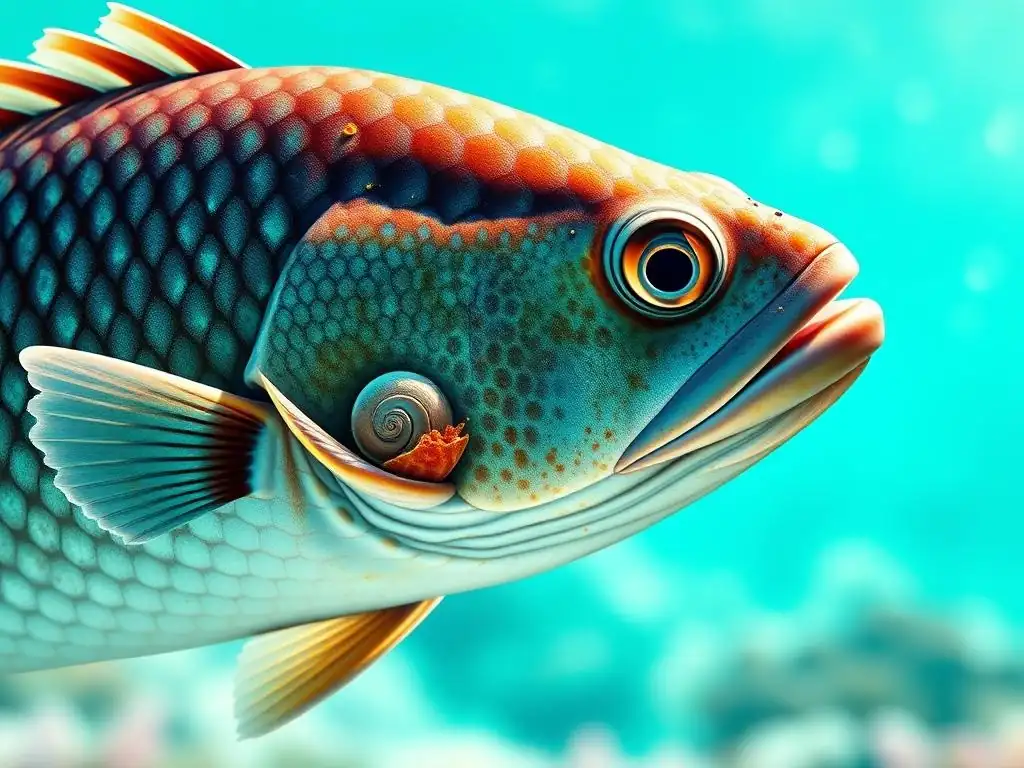
While celebrated for their clean-up roles, snails also occupy a natural position as prey within the complex food web of a reef tank. Various fish species and other invertebrates view snails as a natural food source, especially smaller or more vulnerable species. This predation is a natural part of the ecosystem, mimicking interactions found on natural reefs.
Common predators in a home aquarium can include certain wrasses (e.g., Six-Line Wrasse, Pseudocheilinops hexataenia), triggerfish, pufferfish, and even some species of hermit crabs (e.g., Halloween Hermit Crab, Ciliopagurus strigatus), which may actively hunt and consume smaller snails, sometimes at a rate of 1-2 snails per day if other food sources are scarce. Understanding these dynamics is crucial for maintaining a balanced population and ensuring the long-term saltwater snail ecosystem benefits.
Snails as Predators: Controlling Nuisance Invertebrate Populations
Interestingly, some snail species are not solely prey but can also act as beneficial predators, helping to control nuisance invertebrate populations within the reef tank. This predatory role adds another layer to their diverse contributions to the aquarium ecosystem. Their targeted feeding can help manage imbalances that might otherwise become problematic.
A prime example is the Bumblebee Snail ( Engina mendicaria), a small, attractive snail known for its appetite for bristleworms and other small detritus-dwelling pests. A small group of 3-5 Bumblebee snails introduced into a 50-gallon tank can significantly reduce a burgeoning bristleworm population over several weeks, demonstrating a natural, chemical-free method of pest control and highlighting a unique saltwater snail ecosystem benefit.
The Impact of Snail Predation on Bristleworms
The predatory activity of snails like the Bumblebee Snail on bristleworms is particularly noteworthy for reef aquarists. While many bristleworms are beneficial scavengers, certain species can proliferate rapidly, becoming a nuisance or even a threat to corals and other invertebrates if their population gets out of control. Bumblebee snails actively hunt and consume these worms, helping to keep their numbers in check.
By targeting bristleworms, these predatory snails contribute to a healthier and more balanced substrate environment, preventing potential population explosions of these scavengers. In tanks with a moderate bristleworm issue, the introduction of Bumblebee snails has been observed to reduce visible bristleworm activity by up to 60% within a month, offering an effective biological control method.
Bioturbation and Nutrient Cycling: Snails and the Nitrogen Cycle
How Snails Contribute to Nutrient Distribution in Reef Tanks
Beyond their role in aerating the substrate, the bioturbation activity of snails significantly contributes to the distribution of nutrients within the reef tank. As snails burrow and move through the sand bed and across rockwork, they stir up accumulated detritus and nutrients that might otherwise remain trapped in specific areas. This constant mixing makes these nutrients available for uptake by beneficial bacteria, corals, and other photosynthetic organisms, or facilitates their removal through water changes and filtration.
This continuous movement prevents the formation of nutrient "hotspots" which can lead to localized and often aggressive algae growth. For example, a healthy population of Nassarius snails can effectively turn over the top 1-2 cm of sand bed in a 100-gallon tank every few days, ensuring a more even distribution of organic material and preventing its anaerobic decomposition, which is a key saltwater snail ecosystem benefit.
The Role of Snails in Processing Waste and Reducing Nitrates
While snails do not directly remove nitrates from the water, their primary role in consuming organic waste and detritus is a critical precursor to nitrate control. By intercepting and consuming uneaten food, fish waste, and decaying matter before it fully decomposes, snails prevent the initial release of ammonia and nitrites, which are then converted into nitrates by the nitrogen cycle.
Therefore, an efficient snail clean-up crew indirectly contributes to lower nitrate levels by reducing the organic load entering the system. A tank with a robust clean-up crew that includes detritivorous snails can often maintain nitrate levels below 10-15 ppm, whereas a tank lacking such a crew might struggle to keep levels below 20-30 ppm due to accumulating organic waste, demonstrating their profound impact on water quality.
Maintaining Water Quality Through Snail-Mediated Bioturbation
The continuous, snail-mediated bioturbation of the substrate is fundamental to maintaining excellent water quality in a reef tank. This physical churning of the sand bed ensures that oxygenated water penetrates deeper into the substrate, supporting the vital aerobic decomposition processes carried out by beneficial bacteria. This prevents the formation of anoxic zones that can release harmful compounds.
By preventing the build-up of hydrogen sulfide and other toxic byproducts of anaerobic decomposition, snails contribute directly to a safer and more stable environment for all marine inhabitants. The constant turnover of the sand by species like Nassarius snails ensures that the substrate remains a healthy, active biological filter, processing waste effectively and preventing the release of toxins that can be lethal to marine life at concentrations as low as 0.01 mg/L.
Species Spotlight: Examples of Saltwater Snails and Their Specific Ecosystem Roles
Cerith Snails: Detritus Removal Experts
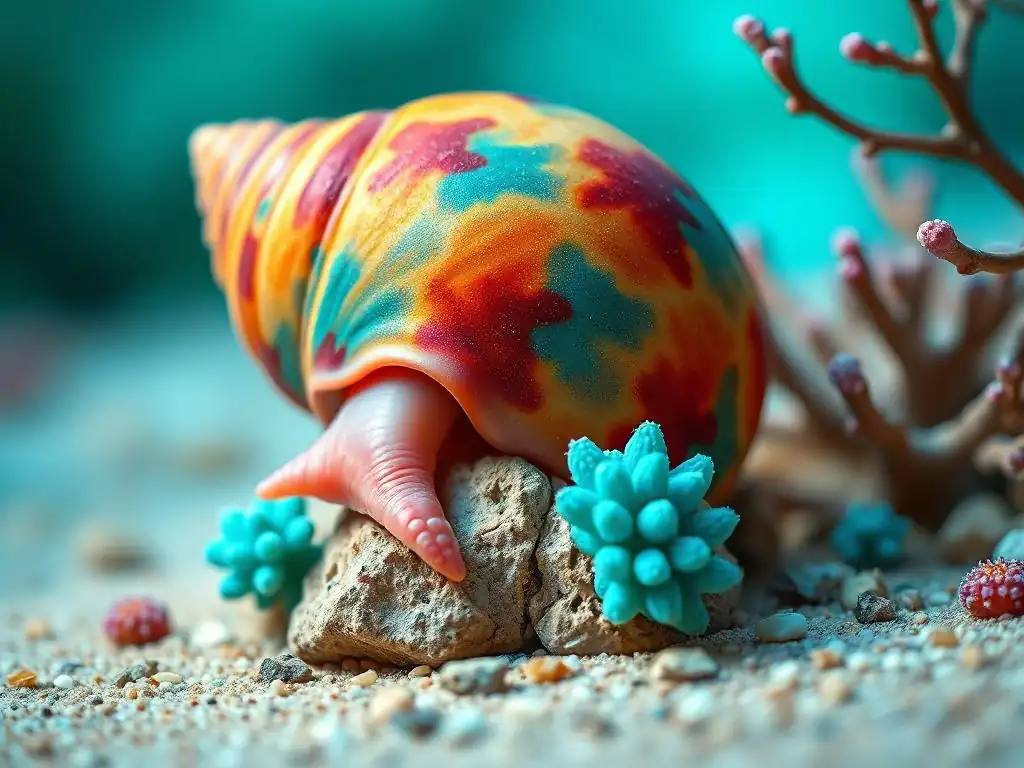
Cerith snails ( Cerithium sp.) are highly versatile and active members of the clean-up crew, renowned for their dual role as excellent detritus removers and general algae grazers. They possess a long, pointed shell and are constantly on the move, sifting through the sand bed, navigating rockwork, and grazing on various types of algae, including film algae and diatoms. Their active burrowing behavior contributes significantly to substrate aeration.
These snails are particularly effective at consuming uneaten food and decaying organic matter that settles on the substrate, preventing its breakdown into pollutants. A healthy population of Cerith snails can consume up to 0.5 grams of detritus per snail per day in a mature reef tank, making them indispensable for maintaining substrate cleanliness and overall water quality, which are crucial saltwater snail ecosystem benefits.
Nassarius Snails: Scavengers and Sand Bed Aerators
Nassarius snails ( Nassarius vibex, Nassarius distortus, or Nassarius obsoletus) are quintessential sand-dwelling scavengers, instantly recognizable by their long siphon that extends from the sand bed. They are highly attuned to the presence of uneaten food or decaying matter, quickly emerging from the substrate to consume it. This rapid response prevents organic waste from lingering and polluting the water column.
Their primary and most significant role, however, is their continuous burrowing and turning of the sand bed. Nassarius snails are tireless bioturbators, preventing the formation of anaerobic pockets within the substrate that can release toxic gases. A single Nassarius snail can disturb several square inches of sand per hour, collectively ensuring that the entire sand bed remains oxygenated and healthy, a vital saltwater snail ecosystem benefit.
Turbo Snails: Voracious Algae Eaters for Large Marine Tanks
Turbo snails ( Turbo fluctuosa, Turbo sarmaticus, or Turbo argyrostomus, among others) are large, robust snails celebrated for their voracious appetite for various types of algae, particularly stubborn film algae and hair algae that coat rockwork and aquarium glass. Their strong, muscular foot and rasping radula allow them to effectively scrape off even tough algal growth, making them highly efficient grazers.
Due to their size and effectiveness, Turbo snails are often recommended for larger marine tanks with significant algae issues. A large Turbo snail can clear a patch of film algae several square inches in size within an hour, and a group of 3-5 large Turbo snails can visibly reduce a widespread hair algae problem in a 100-gallon tank within days, making them one of the most impactful saltwater snail ecosystem benefits for algae control.
Nerite Snails: Algae Grazers for Glass and Hardscape
Nerite snails ( Neritina natalensis, Vittina coromandeliana, or various marine Nerita species) are smaller, often vibrantly colored snails that are excellent at grazing algae from smooth surfaces like aquarium glass, powerheads, and smooth rockwork. They are particularly effective against diatoms (brown algae) and green spot algae, leaving characteristic clean trails as they move.
These snails are generally hardy and less prone to being knocked over by strong currents compared to some larger species. Their relatively small size makes them suitable for tanks of all sizes, though they are especially prized for keeping glass surfaces clear. A small group of 5-10 Nerite snails in a 30-gallon tank can significantly reduce the need for manual glass scraping, showcasing their specific saltwater snail ecosystem benefits for aesthetic maintenance.
Maintaining a Healthy Snail Population in Your Reef Tank
Optimal Water Parameters for Snail Health and Survival
Maintaining optimal and stable water parameters is paramount for the health and longevity of saltwater snails, directly impacting their ability to provide saltwater snail ecosystem benefits. Key parameters include stable salinity (1.023-1.026 specific gravity), a consistent temperature (72-78°F or 22-26°C), and crucially, adequate levels of calcium (400-450 ppm) and alkalinity (8-12 dKH). These minerals are essential for shell growth and preventing shell erosion.
Fluctuations in these parameters, particularly a drop in alkalinity below 7 dKH or calcium below 380 ppm, can lead to visible signs of shell pitting and erosion within weeks, weakening the snail and making it more susceptible to disease or predation. Regular testing and consistent dosing or water changes are therefore vital to ensure a healthy and active snail population.
Preventing Snail Shell Erosion and Addressing Calcium Deficiencies
Snail shell erosion is a common issue in reef tanks and is primarily caused by low pH, insufficient alkalinity, or calcium deficiencies in the water. The acidic conditions or lack of available minerals actively dissolve the snail's shell, making them vulnerable. To prevent this, aquarists must ensure stable water parameters are maintained, especially alkalinity and calcium.
Strategies to address these deficiencies include consistent dosing of two-part calcium and alkalinity solutions, using a calcium reactor, or supplementing with kalkwasser. For instance, maintaining calcium levels consistently above 400 ppm and alkalinity above 8 dKH can extend a snail's lifespan by 20-30% compared to tanks with suboptimal conditions, ensuring they continue to provide their valuable saltwater snail ecosystem benefits for longer.
Protecting Snails from Predators and Aggressive Tank Mates
Protecting snails from predation and aggressive tank mates is essential for maintaining a thriving clean-up crew. Many common reef tank inhabitants, such as certain wrasses (e.g., Bird Wrasses, some Hogfish), triggerfish, pufferfish, and even some larger hermit crabs, are known to prey on snails. Hermit crabs, in particular, may actively kill snails to steal their shells, especially if suitable empty shells are scarce.
To mitigate this, aquarists should research the compatibility of all tank inhabitants before introduction and provide plenty of appropriately sized empty shells for hermit crabs. For example, a single aggressive hermit crab can decimate a small population of 10-15 smaller snails within a month if not properly managed, significantly diminishing the clean-up crew's effectiveness and the overall saltwater snail ecosystem benefits they provide.
Conclusion: Maximizing Saltwater Snail Ecosystem Benefits in Your Reef Tank
The Importance of a Balanced Snail Population for a Thriving Reef Environment
The diverse roles of saltwater snails extend far beyond mere algae consumption, making a balanced and varied snail population indispensable for a thriving reef environment. These unsung heroes contribute significantly to biological filtration, substrate health, and nutrient management, acting as constant scavengers, aerators, and even predators of nuisance organisms. Their collective activity stabilizes the aquarium's ecosystem, reducing the need for manual intervention and mitigating common problems like detritus accumulation and nutrient spikes.
A well-planned clean-up crew, comprising various snail species tailored to the tank's needs, forms a cornerstone of a successful and low-maintenance reef aquarium. By understanding and valuing these multifaceted contributions, aquarists can harness the full spectrum of saltwater snail ecosystem benefits, fostering a resilient and vibrant marine habitat that mimics the complex biodiversity of natural reefs.
Sustainable Practices for Snail Care and Management
Maximizing saltwater snail ecosystem benefits requires adopting sustainable practices for their care and management. This includes avoiding overstocking, as a lack of sufficient food can lead to starvation once primary algae sources are depleted; in such cases, supplemental feeding with algae wafers or nori may be necessary. It is also crucial to maintain stable water parameters, particularly calcium and alkalinity, to prevent shell erosion and ensure their long-term health.
Furthermore, responsible sourcing of snails, preferring aquaculture-raised specimens when available, contributes to broader marine conservation efforts. Regularly monitoring the health of your snail population and promptly addressing any issues, such as shell damage or inactivity, ensures that these vital clean-up crew members remain effective and continue to provide their invaluable services for the life of your reef tank.
Future Research and Understanding of Snail Roles in Reef Ecosystems.
The intricate roles of snails in both natural reef ecosystems and enclosed aquarium environments continue to be a subject of scientific inquiry. While much is understood about their contributions to algae control and detritus removal, ongoing research is constantly uncovering more nuanced interactions, such as their specific impact on microbial communities within the sand bed, their contribution to carbon cycling, and their resilience to environmental changes.
As our understanding deepens, future research will likely reveal even more intricate mechanisms by which snails contribute to the stability and health of marine systems. This continued exploration will further solidify their status as indispensable members of the saltwater snail ecosystem, both in aquariums and the wild, providing deeper insights into how we can better manage and appreciate these vital invertebrates.
Frequently Asked Questions
What are the primary benefits of introducing snails to a saltwater aquarium ecosystem?
Snails contribute significantly by controlling algae growth, consuming detritus, and aerating the substrate. This helps maintain a healthy and balanced aquarium environment.
How do different types of saltwater snails contribute to the ecosystem differently?
Certain snails, like Nassarius snails, excel at scavenging for uneaten food and waste, while others, such as Cerith snails, are more adept at controlling algae on glass and decorations.
What factors should I consider when choosing snails to maximize their ecosystem benefits in my specific saltwater aquarium?
Assess your tank's size, the types of algae present, and the existing inhabitants to ensure compatibility. Also, consider the snails' specific dietary needs and behavior.
Can snails help stabilize the water chemistry in a saltwater aquarium?
Yes, by consuming algae and detritus, snails help reduce the buildup of nitrates and phosphates, which can negatively impact water quality and stability. This contributes to a healthier environment.
What are some potential drawbacks to adding snails to a saltwater aquarium, and how can they be mitigated to ensure the ecosystem benefits outweigh the risks?
Overpopulation can lead to competition for food. Introducing the appropriate number of snails for your tank size and monitoring their population is crucial. Some snails may also prey on corals, so research beforehand.
Final Reflection: Unveiling the Silent Guardians
The intricate web of life within a saltwater ecosystem often hides its most crucial players in plain sight. The true extent of the saltwater snail ecosystem benefits, as we've explored, extends far beyond simple algae consumption, impacting nutrient cycling, habitat structure, and the overall health of these vital marine environments. Understanding these diverse roles is more critical than ever as coastal ecosystems face increasing pressures from pollution, climate change, and habitat destruction.
This exploration has underscored the profound influence these seemingly small creatures have on the larger ecological picture. It's a reminder that even the most unassuming organisms can hold the key to ecosystem stability and resilience. In nature, nothing exists alone.
- Rachel Carson. This quote perfectly encapsulates the interconnectedness we've witnessed, highlighting how the fate of saltwater snails is inextricably linked to the health of the entire coastal environment.
As we conclude, consider the ripple effect of our actions on these delicate ecosystems. What steps can you take, however small, to protect the silent guardians of our saltwater world? Let us all strive to be more mindful of our impact and advocate for the preservation of these vital habitats, ensuring that future generations can marvel at the intricate beauty and essential functions of the saltwater snail ecosystem.
Dive Deeper: Transform Your Aquarium Today!
Thanks for exploring the fascinating world of snails in saltwater ecosystems! We hope you've discovered the vital role these often-overlooked creatures play in maintaining a thriving aquarium. Ready to take your knowledge and enthusiasm to the next level?
- Introduce a diverse cleanup crew to your tank: Start with at least three different types of snails, such as Nerite, Cerith, and Nassarius, to tackle various algae and detritus.
- Share this article with fellow aquarium enthusiasts: Help spread the word about the amazing benefits of snails and their impact on aquarium health.
- Research less common snail species: Explore options like the Tiger Conch or Bumble Bee Snail, known for their unique appearances and specialized cleaning habits, and see if they're a good fit for your setup.
What surprising impact have you noticed from the snails in your aquarium?