
Can You Keep Freshwater Invertebrates in a Saltwater Tank? The Facts.

Welcome to Aquarium Mastery!
Ever wondered if you could mix and match your freshwater and saltwater invertebrates? Dive in to unravel the mysteries surrounding saltwater tank invertebrates compatibility. Get ready to explore the facts and find out what's possible (and what definitely isn't!) as we journey into the fascinating world of aquarium keeping. Curious to learn more? Let's begin!
- Understanding Freshwater vs. Saltwater Invertebrates: A Crucial Distinction
- The Incompatibility of Freshwater Invertebrates in Saltwater Environments
- Saltwater Invertebrate Compatibility: Thriving Species and Tank Mates
- Freshwater Invertebrates and Salinity: Physiological Stressors
- Documented Cases: Fatal Outcomes of Introducing Freshwater Invertebrates to Saltwater
- Water Chemistry in Invertebrate Health: pH, Alkalinity, and Minerals
- Responsible Invertebrate Keeping: Animal Welfare and Ethical Considerations
- Alternatives to Mixing Incompatible Invertebrates
- Conclusion: Respecting Natural Habitats and Prioritizing Species-Specific Needs
-
Frequently Asked Questions
- Can I safely introduce freshwater invertebrates directly into a saltwater aquarium?
- What happens to freshwater invertebrates when exposed to saltwater?
- Are there any freshwater invertebrates that can gradually adapt to saltwater?
- What factors determine the compatibility of saltwater invertebrates in a saltwater tank?
- Where can I find reliable information on saltwater invertebrate compatibility?
- Final Reflection: Navigating the Salty Seas of Compatibility
- Unveil Your Next Aquatic Adventure!
Understanding Freshwater vs. Saltwater Invertebrates: A Crucial Distinction
Biological Differences: Ion Regulation and Excretion
The primary distinction between freshwater and saltwater invertebrates lies in their specialized physiological mechanisms for ion regulation and waste excretion, which are fundamentally adapted to their native environments. Freshwater invertebrates, living in water with a lower salt concentration than their internal fluids, are constantly absorbing water through osmosis and losing essential ions to their surroundings. To counteract this, they possess highly efficient kidneys or nephridia that excrete large volumes of dilute urine, alongside active transport systems in their gills or body surfaces to absorb ions from the water.
Conversely, saltwater invertebrates inhabit an environment with a higher salt concentration than their internal fluids. This means they are constantly losing water through osmosis and gaining excess ions from their surroundings. Their physiological adaptations include specialized chloride cells in gills or other excretory organs that actively pump out excess salts, and many marine invertebrates must actively drink saltwater to replenish lost water while then excreting the concentrated salts. These opposing biological strategies make "saltwater tank invertebrates compatibility" with freshwater species biologically impossible.
Osmoregulation: Maintaining Internal Salt Balance in Different Environments
Osmoregulation is the active process by which an organism maintains the stable concentration of water and solutes in its body fluids, regardless of the external environment. For freshwater invertebrates, the challenge is preventing excessive water uptake and ion loss. They are hyperosmotic regulators, meaning their internal solute concentration is higher than the surrounding water. They combat the constant influx of water by continuously pumping it out and actively absorbing salts to maintain their internal balance, often against a steep concentration gradient.
Saltwater invertebrates, on the other hand, are typically hypoosmotic or isoosmotic regulators. Their internal solute concentration is either lower than or similar to the surrounding seawater. The main challenge for hypoosmotic marine invertebrates is to prevent water loss to the saltier external environment and excrete excess salts they ingest. They achieve this through mechanisms like drinking seawater and excreting highly concentrated salt solutions, ensuring their cells do not dehydrate or become overwhelmed by salinity. This fundamental difference in osmoregulatory strategy is the root cause of why freshwater invertebrates cannot survive in a saltwater tank.
The Incompatibility of Freshwater Invertebrates in Saltwater Environments
Why Direct Transfer is Fatal: Osmotic Shock and Cell Damage
Introducing a freshwater invertebrate directly into a saltwater tank results in immediate and severe osmotic shock, which is almost always fatal. Freshwater organisms are adapted to a very low external salinity, typically less than 5 parts per thousand (ppt). When suddenly placed into saltwater, with a salinity of 30-35 ppt, the external environment becomes vastly hypertonic relative to their internal fluids. This extreme difference in solute concentration causes water to rapidly rush out of the invertebrate's cells and tissues in an attempt to equalize the osmotic pressure.
This rapid and uncontrolled water loss leads to cellular dehydration, causing cells to shrivel and lose their structural integrity (crenation). The internal environment necessary for enzyme function and metabolic processes is severely disrupted. Vital organs, including gills, kidneys, and nervous tissue, are compromised almost instantly. This irreparable cellular and organ damage quickly leads to physiological collapse, often resulting in death within minutes to a few hours, highlighting the complete absence of saltwater tank invertebrates compatibility with freshwater species.
Gradual Acclimation: Limited Success and Ethical Concerns
While some very few euryhaline freshwater species (those tolerant of a wide range of salinities) might survive a slow, gradual acclimation to brackish water, true freshwater invertebrates cannot be successfully acclimated to full marine salinity. Their osmoregulatory systems are simply not designed to handle such high salt concentrations, regardless of the acclimation speed. Even if an invertebrate were to survive the initial osmotic stress, it would be under immense and continuous physiological strain, leading to a drastically shortened lifespan and poor quality of life.
From an ethical standpoint, attempting to force a freshwater invertebrate into a saltwater environment, even with slow acclimation, is irresponsible. It subjects the animal to profound stress, discomfort, and a guaranteed premature death due to its inability to cope physiologically. Responsible aquarists prioritize the welfare of their animals by providing environments that precisely match their natural biological requirements, rather than conducting experiments that are known to fail and cause suffering. This reinforces the principle that "saltwater tank invertebrates compatibility" only applies to species naturally adapted to marine conditions.
Saltwater Invertebrate Compatibility: Thriving Species and Tank Mates
Ideal Saltwater Invertebrate Tank Mates: Shrimp, Snails, and Crabs
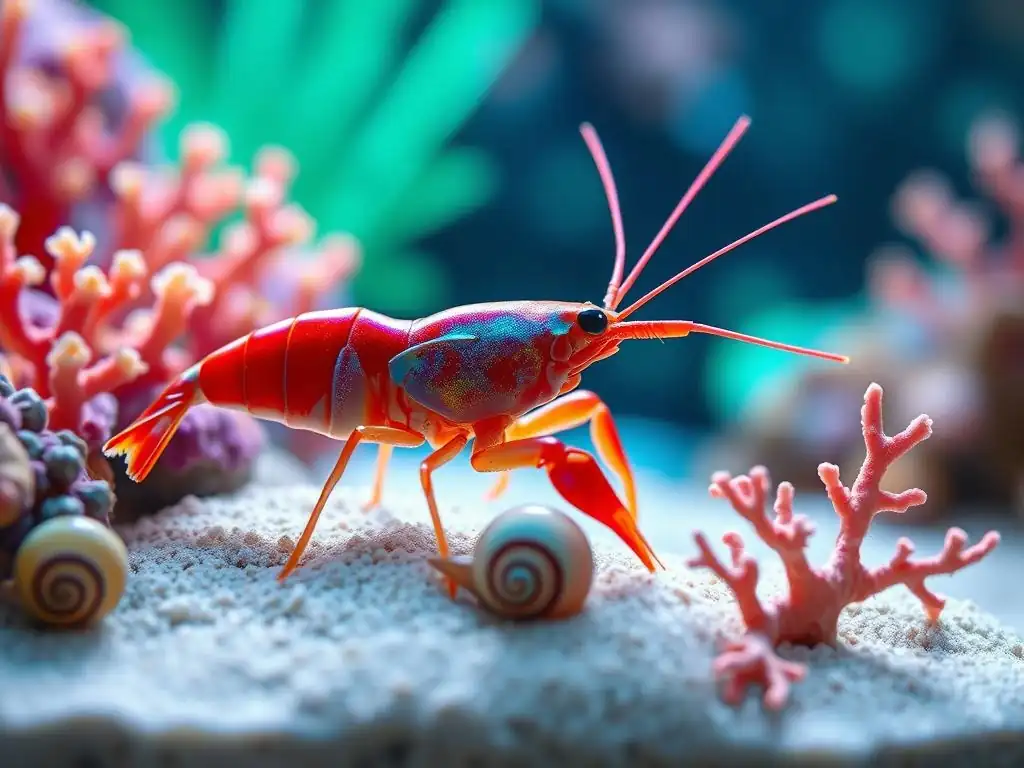
When considering saltwater tank invertebrates compatibility, many species thrive and contribute positively to marine ecosystems. Popular and beneficial invertebrates often include various species of shrimp, such as the Skunk Cleaner Shrimp ( Lysmata amboinensis), which offers symbiotic cleaning services to fish, or the Peppermint Shrimp ( Lysmata wurdemanni), known for its appetite for nuisance Aiptasia anemones. Different snail species, like Turbo Snails ( Turbo fluctuosa) and Nassarius Snails ( Nassarius vibex), are excellent algae grazers and detritivores, respectively, keeping the tank clean.
Hermit crabs, such as the Blue Leg Hermit Crab ( Clibanarius tricolor) and the Scarlet Hermit Crab ( Paguristes cadenati), are also invaluable members of a clean-up crew, consuming detritus, uneaten food, and nuisance algae. These invertebrates not only add visual interest but also perform essential ecological roles, contributing to a balanced and healthy marine aquarium environment. Their natural behaviors and beneficial contributions make them ideal choices for enhancing saltwater tank invertebrates compatibility within a community.
Avoiding Incompatible Saltwater Invertebrates: Predatory Fish and Aggressive Invertebrates
While many saltwater invertebrates are peaceful, it is crucial to research potential tank mates to ensure long-term saltwater tank invertebrates compatibility. Certain fish species are notorious for preying on or harassing invertebrates. For example, triggerfish, pufferfish, and some wrasses will actively consume shrimp, snails, and small crabs. Even seemingly peaceful fish can sometimes pick at the delicate tentacles of an anemone or coral.
Furthermore, some invertebrates themselves can be aggressive or predatory towards other tank inhabitants. Certain species of mantis shrimp (e.g., Odontodactylus scyllarus) are powerful predators capable of breaking glass and consuming fish and other invertebrates. Large crabs, like the Sally Lightfoot Crab ( Percnon gibbesi), while often sold as clean-up crew members, can become opportunistic predators as they grow, especially towards smaller fish or other invertebrates. Thorough research into the adult size, temperament, and dietary needs of any potential inhabitant is paramount to avoid conflict and maintain a harmonious saltwater tank invertebrates community.
Freshwater Invertebrates and Salinity: Physiological Stressors
Effects of Salinity: Dehydration, Organ Failure, and Mortality
The introduction of freshwater invertebrates to a saltwater environment imposes severe physiological stressors directly related to salinity. As previously discussed, the hypertonic marine environment causes an immediate and massive efflux of water from the invertebrate's cells. This rapid dehydration leads to a loss of turgor pressure within individual cells, impairing their function and structure. Enzymes, which require specific hydration levels to operate, become denatured, shutting down crucial metabolic pathways.
This cellular disruption quickly escalates to organ failure. Gills, which in freshwater invertebrates are typically adapted for active ion uptake and oxygen exchange in dilute water, become dysfunctional in the high salinity. The excretory organs, designed to expel large volumes of dilute urine, are overwhelmed by the need to conserve water and excrete excess salts, a task they are not equipped for. The cumulative effect of dehydration, enzyme denaturation, and systemic organ failure leads to irreversible damage and, ultimately, mortality.
Survival Rates: Limited Tolerance and Short Lifespans in Saltwater
The survival rate of true freshwater invertebrates in full marine salinity is virtually zero. Their physiological systems are entirely unsuited for such an environment. While some brackish water species might tolerate a narrow range of fluctuating salinities, they are not true freshwater invertebrates and their tolerance rarely extends to full marine conditions (typically 30-35 ppt). The vast majority of freshwater invertebrates, adapted to 0-5 ppt, cannot bridge this gap.
Even in rare instances where a freshwater invertebrate might survive for more than a few hours, its lifespan will be drastically cut short. It is not thriving but merely existing in a state of severe physiological stress. For example, a freshwater ghost shrimp, typically living for 6-12 months in a freshwater tank, would likely perish within 24 hours in a saltwater environment. This stark reality underscores that attempts to mix these species are not only futile but also cause unnecessary suffering, emphasizing the strict limits of saltwater tank invertebrates compatibility.
Documented Cases: Fatal Outcomes of Introducing Freshwater Invertebrates to Saltwater
Real-World Examples: Failed Acclimation of Ghost Shrimp and Nerite Snails
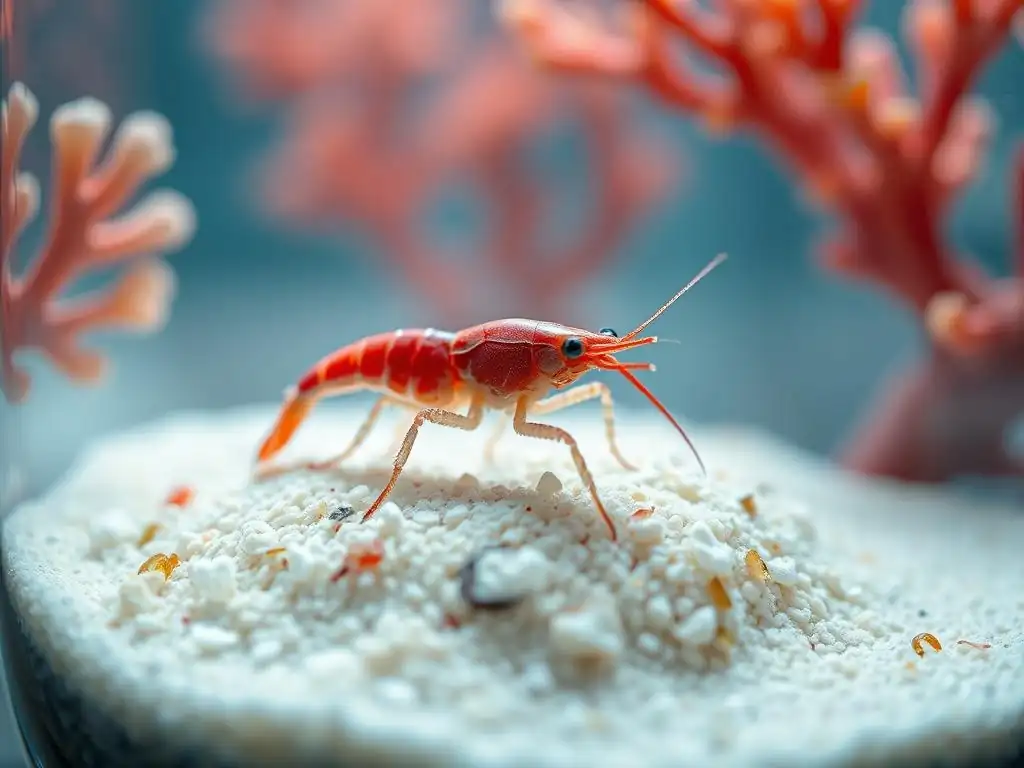
Numerous anecdotal accounts and observations from aquarists consistently document the fatal outcomes of attempting to introduce freshwater invertebrates into saltwater tanks. A common example involves the freshwater ghost shrimp ( Palaemonetes paludosus), often purchased as cheap feeder shrimp or for freshwater clean-up crews. When placed in marine aquariums, these shrimp typically become lethargic within minutes, lose their transparency, and die within a few hours, sometimes less than an hour, due to osmotic shock.
Another frequently attempted case involves freshwater nerite snails (e.g., Neritina natalensis or similar species sold for freshwater aquariums). While some nerite species are naturally found in brackish water and can tolerate a degree of salinity, the common freshwater varieties sold for aquariums cannot survive long-term in full marine conditions. Aquarists often report these snails retracting into their shells, attempting to crawl out of the water, and ceasing all activity before perishing within 1-3 days. These consistent failures highlight the fundamental biological barrier to saltwater tank invertebrates compatibility across different aquatic environments.
Lessons Learned: Understanding Osmotic Pressure and Invertebrate Physiology
These real-world examples serve as powerful, albeit unfortunate, lessons in fundamental invertebrate physiology and the critical role of osmotic pressure. The rapid demise of freshwater invertebrates in saltwater environments is not a matter of poor acclimation technique but a direct consequence of their biological inability to regulate their internal water and salt balance against such extreme external conditions. Their cells simply cannot cope with the massive influx or efflux of water, leading to immediate physiological collapse.
The consistent failure of these attempts underscores the importance of respecting species-specific needs and understanding the profound differences in aquatic environments. Aquarists must recognize that an organism's native habitat dictates its physiological adaptations. Attempting to force an animal into an environment it is not evolved for is not only futile but also ethically unsound, causing unnecessary suffering and death. This understanding is crucial for responsible invertebrate keeping and for ensuring genuine saltwater tank invertebrates compatibility.
Water Chemistry in Invertebrate Health: pH, Alkalinity, and Minerals
Optimal Water Parameters: Freshwater vs. Saltwater Requirements
Beyond salinity, the overall water chemistry requirements for freshwater and saltwater invertebrates are vastly different, further solidifying their incompatibility. Freshwater aquariums typically maintain a pH range between 6.5 and 7.5, with relatively low levels of alkalinity (measured as KH or carbonate hardness, usually below 5 dKH) and general hardness (GH). These parameters support the unique metabolic processes and shell/exoskeleton formation of freshwater species, which often absorb calcium and other minerals from very dilute solutions.
Saltwater aquariums, conversely, require a stable and significantly higher pH, typically between 8.0 and 8.4. They also demand much higher alkalinity (7-12 dKH) and specific concentrations of calcium (around 400-450 ppm) and magnesium (around 1200-1400 ppm). These elevated levels are critical for the calcification processes of marine invertebrates, particularly corals, snails, and crustaceans, which build their shells and skeletons from these readily available ions in their environment. The inability of freshwater invertebrates to thrive, or even survive, in these vastly different chemical conditions is a key aspect of why saltwater tank invertebrates compatibility is strictly limited to marine species.
Maintaining Stable Water Conditions: Gradual Changes and Regular Testing
Regardless of whether one keeps freshwater or saltwater invertebrates, maintaining stable water conditions is paramount for their health and longevity. Sudden fluctuations in pH, temperature, or salinity can induce severe stress, weaken immune systems, and lead to illness or mortality. Marine invertebrates are particularly sensitive to parameter swings, with rapid drops in alkalinity or calcium potentially leading to shell erosion or difficulty molting for crabs and shrimp.
Regular water testing is an indispensable practice for any aquarist. For saltwater tanks, this includes routine checks for salinity, pH, alkalinity, calcium, magnesium, and nitrates, ideally on a weekly or bi-weekly basis. Any necessary adjustments to these parameters should always be made slowly and incrementally over several hours or even days, allowing the invertebrates ample time to adapt without experiencing shock. This meticulous approach to water chemistry is vital for ensuring the well-being and long-term success of any saltwater tank invertebrates community.
Responsible Invertebrate Keeping: Animal Welfare and Ethical Considerations
Ethical Considerations: Understanding Species-Specific Needs
Responsible invertebrate keeping hinges on a deep understanding and respect for the species-specific needs of each animal. Aquarists have an ethical obligation to provide an environment that not only allows their invertebrates to survive but to truly thrive. This involves meticulous research into their native habitat, dietary requirements, social behaviors, and, critically, their precise environmental tolerances, including salinity, temperature, and water chemistry.
Introducing a freshwater invertebrate into a saltwater environment, or vice-versa, is a direct contravention of this ethical responsibility. It subjects the animal to immense and unavoidable physiological stress, leading to a slow, painful decline and eventual death. Such actions are not only futile but also demonstrate a disregard for animal welfare, as they are based on a fundamental misunderstanding of biological compatibility. Prioritizing the well-being of the animal means recognizing and adhering to the strict boundaries of saltwater tank invertebrates compatibility.
Promoting a Healthy Aquarium Environment: Proper Filtration and Diet
Beyond salinity and water chemistry, promoting a healthy aquarium environment for invertebrates involves several key practices. Effective filtration, encompassing mechanical, chemical, and biological components, is essential for maintaining water quality by removing waste products and toxins. Adequate water flow is also crucial, especially in saltwater tanks, for delivering food particles to filter feeders and oxygenating the water.
Furthermore, providing a species-appropriate diet is vital for invertebrate health. This can range from specialized phytoplankton or zooplankton for filter-feeding marine invertebrates, to algae wafers for grazing snails, or protein-rich foods for carnivorous crabs and shrimp. When these fundamental needs—proper environment, stable water parameters, and appropriate nutrition—are met, invertebrates can exhibit natural behaviors, maintain robust health, and live out their full lifespans, creating a truly rewarding experience for the aquarist and a thriving ecosystem.
Alternatives to Mixing Incompatible Invertebrates
Focusing on Thriving Saltwater Invertebrate Communities: Reef Tanks
Instead of attempting to force incompatible species together, a far more rewarding and ethical approach is to focus on creating a thriving community of invertebrates naturally adapted to saltwater conditions. Reef tanks, for instance, are designed to house a diverse array of marine invertebrates, including various species of corals, anemones, shrimp, snails, and crabs. These setups provide the precise environmental parameters—high salinity, stable pH, and ample calcium/alkalinity—that allow marine invertebrates to flourish.
Such dedicated saltwater systems enable aquarists to observe the fascinating natural behaviors and symbiotic relationships that occur within marine ecosystems. A well-designed reef tank exemplifies true saltwater tank invertebrates compatibility, where each species contributes to the overall health and beauty of the system. This approach not only ensures the well-being of the animals but also offers a much richer and more successful long-term experience for the hobbyist.
Building Separate Aquariums: Dedicated Freshwater and Saltwater Setups
For aquarists who are passionate about both freshwater and saltwater invertebrates, the most responsible and successful strategy is to maintain separate, dedicated aquariums for each environment. This allows each tank to be meticulously tailored to the unique and often contrasting environmental requirements of its inhabitants. A freshwater tank can be optimized for species like freshwater shrimp or snails, with appropriate pH, hardness, and minimal salinity.
Concurrently, a separate saltwater tank can be established with the precise salinity, alkalinity, calcium, and other parameters necessary for marine invertebrates. While this approach requires more space, equipment, and a greater investment of time, it completely eliminates the ethical dilemma and physiological stress associated with mixing incompatible species. Ultimately, maintaining dedicated freshwater and saltwater setups ensures the optimal health and longevity of all animals, providing a truly fulfilling and responsible aquatic hobby experience.
Conclusion: Respecting Natural Habitats and Prioritizing Species-Specific Needs
Prioritizing the Specific Needs of Freshwater and Saltwater Species
The core takeaway is unequivocally clear: freshwater invertebrates cannot survive in saltwater tanks, and vice-versa. The fundamental biological differences in osmoregulation, ion regulation, and adaptation to vastly different chemical environments make inter-environment transfer not just ill-advised, but almost always fatal. Freshwater invertebrates lack the physiological machinery to cope with high salinity, leading to rapid dehydration, organ failure, and death.
Responsible aquarists understand and respect these natural boundaries. By prioritizing the specific needs of each species and providing an environment that meticulously mimics their native habitat, we ensure the welfare of our aquatic charges. This means choosing invertebrates that are naturally suited for a saltwater tank environment when setting up a marine aquarium, and similarly for freshwater setups. Adhering to these principles of "saltwater tank invertebrates compatibility" and freshwater compatibility ensures healthy, thriving aquarium ecosystems and a truly ethical approach to the hobby.
Frequently Asked Questions
Can I safely introduce freshwater invertebrates directly into a saltwater aquarium?
No, you cannot. Freshwater invertebrates are not physiologically adapted to survive in a saline environment. The osmotic shock would be fatal.
What happens to freshwater invertebrates when exposed to saltwater?
The high salt concentration in saltwater will cause water to be drawn out of their bodies through osmosis. This leads to dehydration and cell damage, ultimately resulting in death.
Are there any freshwater invertebrates that can gradually adapt to saltwater?
While some brackish water species have limited tolerance, true freshwater invertebrates generally cannot adapt to full saltwater conditions. The physiological differences are too significant for adaptation.
What factors determine the compatibility of saltwater invertebrates in a saltwater tank?
Compatibility depends on factors like diet, aggression, and water parameter requirements. Some invertebrates may prey on others or compete for resources, affecting the tank's overall health.
Where can I find reliable information on saltwater invertebrate compatibility?
AquariumMastery.com and other reputable aquarium resources provide species profiles and compatibility charts. Always research the specific needs of each invertebrate before introducing it to your saltwater tank.
The exploration of freshwater invertebrate survival in saltwater environments reveals more than just scientific facts; it highlights the delicate balance of ecosystems and the importance of informed decision-making in aquarium keeping. Understanding the physiological limitations of these creatures, as we've discussed, is crucial for responsible pet ownership and the prevention of unnecessary suffering. This knowledge empowers us to be better stewards of the aquatic world, even within the confines of our own homes.
This topic, seemingly niche, underscores a broader point about our relationship with nature and the ethical considerations involved in altering natural environments. The impulse to experiment and push boundaries is human, but it must be tempered with respect and a deep understanding of the consequences. The good man is the friend of all living things.
- Mahatma Gandhi. This quote reminds us that even the smallest creatures deserve our consideration and care, and that our actions have ripple effects far beyond what we might immediately perceive.
Now, armed with this knowledge, consider the impact of your choices. Let this exploration of saltwater tank invertebrate compatibility serve as a reminder to research thoroughly, prioritize ethical considerations, and strive to create thriving, balanced ecosystems, whether in your aquarium or in the wider world. The responsibility for the well-being of these creatures ultimately rests with us.
Unveil Your Next Aquatic Adventure!
Thank you for diving into the world of freshwater invertebrates and saltwater tanks! We hope this article illuminated the fascinating differences between these aquatic ecosystems. Now, let's put that knowledge to work!
- Embark on a journey of discovery by researching compatible invertebrate species for your current tank. Consider the specific needs of each species to ensure a thriving environment.
- Share your newfound knowledge! Discuss this article with fellow aquarium enthusiasts and spread awareness about responsible aquatic keeping.
- Dare to be different! Experiment with a new tank setup, carefully monitoring water parameters and invertebrate behavior.
What's the most surprising thing you learned about keeping invertebrates, and how will you apply it to your aquarium hobby?