
Identifying Freshwater Snail Eggs: Friend or Foe in Your Tank?

Welcome to Aquarium Mastery, your ultimate guide to thriving aquatic ecosystems!
Ever peered into your freshwater aquarium and spotted tiny, gelatinous blobs clinging to the glass or plants? Could they be the start of a beautiful new generation... or a sign of an impending snail explosion? Dive into our comprehensive guide on Freshwater Snail Egg Identification to unravel the mystery! Learn to distinguish between the eggs of beneficial snails and those that might overrun your tank. Read on to become a true aquarium master and maintain a balanced, thriving aquatic paradise!
- Understanding Freshwater Snail Egg Identification in Aquariums
- Common Types of Freshwater Snail Eggs Found in Aquariums
- A Visual Guide to Freshwater Snail Egg Identification: Key Characteristics
- Differentiating Between Beneficial and Pest Snail Eggs
- Managing Freshwater Snail Populations: Controlling Egg Laying
- Preventing Snail Infestations: Best Practices for New Aquariums
- Troubleshooting Common Snail Egg Identification Issues
- Conclusion: Mastering Freshwater Snail Egg Identification for a Thriving Aquarium
-
Frequently Asked Questions
- How can I identify freshwater snail eggs in my aquarium?
- Why is it important to identify freshwater snail eggs?
- What are the common characteristics of pest snail eggs?
- What should I do if I find unwanted snail eggs in my freshwater aquarium?
- Where are freshwater snail eggs commonly found in an aquarium?
- Final Reflection: Understanding the Silent Language of Our Aquariums
- Unveil Your Aquarium's Hidden Potential!
Understanding Freshwater Snail Egg Identification in Aquariums
Why Accurate Freshwater Snail Egg Identification Matters
Accurate freshwater snail egg identification is paramount for any aquarist aiming to maintain a balanced and healthy aquatic environment. Misidentifying eggs can lead to significant consequences, ranging from unchecked population explosions of pest snails to the accidental removal of beneficial species. For instance, while Nerite snails are excellent algae eaters and their eggs won't hatch in freshwater, removing them might be unnecessary, whereas overlooking a clutch of rapidly reproducing pond snail eggs can quickly overwhelm a tank, leading to competition for resources.
Furthermore, precise freshwater snail egg identification empowers aquarists to make informed decisions about tank management. Knowing whether you're dealing with the eggs of a helpful detritivore or a prolific pest allows for targeted interventions. This proactive approach helps prevent issues such as increased bioload, which can elevate ammonia and nitrite levels, potentially harming fish and other invertebrates, and also preserves the aesthetic appeal of your carefully curated aquarium.
The Importance of Knowing Your Snails: Preventing Unwanted Infestations
Understanding the specific snail species laying eggs in your tank is crucial for effective population control and preventing unwanted infestations. Different snail species exhibit vastly different reproductive rates and habits. For example, a single Bladder snail can lay hundreds of eggs over its lifespan, with clutches hatching within a mere 1-2 weeks, while a Mystery snail lays larger, fewer eggs in a distinct clutch above the waterline, taking 1-4 weeks to hatch.
By mastering freshwater snail egg identification, you can intercept potential problems before they escalate. Early detection of pest snail eggs allows for their swift removal, preventing thousands of new snails from hatching and consuming valuable resources. This preventative measure is far more manageable and less stressful than attempting to control an established, booming snail population, which often requires more drastic and potentially costly solutions.
Common Types of Freshwater Snail Eggs Found in Aquariums
Identifying Mystery Snail Eggs: A Clutch Above the Waterline
Mystery snail eggs are among the most distinctive freshwater snail eggs found in aquariums, primarily due to their unique placement. These eggs are laid in a gelatinous, often pinkish-white, cream, or greenish clutch, typically resembling a small raspberry or a cluster of tiny pearls. Crucially, Mystery snails lay their eggs above the waterline, adhering them firmly to the tank lid, bracing, or emergent decor.
A single Mystery snail clutch can contain anywhere from 50 to 200 individual eggs. The clutch hardens upon exposure to air and requires high humidity to successfully hatch, a process that usually takes between one to four weeks depending on temperature and humidity levels. Their prominent, above-waterline positioning makes their freshwater snail egg identification relatively straightforward, distinguishing them from most other common aquarium snail eggs.
Ramshorn Snail Eggs: Tiny, Clear Gels on Plants
Ramshorn snail eggs are commonly encountered in freshwater aquariums and are characterized by their appearance as small, clear, gelatinous blobs. These masses typically range from 3 to 10 millimeters in diameter and contain multiple tiny, clear or slightly yellowish dots, which are the individual developing embryos. You will most often find these egg masses adhered to plant leaves, the tank glass, or various pieces of aquarium decor.
While they can reproduce quickly, Ramshorn snails are often considered beneficial for their role as detritivores and algae eaters. However, overfeeding in an aquarium can rapidly accelerate their breeding, leading to a population surge. Their relatively quick hatching time, usually within one to three weeks, means that prompt freshwater snail egg identification and removal are key for managing their numbers effectively if they become too prolific.
Pond Snail Eggs vs. Bladder Snail Eggs: Telling the Difference
Pond snail eggs typically appear as long, clear, jelly-like tubes or irregular masses, containing numerous small, oval-shaped eggs. These egg masses can hold anywhere from 100 to 200 eggs and are commonly found on tank surfaces, live plants, or driftwood. They tend to be larger and more elongated than the egg masses laid by bladder snails.
Bladder snail eggs are very similar in appearance but are generally smaller, more oval, or kidney-shaped clear jelly masses, often containing fewer individual eggs, typically 20-50 per mass. Like pond snails, they deposit their eggs on plants and tank glass. The key distinction in freshwater snail egg identification between the two, beyond the subtle shape difference of the egg mass, often relies on observing the adult snails: bladder snails possess a sinistral (left-opening) shell, while most pond snails have a dextral (right-opening) shell. Both species' eggs hatch rapidly, often within one to two weeks.
Nerite Snail Eggs: Small, White Specks That Won't Hatch in Freshwater
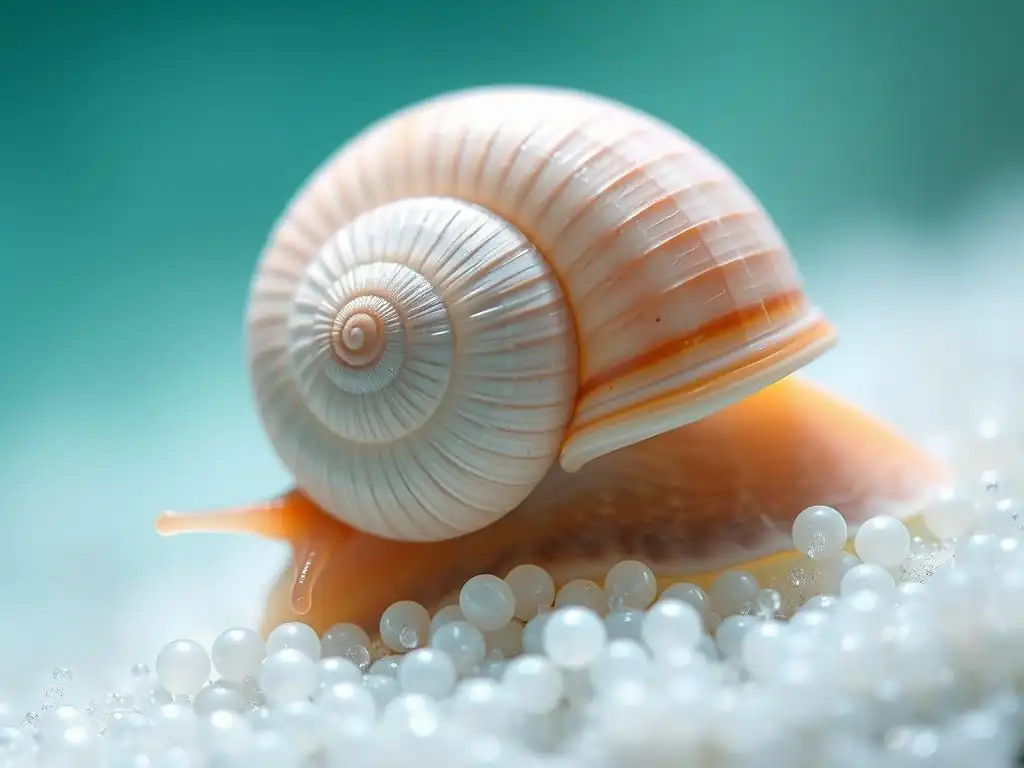
Nerite snail eggs are highly distinctive and easily identifiable due to their unique appearance and persistence. They present as tiny, hard, white, sesame-seed-like specks, typically measuring only 1-2 millimeters in size. These eggs are laid individually and are firmly cemented onto various hard surfaces within the aquarium, including driftwood, rocks, the tank glass, and even the shells of other snails.
A critical characteristic for freshwater snail egg identification of Nerite eggs is that they will not hatch in freshwater. Nerite snails require brackish or saltwater conditions for their larvae to develop and survive. While these eggs are completely harmless to your aquarium inhabitants and won't contribute to a snail overpopulation, their hard, adhesive nature means they can be aesthetically bothersome as they are very difficult to remove once laid, often requiring scraping with a razor blade.
Assassin Snail Eggs: Clear, Square Capsules
Assassin snail eggs are quite unique among common aquarium snail eggs, making their freshwater snail egg identification relatively straightforward. They are laid individually within small, clear, square or rectangular capsules, each typically measuring 1-2 millimeters. Each capsule usually contains a single white or yellowish egg. These distinct capsules are most often found adhered to hard surfaces such as rocks, driftwood, or the tank glass.
Unlike many pest snails, Assassin snails reproduce at a much slower rate, typically laying only one egg per capsule every few days. This slow reproductive cycle makes their presence in the tank much more manageable. Assassin snails are often introduced intentionally into aquariums because they prey on other snails, helping to naturally control pest snail populations. Hatching usually occurs within three to four weeks after laying.
A Visual Guide to Freshwater Snail Egg Identification: Key Characteristics
Size and Shape of Snail Eggs: A Comparative Overview
The size and shape of freshwater snail eggs are primary indicators for accurate identification. Mystery snail clutches are large and irregular, often measuring 2-5 cm in length, resembling a bumpy cluster. In contrast, Nerite snail eggs are minute, individual specks, typically 1-2 mm, and are perfectly round or oval. Ramshorn and Bladder/Pond snail egg masses range from 3-15 mm, appearing as gelatinous, somewhat amorphous blobs. Assassin snail capsules are consistently small (1-2 mm) and have a distinct square or rectangular shape.
Understanding these size and shape variations is crucial for narrowing down the possibilities during freshwater snail egg identification. For instance, finding a large, firm mass above the waterline immediately points to Mystery snails, while tiny, hard white spots on decor are almost certainly Nerite eggs. This comparative overview allows aquarists to quickly categorize and then further investigate the specific species.
Color and Texture: Clues to Snail Species Identification
The color and texture of snail eggs provide additional vital clues for accurate freshwater snail egg identification. Mystery snail clutches can vary in color from vibrant pink to off-white or light green, and their texture is firm and slightly brittle when dry. Ramshorn and Bladder/Pond snail egg masses are typically clear or translucent jelly, allowing you to see the tiny developing embryos inside; their texture is soft and gelatinous.
Nerite snail eggs are stark white, opaque, and possess a hard, cemented texture, making them very difficult to scrape off surfaces. Assassin snail capsules are clear, allowing visibility of the single, usually white or yellowish egg within, and the capsule itself has a somewhat rigid but clear texture. These distinct color and texture profiles are invaluable for confirming visual identification and differentiating between species during your freshwater snail egg identification process.
Egg Placement: Where Snails Choose to Lay Their Eggs
The location where snail eggs are laid is often the most immediate and telling characteristic for freshwater snail egg identification. Mystery snails are unique in that they lay their large clutches exclusively above the waterline, usually on the tank lid, bracing, or emergent decorations. This distinct placement almost always confirms the presence of Mystery snail eggs.
Conversely, most other common freshwater snails lay their eggs submerged within the tank. Ramshorn, Pond, and Bladder snails typically deposit their gelatinous egg masses on the surfaces of live plants (especially the undersides of leaves), the tank glass, or on driftwood and rocks. Nerite snails also lay their individual, hard white eggs submerged, but they prefer hard surfaces like rocks, glass, or decor rather than plants. Assassin snails similarly lay their clear, square capsules on hard submerged surfaces. Observing the precise location of the eggs is a critical first step in accurate freshwater snail egg identification.
Differentiating Between Beneficial and Pest Snail Eggs
Identifying Beneficial Snail Eggs for a Healthy Ecosystem
Identifying beneficial snail eggs is crucial for maintaining a healthy and balanced aquarium ecosystem. Mystery snail eggs, though numerous in their clutches, hatch into snails known for their voracious appetite for soft algae and detritus, contributing positively to tank cleanliness. Their prominent, above-waterline egg placement makes their freshwater snail egg identification easy, allowing aquarists to choose whether to let them hatch or remove them based on tank needs.
Nerite snail eggs are another example of beneficial snail eggs. While their hard, white appearance can be unsightly, they pose no threat to the freshwater environment as they require brackish water to hatch. Thus, accurately identifying these ensures aquarists don't unnecessarily remove the eggs of an excellent algae-eating snail. Similarly, Assassin snail eggs, which hatch into snails that prey on pest snails, are beneficial, and their distinctive single, square capsules make their freshwater snail egg identification straightforward, ensuring these valuable allies are not mistakenly discarded.
Recognizing Pest Snail Eggs: Preventing Population Explosions
Recognizing pest snail eggs is vital for preventing rapid population explosions that can destabilize an aquarium. Pond snails, Bladder snails, and sometimes even Ramshorn snails are often considered pests due to their prolific breeding. Their eggs typically appear as clear, gelatinous masses, often containing dozens to hundreds of individual eggs, laid on submerged surfaces like plants or glass. A single Bladder snail can lay up to 500 eggs in its lifetime, showcasing their rapid reproductive potential.
The key to managing these species lies in early freshwater snail egg identification. Once identified, these egg masses can be manually removed before they hatch, which is far more effective than trying to control a tank already overrun with thousands of adult snails. Overlooking these seemingly innocuous jelly blobs can quickly lead to an overwhelming snail population, impacting water quality and competing with fish for food resources.
The Impact of Snail Overpopulation on Your Aquarium's Health
An unchecked snail overpopulation, often stemming from unmanaged pest snail eggs, can significantly degrade your aquarium's health. The primary impact is an increased bioload: a large number of snails produce substantial waste, leading to elevated levels of ammonia, nitrite, and nitrate. This can stress fish, make them more susceptible to disease, and even lead to fatalities if water parameters become toxic. Additionally, a dense snail population can deplete oxygen levels, especially at night, posing a risk to fish and other aquatic life.
Beyond water chemistry, snail overpopulation can lead to competition for food, particularly with bottom-feeding fish. While snails initially consume uneaten food and detritus, a large population will seek out other food sources, sometimes even consuming healthy live plants when their preferred food is scarce. Furthermore, an abundance of snails and their egg masses can make the tank appear unsightly and unkempt, detracting from the overall aesthetic appeal of your aquatic display. Effective freshwater snail egg identification and control are therefore essential for maintaining ecological balance and visual appeal.
Managing Freshwater Snail Populations: Controlling Egg Laying
Natural Methods for Snail Egg Control in Aquariums
Controlling snail populations naturally, and thus limiting egg laying, primarily revolves around managing food availability. Overfeeding is the most common cause of snail booms, as excess food provides ample sustenance for rapid reproduction. A crucial natural method is to feed your fish only what they can consume within 2-3 minutes, twice a day, ensuring no uneaten food settles on the substrate. This direct reduction of food resources significantly curtails the energy available for snails to reproduce and lay eggs.
Another effective natural method is meticulous tank cleanliness. Regularly vacuuming the substrate removes decaying plant matter, fish waste, and any lingering uneaten food, all of which serve as food sources for snails. Performing consistent partial water changes, such as 25% weekly, also helps maintain overall water quality and reduces dissolved organic compounds that can fuel snail growth. This holistic approach creates an environment less conducive to prolific freshwater snail egg laying and population expansion.
Introducing Snail Predators: A Balanced Approach
Introducing natural snail predators can be a highly effective and balanced method for controlling snail populations and, consequently, their egg laying. Assassin Snails (Anentome helena) are perhaps the most popular and reliable biological control. These carnivorous snails actively hunt and consume other snails, including pest species like Pond and Bladder snails. A general guideline is to introduce one Assassin snail per 5-10 gallons of tank volume for effective control. They reproduce slowly themselves, so they rarely become a nuisance.
Certain fish species are also known snail eaters, though their suitability depends on tank size and compatibility. Loaches, particularly Clown Loaches (Botia macracantha) and Yoyo Loaches (Botia almorhae), are voracious snail eaters, but Clown Loaches can grow very large (up to 12 inches) and require large tanks (75+ gallons). Other fish like some Gouramis or even Betta fish may occasionally snack on small snails or their eggs. While fish predators can help, manual freshwater snail egg identification and removal often remain important supplementary methods for comprehensive control.
Manually Removing Snail Eggs: A Practical Guide
Manually removing snail eggs is one of the most direct and effective methods for controlling snail populations, especially when coupled with accurate freshwater snail egg identification. For submerged egg masses, such as those laid by Ramshorn, Pond, or Bladder snails on tank glass or hard decor, a credit card, a dedicated algae scraper, or even your fingers can be used to gently scrape them off. For eggs found on plant leaves, you can either gently rub them off or, if the leaf is heavily covered, carefully prune and discard the affected leaf.
Mystery snail clutches, being laid above the waterline, are easily removed by simply plucking the entire mass off the tank lid or glass. Consistency is key with manual removal; incorporating a quick scan for egg masses during daily tank checks can prevent hundreds of snails from hatching. Always discard removed eggs safely, perhaps by crushing them or freezing them before disposal, to ensure they don't re-enter the water system or hatch elsewhere. This hands-on approach directly impacts the number of new snails entering your aquarium.
Preventing Snail Infestations: Best Practices for New Aquariums
Quarantine New Plants: Eliminating Snail Eggs Before Introduction
One of the most common ways pest snails and their eggs enter a new aquarium is through live plants. Even seemingly clean plants can harbor microscopic snail eggs or tiny juvenile snails. Therefore, quarantining all new plants before introducing them to your main tank is a critical preventative measure. Ideally, new plants should be kept in a separate container or bucket for 1-2 weeks, allowing any hidden snails or eggs to become visible.
To ensure no freshwater snail eggs make it into your display tank, consider disinfecting new plants. A common method is a bleach dip: dilute 1 part bleach to 19 parts water, dip the plants for no more than 2 minutes, then rinse thoroughly and soak in dechlorinated water for at least 30 minutes. An alum dip (1 tablespoon of alum per gallon of water for 2-3 days) is another effective alternative that is generally safer for delicate plants. This proactive step in preventing freshwater snail egg introduction can save significant future headaches.
Proper Tank Cleaning: Reducing Snail Food Sources
Maintaining impeccable tank hygiene is paramount in preventing snail infestations by directly limiting their food sources. Snails primarily feed on decaying organic matter, including uneaten fish food, fish waste, and decaying plant material. Regular gravel vacuuming, ideally weekly or bi-weekly depending on your tank's bioload, is essential to remove these accumulating detritus layers from the substrate.
Beyond substrate cleaning, ensuring you do not overfeed your fish is crucial. Overfeeding directly translates to more leftover food for snails, fueling their reproduction. Educating aquarists to feed small amounts frequently, ensuring all food is consumed within a few minutes, drastically reduces the available sustenance for snails. This diligent approach to tank cleaning and feeding practices creates an environment less hospitable for snail proliferation and subsequent freshwater snail egg laying.
Monitoring Your Aquarium: Early Detection of Snail Eggs
Consistent and vigilant monitoring of your aquarium is perhaps the most effective long-term strategy for preventing snail infestations. By spending a few minutes each day observing your tank, you can catch any signs of snail eggs or new snails early. Early freshwater snail egg identification allows for immediate action, preventing a small problem from escalating into a full-blown infestation.
Pay particular attention to common egg-laying sites during your daily checks. Scrutinize the undersides of plant leaves, along the edges of the tank glass, and within the crevices of driftwood or rocks. These hidden spots are frequently chosen by snails to deposit their eggs. Promptly removing any identified egg masses upon discovery, before they hatch, is the most efficient way to maintain control over your snail population.
Troubleshooting Common Snail Egg Identification Issues
Dealing with Algae Blooms Obscuring Snail Eggs
Algae blooms can significantly complicate freshwater snail egg identification by obscuring egg masses on tank surfaces and plants. When a thick layer of algae covers the glass or leaves, distinguishing small, clear snail eggs becomes incredibly challenging. To address this, first focus on reducing the algae bloom itself. This involves optimizing lighting (e.g., reducing photoperoperiod to 8-10 hours daily) and controlling nutrient levels (nitrates and phosphates) through regular water changes and avoiding overfeeding.
Once algae growth is managed, physical removal is key. Use an algae scraper on the tank glass and gently wipe down plant leaves with your fingers or a soft cloth. This not only improves the tank's aesthetics but also exposes any hidden snail eggs, allowing for their proper freshwater snail egg identification and removal. In severe cases, a temporary blackout period (2-3 days of no light) can drastically reduce algae, making hidden eggs visible.
Distinguishing Snail Eggs from Other Organisms in the Tank
Distinguishing freshwater snail eggs from other organisms or tank debris can be tricky, as some items might bear a superficial resemblance. For instance, certain fish eggs (like those of some Plecos) can sometimes be mistaken for snail eggs, though fish eggs are typically larger, more opaque, and laid in more organized clusters. Fungal growths or bacterial colonies can also appear as jelly-like masses, similar to some snail egg clutches, but they usually lack distinct individual 'eggs' within their structure.
To accurately differentiate during freshwater snail egg identification, close observation is crucial. Snail eggs, especially those of Ramshorn, Pond, and Bladder snails, will typically show visible, tiny developing embryos or clear sacs within their gelatinous matrix. Fungi might appear more cottony or filamentous, while bacterial films are often slimy and amorphous without defined internal structures. Using a magnifying glass can greatly aid in discerning these subtle yet critical differences, confirming whether you're looking at snail eggs or something else entirely.
What To Do If You're Unsure: Seeking Expert Advice
If you are unsure about a specific freshwater snail egg identification, the best course of action is to seek expert advice. Attempting to identify eggs based on limited information can lead to misidentification and incorrect management strategies. The most effective way to get help is by taking clear, well-lit photographs or even short videos of the eggs in question. Ensure the images are in focus and show the size, shape, color, and placement of the eggs as clearly as possible.
Once you have good visual evidence, consult with experienced aquarists. Online aquarium forums and dedicated Facebook groups are excellent resources, often populated by knowledgeable enthusiasts who can provide rapid freshwater snail egg identification based on your images. Local fish stores with experienced staff can also be a valuable resource for in-person advice. This collaborative approach ensures accurate identification and helps you implement the most appropriate management plan for your aquarium.
Conclusion: Mastering Freshwater Snail Egg Identification for a Thriving Aquarium
Mastering freshwater snail egg identification is an indispensable skill for any aquarist committed to maintaining a balanced and thriving aquatic ecosystem. By accurately distinguishing between the eggs of beneficial species and potential pests, you gain the power to proactively manage your aquarium's inhabitants. This knowledge allows for informed decisions, whether it's embracing the algae-eating prowess of Mystery and Nerite snails or implementing swift control measures for prolific species like Pond and Bladder snails.
Ultimately, consistent monitoring, combined with a deep understanding of freshwater snail egg identification, forms the cornerstone of effective population control. This proactive approach not only prevents unsightly snail overpopulations but also safeguards water quality, protects live plants, and ensures a harmonious environment for your fish and other invertebrates. By becoming proficient in identifying these tiny indicators, you contribute significantly to the long-term health, beauty, and vitality of your freshwater aquarium.
Frequently Asked Questions
How can I identify freshwater snail eggs in my aquarium?
Freshwater snail eggs typically appear as small, gelatinous masses or clear, jelly-like sacs attached to plants, glass, or decorations. The exact appearance can vary depending on the snail species.
Why is it important to identify freshwater snail eggs?
Identifying snail eggs helps you determine if you have a desirable or undesirable snail population in your tank. Some snails are beneficial algae eaters, while others can quickly overpopulate and become pests.
What are the common characteristics of pest snail eggs?
Pest snail eggs often appear in large, clustered masses and hatch quickly, leading to a rapid population boom. They can also be more resistant to changes in water parameters.
What should I do if I find unwanted snail eggs in my freshwater aquarium?
The best course of action is to manually remove the egg masses as soon as you spot them. You can also introduce snail-eating fish or invertebrates to help control the population.
Where are freshwater snail eggs commonly found in an aquarium?
Freshwater snail eggs are frequently found on plant leaves, aquarium glass, and decorations such as rocks or driftwood. Regularly inspecting these areas will help with early detection.
Final Reflection: Understanding the Silent Language of Our Aquariums
The ability to identify freshwater snail eggs, as we've explored, isn't just about keeping a pristine tank; it's about understanding the delicate ecosystem we create within our glass walls. Recognizing these tiny signals allows us to proactively manage our aquariums, preventing potential imbalances and fostering a healthier environment for all inhabitants. This knowledge empowers us to be responsible stewards of these miniature aquatic worlds.
This journey into the realm of freshwater snail eggs has profoundly impacted my own perspective on aquarium keeping. It's no longer just about aesthetics, but about understanding the intricate web of life unfolding before my eyes. The presence or absence of these eggs, and their subsequent identification, becomes a crucial indicator of the overall health and balance of the tank. The best way to observe a fish is to become a fish.
- Jacques Cousteau. This sentiment extends to the entire ecosystem; understanding the smallest components, like snail eggs, allows us to truly appreciate the bigger picture.
Now, armed with this knowledge of freshwater snail egg identification, I encourage you to look anew at your own aquarium. Observe closely, identify carefully, and act thoughtfully. Let this understanding not only guide your tank management but also inspire a deeper appreciation for the interconnectedness of life, both within your aquarium and beyond. Embrace the role of a responsible aquarist, and witness the thriving ecosystem you can cultivate.
Thanks for diving into the world of freshwater snail eggs with us! We hope you're now equipped to tell the difference between welcome additions and potential pests in your aquarium. Now, let's put that knowledge to use!
Here's what you can do next:
- Act now and closely monitor your aquarium for any new egg clutches. Early identification is key to maintaining a balanced ecosystem.
- Share this article with fellow aquarium enthusiasts! Help them identify those tiny hitchhikers and prevent potential snail-pocalypses.
- Try a "snail audit": dedicate 15 minutes to carefully examine every plant, rock, and surface in your tank. What unexpected life might you discover?
Ready to start your aquarium deep-dive and share your snail-spotting success (or snail-related struggles) in the comments below?