
Setting Up the Perfect Caridina Tank: Soil, Filtration, and Ideal Flow Rates

Welcome to Aquarium Mastery!
Ever wondered how to create the perfect underwater paradise for your delicate Caridina shrimp? You're in the right place! This guide dives deep into Caridina tank soil setup, uncovering the secrets to a thriving environment. Discover the ideal soil composition, filtration methods, and flow rates that will have your Caridina flourishing. Ready to unlock the secrets to Caridina success? Let's get started!
- Understanding Caridina Shrimp Needs for a Thriving Aquarium
- Choosing the Right Caridina Tank Soil Setup: A Comprehensive Guide
- Caridina Tank Filtration: Maintaining Pristine Water Quality
- Ideal Flow Rates for Caridina Shrimp: Balancing Oxygenation and Shrimp Welfare
- Cycling Your Caridina Tank: A Step-by-Step Guide
- Planting Your Caridina Tank: Selecting Shrimp-Safe Plants
- Introducing Caridina Shrimp to Their New Home: Acclimation Techniques
- Maintaining Your Caridina Tank: Regular Water Changes and Maintenance
- Frequently Asked Questions
- Final Reflection: Cultivating Thriving Caridina Ecosystems
- Transform Your Tank: Start Your Caridina Paradise Now!
Understanding Caridina Shrimp Needs for a Thriving Aquarium
The Importance of Water Parameters for Caridina Shrimp Health
Caridina shrimp, particularly popular varieties like Crystal Red or Taiwan Bees, are renowned for their vibrant colors but are also highly sensitive to water parameter fluctuations. Maintaining precise and stable water chemistry is paramount for their health, successful molting, and breeding. Key parameters include a slightly acidic pH, typically ranging from 5.5 to 6.8, and very low carbonate hardness (KH), often between 0 and 1 dKH.
General hardness (GH) is also crucial, ideally maintained between 4 and 6 dGH, which corresponds to roughly 70-100 ppm TDS (Total Dissolved Solids) when using a GH-only remineralizer. These specific parameters mimic their natural soft, acidic water habitats.
Deviation from these narrow ranges can lead to severe stress, molting issues, and even death. For instance, a sudden pH drop or rise by even 0.5 can induce shock, while insufficient GH can hinder proper shell development, leading to failed molts. Conversely, high KH can buffer the pH, preventing it from reaching the optimal acidic range Caridina require, leading to long-term health decline. Therefore, meticulous monitoring with accurate liquid test kits, such as an API Freshwater Master Test Kit, and consistent adjustments are non-negotiable for a thriving Caridina tank.
Essential Considerations Before Setting Up Your Caridina Tank
Before embarking on your Caridina tank setup, several foundational aspects must be meticulously planned to ensure a stable and healthy environment. Tank size is a primary consideration; while Caridina are small, a minimum of a 5-gallon tank is recommended for stability, with 10 gallons or more being ideal, as larger volumes are more resistant to parameter swings.
The water source is another critical factor; tap water rarely meets the stringent requirements of Caridina shrimp due to varying mineral content, chlorine, chloramines, or even heavy metals. Consequently, many successful Caridina keepers rely on Reverse Osmosis (RO) or Deionized (DI) water, which is then remineralized with a product specifically formulated for Caridina, such as SaltyShrimp GH+, to achieve the precise GH and TDS levels.
Temperature control is also vital, with the optimal range for most Caridina species being between 68-78°F (20-25.5°C). A reliable heater with a thermostat is essential to maintain this consistency. Lighting should be moderate to low, primarily benefiting live plants rather than the shrimp directly, as intense light can stress them. Furthermore, it's crucial to be acutely aware of potential toxins; copper, even in trace amounts (e.g., from certain fish foods, medications, or even some fertilizers), is highly lethal to invertebrates. Therefore, all equipment, food, and additives must be vetted to ensure they are copper-free and shrimp-safe.
Choosing the Right Caridina Tank Soil Setup: A Comprehensive Guide
The Role of Active Substrates in Caridina Shrimp Keeping
The foundation of a successful Caridina tank setup lies in the choice of substrate, with active substrates playing a pivotal role. Unlike inert gravel or sand, active substrates are designed to buffer water parameters, specifically lowering and stabilizing pH and carbonate hardness (KH) to the acidic, soft water conditions that Caridina shrimp require. These specialized soils achieve this through a process called cation exchange capacity (CEC), where they absorb carbonates and other minerals from the water, effectively reducing KH and, consequently, buffering the pH downwards. This creates a stable environment crucial for delicate shrimp species like Caridina.
Beyond their buffering capabilities, many active substrates are also rich in nutrients, making them an excellent choice for planted aquariums. This dual functionality supports not only the shrimp's specific water parameter needs but also the growth of aquatic plants, which further contribute to water quality by absorbing nitrates and providing essential hiding spots and grazing surfaces for the shrimp.
Without an active substrate, achieving and maintaining the precise low pH and KH required for Caridina often necessitates constant chemical adjustments, which can be stressful for the shrimp due to fluctuations. Therefore, an active substrate forms the cornerstone of a stable Caridina tank soil setup.
Comparing Different Types of Caridina Tank Soil: ADA Aqua Soil Amazonia vs. Fluval Stratum vs. UNS Controsoil
When selecting an active substrate for your Caridina tank soil setup, several prominent brands offer distinct characteristics. ADA Aqua Soil Amazonia is perhaps the most well-known and widely used. It is highly effective at buffering pH, typically reducing it by 1 to 2 points and significantly lowering KH, often to 0-1 dKH. Amazonia is also very nutrient-rich, promoting robust plant growth, though this can lead to an initial ammonia spike during the cycling phase, requiring careful monitoring. Its strong buffering capacity usually lasts for 1 to 2 years, depending on water changes and initial water parameters.
Fluval Stratum offers a gentler buffering capacity compared to ADA Amazonia, typically reducing pH by 0.5 to 1 point and moderately lowering KH. It is less nutrient-dense, which can be advantageous for beginners as it generally produces a smaller initial ammonia spike. Stratum's granular structure holds its shape well and resists compaction, making it a good choice for light to moderately planted Caridina tanks. Its buffering effect tends to be milder and may not last as long as more aggressive soils if starting with harder water.
UNS Controsoil (Ultum Nature Systems) is another popular choice, known for its consistent buffering capabilities and minimal initial ammonia leaching. It comes in various types (e.g., fine, normal, brown, black) and is highly effective at lowering pH by 1 to 2 points and significantly reducing KH, similar to ADA Amazonia. Controsoil is also nutrient-rich, supporting healthy plant growth, and is often praised for its clean appearance and long-term stability. It provides an excellent balance for both shrimp welfare and plant cultivation within a Caridina tank soil setup.
Achieving Optimal pH and KH Levels with Caridina Shrimp Substrate
Achieving and maintaining optimal pH and KH levels is critical for Caridina shrimp, and the right Caridina tank soil setup is the primary tool for this. Active substrates work by absorbing carbonate hardness from the water, which in turn reduces the water's buffering capacity, allowing the pH to naturally drop to the desired acidic range (typically 5.5-6.8). To maximize the effectiveness of these substrates, it is highly recommended to start with purified water, such as Reverse Osmosis (RO) or Deionized (DI) water, which has a KH of 0 and a pH of 7.0.
Once the RO/DI water is added to the tank with the active substrate, the soil will begin to process the water, pulling down the KH and consequently the pH. As the water passes through the substrate, calcium and magnesium ions (GH) are then added back to the RO/DI water using a specific remineralizer like SaltyShrimp GH+, which adds only the necessary minerals without increasing KH.
This controlled approach ensures that the pH remains stable within the ideal range for Caridina, preventing the stressful fluctuations that can occur when trying to lower the pH of high-KH tap water. Regular testing with a reliable liquid test kit is essential to confirm the soil is maintaining the target parameters and to understand when its buffering capacity may begin to wane, typically after 1-2 years.
Preparing Your Caridina Tank Soil for Planting and Shrimp
Proper preparation of your Caridina tank soil is a crucial first step in establishing a healthy and long-lasting environment. While some active substrates, like Fluval Stratum, recommend a light rinse to remove dust, many high-quality buffered soils, such as ADA Aqua Soil Amazonia or UNS Controsoil, are specifically designed not to be rinsed. Rinsing these soils can release fine particles and reduce their buffering capacity prematurely. Instead, they should be carefully added to the tank dry, then gently misted with water before planting to create a slightly damp surface for easier plant placement.
Once the soil is in place and plants are arranged, slowly fill the tank with RO/DI water, preferably by placing a plastic bag or plate on the substrate to diffuse the water's impact and prevent disturbing the soil layers. During the initial filling and subsequent weeks, it's common for active substrates to release ammonia as they leach nutrients and buffer the water. This necessitates a thorough cycling process, which typically takes 4-8 weeks, before any shrimp are introduced.
During this period, regular water changes can help manage very high ammonia levels, though allowing the nitrogen cycle to establish naturally is key. Some aquarists also add beneficial bacteria starters to accelerate this process.
Caridina Tank Filtration: Maintaining Pristine Water Quality
Biological Filtration for Caridina Shrimp: The Nitrogen Cycle
Biological filtration is the cornerstone of a healthy Caridina tank, revolving around the crucial nitrogen cycle. This natural process converts toxic ammonia, produced by shrimp waste and decaying food, into less harmful substances. First, beneficial bacteria (Nitrosomonas species) colonize the filter media and substrate, oxidizing ammonia (NH3) into nitrite (NO2-), which is still highly toxic to shrimp, even in minute concentrations of 0.25 ppm. Subsequently, another group of bacteria (Nitrobacter/Nitrospira species) converts nitrite into much less harmful nitrate (NO3-).
For sensitive Caridina shrimp, a robust and fully established biological filter is non-negotiable. Ammonia and nitrite spikes are lethal, causing immediate stress, organ damage, and death. Therefore, the filter must provide ample surface area for these nitrifying bacteria to thrive. Common biological filter media include ceramic rings, bio-balls, and porous sponges. Ensuring a stable biological filter means the tank has been properly cycled, allowing these bacterial colonies to mature and efficiently process the nitrogenous waste, keeping ammonia and nitrite at undetectable levels (0 ppm).
Mechanical Filtration Options for a Caridina Shrimp Aquarium
Mechanical filtration focuses on the physical removal of particulate matter from the water column, contributing significantly to water clarity and preventing the breakdown of organic debris into harmful compounds. For a Caridina shrimp aquarium, the primary concern with mechanical filtration is ensuring the safety of shrimplets, which can easily be sucked into powerful filter intakes. Therefore, shrimp-safe options are paramount.
Sponge filters are arguably the most popular and recommended mechanical (and biological) filtration choice for Caridina tanks. They provide gentle suction, making them completely safe for even the smallest shrimplets, while effectively trapping suspended particles and offering a vast surface area for beneficial bacteria. Canister filters are powerful and efficient for larger tanks, but their intakes must be fitted with a fine mesh pre-filter sponge (e.g., a filter floss bag or a dedicated sponge cover) to prevent shrimp from being pulled in.
Similarly, Hang-on-Back (HOB) filters can be used, but also require a pre-filter sponge on their intake tube. Fine filter floss or pads within any filter type can further enhance water clarity by trapping microscopic particles, but these need regular rinsing or replacement to prevent clogging and reduced flow.
Chemical Filtration: Using Activated Carbon and Other Media
Chemical filtration involves the use of specialized media to remove dissolved contaminants, odors, and discolorations from the water. While not always continuously necessary, certain chemical media can be beneficial in a Caridina tank under specific circumstances. Activated carbon is widely used for its ability to adsorb organic pollutants, medications, and tannins, leading to crystal-clear, odor-free water.
However, it should be used judiciously in a shrimp tank; it can remove beneficial trace elements and should be replaced every 3-4 weeks, as it can eventually leach adsorbed compounds back into the water. It is also crucial to remove activated carbon when administering medications.
Purigen (by Seachem) is another highly effective chemical filtration resin that adsorbs organic waste, ammonia, nitrite, and nitrate without impacting essential trace elements or significantly altering pH. It's often preferred over activated carbon for shrimp tanks due to its less aggressive action and reusability. Additionally, natural chemical filtration can be achieved using Indian Almond Leaves (IAL) or peat.
These items slowly release tannins, which naturally lower pH, provide a mild antimicrobial effect, and offer beneficial humic substances that Caridina shrimp appreciate, creating a more natural and healthy environment. Always ensure any chemical media used is certified shrimp-safe and does not contain copper.
Choosing the Right Filter for Your Caridina Tank Size
Selecting the appropriate filter for your Caridina tank size is crucial for maintaining stable water parameters and a healthy environment. A general rule of thumb is to over-filter rather than under-filter, but with a strong emphasis on gentle flow for Caridina shrimp. For smaller tanks, typically 5 to 10 gallons, a single sponge filter operated by an air pump is often the ideal choice. A medium-sized sponge filter (e.g., for tanks up to 20 gallons) provides excellent biological filtration, mechanical filtration, and a gentle, shrimp-safe flow, making it perfect for breeding setups where shrimplets are vulnerable.
For larger Caridina tanks, such as 20 gallons or more, a canister filter can be a highly efficient option, offering superior filtration capacity and media customization. However, it is imperative to outfit the canister filter's intake with a pre-filter sponge to prevent shrimp, especially shrimplets, from being drawn into the impeller.
Alternatively, a combination of two sponge filters can provide robust filtration for tanks up to 20-30 gallons, ensuring redundancy and ample biological capacity. When choosing, always consider the filter's listed flow rate (GPH - gallons per hour) and ensure it can be diffused or is naturally gentle enough for the specific Caridina species you intend to keep.
Ideal Flow Rates for Caridina Shrimp: Balancing Oxygenation and Shrimp Welfare
Understanding the Impact of High Flow on Caridina Shrimp
While adequate water circulation is essential for oxygenation and nutrient distribution, high flow rates can be detrimental to Caridina shrimp. Unlike fish that can easily navigate strong currents, Caridina shrimp are small, delicate invertebrates that prefer calm, stable environments. A powerful current forces them to constantly expend energy fighting against the flow, leading to chronic stress, exhaustion, and weakened immune systems.
This stress can manifest in various ways, including reduced activity, poor coloration, and, most critically, failed molts. Molting is a vulnerable process for shrimp, and undue stress from high flow can prevent them from successfully shedding their old exoskeleton, often leading to death.
Furthermore, high flow can interfere with their feeding habits. Caridina shrimp are primarily grazers, constantly foraging on biofilm and microscopic organisms on surfaces. Strong currents can sweep away their food sources or make it difficult for them to hold onto surfaces while feeding. It can also disrupt breeding efforts, as eggs or newly hatched shrimplets can be dislodged or swept away before they have a chance to settle. Therefore, understanding and mitigating excessive water movement is paramount for the welfare and long-term success of a Caridina colony.
Achieving Gentle Circulation in Your Caridina Tank
Achieving gentle yet effective circulation is key to a thriving Caridina tank. The goal is to ensure sufficient water movement to prevent stagnant areas and facilitate gas exchange at the surface, without creating strong currents that stress the shrimp. Sponge filters are exceptionally well-suited for this purpose. Powered by an air pump, they draw water gently through the sponge, providing excellent biological and mechanical filtration while producing a diffused, low-impact outflow that Caridina shrimp find comfortable. The bubbling action also ensures good surface agitation for oxygenation.
For tanks utilizing canister or Hang-on-Back (HOB) filters, spray bars are an indispensable accessory. A spray bar attaches to the filter's output and disperses the filtered water over a wider area through multiple small holes, significantly reducing the direct force of the flow. Positioning the spray bar to point towards the tank wall or slightly below the water surface can further diffuse the current. Observing your shrimp's behavior is the best indicator: if they are constantly clinging to surfaces, struggling to move, or being pushed around, the flow is likely too high and needs to be adjusted.
Using Powerheads and Wave Makers in Larger Caridina Tanks
While powerheads and wave makers are common in larger fish or reef tanks to create dynamic water movement, their use in dedicated Caridina shrimp tanks, especially those under 30 gallons, is generally not recommended. These devices are designed to generate strong, concentrated currents, which directly contradict the calm, stable environment preferred by Caridina shrimp. Introducing such high flow would subject the shrimp to constant stress, as detailed previously, leading to poor health, molting issues, and reduced breeding success.
In exceptionally large Caridina setups (e.g., 50 gallons or more) where traditional filtration might struggle to provide adequate circulation across the entire tank, a very low-flow powerhead might be considered only if carefully positioned to create widespread, gentle movement without direct impingement on shrimp-dense areas. For instance, pointing it towards a tank wall to create a subtle back-and-forth flow.
However, even in these scenarios, the primary goal should remain gentle circulation, and often, simply using multiple, appropriately sized sponge filters or a canister filter with a well-diffused spray bar provides sufficient water movement without the risks associated with dedicated flow-generating devices.
Monitoring Flow Rates and Adjusting as Needed
Regularly monitoring and adjusting flow rates is an ongoing task to ensure the optimal environment for your Caridina shrimp. The most effective way to assess flow is through direct observation of your shrimp's behavior and the movement of plants or debris in the tank. Healthy Caridina shrimp should be seen actively grazing on surfaces, moving freely, and not appearing to struggle against any current. If shrimp are consistently clinging to plants or décor, avoiding certain areas of the tank, or being visibly pushed around, it's a clear sign that the flow is too strong.
Adjustments can be made in several ways depending on your filtration setup. For sponge filters, reducing the airflow from the air pump will decrease the water movement. For canister or HOB filters, ensure that any spray bars are correctly positioned and that the output flow is diffused.
Some filters come with adjustable flow controls that can be turned down. If the flow is still too strong, consider adding another spray bar to further distribute the output, or, in extreme cases, switching to a filter with a naturally lower GPH rating. The aim is a gentle, widespread circulation that provides oxygenation and prevents dead spots, without creating a noticeable current that impacts the shrimp.
Cycling Your Caridina Tank: A Step-by-Step Guide
The Importance of a Fully Cycled Tank Before Adding Shrimp
The most critical step before introducing any Caridina shrimp to your new tank is ensuring it is fully cycled. This means establishing a robust colony of beneficial bacteria capable of processing the toxic waste products produced by aquatic life. Without a mature nitrogen cycle, ammonia and nitrite, which are highly lethal to sensitive Caridina shrimp, will accumulate rapidly, leading to severe stress, organ damage, and almost certain death within hours or days. A properly cycled tank will consistently show 0 ppm ammonia, 0 ppm nitrite, and measurable (but manageable) nitrate levels.
Rushing this process is a common mistake that leads to significant losses. The cycling process typically takes anywhere from 4 to 8 weeks, depending on various factors like temperature, water parameters, and the method used. During this period, the tank is essentially "maturing," allowing the bacterial colonies to grow to a sufficient size to handle the bioload of the intended inhabitants. Adding shrimp to an uncycled tank is akin to placing them in a toxic soup, guaranteeing a high mortality rate and immense stress for the animals.
Monitoring Ammonia, Nitrite, and Nitrate Levels
Throughout the cycling process, meticulous monitoring of water parameters is absolutely essential. You will need a reliable liquid test kit, such as the API Freshwater Master Test Kit, which includes tests for ammonia, nitrite, and nitrate. Daily or every-other-day testing is recommended during the initial weeks. The process typically unfolds as follows:
- Ammonia Spike: After introducing an ammonia source (e.g., pure ammonia, fish food), ammonia levels will rise.
- Nitrite Spike: As Nitrosomonas bacteria convert ammonia to nitrite, ammonia levels will begin to drop, and nitrite levels will spike.
- Nitrate Presence: Finally, as Nitrobacter/Nitrospira bacteria convert nitrite to nitrate, nitrite levels will fall to 0 ppm, and nitrate levels will begin to rise.
The tank is considered fully cycled only when both ammonia and nitrite consistently read 0 ppm for several consecutive days, and nitrates are present. Record your readings to track progress and identify trends. This consistent zero reading for ammonia and nitrite indicates that the beneficial bacteria colonies are sufficiently established to handle the waste produced by your future Caridina shrimp.
Using Beneficial Bacteria to Speed Up the Cycling Process
While the natural cycling process can take several weeks, certain methods can help accelerate the establishment of beneficial bacteria, potentially reducing the cycling time. One popular approach is to use commercial beneficial bacteria starters such as Seachem Stability, FritzZyme 7, or Microbe-Lift Special Blend. These products contain live, dormant, or encapsulated nitrifying bacteria cultures that, when added to the tank, can jumpstart the colonization process. Follow the product instructions carefully for dosing.
Another highly effective method, if available, is to introduce established filter media from a healthy, fully cycled aquarium. A small piece of sponge filter, ceramic rings, or bio-balls from an existing tank can contain millions of active beneficial bacteria, instantly seeding your new tank. However, ensure the donor tank is disease-free to avoid introducing pathogens. Regardless of the method, it's still crucial to "feed" the bacteria an ammonia source (e.g., a pinch of fish food every few days or a controlled dose of pure ammonia) to ensure their population grows sufficiently before the Caridina shrimp are introduced.
Planting Your Caridina Tank: Selecting Shrimp-Safe Plants
Plants That Help Maintain Water Quality in Caridina Tanks
Integrating live plants into your Caridina tank is not merely for aesthetics; they play a crucial role in maintaining optimal water quality, which is paramount for these sensitive shrimp. Plants actively absorb nitrates, the end product of the nitrogen cycle, thereby helping to keep nitrate levels low and stable. This is particularly beneficial for Caridina, which prefer very low nitrate concentrations (ideally below 10-20 ppm). Furthermore, during photosynthesis, plants release oxygen, which is vital for both the shrimp and the beneficial bacteria in your filter and substrate.
Beyond water purification, plants provide invaluable physical benefits. They offer ample surface area for the growth of biofilm and algae, which are primary food sources for Caridina shrimp, allowing them to graze continuously. Dense planting also creates numerous hiding spots and security for the shrimp, reducing stress and encouraging natural behaviors, including breeding. Excellent choices for Caridina tanks include Java Moss ( Taxiphyllum barbieri), Anubias species ( Anubias barteri nana, Anubias coffeefolia), Bucephalandra species, and various Cryptocoryne species. These plants are generally low-light, low-maintenance, and do not require intense fertilization that could introduce harmful substances like copper.
Creating a Natural and Aesthetically Pleasing Aquascape
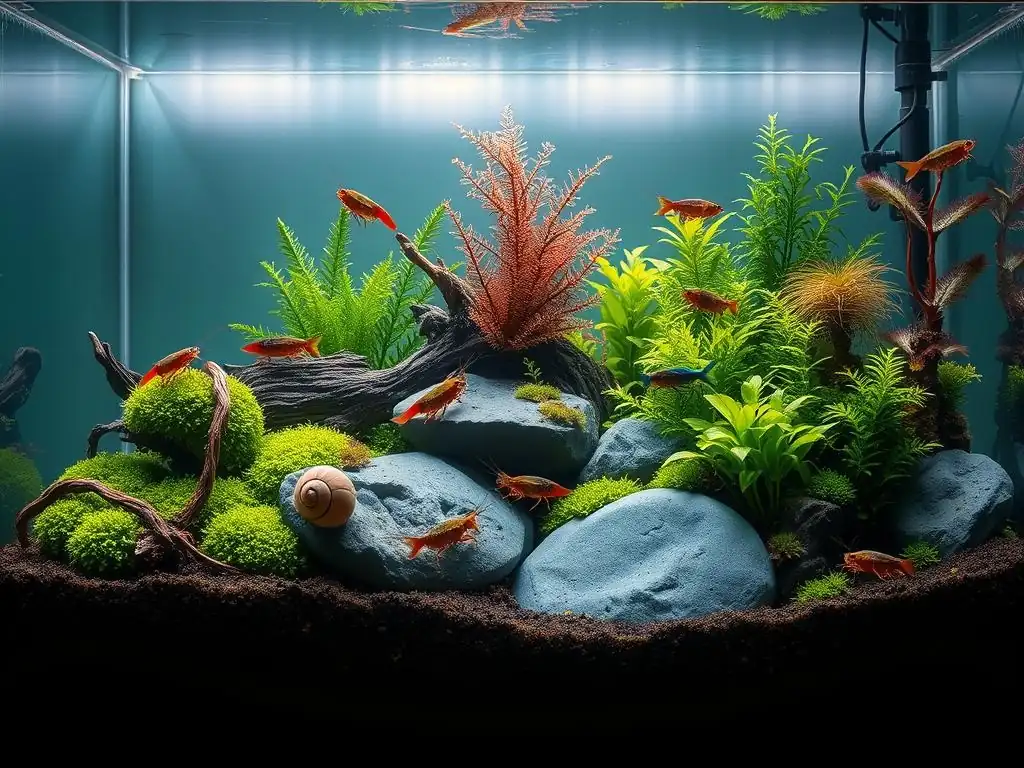
Creating a natural and aesthetically pleasing aquascape in your Caridina tank enhances both the visual appeal for the aquarist and the living environment for the shrimp. Incorporating natural hardscape elements such as driftwood and inert rocks (e.g., Seiryu stone, lava rock, petrified wood) provides excellent surfaces for biofilm growth, which is a continuous food source for shrimp. These elements also offer structural interest and numerous hiding spots, crucial for shrimp during molting or when feeling stressed.
When selecting plants, consider layering them to create depth and visual interest. Foreground plants like Monte Carlo (though often requiring CO2) or small carpeting mosses can create a lush base. Midground plants such as various Anubias or Bucephalandra species, often attached to driftwood or rocks, add texture and cover.
Background plants like taller stem plants (if light permits) or large Cryptocorynes provide a green backdrop and additional nitrate absorption. Ensure that the aquascape provides open areas for the shrimp to forage and for you to observe them, balanced with dense pockets of plants for security. A well-designed Caridina tank soil setup, combined with thoughtful aquascaping, creates a miniature ecosystem that is both beautiful and functional.
Avoiding Plants That Can Harm Caridina Shrimp
While most aquatic plants are beneficial, it's crucial to be aware of potential hazards, especially regarding new plant introductions and fertilization. The primary concern is the presence of pesticides. Many commercially grown aquatic plants are cultivated emersed (out of water) and may be treated with pesticides to control terrestrial pests.
These chemicals, even in trace amounts, are highly toxic to invertebrates like Caridina shrimp. Always quarantine new plants for at least 2-3 weeks in a separate container, performing daily 100% water changes to leach out any residual chemicals. Some aquarists also recommend a potassium permanganate dip as an extra precaution, followed by thorough rinsing.
Another significant concern is copper, which is a common ingredient in some plant fertilizers. While essential for plant growth in minute quantities, copper is lethal to shrimp. Always check the ingredient list of any plant fertilizer you intend to use, ensuring it is explicitly labeled as "shrimp-safe" or "copper-free." Even if a plant fertilizer is low in copper, it's generally safer to dose sparingly in a Caridina tank, as the shrimp graze on the plants and can absorb these elements. Opt for plants that thrive in low-tech, low-fertilizer setups, reducing the need for potentially harmful additives.
Introducing Caridina Shrimp to Their New Home: Acclimation Techniques
Slowly Acclimating Shrimp to Your Tank's Water Parameters
Introducing Caridina shrimp to their new home is a critical phase, and improper acclimation is a leading cause of stress and mortality. These sensitive invertebrates are highly susceptible to sudden changes in water parameters, including pH, GH, KH, and temperature. The drip acclimation method is widely considered the safest and most effective technique. Begin by floating the sealed bag containing the shrimp in your tank for 15-20 minutes to equalize the water temperature.
After temperature equalization, carefully open the bag and pour the shrimp and their water into a clean, dedicated container (e.g., a small plastic bin or bucket). Using an air line tube with a knot or an airline valve to regulate flow, start a slow drip from your main tank into the container. Aim for a rate of 1-2 drips per second.
Continue this process for at least 1 to 3 hours, allowing the water in the container to slowly mix with your tank water, gradually adjusting the shrimp to the new parameters. Once the volume in the container has roughly quadrupled, use a shrimp net to gently transfer the shrimp into your tank, discarding the old water from the container to prevent introducing any unwanted substances.
Monitoring Shrimp Behavior After Introduction
Once your Caridina shrimp have been carefully introduced to their new home, close observation of their behavior over the next 24-48 hours is crucial to assess their adaptation and overall well-being. Healthy, well-acclimated shrimp will typically begin exploring their new environment within a few minutes to an hour. They will start grazing on surfaces, picking at biofilm on plants and substrate, and exhibiting active, curious behavior. Their coloration should remain vibrant and consistent with their species.
Conversely, signs of stress include frantic swimming around the tank, particularly near the surface or sides, lethargy (sitting motionless for extended periods), loss of color, or attempting to jump out of the water. If you observe these symptoms, it indicates that the shrimp are struggling to adapt, and immediate action may be required, such as performing a small, slow water change with perfectly matched parameters or double-checking your water parameters for any unexpected swings.
However, it's also important to give them some space and not disturb them excessively during this initial period, allowing them to settle into their new surroundings.
Maintaining Your Caridina Tank: Regular Water Changes and Maintenance
Performing Regular Water Changes Without Stressing Your Shrimp
Regular water changes are fundamental to the long-term health of your Caridina tank, but they must be performed with extreme care to avoid stressing these sensitive invertebrates. Small, frequent water changes are far superior to large, infrequent ones. Aim for a 10-15% water change weekly or bi-weekly, depending on your tank's bioload and nitrate levels. Always use temperature-matched, remineralized RO/DI water. A sudden temperature swing of even a few degrees can shock shrimp and lead to failed molts.
When siphoning water out, do so gently, avoiding vigorous disturbance of the Caridina tank soil setup or the shrimp themselves. A small, narrow siphon or airline tubing can be effective for precision.
To prevent accidentally sucking up shrimplets, attach a fine mesh net or a piece of sponge over the siphon's intake. When refilling, pour the new water slowly onto a flat surface like a plastic bag or a plate resting on the substrate, or use a drip system, to diffuse the flow and prevent disturbing the shrimp or stirring up the substrate, which could release trapped detritus or ammonia.
Cleaning the Substrate and Removing Debris
Maintaining a clean substrate is important for water quality, but the approach for a Caridina tank soil setup differs from that of a typical fish tank. Active substrates should not be deeply gravel vacuumed, as this can disrupt their buffering properties, release trapped nutrients, and compact the soil. Instead, focus on light surface cleaning and the removal of visible debris. Use a small, narrow siphon or a turkey baster to spot clean any uneaten food, shed exoskeletons, or large pieces of plant decay from the top layer of the substrate.
Prompt removal of uneaten food is particularly critical, as decaying food can quickly lead to ammonia spikes, which are lethal to Caridina shrimp. If you notice an accumulation of detritus on the substrate surface, a very gentle, shallow siphon can be used to skim it off. However, remember that Caridina shrimp actively graze on the biofilm that develops on surfaces, including the substrate, so a completely sterile environment is not desirable. The goal is to remove excess organic waste without disrupting the beneficial microbial ecosystem within the Caridina tank soil.
Long-Term Success with Your Caridina Shrimp Tank: Tips and Tricks
Achieving long-term success with your Caridina shrimp tank hinges on consistency, patience, and a deep understanding of their specific needs. Consistent water parameters are arguably the most crucial factor; frequent testing and meticulous adherence to the target pH, GH, KH, and TDS levels will prevent stress and promote a thriving colony. Avoid overfeeding, as Caridina shrimp primarily graze on biofilm and algae; a tiny amount of high-quality shrimp food 2-3 times a week is often sufficient, ensuring no food remains uneaten for more than a few hours.
Regularly monitor your shrimp for signs of health or stress, such as active grazing, clear coloration, and successful molts. Establish a strict quarantine protocol for any new inhabitants, whether fish, other shrimp, or plants, to prevent the introduction of diseases or pests. Always have a dedicated set of Caridina tank soil setup equipment, including separate nets and siphons, to avoid cross-contamination. Finally, remember that Caridina tanks thrive on stability and minimal intervention. Resist the urge to constantly rearrange or over-clean. A stable, well-maintained environment will lead to a robust, healthy, and self-sustaining Caridina shrimp colony.
Frequently Asked Questions
What is the best type of soil for a Caridina shrimp tank?
The best type of soil is one designed specifically for Caridina shrimp, such as aquatic soil that lowers the pH and KH of the water. These soils typically contain beneficial nutrients and buffers.
Why is soil important for Caridina shrimp?
Soil is crucial because it helps to maintain the ideal water parameters for Caridina shrimp, specifically a slightly acidic pH and low KH. It also provides a surface for beneficial bacteria to colonize.
How often should I replace the soil in my Caridina tank?
Generally, Caridina tank soil needs replacing every 12-18 months, as its buffering capacity diminishes over time. Monitor your water parameters closely to determine when a replacement is necessary, looking for rising pH or KH.
What type of filtration is recommended for a Caridina tank with soil?
Sponge filters are highly recommended, as they provide gentle filtration and a large surface area for beneficial bacteria growth. Avoid strong filters that create excessive flow, which Caridina shrimp dislike.
What are the ideal flow rates for a Caridina shrimp tank using soil?
Caridina shrimp prefer low flow rates. Aim for a gentle circulation of the water, typically around 3-5 times the tank volume per hour. Too much flow can stress the shrimp.
Final Reflection: Cultivating Thriving Caridina Ecosystems
The meticulous details of a Caridina tank soil setup, as explored throughout this article, are not merely about aesthetics; they represent a commitment to creating a miniature ecosystem where these delicate creatures can flourish. Understanding the nuances of soil composition, filtration efficiency, and optimal flow rates is paramount in ensuring the health and longevity of your Caridina shrimp, transforming a simple aquarium into a vibrant and self-sustaining habitat.
This journey into the intricacies of Caridina keeping has profoundly influenced my understanding of the delicate balance within aquatic environments. Witnessing the vibrant colors and intricate behaviors of these tiny shrimp thriving in a well-maintained tank is a testament to the power of informed and dedicated care. As Jacques Cousteau wisely stated, The sea, once it casts its spell, holds one in its net of wonder forever.
This sentiment extends to the microcosm of our aquariums, reminding us of the interconnectedness of life and the responsibility we bear as stewards of these miniature worlds.
Now, as you embark on or refine your own Caridina tank journey, I invite you to reflect on the principles we've discussed. Consider how you can further optimize your setup to mimic the natural habitats of these fascinating creatures. Let the knowledge gained here inspire you to not only create a beautiful aquarium but also to foster a thriving ecosystem where your Caridina shrimp can truly thrive, bringing you endless joy and a deeper appreciation for the wonders of the aquatic world.
Transform Your Tank: Start Your Caridina Paradise Now!
Thank you for diving into the secrets of Caridina tank setup! We hope you've gained valuable insights into creating the perfect environment for your delicate shrimp. Now it's time to put that knowledge into action!
Here's how you can bring your dream Caridina tank to life:
- Start planning your hardscape! Spend this week visualizing your ideal aquascape, research compatible plants, and create a detailed blueprint.
- Share your Caridina tank inspiration! Post pictures of your dream tank setup on social media using #AquariumMasteryCaridina and inspire others.
- Brainstorm unexpected tankmates! Research nano fish that might coexist with Caridina shrimp (with extreme caution and proper research! ), and then research plants that will help create a vibrant eco-system.
Ready to embark on your Caridina journey? What unique element will you bring to your shrimp paradise?