
What is "Egg Tumbling" for Cichlids and Is It Necessary?

Welcome to Aquarium Mastery!
Ever wondered if mimicking nature's currents is essential for successfully raising Cichlid fry? This article dives deep into the fascinating world of "Egg Tumbling" – a technique used by aquarists to dramatically improve hatching rates. Discover whether it's a must-do or a can-skip for your Cichlid breeding endeavors and learn the secrets to maximizing your success! Ready to unlock the potential of your Cichlid breeding program? Let's get started!
- Egg Tumbling for Cichlids: Necessity and Techniques
- Cichlid Egg Care: An Overview
- Egg Tumbling: Mimicking Parental Care
- Necessity of Egg Tumbling: Species-Specific Considerations
- Setting Up an Egg Tumbler
- Alternatives to Egg Tumbling: Natural Incubation
- Troubleshooting Egg Tumbling
- Egg Tumbling vs. Natural Incubation: A Comparison
- Advanced Tips for Successful Breeding
- Preventing Egg Loss
- Egg Tumbling: A Tool for Aquarists
-
Frequently Asked Questions
- What exactly is "egg tumbling" in the context of cichlid breeding?
- Why is egg tumbling sometimes considered necessary for cichlid eggs?
- How is egg tumbling typically performed in a home aquarium setting?
- What are the potential downsides or risks associated with artificially tumbling cichlid eggs?
- Are there any cichlid species where egg tumbling is generally considered unnecessary?
- Final Reflection: Nurturing Life, Preventing Loss
- Ignite Your Cichlid Breeding Success!
Egg Tumbling for Cichlids: Necessity and Techniques
Cichlid Egg Care: An Overview
Oxygenation and Fungus Prevention
The successful incubation of cichlid eggs hinges critically on two primary factors: consistent oxygenation and rigorous fungus prevention. Cichlid eggs, like all fish eggs, are highly susceptible to fungal infections, particularly if they are unfertilized or if water circulation is poor. A lack of adequate water flow starves the developing embryos of vital oxygen and allows fungal spores, which are ubiquitous in aquarium water, to settle and proliferate on the egg surface. Once established, fungus can rapidly spread from infected eggs to healthy ones, potentially leading to the complete loss of an entire clutch within 24 to 48 hours.
To combat these threats, a constant supply of oxygenated water must flow over the eggs. In nature, cichlid parents achieve this through diligent fanning of the eggs with their fins or, in the case of mouthbrooders, by constantly "tumbling" the eggs within their buccal cavity. This natural action ensures that metabolic waste products are flushed away and fresh, oxygen-rich water reaches every egg. Understanding these fundamental needs is the first step in effective Cichlid egg tumbling prevention of widespread fungal outbreaks and ensuring high hatch rates.
Mouthbrooders vs. Substrate Spawners
Cichlids exhibit diverse breeding strategies, broadly categorized into mouthbrooders and substrate spawners, a distinction critical for understanding the relevance of egg tumbling. Mouthbrooding cichlids, such as many African Rift Lake species like Mbuna (e.g., Maylandia zebra) and Peacocks (e.g., Aulonocara jacobfreibergi), incubate their eggs within the female's mouth. The female carries the eggs, constantly rotating and aerating them, until they hatch and the fry are free-swimming. This natural tumbling provides inherent oxygenation and protection from external threats.
In contrast, substrate spawners, including species like Convict Cichlids ( Amatitlania nigrofasciata) and Angelfish (though not a true cichlid, they share similar spawning habits), lay their adhesive eggs on flat surfaces such as rocks, leaves, or even the aquarium glass. Both parents typically guard and fan these eggs, ensuring oxygenation and deterring predators. The choice between natural incubation and artificial egg tumbling largely depends on which of these breeding strategies the cichlid species employs and the specific challenges faced by the aquarist, making the decision for Cichlid egg tumbling prevention of issues a species-specific one.
Egg Tumbling: Mimicking Parental Care
Definition and Function
Egg tumbling is an artificial incubation method that simulates the natural fanning or oral tumbling action provided by cichlid parents, particularly mouthbrooding females. It involves placing cichlid eggs in a specialized device, known as an egg tumbler, where a gentle, continuous flow of water is directed over them. The primary function of this continuous water movement is to keep the eggs in constant motion, preventing them from settling and allowing fresh, oxygenated water to circulate around each individual egg.
This technique is invaluable for aquarists aiming to maximize hatch rates, especially when natural parental care is absent, insufficient, or undesirable. For instance, if a breeding pair of substrate spawners consumes their eggs, or if a mouthbrooding female is stressed and spits out her clutch prematurely, an egg tumbler can serve as a vital surrogate incubator. By understanding the definition and function of egg tumbling, aquarists gain a powerful tool for Cichlid egg tumbling prevention of complete clutch loss in challenging breeding scenarios.
Ensuring Oxygenation and Preventing Fungus
The efficacy of an egg tumbler lies in its ability to meticulously ensure oxygenation and robustly prevent fungal proliferation. The constant, gentle agitation within the tumbler means that each egg is continually exposed to fresh, oxygen-rich water, which is paramount for the developing embryo's metabolic needs. Without this consistent flow, stagnant water pockets could form around the eggs, leading to oxygen depletion and the accumulation of waste products. For instance, studies have shown that maintaining oxygen saturation above 6 mg/L significantly improves hatch rates, often increasing viability from a meager 30% to over 85% for susceptible clutches.
Furthermore, the continuous movement effectively deters the settlement and growth of fungal spores. Fungi require a stable surface to colonize, and the constant rolling or "tumbling" action physically prevents them from adhering to the egg membrane. This active physical barrier is a cornerstone of Cichlid egg tumbling prevention of devastating fungal infections, which can otherwise decimate an entire batch of eggs overnight. By providing both optimal oxygen levels and a dynamic environment, the egg tumbler creates an ideal artificial incubation chamber.
Necessity of Egg Tumbling: Species-Specific Considerations
When Egg Tumbling is Beneficial: Substrate Spawners
For substrate-spawning cichlids, egg tumbling can be remarkably beneficial, though not always strictly necessary. It becomes particularly advantageous in situations where natural parental care is compromised or when the aquarist aims for a significantly higher yield. Common scenarios include:
- First-time parents: Inexperienced cichlid pairs may inadvertently eat their first few clutches due to stress, hunger, or lack of proper instinct.
- Aggression or stress: In community tanks, or even dedicated breeding setups, aggression from tank mates or the male cichlid towards the female can lead to egg abandonment.
- High-value eggs: For rare or genetically significant strains, maximizing every clutch's survival is paramount.
- Faster re-breeding: Removing eggs allows the parents to condition and breed again sooner, increasing overall production.
Species like Convict Cichlids ( Amatitlania nigrofasciata) and Kribensis cichlids ( Pelvicachromis pulcher) are excellent examples where tumbling can supplement or replace natural care. While these species are generally attentive parents, introducing a tumbler can be a strategic move for Cichlid egg tumbling prevention of loss under less-than-ideal conditions.
Egg Tumbling for Convict Cichlids
Convict Cichlids ( Amatitlania nigrofasciata) are renowned for their prolific breeding and often exceptional parental care, making them a popular choice for beginner cichlid breeders. They are classic substrate spawners, laying their eggs in caves or on vertical surfaces, and both parents diligently guard and fan the clutch. Despite their strong parental instincts, there are specific instances where egg tumbling for Convict Cichlids can be advantageous. For example, if a pair repeatedly consumes their eggs, or if the goal is to produce an exceptionally large number of fry without the parents' stress or space requirements.
In such cases, carefully siphoning the eggs from the spawning site into an egg tumbler can significantly boost the hatch rate, sometimes from a typical 60-70% with stressed parents to over 90% in a controlled tumbling environment. While not a necessity for Cichlid egg tumbling prevention of loss with healthy, established Convict pairs, it offers a reliable alternative for maximizing yield or overcoming specific behavioral challenges.
When Egg Tumbling is Unnecessary or Harmful: Mouthbrooders
For mouthbrooding cichlids, egg tumbling is generally unnecessary and, in many cases, can be detrimental. Species such as the vast majority of African Rift Lake cichlids, including Mbuna (e.g., Metriaclima estherae) and Peacock Cichlids ( Aulonocara species), have evolved a sophisticated natural incubation process where the female carries and constantly tumbles the eggs within her buccal cavity. This natural method provides optimal oxygenation, protection from predators, and even anti-fungal properties through the female's oral environment.
Interfering with this natural process by prematurely "stripping" eggs from the female's mouth and placing them in an artificial tumbler can be stressful for the female and potentially damaging to the delicate eggs. While it is sometimes done for commercial breeding or specific scientific purposes, it carries risks of lower hatch rates if not executed perfectly, as the eggs lose the unique benefits of the mother's care.
For the average aquarist, the best Cichlid egg tumbling prevention for mouthbrooders is simply to allow the female to complete her natural incubation, as her inherent care far surpasses any artificial setup in terms of ease and effectiveness.
Setting Up an Egg Tumbler
Selecting a Tumbler
Choosing the right egg tumbler is crucial for successful artificial incubation. Aquarists have options ranging from commercially manufactured units to DIY solutions. Commercial tumblers, like the Ziss Aqua BL-30 or BL-50 models, are specifically designed for fish eggs, offering features such as adjustable flow rates, fine mesh screens to prevent fry escape, and durable construction.
These are often preferred for their reliability and ease of use. DIY tumblers can be fashioned from readily available materials such as plastic soda bottles or PVC pipes, with fine mesh glued to the ends and an air stone inserted to create the tumbling action.
When selecting, consider the size of the cichlid eggs (smaller eggs require finer mesh to prevent escape), the quantity of eggs to be incubated, and the ease of cleaning. A tumbler that allows for gentle, consistent water flow without causing excessive turbulence or damaging the delicate egg membranes is paramount. For Cichlid egg tumbling prevention of damage, ensure the internal surface is smooth and free of sharp edges.
Airflow and Water Parameters
Precise control over airflow and meticulous maintenance of water parameters are the cornerstones of successful egg tumbling. The airflow, typically supplied by an air pump connected to an air stone within the tumbler, must be gentle enough to ensure the eggs "dance" or lightly roll without being violently tossed around or damaged. Too strong a flow can bruise or rupture eggs, while too weak a flow will result in insufficient oxygenation and allow fungus to proliferate. A common observation is to adjust the air flow so that the eggs are gently lifted and fall, creating a continuous, soft motion.
Furthermore, the water parameters within the egg tumbler must precisely match those of the breeding tank, particularly temperature, pH, and hardness. Cichlid eggs are highly sensitive to sudden fluctuations; even a shift of 1-2°C or 0.2 pH units can significantly reduce viability or cause developmental issues. It is advisable to use water directly from the breeding tank for the tumbler setup and to perform small, frequent water changes (e.g., 10-20% daily) with perfectly matched, dechlorinated water to maintain pristine conditions and assist in Cichlid egg tumbling prevention of bacterial or fungal outbreaks.
Monitoring Egg Development
Consistent monitoring of egg development is a critical aspect of artificial incubation in an egg tumbler. Daily observation allows the aquarist to track the progress of the embryos and promptly identify any issues.
Healthy, fertilized cichlid eggs typically remain translucent or clear, gradually showing signs of development such as the appearance of eye spots (often visible within 2-3 days post-spawn for many species) and later, a visible spine or tail twitching. The incubation period varies by species and temperature; for instance, Convict Cichlid eggs usually hatch in 3-5 days at 26°C (79°F), while some African cichlids might take 5-7 days.
Conversely, unfertilized or non-viable eggs will typically turn opaque white within 24-48 hours and often develop a fuzzy, cotton-like fungal growth. It is imperative to remove these compromised eggs immediately using a small pipette or turkey baster. This proactive removal is a key component of Cichlid egg tumbling prevention of fungal spread, as fungus on one egg can quickly propagate to healthy adjacent eggs, potentially destroying the entire clutch. Regular observation ensures that only viable eggs continue to receive optimal care.
Alternatives to Egg Tumbling: Natural Incubation
Parental Incubation
Parental incubation represents the most natural and often least labor-intensive method for breeding cichlids. In this scenario, the cichlid parents, whether mouthbrooders or substrate spawners, are allowed to perform their inherent duties of guarding, fanning, or orally incubating their eggs and fry. For substrate spawners like Convict Cichlids, both male and female will typically fan the eggs with their fins, remove unfertilized eggs, and protect the developing clutch from perceived threats. Mouthbrooding females, such as those from the Aulonocara or Mbuna genera, will diligently hold the eggs in their buccal cavity for weeks, providing constant aeration and protection.
The advantages of parental incubation include reduced stress for the aquarist, the observation of natural cichlid behavior, and often, the production of more robust and well-socialized fry. However, disadvantages can arise: inexperienced parents may consume their eggs, aggression within a community tank can lead to clutch abandonment or predation, and the yield might be lower compared to artificial methods in certain circumstances. Despite these drawbacks, for many aquarists, allowing parents to raise their young is the preferred and most rewarding approach, making it the ultimate Cichlid egg tumbling prevention method by default.
Artificial Incubation
Beyond egg tumbling, other forms of artificial incubation exist, though they are less commonly employed for cichlid eggs due to the efficiency of tumblers. One such method involves placing eggs on a flat surface, such as a petri dish or a small container, with an air stone providing gentle aeration directly beneath or beside them. This method requires very precise control over water flow and hygiene, as eggs are more susceptible to fungal growth without the constant "tumbling" action.
Another approach, sometimes used for very delicate or difficult-to-tumble eggs, involves static incubation in a small container with daily water changes and the addition of anti-fungal agents like methylene blue (used sparingly due to its staining properties and potential toxicity). While these methods can sometimes work, they demand more active intervention from the aquarist in terms of water quality management and manual removal of fungused eggs. They generally offer fewer advantages than a purpose-built egg tumbler for Cichlid egg tumbling prevention of fungus and ensuring high oxygen levels.
Troubleshooting Egg Tumbling
Fungus Prevention
Fungal outbreaks are arguably the most common and devastating issue encountered during egg tumbling. Even with optimal tumbling, fungus can still appear, primarily on unfertilized or non-viable eggs, and then rapidly spread. Effective fungus prevention involves a multi-pronged approach:
- Immediate Removal of Affected Eggs: As soon as an egg turns opaque white and shows signs of fuzziness, it must be removed. Use a fine pipette or turkey baster to gently siphon it out without disturbing healthy eggs.
- Pristine Water Quality: Maintain zero ammonia and nitrite levels. Perform small, daily water changes (e.g., 10-15%) with perfectly matched, dechlorinated water from the breeding tank.
- Chemical Aids (Use Sparingly): In severe cases, a very dilute solution of methylene blue can be added to the tumbler water. This antifungal agent should be used with caution as it can stain equipment and may have subtle effects on egg development. A typical concentration might be 1 drop per gallon, diluted first.
Implementing these strategies proactively is essential for Cichlid egg tumbling prevention of widespread fungal infections and ensuring a successful hatch.
Maintaining Water Parameters
Maintaining stable and appropriate water parameters is paramount for the successful development of cichlid eggs in a tumbler. Any significant deviation from the ideal conditions can stress the developing embryos, leading to deformities, premature hatching, or complete mortality. The temperature in the tumbler should precisely match that of the breeding tank, typically within the range of 24-28°C (75-82°F) for most cichlids, with specific preferences varying by species. A drop of even 2-3°C can significantly slow development or cause death.
Similarly, pH and hardness (GH/KH) must be kept consistent. African Rift Lake cichlid eggs, for example, thrive in hard, alkaline water (pH 7.8-8.5, GH 10-20 dGH), while many South American cichlid eggs prefer softer, acidic conditions. Regular testing (daily) is crucial to detect any shifts, and corrective actions, such as buffering or adding RO water, should be taken gently and incrementally. Consistent parameters are key to Cichlid egg tumbling prevention of developmental failure.
Identifying and Removing Unfertilized Eggs
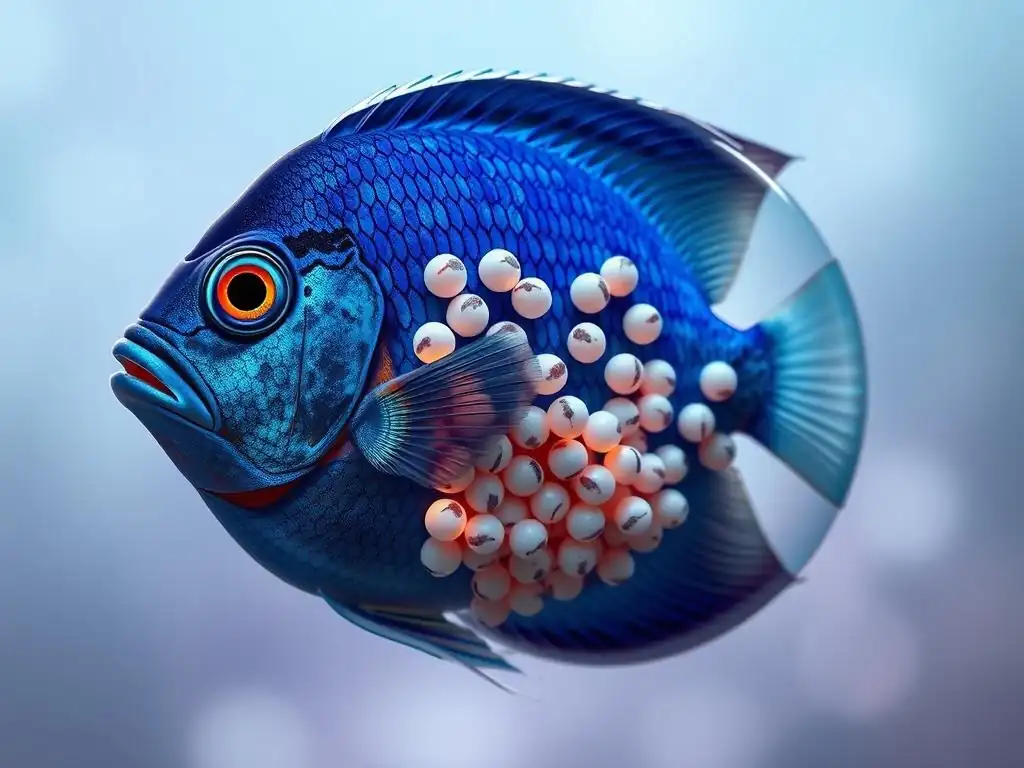
A critical skill in successful egg tumbling is the ability to accurately identify and promptly remove unfertilized or non-viable eggs. Within 24 to 48 hours of spawning, healthy, fertilized cichlid eggs will typically remain translucent or clear, sometimes showing a slight yellowish tint depending on the species. As development progresses, tiny eye spots may become visible, followed by the appearance of a developing embryo.
In stark contrast, unfertilized eggs will quickly turn opaque white, often within 12-24 hours. This change in color is usually followed by the development of a fuzzy, cotton-like fungal growth, as these dead eggs provide a perfect substrate for fungal colonization. It is absolutely essential to remove these white, fungused eggs as soon as they are identified.
Fungus spreads rapidly through direct contact, and a single infected egg can quickly compromise an entire clutch. A small, sterile pipette or a fine-tipped turkey baster can be used to gently siphon out the affected eggs without disturbing the healthy ones. This proactive measure is a primary method for Cichlid egg tumbling prevention of widespread fungal infections.
Egg Tumbling vs. Natural Incubation: A Comparison
Advantages and Disadvantages
Choosing between egg tumbling and natural incubation involves weighing several advantages and disadvantages:
Egg Tumbling:
- Advantages:
- Higher Yield: Often results in a significantly higher number of viable fry, especially from inexperienced parents or in challenging tank environments.
- Faster Re-breeding: For mouthbrooders, stripping eggs allows the female to recondition and spawn sooner, increasing production cycles.
- Controlled Environment: Allows for precise control over water parameters and reduces risk of parental predation or aggression.
- Disadvantages:
- Requires Equipment & Skill: Necessitates specialized equipment and a learning curve for successful operation.
- Risk of Damage: Improper tumbling or handling can damage delicate eggs.
- Fry Care: Aquarist must manage fry feeding and rearing independently.
Natural Incubation:
- Advantages:
- Less Effort: Requires minimal intervention from the aquarist; parents do the work.
- Natural Behavior: Allows observation of fascinating cichlid parental care.
- Stronger Fry: Fry raised by parents may exhibit better social skills and resilience.
- Disadvantages:
- Lower Yield: Vulnerable to parental consumption, aggression from tank mates, or stress-induced abandonment.
- Slower Re-breeding: Mouthbrooding females are occupied for weeks, delaying next spawn.
- Aggression: Breeding pairs can become highly aggressive, necessitating tank separation.
Selecting the Optimal Method
The optimal method for cichlid egg incubation hinges on several key factors, including the specific cichlid species, the aquarist's experience level, and their breeding objectives. For most mouthbrooding cichlids, such as African Mbuna and Peacocks, natural incubation by the female is almost always the preferred and most effective method. Their evolutionary adaptation for oral incubation provides superior protection and aeration that artificial tumblers struggle to perfectly replicate. For these species, allowing the female to hold her eggs is the best Cichlid egg tumbling prevention strategy for issues.
Conversely, for substrate-spawning cichlids, especially if dealing with first-time parents who might consume their eggs, or in situations where maximizing yield is paramount (e.g., for commercial breeding or rare species), egg tumbling becomes a highly beneficial tool. It provides a reliable backup and can significantly increase the number of fry reaching maturity. Ultimately, the decision involves a careful assessment of the pros and cons relative to the specific breeding scenario and the aquarist's comfort with the technical demands of artificial incubation.
Advanced Tips for Successful Breeding
Water Quality Optimization
Optimizing water quality is arguably the single most critical factor for successful cichlid breeding, impacting everything from egg viability to fry survival. For African Rift Lake cichlids, this means maintaining consistently high pH (typically 7.8-8.5), high hardness (GH 10-20 dGH), and adequate alkalinity (KH 10-15 dKH). South American cichlids, conversely, often require softer, more acidic conditions. Regardless of species, ammonia and nitrite must be at zero parts per million (ppm), and nitrates kept very low, ideally below 10 ppm.
Achieving this requires a robust filtration system (mechanical, biological, and chemical), regular and appropriately sized water changes (e.g., 25-30% twice a week for breeding tanks), and the use of a reliable water conditioner that neutralizes chlorine and chloramines. Consistent temperature, typically within a species-specific optimal range, is also vital. Stable, pristine water quality creates an environment where Cichlid egg tumbling prevention of fungal issues is inherently supported, whether eggs are in a tumbler or with parents.
Stress Reduction
Minimizing stress for breeding cichlids is paramount for successful spawning, egg development, and fry survival. Stressed fish are less likely to breed, may abandon or consume eggs, and can exhibit weakened immune systems. To reduce stress:
- Provide Hiding Spots: Ample caves, rockwork, and decor create secure territories and escape routes, especially for females or subordinate males.
- Appropriate Tank Mates: Ensure tank mates are compatible and not overly aggressive. In many cases, a dedicated breeding tank is ideal to isolate the pair.
- Stable Environment: Maintain consistent lighting cycles, water parameters, and avoid sudden disturbances like loud noises or rapid movements near the tank.
- Proper Nutrition: A varied, high-quality diet boosts overall health and breeding readiness.
For mouthbrooding females, stress can lead to premature spitting of eggs. Creating a calm, secure environment is a proactive Cichlid egg tumbling prevention measure, as it encourages natural parental care and reduces the likelihood of needing artificial intervention.
Feeding Fry After Hatching: Brine Shrimp and Micro Worms
Once cichlid fry hatch and absorb their yolk sacs (typically 3-7 days post-hatch, depending on species and temperature), they become free-swimming and require their first external food source. Providing appropriate, highly nutritious food is critical for their rapid growth and survival. Newly hatched brine shrimp nauplii are an excellent choice for most cichlid fry. They are live, highly nutritious, and their jerky swimming motion stimulates the fry's feeding response. Hatching brine shrimp requires a separate setup (e.g., a brine shrimp hatchery) but is well worth the effort.
Alternatively, micro worms are another superb first food, particularly for smaller fry, as they are live and very small. Finely crushed high-quality flake food (especially spirulina-based) or specialized fry foods can also be used, but live foods generally yield better growth rates. Fry should be fed small amounts multiple times a day (3-5 times) to ensure they always have access to food, but care must be taken not to overfeed, which can quickly foul the water. Proper nutrition is key to Cichlid egg tumbling prevention of stunting or mortality in the delicate fry stage.
Preventing Egg Loss
Minimizing Stress
Minimizing stress throughout the breeding process is a foundational strategy for preventing cichlid egg loss. Stressors can manifest in various forms, including inconsistent water parameters, overcrowding, aggressive tank mates, inadequate hiding spots, and sudden environmental changes (e.g., drastic temperature swings, bright lights left on during the night). When cichlids, particularly breeding pairs, are under stress, their natural instincts can be compromised. This might lead to first-time parents consuming their eggs, experienced parents abandoning a clutch, or mouthbrooding females spitting out their eggs prematurely.
To mitigate stress, ensure the breeding tank is appropriately sized for the species, provide ample visual breaks and hiding places, maintain stable and species-appropriate water conditions, and introduce tank mates only if they are compatible and do not pose a threat to the breeding pair or their offspring. A calm, secure environment allows cichlids to focus on their natural breeding behaviors, serving as a proactive Cichlid egg tumbling prevention measure by supporting successful natural incubation.
Addressing Aggression
Aggression is a common characteristic among many cichlid species, particularly during breeding when territorial instincts are heightened. Unchecked aggression can be a significant cause of egg loss. A male may relentlessly harass a female to spawn, or attack her once eggs are laid, leading to her abandoning the clutch or even being severely injured. In community tanks, other fish may prey on unguarded eggs.
Addressing aggression involves several strategies:
- Adequate Space: Provide a sufficiently large tank with plenty of territories and visual barriers (e.g., rock piles, tall plants) to break line of sight.
- Compatible Tank Mates: Choose tank mates carefully, avoiding overly aggressive or overly timid species that might become targets.
- Gender Ratios: For polygamous species, maintaining a ratio of one male to multiple females can diffuse aggression.
- Isolation: In severe cases, or for consistent breeding, isolating the breeding pair in a dedicated tank is often the most effective solution.
- Intervention: If a female is being relentlessly pursued after spawning (especially mouthbrooders), she may need to be moved to a separate "holding" tank to safely incubate her eggs.
Proactive management of aggression is crucial for Cichlid egg tumbling prevention by ensuring the safety and successful incubation of the eggs.
Egg Tumbling: A Tool for Aquarists
Mastering Egg Tumbling
Mastering egg tumbling is a valuable skill for any serious cichlid aquarist looking to maximize breeding success, especially with challenging species or in specific breeding scenarios. It is not merely about setting up a device; it involves a nuanced understanding of water flow dynamics, the delicate balance of water parameters, and meticulous observation of egg development. It requires patience to fine-tune the airflow so that eggs are gently agitated without being damaged, and a keen eye to promptly identify and remove unfertilized or fungused eggs before they compromise the entire batch.
With practice, aquarists learn to anticipate potential issues and implement corrective actions swiftly. This mastery allows for the rescue of clutches that might otherwise be lost due to parental inexperience, aggression, or premature abandonment. Ultimately, mastering egg tumbling transforms it from a mere technique into a powerful tool, contributing significantly to the Cichlid egg tumbling prevention of widespread losses and ensuring a higher yield of healthy fry.
New Developments in Cichlid Breeding
The field of cichlid breeding continues to evolve, with new developments constantly emerging that enhance aquarists' ability to successfully propagate these fascinating fish. While core principles like pristine water quality and proper nutrition remain foundational, advancements in technology and understanding continually refine breeding practices. This includes improved designs for egg tumblers, offering more precise control over flow and easier maintenance, as well as the development of specialized foods tailored to the specific nutritional needs of cichlid fry at different stages of growth.
Furthermore, ongoing research into cichlid genetics, behavior, and environmental triggers provides deeper insights into optimizing breeding conditions and addressing common challenges. Aquarists now have access to more sophisticated water testing kits, automated dosing systems for maintaining parameters, and a wealth of shared knowledge through online communities. These developments collectively contribute to a more informed and efficient approach to cichlid breeding, where the strategic use of tools like egg tumblers, combined with a deep understanding of cichlid biology, continues to improve outcomes and support the Cichlid egg tumbling prevention of common breeding pitfalls.
Frequently Asked Questions
What exactly is "egg tumbling" in the context of cichlid breeding?
Egg tumbling refers to the process of gently rotating or circulating cichlid eggs. This is typically done artificially to mimic the natural fanning behavior of parent fish, ensuring oxygenation and preventing fungal growth.
Why is egg tumbling sometimes considered necessary for cichlid eggs?
Without sufficient water circulation, cichlid eggs are susceptible to fungal infections and oxygen deprivation. Egg tumbling helps maintain a healthy environment, increasing the chances of successful hatching.
How is egg tumbling typically performed in a home aquarium setting?
Aquarists often use air stones, small pumps, or specialized egg tumblers to create a gentle current around the eggs. The goal is to keep the eggs moving without causing damage.
What are the potential downsides or risks associated with artificially tumbling cichlid eggs?
Improperly implemented egg tumbling can damage the delicate egg membranes. Also, it removes the opportunity for parental care, which can be a natural defense against disease.
Are there any cichlid species where egg tumbling is generally considered unnecessary?
Yes, some cichlid species are excellent parents and naturally provide sufficient fanning and protection for their eggs. In these cases, intervention is often not required and can even be detrimental.
Okay, here's a final reflection designed to close your article "What is 'Egg Tumbling' for Cichlids and Is It Necessary?" while optimizing for the keyword "Cichlid egg tumbling prevention," and following the structure you provided:
Final Reflection: Nurturing Life, Preventing Loss
The intricacies of cichlid breeding, particularly the practice of egg tumbling, highlight the dedication and care required to successfully raise these fascinating fish. Understanding and implementing effective cichlid egg tumbling prevention is not merely a technical skill; it's an act of stewardship, ensuring the survival of a new generation and the continuation of the species within our aquariums.
This journey into the world of cichlid egg care has, hopefully, illuminated the importance of understanding the natural processes and adapting our techniques to support them. The delicate balance between intervention and observation is crucial, reminding us that sometimes the best approach is to mimic nature's own rhythms. The best way to observe a fish is to become a fish.
- Jacques Cousteau. This quote reminds us that understanding the environment and needs of our cichlids is paramount to their well-being and reproductive success.
Now, armed with this knowledge, we encourage you to reflect on your own cichlid keeping practices. Consider how you can better support the natural incubation process, implement effective egg tumbling prevention strategies, and ultimately, contribute to the thriving of these captivating creatures. Your dedication to understanding and applying these principles will not only benefit your cichlids but also enrich your own experience as an aquarist.
Ignite Your Cichlid Breeding Success!
Thank you for exploring the world of cichlid egg tumbling with us! We hope you've gained valuable insights into this fascinating aspect of fishkeeping. Now, let's translate that knowledge into action!
- Master the Art: Try building your own DIY egg tumbler using readily available materials and closely monitor the eggs from one of your cichlid pairs.
- Share Your Wisdom: Discuss your experiences with or without egg tumbling in online forums to exchange insights and strategies with fellow cichlid enthusiasts.
- Dive Deeper: Research alternative methods of artificial incubation and compare their effectiveness with egg tumbling, expanding your knowledge of cichlid breeding techniques.
What surprising discoveries did you make while observing your cichlids' breeding behavior, and how did it change your approach to egg care?