
The Fascinating Hermaphroditism of Anthias: Sex Changers in Your Aquarium

Welcome to Aquarium Mastery!
Ever wondered about the secret lives unfolding beneath the surface of your saltwater aquarium? Dive in and explore the captivating world of Anthias! Discover the intriguing phenomenon of sex change in these vibrant reef inhabitants and unlock the secrets to successfully keeping these hermaphroditic beauties thriving in your own tank. Ready to understand the nuances of " Anthias sex change aquarium" dynamics? Let's begin your journey to aquarium mastery!
- Understanding Anthias: Reef-Safe Schooling Fish
- The Unique Biology of Anthias: Protogynous Hermaphroditism Explained
- Anthias Sex Change in the Aquarium: Observing and Understanding
- Managing Anthias Sex Change in Your Reef Aquarium
- The Benefits and Challenges of Anthias Sex Change in Captivity
- Creating an Ideal Aquarium Environment for Anthias to Thrive
- Feeding Anthias: Ensuring Proper Nutrition and Coloration
- Health Considerations for Anthias in Your Aquarium
- Anthias Breeding in Captivity: A Challenging Endeavor
- Conclusion: Appreciating the Wonders of Anthias Sex Change in Your Aquarium
-
Frequently Asked Questions
- How common is sex change in Anthias within an aquarium environment?
- What triggers a sex change in Anthias, specifically regarding aquarium dynamics?
- What are the visible signs that an Anthias is undergoing a sex change in my aquarium?
- How can I ensure a successful sex change in my Anthias tank and maintain a healthy group?
- Is the sex change reversible in Anthias kept in a home aquarium?
- Final Reflection: The Enduring Wonder of Transformation
- Unleash Your Inner Anthias Expert!
Understanding Anthias: Reef-Safe Schooling Fish
Anthias Species Overview for Saltwater Aquariums
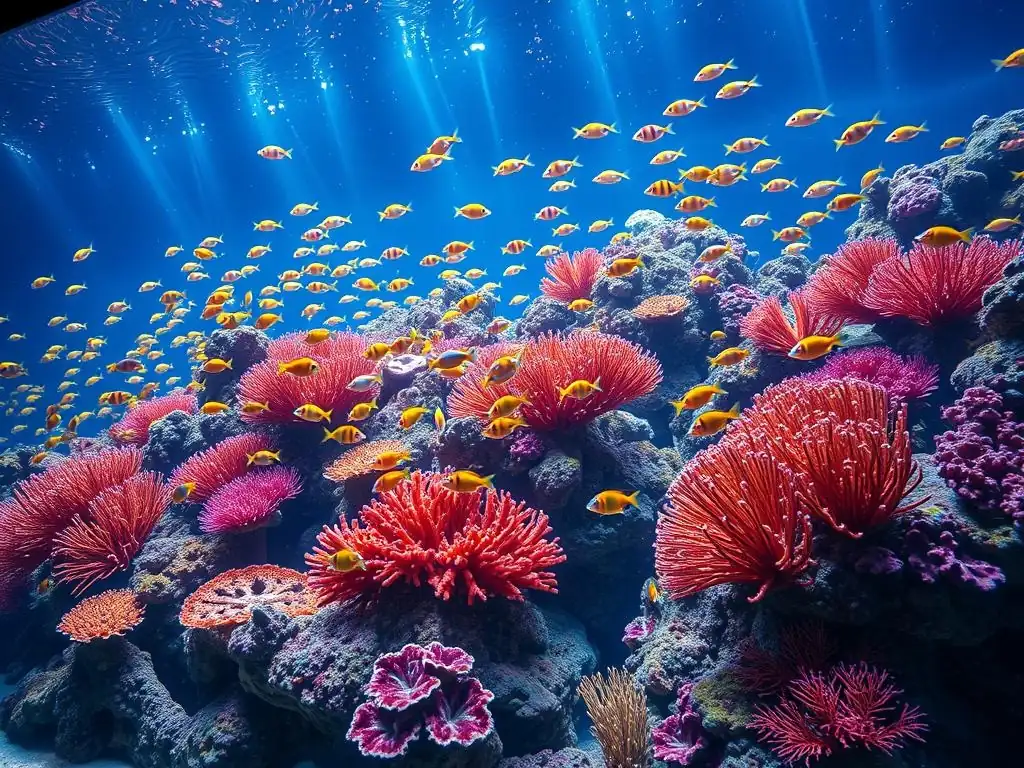
Anthias are a diverse group of highly active, colorful, and captivating fish belonging primarily to the genera Pseudanthias, Serranocirrhitus, and Nemanthias within the Serranidae family. Native to the Indo-Pacific reefs, these fish are celebrated for their vibrant hues, ranging from fiery oranges and reds to striking purples and yellows. They are typically found in large schools, often numbering in the hundreds or even thousands in the wild, inhabiting the upper water column above coral formations where they feed on zooplankton. Their constant movement and dazzling display make them a popular choice for mature saltwater reef aquariums.
These elegant fish generally reach a size of 2 to 6 inches (5 to 15 cm) in captivity, depending on the species. While generally peaceful towards other tank inhabitants, they exhibit a complex social structure within their own species, which is crucial for their well-being in an aquarium setting. Their natural schooling behavior translates into a need for groups in captivity, creating a dynamic and visually stunning focal point in a well-established reef tank.
Popular Anthias Varieties for Reef Tanks
Among the numerous Anthias species, several have become particularly popular in the aquarium trade due to their availability, hardiness, and striking coloration. The Lyretail Anthias ( Pseudanthias squamipinnis) is arguably the most common and recognizable, known for its brilliant orange to red coloration and the distinctively elongated, lyre-shaped tail of the males. They are relatively robust and adapt well to captive life, making them an excellent choice for aquarists.
Another highly sought-after variety is the Dispar Anthias ( Pseudanthias dispar), a smaller species often displaying vibrant orange bodies with a prominent red stripe along the dorsal fin. Bartlett's Anthias ( Pseudanthias bartlettorum) stands out with its beautiful purple and yellow coloration, though it can be slightly more delicate than the Lyretail.
Other notable species include the Squareback Anthias ( Pseudanthias pleurotaenia) with its unique body shape and color patterns, and the Ignitus Anthias ( Pseudanthias ignitus), valued for its intense red-orange hues. Each species offers a unique aesthetic, allowing aquarists to select based on color preference, temperament, and tank size.
The Unique Biology of Anthias: Protogynous Hermaphroditism Explained
What is Protogynous Hermaphroditism?
Protogynous hermaphroditism is a remarkable biological phenomenon where an organism begins its life as a female and possesses the ability to change sex to male later in life. This is a common reproductive strategy observed in many marine fish families, including wrasses, parrotfish, and particularly, Anthias. Unlike simultaneous hermaphrodites that possess both male and female reproductive organs at the same time, protogynous species undergo a complete and irreversible transformation from one sex to the other.
This adaptive strategy offers significant evolutionary advantages, especially in species with complex social structures. It allows a population to quickly adjust its sex ratio in response to environmental changes or the loss of a dominant male, thereby optimizing reproductive success. For Anthias, this means that a group can maintain a functional breeding hierarchy even if the primary male is lost, as a female can step up to fill the void.
The Anthias sex change aquarium process is intrinsically linked to their intricate social hierarchy. In their natural habitat and in a well-maintained aquarium, Anthias typically form harems consisting of a single dominant male, a few sub-dominant males (often less vibrant or smaller), and a larger group of females. The dominant male maintains control over the territory and mates with the females within his group.
Should the dominant male be removed from the group, die, or become too weak to maintain his position, the largest, most dominant, and often most aggressive female within the harem will begin the process of sex reversal. This transformation is triggered by the absence of the male's suppressive hormones and behavioral cues. Over a period of weeks to a few months, the chosen female will undergo physiological changes, including the development of male gonads and secondary sexual characteristics, such as increased size, more vibrant coloration, and the elongation of certain fins, fully transitioning into a functional male.
Anthias Sex Change in the Aquarium: Observing and Understanding
Factors Triggering Sex Reversal in Anthias
The primary factor triggering Anthias sex change aquarium is the disruption or absence of the dominant male in a social group. If an existing male is removed or perishes, the largest and most socially dominant female will typically initiate the transformation. This change is not instantaneous but a gradual process driven by hormonal shifts in response to the altered social dynamics. For example, if an aquarist starts with a group of juvenile Anthias, which are all typically female, one or more will naturally transition to male as they mature and establish a hierarchy.
While the absence of a dominant male is the main catalyst, other factors can influence the process. Environmental stress, such as poor water quality or inadequate space, can potentially affect the speed or success of a gender transformation, though these are secondary to the social trigger. The presence of multiple males in a small tank can also lead to intense aggression, sometimes forcing subordinate males to revert to a less dominant, female-like state behaviorally, though a true physiological sex reversal back to female is not observed in protogynous species like Anthias.
The social structure of Anthias is a strict pecking order, with the dominant male at the apex. This hierarchy ensures the stability of the group and regulates the Anthias sex change aquarium process. In a healthy school, the dominant male actively suppresses the sex change in other females through both behavioral cues and possibly pheromonal signals. This prevents multiple females from attempting to become male simultaneously, which would lead to intense, often fatal, aggression due to competition for dominance.
When the dominant male is no longer present, the largest female, often the one that was previously the most dominant female, assumes leadership. This shift in social dynamics removes the inhibitory signals, allowing her body to begin the hormonal and physiological changes necessary for a complete sex reversal. This intricate social mechanism ensures that a new male can emerge to maintain the group's reproductive capacity, highlighting the importance of understanding and respecting their natural social requirements in captivity.
Identifying Female and Male Anthias in Your Tank
Identifying female and male Anthias, especially during an Anthias sex change aquarium event, involves observing differences in size, coloration, and fin morphology. In most species, females are generally smaller and exhibit more subdued or uniform coloration. For instance, female Lyretail Anthias are typically orange-pink with a rounded tail.
Males, conversely, are usually larger, display significantly more vibrant and complex color patterns, and often develop elongated or distinctly shaped fins. A male Lyretail Anthias, for example, will have a deeper orange-red body, a prominent white or red spot on the dorsal fin, and a characteristic lyre-shaped tail with elongated streamers. When a female undergoes sex reversal, aquarists will observe a gradual intensification of color, an increase in size, and the development of these male-specific fin structures over several weeks or months, providing a clear visual cue of the ongoing transformation.
Managing Anthias Sex Change in Your Reef Aquarium
Maintaining a Balanced Anthias School
Maintaining a balanced Anthias school is crucial for their long-term health and to facilitate a natural Anthias sex change aquarium when needed. It is generally recommended to start with a group of 5-7 juvenile Anthias, as most juveniles are female. This allows the group to establish its own hierarchy, with one or two individuals naturally transitioning into males as they mature. For example, in a 120-gallon tank, a group of seven Lyretail Anthias females will likely see one become a male within a few months.
Aim for a ratio of one dominant male to a harem of 5-10 females. Introducing an adult male to an existing group of females can work, but starting with all females and allowing natural sex reversal often leads to a more stable and less aggressive social structure. Regularly monitor the group for signs of aggression, particularly if a new male is emerging or if multiple males attempt to dominate, which can destabilize the school.
Introducing New Anthias to the Aquarium: Minimizing Stress
Introducing new Anthias to an established aquarium, especially one with an existing school, requires careful planning to minimize stress and aggression. All new arrivals should undergo a strict quarantine period of at least 3-4 weeks in a separate tank. This allows them to de-stress from shipping, acclimate to captive foods, and ensures they are free of diseases like marine ich or velvet, which can quickly decimate a healthy display tank.
When transferring to the main display, use a slow drip acclimation method to match water parameters precisely. Introducing multiple new Anthias simultaneously can help diffuse aggression from existing tank inhabitants, as the attention is spread across several newcomers rather than focused on one. Rearranging some live rock aquascaping just before introduction can also disrupt existing territories, giving the new fish a better chance to settle without immediate confrontation and reducing stress that could impact a potential Anthias sex change aquarium in the future.
Preventing Aggression During Sex Change: Tank Design and Stocking
Aggression, particularly during the Anthias sex change aquarium process or when establishing a new male, can be a significant challenge. Proper tank design and stocking density are key preventative measures. Anthias are active swimmers and require ample space; a minimum of 75 gallons is recommended for a small group, with 120 gallons or more ideal for a larger school of 7-10 individuals. This provides sufficient swimming room and allows subordinate individuals to escape dominant fish.
Crucially, the aquascape should include numerous hiding spots, caves, and overhangs created by live rock. These retreats offer safe havens for bullied or less dominant fish, reducing stress and preventing injuries. Avoid stocking with overly aggressive tank mates that might harass Anthias or compete for food. Providing multiple feeding stations or broadcasting food widely can also help ensure all fish receive adequate nutrition, reducing competition-related stress and supporting the physiological demands of gender transformation.
The Benefits and Challenges of Anthias Sex Change in Captivity
The unique social dynamics and the phenomenon of Anthias sex change aquarium offer several advantages for the dedicated aquarist. Firstly, observing the gradual transformation of a female into a vibrant male is a truly fascinating biological spectacle, providing a deeper appreciation for marine life. This natural process means that if the dominant male in a school is lost due to unforeseen circumstances, the group can inherently replace him, ensuring the continuity of the social structure without the need for the aquarist to source and introduce another potentially incompatible male.
Furthermore, Anthias, especially when kept in appropriate schools with a clear hierarchy, exhibit captivating schooling behavior and constant activity. Their bright colors and fluid movements add immense aesthetic value to a reef aquarium. The presence of a mature, dominant male often enhances the coloration of the females, creating an even more visually stunning display, making the Anthias sex change a beneficial aspect of their captive care.
Despite the advantages, the Anthias sex change aquarium process and their social structure can present challenges, primarily related to aggression. If an aquarium is too small, or if multiple dominant males emerge or are introduced, intense territorial disputes can erupt. A newly transitioning male might become overly aggressive towards other females or sub-dominant males, leading to stress, fin nipping, and in severe cases, even death for the targeted fish.
Another common issue arises when aquarists attempt to keep multiple males in a tank that is not large enough or lacks sufficient hiding spots. This often results in one male relentlessly bullying the others, preventing them from feeding and thriving. During the actual sex change, the transitioning female can also be vulnerable to aggression from the existing male or other females vying for dominance. Close monitoring of the school's dynamics is essential, and intervention, such as removing the aggressor or adding more hiding spots, may be necessary to prevent harm and ensure a successful transformation.
Creating an Ideal Aquarium Environment for Anthias to Thrive
Tank Size and Dimensions for Anthias Schools
Providing adequate tank size and appropriate dimensions is paramount for the health and well-being of Anthias, especially when considering their schooling behavior and the potential for Anthias sex change aquarium. Due to their active nature and need for a social group, a minimum tank size of 75 gallons is often cited for a small school of 3-5 Anthias. However, for a thriving, stable school of 7-10 individuals, a tank of 120 gallons or larger is highly recommended.
Length is more important than height for Anthias, as they prefer horizontal swimming space. A tank that is 48 inches long or more allows ample room for their schooling patterns and provides sufficient territory for a dominant male while offering retreats for sub-dominant individuals. This generous space helps mitigate aggression, supports natural behaviors, and reduces stress, which is crucial for successful sex changes.
Water Parameters and Filtration for Anthias Health
Maintaining pristine and stable water parameters is critical for Anthias, as they are sensitive to fluctuations. Ideal specific gravity should be kept between 1.023 and 1.026, and temperature between 74-80°F (23-27°C). pH levels should remain stable between 8.1 and 8.4, with alkalinity (dKH) ranging from 8-12, calcium 400-450 ppm, and magnesium 1250-1350 ppm. Ammonia and nitrites must be undetectable, and nitrates should be kept below 10 ppm.
Robust filtration is essential to manage the bioload from these active, frequently fed fish. A high-quality protein skimmer is a must, along with a substantial amount of live rock (1-2 lbs per gallon) for biological filtration. Strong water flow, mimicking their natural reef environment, is also vital, ideally 10-20 times the tank volume per hour, to ensure adequate oxygenation and waste removal. Consistent water quality minimizes stress, supports a strong immune system, and facilitates healthy Anthias sex change aquarium processes.
Suitable Tank Mates for Anthias in a Reef Setting
Choosing suitable tank mates is crucial to ensure a peaceful and thriving environment for Anthias in a reef aquarium. Anthias are generally peaceful fish, but their active nature and schooling habits mean they can be easily stressed or outcompeted by overly aggressive or boisterous species. Ideal tank mates include other peaceful reef inhabitants such as tangs (e.g., Yellow Tangs, Blue Tangs), gobies, blennies, cardinalfish, and certain wrasses (e.g., Leopard Wrasses, Halichoeres wrasses).
Avoid housing Anthias with known aggressive predators like large triggerfish, lionfish, or certain large angelfish species that might view them as food or harass them relentlessly. Similarly, very boisterous fish that constantly dart around can intimidate Anthias and prevent them from feeding comfortably. Ensure that tank mates do not directly compete for food or territory, especially during the Anthias sex change aquarium process when individuals may be more vulnerable. Anthias are generally considered reef-safe and will not bother corals, making them excellent additions to mixed reef aquariums.
Feeding Anthias: Ensuring Proper Nutrition and Coloration
Anthias Dietary Requirements: Small, Frequent Feedings
Anthias are primarily planktivores, meaning they feed on zooplankton drifting in the water column in their natural reef environment. This translates to a unique dietary requirement in captivity: they need small, frequent feedings throughout the day. Ideally, aquarists should feed Anthias 3-5 times daily, mimicking their natural continuous foraging behavior. A common mistake is feeding them only once or twice a day, which can lead to malnourishment, "wasting disease," and overall poor health.
Consistent and adequate nutrition is vital for their vibrant coloration, active swimming, and resilience against disease. It is especially important to provide ample food during the Anthias sex change aquarium process, as the physiological transformation demands significant energy. Neglecting their frequent feeding needs can lead to lethargy, faded colors, and increased susceptibility to common marine ailments.
Recommended Foods for Anthias: Frozen, Live, and Prepared Options
A varied diet is essential to meet the nutritional needs of Anthias. High-quality frozen foods should form the staple of their diet. Excellent choices include frozen mysis shrimp, enriched brine shrimp, cyclop-eeze, and finely chopped marine-based foods like krill or clams. These foods are highly palatable and provide necessary proteins and fatty acids.
Live foods, such as copepods and rotifers, are highly beneficial, especially for newly introduced or finicky Anthias, as they stimulate natural feeding instincts and provide superior nutrition. Many aquarists maintain a refugium to cultivate a continuous supply of live copepods. While Anthias may initially be hesitant, some will eventually accept high-quality prepared pellet and flake foods designed for marine planktivores. It's crucial to offer a diverse range of foods to ensure a complete nutritional profile and support their overall vitality, including during the demanding Anthias sex change aquarium period.
Nutritional Strategies to Support Health and Coloration During Sex Change
The Anthias sex change aquarium process is a significant physiological undertaking, demanding substantial energy and resources from the fish. Therefore, specific nutritional strategies can greatly support their health and ensure successful gender transformation. During this period, increasing the frequency of feedings even further, perhaps to 4-6 times a day, can provide the continuous energy supply needed.
Focus on offering highly nutritious, easily digestible foods. Soaking frozen foods in vitamin supplements, such as Selcon or other marine vitamin preparations, can significantly boost their nutritional value, providing essential fatty acids and vitamins (e.g., Vitamin C, B vitamins) that aid in immune function and cellular repair. Ensuring a diverse diet helps prevent deficiencies that could hinder the transformation. A well-nourished fish is more resilient to the stress of sex change and more likely to exhibit vibrant coloration and robust health post-transformation.
Health Considerations for Anthias in Your Aquarium
Common Anthias Diseases and Prevention
Anthias, like many marine fish, are susceptible to common aquarium diseases, particularly if stressed or kept in suboptimal conditions. Marine ich ( Cryptocaryon irritans) and marine velvet ( Amyloodinium ocellatum) are prevalent external parasites that can rapidly spread through a stressed school. Symptoms include white spots on the body and fins (ich) or a dusty, velvet-like coating (velvet), accompanied by rapid breathing and scratching.
Prevention is paramount and revolves around strict quarantine procedures for new arrivals and maintaining impeccable water quality. Other potential issues include bacterial infections (e.g., fin rot, cloudy eyes), often secondary to poor water parameters or injuries from aggression. Internal parasites can also be an issue, typically indicated by wasting despite consistent feeding. Regular observation for changes in behavior, appetite, or physical appearance is crucial for early detection and intervention.
Quarantine Procedures for New Anthias Arrivals
Implementing a rigorous quarantine procedure for all new Anthias is the single most effective way to prevent the introduction of diseases into your main display tank. New arrivals should be housed in a separate quarantine tank for a minimum of 3-4 weeks. This period allows them to de-stress from shipping, acclimate to captive foods, and provides time to observe for any signs of illness.
During quarantine, maintain stable water parameters similar to your main display. If any signs of disease are observed, the fish can be treated in the quarantine tank without exposing the entire main system. For instance, a copper-based medication can be used for ich, or a freshwater dip followed by transfer to a observation tank. This isolation period also allows the fish to build strength and resilience before facing the social dynamics of an established group, which is particularly important if they are likely to undergo Anthias sex change aquarium later.
Minimizing Stress to Promote Health and Successful Sex Change
Stress is a primary factor contributing to disease susceptibility and can significantly hinder the success of an Anthias sex change aquarium. Therefore, minimizing stress is crucial for their overall health and the smooth progression of gender transformation. Key stressors for Anthias include poor water quality (fluctuating parameters, high nitrates), inadequate tank size, aggressive tank mates, insufficient hiding spots, and inconsistent or insufficient feeding.
To mitigate stress, provide a stable, mature aquarium environment with pristine water quality. Ensure the tank is appropriately sized for the school, offering ample swimming room and numerous secure hiding places within the live rock structure. Carefully select peaceful tank mates and maintain a consistent feeding schedule with high-quality, varied foods. A low-stress environment allows Anthias to exhibit their natural behaviors, including their social hierarchy and the fascinating process of sex reversal, without compromising their immune system or vitality.
Anthias Breeding in Captivity: A Challenging Endeavor
Understanding Anthias Spawning Behavior
Anthias are pelagic spawners, meaning they release their eggs and sperm directly into the water column, where fertilization occurs. Spawning events typically happen at dusk, often coinciding with the gradual dimming of aquarium lights. During courtship, the dominant male will perform elaborate displays, often involving rapid swimming, fin flaring, and darting movements, to entice females to release their eggs.
Once a female is receptive, she will join the male in a rapid ascent towards the surface, releasing a cloud of eggs as the male simultaneously releases sperm. The fertilized eggs are buoyant and drift with the currents. In the wild, these eggs become part of the zooplankton, drifting until they hatch. This pelagic spawning behavior makes collecting and rearing Anthias larvae exceptionally challenging in a home aquarium setting, as the eggs and subsequent larvae are microscopic and highly vulnerable.
Creating a Breeding Environment for Anthias
Creating an environment conducive to Anthias breeding in captivity requires a very large, well-established aquarium and a healthy, mature school. Tanks of 200 gallons or more are generally necessary to provide the space and stability needed for a thriving Anthias group to feel secure enough to spawn. Strong water flow, mimicking natural reef currents, may also encourage spawning behavior.
Even if spawning occurs, the primary hurdle for aquarists is the successful rearing of the larvae. Anthias larvae are incredibly tiny, often less than a millimeter upon hatching, and require microscopic live foods such as rotifers and various sizes of copepods that are challenging to culture in sufficient quantities. Specialized larval rearing tanks with precise water parameters, gentle flow, and dedicated feeding protocols are typically required, making captive breeding a rare achievement for most home aquarists.
Current Research and Future Prospects for Breeding Anthias
Despite the inherent difficulties, research into the captive breeding of Anthias is an active area of interest for public aquariums, universities, and commercial aquaculture facilities. Significant progress has been made with some species, such as the Lyretail Anthias, through dedicated efforts to understand their larval development and nutritional requirements. Advances in the culture of various sizes of live feeds, including specific strains of rotifers and copepods, are gradually improving success rates.
The long-term goal of this research is to make tank-bred Anthias more widely available to the aquarium hobby, reducing reliance on wild-caught specimens and promoting more sustainable practices. While still a challenging endeavor far beyond the scope of the average home aquarist, continued scientific advancements offer promising prospects for the future, potentially leading to a more consistent supply of robust, captive-bred Anthias for the hobby, complete with their fascinating Anthias sex change aquarium capabilities.
Conclusion: Appreciating the Wonders of Anthias Sex Change in Your Aquarium
Anthias are undoubtedly among the most visually stunning and behaviorally captivating fish for a saltwater reef aquarium. Their vibrant colors, constant activity, and graceful schooling behavior create a dynamic and mesmerizing display. However, their true wonder lies in their unique biological trait of protogynous hermaphroditism – the ability for a female to undergo a complete Anthias sex change aquarium and transform into a male, driven by social cues.
Understanding and appreciating this fascinating aspect of their biology is key to their successful long-term care. By providing a spacious, stable environment with pristine water quality, ample hiding spots, and a consistent diet of small, frequent feedings, aquarists can create the ideal conditions for Anthias to thrive. Observing their complex social hierarchy and the seamless, natural transition from female to male offers a unique and profoundly rewarding experience, truly showcasing the wonders of marine life in your home aquarium.
Further Resources for Anthias Care and Information
For more in-depth information on Anthias care, including detailed species profiles, specific dietary needs, and compatibility charts, explore the comprehensive guides available on Aquarium Mastery. Our sections on saltwater fish profiles, reef tank setup, and water chemistry provide essential knowledge to help you maintain a thriving marine ecosystem.
Additionally, consider engaging with the broader aquarist community. Joining online forums dedicated to marine aquariums or participating in local aquarium clubs can provide invaluable insights, practical tips, and shared experiences from fellow enthusiasts who have successfully kept and observed the fascinating Anthias sex change aquarium phenomenon firsthand.
Frequently Asked Questions
How common is sex change in Anthias within an aquarium environment?
Sex change, or sequential hermaphroditism, is a natural occurrence in Anthias. While not every Anthias will change, it's highly likely within a stable aquarium environment, especially when the dominant male is removed.
What triggers a sex change in Anthias, specifically regarding aquarium dynamics?
The primary trigger is the loss of the dominant male. This creates a power vacuum, prompting the largest and most dominant female in the group to undergo a hormonal shift, leading to the sex change.
What are the visible signs that an Anthias is undergoing a sex change in my aquarium?
Initially, you might observe the largest female becoming more aggressive and territorial. Over time, color changes will occur, with the fish developing the male Anthias' characteristic coloration and fin extensions.
How can I ensure a successful sex change in my Anthias tank and maintain a healthy group?
Maintaining stable water parameters and providing a varied and nutritious diet are crucial. Avoid overcrowding and ensure adequate hiding places to reduce stress during the transition period.
Is the sex change reversible in Anthias kept in a home aquarium?
Generally, the sex change is not reversible once the fish has fully transitioned into a male. The hormonal and physical changes are permanent.
Final Reflection: The Enduring Wonder of Transformation
The intricate dance of sex change within Anthias, as explored throughout this article, is not merely a biological curiosity, but a powerful reminder of the inherent adaptability and resilience found within the natural world. Understanding this phenomenon, especially in the context of aquarium keeping, allows us to appreciate the delicate balance of ecosystems and the profound impact even small changes can have. This knowledge empowers aquarists to create more sustainable and thriving environments for these captivating creatures.
The Anthias' ability to transform highlights the fluidity of identity and the constant potential for change, a concept that resonates deeply beyond the aquarium walls. Witnessing this transformation firsthand fosters a sense of wonder and respect for the complexities of life. As the renowned biologist Rachel Carson once said: The more clearly we can focus our attention on the wonders and realities of the universe about us, the less taste we shall have for destruction.
This quote underscores the importance of understanding and appreciating the natural world, starting with the captivating Anthias in our own aquariums.
Now, consider the implications of this remarkable adaptation. How can the Anthias' story inspire you to embrace change, to adapt to new challenges, and to appreciate the beauty of transformation in your own life? Let the vibrant colors and dynamic lives of these sex-changing fish serve as a constant reminder that potential for growth and evolution exists within us all. Embrace the wonder, and cultivate a deeper understanding of the world around you, starting with the fascinating Anthias in your aquarium.
Unleash Your Inner Anthias Expert!
Thank you for diving deep into the captivating world of Anthias and their incredible ability to change sex! Now that you're equipped with this fascinating knowledge, let's explore how you can further connect with these amazing creatures and the aquarium community.
Here's what you can do next:
- Observe your own Anthias more closely. Spend extra time watching their behavior and interactions to identify potential signs of sex change or social dynamics.
- Share this article with fellow aquarium enthusiasts. Help spread awareness about the amazing biology of Anthias and encourage responsible fishkeeping.
- Research advanced Anthias care tips to optimize their environment and health in your aquarium.
What specific Anthias behavior are you most curious to observe in your tank now?