
SlowGrowing Rosette Plants: Beauty Without Constant Maintenance

Welcome to Aquarium Mastery!
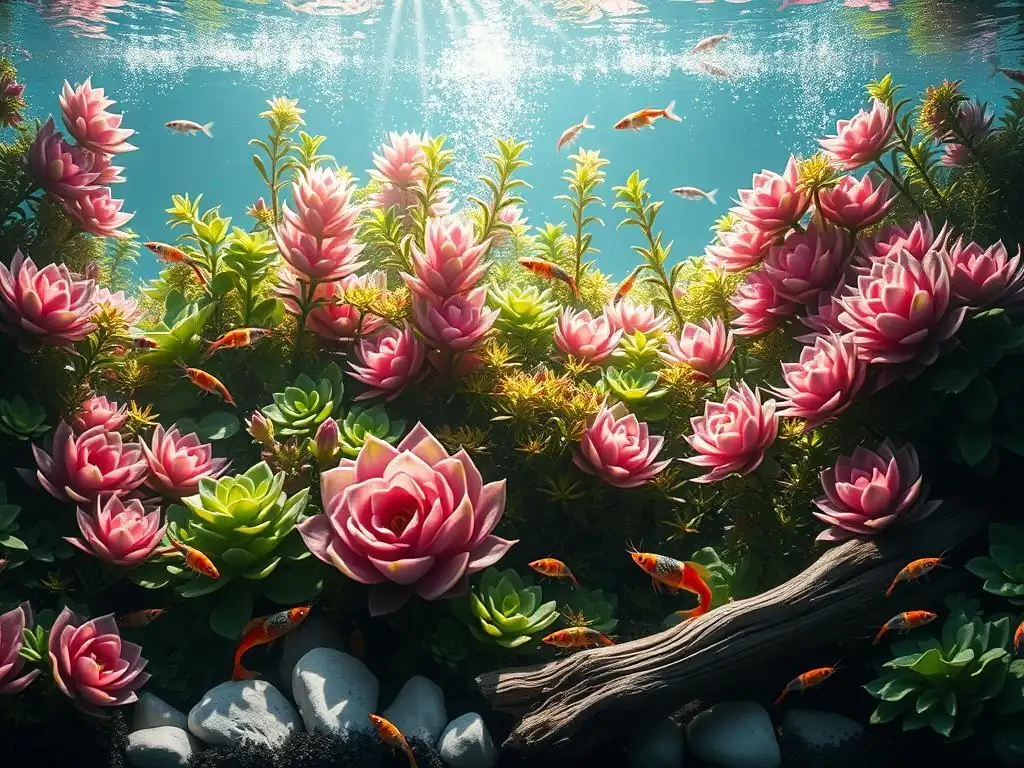
Ever dreamt of a lush, vibrant aquarium without the constant trimming and fuss? Dive in and discover the secrets to thriving with Rosette plants low maintenance. These beauties offer stunning aesthetics without demanding all your time. Intrigued? Let's explore how to cultivate a captivating underwater garden that practically takes care of itself!
- Introduction to Low-Maintenance Rosette Plants for Freshwater Aquariums
- Top Low-Maintenance Rosette Plants for Beginners
- Planting and Caring for Low-Maintenance Rosette Plants
- Maintaining a Low-Maintenance Planted Aquarium with Rosette Plants
- Benefits of Rosette Plants in a Freshwater Aquarium Ecosystem
- Choosing the Right Rosette Plants for Your Aquarium Size and Setup
- Troubleshooting Common Issues with Slow-Growing Rosette Plants
- Conclusion: Enjoying the Beauty of Low-Maintenance Rosette Plants
-
Frequently Asked Questions
- What are rosette plants, and why are they considered low maintenance?
- What are some examples of slow-growing rosette plants suitable for beginner aquarists?
- How important is lighting for slow-growing rosette plants?
- What kind of substrate and fertilization do rosette plants need?
- What are some common problems aquarists face when growing rosette plants, and how can they be resolved?
- Final Reflection: Embracing the Patience of Rosette Growth
- Unveil the Tranquility: Begin Your Rosette Haven Today!
Introduction to Low-Maintenance Rosette Plants for Freshwater Aquariums
Understanding Rosette Plants and Their Unique Growth Habit
Rosette plants are a distinct category of aquatic flora characterized by their leaves growing outwards from a central basal point, often resembling a natural "rosette" or spiral. Unlike stem plants, which grow vertically from a single stem with leaves emerging along its length, rosette plants typically lack a prominent central stem above the substrate. Their leaves originate directly from a crown or rhizome, and they often develop extensive root systems that anchor them firmly in the substrate and absorb nutrients. This unique growth habit contributes significantly to their stability and aesthetic appeal in an aquarium.
The growth pattern of rosette plants means that new leaves emerge from the center of the plant, pushing older leaves outwards. This characteristic also influences their propagation, which often occurs through runners or side shoots rather than cuttings. Species like Echinodorus (Sword Plants) and Cryptocoryne are prime examples of true rosette plants, while Anubias species, though technically rhizome plants, share a similar low-maintenance profile and visual appearance, leading them to be frequently grouped with rosette plants for aquascaping purposes due to their compact, basal leaf structure.
Why Choose Slow-Growing Rosette Plants for Your Aquarium?
Opting for slow-growing rosette plants offers numerous advantages, particularly for aquarists seeking a beautiful yet low-maintenance aquatic setup. Their inherent slow growth rate translates directly into significantly less pruning and trimming compared to fast-growing stem plants. This reduces the time and effort required for tank upkeep, making them ideal for busy individuals or beginners. Furthermore, their stability ensures that the aquascape remains consistent over longer periods, requiring fewer interventions to maintain its intended design.
Beyond reduced maintenance, the slow growth of these rosette plants contributes to a more stable aquarium ecosystem. They absorb nutrients at a slower pace, which can help prevent rapid nutrient depletion and, crucially, minimize the risk of algae outbreaks often associated with fluctuating nutrient levels or excessive plant growth. Their robust nature and adaptability to a range of water parameters, including lower light conditions, make them incredibly resilient. This resilience, combined with their aesthetic appeal, makes slow-growing rosette plants a cornerstone for any beautiful and sustainable low-maintenance aquarium.
Top Low-Maintenance Rosette Plants for Beginners
Echinodorus (Sword Plants): A Beginner-Friendly Choice
Echinodorus species, commonly known as Sword Plants, are among the most popular and versatile rosette plants for freshwater aquariums, highly favored by beginners due to their robust nature and impressive size. These plants are true root feeders, developing extensive and powerful root systems that thrive in nutrient-rich substrates. Their leaves can range from broad and oval to long and sword-shaped, with colors varying from vibrant green to reddish hues, providing significant visual impact in the midground or background of an aquarium.
Sword plants are remarkably adaptable to a wide range of water parameters and light conditions, generally preferring moderate lighting but tolerating lower levels. While they can grow quite large, reaching up to 50 cm or more in height depending on the species, their growth rate is moderate, meaning less frequent pruning than many other aquatic plants. Their hardiness and ability to thrive without CO2 injection make them excellent low-maintenance rosette plants, requiring primarily a good substrate and occasional root tab fertilization to flourish.
Echinodorus bleheri (Amazon Sword): Classic and Easy
Echinodorus bleheri, widely known as the Amazon Sword, is perhaps the most iconic and frequently chosen Sword plant for larger freshwater aquariums. Renowned for its large, bright green, sword-shaped leaves that can reach lengths of 30-50 cm, it serves as an excellent background plant, creating a lush, natural backdrop.
This species is celebrated for its incredible hardiness and adaptability, thriving in a broad spectrum of water conditions from pH 6.0 to 7.5 and temperatures between 22-28°C. Its robust root system makes it a heavy root feeder, benefiting immensely from nutrient-rich substrates or the regular addition of root tabs, typically every 3 to 6 months depending on the specific product.
The Amazon Sword's moderate growth rate and minimal care requirements solidify its status as a quintessential low-maintenance rosette plant. It rarely needs pruning beyond removing older, yellowing outer leaves. While it appreciates moderate lighting (around 20-30 PAR), it can tolerate lower light levels, though growth may be slower. Its resilience against common aquarium issues and its significant size make it an ideal choice for aquarists aiming for a mature, established look with minimal effort in tanks 75 liters and larger.
Echinodorus parviflorus 'Tropica': Compact and Undemanding
For aquarists seeking a smaller, more compact version of the Sword plant, Echinodorus parviflorus 'Tropica' (Black Amazon Sword 'Tropica') is an excellent low-maintenance rosette plant choice. This cultivar typically grows to a height of 10-20 cm, making it suitable for the midground of larger tanks or even as a background plant in nano aquariums. It features distinctive dark green, slightly crinkled leaves, often with a subtle reddish hue under stronger lighting, adding a unique texture to the aquascape.
Like its larger relatives, 'Tropica' is a root feeder and benefits from a nutrient-rich substrate or root tabs, which should be replaced roughly every 4-5 months. Its growth rate is slower than the Amazon Sword, contributing to its low-maintenance appeal. It thrives in moderate lighting but is quite forgiving in lower light setups, though its vibrant coloration may be less pronounced. This compact Sword plant tolerates pH levels from 6.0 to 7.5 and temperatures between 22-28°C, proving to be an undemanding and visually appealing addition to various freshwater aquarium setups.
Cryptocoryne Species: Adaptable and Low-Light Tolerant Rosettes
Cryptocoryne species, affectionately known as "Crypts," are a diverse genus of rosette plants highly valued for their adaptability and ability to thrive in low-light conditions, making them excellent choices for low-maintenance aquariums. These plants exhibit a wide range of leaf shapes, sizes, and colors, from green to various shades of brown and reddish-brown, allowing for varied textures and visual interest. While Crypts are famously susceptible to "Crypt melt" – a temporary shedding of leaves when introduced to new conditions or significant environmental changes – they are remarkably resilient and will almost always recover and grow back stronger once established.
Once settled, Crypts develop strong root systems and are predominantly root feeders, requiring a nutrient-rich substrate or the regular placement of root tabs near their base. Their slow to moderate growth rate means minimal pruning, typically only the removal of old or decaying outer leaves. Their exceptional tolerance for low light (as low as 10-15 PAR) makes them ideal for tanks without intense lighting setups or CO2 injection, proving their status as truly low-maintenance rosette plants that can form dense, beautiful clumps over time, providing ample shelter for fish and invertebrates.
Cryptocoryne wendtii: A Versatile and Hardy Option
Cryptocoryne wendtii is arguably the most popular and versatile Cryptocoryne species, widely recognized for its hardiness and broad availability. It comes in numerous color forms, including 'Green,' 'Red,' 'Brown,' and 'Bronze,' each offering distinct coloration and leaf textures that can range from smooth to hammered. This adaptability allows aquarists to introduce varied aesthetics while maintaining a consistent care routine. C. wendtii typically grows to a height of 10-20 cm, making it suitable for the midground or foreground of most aquariums.
This particular Crypt is incredibly forgiving regarding water parameters, thriving in pH levels from 6.0 to 8.0 and temperatures between 22-28°C. It is a classic low-maintenance rosette plant, performing well even in very low light conditions (around 10-20 PAR) and without CO2 supplementation. Like other Crypts, it benefits from root tabs inserted every 4-6 months to provide essential nutrients, especially iron and potassium, which are crucial for vibrant leaf coloration and healthy growth. Its slow growth and ability to form dense clusters make it a perfect long-term resident for a stable, easy-care planted tank.
Cryptocoryne parva: The Smallest Crypt for Nano Tanks
Cryptocoryne parva stands out as the smallest and one of the slowest-growing Cryptocoryne species, making it an excellent choice for nano aquariums or as a carpeting plant in the foreground of larger setups. Reaching a maximum height of only 3-5 cm, its tiny, narrow, bright green leaves create a delicate, dense carpet over time. Unlike many other Crypts, C. parva prefers slightly higher lighting (moderate, around 20-40 PAR) to truly carpet effectively, though it can still survive in lower light, albeit with a much slower growth rate.
Despite its preference for more light than its larger relatives, Cryptocoryne parva remains a low-maintenance rosette plant due to its incredibly slow growth and minimal nutrient demands. It is a root feeder, benefiting from a rich substrate and occasional root tabs, perhaps once every 6-8 months due to its slow metabolism. It thrives in stable water parameters, with a pH range of 6.0-7.5 and temperatures of 22-26°C. Its patience-testing growth rate means it requires very little attention once established, offering a unique, miniature aesthetic for those willing to wait for its full carpeting potential.
Anubias (Rhizome Plants with Rosette-Like Appearance): Exceptionally Hardy
Anubias species are renowned for being among the hardiest and most low-maintenance aquatic plants available, often grouped with rosette plants due to their similar appearance of leaves emerging from a central point, although botanically they are rhizome plants. Their defining characteristic is a thick, creeping rhizome from which leaves and roots sprout. Crucially, this rhizome must not be buried in the substrate, as it will rot. Instead, Anubias are typically attached to hardscape elements like driftwood or rocks using fishing line or super glue, where their roots will eventually anchor them.
The extreme durability of Anubias comes from their incredibly slow growth rate and thick, leathery leaves, which are highly resistant to algae and herbivorous fish. They thrive in very low light conditions (as low as 5-10 PAR) and do not require CO2 injection or a nutrient-rich substrate, absorbing most of their nutrients from the water column. This combination of factors makes them arguably the easiest "rosette plants low maintenance" option for any freshwater aquarium, offering lush green foliage with minimal effort.
Anubias barteri var. nana: Attaching to Decor for Easy Care
Anubias barteri var. nana is the most popular and widely available Anubias variety, celebrated for its compact size and exceptional hardiness. Typically growing to a height of 5-15 cm, it features dark green, oval-shaped leaves that emerge from a creeping rhizome. Its small stature makes it ideal for foreground or midground placement, especially when attached to small pieces of driftwood or rocks, creating natural-looking focal points or accents in the aquascape.
The primary care instruction for Anubias barteri var. nana is to ensure its rhizome is never buried in the substrate; it must be exposed to the water column to prevent rot. It flourishes in a wide range of water parameters, including pH 6.0-8.0 and temperatures of 22-28°C, and is perfectly content in low light.
Its growth rate is incredibly slow, sometimes producing only one new leaf per month, which means virtually no pruning is required. This makes it an absolute champion among low-maintenance rosette plants, perfect for beginners and seasoned aquarists alike who desire beautiful, enduring greenery with minimal fuss.
Planting and Caring for Low-Maintenance Rosette Plants
Optimal Substrate and Lighting for Rosette Plants
The success of low-maintenance rosette plants largely depends on providing them with the appropriate substrate and lighting conditions tailored to their specific needs. For true root-feeding rosette plants like Echinodorus (Sword Plants) and Cryptocoryne species, a nutrient-rich substrate is paramount. Aquasoil, which is specifically designed for planted tanks, provides a wealth of macro and micronutrients directly to the roots.
Alternatively, if using an inert substrate like sand or gravel, it is essential to supplement with root tabs inserted near the base of each plant, typically replaced every 3-6 months. These tabs slowly release vital nutrients such as iron, potassium, and trace elements, which are crucial for robust root development and healthy leaf growth. In contrast, Anubias species, being rhizome plants, do not require a nutrient-rich substrate and should not have their rhizomes buried; they thrive when attached to hardscape, absorbing nutrients from the water column.
Regarding lighting, most low-maintenance rosette plants are highly adaptable and generally prefer low to moderate light intensity. Excessive light can often lead to algae growth on their slower-growing leaves, particularly for Anubias and many Cryptocoryne varieties. A light intensity of 10-30 PAR (Photosynthetically Active Radiation) for an 8-10 hour photoperiod is usually sufficient for healthy growth without promoting algae.
For instance, Echinodorus bleheri will thrive in moderate light, while Anubias barteri var. nana and most Cryptocoryne wendtii varieties are perfectly content in low light. Understanding the specific light requirements of each species helps optimize their growth and maintain the low-maintenance aspect of your planted aquarium.
Fertilization Strategies for Healthy Growth Without Algae Blooms
Fertilization for low-maintenance rosette plants is a balance between providing necessary nutrients for healthy growth and avoiding an excess that can fuel algae blooms. Since many popular rosette plants like Echinodorus and Cryptocoryne are primarily root feeders, their nutrient uptake largely occurs through their root systems embedded in the substrate. Therefore, the primary fertilization strategy revolves around ensuring the substrate is nutrient-rich.
This can be achieved either by using a dedicated aquasoil substrate, which typically provides nutrients for 1-2 years, or by regularly inserting root tabs into an inert substrate. Root tabs deliver essential macro and micronutrients directly to the plant roots, promoting strong growth and vibrant coloration without excessively enriching the water column.
For plants like Anubias, which absorb nutrients predominantly from the water column, or as a supplementary measure for root feeders, liquid fertilizers can be used cautiously. A comprehensive liquid fertilizer dosed once or twice a week, according to manufacturer instructions, can provide trace elements like iron, manganese, and boron that might be deficient in tap water.
However, it's crucial to start with a lower dose and observe plant response, as over-dosing liquid fertilizers is a common trigger for algae growth. The goal is to provide just enough nutrients to sustain the slow, steady growth of these low-maintenance rosette plants, thereby preventing both deficiencies and unwanted algae.
Liquid Fertilizers vs. Root Tabs: Which is Best?
The choice between liquid fertilizers and root tabs largely depends on the specific feeding habits of your low-maintenance rosette plants. For heavy root feeders such as Echinodorus (Sword Plants) and Cryptocoryne species, root tabs are generally considered the best and most efficient method of fertilization. These tabs, which are typically composed of compacted nutrients like iron, potassium, and nitrogen, are inserted directly into the substrate near the plant's root zone.
This targeted delivery ensures that essential nutrients are readily available where the plant needs them most, promoting robust root growth and preventing deficiencies without significantly altering the water column's chemistry, thus minimizing the risk of algae blooms. A typical application might be one tab per plant every 3-6 months, depending on the plant's size and growth rate.
Liquid fertilizers, on the other hand, deliver nutrients directly into the water column, making them more suitable for plants that absorb nutrients through their leaves, such as Anubias species, which are often attached to hardscape and not rooted in the substrate. They can also serve as a general supplement for trace elements for all plants.
While beneficial, liquid fertilizers must be dosed carefully, often at half the recommended amount for low-tech setups, to avoid an excess of nutrients in the water that can trigger algae growth. For a tank primarily stocked with low-maintenance rosette plants, a combination of targeted root tabs for the rooted species and infrequent, minimal liquid dosing for water column absorption typically provides the best balance for healthy plant growth and a clean, algae-free environment.
Water Parameters for Thriving Rosette Plants
Maintaining stable water parameters is crucial for the long-term health and vitality of low-maintenance rosette plants. While these plants are generally forgiving, sudden and drastic fluctuations in pH, temperature, or water hardness can induce stress, leading to issues like "Crypt melt" in Cryptocoryne species or general stunted growth.
Consistency is key; providing a stable environment allows these slow-growing plants to establish strong root systems and adapt to their surroundings without expending energy on recovering from environmental shocks. Regular partial water changes, typically 20-30% weekly or bi-weekly, help maintain stable water chemistry by replenishing trace elements and removing accumulated waste, contributing to a healthy ecosystem for both plants and fish.
Beyond stability, understanding the general preferred ranges for these parameters further optimizes plant health. Most common low-maintenance rosette plants, including Echinodorus, Cryptocoryne, and Anubias, thrive in a slightly acidic to neutral pH range, typically between 6.0 and 7.5. Temperatures between 22-28°C (72-82°F) are generally suitable, mimicking tropical freshwater conditions.
Water hardness, measured as General Hardness (GH) and Carbonate Hardness (KH), can vary, but a GH of 3-8 dGH (degrees of General Hardness) and a KH of 3-6 dKH (degrees of Carbonate Hardness) are often ideal, providing essential minerals while maintaining some buffering capacity. While some species might tolerate wider ranges, keeping parameters within these general guidelines ensures optimal growth and vibrant coloration for your beautiful, low-maintenance rosette plants.
pH, Temperature, and Water Hardness Considerations
Specific water parameters play a significant role in the health and growth of low-maintenance rosette plants, even though many are quite adaptable. For pH, most Echinodorus, Cryptocoryne, and Anubias species prefer a slightly acidic to neutral range, ideally between pH 6.0 and 7.5. While some can tolerate slightly higher pH values up to 8.0, maintaining a stable pH within this range helps with nutrient availability and reduces stress on the plants. For instance, iron, a crucial micronutrient, is more readily available to plants in slightly acidic conditions.
Temperature is another vital factor. A consistent temperature range of 22-28°C (72-82°F) is generally optimal for the majority of these rosette plants, mirroring their natural tropical habitats. Temperatures outside this range can slow down metabolism, leading to stunted growth, or conversely, accelerate it too much for slow growers, making them more susceptible to algae.
Lastly, water hardness, particularly General Hardness (GH), which measures calcium and magnesium ions, is important for plant cell structure. A GH of 3-8 dGH is typically sufficient, providing these essential minerals without making the water excessively hard. Carbonate Hardness (KH), which indicates buffering capacity, ideally ranges from 3-6 dKH to help stabilize pH, preventing drastic swings that can harm your low-maintenance rosette plants.
Maintaining a Low-Maintenance Planted Aquarium with Rosette Plants
Pruning and Propagation of Rosette Plants
Maintaining low-maintenance rosette plants involves minimal pruning, which is one of their major appeals. Unlike fast-growing stem plants that require regular trimming to prevent overgrowth, rosette plants primarily need attention when their outermost leaves begin to yellow, develop holes, or show signs of decay. This process involves carefully removing the oldest or damaged leaves at their base, close to the crown or rhizome, using sharp aquascaping scissors.
This not only improves the plant's aesthetic but also directs the plant's energy towards producing new, healthy growth from its center. For an Echinodorus bleheri, you might remove 2-3 outer leaves every few months, while an Anubias barteri var. nana might only need one leaf removed per year due to its extremely slow growth.
Propagation of low-maintenance rosette plants typically occurs through vegetative means, making it straightforward. Echinodorus species commonly propagate by sending out runners (stolons) from the mother plant, on which small plantlets develop. Once these plantlets have developed a few leaves and roots (e.g., 3-4 leaves and roots at least 2 cm long), they can be carefully detached and replanted.
Cryptocoryne species propagate by producing side shoots or adventitious plantlets from their root system, which can be gently separated once they are sufficiently developed. Anubias species are propagated by carefully dividing the rhizome, ensuring each section has at least a few leaves and a portion of the rhizome, which can then be reattached to hardscape. This natural propagation minimizes effort while allowing you to expand your collection of these beautiful, easy-care rosette plants.
Preventing Common Problems with Rosette Plants
Preventing common problems with low-maintenance rosette plants primarily revolves around maintaining stable tank conditions and providing consistent, appropriate care. The most effective way to avoid issues like nutrient deficiencies or algae growth is to establish a balanced ecosystem from the outset. This includes setting up an appropriate lighting schedule, typically 8-10 hours per day at low to moderate intensity (e.g., 15-30 PAR), to prevent excessive light that can spur algae.
Regular partial water changes, for example, 25% weekly, are crucial for replenishing essential trace elements and removing accumulated organic waste, which can otherwise contribute to imbalances. Furthermore, adhering to a consistent, conservative fertilization routine, such as inserting root tabs for Echinodorus and Cryptocoryne every 3-6 months and sparingly dosing liquid fertilizers, helps ensure plants receive necessary nutrients without over-enriching the water column.
Despite their hardiness, low-maintenance rosette plants can occasionally exhibit signs of distress. Understanding the visual cues is key to early intervention. For instance, yellowing leaves might indicate an iron deficiency, while small holes could point to potassium deficiency.
Algae growth on their leaves often signals an imbalance, usually too much light or excess nutrients relative to the plant biomass. By proactively monitoring water parameters, observing plant health, and making small, gradual adjustments to lighting, fertilization, or water change frequency, aquarists can largely prevent the most common problems and ensure their beautiful rosette plants remain vibrant and healthy with minimal effort.
Addressing Nutrient Deficiencies in Rosette Plants
Nutrient deficiencies are a common issue for even low-maintenance rosette plants, manifesting as distinct visual symptoms on their leaves. One of the most frequently observed deficiencies is iron (Fe) deficiency, which typically presents as interveinal chlorosis: the areas between the leaf veins turn yellow, while the veins themselves remain green. This is particularly noticeable in new growth. For large root feeders like Echinodorus (Sword Plants), this often indicates a depleted substrate, and the solution is to insert an iron-rich root tab near the plant's base, which can show improvement within 1-2 weeks.
Another common deficiency is potassium (K), often characterized by pinholes, yellowing, or decaying edges on older leaves. This can be addressed by adding a potassium-specific liquid fertilizer or a comprehensive liquid fertilizer containing potassium. Stunted growth, along with overall pale coloration, can suggest a general lack of macronutrients (nitrogen, phosphorus, potassium) or micronutrients.
For low-maintenance rosette plants, the first line of defense should always be ensuring the substrate is adequately supplied with nutrients via root tabs, as this is their primary feeding mechanism. If symptoms persist, a balanced, low-dose liquid fertilizer can supplement any water column deficiencies, but always proceed cautiously to avoid triggering algae blooms.
Dealing with Algae Growth on Rosette Plant Leaves
Algae growth on the leaves of slow-growing rosette plants, such as Anubias and Cryptocoryne, is a common aesthetic problem and usually indicates an imbalance in the aquarium ecosystem. Because these plants grow slowly, their leaves are exposed to light and nutrients for longer periods, making them more susceptible to algae colonization if conditions are not optimal.
The most frequent culprits are excessive light intensity or duration (e.g., more than 10 hours of light or very high PAR), and an imbalance between available nutrients and plant uptake. For instance, too much nitrate or phosphate without sufficient plant biomass to absorb it can fuel algae.
To combat algae on your low-maintenance rosette plants, the first step is often to reduce the photoperiod to 8 hours per day and ensure your light intensity is appropriate for low-light plants (e.g., under 30 PAR). Manual removal of algae using a soft brush or by gently wiping the leaves can provide immediate visual improvement. More importantly, address the underlying cause: perform regular partial water changes (e.g., 25-30% weekly) to dilute excess nutrients, ensure you're not overfeeding your fish, and consider if your fertilization strategy is balanced.
For Anubias with stubborn green spot algae, a very mild hydrogen peroxide dip (e.g., 3% H2O2, 1-2 ml per liter of water for 30-60 seconds, then rinse) can be effective, but this should be a last resort and performed with extreme caution. Maintaining a healthy balance of fish, plants, and beneficial bacteria is key to keeping your low-maintenance rosette plants algae-free.
Benefits of Rosette Plants in a Freshwater Aquarium Ecosystem
Natural Filtration and Water Quality Improvement
Beyond their aesthetic appeal, low-maintenance rosette plants play a vital role in enhancing the natural filtration and overall water quality within a freshwater aquarium ecosystem. Through the process of photosynthesis, these plants actively absorb nitrates, phosphates, and other nitrogenous compounds that are byproducts of fish waste and decaying organic matter.
For instance, a well-established bed of Echinodorus bleheri can significantly reduce nitrate levels, which are typically harmful to fish at high concentrations (e.g., above 40 ppm). This nutrient uptake acts as a natural biological filter, complementing the mechanical and chemical filtration of your aquarium equipment and leading to clearer, healthier water.
Furthermore, during daylight hours, rosette plants release oxygen into the water as a byproduct of photosynthesis. This oxygenation is critical for the respiration of fish and beneficial aerobic bacteria that break down ammonia and nitrite in the biological filter. A tank with a healthy population of low-maintenance rosette plants will often exhibit more stable oxygen levels, especially overnight when fish and bacteria consume oxygen. This natural process helps create a more balanced and self-sustaining environment, reducing the need for frequent large water changes and contributing to the overall well-being of the aquarium inhabitants.
Providing Shelter and Breeding Grounds for Fish and Invertebrates
The dense foliage and broad leaves characteristic of many low-maintenance rosette plants offer invaluable shelter and breeding grounds for a variety of fish and invertebrates within the aquarium ecosystem. Species like the Amazon Sword ( Echinodorus bleheri), with its large, sweeping leaves, provide excellent hiding spots for shy fish, such as various Tetras or Dwarf Cichlids, reducing their stress levels and promoting more natural behaviors. This sense of security can lead to more vibrant coloration and active foraging. Small invertebrates like cherry shrimp or snails also find refuge among the leaves, escaping potential predators and foraging on biofilm.
Moreover, the structured environment created by rosette plants serves as ideal spawning sites for many aquarium fish. For example, some species of egg-laying fish, like Angelfish, prefer to lay their eggs directly on broad plant leaves. The dense network of roots and leaves also provides crucial protection for fry and juvenile fish, offering them cover from larger tank mates and increasing their survival rates. A tank with a lush cover of low-maintenance rosette plants thus becomes a more dynamic and thriving miniature ecosystem, supporting a wider range of aquatic life.
Enhancing the Aesthetic Appeal of Your Aquarium
The inclusion of low-maintenance rosette plants significantly elevates the aesthetic appeal of any freshwater aquarium, transforming a simple glass box into a vibrant, living piece of art. Their unique growth habit, with leaves radiating from a central point, creates natural focal points and adds depth and texture to the aquascape. For instance, a single, well-grown Echinodorus bleheri can serve as a majestic background plant, providing a lush green curtain, while a cluster of Cryptocoryne wendtii varieties can introduce varying shades of green, brown, and red, creating visual interest in the midground.
The slow growth rate of these rosette plants ensures that the aquascape maintains its intended design for extended periods, requiring minimal intervention to preserve its beauty. This stability allows aquarists to enjoy a consistently appealing setup without the constant need for trimming and rearranging. Furthermore, the natural, organic forms of these plants contribute to a more serene and realistic underwater environment, enhancing the overall tranquility and visual pleasure of the aquarium. Their ability to thrive with minimal fuss means that stunning aquascapes are achievable even for beginners, making beautiful planted tanks accessible to a wider audience.
Choosing the Right Rosette Plants for Your Aquarium Size and Setup
Rosette Plants for Nano Aquariums
Selecting the appropriate low-maintenance rosette plants for nano aquariums (typically under 30 liters or 8 gallons) is crucial to maintain proper scale and prevent the tank from becoming overcrowded. The key is to choose species that remain compact and grow slowly, ensuring they do not quickly outgrow the limited space. Cryptocoryne parva is an excellent choice, being the smallest of the Crypts, typically reaching only 3-5 cm in height. Its very slow growth rate means it will take a long time to spread, but it forms a beautiful, miniature carpet in the foreground.
Another ideal low-maintenance rosette plant for nano tanks is Anubias barteri var. nana. Growing to about 5-15 cm, its compact size and ability to be attached to small pieces of driftwood or rocks make it incredibly versatile for adding greenery without taking up precious substrate space. Similarly, Echinodorus parviflorus 'Tropica', a smaller Sword plant reaching 10-20 cm, can serve as a midground or background plant in slightly larger nano setups (e.g., 20-30 liters). These choices ensure that the tank's visual balance is maintained, providing lush greenery while leaving ample swimming space for small fish or invertebrates.
Rosette Plants for Larger Planted Tanks
For larger planted tanks (typically 75 liters/20 gallons and above), the selection of low-maintenance rosette plants expands significantly, allowing for more dramatic aquascaping and the creation of lush, dense backgrounds. The larger size of these tanks can comfortably accommodate the full growth potential of bigger rosette species without overwhelming the space. Echinodorus bleheri, the Amazon Sword, is a quintessential choice for the background of tanks 75 liters and up. Its broad, sword-shaped leaves can reach lengths of 30-50 cm, creating an impressive, vibrant green backdrop that fills vertical space beautifully.
In addition to the Amazon Sword, various larger Cryptocoryne species, such as Cryptocoryne undulata or some forms of Cryptocoryne spiralis, can be excellent midground or background plants. While C. undulata can reach 20-30 cm with wavy, reddish-brown leaves, C. spiralis can grow even taller, sometimes up to 40 cm, with narrow, strap-like leaves.
These larger low-maintenance rosette plants provide significant visual mass and texture, enhancing the overall depth and natural feel of the aquascape. Their slow to moderate growth rates ensure that even in larger tanks, maintenance remains manageable, allowing aquarists to enjoy the grandeur of a densely planted setup with minimal fuss.
Troubleshooting Common Issues with Slow-Growing Rosette Plants
Why are My Rosette Plant Leaves Turning Yellow?
Yellowing leaves on low-maintenance rosette plants are a common indicator of underlying issues, most frequently a nutrient deficiency, particularly iron. If the areas between the leaf veins turn yellow while the veins themselves remain green (known as interveinal chlorosis), it is a strong sign of iron deficiency. This is especially prevalent in root-feeding plants like Echinodorus and Cryptocoryne when the substrate is depleted of nutrients. The solution typically involves inserting an iron-rich root tab near the plant's base, which usually shows improvements within 1-2 weeks as the plant absorbs the necessary iron.
Beyond iron, yellowing can also be attributed to other factors. Older, outermost leaves naturally yellow and decay as part of the plant's life cycle, and these should be trimmed at the base. If new leaves are yellowing, it might indicate a more widespread nutrient deficiency or even insufficient light reaching the plant, especially if larger plants are shading smaller ones.
Sudden changes in water parameters, such as a drastic pH swing or temperature shock, can also cause yellowing or melting, particularly in sensitive Cryptocoryne species. Ensuring stable water parameters, consistent lighting, and targeted fertilization are key to keeping your low-maintenance rosette plants vibrant and green.
How to Encourage Healthy Root Growth in Rosette Plants
Healthy root growth is fundamental for the long-term vitality of low-maintenance rosette plants, particularly for heavy root feeders like Echinodorus and Cryptocoryne. The primary way to encourage robust root development is by providing a nutrient-rich substrate. Using a dedicated aquasoil substrate ensures a steady supply of essential macro and micronutrients directly to the roots.
If using an inert substrate like sand or gravel, regularly inserting root tabs is crucial. These tabs, typically replaced every 3-6 months, deliver a concentrated dose of nutrients such as nitrogen, phosphorus, potassium, and iron directly to the root zone, which are vital for strong root proliferation and overall plant health.
Beyond substrate nutrition, good water circulation around the substrate and stable water parameters also contribute significantly to healthy root growth. Adequate circulation helps deliver dissolved nutrients to the root zone and prevents stagnant areas where waste might accumulate. Avoiding frequent uprooting or moving of these plants is also important, as it stresses the root system and can inhibit establishment. By maintaining a nutrient-rich and stable environment at the substrate level, aquarists can ensure their low-maintenance rosette plants develop strong, extensive root systems, leading to more vigorous leaf growth and greater resilience.
Conclusion: Enjoying the Beauty of Low-Maintenance Rosette Plants
Frequently Asked Questions
What are rosette plants, and why are they considered low maintenance?
Rosette plants are aquatic plants that grow in a circular, radiating pattern similar to a rose. They're often considered low maintenance because many species are slow-growing and have minimal nutrient requirements.
What are some examples of slow-growing rosette plants suitable for beginner aquarists?
Good choices for beginners include Anubias nana, Cryptocoryne wendtii, and Echinodorus tenellus (Pygmy Chain Sword). These are hardy species that can tolerate a range of water parameters.
How important is lighting for slow-growing rosette plants?
While they don't need intense lighting, adequate light is still crucial. Low to medium lighting is usually sufficient for healthy growth and preventing algae issues.
What kind of substrate and fertilization do rosette plants need?
Most rosette plants prefer a nutrient-rich substrate, but many can thrive even without it. Root tabs or liquid fertilizers can supplement nutrients if needed, but avoid over-fertilizing.
What are some common problems aquarists face when growing rosette plants, and how can they be resolved?
Common issues include algae growth, nutrient deficiencies, and melting leaves. Proper lighting, regular water changes, and appropriate fertilization can help prevent and resolve these problems.
Final Reflection: Embracing the Patience of Rosette Growth
The allure of low-maintenance beauty is undeniable in our fast-paced world, and the enduring popularity of rosette plants speaks volumes to this desire. These slow-growing wonders offer a tranquil alternative to the constant demands of high-maintenance gardens, proving that beauty doesn't always require relentless effort. Their unique form and resilience resonate deeply with those seeking a connection to nature without sacrificing precious time.
The quiet elegance of rosette plants has subtly but profoundly influenced our appreciation for sustainable gardening and mindful living. My own journey with these plants has taught me the value of patience and the beauty of gradual transformation. Adopt the pace of nature: her secret is patience.
– Ralph Waldo Emerson. This sentiment perfectly encapsulates the essence of cultivating rosette plants, reminding us to find joy in the slow, steady unfolding of life.
Now, take a moment to consider the lessons these resilient plants offer. How can you apply the principles of slow growth and low maintenance to other areas of your life? Embrace the beauty of patience, find joy in the simple things, and discover the enduring satisfaction of nurturing something beautiful without the need for constant intervention. Let the rosette plant be a reminder that true beauty often lies in the quiet, unhurried moments.
Unveil the Tranquility: Begin Your Rosette Haven Today!
Thank you for exploring the world of slow-growing rosette plants with us. We hope this article has illuminated the path to a more serene and manageable aquatic ecosystem. Now, let's translate this knowledge into action!
- Embark on Your Rosette Journey: Select and introduce one slow-growing rosette plant to your aquarium this week, observing its impact on the overall aesthetic and ecosystem balance.
- Share Your Discoveries: Post a picture of your newly added rosette plant on social media using #AquariumMasteryRosettes, and tag us to share your experience with fellow enthusiasts.
- Think Outside the Tank: Research complementary fish species or aquatic snails that enhance the health and beauty of your rosette plants, and integrate them to foster a vibrant habitat.
Ready to embrace the beauty of slow-growing rosette plants in your aquarium, and what species is exciting you the most?