
Banded Butterflyfish (Chaetodon striatus): Atlantic Elegance and Its Precise Tank Requirements

Welcome to Aquarium Mastery!
Ever been captivated by the elegant dance of a Banded Butterflyfish? These stunning Atlantic natives bring a unique charm to any saltwater aquarium. But beneath their beauty lies a demand for precise care. Dive in and discover our comprehensive Banded Butterflyfish Tank Care Guide, unlocking the secrets to successfully keeping these captivating creatures thriving in your home aquarium. Are you ready to master the art of their care?
- Introduction to the Banded Butterflyfish: An AquariumMastery.com Profile
- Understanding the Banded Butterflyfish Species
- Banded Butterflyfish Tank Care Guide: Essential Considerations
- Diet and Feeding Habits of Banded Butterflyfish
- Banded Butterflyfish Tank Mates: Compatibility and Social Interactions
- Maintaining a Healthy Banded Butterflyfish: Preventing and Treating Diseases
- Breeding Banded Butterflyfish: Challenges and Possibilities
- Common Problems and Solutions in Banded Butterflyfish Tank Care
- The Allure of the Banded Butterflyfish: Is It Right for Your Aquarium?
-
Frequently Asked Questions
- How large of a tank is required for a Banded Butterflyfish?
- What are the ideal water parameters for a Banded Butterflyfish aquarium?
- What should I feed my Banded Butterflyfish?
- Are Banded Butterflyfish reef safe?
- What are some common diseases that affect Banded Butterflyfish and how can I prevent them?
- Final Reflection: Appreciating the Delicate Balance
- Ignite Your Aquarium Passion: Start Your Banded Butterflyfish Journey!
Introduction to the Banded Butterflyfish: An AquariumMastery.com Profile
The Banded Butterflyfish, scientifically known as Chaetodon striatus, is a striking marine fish renowned for its distinctive markings and graceful swimming. Hailing from the Atlantic Ocean, this species brings a touch of wild reef elegance to the home aquarium. However, its beauty comes with specific care demands, making it a species best suited for intermediate to advanced aquarists. This comprehensive Banded butterflyfish tank care guide will delve into every aspect of keeping Chaetodon striatus, ensuring you have the knowledge to provide an optimal environment for this captivating creature.
Understanding the precise requirements for water parameters, diet, and tank mates is crucial for the long-term health and vibrancy of the Banded Butterflyfish. At AquariumMastery.com, we aim to equip you with detailed, actionable information, transforming the challenge of marine aquarium keeping into a rewarding experience. From its natural origins to advanced husbandry techniques, we cover the essential considerations for integrating this elegant fish into your saltwater setup.
Understanding the Banded Butterflyfish Species
Origin and Natural Habitat of Chaetodon striatus
The Banded Butterflyfish is endemic to the Western Atlantic Ocean, boasting a wide distribution that spans from the coast of Florida, throughout the Caribbean Sea, and extending south to Brazil. While occasionally sighted as far north as Massachusetts, its primary range is within the warmer, tropical and subtropical waters. These fish thrive in diverse reef environments, commonly found in shallow coral reefs, rocky areas, and even seagrass beds, typically at depths ranging from 3 to 60 meters (approximately 10 to 200 feet).
In their natural habitat, Chaetodon striatus can often be observed in pairs or small aggregations, diligently foraging among the corals and rocks. Their preferred environment offers abundant hiding spots within the intricate reef structure, alongside open areas for swimming. This adaptability to various reef zones underscores their resilience, yet also highlights the need to replicate such a complex environment in a captive setting.
Physical Characteristics and Identifying Features
The Banded Butterflyfish is easily identifiable by its distinctive appearance. Adults typically reach a maximum size of 6 to 7 inches (approximately 15 to 18 centimeters) in length, exhibiting a laterally compressed, disc-shaped body that is characteristic of the butterflyfish family. Their base coloration is a pearly white or yellowish-white, adorned with four prominent, vertical black bands that give the fish its common name. The first band runs through the eye, the second from the dorsal fin to the pectoral fin base, the third across the mid-body, and the fourth near the caudal peduncle.
Beyond these striking bands, the Banded Butterflyfish also features bright yellow coloration on its dorsal and anal fins, which provides a vivid contrast. The caudal fin typically has a black base, transitioning to a translucent or yellowish margin. Juveniles may exhibit a more pronounced black spot (ocellus) on the posterior dorsal fin, which fades as they mature. This combination of bold patterns and vibrant accents makes Chaetodon striatus a visually appealing addition to any marine aquarium.
Banded Butterflyfish Temperament and Behavior in the Wild
In their natural environment, Banded Butterflyfish are generally observed as peaceful, albeit somewhat territorial, creatures. They are typically found either as solitary individuals, in stable pairs, or occasionally in small, loose groups. Their daily behavior revolves around foraging, where they meticulously pick at small invertebrates, worms, and various organisms found on coral and rocky substrates. This foraging behavior is crucial to understand for their captive diet.
While not overtly aggressive, they can exhibit territorial displays towards conspecifics or other similar-looking species, particularly in areas with limited resources or space. At night, they seek refuge within the reef's crevices and caves, resting until daylight. Their active, exploratory nature in the wild underscores the importance of providing ample swimming space and varied aquascaping in a home aquarium to satisfy their behavioral needs and minimize stress, a key aspect of any effective Banded butterflyfish tank care guide.
Banded Butterflyfish Tank Care Guide: Essential Considerations
Minimum Tank Size for Banded Butterflyfish: Creating Ample Swimming Space
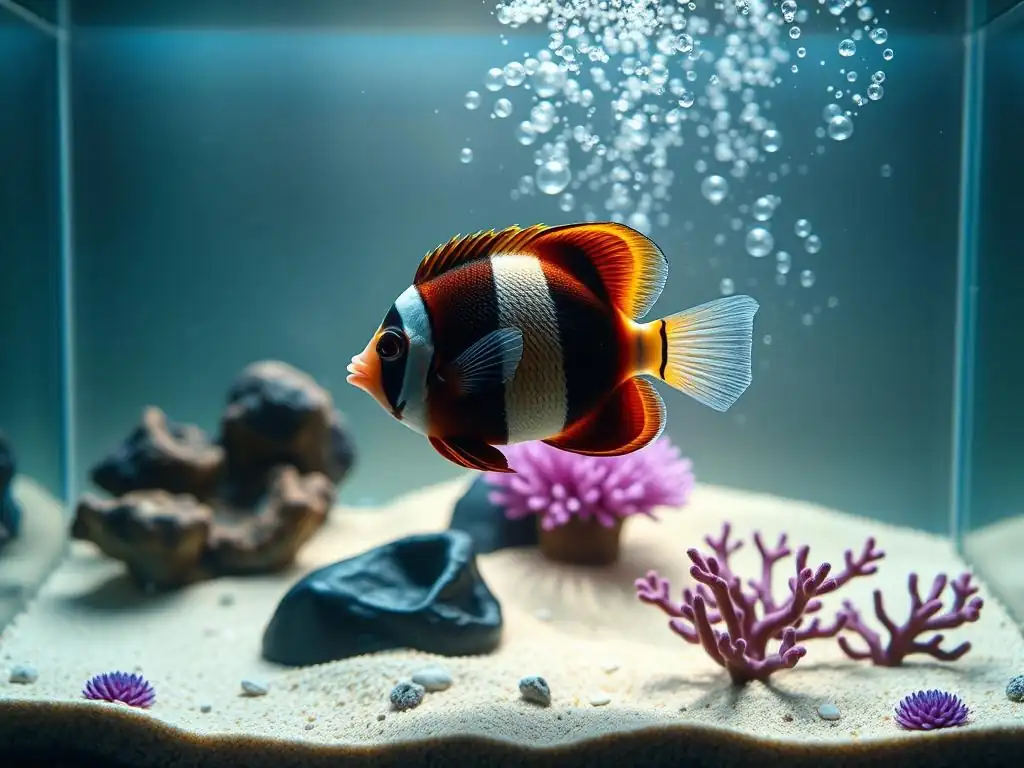
Providing adequate space is paramount for the health and well-being of the Banded Butterflyfish, making tank size a foundational element of any comprehensive Banded butterflyfish tank care guide. Due to their active swimming habits and potential for territorial behavior, a minimum tank size of 75 gallons (approximately 280 liters) is recommended for a single adult specimen. This volume allows for sufficient swimming room and helps dissipate any minor aggression.
For a pair of Banded Butterflyfish, or if planning a community tank with other compatible species, a larger aquarium of 125 gallons (approximately 470 liters) or more is highly advisable. Larger tanks offer increased stability in water parameters, more diverse aquascaping opportunities for hiding and exploration, and greater dilution of waste products. Insufficient tank size can lead to chronic stress, stunted growth, and increased susceptibility to disease, compromising the fish's overall health and lifespan.
Water Parameters for Chaetodon striatus: Maintaining a Stable Environment
Maintaining stable and appropriate water parameters is arguably the most critical aspect of Banded butterflyfish tank care. These fish are sensitive to fluctuations, and consistent monitoring is essential for their long-term health. Regular testing using reliable kits is non-negotiable.
Ideal Temperature Range for Banded Butterflyfish
The optimal temperature range for Banded Butterflyfish aligns with their tropical origins, ideally maintained between 75-82°F (24-28°C). Consistency within this range is more important than hitting a precise number, as sudden temperature swings can induce significant stress, weakening the fish's immune system. A high-quality, appropriately sized heater with a reliable thermostat is essential to ensure stable water temperatures, especially during colder months or in environments with fluctuating ambient temperatures.
Salinity Levels for a Healthy Butterflyfish Tank
For Chaetodon striatus, a stable salinity level mimicking natural seawater is crucial. The recommended specific gravity should be maintained between 1.020 and 1.025. Many aquarists opt for the higher end of this range, closer to 1.023-1.025, to more accurately replicate natural reef conditions. Accurate measurement with a refractometer is highly recommended over hydrometers, as refractometers offer superior precision and are less prone to errors. Regular top-offs with fresh RO/DI water are necessary to compensate for evaporation and prevent salinity creep.
pH and Alkalinity Considerations for Optimal Water Quality
Maintaining stable pH and alkalinity levels is vital for the health of Banded Butterflyfish and the overall biological stability of the aquarium. The ideal pH range for these fish is 8.1 to 8.4. Simultaneously, alkalinity (measured in dKH) should be kept between 8 and 12 dKH. These parameters directly impact the buffering capacity of the water, preventing drastic pH swings that can be detrimental to marine life.
Furthermore, proper calcium levels (400-450 ppm) and magnesium levels (1200-1350 ppm) are important, especially if live rock is present or if you plan to keep any non-photosynthetic corals or invertebrates that benefit from these elements. While the Banded Butterflyfish itself doesn't directly consume these elements for skeletal growth in the same way corals do, a well-buffered and mineral-rich environment contributes to overall water quality and stability, reducing stress on the fish. Regular testing and the use of buffer solutions or a calcium reactor may be necessary to maintain these parameters consistently.
Essential Equipment for Your Banded Butterflyfish Tank
Beyond the tank itself, several pieces of equipment are indispensable for a successful Banded butterflyfish tank care setup. These components ensure water quality, provide appropriate environmental conditions, and support the overall health of your fish.
Filtration Needs: Keeping the Water Pristine
Robust filtration is non-negotiable for a Banded Butterflyfish aquarium. A multi-faceted approach combining mechanical, biological, and chemical filtration is ideal. Mechanical filtration, often provided by filter socks or sponges, removes particulate matter from the water column, preventing the buildup of detritus. This should be cleaned or replaced frequently, typically every few days.
Biological filtration is primarily achieved through a generous amount of cured live rock (at least 1-1.5 pounds per gallon, or 0.45-0.68 kg per 3.78 liters) and a robust protein skimmer. The live rock provides vast surface area for beneficial nitrifying bacteria, converting harmful ammonia and nitrite into less toxic nitrate. An appropriately sized, and preferably oversized, protein skimmer is essential for removing dissolved organic compounds before they break down into nitrates and phosphates, significantly contributing to water clarity and overall water quality.
Chemical filtration, such as activated carbon or specialized nitrate/phosphate removers, should be used intermittently or continuously to absorb impurities and maintain crystal-clear water. Regular water changes, typically 10-20% bi-weekly, complement the filtration system by replenishing trace elements and further reducing nitrate levels.
Lighting Requirements for a Banded Butterflyfish Aquarium
Banded Butterflyfish do not have exceptionally demanding lighting requirements themselves, especially if the tank is not intended for photosynthetic corals. Moderate lighting that mimics the filtered sunlight of their natural reef environment is generally sufficient. A standard LED lighting system or even T5 fluorescent lights designed for marine aquariums will provide adequate illumination for the fish and any live rock present.
The photoperiod should typically be set for 10-12 hours per day, providing a consistent day-night cycle. Avoid overly intense lighting, as this can stress the fish and promote nuisance algae growth, particularly if nutrient levels are not perfectly managed. If you plan to keep non-photosynthetic corals or other invertebrates that might have specific lighting needs, adjust accordingly, but prioritize the fish's comfort first.
Substrate and Aquascaping: Replicating Their Natural Habitat
The choice of substrate and aquascaping design plays a significant role in creating a comfortable and natural environment for the Banded Butterflyfish. A fine to medium grain sand bed or crushed coral substrate is suitable, typically 1-2 inches (2.5-5 cm) deep. While these fish don't burrow, the substrate contributes to the biological filter and allows for the establishment of beneficial microfauna.
Aquascaping should focus on replicating a rocky reef environment with ample live rock. Arrange the live rock to create numerous caves, crevices, and overhangs, providing essential hiding spots and territories for the fish. Simultaneously, ensure there are open swimming areas in the mid-water column, as Banded Butterflyfish are active swimmers. Aim for a balance between dense rockwork and clear space. This thoughtful arrangement reduces stress, encourages natural behaviors, and is a vital component of successful Banded butterflyfish tank care.
Diet and Feeding Habits of Banded Butterflyfish
Natural Diet in the Wild
In their natural habitat, Banded Butterflyfish are primarily carnivorous micro-predators, though their diet can be quite varied. They are known to forage extensively on small benthic invertebrates, including various species of tube worms, small crustaceans, and other minute organisms found living on or within the coral and rocky substrates. While not obligate corallivores like some of their butterflyfish relatives, Chaetodon striatus is documented to occasionally pick at coral polyps, particularly those of soft corals and some stony corals (Scleractinia and Gorgonia), often to consume the small organisms residing on them rather than the coral tissue itself.
They also consume filamentous algae as a minor part of their diet. This opportunistic feeding behavior highlights the need for a diverse diet in captivity.
Recommended Foods for Captive Banded Butterflyfish
Successfully transitioning Banded Butterflyfish to a captive diet requires patience and variety. The cornerstone of their diet should be high-quality frozen foods. Excellent choices include:
- Mysis shrimp: A highly nutritious and palatable staple.
- Brine shrimp: While less nutritious on its own, it can be gut-loaded with spirulina or vitamin supplements.
- Finely chopped seafood: Small pieces of krill, clam, squid, or enriched marine shrimp.
- Frozen marine mixes: Products specifically formulated for marine carnivores, often containing a blend of various seafood and vitamins.
Some Banded Butterflyfish may accept high-quality marine flake or pellet foods, but this is not guaranteed, especially with wild-caught specimens. Offer small pieces of dried nori or other marine algae occasionally to supplement their diet and provide grazing opportunities. Soaking foods in vitamin supplements like Selcon or garlic extracts can enhance palatability and nutritional value, aiding in their adaptation to captive feeding.
Feeding Schedule and Portion Control for Healthy Growth
To ensure proper nutrition and minimize waste, Banded Butterflyfish should be fed small amounts 2 to 3 times per day. This frequent, small-portion feeding mimics their natural grazing behavior and allows for better digestion and nutrient absorption. Avoid overfeeding, as uneaten food quickly degrades, leading to elevated nitrate and phosphate levels, which can compromise water quality and promote nuisance algae growth.
Observe your fish during feeding to ensure all food is consumed within a few minutes. If food remains, reduce the portion size for the next feeding. A healthy Banded Butterflyfish should have a slightly rounded belly after eating, but not appear bloated. Consistent feeding on a varied diet is crucial for their long-term health, color vibrancy, and active behavior, underscoring this vital component of a comprehensive Banded butterflyfish tank care guide.
Choosing appropriate tank mates is a critical aspect of Banded butterflyfish tank care, as their temperament and dietary habits can influence community tank dynamics. While generally peaceful, they can be territorial, and their natural foraging behavior makes them unsuitable for many reef setups.
Suitable Tank Mates for Banded Butterflyfish
Banded Butterflyfish typically do best with peaceful to semi-aggressive fish of similar size and temperament. Ideal tank mates often include:
- Tangs: Such as Yellow Tangs ( Zebrasoma flavescens) or Kole Tangs ( Ctenochaetus strigosus), which are active swimmers and generally ignore butterflyfish.
- Larger Damselfish: Less aggressive species like the Azure Damselfish ( Chrysiptera parasema) or Yellowtail Damselfish ( Chrysiptera parasema).
- Gobies and Blennies: Many bottom-dwelling or perching gobies (e.g., Watchman Gobies, Diamond Watchman Gobies) and blennies (e.g., Lawnmower Blennies, Starry Blennies) are compatible.
- Other non-aggressive species: Such as Foxface Rabbitfish ( Siganus vulpinus) or certain Angelfish species (e.g., Coral Beauty Angelfish, Flame Angelfish), provided the tank is sufficiently large and ample hiding spots are available.
- Wrasses: Many cleaner wrasses or fairy wrasses are also suitable companions.
Introducing tank mates simultaneously or introducing the Banded Butterflyfish last can help reduce territorial issues. Always ensure the tank is adequately sized to prevent overcrowding and stress.
Fish to Avoid: Aggressive and Incompatible Species
Certain fish species are generally incompatible with Banded Butterflyfish and should be avoided:
- Highly Aggressive Species: Triggers (e.g., Clown Triggerfish, Picasso Triggerfish), large Angelfish (e.g., Emperor Angelfish, Queen Angelfish), or certain Groupers can bully or prey upon Banded Butterflyfish.
- Very Small or Timid Species: Extremely shy or small fish may be stressed or outcompeted for food by the more active Banded Butterflyfish.
- Other Butterflyfish Species: While some success can be had in very large tanks (200+ gallons) with multiple butterflyfish, mixing different Chaetodon species or even multiple Banded Butterflyfish can lead to aggression and territorial disputes, especially if they are of similar size or shape. It is generally safer to keep a single Banded Butterflyfish or a confirmed mated pair.
- Fish with Similar Diets: Species that compete directly for the same food sources might lead to underfeeding for the more timid fish.
Invertebrate Compatibility: Reef Tank Considerations
This is a crucial point in any Banded butterflyfish tank care guide: Banded Butterflyfish are generally not considered reef-safe. While they may not actively consume large chunks of coral, they are known to nip at and consume coral polyps, particularly soft corals (like Zoanthids, Palythoa, Xenia, Leather Corals) and some stony corals (SPS and LPS). This behavior is part of their natural foraging and can quickly decimate a coral collection.
Therefore, it is strongly advised to keep Banded Butterflyfish in fish-only or fish-only-with-live-rock (FOWLR) setups rather than dedicated reef tanks. They are typically compatible with:
- Cleaner Shrimp: Such as Pacific Cleaner Shrimp ( Lysmata amboinensis) or Peppermint Shrimp ( Lysmata wurdemanni).
- Snails: Most herbivorous snails (e.g., Turbo Snails, Nassarius Snails) are usually safe, though occasional nipping at snail tentacles might occur.
- Hermit Crabs: Most common hermit crabs are generally ignored.
Avoid keeping them with highly desirable or expensive corals if you value your coral collection. Their beauty is best appreciated in an environment tailored to their specific needs, free from the temptation of a coral buffet.
Maintaining a Healthy Banded Butterflyfish: Preventing and Treating Diseases
Preventing disease is far easier than treating it, and a proactive approach is fundamental to successful Banded butterflyfish tank care. These fish, like all marine species, are susceptible to common aquarium ailments, especially when stressed by poor water quality or improper tank mates.
Common Diseases Affecting Banded Butterflyfish
Banded Butterflyfish can fall victim to several prevalent marine fish diseases:
- Ich (White Spot Disease - Cryptocaryon irritans): Characterized by small, white spots resembling salt grains on the body and fins. Often accompanied by flashing (rubbing against surfaces) and rapid breathing.
- Velvet (Amyloodinium ocellatum): A highly contagious and lethal parasitic infection, appearing as a fine, dusty, yellowish or brownish coating on the fish's skin. Fish often gasp at the surface.
- Bacterial Infections: Can manifest as fin rot (frayed, discolored fins), cloudy eyes, or open sores. Often secondary to stress or parasitic infestations.
- Lymphocystis: A viral infection causing cauliflower-like growths on the skin and fins. Usually not fatal but unsightly.
- Internal Parasites: Less visible, but can lead to wasting, loss of appetite, and abnormal feces.
Stress, often caused by unstable water parameters, overcrowding, or aggressive tank mates, significantly weakens the fish's immune system, making them more vulnerable to these diseases.
Quarantine Procedures for New Additions
Implementing a strict quarantine protocol for all new fish, including Banded Butterflyfish, is the single most effective way to prevent the introduction of diseases into your main display tank. A separate quarantine tank (QT) of at least 20-30 gallons (75-115 liters) should be set up with its own heater, filter, and possibly a protein skimmer.
New fish should be acclimated and then housed in the QT for a minimum of 4-6 weeks. During this period, observe them closely for any signs of disease. Many aquarists opt for prophylactic treatment during quarantine, such as a copper-based medication or tank transfer method, to eliminate common parasites like Ich and Velvet before they ever enter the main system. This proactive measure is a cornerstone of responsible Banded butterflyfish tank care.
Recognizing and Treating Parasitic Infections
Early recognition of parasitic infections is key to successful treatment. Symptoms like white spots, rapid gill movement, lethargy, loss of appetite, and excessive flashing against décor indicate a potential parasitic issue.
- Ich and Velvet: These are typically treated with copper-based medications (e.g., copper sulfate, chelated copper) in the quarantine tank. Ensure precise dosing and monitoring of copper levels with a reliable test kit. Hyposalinity (gradually reducing specific gravity to 1.008-1.010) is an alternative, but requires careful monitoring and is stressful. Freshwater dips (5-10 minutes in temperature and pH matched freshwater) can provide temporary relief and dislodge some parasites.
- Gill Flukes: Can be treated with Praziquantel-based medications.
Always remove activated carbon or other chemical filtration before administering medications, and follow the manufacturer's instructions meticulously. Never dose medications directly into your main display tank, especially if it contains live rock or invertebrates, as many medications are harmful to beneficial bacteria and invertebrates.
Maintaining Optimal Water Quality to Prevent Illness
The most effective long-term disease prevention strategy is maintaining pristine and stable water quality. This involves:
- Regular Water Changes: Consistent 10-20% bi-weekly water changes replenish trace elements and dilute nitrates and other pollutants.
- Consistent Water Parameters: Regularly test ammonia, nitrite, nitrate, pH, salinity, alkalinity, calcium, and magnesium. Address any deviations promptly.
- Robust Filtration: Ensure your mechanical, biological, and chemical filtration systems are operating efficiently and are regularly maintained.
- Appropriate Diet: A varied and nutritious diet strengthens the fish's immune system.
- Avoid Overcrowding: Overcrowding leads to increased waste production and stress.
- Stable Environment: Minimize sudden changes in temperature, lighting, or tank mates, as these can induce stress.
By adhering to these principles, you create a resilient environment that helps your Banded Butterflyfish resist illness and thrive for many years, making your Banded butterflyfish tank care efforts truly successful.
Breeding Banded Butterflyfish: Challenges and Possibilities
Breeding marine fish in captivity, especially complex species like butterflyfish, presents significant challenges. While some species have seen breakthroughs, the Banded Butterflyfish remains elusive in terms of widespread captive breeding.
Breeding Behavior in the Wild
In their natural habitat, Banded Butterflyfish are pelagic spawners. This means they release their eggs and sperm directly into the open water column, where fertilization occurs. They often form monogamous pairs for spawning, rising towards the surface to release their gametes.
The fertilized eggs are buoyant and drift with the currents as part of the plankton. After hatching, the larval stage is also planktonic, drifting for an extended period before settling onto the reef as tiny juveniles. This extended pelagic larval stage is a major hurdle for captive breeding, as it requires precise environmental control and a specialized food source.
Attempts at Breeding in Captivity: Current Knowledge
Documented successful breeding of Chaetodon striatus in home aquariums is exceedingly rare, if it has occurred at all. Even public aquariums and research institutions have found consistent captive breeding of most Chaetodon species to be incredibly difficult. The challenges are multifaceted:
- Spawning Induction: Replicating the specific environmental cues (e.g., lunar cycles, water flow, temperature shifts, availability of specific food items) that trigger spawning in a captive setting is complex.
- Egg Viability: Ensuring the eggs are viable and fertile after spawning.
- Larval Rearing: This is the most significant hurdle. Marine larvae are microscopic, require extremely specific and live food sources (e.g., rotifers, copepods, microalgae) at precise densities, and are highly sensitive to water quality. Their survival rate in captivity is typically very low.
- Metamorphosis: Guiding the larvae through metamorphosis into juvenile fish is another critical stage that is poorly understood for many species.
Limited Success and Future Research
While there have been some limited successes with breeding certain butterflyfish species in highly controlled aquaculture facilities (e.g., the Yellow Longnose Butterflyfish, Forcipiger flavissimus), the Banded Butterflyfish has not seen similar breakthroughs. Most Banded Butterflyfish available in the aquarium trade are wild-caught.
Future research will likely focus on understanding the specific nutritional needs of their larvae, optimizing water parameters during the larval stage, and developing more effective live food culture techniques. Any consistent success in breeding Chaetodon striatus in captivity would be a significant achievement for the marine aquarium hobby and would contribute to reducing pressure on wild populations. For now, aquarists should assume that breeding Banded Butterflyfish is not a feasible goal in a typical home aquarium setup, focusing instead on providing exemplary Banded butterflyfish tank care for longevity.
Common Problems and Solutions in Banded Butterflyfish Tank Care
Even with diligent Banded butterflyfish tank care, aquarists may encounter specific challenges unique to this species. Recognizing and addressing these issues promptly is crucial for the fish's well-being.
Fin Nipping and Aggression Issues
While generally peaceful, Banded Butterflyfish can sometimes exhibit fin nipping or aggression, particularly towards other butterflyfish, very timid species, or fish with similar body shapes. This behavior is often a result of perceived competition for space or resources.
- Solution:
- Larger Tank: Ensure the tank is adequately sized (75 gallons for one, 125+ for a pair or community) to provide ample territory and swimming room.
- Appropriate Tank Mates: Avoid keeping them with other butterflyfish unless in a very large, well-established system. Select tank mates that are either more robust or distinctly different in appearance.
- Aquascaping: Provide plenty of hiding spots and visual barriers using live rock to break up line of sight and allow less dominant fish to retreat.
- Observation: If persistent aggression occurs, especially if one fish is being severely bullied, consider rehoming the aggressor or the bullied fish to prevent chronic stress and potential injury.
Difficulty Adapting to Captive Environments
Some wild-caught Banded Butterflyfish can be challenging to acclimate to a new aquarium. They may appear stressed, hide constantly, or refuse to eat for extended periods after introduction. This can be due to the stress of capture and transport, or unfamiliar surroundings.
- Solution:
- Proper Acclimation: Use a slow drip acclimation process over an hour or more to gradually equalize water parameters.
- Quarantine Tank: Always start new fish in a quarantine tank (QT). This allows them to de-stress in a smaller, controlled environment without competition.
- Darkness and Quiet: For the first few hours or even a day in the QT, keep the tank lights off and minimize external disturbances.
- Stable Parameters: Ensure all water parameters in the QT are perfect and stable.
- Patience: It can take several days or even weeks for a Banded Butterflyfish to settle in. Avoid poking or stressing the fish unnecessarily.
Overcoming Picky Eating Habits
A common challenge, particularly with wild-caught specimens, is their reluctance to accept prepared foods. They may initially only respond to live foods or ignore all offerings.
- Solution:
- Variety is Key: Offer a wide range of high-quality frozen foods (mysis shrimp, brine shrimp, finely chopped clam, krill) from day one.
- Live Food as a Starter: If the fish refuses all prepared foods, try offering live brine shrimp or blackworms to stimulate a feeding response. Once they start eating, gradually mix in frozen foods.
- Soak Foods: Soaking frozen foods in garlic extract (e.g., Garlic Guard) or vitamin supplements (e.g., Selcon) can make them more palatable and enticing.
- Target Feeding: Use a turkey baster or long tongs to offer food directly near the fish, ensuring it notices the offering.
- Small, Frequent Feedings: Offer very small amounts of food multiple times a day to prevent fouling the water.
- Patience and Persistence: It can take days or even weeks to convert a picky eater. Do not give up quickly. A healthy fish can go for several days without food, but monitor condition closely.
The Allure of the Banded Butterflyfish: Is It Right for Your Aquarium?
The Banded Butterflyfish is undoubtedly a beautiful and captivating addition to a marine aquarium, but its specific needs mean it is not suitable for every aquarist. Before committing to this species, a realistic assessment of your capabilities and resources is essential.
Banded Butterflyfish Care Level: Intermediate to Advanced
The Banded Butterflyfish is generally considered an intermediate to advanced care level species. This designation stems from several factors outlined in this Banded butterflyfish tank care guide:
- Specific Water Parameters: Requires very stable and pristine water quality, necessitating consistent monitoring and maintenance.
- Dietary Demands: Can be finicky eaters, requiring a varied diet and patience to adapt to captive foods.
- Tank Size: Needs a spacious aquarium (minimum 75 gallons for one, larger for multiples or communities) to thrive.
- Reef Incompatibility: Not reef-safe, limiting tank mate options and requiring a FOWLR setup.
- Disease Susceptibility: Like many marine fish, they are prone to common diseases if water quality or stress levels are not managed.
- Lifespan: With proper care, they can live for 5-7 years or more, representing a long-term commitment.
Beginner aquarists may find these requirements overwhelming, leading to stress for both the fish and the keeper.
Assessing Your Commitment and Resources
Before acquiring a Banded Butterflyfish, honestly evaluate your commitment and resources:
- Time: Are you prepared to dedicate time to daily observations, regular water testing, consistent feeding, and bi-weekly water changes?
- Financial Investment: Can you afford the initial cost of a large tank, robust filtration, and ongoing expenses for high-quality frozen foods, salt mix, and test kits?
- Knowledge: Do you have a solid understanding of marine aquarium husbandry, including the nitrogen cycle, water chemistry, and disease identification? If not, are you willing to invest the time to learn?
- Patience: Are you patient enough to acclimate a potentially shy or picky eater and deal with challenges as they arise?
A healthy, thriving Banded Butterflyfish is a testament to dedicated and knowledgeable care.
Contributing to Responsible Reef Keeping
By choosing to keep a Banded Butterflyfish, you also engage with the broader responsible reef keeping community. If considering a wild-caught specimen (as most currently are), ensure it comes from a reputable dealer who practices ethical and sustainable collection methods. Prioritizing the health and well-being of the fish through exemplary Banded butterflyfish tank care contributes to the longevity of the species in the hobby and reduces demand for poorly handled specimens.
Ultimately, the Banded Butterflyfish is a rewarding species for the experienced aquarist who can meet its precise requirements. Its elegance and active nature make it a captivating centerpiece, bringing a piece of the Atlantic reef's beauty into your home, provided you are prepared for the journey.
Frequently Asked Questions
How large of a tank is required for a Banded Butterflyfish?
Banded Butterflyfish require a minimum tank size of 125 gallons. They need ample swimming space and room to establish their territory. Crowded conditions can lead to stress and aggression.
What are the ideal water parameters for a Banded Butterflyfish aquarium?
Maintaining stable water parameters is crucial. Aim for a temperature of 72-78°F, a specific gravity of 1.020-1.025, and a pH of 8.1-8.4. Regular testing and water changes are essential.
What should I feed my Banded Butterflyfish?
Banded Butterflyfish are finicky eaters. Offer a varied diet including frozen mysis shrimp, brine shrimp, and high-quality flake food. Introduce new foods slowly and observe their feeding habits.
Are Banded Butterflyfish reef safe?
Generally, Banded Butterflyfish are not considered reef safe. They may nip at corals and invertebrates, especially soft corals. Exercise caution when considering them for a reef environment.
What are some common diseases that affect Banded Butterflyfish and how can I prevent them?
Banded Butterflyfish are susceptible to diseases like ich and marine velvet. Quarantine new fish before introducing them to the main tank. Maintain excellent water quality to boost their immune system.
Final Reflection: Appreciating the Delicate Balance
The intricate dance between the beauty of the Banded Butterflyfish and the precise requirements of its captive environment highlights a crucial point: responsible aquarism demands a deep understanding of the species we choose to keep. Understanding the nuances of their natural habitat, diet, and social needs is not merely a suggestion, but a moral imperative for anyone considering adding this Atlantic elegance to their home aquarium.
This journey into the world of Chaetodon striatus underscores the profound impact our choices have on the delicate ecosystems from which these creatures originate. The success of maintaining these fish hinges not only on our technical abilities but also on our willingness to continuously learn and adapt our practices to ensure their well-being. In the end, we will conserve only what we love; we will love only what we understand; and we will understand only what we are taught.
- Baba Dioum's words resonate deeply, reminding us that education and empathy are the cornerstones of conservation.
As you contemplate the possibility of welcoming a Banded Butterflyfish into your aquarium, remember that you are not simply acquiring a pet, but becoming a steward of a small piece of the ocean. Let this guide serve as a starting point, a catalyst for further research, and, most importantly, a call to action: commit to providing the best possible life for these magnificent creatures, ensuring their health and happiness within the confines of your care. Only then can we truly appreciate the beauty and fragility of the natural world.
Ignite Your Aquarium Passion: Start Your Banded Butterflyfish Journey!
Thank you for diving deep into the world of the Banded Butterflyfish with us. We hope you’ve gained valuable insights into their unique beauty and specific care needs. Now, let's transform that knowledge into action!
- Take the Plunge: Start researching compatible tank mates for your future Chaetodon striatus, ensuring a harmonious reef environment.
- Share the Spark: Spread the word about these amazing fish! Post your favorite fact about Banded Butterflyfish on social media.
- Explore Alternatives: Can't accommodate a Banded Butterflyfish? Consider setting up a smaller, dedicated biotope aquarium focusing on native invertebrates.
What's the first step you'll take to welcome these elegant swimmers into your aquarium vision?