
The Ultimate Guide to Freshwater Crab Care: Beyond the Aquarium Basics

Welcome to Aquarium Mastery!
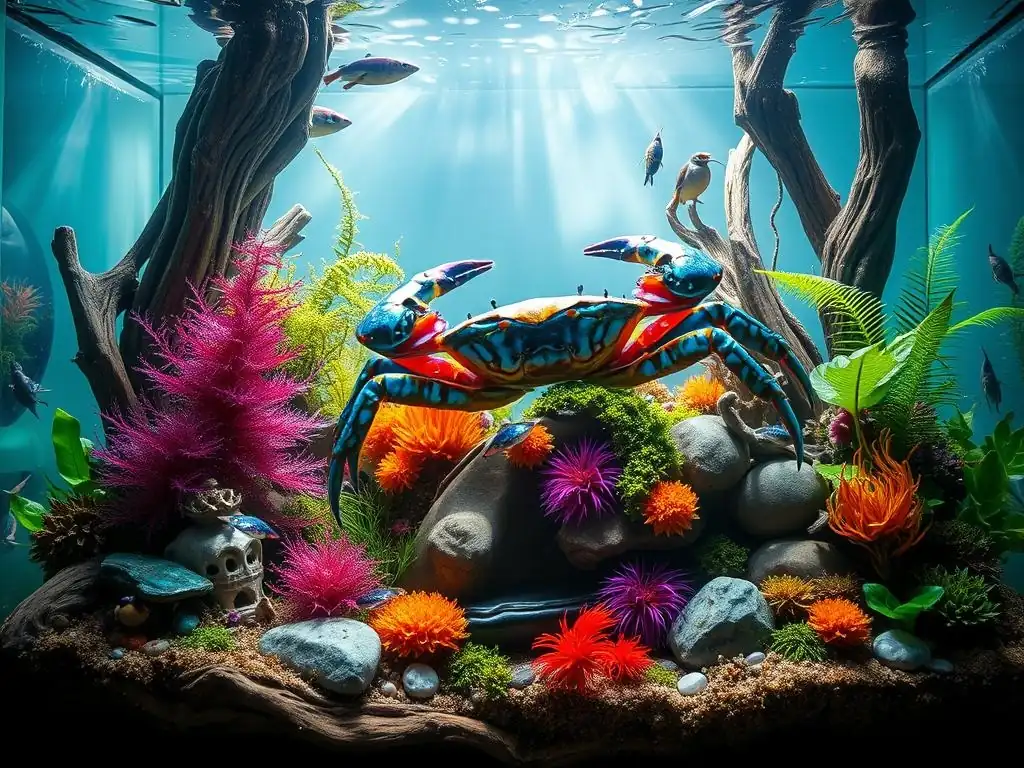
Ever wondered what it takes to create a thriving habitat for captivating crustaceans? Dive into our Ultimate Guide to Freshwater Crab Care: Beyond the Aquarium Basics and unlock the secrets to keeping these fascinating invertebrates happy and healthy in your own freshwater crab tank. Get ready to go beyond the basics and discover everything you need to know!
- The Ultimate Guide to Vampire Crab Care: Beyond the Aquarium Basics
- Introduction to Vampire Crab Keeping
- Vampire Crab Paludarium Setup: Creating the Ideal Habitat
- Vampire Crab Water Parameters and Maintenance
- Vampire Crab Diet and Feeding: Ensuring Optimal Nutrition
- Vampire Crab Paludarium Mates: Compatibility and Considerations
- Vampire Crab Health and Disease Prevention
- Vampire Crab Molting: Understanding the Process
- Vampire Crab Breeding: A Challenging but Rewarding Endeavor
- Troubleshooting Common Vampire Crab Care Issues
- Advanced Vampire Crab Paludarium Care Techniques
- Conclusion: Mastering Vampire Crab Paludarium Care
-
Frequently Asked Questions
- How do I choose the right freshwater crab species for my tank?
- What are the essential components for setting up a freshwater crab tank?
- What should I feed my freshwater crabs?
- How often should I perform water changes in my freshwater crab tank?
- What are some common health issues in freshwater crabs and how can I prevent them?
- Final Reflection: A Deeper Dive into Crustacean Companionship
- Unleash Your Inner Crab Keeper!
The Ultimate Guide to Vampire Crab Care: Beyond the Aquarium Basics
Introduction to Vampire Crab Keeping
Why Keep Vampire Crabs? Unveiling Their Unique Appeal
Vampire crabs, primarily species from the Geosesarma genus, have surged in popularity among aquarists and terrarium enthusiasts due to their striking appearance and fascinating behaviors. Unlike fully aquatic freshwater crabs, these semi-terrestrial crustaceans boast vibrant colors, ranging from deep purples and reds to bright oranges and yellows, often with captivating eye patterns.
Their relatively small size, typically reaching a carapace width of only 0.8 to 1.2 inches (2 to 3 cm), makes them ideal inhabitants for smaller, specialized setups, offering a unique alternative to traditional fish tanks. Their active, inquisitive nature, particularly during dawn and dusk, provides endless observation opportunities, showcasing their foraging, climbing, and social interactions within a well-maintained freshwater crab tank care environment.
Beyond their aesthetic appeal, vampire crabs present a rewarding challenge for hobbyists seeking to expand their invertebrate keeping skills. Their semi-aquatic lifestyle necessitates a paludarium setup, which combines both land and water elements, mimicking their natural habitats found in the humid forests of Southeast Asia.
This specific requirement for a balanced environment—providing ample terrestrial space for exploration and molting, alongside shallow freshwater areas—distinguishes their care from that of fully aquatic or fully terrestrial pets. With an average lifespan of 2 to 3 years in captivity under optimal freshwater crab tank care conditions, these creatures offer a long-term commitment that allows enthusiasts to observe their full life cycle and complex behaviors.
Understanding Vampire Crab Species Suitable for Paludariums
The term "Vampire Crab" most commonly refers to Geosesarma dennerle, renowned for its deep purple body, creamy-white claws, and bright yellow eyes. However, the Geosesarma genus encompasses many other species, such as Geosesarma bicolor (often called the Red Devil Crab due to its red body and black claws) or Geosesarma sp. "Red Riding Hood" (characterized by a vibrant red carapace and darker legs).
While their exact origins are often kept secret by collectors, most Geosesarma species suitable for paludariums originate from small islands and coastal regions in Southeast Asia, particularly Indonesia (e.g., Sulawesi) and parts of Malaysia. These crabs naturally inhabit areas near freshwater streams, rice paddies, or damp forest floors, where they can easily transition between land and water.
Understanding the specific needs of these Geosesarma species is crucial for successful freshwater crab tank care. All suitable vampire crab species are predominantly terrestrial, requiring significant land area within their enclosure, typically at least 70-80% land to 20-30% water. The water section must be shallow, usually no more than a few inches deep, allowing them to easily access and exit the water without risk of drowning.
Their natural habitat dictates a warm, humid environment, with temperatures generally ranging from 72°F to 82°F (22°C to 28°C) and high humidity levels (75-90%). Providing a diverse landscape with plenty of hiding spots, climbing structures, and leaf litter is essential to mimic their natural forest floor environment and ensure their well-being in a dedicated freshwater crab tank.
Vampire Crab Paludarium Setup: Creating the Ideal Habitat
Choosing the Right Size Paludarium for Your Vampire Crabs
Selecting an appropriately sized paludarium is paramount for the health and well-being of vampire crabs, as it directly impacts their ability to establish territories and exhibit natural behaviors. While small, a single vampire crab or a small group (e.g., 2-3 crabs) benefits from a minimum tank size of 10 gallons (approximately 38 liters).
However, to truly provide adequate space for a small colony (e.g., 4-6 crabs) and facilitate complex aquascaping with distinct land and water zones, a 20-gallon long (approximately 76 liters) or larger tank is highly recommended. The "long" dimension is particularly beneficial as it provides more floor space, which is crucial for these primarily terrestrial creatures, allowing them to explore and maintain individual territories without excessive aggression.
An adequately sized paludarium not only accommodates multiple crabs but also simplifies freshwater crab tank care by providing more stable environmental parameters. Larger volumes of substrate and water are less prone to rapid fluctuations in temperature and humidity, creating a more forgiving environment.
For instance, a 20-gallon long tank, typically measuring about 30 inches (76 cm) in length, offers ample room for a significant land area, a dedicated shallow water section, and vertical climbing opportunities. This space allows for the creation of multiple hiding spots and visual barriers, which are vital for reducing stress and preventing territorial disputes among crabs, particularly when housing mixed-sex groups or small colonies.
Essential Substrate Considerations for Vampire Crab Paludariums
The substrate in a vampire crab paludarium serves multiple critical functions, including moisture retention, burrowing opportunities, and supporting plant growth. A multi-layered approach is often ideal for comprehensive freshwater crab tank care. The base layer, for drainage, can consist of hydroton balls or lava rock, covered by a fine mesh to prevent mixing.
Above this, a thick layer (at least 3-4 inches or 7-10 cm) of a moisture-retaining substrate mix is essential. A popular and effective mix includes coco fiber, sphagnum moss, and organic topsoil, often in a ratio of 2:1:1 respectively. This combination provides excellent moisture retention, allowing the substrate to remain consistently damp but not waterlogged, which is crucial for maintaining high humidity levels within the enclosure.
Additionally, incorporating a layer of leaf litter (e.g., dried oak or Indian almond leaves) on top of the substrate is highly beneficial for vampire crabs. This mimics their natural forest floor environment, providing additional hiding spots, a natural food source as the leaves decompose, and a substrate for beneficial microfauna. The decomposing leaves also release tannins, which can have mild antibacterial and antifungal properties, contributing to a healthier environment.
When selecting substrate materials, ensure they are free from pesticides, fertilizers, and other harmful chemicals. Regular misting of the substrate is necessary to maintain appropriate humidity, helping to prevent issues like molting complications, a common concern in freshwater crab tank care.
Providing Ample Hiding Places, Climbing Structures, and Water Access
Vampire crabs are naturally shy and nocturnal, making ample hiding places crucial for their security and stress reduction. These can include small caves fashioned from cork bark, coconut shells, ceramic pots, or even PVC pipes buried partially in the substrate. Aim to provide at least one hiding spot per crab, plus a few extra, to allow individuals to choose their preferred refuge and avoid competition.
Beyond simple hiding, climbing structures are equally important. These active crabs love to climb, explore, and perch, so incorporating driftwood, cork bark branches, or sturdy artificial plants that extend from the land into the water section will greatly enhance their habitat. These structures also provide elevated areas where crabs can bask or observe their surroundings from a secure vantage point.
Crucially, every vampire crab paludarium must feature easily accessible water. While primarily terrestrial, these crabs need to submerge themselves to moisten their gills, hydrate, and sometimes even forage. The water section should be shallow, generally no more than 1-3 inches (2.5-7.5 cm) deep, with gentle slopes or ramps (such as smooth rocks or driftwood) leading in and out.
This prevents accidental drowning and ensures easy access for smaller or weaker crabs. The water should be dechlorinated freshwater. For comprehensive freshwater crab tank care, ensure that both the land and water areas are designed with the crabs' natural behaviors in mind, promoting exploration, security, and overall well-being.
Vampire Crab Water Parameters and Maintenance
Maintaining Optimal Water Quality for Vampire Crabs
Maintaining pristine water quality is a cornerstone of effective freshwater crab tank care, even though vampire crabs spend most of their time on land. The small water bodies in paludariums are particularly susceptible to rapid parameter shifts due to evaporation, waste accumulation, and uneaten food. Ideal water parameters for vampire crabs include a pH between 7.0 and 8.0, and a general hardness (GH) of 8-15 dGH.
Ammonia, nitrite, and nitrate levels must be kept as close to zero as possible, as crabs are highly sensitive to these nitrogenous compounds. Regular testing using a reliable liquid test kit is essential to monitor these parameters weekly, allowing for prompt intervention before problems escalate.
To achieve and maintain these optimal conditions, it's vital to use dechlorinated water for all water changes and top-offs. Tap water often contains chlorine or chloramines, which are toxic to crabs and other aquatic life; a good quality water conditioner will neutralize these chemicals. Furthermore, maintaining a stable temperature between 72°F and 82°F (22°C to 28°C) is important for the crabs' metabolism and overall health.
While the water section is small, the overall tank temperature and humidity are critical. A small, submersible heater may be necessary for the water section in cooler environments, or ambient room temperature might suffice if the room is consistently warm. Consistent monitoring and proactive adjustments are key to successful freshwater crab tank care.
The Importance of Regular Water Changes in Vampire Crab Care
Regular water changes are indispensable for preventing the buildup of harmful toxins and maintaining stable water parameters in a vampire crab paludarium. Given the small volume of water typically present, the concentration of waste products can escalate quickly. It is generally recommended to perform a 25-50% water change in the aquatic section weekly, or even bi-weekly depending on the tank size, crab population, and feeding habits. For instance, in a paludarium with a 1-gallon water section housing 3-4 crabs, a 50% weekly water change helps dilute nitrates and replenish essential minerals more effectively than less frequent changes.
During water changes, it's also an opportune time to gently siphon out any uneaten food, detritus, or visible waste from the water section. Care must be taken not to disturb the crabs excessively or remove beneficial biofilm. Always ensure the replacement water is dechlorinated and matches the temperature of the existing tank water as closely as possible to prevent temperature shock.
Consistent water changes, combined with mindful feeding practices, are critical components of long-term freshwater crab tank care, directly contributing to the crabs' health, vitality, and successful molting cycles. Neglecting this aspect can lead to stress, disease, and even fatalities among your vampire crabs.
Filtration Systems for Vampire Crab Paludariums: What You Need to Know
While the water volume in vampire crab paludariums is small, a suitable filtration system can significantly contribute to water quality and reduce the frequency of manual cleaning, making freshwater crab tank care more manageable. For shallow water sections, traditional hang-on-back (HOB) filters or large canister filters are often overkill and can create too much current.
Instead, small internal filters, sponge filters, or even simple air stone setups are generally more appropriate. A small internal filter with adjustable flow, such as a compact submersible power filter designed for nano tanks, can provide both mechanical filtration (removing particulate matter) and biological filtration (housing beneficial bacteria that convert ammonia and nitrite).
Sponge filters, driven by an air pump, are an excellent choice for their gentle flow and large surface area for biological filtration. They are particularly safe for small crabs and their larvae, as there are no strong intakes to trap them. For a 5-gallon water section, a small sponge filter rated for up to 10 gallons would be adequate.
In very shallow setups (less than 2 inches deep), simply circulating the water with a small air stone can provide some oxygenation and prevent stagnation, though it offers minimal mechanical or biological filtration. Regardless of the choice, any filter must be positioned to avoid strong currents that could stress the crabs or prevent them from easily accessing the water. Regular cleaning of filter media is also essential to prevent the buildup of detritus and maintain optimal filter performance.
Vampire Crab Diet and Feeding: Ensuring Optimal Nutrition
What Do Vampire Crabs Eat? A Comprehensive Dietary Guide
Vampire crabs are omnivores, with a strong preference for protein and decaying plant matter in their natural habitat. Their diet in the wild consists of small insects, larvae, decaying leaves, fruits, and detritus found on the forest floor and in shallow streams. Replicating this diverse diet in captivity is crucial for their long-term health, vibrant coloration, and successful molting. A varied diet prevents nutritional deficiencies and encourages natural foraging behaviors, making freshwater crab tank care more enriching for both the crabs and the keeper. Neglecting dietary diversity can lead to dull coloration, weak exoskeletons, and susceptibility to disease.
Their omnivorous nature means they require both animal and plant-based foods. Protein sources are particularly important for growth and exoskeleton formation, especially during molting cycles. While they will scavenge, active hunting for small prey is also a natural behavior, which can be observed if live foods are offered. Understanding their dietary needs is a key aspect of successful freshwater crab tank care, ensuring they receive all necessary vitamins, minerals, and macronutrients for a thriving life in their paludarium environment.
Recommended Foods for Vampire Crabs: Commercial and Natural Options
A balanced diet for vampire crabs should include a mix of high-quality commercial foods and natural supplements. For commercial options, sinking crab pellets, small shrimp pellets, and high-protein fish flakes or micro-pellets formulated for bottom feeders are excellent staples. Brands like Hikari Crab Cuisine or Fluval Bug Bites offer good nutritional profiles.
These should be offered in small quantities to prevent overfeeding and water fouling. Supplementing with frozen foods such as bloodworms, brine shrimp, daphnia, and Mysis shrimp provides essential protein and fat; these should be thawed before feeding. Live foods like fruit flies (especially flightless varieties), small crickets, or springtails can also be offered as occasional treats, stimulating hunting instincts.
Beyond commercial and frozen options, natural plant-based foods are vital. Blanched vegetables like zucchini, spinach, kale, and carrots can be offered sparingly. Decaying leaf litter, such as Indian almond leaves or oak leaves, is not only a crucial part of their habitat but also a natural food source as they break down.
These leaves provide detritus, beneficial microorganisms, and essential tannins. For example, a single Indian almond leaf can provide weeks of foraging material. Calcium supplements, such as a small cuttlebone piece or calcium powder sprinkled on food once a week, are also highly recommended to support healthy exoskeleton development, which is critical during the molting process in freshwater crab tank care.
Feeding Frequency and Portion Control for Healthy Crabs
Establishing an appropriate feeding schedule and mastering portion control are critical aspects of freshwater crab tank care to prevent both underfeeding and overfeeding. Overfeeding leads to uneaten food decaying in the paludarium, which can rapidly degrade water quality and encourage the growth of harmful bacteria or fungi. Underfeeding, conversely, can lead to stunted growth, nutritional deficiencies, and increased aggression among crabs due to competition for scarce resources.
Generally, vampire crabs should be fed small amounts 3-4 times per week. The exact frequency and portion size will depend on the number of crabs, their size, and the overall bioload of the paludarium.
A good rule of thumb is to offer an amount of food that can be consumed within a few hours. For a small colony of 4-6 crabs, this might equate to 2-3 small sinking pellets or a pinch of flakes per feeding, supplemented with a few pieces of frozen food or a small blanched vegetable piece once or twice a week. Observe your crabs during feeding times; if there is significant leftover food after 2-3 hours, reduce the portion size.
If the food disappears very quickly and crabs appear to be constantly searching, you might slightly increase the amount. Distributing food in multiple spots can also help ensure that all crabs get a share and reduce competition, contributing to a more harmonious freshwater crab tank environment.
Vampire Crab Paludarium Mates: Compatibility and Considerations
Suitable Paludarium Mates for Vampire Crabs: Peaceful Coexistence
Choosing compatible tank mates for vampire crabs requires careful consideration due to their semi-terrestrial nature, small size, and potential for territoriality. The best approach for freshwater crab tank care is often a species-only paludarium, or one with very carefully selected invertebrates. Small, peaceful, fully aquatic snails like Nerite snails ( Neritina natalensis) or Malaysian Trumpet Snails ( Melanoides tuberculata) can coexist in the water section, acting as scavengers without posing a threat to the crabs.
Their hard shells protect them from curious claws, and they help manage algae and detritus. Similarly, small, non-aggressive terrestrial isopods (e.g., Dwarf White Isopods, Trichorhina tomentosa) or springtails ( Collembola) can be introduced to the land area as a cleanup crew, consuming mold and decaying matter, and potentially serving as an occasional snack for the crabs.
When considering other crabs, it's generally best to keep only one species of Geosesarma to prevent inter-species aggression and hybridization. If housing multiple vampire crabs, ensure ample space and hiding spots to minimize conflict. For instance, a 20-gallon long paludarium can comfortably house a small colony of 5-6 Geosesarma dennerle if properly aquascaped with multiple territories. The key to successful cohabitation lies in providing enough resources and space to reduce competition, ensuring that all inhabitants can thrive without undue stress, which is a vital aspect of comprehensive freshwater crab tank care.
Animals to Avoid in Vampire Crab Paludariums
Introducing unsuitable tank mates can quickly lead to stress, injury, or death for vampire crabs. Avoid any species that are significantly larger, more aggressive, or possess powerful claws that could harm the crabs. This includes most types of freshwater fish, even small peaceful ones, as they may prey on juvenile crabs or compete for food. Larger crustaceans like crayfish, even small species, are highly territorial and possess strong claws capable of seriously injuring or killing vampire crabs. For example, a small ghost shrimp might seem innocuous, but it could become prey, or larger shrimp might compete for food.
Similarly, avoid other types of aquatic or semi-aquatic crabs that are not Geosesarma species, as they often have different care requirements, aggression levels, or disease vectors. Frogs, newts, or other amphibians are generally not suitable, as they may view small crabs as food or introduce pathogens. Any animal that requires deep water or cannot tolerate the high humidity and specific temperature range of a vampire crab paludarium should also be excluded. Prioritizing the safety and specific needs of the vampire crabs themselves is paramount for long-term freshwater crab tank care, ensuring a peaceful and thriving environment.
Managing Aggression and Territoriality in Community Paludariums
Despite being relatively small, vampire crabs can exhibit territorial behaviors, especially if space or resources are limited. This aggression typically manifests as chasing, claw waving, or sparring, particularly among males or when new crabs are introduced. To mitigate aggression in a community paludarium, the primary strategy in freshwater crab tank care is to provide an abundance of hiding spots and visual barriers. Each crab should have multiple options for refuge, such as cork bark tubes, coconut shells, or dense plant cover, allowing them to retreat and feel secure. Aim for at least 2-3 hiding spots per crab.
The layout of the paludarium also plays a crucial role. Breaking up sight lines with driftwood, rocks, and plants can help establish perceived territories and reduce direct confrontations. For instance, creating distinct "zones" with dense planting in one area and open spaces in another can help crabs establish their own preferred areas.
Ensuring adequate food distribution, perhaps by scattering small amounts in multiple locations, reduces competition during feeding times. If severe aggression persists, despite ample space and hiding spots, it may be necessary to remove the most aggressive individual or consider reducing the number of crabs in the paludarium. Monitoring behavior closely is key to maintaining a harmonious freshwater crab tank.
Vampire Crab Health and Disease Prevention
Common Vampire Crab Diseases and Ailments
While generally hardy, vampire crabs can suffer from various health issues if their environment is not optimal or if they are stressed. One of the most common problems in freshwater crab tank care is molting complications, where a crab struggles to shed its old exoskeleton. This can be caused by low humidity, insufficient calcium, or poor water quality.
Symptoms include a crab being stuck in its old shell, lethargy, or visible deformities after a failed molt, which often proves fatal. Another frequent issue is fungal or bacterial infections, often appearing as fuzzy growths or lesions on the exoskeleton, particularly if water quality is poor or injuries are present.
Shell rot, characterized by pitting or erosion of the exoskeleton, is usually a bacterial infection stemming from unsanitary conditions or physical damage. Parasitic infestations, though less common, can also occur, presenting as small white spots or worms on the crab's body. Furthermore, stress from overcrowding, unsuitable tank mates, or unstable parameters can weaken a crab's immune system, making it more susceptible to all these ailments. Understanding these common issues is the first step in effective freshwater crab tank care and ensuring prompt intervention.
Recognizing Symptoms of Illness in Your Vampire Crabs
Early detection of illness is crucial for successful treatment and prevention of further spread in a vampire crab colony. Vigilant observation of your crabs' behavior and physical appearance is paramount. Common symptoms of an unhealthy vampire crab include:
- Lethargy or inactivity: A healthy crab is generally active, especially during dawn and dusk. Prolonged stillness, especially if not hiding, can be a red flag.
- Loss of appetite: Refusal to eat or lack of interest in food is a significant indicator of distress or illness.
- Discoloration or dullness: Healthy vampire crabs exhibit vibrant colors. Fading colors or unusual patches can indicate stress or disease.
- Abnormal posture or movement: Uncoordinated movements, struggling to climb, or an unusual hunched posture.
- Visible growths or lesions: Fuzzy patches (fungus), white spots (parasites), or erosions on the shell (shell rot).
- Molting difficulties: A crab struggling for prolonged periods during molting, or appearing deformed after a molt.
- Missing limbs: While crabs can regenerate limbs during molting, sudden or multiple limb loss without molting can indicate aggression or severe stress.
- Escape attempts: Frequent attempts to climb out of the tank can signal an unsuitable environment.
Any deviation from normal behavior warrants immediate investigation into water parameters, humidity levels, and overall freshwater crab tank care practices.
Quarantine Procedures and Treatment Options for Sick Crabs
If a vampire crab shows signs of illness, prompt action is necessary. The first step in effective freshwater crab tank care for sick individuals is to quarantine them in a separate, smaller setup. This prevents potential spread of disease to other crabs and allows for focused treatment without affecting the main paludarium's parameters. A simple 2-5 gallon tank with a shallow water section, a small land area, and a hiding spot can serve as a quarantine tank. Maintain the same optimal temperature and humidity as the main tank.
Treatment options depend on the diagnosed ailment:
- Molting issues: Often resolved by optimizing humidity (target 80-90%), ensuring adequate calcium in the diet, and maintaining stable temperatures.
- Fungal/Bacterial infections: Mild cases might improve with pristine water quality and proper humidity. For more severe cases, short-term dips in a mild salt bath (non-iodized aquarium salt, e.g., 1 teaspoon per gallon for 10-15 minutes, once daily for a few days) can sometimes help, but use with extreme caution as crabs are sensitive to salt. Broad-spectrum antibacterial or antifungal medications designed for invertebrates (e.g., Furan-2) may be considered, but always consult product instructions carefully and use at reduced dosages for sensitive invertebrates.
- Shell rot: Improve water quality and humidity. In some cases, a very dilute povidone-iodine solution can be dabbed onto the affected area with a cotton swab, but this is an advanced technique and requires precision.
Always identify the root cause of the illness (e.g., poor water quality, stress) and correct it in the main paludarium to prevent recurrence. Consulting with experienced aquarists or a veterinarian specializing in invertebrates can provide invaluable guidance for complex cases in freshwater crab tank care.
Vampire Crab Molting: Understanding the Process
The Molting Process Explained: What to Expect
Molting, or ecdysis, is a critical and recurring biological process for vampire crabs, allowing them to grow and regenerate lost limbs. As crustaceans grow, their hard exoskeleton does not, so they must shed it periodically. The frequency of molting depends on the crab's age and growth rate; juveniles may molt every few weeks, while adults might molt every 1-3 months. Before molting, a crab will typically become reclusive, seeking a private, secure hiding spot (often on land).
They may also stop eating for a few days. During the actual molt, the crab absorbs water to swell, causing its old shell to split, usually along the back. It then slowly extracts itself from the old exoskeleton, a process that can take minutes to several hours.
The newly molted crab, known as a "soft shell" crab, is extremely vulnerable. Its new exoskeleton is soft and pliable, taking several days to fully harden. During this time, the crab will remain hidden, often consuming its old exoskeleton (exuvia) to reabsorb valuable calcium and other minerals. This consumption is vital for the hardening process and should not be disturbed or removed unless it shows signs of mold. Understanding this delicate process is paramount for successful freshwater crab tank care, as improper conditions during molting are a leading cause of fatalities.
Providing a Safe Environment for Molting Crabs
Creating a secure and stable environment is crucial to ensure a successful molt for vampire crabs. The most important factors are high humidity (ideally 80-90%) and ample undisturbed hiding spots. Low humidity can cause the old shell to dry and stick, preventing the crab from fully extracting itself, leading to a fatal "stuck molt." Regular misting of the land area and maintaining a deep, consistently damp substrate are essential for humidity. A tight-fitting lid is also necessary to trap humidity within the paludarium.
Equally important is providing multiple secluded hiding spots where crabs can feel safe during their vulnerable post-molt period. This includes cork bark tubes, coconut shells, or dense plant cover. Do not disturb a molting crab or its old exoskeleton unless absolutely necessary. Introducing new crabs or performing major tank disturbances during this period can cause significant stress. Ensuring a calcium-rich diet prior to molting also provides the necessary building blocks for the new shell. By prioritizing these environmental factors, you significantly increase the chances of successful molts, which is a key indicator of good freshwater crab tank care.
Post-Molting Care: Helping Your Crab Recover
After a vampire crab has successfully molted, its post-molting care is critical for a full recovery and hardening of the new exoskeleton. The primary focus is to ensure the crab remains undisturbed in its chosen hiding spot for several days. During this period, avoid handling the crab or making significant changes to the paludarium. The crab will likely be consuming its old exoskeleton, which is a vital source of calcium and other minerals needed to harden its new shell. Do not remove the old shell unless it starts to mold or decompose excessively.
Continue to maintain optimal humidity and stable temperatures. While the crab may not eat immediately after molting, ensure that small amounts of high-calcium foods (like calcium-dusted pellets or blanched leafy greens) are available nearby once it starts to emerge. It can take anywhere from a few days to over a week for the new shell to fully harden, depending on the crab's size and age.
During this time, the crab is very soft and vulnerable to aggression from tank mates, so ensuring ample hiding spots is doubly important. Patient and gentle freshwater crab tank care during this recovery phase is vital for the crab's long-term health.
Vampire Crab Breeding: A Challenging but Rewarding Endeavor
Creating Breeding Conditions for Vampire Crabs
Breeding vampire crabs in captivity can be a challenging but rewarding experience, requiring precise environmental control to mimic their natural reproductive triggers. Optimal breeding conditions typically involve stable water parameters (pH 7.0-8.0, GH 8-15 dGH), consistent warmth (around 78-82°F or 25-28°C), and very high humidity (80-90%). A well-established paludarium with a significant land area, abundant hiding spots, and a shallow, clean water section is essential. The presence of both sexes is, of course, necessary, ideally with a slightly higher ratio of females to males (e.g., 2 females per male) to reduce male competition and stress on females.
Providing a varied and nutritious diet, rich in protein and calcium, is also crucial for conditioning the crabs for breeding. This ensures females have the energy and resources to produce viable eggs. Some hobbyists report increased breeding activity after a slight drop in temperature followed by a gradual increase, mimicking seasonal changes in their natural habitat. However, maintaining consistent optimal conditions is generally the most reliable approach for encouraging reproduction in freshwater crab tank care. Cleanliness is paramount, as poor water quality can lead to egg loss or larval mortality.
Identifying Male and Female Vampire Crabs
Distinguishing between male and female vampire crabs is relatively straightforward and essential for successful breeding in freshwater crab tank care. The most reliable method is to examine the underside of the crab's abdomen.
- Males: Have a narrow, pointed, or T-shaped abdominal flap that tucks tightly against their body. Their chelipeds (claws) are often noticeably larger and more robust than those of females, especially the dominant claw.
- Females: Possess a broad, U-shaped, or rounded abdominal flap that covers most of their underside. This broader flap serves to hold and protect the eggs (roe) when they are "berried." Female claws are typically smaller and more uniform in size compared to males.
Observing these features requires gently picking up the crab (with caution to avoid nipping) and turning it over. Always handle crabs minimally and carefully to reduce stress. A mature female vampire crab, when ready to breed, will often appear "berried" with a cluster of tiny, dark eggs held under her abdominal flap. These eggs will darken as they develop.
Caring for Vampire Crab Larvae
Caring for vampire crab larvae is arguably the most challenging aspect of their breeding, as they undergo a complex larval development stage in freshwater. Unlike many freshwater invertebrates that produce fully formed miniature versions of the adults, Geosesarma crabs release zoea larvae into the water. These larvae are tiny, planktonic, and extremely delicate, requiring very specific conditions and microscopic food sources. They are highly susceptible to water quality fluctuations, strong currents, and predation.
Successful rearing typically requires isolating the berried female into a separate, small, clean freshwater tank with very gentle aeration (e.g., an air stone with minimal bubbles) and no filtration that could suck up the larvae. Once the larvae hatch, they need to be fed infusoria, liquid invertebrate food, or specialized larval fish food.
The zoea larvae will undergo several molts in the water column before metamorphosing into megalopae (a transitional stage) and then into miniature crabs that can move onto land. The survival rate of larvae in captivity is often very low, making the successful rearing of vampire crab larvae a significant achievement in advanced freshwater crab tank care.
Troubleshooting Common Vampire Crab Care Issues
Addressing Aggression and Territoriality Problems
Aggression and territoriality are common issues in vampire crab paludariums, especially in overcrowded conditions or when resources are scarce. These behaviors can manifest as chasing, sparring, or even physical injury, leading to stress, lost limbs, or death. The primary solution in freshwater crab tank care is to ensure the paludarium is adequately sized for the number of crabs. For instance, a 10-gallon tank might support 2-3 crabs, but a 20-gallon long is far better for a small colony of 4-6, providing more floor space.
Crucially, provide an abundance of hiding spots and visual barriers. Each crab needs several options for retreat, such as cork bark tubes, coconut shells, or dense plant thickets (e.g., Java moss, Pothos roots). Arrange decor to break up sight lines, creating distinct territories. Distribute food in multiple locations to prevent competition during feeding. If a specific crab is consistently aggressive, it might be necessary to temporarily isolate it or consider rehoming it if the aggression persists and harms other crabs. Observe interactions closely to identify the source of the conflict.
Solving Water Quality Issues Affecting Your Crabs
Poor water quality is a silent killer in any aquatic or semi-aquatic setup, and vampire crab paludariums are no exception. Given their small water volumes, parameters can shift rapidly. Common issues include high ammonia, nitrite, or nitrate levels. Symptoms in crabs can range from lethargy and loss of appetite to respiratory distress or death. The solution in freshwater crab tank care starts with diligent monitoring:
- Test water regularly: Use a reliable liquid test kit for ammonia, nitrite, nitrate, and pH at least once a week.
- Perform consistent water changes: Conduct 25-50% water changes in the aquatic section weekly, or bi-weekly. Always use dechlorinated water that matches the tank's temperature.
- Avoid overfeeding: Uneaten food rapidly decomposes and pollutes the water. Feed small amounts that can be consumed within a few hours.
- Remove uneaten food: Promptly siphon out any uneaten food from the water section.
- Ensure adequate filtration: A small sponge filter or internal filter can help maintain biological filtration and remove particulates.
- Maintain proper humidity: While not directly water quality, low humidity stresses crabs, making them more susceptible to water quality issues.
Addressing the root cause of the water quality problem, rather than just treating symptoms, is vital for long-term success.
Dealing with Escaped Crabs: Prevention and Recovery
Vampire crabs are notorious escape artists due to their excellent climbing abilities and natural curiosity. An escaped crab can quickly dehydrate and perish in a household environment. Prevention is therefore the most critical aspect of freshwater crab tank care for these invertebrates. Ensure your paludarium has a very tight-fitting lid with no gaps, even tiny ones. Mesh lids often have too many openings unless specifically designed for reptiles or invertebrates. Any holes for wires or tubes must be securely plugged or covered. Using clips or weights to secure the lid is also advisable, as crabs are surprisingly strong.
If a crab does escape, immediate action is necessary for recovery. Search thoroughly in nearby dark, humid spots: under furniture, behind appliances, in damp corners, or even under rugs. Vampire crabs can survive for a surprising amount of time out of water if humidity is high, but they will quickly dehydrate in dry household air.
A common tactic is to place shallow dishes of water or damp cloths on the floor in potential hiding areas, as the crab might be drawn to moisture. Once found, gently return the crab to its paludarium and immediately re-evaluate the tank's security to prevent future escapes.
Advanced Vampire Crab Paludarium Care Techniques
Setting Up a Biotope Paludarium for Vampire Crabs
For the dedicated hobbyist, setting up a biotope paludarium offers an advanced freshwater crab tank care challenge that aims to replicate the vampire crab's natural habitat as closely as possible. A biotope focuses on geographical accuracy, using only plants, substrate, and decor that would naturally occur in the specific region where Geosesarma crabs are found, typically the humid rainforests of Southeast Asia (e.g., Sulawesi, Indonesia). This involves extensive research into the flora and substrate types of their native streams and forest floors.
For example, a Sulawesi biotope might incorporate fine river sand, various types of smooth river rocks, specific aquatic plants like Anubias species (which are native to Africa but widely used in tropical biotopes and can tolerate semi-aquatic conditions if roots are wet), and terrestrial plants such as certain Ficus species or Pothos that thrive in high humidity. Cork bark and various types of driftwood would represent fallen logs and branches.
The water section would be shallow, mimicking small streams or puddles. This meticulous approach not only provides an optimal environment for the crabs but also creates a stunning, educational display that truly showcases the crabs in their "natural" element.
Aquascaping Ideas for Vampire Crab Habitats
Aquascaping a vampire crab paludarium goes beyond basic setup; it's an art form that enhances both the aesthetic appeal and the functionality of the habitat, crucial for advanced freshwater crab tank care. The goal is to create a dynamic landscape that encourages natural behaviors like climbing, burrowing, and foraging, while also providing security.
- Multi-level Design: Utilize cork bark flats, large pieces of driftwood, and stacked rocks to create varying elevations. This maximizes usable space and provides climbing opportunities.
- Dense Plant Cover: Incorporate both terrestrial and semi-aquatic plants. On land, use plants like Pothos, Fittonia, or various mosses (e.g., Java moss, sheet moss) for cover and humidity retention. In the shallow water, Anubias, Java Fern, or Cryptocoryne species can thrive.
- Hiding Spots Galore: Integrate numerous natural hiding spots such as coconut shells, small ceramic caves, or crevices formed by driftwood. Ensure there are more hiding spots than crabs to reduce stress.
- Leaf Litter: A generous layer of dried Indian almond leaves, oak leaves, or beech leaves on the land area not only looks natural but also provides foraging opportunities, minor food sources, and hides.
- Water Feature Integration: Design the water section with gentle slopes or ramps using smooth rocks or driftwood, ensuring easy access for the crabs. A small waterfall or trickle can add visual appeal and help with humidity, but ensure it doesn't create strong currents in the water section.
Thoughtful aquascaping creates a visually stunning paludarium that is also a thriving ecosystem for your vampire crabs.
Maintaining Humidity and Temperature for Vampire Crabs
Precise control of humidity and temperature is paramount for advanced freshwater crab tank care, as these parameters directly impact the health, molting success, and activity levels of vampire crabs. The ideal temperature range for Geosesarma species is generally 72-82°F (22-28°C), with humidity consistently between 75-90%.
- Temperature Control: A small, low-wattage heat mat placed on the side or back of the paludarium (never underneath to avoid overheating the substrate) can help maintain ambient temperature. Alternatively, if the room is consistently warm, ambient temperature might suffice. For the water section, a tiny submersible heater might be needed in cooler environments, though often the ambient tank temperature is sufficient for the shallow water.
- Humidity Control:
- Tight-fitting lid: This is the most crucial element to trap moisture.
- Deep, damp substrate: A thick layer of coco fiber and sphagnum moss retains moisture and slowly releases it.
- Regular misting: Manual misting with dechlorinated water 1-2 times daily is often necessary.
- Live plants: Plants release moisture through transpiration, contributing to humidity.
- Fogger/Mister: For larger setups or drier climates, an automated reptile fogger or mister can maintain consistent high humidity, simulating their rainforest environment.
- Large water surface: While water volume is small, a wider, shallow water area can contribute to evaporation and humidity.
Monitoring humidity with a reliable hygrometer and temperature with a thermometer is essential for fine-tuning these critical environmental factors.
Conclusion: Mastering Vampire Crab Paludarium Care
Recap of Key Principles for Successful Crab Keeping
Mastering vampire crab paludarium care hinges on a holistic approach that prioritizes their unique semi-terrestrial needs. The journey begins with selecting the right Geosesarma species and understanding their natural behaviors. A well-designed paludarium is fundamental, providing ample land area (at least 70% of the footprint) with a deep, moisture-retaining substrate, numerous hiding spots, and climbing structures. The shallow water section must be easily accessible and maintained with pristine water quality through regular testing and frequent, small water changes using dechlorinated water. Optimal temperature (72-82°F or 22-28°C) and high humidity (75-90%) are non-negotiable, crucial for successful molting and overall health.
A diverse and nutritious diet of high-protein commercial foods, frozen treats, and blanched vegetables, supplemented with calcium, is essential for vibrant coloration and strong exoskeletons. While generally peaceful within their species, providing ample space and visual barriers helps mitigate territoriality, especially in colonies. Vigilant observation for signs of illness and prompt action, including quarantine and appropriate treatment, are vital for disease prevention.
Understanding the delicate molting process and providing a secure environment during this vulnerable time are perhaps the most critical aspects of long-term success. By diligently adhering to these principles of freshwater crab tank care, hobbyists can enjoy a thriving and captivating vampire crab paludarium.
Resources for Further Learning About Vampire Crabs
For those passionate about delving deeper into the intricacies of freshwater crab tank care and the fascinating world of vampire crabs, numerous resources are available to expand your knowledge.
- Online Forums and Communities: Websites like specialized invertebrate forums or Facebook groups dedicated to Geosesarma crabs are invaluable. They offer a platform to ask questions, share experiences, and learn from a global community of experienced keepers. Many hobbyists share specific insights on breeding, diet variations, and troubleshooting unique challenges.
- Dedicated Websites and Blogs: Several reputable websites and blogs focus specifically on invertebrate care, including detailed profiles and care guides for various Geosesarma species. These often provide species-specific information on their natural habitats, which can inspire biotope setups.
- Academic Papers and Zoological Resources: For the truly dedicated, academic papers on Geosesarma taxonomy, ecology, and behavior can offer profound insights into their biology and natural history. University or museum zoology departments sometimes publish such research.
- YouTube Channels: Many experienced aquarists and paludarium keepers share their setups, feeding routines, and troubleshooting tips through video tutorials, offering a visual guide to best practices.
- Local Pet Stores with Knowledgeable Staff: While not always comprehensive, some specialized aquatic or reptile stores have staff with direct experience in uncommon invertebrate care who can offer practical advice and specific product recommendations for freshwater crab tank care.
By leveraging these resources, enthusiasts can continuously refine their care techniques and contribute to the growing body of knowledge surrounding these captivating crustaceans.
Frequently Asked Questions
How do I choose the right freshwater crab species for my tank?
Selecting the right species depends on your tank size and experience. Research the size requirements and temperament of different crab species to ensure compatibility with your setup. Consider factors like water parameters and dietary needs.
What are the essential components for setting up a freshwater crab tank?
A proper freshwater crab tank needs a secure lid, a filtration system appropriate for the tank size, and land areas for the crabs to surface and breathe. Provide plenty of hiding spots with rocks and driftwood.
What should I feed my freshwater crabs?
Freshwater crabs are typically omnivores and enjoy a varied diet. Offer them commercial crab pellets, sinking shrimp pellets, vegetables, and occasional live or frozen foods like bloodworms. A balanced diet is crucial for their health.
How often should I perform water changes in my freshwater crab tank?
Regular water changes are essential for maintaining water quality. Aim for 10-20% water changes weekly or bi-weekly, depending on the size of your tank and the number of crabs you have. Monitor your water parameters regularly.
What are some common health issues in freshwater crabs and how can I prevent them?
Common issues include shell rot and parasitic infections. Prevent these by maintaining excellent water quality, providing a balanced diet, and quarantining new crabs before introducing them to the main tank. Observe your crabs for signs of illness.
Okay, here's a final reflection designed to conclude your "The Ultimate Guide to Freshwater Crab Care: Beyond the Aquarium Basics" article, optimized for emotional connection and future impact, and incorporating the requested Markdown formatting:
Final Reflection: A Deeper Dive into Crustacean Companionship
The journey into freshwater crab tank care extends far beyond simply maintaining water parameters and providing adequate shelter. It's about fostering a miniature ecosystem, understanding the intricate needs of these fascinating creatures, and accepting the responsibility that comes with bringing a piece of the wild into our homes. The growing interest in keeping these unique invertebrates underscores a shift towards more mindful and enriching pet ownership, a trend that deserves our continued attention and support.
This exploration has hopefully illuminated the nuances of freshwater crab husbandry, revealing that successful crab keeping is a continuous learning process, a dance between observation, adaptation, and respect for the natural world. In the end, we will conserve only what we love; we will love only what we understand; and we will understand only what we are taught.
- Baba Dioum. This quote perfectly encapsulates the spirit of responsible pet ownership, urging us to deepen our understanding and appreciation for the creatures we choose to share our lives with.
Now, armed with this knowledge, I invite you to reflect on your own relationship with the natural world. Consider how you can apply these principles of mindful care and observation not only to your freshwater crab tank, but to all aspects of your life. Embrace the challenge of creating a thriving environment for these captivating creatures, and in doing so, discover a deeper connection to the delicate balance of life itself.
Unleash Your Inner Crab Keeper!
Thanks for diving into the world of freshwater crab care! We hope you’ve found some valuable insights to help you provide the best possible life for your crustacean companions. Ready to put that knowledge into action?
Here's how to take the next steps:
- Start planning your ultimate crabitat! Use the information we covered to design a thriving environment tailored to your specific crab species.
- Share your newfound expertise! Introduce a friend to the fascinating world of freshwater crabs by sharing this article.
- Explore uncommon crab-keeping techniques! Research specific dietary supplements or enrichment activities to boost your crab's well-being.
What unique feature are you most excited to incorporate into your freshwater crab habitat?