
Water Parameters for Optimal Crayfish Health, Coloration, and Vitality

Welcome to Aquarium Mastery!
Ever wondered if your crayfish are truly thriving? Unlock the secrets to vibrant colors, robust health, and peak vitality with our in-depth Crayfish Water Parameter Guide. Dive in to discover the precise conditions your shelled friends need to flourish, and avoid common pitfalls that can lead to stress and illness. Ready to create the perfect aquatic haven? Let's get started!
- Crayfish Water Parameter Guide: Optimal Health, Coloration & Vitality
- Understanding Crayfish Water Quality Requirements for Thriving Aquariums
- Key Water Parameters for Crayfish Keeping: A Detailed Guide
- Essential Water Testing for Crayfish Aquariums: Ensuring Optimal Conditions
- Water Changes for Crayfish: Maintaining Water Quality and Stability
- Crayfish-Specific Water Conditioners and Additives: What to Use and When
- Troubleshooting Water Parameter Issues in Crayfish Tanks
- Creating a Healthy and Vibrant Environment for Your Crayfish Through Optimal Water Quality
- Frequently Asked Questions
- Final Reflection: The Living Symphony of Crayfish Aquariums
- Unleash Your Crayfish's Full Potential!
Crayfish Water Parameter Guide: Optimal Health, Coloration & Vitality
Understanding Crayfish Water Quality Requirements for Thriving Aquariums
Why Water Parameters Matter for Crayfish Health and Vibrant Colors
Water parameters are the invisible architects of a crayfish's well-being, directly influencing everything from their metabolic rate to the vibrancy of their coloration. When water conditions deviate from optimal ranges, crayfish experience significant physiological stress. This stress can manifest as lethargy, reduced appetite, and a weakened immune system, making them highly susceptible to diseases. For instance, poor water quality is a leading cause of failed molts, where the crayfish cannot successfully shed its old exoskeleton, a condition that accounts for a significant percentage of mortalities in captive populations.
Beyond mere survival, stable and appropriate water parameters are crucial for showcasing the stunning colors that make many crayfish species so appealing. Crayfish kept in ideal conditions, such as those with a stable pH of 7.5 and General Hardness (GH) around 10 dGH, often display brighter blues, more intense reds, or richer browns compared to their counterparts enduring fluctuating or unsuitable environments. These vibrant hues are not just aesthetic; they are indicators of a healthy, unstressed animal. Implementing a robust crayfish water parameter guide ensures both the health and aesthetic appeal of your aquatic pets.
The Importance of Stable Water Conditions for Crayfish Longevity
Stability in water parameters is often more critical than hitting exact numerical targets, provided the parameters are within an acceptable range. Crayfish are highly sensitive to sudden changes, which can induce severe shock and compromise their delicate biological systems. Rapid fluctuations in temperature or pH, for example, force the crayfish's body to expend excessive energy on osmoregulation and detoxification, diverting resources from growth, reproduction, and immune function.
Sudden temperature drops of more than 3-4°F (1.5-2°C) can induce thermal shock, leading to immediate stress and potential death, while rapid pH swings exceeding 0.5 can severely impair gill function and mineral absorption. Studies on popular ornamental crayfish like the Electric Blue Crayfish (Procambarus alleni) suggest that consistent water parameters contribute to lifespans often exceeding 2-3 years in captivity, whereas individuals subjected to unstable conditions typically experience significantly reduced lifespans, sometimes under one year. A consistent crayfish water parameter guide is key to their long-term survival.
Key Water Parameters for Crayfish Keeping: A Detailed Guide
Ideal Temperature Ranges for Crayfish Species
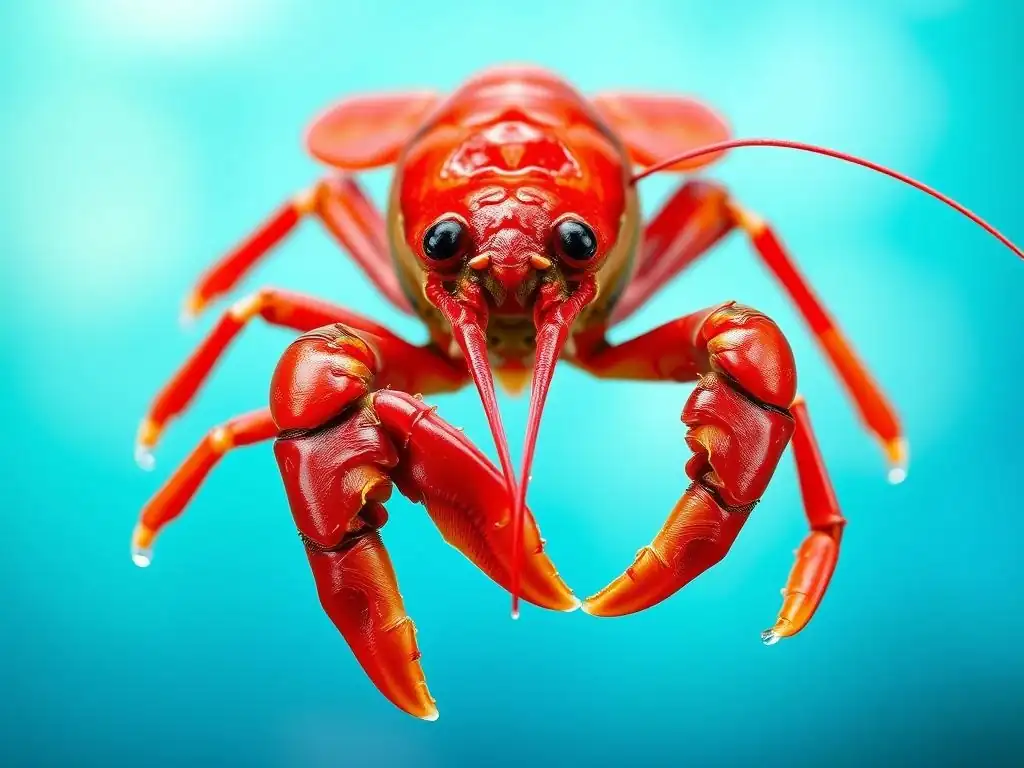
Temperature is a fundamental water parameter that profoundly affects a crayfish's metabolism, activity levels, and oxygen requirements. Most popular pet crayfish species, including the American Blue Crayfish (Procambarus alleni), the Marbled Crayfish (Procambarus fallax f. virginalis), and various Cherax species, thrive in a temperature range of 65°F to 78°F (18°C to 25.5°C). Within this range, their metabolic processes function optimally, supporting healthy growth rates and successful molting cycles.
Temperatures outside this ideal range can lead to significant issues. For instance, prolonged exposure to temperatures above 80°F (26.7°C) can significantly reduce dissolved oxygen levels in the water, leading to respiratory distress and increased susceptibility to bacterial infections. Conversely, temperatures below 60°F (15.5°C) can slow a crayfish's metabolism excessively, inhibiting growth, reducing activity, and potentially leading to lethargy and a weakened immune system. Maintaining consistent temperatures is a crucial aspect of any comprehensive crayfish water parameter guide.
pH Levels for Crayfish: Maintaining a Stable and Suitable Environment
pH measures the acidity or alkalinity of water, with a scale ranging from 0 to 14. For most common freshwater crayfish species, a slightly alkaline to neutral pH is preferred. A pH range of 6.8 to 8.0 is generally considered acceptable, with an ideal target often cited between 7.0 and 7.8. This range supports their physiological needs and ensures the proper availability of essential minerals.
Highly acidic water (below pH 6.5) can be detrimental, causing stress, damaging gills, and hindering the uptake of vital minerals. Conversely, extremely alkaline water (above pH 8.0) can also cause stress, although this is less common in most home aquariums unless specific buffering agents are heavily used. Maintaining a stable pH within this optimal range is a cornerstone of any effective crayfish water parameter guide.
The Impact of pH on Crayfish Exoskeleton Health
The pH level directly influences the availability of calcium and other minerals crucial for a crayfish's exoskeleton. Crayfish rely on calcium carbonate to harden their new shell after molting, a process that occurs regularly as they grow. In acidic water, calcium carbonate becomes less soluble and harder for the crayfish to absorb.
Acidic water (typically below pH 6.5) can also directly corrode the crayfish's cuticle and inhibit the proper calcification of the new exoskeleton post-molt, leading to a condition known as "soft shell syndrome." This leaves the crayfish vulnerable to injury and predation. Maintaining a pH of 7.0-7.8 ensures that calcium carbonate remains readily available in the water column for absorption, facilitating robust shell formation and successful molts, which is a vital component of a crayfish water parameter guide.
Buffering Capacity: Preventing pH Swings in Crayfish Tanks
Buffering capacity, primarily measured by Carbonate Hardness (KH), is the water's ability to resist changes in pH. It is a critical component of a stable crayfish water parameter guide. Bicarbonates and carbonates in the water act as natural buffers, neutralizing acids that can accumulate from biological processes (like the nitrogen cycle) or the decomposition of organic matter.
A low buffering capacity, typically indicated by a KH reading below 4 dKH (71.6 ppm), makes the water highly susceptible to rapid and dangerous pH fluctuations. These swings can be lethal to crayfish, as their internal systems struggle to adapt to sudden shifts in acidity or alkalinity. For robust pH stability in a crayfish tank, particularly one with live plants or driftwood that can naturally lower pH over time, aiming for a KH between 6 and 10 dKH (107.4 - 179 ppm) is highly recommended.
Water Hardness (GH and KH) for Crayfish: Balancing Mineral Content
Water hardness is a measure of dissolved mineral content, primarily calcium and magnesium ions. It is differentiated into General Hardness (GH) and Carbonate Hardness (KH). Both play distinct but equally vital roles in maintaining a healthy environment for crayfish. Understanding and managing these values are essential for any comprehensive crayfish water parameter guide.
While KH primarily influences pH stability as discussed, GH directly impacts the availability of minerals necessary for the crayfish's physical development. Together, these two parameters dictate the overall "feel" of the water for the crayfish and directly contribute to their ability to thrive, successfully molt, and display vibrant coloration.
General Hardness (GH): Supporting Crayfish Molting
General Hardness (GH) represents the concentration of dissolved calcium and magnesium ions, which are absolutely critical for a crayfish's ability to develop a strong exoskeleton and successfully molt. Without sufficient calcium and magnesium, the new shell formed after molting will be soft and brittle, leaving the crayfish extremely vulnerable and often leading to mortality. This is a common issue for crayfish kept in very soft water.
A GH range of 8 to 15 dGH (143 to 268 ppm) is often recommended for most crayfish species, ensuring sufficient mineral availability for healthy molting cycles. These cycles occur every few weeks to months, depending on the crayfish's age and growth rate. Providing adequate GH is a primary consideration in any crayfish water parameter guide aimed at preventing molting complications.
Carbonate Hardness (KH): Maintaining pH Stability
Carbonate Hardness (KH), also known as alkalinity, measures the concentration of bicarbonates and carbonates, which act as natural buffers against pH changes. These compounds neutralize acids produced by biological processes in the aquarium, preventing sudden and dangerous drops in pH. A stable pH is crucial for crayfish, as rapid fluctuations can cause severe stress and even death.
Maintaining a KH of at least 4 dKH (71.6 ppm) is crucial to prevent dangerous pH crashes, especially in tanks with live plants that respire at night or driftwood that releases tannins, both of which can naturally lower pH over time. For optimal stability and to effectively use a crayfish water parameter guide, many aquarists aim for a KH between 6 and 10 dKH.
Ammonia, Nitrite, and Nitrate Levels: The Nitrogen Cycle and Crayfish Toxicity
The nitrogen cycle is the cornerstone of a healthy aquatic environment. It describes the process by which toxic waste products from crayfish, uneaten food, and decaying organic matter are converted into progressively less harmful substances by beneficial bacteria. Understanding and managing the levels of ammonia, nitrite, and nitrate is paramount, as crayfish are particularly sensitive to these compounds.
Any detectable levels of ammonia or nitrite indicate a problem in the tank's biological filtration and pose an immediate threat to crayfish health. While nitrates are less toxic, their accumulation still requires careful management to prevent long-term stress and disease. This aspect is non-negotiable in any effective crayfish water parameter guide.
Understanding the Nitrogen Cycle in Crayfish Aquariums
The nitrogen cycle is a fundamental biological process in any aquatic environment, converting highly toxic ammonia (NH3) produced by crayfish waste and uneaten food into less harmful substances. In a healthy, mature aquarium, two types of beneficial bacteria play critical roles: Nitrosomonas bacteria convert ammonia into nitrite (NO2-), and then Nitrobacter bacteria further convert nitrite into nitrate (NO3-).
This cycle typically takes 4-6 weeks to establish fully in a new tank, a period commonly known as "cycling the tank." During this time, ammonia and nitrite levels will spike before dropping to zero as the bacterial colonies grow. A fully cycled tank with robust biological filtration is essential for the long-term health of crayfish.
Managing Ammonia and Nitrite: Prevention and Solutions
Ammonia and nitrite are highly toxic to crayfish, even at very low concentrations. Ammonia levels as low as 0.25 ppm can cause gill damage, respiratory distress, and lethargy, while nitrite levels above 0.5 ppm can lead to "brown blood disease" by impairing oxygen uptake. The goal for both ammonia and nitrite in a crayfish aquarium is consistently 0 ppm.
To maintain these critical zero levels, prevention is key. Avoid overfeeding, as uneaten food quickly decays and releases ammonia. Ensure your filtration system is adequately sized for your tank's bioload and regularly maintained. If ammonia or nitrite are detected, perform an immediate 25-50% partial water change, increase aeration, and consider adding a reputable bacterial supplement to boost the biological filter.
Controlling Nitrate Levels: Water Changes and Planted Tanks
Nitrate (NO3-) is the final product of the nitrogen cycle and is significantly less toxic than ammonia or nitrite. However, sustained high levels of nitrate can still stress crayfish, leading to reduced appetite, lethargy, dull coloration, and increased susceptibility to disease. While there's no "zero" target for nitrate, levels consistently above 20-40 ppm are generally considered undesirable.
The primary method for controlling nitrate accumulation is regular partial water changes, typically 25-30% weekly or bi-weekly depending on the tank's bioload and plant density. Heavily planted tanks can also significantly help in nitrate control, as live plants readily absorb nitrates as a nutrient for their growth. Implementing these practices is a crucial part of any effective crayfish water parameter guide.
Essential Water Testing for Crayfish Aquariums: Ensuring Optimal Conditions
Recommended Water Testing Kits for Crayfish Keepers
Accurate and consistent water testing is the cornerstone of successful crayfish keeping and an indispensable part of any crayfish water parameter guide. For reliable results, a comprehensive liquid test kit is highly recommended over test strips. Liquid kits, such as the API Freshwater Master Test Kit, offer greater precision and accuracy for critical parameters like pH, ammonia, nitrite, and nitrate.
For General Hardness (GH) and Carbonate Hardness (KH), separate liquid tests are often available or included in more advanced kits. These provide precise measurements crucial for exoskeleton health and pH stability, respectively. While test strips offer convenience, their accuracy can be inconsistent, making them less ideal for monitoring the sensitive needs of crayfish.
Frequency of Water Testing: Establishing a Routine
Establishing a regular water testing routine is vital for maintaining optimal conditions and proactively addressing imbalances. During the initial cycling phase of a new tank, test ammonia, nitrite, and nitrate daily or every other day to monitor the cycle's progress and ensure it completes successfully. This vigilant monitoring is a key step in setting up a tank according to a robust crayfish water parameter guide.
Once the tank is established (typically after 6-8 weeks with 0 ppm ammonia and nitrite), weekly testing for ammonia, nitrite, nitrate, and pH is a good routine. GH and KH can be tested bi-weekly or monthly, or whenever you notice issues with molting, pH stability, or general crayfish health. Regular testing allows for early detection and correction of potential problems.
Interpreting Water Test Results: Identifying and Addressing Imbalances
Understanding what your water test results mean is crucial for effective intervention. If ammonia or nitrite levels are detected (anything above 0 ppm), it indicates a problem with your biological filtration. The immediate action should be an immediate 25-50% partial water change, followed by an assessment of feeding habits, tank stocking, and filter maintenance.
A pH below 6.8 often indicates low KH, which means your water lacks sufficient buffering capacity. This can be addressed by adding a buffer product like crushed coral to the substrate or filter, or by carefully adding small amounts of baking soda (sodium bicarbonate, e.g., 1/4 teaspoon per 10 gallons to raise KH by about 1-2 dKH). Consistent nitrate levels above 40 ppm suggest insufficient water changes or overstocking. A well-informed crayfish water parameter guide relies on accurate interpretation of these results.
Water Changes for Crayfish: Maintaining Water Quality and Stability
How Often to Perform Water Changes in a Crayfish Tank
Regular partial water changes are the most effective and fundamental method for maintaining optimal water quality and stability in a crayfish aquarium. They dilute accumulated nitrates, remove dissolved organic pollutants, and replenish essential trace minerals. For most established crayfish aquariums, a 25-30% partial water change every one to two weeks is a good starting point.
The exact frequency and volume may need to be adjusted based on several factors, including the tank's bioload (number and size of crayfish), the efficiency of the filtration system, and the presence of live plants (which consume nitrates). Tanks with higher bioloads or fewer plants might benefit from weekly changes, while very lightly stocked tanks could potentially extend to bi-weekly changes. This routine is a critical part of a successful crayfish water parameter guide.
The Proper Way to Perform Water Changes: Avoiding Stress
Performing water changes correctly is crucial to avoid stressing your crayfish. First, always match the temperature of the new water to the tank water within 1-2°F (0.5-1°C) to prevent temperature shock, which can severely impact crayfish. Second, use a gravel vacuum to siphon out old water while simultaneously removing detritus, uneaten food, and waste from the substrate. This decaying organic matter is a major source of ammonia and nitrates.
When refilling, add the new, dechlorinated water slowly to avoid sudden changes in water parameters, flow, or temperature. Pouring water directly onto the substrate or a decoration can help diffuse the flow and minimize disturbance to the crayfish. A careful approach ensures that water changes are beneficial rather than stressful, aligning with best practices in any crayfish water parameter guide.
Choosing the Right Water Source: Tap Water vs. RO/DI Water
The choice of water source significantly impacts the ongoing maintenance of your crayfish water parameter guide. For most hobbyists, tap water is the most convenient and cost-effective option, provided it is properly dechlorinated and its parameters (pH, GH, KH) fall within the acceptable range for crayfish (e.g., pH 7.0-7.8, GH 8-15 dGH). It often contains beneficial trace minerals naturally.
Reverse Osmosis (RO) or deionized (DI) water, while pure and free of harmful contaminants, lacks all essential minerals. If using RO/DI water, it is absolutely necessary to remineralize it with products specifically designed for invertebrates or general hardness boosters to achieve the appropriate GH and KH levels. Failure to remineralize RO/DI water will lead to severe mineral deficiencies and molting issues for crayfish.
Dechlorinating Tap Water for Crayfish Aquariums
Chlorine and chloramines, commonly used in municipal tap water to disinfect it, are highly toxic to all aquatic life, including crayfish. They can cause severe damage to gills, impair oxygen absorption, and even be lethal at low concentrations. Therefore, it is imperative to always use a high-quality water conditioner that neutralizes both chlorine and chloramines before adding tap water to your aquarium.
Most reputable water conditioners work almost instantly. The typical dosage is around 5 mL per 10 gallons (38 liters) of new water, but always follow the product's specific instructions. Never add untreated tap water directly to a crayfish tank, as this can cause immediate and severe distress or death. Proper dechlorination is a fundamental step in any crayfish water parameter guide.
Crayfish-Specific Water Conditioners and Additives: What to Use and When
Products to Improve Water Quality for Crayfish
While regular water changes and proper filtration are the cornerstones of water quality, certain products can be beneficial for fine-tuning crayfish water parameters. Mineral supplements specifically formulated for invertebrates, often rich in calcium and magnesium, can be highly advantageous, especially if your tap water is naturally soft (GH below 8 dGH). These supplements directly support exoskeleton development and successful molting.
Products like 'Salty Shrimp GH/KH+' or 'Seachem Replenish' are examples that can help maintain optimal GH and KH levels, which are crucial for robust shell formation and pH stability in species such as the Signal Crayfish (Pacifastacus leniusculus). Additionally, beneficial bacteria starters can aid in establishing or boosting the nitrogen cycle, particularly after large water changes or filter maintenance, ensuring rapid conversion of ammonia and nitrite.
Avoiding Harmful Additives: Protecting Your Crayfish
Just as important as knowing what to use is knowing what to avoid. Many common aquarium medications, particularly those containing copper, are highly toxic to all invertebrates, including crayfish. Even at seemingly low concentrations (e.g., copper sulfate at 0.1 ppm can be lethal to invertebrates), copper can cause severe neurological damage and death. Always check product labels for invertebrate safety warnings before adding any medication or additive to a tank containing crayfish.
Similarly, some general 'all-in-one' plant fertilizers may contain high levels of copper or other heavy metals that are safe for fish but harmful to crayfish. When using fertilizers, opt for invertebrate-safe formulations or research the specific ingredients carefully. Protecting your crayfish from harmful substances is a vital component of a comprehensive crayfish water parameter guide.
Troubleshooting Water Parameter Issues in Crayfish Tanks
Common Problems and Solutions
Despite best efforts, water parameter issues can arise. Common problems in crayfish tanks include high ammonia/nitrite, low pH, or soft shell syndrome. If you observe signs of distress in your crayfish, such as lethargy, loss of appetite, rapid gill movement, or excessive hiding, immediate water testing is crucial. High ammonia or nitrite levels (anything above 0 ppm) require an immediate 25-50% water change to dilute the toxins, followed by assessing feeding habits and filtration adequacy.
Soft shell syndrome, where the crayfish struggles to harden its new shell after molting, often points to insufficient General Hardness (GH, typically below 8 dGH) or unstable pH. This can be addressed by adding mineral supplements designed for invertebrates or using a KH buffer to stabilize pH. A sudden drop in pH might indicate depleted buffering capacity, requiring KH adjustment.
Identifying the Cause of Water Parameter Imbalances
Identifying the root cause of water parameter imbalances is key to long-term resolution. Persistent high nitrates, for example, often indicate insufficient or infrequent water changes, or an overstocked tank. If nitrates consistently exceed 40 ppm even after a weekly 25% water change, consider increasing water change frequency or reducing the bioload.
Sudden pH drops can be caused by decaying organic matter (e.g., uneaten food, dead plant matter), un-buffered CO2 injection for planted tanks, or a depleted KH. A KH test below 4 dKH would confirm low buffering capacity. Overfeeding is a common culprit for spikes in ammonia and nitrite, as excess food quickly breaks down. Understanding these causes allows for targeted solutions within your crayfish water parameter guide strategy.
Preventing Future Water Quality Problems in Crayfish Aquariums
Prevention is always better than cure when it comes to water quality. The most effective way to prevent future water parameter problems is to adhere to a consistent and diligent aquarium maintenance routine. This includes performing regular partial water changes (e.g., 25-30% weekly) with properly dechlorinated and temperature-matched water, coupled with thorough gravel vacuuming to remove detritus.
Proper stocking levels are also paramount; avoid overstocking, as this creates an excessive bioload that can overwhelm the tank's biological filtration. For example, one adult dwarf crayfish like Cambarellus patzcuarensis can thrive in a 5-gallon tank, while a larger Procambarus clarkii requires at least 20 gallons. Feed sparingly, only what your crayfish can consume in 2-3 minutes, to prevent uneaten food from decaying and polluting the water. Regular water testing, as outlined in this crayfish water parameter guide, serves as an early warning system, allowing for proactive adjustments before issues escalate.
Creating a Healthy and Vibrant Environment for Your Crayfish Through Optimal Water Quality
The Relationship Between Water Parameters and Crayfish Behavior
The intricate relationship between optimal water parameters and crayfish behavior cannot be overstated. Crayfish kept in ideal conditions, with stable water parameters as outlined in this comprehensive crayfish water parameter guide, typically exhibit active foraging, confident exploration of their environment, and, depending on the species, even playful interactions. They will often be seen actively searching for food, maintaining their burrows, and displaying their natural coloration vividly. This active and natural behavior is a clear sign of a healthy, unstressed animal.
Conversely, crayfish in sub-optimal water conditions often become reclusive, hiding excessively, refusing food, or displaying erratic, jerky movements. They might appear lethargic, dull in coloration, or show signs of respiratory distress like rapid gill movement. Such behavioral changes are clear indicators of stress and potential underlying health issues stemming from poor water quality. Observing these cues allows attentive aquarists to intervene promptly.
Achieving Long-Term Success with Crayfish Keeping
Achieving long-term success in crayfish keeping is a rewarding endeavor that hinges on a diligent commitment to maintaining optimal water quality. By consistently monitoring and maintaining the ideal crayfish water parameter guide values – ensuring a stable temperature between 65-78°F, a pH of 7.0-7.8, General Hardness (GH) between 8-15 dGH, Carbonate Hardness (KH) between 4-10 dKH, and critically, zero ammonia and nitrite – aquarists can expect their crayfish to thrive.
This commitment not only ensures vibrant coloration, successful molting cycles, and active behavior but also significantly reduces the incidence of disease, allowing crayfish to live out their full lifespan, which can range from 2 to 5 years depending on the species. Regular testing, consistent water changes, and an understanding of the nitrogen cycle are the pillars that support a flourishing crayfish aquarium, making the hobby truly enjoyable and sustainable.
Frequently Asked Questions
How important are water parameters for crayfish health?
Water parameters are absolutely crucial for crayfish health. Maintaining stable and appropriate levels prevents stress, disease, and ensures proper molting. Neglecting parameters can lead to poor coloration and even death.
What is the ideal pH range for a crayfish aquarium?
The ideal pH for most crayfish species is between 6.5 and 8.0. A slightly alkaline pH is generally preferred. However, stable pH is more important than rigidly adhering to a specific number.
What temperature range is best for crayfish?
Most common crayfish species thrive in water temperatures between 65°F and 78°F (18°C and 26°C). Avoid extreme temperature fluctuations and maintain a stable environment for optimal health.
How often should I perform water changes in a crayfish tank?
Regular water changes are essential for removing nitrates and maintaining water quality. Aim for 25-50% water changes every 1-2 weeks, depending on the tank size and crayfish bioload.
What are acceptable levels of ammonia, nitrite, and nitrate in a crayfish aquarium?
Ammonia and nitrite should always be zero. Nitrate levels should be kept below 20 ppm to prevent stress and promote healthy growth and coloration in your crayfish.
Final Reflection: The Living Symphony of Crayfish Aquariums
The intricacies of maintaining optimal water parameters, as detailed in this guide, are not merely about numbers and charts; they are about fostering a thriving ecosystem where crayfish can truly flourish. Understanding and applying these principles transforms a simple aquarium into a vibrant, living symphony, where health, coloration, and vitality harmonize.
This journey into the aquatic world of crayfish has underscored the profound impact of seemingly invisible factors. The delicate balance we strive to achieve mirrors the interconnectedness of nature itself, reminding us that even small adjustments can ripple outwards, affecting the entire ecosystem. The best aquarium is not just a display case for fish, but a miniature ecosystem where all the inhabitants thrive.
This quote perfectly encapsulates the responsibility we undertake when caring for these fascinating creatures.
Now, armed with this knowledge, I invite you to reflect on your own role in creating a nurturing environment for your crayfish. Consider how you can apply these principles to not only enhance their well-being but also deepen your appreciation for the delicate balance of life within your aquarium. Let us all strive to be conscientious stewards of these miniature ecosystems, ensuring that our crayfish thrive and continue to captivate us with their unique beauty and vitality.
Unleash Your Crayfish's Full Potential!
Thank you for exploring the secrets to vibrant and healthy crayfish! Now that you understand the critical role of water parameters, it's time to take action and witness the remarkable transformation in your aquatic companions.
Here’s how you can start:
- Implement a weekly water testing schedule using a reliable testing kit to monitor pH, ammonia, nitrite, and nitrate levels. Consistent monitoring is key to proactively addressing any imbalances.
- Delve deeper by researching specific species requirements, as the optimal water parameters may vary. Consider joining an online forum to share experiences and best practices with other enthusiasts.
- Why not create a logbook or digital record of your water parameter tests and crayfish observations? Documenting changes over time can reveal trends and allow for data-driven adjustments.
What specific water parameter are you most excited to optimize first for your crayfish, and what changes do you anticipate seeing?