
Aquarium Plant Lighting Demystified: PAR, Kelvin, and Spectrum Explained

Welcome to Aquarium Mastery!
Ever wondered if your aquarium plants are really getting enough light? We delve into the fascinating world of aquarium lighting, starting with a crucial concept: PAR values. Get ready to demystify the jargon and learn how to choose the perfect lighting to help your aquatic plants thrive! Curious to know more? Let's dive in...
- Understanding Aquarium Lighting for Planted Tanks
-
Frequently Asked Questions
- What exactly are PAR values in the context of aquarium lighting?
- Why are PAR values important when choosing aquarium lighting for planted tanks?
- How do Kelvin ratings relate to PAR values in aquarium lighting?
- What are some common factors that affect PAR values in my aquarium?
- Where can I find reliable PAR value information for different aquarium lights?
- Final Reflection: Illuminating the Path to Thriving Aquascapes
- Ignite Your Aquarium: Discover the Perfect Plant Lighting!
Understanding Aquarium Lighting for Planted Tanks
The Importance of Proper Lighting for Aquatic Plant Growth
Proper lighting is arguably the single most critical factor for the successful cultivation of aquatic plants in a freshwater aquarium. Just as terrestrial plants rely on sunlight for photosynthesis, submerged aquatic plants depend on artificial light sources to convert light energy into chemical energy, fueling their growth and overall health.
Without adequate light intensity and quality, plants cannot perform photosynthesis efficiently, leading to stunted growth, discoloration, and increased susceptibility to algae overgrowth as the plants struggle to outcompete nuisance algae for available nutrients. For instance, a common issue in newly set up planted tanks is insufficient light, which often manifests as plants becoming leggy, dropping lower leaves, or exhibiting a pale, yellowish hue, indicative of a lack of chlorophyll production.
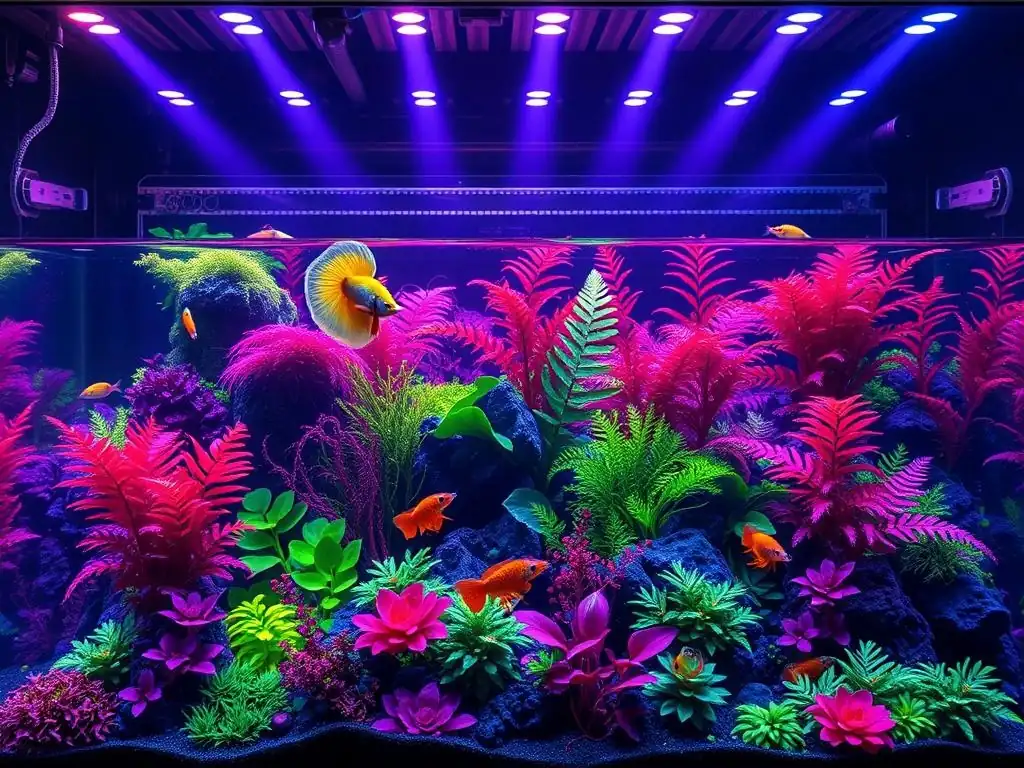
Beyond basic survival, optimal lighting also dictates the vibrancy, density, and even specific colorations of many aquatic plant species. For example, certain red plants like Rotala macrandra or Ludwigia repens require high light intensity and specific spectrum components to truly express their rich red pigments; under subpar lighting, they often remain green or show muted colors. Understanding and applying appropriate PAR values aquarium lighting principles ensures that plants not only survive but thrive, creating a lush, vibrant underwater landscape that effectively consumes excess nutrients, thereby contributing to a more stable and healthier aquarium ecosystem for fish and invertebrates.
Key Lighting Factors Affecting Planted Aquariums
When designing or optimizing lighting for a planted aquarium, several interconnected factors must be considered to ensure plants receive the specific light they need. The three primary parameters are Photosynthetically Active Radiation (PAR), Kelvin temperature, and the light spectrum. Each of these elements plays a distinct yet crucial role in influencing plant growth, health, and the overall aesthetic of the aquarium. Ignoring any one of these can lead to suboptimal plant growth or an increase in algae issues.
PAR, or Photosynthetically Active Radiation, quantifies the amount of light within the visible spectrum (400-700 nanometers) that is actually available for photosynthesis. It's a measure of light intensity that is directly relevant to plant growth, making it a key metric when discussing PAR values aquarium lighting setups. Kelvin (K) refers to the color temperature of the light, which describes how "warm" (reddish-yellow) or "cool" (bluish-white) the light appears.
While primarily an aesthetic consideration for human eyes, certain Kelvin ranges are more beneficial for plant growth, impacting how plants perceive and utilize light. Lastly, the light spectrum refers to the specific wavelengths of light emitted by the fixture.
Plants primarily absorb red and blue wavelengths for photosynthesis, with other colors playing supporting roles. A balanced spectrum ensures plants receive all the necessary wavelengths for robust growth and vibrant coloration, making the selection of the correct light spectrum as vital as ensuring adequate PAR values.
Frequently Asked Questions
What exactly are PAR values in the context of aquarium lighting?
PAR stands for Photosynthetically Active Radiation. It measures the amount of usable light for plants to perform photosynthesis. Higher PAR values generally indicate more intense and effective lighting for plant growth.
Why are PAR values important when choosing aquarium lighting for planted tanks?
PAR values directly impact the health and growth of aquatic plants. If the PAR values are too low, plants may struggle to survive. Conversely, excessively high PAR can lead to algae blooms and plant damage.
How do Kelvin ratings relate to PAR values in aquarium lighting?
Kelvin ratings indicate the color temperature of the light, measured in degrees Kelvin (K). While Kelvin doesn't directly measure PAR, it can influence the spectrum of light emitted, which in turn affects PAR. Different plant types have different lighting requirements.
What are some common factors that affect PAR values in my aquarium?
Several factors influence PAR, including the light's intensity, the distance from the light source to the plants, the water clarity, and the presence of any obstructions like decorations or cloudy water.
Where can I find reliable PAR value information for different aquarium lights?
Manufacturers often provide PAR data for their lights, but independent testing can be helpful. Look for reviews and data from reputable aquarium forums and websites that specialize in aquarium lighting.
Final Reflection: Illuminating the Path to Thriving Aquascapes
The intricacies of aquarium plant lighting, as we've explored, are not merely technical specifications, but the very lifeblood of a thriving aquatic ecosystem. Understanding PAR values, Kelvin temperatures, and spectral output is no longer a niche concern for expert aquascapers; it's a fundamental aspect of responsible aquarium keeping, directly impacting the health and vitality of our underwater gardens.
This journey into the science of light has profoundly shaped my perspective on the delicate balance within our aquariums. It's a constant reminder that even seemingly small adjustments can have significant ripple effects throughout the entire ecosystem. The ability to manipulate light, to tailor it to the specific needs of our plants, is a powerful tool, but one that demands respect and understanding. The best time to plant a tree was 20 years ago. The second best time is now.
This ancient proverb resonates deeply, reminding us that even if we're late to the game, understanding and applying these principles today can still yield incredible results.
Now, armed with this knowledge, I invite you to reflect on your own aquariums. Are your plants truly thriving, or merely surviving? Consider the light they receive, the PAR values, the spectrum, and the Kelvin temperature. Take the time to assess, adjust, and observe. By embracing the principles we've discussed, you can unlock the full potential of your aquascapes, creating vibrant, healthy, and truly captivating underwater worlds.
Ignite Your Aquarium: Discover the Perfect Plant Lighting!
Thanks for diving deep into the world of aquarium plant lighting! We hope you’ve gained a clearer understanding of PAR, Kelvin, and spectrum to create a thriving aquatic ecosystem. Now, it's time to put that knowledge into action!
Here’s what you can do next:
- Calculate the PAR needed for your specific plants and tank size. Don't just guess; use online calculators and plant-specific PAR recommendations to ensure optimal growth.
- Share your newfound lighting wisdom! Write a short guide for beginners on a forum, social media or in your local aquarium community.
- Experiment with different light spectrum combinations to see which yields the most vibrant colors and healthiest growth in your aquarium. Take detailed notes on your observations!
What’s the first lighting adjustment you’ll make in your aquarium based on what you've learned today?