
Echinodorus Ozelot: The Spotted Sword Plant and Its Striking Appeal

Welcome to Aquarium Mastery!
Intrigued by the captivating beauty of Echinodorus Ozelot? This spotted sword plant is a true showstopper for any aquarium, but mastering its care can be a rewarding challenge. Dive into our comprehensive Echinodorus Ozelot care guide to unlock the secrets to keeping this striking plant thriving in your own aquatic paradise. Ready to transform your tank? Let's get started!
- Introduction to Echinodorus 'Ozelot': A Unique Aquarium Sword Plant
- Understanding Echinodorus 'Ozelot': Origins and Characteristics
- Echinodorus 'Ozelot' Care Guide: Essential Parameters for Growth
- Planting and Propagating Echinodorus 'Ozelot'
- Echinodorus 'Ozelot' in the Aquarium: Compatibility and Placement
- Common Problems and Solutions for Echinodorus 'Ozelot' Care
- Echinodorus 'Ozelot' Varieties and Similar Species
- Maintaining a Healthy and Thriving Echinodorus 'Ozelot'
- The Benefits of Adding Echinodorus 'Ozelot' to Your Aquarium
- Conclusion: Echinodorus 'Ozelot' - A Striking Addition to Any Freshwater Aquarium
-
Frequently Asked Questions
- What are the ideal water parameters for Echinodorus Ozelot?
- How much light does an Echinodorus Ozelot need?
- What type of substrate is best for planting Echinodorus Ozelot?
- How frequently should I fertilize my Echinodorus Ozelot?
- What are some common problems encountered when caring for Echinodorus Ozelot?
- Final Reflection: Embracing the Beauty of Imperfection
- Cultivate Your Aquatic Oasis: Unleash the Beauty of Echinodorus Ozelot!
Introduction to Echinodorus 'Ozelot': A Unique Aquarium Sword Plant
The Echinodorus 'Ozelot', commonly known as the Ozelot sword plant or spotted sword plant, stands out as a highly sought-after specimen in freshwater aquariums due to its distinctive variegated foliage. This captivating plant, a hybrid within the expansive Echinodorus genus, offers a vibrant splash of color and texture, making it a focal point in various aquascapes. Its ease of care, combined with its striking appearance, makes it an excellent choice for both novice and experienced aquarists looking to elevate the aesthetic appeal and ecological balance of their tanks.
Often recognized by its unique spotting pattern, which can range from deep red to black on a green or reddish-brown background, the Echinodorus 'Ozelot' provides a dynamic visual element. This article serves as a comprehensive Echinodorus Ozelot care guide, detailing everything from its origins and ideal growing conditions to propagation techniques and solutions for common problems. Understanding the specific needs of this plant is crucial for cultivating a lush, healthy specimen that thrives and enhances the overall beauty of your aquatic environment.
Understanding Echinodorus 'Ozelot': Origins and Characteristics
The History and Development of the Echinodorus 'Ozelot' Variety
The Echinodorus 'Ozelot' is not a naturally occurring species but rather a cultivated hybrid, a testament to selective breeding within the Echinodorus genus. It was developed in the aquatic plant nurseries, notably originating from the German nursery Dennerle, which has a long history of introducing innovative plant varieties to the hobby. This particular cultivar is believed to be a cross between Echinodorus schlueteri and Echinodorus barthii, inheriting desirable traits from both parent plants, including robust growth and distinctive leaf coloration.
Its development was aimed at creating a hardy, visually appealing plant that could adapt well to typical aquarium conditions while offering a unique aesthetic. The success of the 'Ozelot' sword plant lies in its genetic predisposition for vibrant, spotted leaves that intensify in color under optimal lighting, making it a popular choice for aquascaping since its introduction in the late 20th century. This history underscores its resilience and suitability for a wide range of freshwater setups, solidifying its place as a staple in the aquatic plant community.
Identifying Key Features: Spots, Leaf Shape, and Size
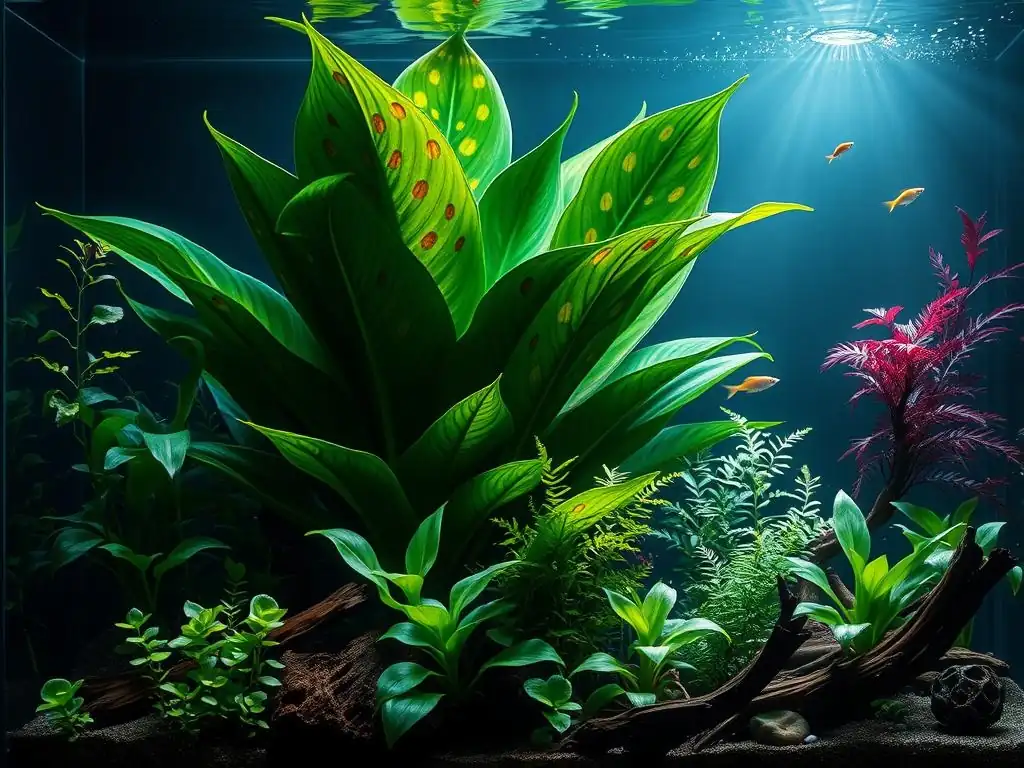
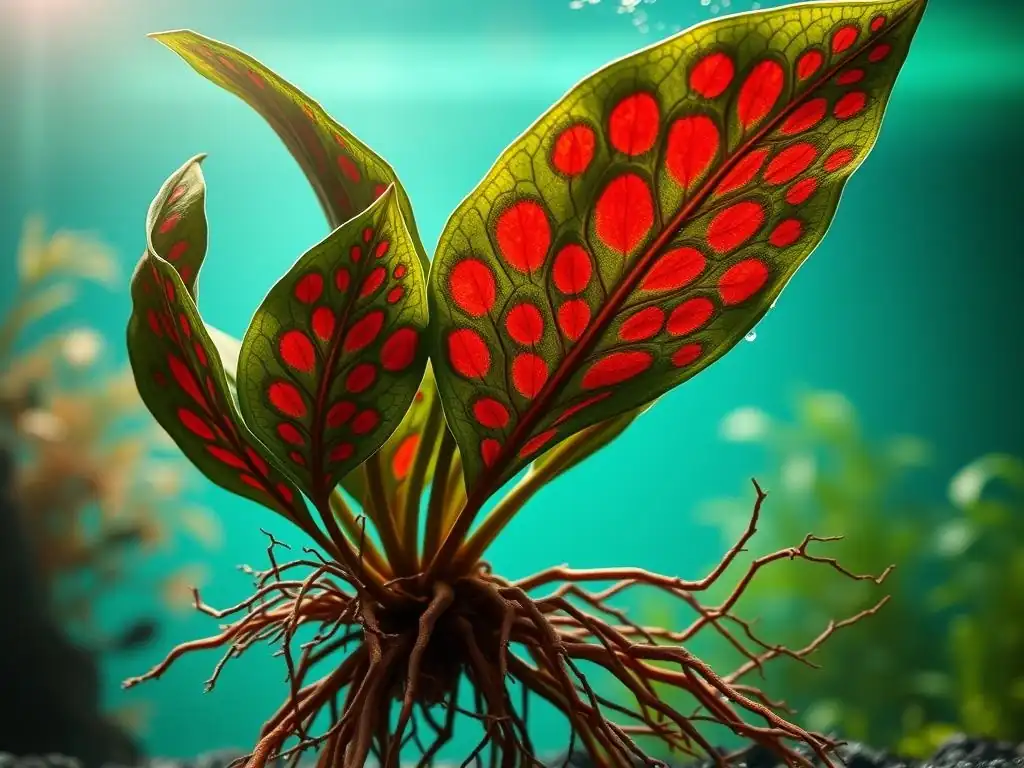
The most prominent feature of the Echinodorus 'Ozelot' is its striking spotted pattern, which gives the plant its name, reminiscent of the markings on an ocelot cat. These spots typically appear in shades of dark red, brown, or black against a base color that can range from bright green to a reddish-bronze, depending on light intensity and nutrient availability. Young leaves often emerge with more pronounced spotting and a reddish hue, gradually transitioning to green with darker spots as they mature.
In terms of morphology, the leaves of the 'Ozelot' sword plant are typically lanceolate to ovate, with a slightly wavy margin and a distinct central vein. They can grow quite large, reaching lengths of 20-50 cm (8-20 inches) or more under optimal conditions, forming a dense rosette. The plant itself can attain a height of up to 40-60 cm (16-24 inches), making it an ideal background or midground plant in larger aquariums. Its robust root system anchors it firmly in the substrate, contributing to its overall hardiness and ease of maintenance in an Echinodorus Ozelot care guide context.
Echinodorus 'Ozelot' Care Guide: Essential Parameters for Growth
Optimal Water Parameters for Echinodorus 'Ozelot' Health
Maintaining stable and appropriate water parameters is fundamental for the health and vibrant coloration of your Echinodorus 'Ozelot'. This plant is relatively adaptable but thrives best within specific ranges that mimic its natural habitat conditions, ensuring vigorous growth and preventing common deficiencies. Consistent water quality checks are a critical part of any comprehensive Echinodorus Ozelot care guide.
Regular water changes, typically 25-30% weekly or bi-weekly, are essential to keep nitrate levels low and replenish vital trace elements. While the 'Ozelot' sword plant can tolerate slight fluctuations, sudden drastic changes in water chemistry can stress the plant, leading to stunted growth or leaf deterioration. Adhering to the recommended ranges for temperature, pH, and hardness will significantly contribute to the long-term success of cultivating this beautiful sword plant.
Temperature Requirements for 'Ozelot' Sword Plant
The Echinodorus 'Ozelot' prefers a tropical temperature range, mirroring the conditions of many popular freshwater aquarium fish. The ideal water temperature for this plant falls between 22°C and 28°C (72°F to 82°F). Maintaining temperatures within this range promotes efficient metabolic processes, ensuring healthy growth and nutrient uptake.
Temperatures consistently below 20°C (68°F) can slow down the plant's growth significantly and may lead to a duller appearance, while prolonged exposure to temperatures above 30°C (86°F) can stress the plant, making it more susceptible to disease and decay. Using a reliable aquarium heater with a thermostat is recommended to keep the temperature stable, especially in environments with fluctuating ambient room temperatures.
pH Levels and Water Hardness for 'Ozelot' Sword
The Echinodorus 'Ozelot' is quite tolerant of a range of pH levels, thriving in slightly acidic to neutral water. An optimal pH range for this plant is between 6.0 and 7.5. While it can adapt to slightly outside these parameters, maintaining pH within this window ensures optimal nutrient availability, particularly iron, which is crucial for its vibrant coloration and overall health.
Regarding water hardness, the 'Ozelot' sword plant prefers soft to moderately hard water, with a general hardness (GH) of 3-12 dGH (50-200 ppm) and carbonate hardness (KH) of 3-8 dKH (50-140 ppm). Extremely soft water might require supplementation to provide essential minerals, while very hard water can sometimes inhibit nutrient absorption. Regular testing of both pH and hardness using an aquarium test kit will help maintain these critical parameters within the recommended ranges for a healthy Echinodorus Ozelot care guide regimen.
Lighting Needs for Vibrant Echinodorus 'Ozelot' Growth
Lighting is a crucial factor in the health and coloration of the Echinodorus 'Ozelot'. While it can tolerate moderate lighting conditions, providing adequate light intensity is key to bringing out its most vibrant spotted patterns and promoting robust growth. Insufficient light will result in smaller, paler leaves with less pronounced spotting, while excessive light can encourage undesirable algae growth on the leaves.
A balanced lighting setup, considering both intensity and duration, is essential for this plant. Many aquarists find success with LED lighting systems that offer adjustable intensity and spectrum. Placing the 'Ozelot' sword plant in a position where it receives consistent light exposure, without being overshadowed by other taller plants, is also important for its long-term vitality.
Light Intensity and Duration for 'Ozelot' Sword Plant
For optimal growth and coloration, the Echinodorus 'Ozelot' thrives under moderate to high light intensity. This translates to approximately 20-40 PAR (Photosynthetically Active Radiation) at the substrate level, or roughly 2-3 watts per gallon for traditional fluorescent lighting (though PAR is a more accurate measure for modern LEDs). Under moderate light, the spots may be less pronounced, and the overall color might lean more towards green. With higher light, the reddish hues and dark spotting become significantly more intense and defined.
The recommended photoperiod for the 'Ozelot' sword plant is typically 8-10 hours per day. A consistent light cycle is crucial; using a timer for your aquarium lights helps maintain this regularity. Extending the photoperiod beyond 10 hours can increase the risk of algae outbreaks without necessarily providing additional benefits to the plant, making a balanced light duration a key component of effective Echinodorus Ozelot care guide practices.
Substrate and Fertilization for Echinodorus 'Ozelot'
The Echinodorus 'Ozelot', like other sword plants, is a heavy root feeder, meaning it primarily absorbs nutrients through its extensive root system embedded in the substrate. Therefore, the quality and composition of your substrate, along with a consistent fertilization strategy, are paramount for its health and vigorous growth. Neglecting these aspects is a common reason for poor performance in an Echinodorus Ozelot care guide.
A nutrient-rich substrate provides a steady supply of essential macro and micronutrients directly to the roots, promoting strong development and preventing deficiencies. Supplementing with liquid fertilizers for water column absorption is also beneficial, especially for micronutrients that may be leached from the substrate over time or for plants that also absorb through their leaves.
Choosing the Right Substrate for Root Development
For the Echinodorus 'Ozelot', a nutrient-rich substrate is highly recommended to support its robust root system. Options include specialized aquatic plant substrates, which are often composed of fired clay granules, laterite, or other nutrient-infused materials. These substrates provide an excellent medium for root anchoring and slow-release nutrient delivery. A substrate depth of at least 7-10 cm (3-4 inches) is ideal to allow the roots to spread and establish firmly.
If using an inert substrate like sand or fine gravel, it is crucial to supplement with root tabs. These tabs, typically pressed pellets of concentrated nutrients, are inserted directly into the substrate near the plant's roots and slowly release fertilizers over several months. This method effectively transforms an inert substrate into a nutrient-rich environment suitable for the 'Ozelot' sword plant, ensuring it receives the necessary iron, potassium, and other trace elements.
Fertilization Strategies for Lush 'Ozelot' Growth
To ensure lush growth and vibrant coloration, a consistent fertilization strategy is vital for the Echinodorus 'Ozelot'. As a heavy root feeder, the primary focus should be on root zone fertilization. Root tabs, which are replaced every 3-6 months depending on the product, are an excellent way to provide a continuous supply of macro (nitrogen, phosphorus, potassium) and micronutrients (iron, manganese, zinc) directly to the roots. Iron, in particular, is critical for the characteristic reddish hues and overall health of the 'Ozelot' sword plant; a deficiency often manifests as yellowing leaves (chlorosis).
In addition to root tabs, supplementing with a comprehensive liquid fertilizer designed for aquatic plants can benefit the 'Ozelot' sword plant, particularly for water column-absorbed nutrients or to address specific deficiencies. Dosing liquid fertilizers according to the product's instructions, usually weekly after water changes, ensures that all necessary elements are available. A balanced approach combining root tabs and liquid fertilizers provides the most comprehensive nutrient regimen for a thriving Echinodorus Ozelot care guide.
Planting and Propagating Echinodorus 'Ozelot'
Planting Your Echinodorus 'Ozelot': A Step-by-Step Guide
Proper planting techniques are essential to give your Echinodorus 'Ozelot' the best start in its new aquarium environment. Incorrect planting can lead to stunted growth or even decay. This step-by-step guide ensures the plant establishes quickly and effectively, laying the groundwork for a successful Echinodorus Ozelot care guide.
- Prepare the Plant:
- Gently remove the plant from its nursery pot or packaging.
- Carefully rinse off any rockwool or substrate clinging to the roots under lukewarm tap water. Ensure all foreign material is removed to prevent it from fouling your aquarium water.
- Trim any excessively long or damaged roots with sharp scissors, leaving about 2-3 inches of healthy root mass. This encourages new root growth.
- Remove any yellowing, decaying, or damaged leaves at the base of the plant to prevent rot and direct energy to new growth.
- Prepare the Substrate:
- Ensure your substrate is deep enough (at least 7-10 cm or 3-4 inches) to accommodate the root system. If using root tabs, prepare them for insertion.
- Planting in the Aquarium:
- Dig a hole in the substrate large enough to comfortably fit the root ball.
- Carefully place the plant in the hole, ensuring the crown (where the leaves meet the roots) is just above the substrate line. Burying the crown can lead to rot.
- Gently push the substrate around the roots to anchor the plant firmly. Ensure no roots are exposed.
- If using root tabs, insert them about 2-3 inches deep into the substrate, a few inches away from the plant's base.
- Post-Planting Care:
- After planting, observe the plant for any signs of stress. Initial melting of some leaves is common as the plant adjusts to its new environment; simply trim these off.
- Maintain stable water parameters and consistent lighting as outlined in the Echinodorus Ozelot care guide sections.
Propagating Echinodorus 'Ozelot': Methods and Tips
The Echinodorus 'Ozelot' is relatively easy to propagate, primarily through the formation of adventitious plantlets. This natural reproductive method allows aquarists to expand their collection or share plants with others. Understanding these methods is a key part of a complete Echinodorus Ozelot care guide.
While less common or efficient for this specific variety, Echinodorus species can also sometimes be propagated by dividing the rhizome, though this is riskier for the parent plant. The most reliable and widely used method for the 'Ozelot' sword plant involves its production of plantlets on flower stalks.
Propagation via Adventitious Plantlets
The primary and most effective method for propagating Echinodorus 'Ozelot' is through adventitious plantlets that form on the flower stalk (inflorescence). Under good growing conditions, the mature 'Ozelot' sword plant will send up a long, slender stalk that can extend out of the water. Along this stalk, small plantlets, complete with miniature leaves and roots, will develop.
To propagate:
- Allow the plantlets to develop sufficiently on the mother plant's stalk. They should have at least 3-4 leaves and a visible root system of 1-2 cm (0.5-1 inch) in length.
- Once the plantlets are adequately developed, carefully snip them from the main stalk using sharp, clean scissors. You can either cut the entire stalk with the plantlets or cut individual plantlets if they are mature enough.
- Gently plant the new plantlets into the substrate, ensuring their roots are buried but the crown is exposed, similar to planting a mature specimen.
- Provide adequate light and nutrients to the newly planted 'Ozelot' sword plantlets. They may experience a brief period of adjustment but should quickly establish and begin to grow, contributing to the expansion of your Echinodorus Ozelot care guide efforts.
Echinodorus 'Ozelot' in the Aquarium: Compatibility and Placement
Choosing Tank Mates for Your Echinodorus 'Ozelot'
When integrating the Echinodorus 'Ozelot' into your aquarium, considering its tank mates is crucial to ensure its longevity and pristine appearance. While the 'Ozelot' sword plant is robust, certain fish species are known to graze on or uproot aquatic plants, potentially damaging your beautiful specimen. A well-chosen community of fish will allow your 'Ozelot' sword plant to thrive undisturbed.
Generally, peaceful community fish are ideal companions. This includes popular choices like tetras (e.g., Neon Tetras, Cardinal Tetras, Rummy Nose Tetras), rasboras, most livebearers (e.g., Guppies, Mollies, Platies), and smaller peaceful cichlids like Dwarf Gouramis or Angelfish. Bottom dwellers such as Corydoras catfish and Otocinclus are also excellent choices as they help keep the substrate clean without disturbing the plant roots. Avoid large, boisterous fish or known plant-eaters like Silver Dollars, large African Cichlids, or some species of Goldfish, as they can quickly decimate the leaves of your 'Ozelot' sword plant.
Ideal Placement Within the Aquarium Landscape
The Echinodorus 'Ozelot' is a medium to large-sized rosette plant, making its placement within the aquarium landscape an important consideration for both aesthetics and the plant's health. Due to its potential size, it is generally best suited for midground or background placement in most average-sized aquariums (50 gallons or larger). In smaller tanks, it might quickly dominate the space and require more frequent pruning.
When positioning your 'Ozelot' sword plant, ensure it has ample space to spread its broad leaves without overshadowing other plants excessively. Placing it slightly off-center or in clusters of two or three can create a visually appealing focal point. Furthermore, ensure it receives adequate light, as discussed in the Echinodorus Ozelot care guide section on lighting, without being shaded by taller hardscape elements or other plants. Its vibrant spotted leaves make it an excellent contrast plant, especially when placed against solid green foliage or dark backgrounds.
Common Problems and Solutions for Echinodorus 'Ozelot' Care
Identifying and Treating Common Diseases in 'Ozelot' Sword Plants
While the Echinodorus 'Ozelot' is generally hardy, like all aquatic plants, it can occasionally suffer from issues that might be mistaken for "diseases" but are more often related to environmental stress or nutrient deficiencies rather than true pathogens. Bacterial or fungal infections are less common in plants unless there's significant decay, often a secondary problem. The primary "diseases" you'll encounter are typically symptoms of suboptimal conditions, requiring adjustments to your Echinodorus Ozelot care guide regimen.
One common problem is "melting" or rapid decay of leaves, especially after initial planting or significant changes in water parameters. This is often an adjustment phase where the plant sheds old leaves grown in different conditions (e.g., emersed growth in nurseries) and grows new, adapted submerged leaves. The best treatment is to maintain stable conditions, ensure proper nutrient availability, and trim away decaying leaves to prevent water fouling. Persistent melting might indicate severe deficiencies or unsuitable water parameters, necessitating a thorough review of your tank's environment.
Addressing Nutrient Deficiencies in Echinodorus 'Ozelot'
Nutrient deficiencies are the most frequent "ailments" affecting the Echinodorus 'Ozelot', directly impacting its growth, coloration, and overall vitality. Recognizing the signs of specific deficiencies is crucial for prompt correction and maintaining a healthy 'Ozelot' sword plant. Iron and potassium are two of the most critical micronutrients for this species.
- Iron Deficiency: This is perhaps the most common deficiency for 'Ozelot' sword plants, manifesting as yellowing or chlorosis of new leaves, while older leaves remain green. The distinctive red or dark spots may also become less pronounced.
- Solution: Increase iron supplementation, primarily through root tabs which are highly effective for this root-feeding plant. Liquid iron fertilizers dosed into the water column can also provide a quick boost. Ensure your pH is within the optimal range (6.0-7.5), as high pH can make iron less available.
- Potassium Deficiency: Symptoms include yellowing or holes appearing in older leaves, often starting from the leaf margins, or a general lack of vigor.
- Solution: Supplement with potassium-rich liquid fertilizers or root tabs containing potassium. Potassium is a macronutrient vital for overall plant health and resilience.
- Nitrogen/Phosphate Deficiency: General yellowing of older leaves and stunted growth can indicate a lack of nitrogen or phosphate. However, in established aquariums with fish, these are usually abundant.
- Solution: If confirmed through testing, carefully dose a comprehensive liquid fertilizer containing these macronutrients. Overdosing can lead to algae.
Regular observation, coupled with consistent water testing and proper fertilization, as detailed in this Echinodorus Ozelot care guide, will help prevent and quickly rectify most nutrient-related issues.
Preventing Algae Growth on Echinodorus 'Ozelot' Leaves
Algae growth on the leaves of your Echinodorus 'Ozelot' can be an unsightly problem, inhibiting photosynthesis and indicating an imbalance in your aquarium. Common types of algae found on plant leaves include green spot algae, green dust algae, and sometimes black beard algae. While a small amount of algae is natural, excessive growth suggests an issue with lighting, nutrient levels, or CO2.
To prevent algae:
- Optimize Lighting: Ensure your photoperiod is not too long (8-10 hours is ideal) and light intensity is appropriate for your tank's CO2 and nutrient levels. Too much light without sufficient CO2 and nutrients is a common trigger for algae.
- Nutrient Balance: Avoid nutrient imbalances. Excess nitrates or phosphates, especially without adequate plant uptake, can fuel algae. Regular water changes (25-30% weekly) help remove excess nutrients. Ensure plants are receiving all necessary nutrients, as healthy plants outcompete algae.
- CO2: If you have high lighting, consider CO2 supplementation. Plants require CO2 to utilize light and nutrients efficiently; a lack of CO2 can lead to plants struggling and algae taking over.
- Tank Maintenance: Regularly clean the tank, remove detritus, and ensure good water circulation. Introduce algae-eating inhabitants like Otocinclus catfish or Amano shrimp, which can help keep leaves clean without harming the 'Ozelot' sword plant.
- Manual Removal: Gently wipe off algae from the leaves during routine maintenance with your fingers or a soft cloth. This physical removal can prevent it from spreading and gives the plant a chance to recover. Implementing these preventative measures is a crucial aspect of an effective Echinodorus Ozelot care guide.
Echinodorus 'Ozelot' Varieties and Similar Species
Exploring Different Echinodorus 'Ozelot' Color Variations
The term Echinodorus 'Ozelot' primarily refers to a specific hybrid, but within this cultivar, variations in coloration are common and often influenced by environmental factors, particularly light intensity. The two main recognized color variations are the 'Green Ozelot' and the 'Red Ozelot', though these are not distinct species but rather expressions of the same plant under different conditions or slight genetic variations.
- 'Green Ozelot': This variation typically exhibits a greener base leaf color with dark, almost black, spots. It tends to be the default appearance under moderate lighting conditions or when the plant is not receiving optimal iron supplementation. The green provides a striking contrast to the dark spots, giving it a classic, elegant look.
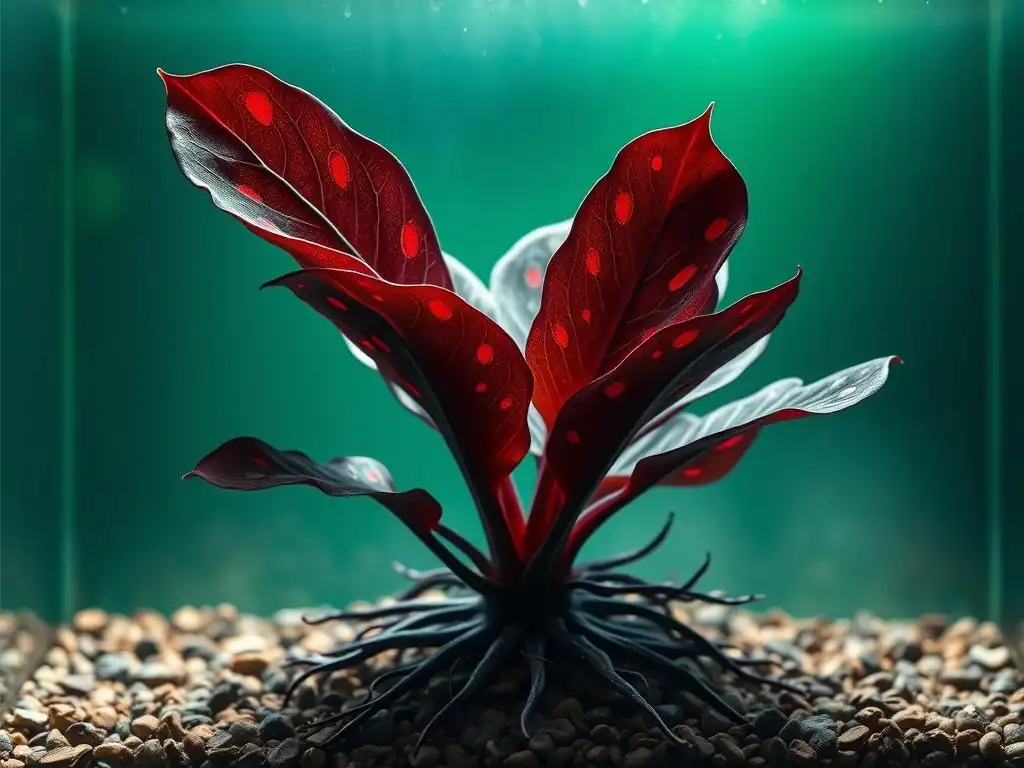
- 'Red Ozelot': This is arguably the more sought-after variation, characterized by a reddish-brown to deep red base leaf color, often more pronounced on younger leaves, with prominent dark red to black spots. The vibrant red coloration is typically achieved under higher light intensity and with consistent iron and other trace element fertilization. Aquarists aiming for the 'Red Ozelot' look should focus on providing strong, full-spectrum lighting and ensuring a rich, iron-laden substrate.
Understanding these variations allows aquarists to manipulate conditions to achieve their desired aesthetic from their Echinodorus Ozelot care guide efforts.
Comparing Echinodorus 'Ozelot' to Other Echinodorus Species
The Echinodorus genus is vast, encompassing many popular aquarium plants, often referred to as "sword plants" due to their characteristic leaf shape. While Echinodorus 'Ozelot' stands out with its unique spotting, it shares many general care requirements with its relatives but also has distinct visual differences.
- Echinodorus 'Red Flame': This hybrid is often compared to 'Ozelot' due to its vibrant red coloration. However, 'Red Flame' typically features solid red or reddish-brown leaves with green veins, lacking the distinct spotted pattern of the 'Ozelot'. Its red intensifies with high light and iron, much like the 'Red Ozelot' variation, but without the characteristic 'ocelot' spots.
- Echinodorus rubin: Another popular red sword plant, 'Rubin' is known for its broad, deep red leaves that are generally unspotted or have only very subtle markings. Its leaves tend to be wider and more uniformly red than 'Ozelot', making it a solid red centerpiece.
- Echinodorus bleheri (Amazon Sword): This is perhaps the most common Echinodorus species in the hobby, known for its large, broad, solid green leaves. It lacks any red coloration or spotting and grows significantly larger than 'Ozelot', making it suitable for very large tanks or as a solitary background plant. Its care is similar, but its aesthetic is entirely different, highlighting the unique appeal of the Echinodorus 'Ozelot' care guide for spotted varieties.
Each of these Echinodorus species offers different aesthetic qualities, allowing aquarists to choose plants that best fit their aquascape vision while still benefiting from the general hardiness and beauty of the sword plant family.
Maintaining a Healthy and Thriving Echinodorus 'Ozelot'
Regular Maintenance Tips for Long-Term Health
Consistent and thoughtful maintenance is paramount for the long-term health and striking appearance of your Echinodorus 'Ozelot'. Beyond the initial setup and basic care parameters, regular attention to specific tasks will ensure your 'Ozelot' sword plant remains vibrant and free from issues. These tips are integral to a successful Echinodorus Ozelot care guide.
- Water Changes: Perform weekly or bi-weekly water changes of 25-30% to replenish trace elements and remove accumulated nitrates and other waste products. This helps maintain stable water parameters and prevents the buildup of substances that can inhibit plant growth or promote algae.
- Substrate Stirring (Gentle): Periodically and gently stir the substrate around the base of the plant to release any trapped gases and prevent anaerobic pockets, which can be harmful to roots. Be cautious not to disturb the roots too much.
- Root Tab Replacement: If using root tabs, mark your calendar to replace them every 3-6 months, depending on the product's instructions. This ensures a continuous supply of essential nutrients to the roots, which is crucial for this heavy root feeder.
- Algae Control: Regularly inspect leaves for algae growth. Gently wipe off any visible algae to ensure the plant can photosynthesize efficiently. Address underlying causes of algae (e.g., too much light, nutrient imbalance).
- Observation: Pay close attention to the plant's appearance. Yellowing leaves, holes, or stunted growth are often early indicators of nutrient deficiencies or environmental stress, allowing for prompt intervention.
Pruning Techniques for Optimal Growth and Appearance
Pruning the Echinodorus 'Ozelot' is an important maintenance task that promotes healthy new growth, maintains the plant's desired size, and improves its overall aesthetic within the aquascape. Without proper pruning, the 'Ozelot' sword plant can become overgrown, casting shadows on other plants and accumulating decaying foliage.
- Removing Old or Damaged Leaves: The primary pruning technique involves removing older, yellowing, or decaying leaves. These leaves are typically found at the outer base of the rosette. Use sharp, clean scissors to cut the leaf stem as close to the rhizome (the base of the plant) as possible. Removing these leaves redirects the plant's energy towards producing new, healthy growth and prevents decaying plant matter from fouling the water. This also helps prevent algae from establishing on dying leaves.
- Controlling Size: If your 'Ozelot' sword plant is growing too large for your aquarium, you can selectively remove some of the largest, outermost healthy leaves to reduce its overall footprint. While this won't stop its growth entirely, it can help manage its size in smaller tanks.
- Removing Flower Stalks/Plantlets: Once adventitious plantlets on a flower stalk have matured and are ready for propagation, you can cut the entire stalk. If you do not wish to propagate, you can remove flower stalks as they emerge to redirect the plant's energy into foliage growth.
Regular pruning, typically every few weeks or as needed, is a simple yet effective practice that significantly contributes to a thriving Echinodorus Ozelot care guide and a visually appealing aquarium.
The Benefits of Adding Echinodorus 'Ozelot' to Your Aquarium
Enhancing Aquarium Aesthetics with the Spotted Sword Plant
The Echinodorus 'Ozelot' is undeniably a powerhouse when it comes to visual appeal in a freshwater aquarium. Its most striking feature, the unique spotted pattern on its leaves, provides a dynamic texture and color contrast that few other aquatic plants can offer. Whether it's the deep red spots on a green background or the more intense reddish-brown hues under optimal lighting, the 'Ozelot' sword plant instantly draws the eye and elevates the overall beauty of any aquascape.
Its robust, rosette growth habit makes it an excellent choice for a focal point or a strong midground/background plant, depending on tank size. The broad leaves create a lush, natural backdrop, providing depth and structure to the layout. The vibrant colors and distinct patterns of the 'Ozelot' sword plant can transform a mundane tank into a captivating aquatic display, making it a favorite among aquascapers seeking to add dramatic flair and natural elegance. This aesthetic contribution is a primary reason why many aquarists seek out an Echinodorus Ozelot care guide.
Contributing to a Balanced Aquarium Ecosystem
Beyond its undeniable beauty, incorporating Echinodorus 'Ozelot' into your aquarium offers significant ecological benefits, contributing to a healthier and more stable aquatic environment. Live plants play a crucial role in maintaining water quality and providing a natural habitat for fish and invertebrates.
- Oxygenation: Through photosynthesis, the 'Ozelot' sword plant releases oxygen into the water during the day, which is vital for the respiration of fish and beneficial bacteria. This natural oxygen production helps maintain healthy dissolved oxygen levels, especially important in heavily stocked tanks.
- Nitrate Absorption: As a living organism, Echinodorus 'Ozelot' actively absorbs nitrates, phosphates, and other nitrogenous waste products produced by fish waste, uneaten food, and decaying organic matter. By consuming these compounds, the plant acts as a natural filter, helping to keep nitrate levels low and reducing the frequency of water changes needed to maintain pristine water quality. This natural filtration is a cornerstone of a balanced aquarium ecosystem and a key benefit highlighted in any Echinodorus Ozelot care guide.
- Habitat and Shelter: The dense foliage of the 'Ozelot' sword plant provides excellent hiding spots and shelter for shy fish, fry, and invertebrates. This reduces stress in fish, mimics their natural environment, and can encourage more natural behaviors. It also provides a surface for beneficial biofilm growth, which is a food source for some fish and shrimp.
These ecological contributions make the Echinodorus 'Ozelot' not just a beautiful addition but a functional one, enhancing the overall health and stability of your freshwater aquarium.
Conclusion: Echinodorus 'Ozelot' - A Striking Addition to Any Freshwater Aquarium
Frequently Asked Questions
What are the ideal water parameters for Echinodorus Ozelot?
The Echinodorus Ozelot thrives in water with a temperature range of 72-82°F (22-28°C), a pH between 6.5 and 7.5, and moderate water hardness. These conditions promote optimal growth and coloration.
How much light does an Echinodorus Ozelot need?
This plant requires moderate to high lighting to maintain its vibrant coloration and healthy growth. Insufficient light can lead to stunted growth and a loss of its distinctive spots.
What type of substrate is best for planting Echinodorus Ozelot?
A nutrient-rich substrate is crucial for the Echinodorus Ozelot. Consider using aquarium soil or adding root tabs to provide essential nutrients directly to the roots.
How frequently should I fertilize my Echinodorus Ozelot?
Regular fertilization, especially with liquid fertilizers containing iron and potassium, is recommended. This helps maintain the plant's health and enhances its spotted pattern.
What are some common problems encountered when caring for Echinodorus Ozelot?
Common issues include algae growth due to excessive light or nutrients, and nutrient deficiencies resulting in yellowing or stunted leaves. Addressing these promptly is important.
Final Reflection: Embracing the Beauty of Imperfection
The journey through understanding the Echinodorus Ozelot reveals more than just the intricacies of aquarium plant care; it highlights the inherent beauty found in embracing imperfection and celebrating unique patterns. Just as each Ozelot displays a distinct constellation of spots, our own lives are marked by individual experiences that contribute to our unique character and resilience.
This plant, with its captivating spots, has not only enriched aquascapes but also subtly influenced our appreciation for the unconventional. It reminds us that beauty isn't always found in uniformity, but often in the delightful deviations from the norm. The best and most beautiful things in the world cannot be seen or even touched - they must be felt with the heart.
- Helen Keller. This sentiment resonates deeply when considering the Ozelot; its true allure lies in the feeling of wonder it evokes, a connection to the natural world that transcends mere aesthetics.
Now, consider the lessons learned from nurturing this spotted sword plant. Just as the Echinodorus Ozelot thrives with attentive care and a balanced environment, so too do our own passions and relationships. Let us cultivate a similar dedication to fostering growth, appreciating individuality, and finding beauty in the unexpected patterns that shape our lives. Embrace the spots, nurture the roots, and watch your own unique beauty flourish.
Cultivate Your Aquatic Oasis: Unleash the Beauty of Echinodorus Ozelot!
Thank you for diving into the world of Echinodorus Ozelot with us! We hope you've discovered the captivating appeal of this spotted sword plant and its potential to transform your aquarium. Now, let's translate inspiration into action:
- Transform your aquarium with an Echinodorus Ozelot! Source one from a reputable local aquarium store or online vendor specializing in aquatic plants to ensure a healthy start.
- Document the growth and changes of your Echinodorus Ozelot over time. Share your progress on social media using #AquariumMastery and inspire others to create beautiful planted tanks.
- Try propagating your Echinodorus Ozelot. Create a small side tank to raise it from seed!
What creative aquascaping idea will you bring to life with your new Echinodorus Ozelot?