
MaletoFemale Ratios: The Key to Peace in Mbuna & Peacock Tanks


Welcome to Aquarium Mastery, where we unlock the secrets to thriving aquatic ecosystems!
Curious about the delicate balance within your Mbuna or Peacock Cichlid tank? Achieving the right harmony hinges on understanding Mbuna fish breeding ratios. Dive in to discover expert insights and practical advice in our latest article, "MaletoFemale Ratios: The Key to Peace in Mbuna & Peacock Tanks," and learn how to create a peaceful and vibrant underwater world for your finned friends! Ready to master the art of Mbuna harmony? Let's get started!
- Male-to-Female Ratios for Malawi Cichlid Tank Harmony
- Understanding Malawi Cichlid Aggression
- Optimizing Ratios for Reduced Aggression
- Recommended Ratios for Mbuna Cichlids
- Recommended Ratios for Aulonocara (Peacock) Cichlids
- Identifying Male and Female Cichlids
- Establishing and Maintaining Ratios
- Consequences of Incorrect Ratios
- Factors Influencing Cichlid Aggression
- Troubleshooting Aggression
- Conclusion: Achieving a Peaceful Malawi Cichlid Tank.
-
Frequently Asked Questions
- What is the ideal male-to-female ratio for Mbuna fish in an aquarium?
- Why is maintaining a specific male-to-female ratio important for Mbuna and Peacock Cichlids?
- What happens if I have too many male Mbuna in my aquarium?
- Can I keep only females in my Mbuna or Peacock Cichlid tank?
- How do I determine the sex of my Mbuna fish to achieve the correct ratio?
- Final Reflection: Harmony Through Numbers
- Embark on Your Mbuna & Peacock Paradise Now!
Male-to-Female Ratios for Malawi Cichlid Tank Harmony
Understanding Malawi Cichlid Aggression
Male Dominance and Territoriality
Male Malawi cichlids, particularly Mbuna and Peacock species, are inherently territorial and driven by a strong instinct to establish dominance within their environment. This behavior is primarily linked to securing breeding rights and defending prime real estate, such as caves or rock formations, which serve as spawning sites. Aggression manifests through various displays, including fin-flaring, chasing, nipping at fins, and even direct physical confrontation, often resulting in injury or death for weaker individuals. The intensity of this dominance can severely impact the well-being of a community tank if not managed through careful stocking and appropriate Mbuna fish breeding ratios.
The drive for dominance is especially pronounced during breeding cycles. A dominant male will relentlessly pursue females to encourage spawning while simultaneously defending his territory from rival males. This constant pressure can stress females, leading to fin damage, scale loss, and even internal injuries. For example, a single male Melanochromis auratus can terrorize an entire tank if not provided with multiple females to disperse his aggression, highlighting the critical role of proper male-to-female ratios in maintaining peace.
The Impact of Sex Ratios on Cichlid Behavior
The male-to-female sex ratio is arguably the most critical factor influencing aggression levels and overall harmony in a Malawi cichlid aquarium. An imbalanced ratio, particularly one with too many males or insufficient females, concentrates male aggression onto a limited number of target fish. This often results in constant harassment, leading to extreme stress, illness, and ultimately, mortality for the persecuted individuals. For instance, a tank with two male Mbuna and only one female will likely see the female constantly chased and harried by both males, unable to find respite.
Conversely, a carefully managed ratio with a significantly higher number of females per male helps to "spread out" the male's aggression. If a male has four or five females to pursue, the pressure on any single female is drastically reduced. This allows females to recover from spawning attempts and reduces the likelihood of them being harassed to death. Achieving the correct Mbuna fish breeding ratios also promotes natural breeding behaviors without excessive stress, leading to more successful spawns and healthier fry.
Optimizing Ratios for Reduced Aggression
Strategies for Decreasing Aggression Through Stocking
Implementing strategic stocking based on male-to-female ratios is paramount for mitigating aggression in Malawi cichlid tanks. The most effective strategy involves maintaining a "harem" setup, where one dominant male is housed with multiple females of the same species. A common recommendation is a ratio of 1 male to 3-5 females, though this can vary depending on the species' inherent aggression levels. For example, a highly aggressive species like Pseudotropheus demasoni might require a ratio closer to 1 male to 5-6 females, while a milder species might thrive with 1 male to 3 females.
Another approach, often used in larger tanks (100+ gallons), is "colony" stocking, which involves keeping several males of the same species, provided there are even more females and ample space for territories. This method relies on overstocking to the point where no single male can establish complete dominance, thereby diffusing aggression across the entire population. However, this strategy demands exceptional filtration and rigorous water quality management to handle the increased bioload. Without proper Mbuna fish breeding ratios and adequate space, even colony stocking can quickly devolve into chaos.
Avoiding Overcrowding and Its Effects
While strategic stocking with appropriate male-to-female ratios is vital, it must be balanced with the avoidance of general overcrowding. Even perfectly balanced Mbuna fish breeding ratios will fail to prevent aggression if the tank itself is too small for the number of fish housed. Overcrowding leads to increased stress for all inhabitants, as space for territories and hiding spots becomes scarce. This stress weakens the fish's immune systems, making them highly susceptible to diseases like Malawi bloat.
A crowded tank also suffers from rapidly deteriorating water quality due to the high bioload. Elevated levels of ammonia, nitrite, and nitrate further stress the fish, exacerbating aggressive tendencies and leading to chronic health issues.
For instance, a 40-gallon breeder tank is generally considered too small for a thriving community of Mbuna, regardless of the sex ratio, as it lacks the horizontal swimming space and territory-defining rockwork necessary. A minimum of 55 gallons is often recommended for a small Mbuna community, with larger tanks (75+ gallons) being ideal for more species or larger numbers, allowing the carefully chosen Mbuna fish breeding ratios to truly make a difference.
Recommended Ratios for Mbuna Cichlids
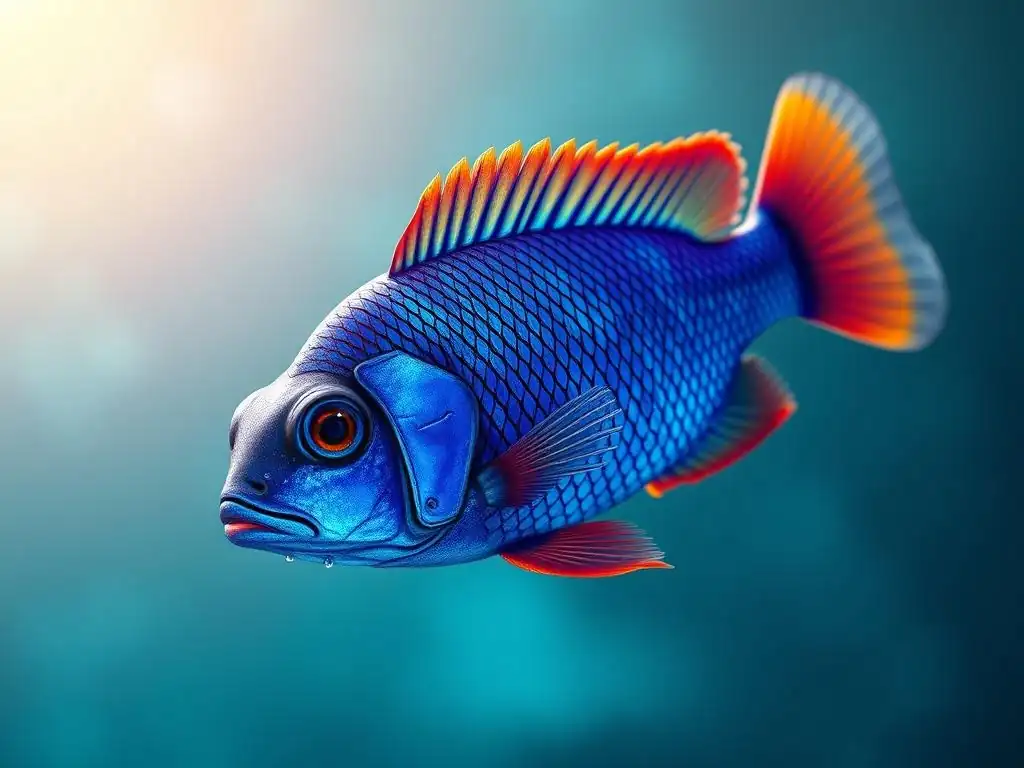
Ratios for Labidochromis caeruleus and Pseudotropheus saulosi
For Labidochromis caeruleus, commonly known as the Yellow Lab, a relatively peaceful Mbuna species, a male-to-female ratio of 1:3 or 1:4 is often ideal. Yellow Labs are known for their vibrant color and relatively mild temperament compared to other Mbuna, but males will still establish territories and display aggression towards rivals or unbred females. For example, in a 55-gallon tank, one male and three to four females can form a stable breeding group, allowing the male to spread his attention and reduce stress on any single female.
Pseudotropheus saulosi, a smaller Mbuna species known for its striking sexual dimorphism (males are blue with black bars, females are yellow), benefits from a slightly higher female ratio due to the males' territorial nature despite their size. A ratio of 1 male to 4-5 females is highly recommended for P. saulosi.
In a 40-gallon breeder or larger, a group of one male and four females can thrive, with the multiple females diluting the male's breeding drive and reducing the likelihood of any single female being harassed to death. These specific Mbuna fish breeding ratios are crucial for ensuring the health and reproductive success of these popular species.
General Mbuna Ratio Guidelines
Generally, for most Mbuna species, maintaining a male-to-female ratio of 1:3 to 1:5 is a robust guideline to promote peace and successful breeding. This range accommodates the varying degrees of aggression among different Mbuna species. For instance, more aggressive species like Melanochromis cyaneorhabdos (Maingano) or Maylandia zebra (Red Top Lundo) often require a higher female count, leaning towards the 1:4 or 1:5 ratio, to prevent a single male from dominating and injuring females.
Conversely, less aggressive species, such as some Cynotilapia species or Iodotropheus sprengerae (Rusty Cichlid), might thrive with a 1:3 ratio, given sufficient space and hiding spots. The core principle remains consistent: provide enough females to diffuse the male's attention and minimize concentrated aggression. When planning a Mbuna community, it's essential to research the specific aggression levels of each chosen species and adjust the Mbuna fish breeding ratios accordingly to ensure a harmonious environment.
Recommended Ratios for Aulonocara (Peacock) Cichlids
Balancing Male-to-Female Ratios in Peacock Tanks
Aulonocara, or Peacock cichlids, are generally less aggressive than Mbuna, but male dominance and territoriality are still significant concerns that necessitate careful attention to male-to-female ratios. Male Peacocks display brilliant colors to attract mates and defend their chosen territories, often a cave or a specific spot in the sand.
Without enough females, a male will relentlessly pursue the few available, leading to stress, fin nipping, and poor health for the females. For example, a single male Aulonocara baenschi (Benga Peacock) with only one female will likely stress her to the point of reabsorbing eggs or becoming emaciated due to constant harassment.
The goal is to provide a sufficient number of females to distribute the male's breeding drive and attention, thereby reducing stress on individual females and promoting natural breeding behaviors. Unlike Mbuna, where aggressive overstocking is sometimes employed, Peacock tanks benefit more from slightly lower stocking densities combined with appropriate sex ratios to allow males to display their full coloration and behavior without excessive conflict. Correct Mbuna fish breeding ratios, specifically adapted for Peacocks, ensure a vibrant and healthy display.
Ratios for Aulonocara nyassae and Aulonocara stuartgranti
For Aulonocara nyassae, commonly known as the Blue Neon Peacock, a male-to-female ratio of 1:3 is often sufficient in a tank of adequate size (e.g., 75 gallons or more). These Peacocks are moderately peaceful, and a trio or quartet can form a stable breeding group. The three females provide enough targets to spread the male's attention, preventing any one female from being overly stressed during breeding attempts.
For Aulonocara stuartgranti varieties, such as the Ngara Flametail or Usisya, which can exhibit slightly more territorial behavior than some other Peacocks, a ratio of 1 male to 3-4 females is generally recommended. For instance, in a 75-gallon tank, one male A. stuartgranti "Ngara Flametail" with four females will likely result in a peaceful setup, with ample opportunities for the male to display his stunning colors and for the females to breed successfully without undue stress. These specific Mbuna fish breeding ratios are vital for the long-term health and reproductive success of these beautiful cichlids.
Identifying Male and Female Cichlids
Visual Sexing: Coloration and Egg Spots
Visual sexing is the most common method for distinguishing male and female Malawi cichlids, though it is not always foolproof, especially with juvenile fish. In many Mbuna and Peacock species, males exhibit significantly brighter and more elaborate coloration, particularly when mature and in breeding condition. For example, male Pseudotropheus saulosi are vibrant blue with black bars, while females are bright yellow. Similarly, male Peacocks display a dazzling array of colors, while females typically remain a duller, mottled brown or silver to blend into their surroundings.
Another common visual cue, especially in males, is the presence of "egg spots" on the anal fin. These are small, yellowish-orange spots that mimic the appearance of eggs. During spawning, the male displays these spots to the female, tricking her into mouthing them as she would her own eggs. When she mouths the spots, the male releases sperm, fertilizing the eggs she is holding in her mouth. While males usually have more prominent and numerous egg spots, some females can also display them, making this a less definitive method on its own.
Venting for Accurate Sex Determination
For a more accurate sex determination, particularly with juvenile fish or species where visual differences are subtle, "venting" is the most reliable method. Venting involves carefully examining the fish's genital papilla, the small protrusion located just anterior to the anal fin. This requires gently catching the fish, placing it on a soft, wet surface (like a net or a wet paper towel), and carefully observing the vent area.
In female cichlids, the vent typically has two distinct openings: a larger, more oval-shaped opening for egg laying (the ovipositor) and a smaller, rounder opening for waste excretion. The ovipositor is often more pronounced and sometimes slightly protrudes during breeding. Male cichlids, in contrast, typically have two openings of similar size and shape, both generally smaller and more pointed. This method requires practice and a keen eye but provides the most definitive way to determine the Mbuna fish breeding ratios accurately when establishing a colony.
Establishing and Maintaining Ratios
Introducing New Fish Gradually
When establishing or adjusting Mbuna fish breeding ratios, introducing new fish gradually and strategically is crucial to minimize aggression and stress. Adding a single new fish, especially a male, into an established territory can trigger severe aggression from the existing dominant male. Instead, it is often recommended to add multiple fish, particularly females, simultaneously.
This "overwhelms" the dominant male with too many targets, diffusing his aggression and preventing him from focusing on a single individual. For example, if you need to add females to a tank with an established male, introduce at least three or four at the same time.
Furthermore, always quarantine new fish in a separate tank for at least two to four weeks. This prevents the introduction of diseases into your main display tank and allows you to observe their health and behavior before integration. When ready to introduce, consider re-arranging the existing tank's aquascaping to disrupt established territories, giving all fish, old and new, a more equal footing in establishing new hierarchies.
Monitoring and Adjusting Ratios
Establishing the correct Mbuna fish breeding ratios is not a one-time event; it requires continuous monitoring and potential adjustment. Fish behavior can change over time, and initial sexing might have been inaccurate, leading to an imbalance. Regularly observe your fish for signs of undue stress, such as constant chasing, hiding, torn fins, or refusal to eat. If a specific male is relentlessly harassing one or two females, it may indicate that your female count is too low for that male's aggression level.
If aggression persists despite initial correct ratios, consider adding more females to further dilute the male's attention. For instance, if you started with 1 male to 3 females and one female is severely stressed, increasing the ratio to 1 male to 4 or 5 females might be necessary. In extreme cases, if a male is excessively aggressive and causing harm, he may need to be removed and rehomed. Conversely, if you observe two males displaying dominant behavior, you might need to remove one or add a significant number of additional females to spread the aggression.
Tank Size and Aquascaping for Reduced Aggression
Beyond precise Mbuna fish breeding ratios, the physical environment of the tank—its size and aquascaping—plays an equally critical role in reducing aggression. A larger tank provides more swimming space and allows for the creation of multiple territories and hiding spots, which are essential for persecuted fish to escape. For Mbuna, a minimum of 55 gallons is often recommended, with 75 gallons or more being ideal for a diverse community. Peacocks generally also thrive in 75 gallons and up.
Aquascaping with ample rockwork, caves, and visual barriers is crucial. Create structures with multiple entrances and exits, allowing fish to dart into safety when chased. Stacking rocks to create "line of sight" breaks prevents a dominant fish from constantly seeing its subordinates, reducing the urge to chase. For example, a tall rock pile reaching near the surface can provide excellent refuge, while multiple small caves at the bottom cater to different fish sizes and preferences. This thoughtful design, combined with accurate Mbuna fish breeding ratios, creates a truly peaceful and thriving cichlid habitat.
Consequences of Incorrect Ratios
Increased Aggression and Stress
The most immediate and visible consequence of incorrect Mbuna fish breeding ratios is a dramatic increase in aggression within the tank. When there are too few females for a dominant male, his breeding drive becomes concentrated on the limited targets, leading to relentless chasing, fin nipping, and physical assaults. This constant harassment causes severe stress to the females, manifesting as torn fins, missing scales, and a general state of fear and withdrawal. Subordinate males or even other species can also become targets of redirected aggression.
Chronic stress from constant aggression has profound physiological effects on fish. Their immune systems become compromised, making them highly susceptible to common aquarium diseases. The constant "fight or flight" response depletes their energy reserves, leading to emaciation and a dulling of colors. In severe cases, the bullied fish may refuse to eat, leading to starvation, or succumb to injuries and stress-induced illnesses. An imbalanced ratio can quickly turn a vibrant cichlid tank into a battleground, resulting in significant fish loss.
Breeding Problems and Reduced Fry Survival
Incorrect Mbuna fish breeding ratios directly undermine successful breeding and drastically reduce fry survival rates. Stressed females, constantly harassed by an overly aggressive male, are less likely to hold eggs to term. They may prematurely drop eggs, reabsorb them, or fail to spawn altogether due to the overwhelming pressure. The male's relentless pursuit can also prevent the female from finding a safe place to hold her eggs, as she is continuously on the run.
Even if a female successfully spawns and holds eggs, the high-stress environment of an imbalanced tank significantly impacts fry survival. Fry are highly vulnerable to predation, not only from other tank mates but also from their own parents if the tank is too stressful or lacks adequate hiding places. Without sufficient females to spread the male's attention, the focus on breeding becomes too intense, often leading to failed spawns and a near-zero survival rate for any fry that do hatch.
Health Issues from Chronic Stress
Beyond direct physical injury, chronic stress induced by incorrect Mbuna fish breeding ratios is a leading cause of various health issues in Malawi cichlids. The sustained elevation of stress hormones, such as cortisol, suppresses the fish's immune system, making them highly vulnerable to opportunistic pathogens. One of the most devastating and common diseases linked to stress in Malawi cichlids is Malawi Bloat. This condition, often fatal, is characterized by an internal bacterial infection that causes severe bloating and organ failure.
Other common health problems include fin rot, bacterial infections of the skin and gills, and parasitic infestations, all of which are exacerbated by a weakened immune response. Fish under chronic stress also exhibit poor coloration, lethargy, and a lack of appetite, leading to a general decline in their overall health and vitality. Maintaining appropriate Mbuna fish breeding ratios is therefore not just about preventing aggression, but fundamentally about safeguarding the long-term health and well-being of your entire cichlid community.
Factors Influencing Cichlid Aggression
Tank Size and Stocking Levels
Tank size is a foundational factor influencing cichlid aggression, often more so than any other single variable. A larger tank provides more physical space, allowing fish to establish larger territories and offering more escape routes and hiding spots for submissive individuals. For example, a 75-gallon tank offers significantly more linear swimming room and potential rockwork structures than a 55-gallon, even though the height might be similar. This extra space helps to dilute aggression, even with optimal Mbuna fish breeding ratios.
Stocking levels, while related to tank size, also play a critical role. In Malawi cichlid keeping, "overstocking" is often a deliberate strategy to diffuse aggression. By having a high density of fish (but still within the tank's bioload capacity, supported by excellent filtration), no single fish can establish absolute dominance, as there are too many rivals and targets. This constant low-level interaction prevents intense, focused aggression on one or two individuals. However, this strategy requires meticulous water quality management and is not a substitute for proper Mbuna fish breeding ratios.
Aquascaping and Hiding Places
The design of your tank's interior, or aquascaping, is paramount in mitigating cichlid aggression. Malawi cichlids are highly territorial, and well-structured rockwork provides essential boundaries, hiding places, and visual breaks. Creating intricate rock formations with numerous caves, tunnels, and crevices allows submissive fish to retreat from aggressive encounters and establish their own smaller territories. For example, building rock piles that extend from the substrate to near the water surface can provide multi-level hiding spots and break up line-of-sight across the tank.
Visual barriers are particularly important. If a dominant male cannot constantly see a subordinate, his aggression will naturally decrease. Arrange rocks to create distinct zones or "rooms" within the tank, preventing a single fish from claiming the entire space. Using different types of rocks, such as lava rock or Texas holey rock, can offer varied textures and more natural-looking hiding spots. A thoughtfully aquascaped tank, combined with appropriate Mbuna fish breeding ratios, transforms a potential war zone into a thriving, peaceful community.
Water Quality Parameters
Excellent water quality is not just about keeping fish alive; it's a critical factor in managing aggression and promoting overall health. Poor water quality, characterized by elevated levels of ammonia, nitrite, and nitrate, acts as a significant stressor on fish. When fish are stressed, their immune systems weaken, and they become more susceptible to disease, but they also tend to be more irritable and aggressive. For example, high nitrates can lead to chronic stress, making normally docile fish more prone to nipping.
Maintaining stable water parameters through regular water changes (e.g., 25-50% weekly) and robust filtration (mechanical, chemical, and biological) reduces stress and keeps fish in optimal condition. Healthy fish are generally less aggressive and better able to cope with the natural social dynamics of a cichlid tank. Consistent temperature (e.g., 78-82°F) and appropriate pH (e.g., 7.8-8.6 for Malawi cichlids) also contribute to a stable environment that minimizes stress and supports the effectiveness of carefully chosen Mbuna fish breeding ratios.
Troubleshooting Aggression
Identifying the Cause of Aggression
When aggression flares up in a Malawi cichlid tank, the first step is to systematically identify the underlying cause. Observe your fish closely for several days, noting specific behaviors: Is the aggression constant, or does it occur only at feeding time? Is it directed at a single fish, or are multiple fish being harassed? Is a particular male the primary aggressor, or are multiple males fighting for dominance? Sometimes, aggression can be triggered by a new addition, a sudden change in tank decor, or even a shift in water parameters.
Consider the possibility of inaccurate sexing, where a fish initially thought to be a female turns out to be a male, throwing off your carefully planned Mbuna fish breeding ratios. Check if any fish are showing signs of illness, as sick fish can be targeted by healthy tank mates. Keeping a log of aggressive incidents, noting the time, aggressor, and target, can help reveal patterns and pinpoint the root of the problem.
Re-arranging the Tank and Adding Cover
If aggression persists, re-arranging the tank's aquascaping is often an effective first measure. Moving rocks, caves, and other decor disrupts established territories, effectively "resetting" the pecking order. This can confuse the dominant fish, forcing them to re-establish new territories and temporarily diverting their aggressive focus. For example, completely dismantling and rebuilding a rock structure can provide new hiding spots and visual barriers that weren't there before.
Adding more cover and hiding places is also crucial. Ensure there are enough caves and crevices for every fish to retreat to, especially for the submissive individuals. Create more "line of sight" breaks using tall rock formations or synthetic plants (if compatible with your cichlids' habits). The goal is to provide ample opportunities for harassed fish to escape and feel secure, which can significantly reduce stress and aggression, allowing the underlying Mbuna fish breeding ratios to function as intended.
Re-Evaluating Ratios
If re-arranging the tank and adding cover do not resolve the aggression, it is time to critically re-evaluate your male-to-female ratios. Despite initial planning, the actual sex ratio might be off due to misidentification or unexpected male development. For example, if you have a single male constantly harassing a few females, your female count might simply be too low for that male's specific temperament. Consider adding more females of the same species (ensuring they are introduced simultaneously to avoid concentrated aggression).
Alternatively, if you have multiple males of the same species and they are constantly fighting, you might need to remove one or more of the males. In some cases, a particularly aggressive male might need to be rehomed entirely if he is causing chronic stress and injury to other tank inhabitants. Adjusting Mbuna fish breeding ratios by either adding females or removing problematic males is often the ultimate solution to achieving long-term peace in a cichlid aquarium.
Conclusion: Achieving a Peaceful Malawi Cichlid Tank.
Frequently Asked Questions
What is the ideal male-to-female ratio for Mbuna fish in an aquarium?
The recommended ratio is generally one male to several females (3-5). This helps to distribute aggression from the male and reduce stress on individual females, promoting a more peaceful tank environment.
Why is maintaining a specific male-to-female ratio important for Mbuna and Peacock Cichlids?
Mbuna and Peacock Cichlids are known for their aggressive behavior, especially males. A proper ratio dilutes male aggression, preventing a single female from being constantly harassed and improving overall tank health.
What happens if I have too many male Mbuna in my aquarium?
Having too many males leads to increased competition and heightened aggression, resulting in constant fighting and potential injuries or even death. Females may also suffer from excessive stress.
Can I keep only females in my Mbuna or Peacock Cichlid tank?
While a female-only tank can work, it's not always ideal. Some females may still exhibit aggression, and the lack of male interaction can impact their natural behaviors. Observe closely for any signs of bullying.
How do I determine the sex of my Mbuna fish to achieve the correct ratio?
Sexing Mbuna can be challenging, especially when they're young. Males often display brighter colors and egg spots on their anal fins, while females tend to be duller. Venting (examining the genital papilla) is a more reliable method for accurate sex determination, though it requires experience.
Final Reflection: Harmony Through Numbers
The delicate balance of power within a Mbuna or Peacock cichlid tank, as we've explored, hinges significantly on the careful consideration of male-to-female ratios. This isn't just about aesthetics; it's about creating an environment where aggression is diffused, stress is minimized, and the natural beauty of these vibrant fish can truly flourish. Understanding and implementing these ratios is more crucial now than ever, as the popularity of these captivating fish continues to grow, and the potential for imbalance in home aquariums increases.
The impact of proper breeding ratios extends beyond the confines of our glass boxes. It reflects a broader understanding of ecosystem dynamics and the responsibility we bear as keepers of these creatures. By prioritizing the well-being of our fish through informed practices, we contribute to a more sustainable and ethical approach to the aquarium hobby. The best way to observe a fish is to become a part of its world.
- Jacques Cousteau. This quote reminds us that true appreciation comes from understanding and respecting the needs of the creatures we care for.
As you consider the information presented, I encourage you to reflect on your own aquarium practices. Are you truly providing the optimal environment for your Mbuna or Peacock cichlids? Take the time to assess your tank's population, adjust your ratios if necessary, and witness the transformative power of balance. By embracing these principles, you not only create a more peaceful and vibrant aquarium but also contribute to a more responsible and fulfilling aquarium keeping experience.
Embark on Your Mbuna & Peacock Paradise Now!
Thanks for diving into the world of Mbuna and Peacock cichlids! We hope you've gained valuable insights into creating a harmonious aquarium environment. Now, it's time to put that knowledge into action and elevate your aquarium game.
Here’s how:
- Carefully re-evaluate your tank's current male-to-female ratios. This is the most crucial step towards a peaceful aquarium!
- Share this article with fellow cichlid enthusiasts! Help them unlock the secrets to a thriving tank.
- Consider researching less aggressive Mbuna or Peacock species to add more diversity to your aquarium.
What specific changes will you make to your tank's male-to-female ratios to achieve greater peace and harmony?