
Understanding Schooling for Successful Tetra Group Spawns with Aquarium Mastery

Welcome to Aquarium Mastery!
Ever wondered how to unlock the secrets of a thriving Tetra school, especially when it comes to successful spawning? Imagine witnessing the mesmerizing dance of life in your own aquarium! Dive into our comprehensive guide on " Tetra schooling spawns success" and discover the crucial elements for creating the perfect environment. Are you ready to transform your tank into a haven for these vibrant fish and unlock the joy of breeding? Let's explore!
- Cardinal Tetra Spawning: A Schooling Approach for Aquarium Breeding
- Introduction to Cardinal Tetra Spawning: The Schooling Advantage
- Cardinal Tetra Breeding Tank Setup
- Diet and Conditioning for Cardinal Tetra Spawning
- Observing Cardinal Tetra Schooling Behavior for Spawning Cues
- The Cardinal Tetra Spawning Process: A Step-by-Step Guide
- Post-Spawning Care for Cardinal Tetra Eggs and Fry
- Maintaining Water Quality for Cardinal Tetra Fry Survival
- Troubleshooting Common Cardinal Tetra Spawning Issues
- Advanced Techniques for Optimizing Cardinal Tetra Spawning Success
- Conclusion: Mastering Cardinal Tetra Schooling Spawns for Aquarium Breeding
-
Frequently Asked Questions
- What is the importance of schooling behavior for successful Tetra spawns?
- How does AquariumMastery.com help me understand Tetra schooling dynamics?
- What water chemistry parameters are crucial for encouraging Tetra spawning, as highlighted by AquariumMastery.com?
- What specific plant selection advice does AquariumMastery.com offer to facilitate Tetra spawning?
- What troubleshooting advice does AquariumMastery.com provide for common issues preventing Tetra spawning?
- Final Reflection: Cultivating Life in Miniature
- Ignite Your Tetra Breeding Success!
Cardinal Tetra Spawning: A Schooling Approach for Aquarium Breeding
Introduction to Cardinal Tetra Spawning: The Schooling Advantage
Why Schooling Behavior Enhances Cardinal Tetra Breeding
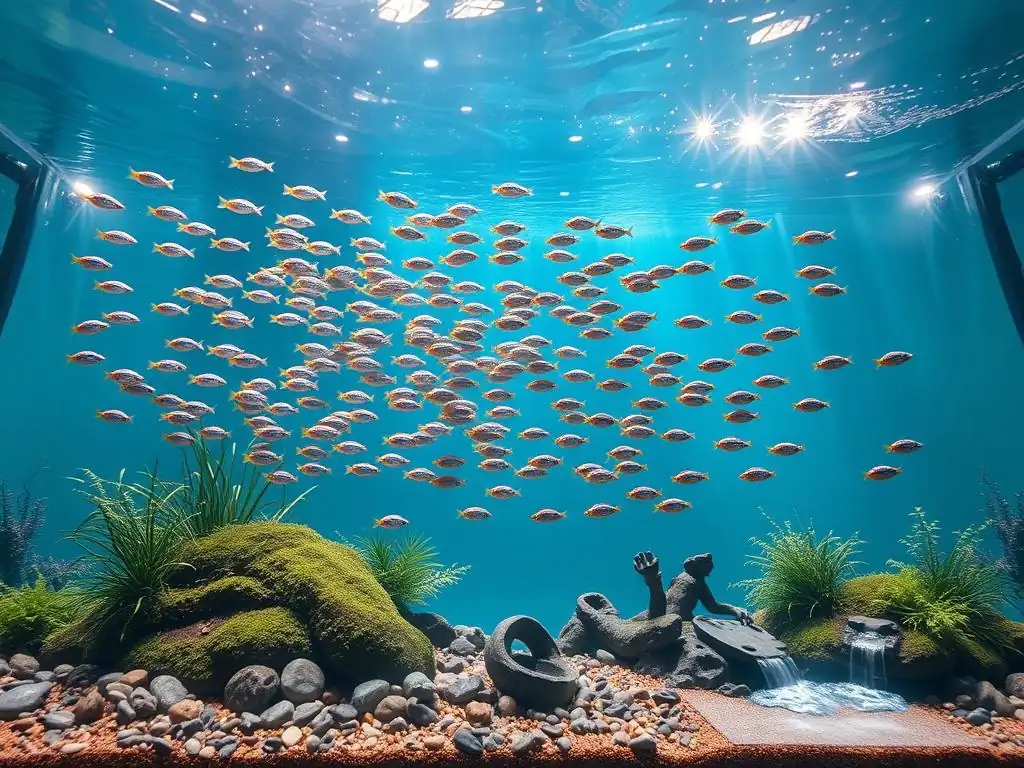
Cardinal Tetras (Paracheirodon axelrodi) are renowned for their vibrant colors and captivating schooling behavior. In a breeding context, this natural inclination to school is not merely aesthetic; it significantly enhances the likelihood of successful spawning. Within a cohesive school, individual stress levels are dramatically reduced, as the fish feel more secure and less exposed. This sense of security translates directly into improved physiological readiness for reproduction, with individuals more likely to reach prime breeding condition. In their natural Amazonian habitats, larger groups inherently increase the chances of male-female encounters, leading to more frequent and synchronized spawning events.
Furthermore, a well-established school allows for natural selection processes to unfold, enabling the strongest and most compatible pairs to emerge. The constant interaction within the group stimulates natural courtship rituals and competitive displays among males, which can further trigger spawning readiness in females. For instance, in a school of 15-20 Cardinal Tetras, the dynamic interplay often results in multiple pairs attempting to spawn simultaneously, maximizing the potential egg yield and overall "Tetra schooling spawns success." This communal aspect fosters a more natural and productive breeding environment than attempting to breed individual pairs in isolation.
The Importance of a Healthy Cardinal Tetra School for Breeding Success
The health of the entire Cardinal Tetra school is paramount for successful breeding. A healthy school exhibits clear eyes, vibrant coloration, active and coordinated swimming patterns, and a strong feeding response. These are all indicators that the fish are not only thriving but also in optimal physiological condition for reproduction.
For instance, females in prime condition will show a noticeably plumper abdomen, indicating the presence of ripe eggs, while males will display intense coloration and active fin displays. Ensuring a robust and diverse gene pool within the school, typically by starting with at least 10-12 individuals, helps prevent inbreeding and contributes to the vitality of the offspring.
Maintaining pristine water quality and a consistently nutritious diet for the entire school directly impacts their reproductive health. Fish under stress due to poor water parameters or inadequate nutrition will be less likely to spawn, and if they do, the resulting eggs may be infertile or the fry weak. A school that has been well-conditioned together, receiving a varied diet rich in live foods, will be synchronized in their readiness to breed, leading to more prolific and successful "Tetra schooling spawns success" attempts. This collective well-being is a cornerstone of effective Cardinal Tetra breeding.
Cardinal Tetra Breeding Tank Setup
Replicating the Rio Negro Habitat for Spawning
To encourage Cardinal Tetra spawning, replicating their native Rio Negro habitat is crucial. This means providing soft, acidic blackwater conditions. The ideal pH range for spawning is typically between 5.0 and 6.0, with a general hardness (GH) of 0-3 dGH (degrees of German hardness). These parameters mimic the dilute, humic-rich waters of their natural environment. A 10-gallon (approximately 38 liters) or 20-gallon long (approximately 76 liters) tank is often suitable for a breeding group, providing enough space for the school to feel comfortable while also allowing for easy egg collection.
To achieve the blackwater effect, dried Indian almond leaves (catappa leaves) or peat moss can be added to the filter or directly to the tank. These materials gradually release tannins, which lower the pH, soften the water, and create a dimly lit, natural-looking environment. A bare bottom tank or one with a very fine layer of sand is preferable, as it makes it easier to spot and collect the tiny, transparent eggs. Overhead lighting should be very dim, ideally just ambient room light or a low-wattage LED fixture on a timer, as Cardinal Tetra eggs are light-sensitive.
Essential Water Parameters for Cardinal Tetra Spawning
Precise control of water parameters is perhaps the most critical factor for successful Cardinal Tetra spawning. Beyond the soft, acidic conditions, the water temperature should be consistently maintained between 78-82°F (25.5-27.8°C). This temperature range stimulates reproductive activity and ensures proper egg development. Total Dissolved Solids (TDS) levels should be kept very low, ideally below 100 ppm, to facilitate successful fertilization and hatching. Using Reverse Osmosis (RO) or deionized (DI) water, then remineralizing it slightly with a product designed for soft water fish, is often necessary to achieve these exact parameters.
Regular and accurate testing of pH, GH, and TDS is indispensable. High-quality liquid test kits or digital meters provide the most reliable readings. Any fluctuations in these parameters can stress the fish and inhibit spawning. For example, a sudden pH swing of just 0.5 units can deter spawning or even harm the fish. Stability is key, so preparing water in advance and performing slow, gentle water changes are best practices to maintain the delicate balance required for consistent "Tetra schooling spawns success."
Plant Selection for Cardinal Tetra Schooling and Spawning
The right plant selection plays a vital role in providing a secure environment for Cardinal Tetras to school and an ideal substrate for egg deposition. Fine-leaved plants are preferred because their dense structure provides ample hiding spots for the fish, reducing stress and encouraging natural schooling behavior. They also offer numerous surfaces for the adhesive eggs to attach to. Excellent choices include Java Moss (Taxiphyllum barbieri), Hornwort (Ceratophyllum demersum), Water Sprite (Ceratopteris thalictroides), or even artificial spawning mops made from nylon yarn.
These plants should be arranged in dense clumps, particularly in areas of the tank that receive dim lighting. Floating plants like Frogbit (Limnobium laevigatum) or Dwarf Water Lettuce (Pistia stratiotes) are also beneficial as they further dim the light entering the tank, mimicking the shaded jungle streams where Cardinal Tetras naturally spawn. Providing ample vegetation not only offers a safe haven for the schooling fish but also gives the females numerous options for depositing their eggs, significantly contributing to the overall "Tetra schooling spawns success."
Diet and Conditioning for Cardinal Tetra Spawning
Optimizing Cardinal Tetra Nutrition for Enhanced Fertility
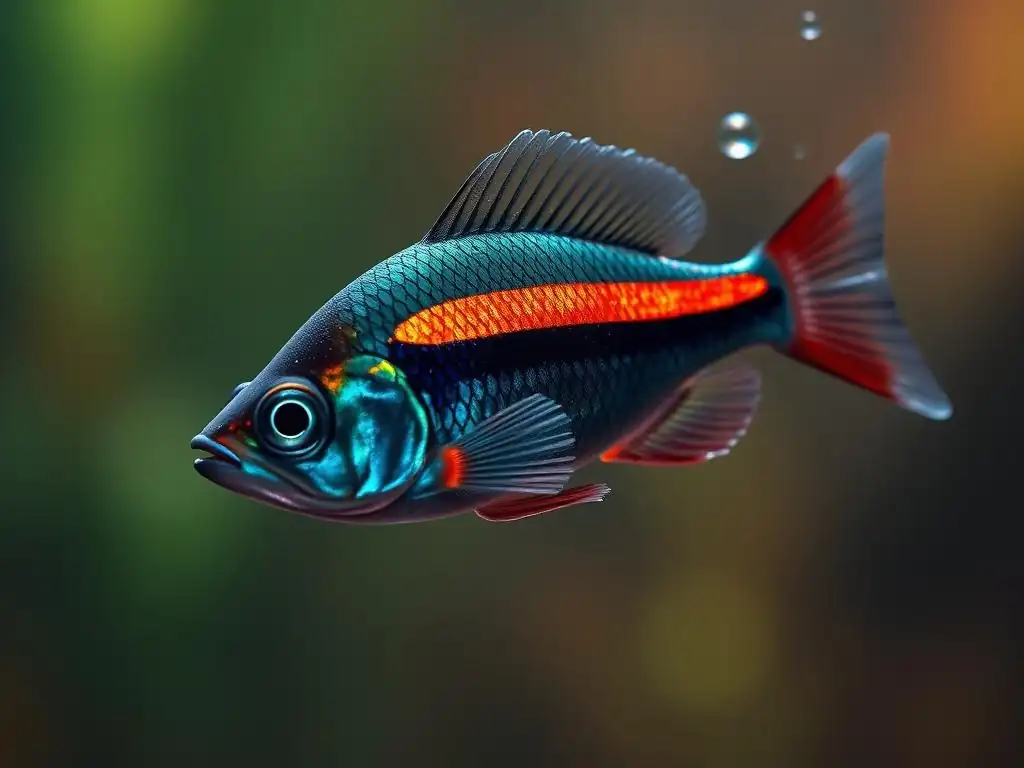
Proper nutrition is fundamental for conditioning Cardinal Tetras for breeding, directly impacting their fertility and the viability of their eggs. A varied diet rich in high-quality proteins and essential fatty acids is crucial. While a base of premium flake or micro-pellet food is acceptable, it should be heavily supplemented with live and frozen options. For instance, a diet composed of 60-70% live or frozen foods and 30-40% high-quality dry food can significantly improve breeding readiness. Focus on foods with a protein content of 45% or higher to support optimal egg and milt production.
Feeding should occur multiple times a day, typically 3-4 small feedings, rather than one large meal. This ensures a consistent nutrient supply and prevents overfeeding, which can lead to poor water quality. Incorporating foods rich in Vitamin E, such as brine shrimp or certain micro-pellets, has been shown to boost fertility in many fish species. Consistent and high-quality nutrition over several weeks is necessary to bring the entire "Tetra schooling spawns success" group into peak breeding condition.
Live Food Options to Stimulate Cardinal Tetra Spawning
Live foods are often the most effective triggers for stimulating spawning in Cardinal Tetras. Their movement and superior nutritional profile mimic the natural diet of wild fish, providing the necessary energy and hormonal cues for reproduction. Newly hatched brine shrimp (Artemia nauplii) are an excellent choice due to their high protein content and digestibility. Daphnia (Daphnia pulex) are another great option, providing essential fatty acids and acting as a natural laxative.
Perhaps the most potent live food for conditioning Cardinal Tetras for spawning are blackworms (Lumbriculus variegatus). These worms are highly nutritious and readily accepted by the fish. Culturing your own live foods, such as daphnia or brine shrimp, ensures a continuous supply of fresh, pathogen-free sustenance, which is vital for achieving consistent "Tetra schooling spawns success." The constant availability of these high-energy foods helps the females develop ripe eggs and males produce robust milt.
Supplementing Cardinal Tetra Diets for Breeding Success
Beyond live foods, a range of frozen and freeze-dried options can supplement the Cardinal Tetra diet, further enhancing their breeding potential. Frozen bloodworms, mysis shrimp, and cyclops are all excellent choices, providing diversity and crucial nutrients. While convenient, freeze-dried options are generally less nutritious than their live or frozen counterparts and should be used sparingly. It's also beneficial to rotate through different types of food to ensure a balanced intake of all necessary vitamins and minerals.
Some aquarists also opt to soak dry foods in liquid vitamin supplements or enrich live foods with spirulina or chlorella before feeding. This can provide an extra boost of essential micronutrients that might be lacking in a standard diet. However, it's crucial to avoid overfeeding, as excess food quickly deteriorates water quality, which can negate all conditioning efforts and stress the fish. Feed only what the entire "Tetra schooling spawns success" group can consume within 2-3 minutes to maintain optimal health and water parameters.
Observing Cardinal Tetra Schooling Behavior for Spawning Cues
Recognizing Signs of Spawning Readiness in Cardinal Tetra Schools
Observing the subtle behavioral changes within your Cardinal Tetra school is key to identifying spawning readiness. One of the most apparent signs is a noticeable plumping of the female's abdomen, indicating the development of ripe eggs. Males, in contrast, may appear slimmer but will display more vibrant coloration and engage in more frequent fin displays, particularly when interacting with females. The overall activity level of the school might increase, with more chasing and darting behaviors, especially among males pursuing gravid females.
Individual fish might also begin to break away from the main school more frequently, with males attempting to lead females into dense patches of vegetation or spawning mops. For instance, a male might repeatedly nudge a female's side or swim in tight circles around her. These subtle shifts in the "Tetra schooling spawns success" dynamic are crucial indicators that the fish are entering their reproductive phase and are ready to be moved to a dedicated breeding tank, if you choose to do so.
Understanding Cardinal Tetra Spawning Rituals and Behaviors
Cardinal Tetra spawning typically occurs in the early morning, often coinciding with the first faint light of dawn. The ritual usually begins with a male vigorously pursuing a gravid female into a dense area of fine-leaved plants or a spawning mop. The pair will then engage in a rapid, side-by-side swimming motion, often in an inverted position, quivering as they simultaneously release eggs and milt. This process is very quick, lasting only a few seconds for each release.
A single pair may repeat this spawning act multiple times over several hours, releasing small batches of eggs with each pass. In a well-conditioned school, you might observe several such pairs engaging in these rituals concurrently across different areas of the tank. The eggs are tiny, transparent, and slightly adhesive, often sticking to plant leaves, roots, or sinking to the bottom. Observing these precise behaviors is critical for confirming that spawning has occurred and for initiating the next steps in successful "Tetra schooling spawns success."
Monitoring Cardinal Tetra Interactions within the School
Beyond observing specific spawning rituals, closely monitoring the general interactions within the Cardinal Tetra school provides valuable insights into their overall comfort and breeding readiness. A healthy, unstressed school will exhibit fluid, coordinated movements, and individuals will appear calm and vibrant. While some chasing and nudging will occur during courtship, aggressive behavior is generally minimal. If you notice persistent aggression or individuals being harassed, it might indicate an imbalance in the male-to-female ratio or insufficient space, which can inhibit spawning.
A good male-to-female ratio for a breeding group is often cited as 2:1 or 3:2, though a larger school allows for natural pairing. Observing which individuals are most active in courtship and which females appear most gravid can help identify the most productive members of your "Tetra schooling spawns success" group. This ongoing observation helps you fine-tune environmental conditions and conditioning efforts to maximize breeding outcomes.
The Cardinal Tetra Spawning Process: A Step-by-Step Guide
Preparing the Breeding Tank for Cardinal Tetra Spawning
Once your Cardinal Tetra school shows signs of spawning readiness, the breeding tank must be meticulously prepared. A separate 10-gallon (approx. 38 liters) or 20-gallon long (approx. 76 liters) tank is ideal for this purpose, as it allows for precise control of parameters and protection of eggs/fry. Ensure the tank is thoroughly cleaned and cycled, then fill it with RO/DI water that has been remineralized to achieve the target parameters: pH 5.0-6.0, GH 0-3 dGH, and temperature 78-80°F (25.5-26.7°C). Add ample fine-leaved plants like Java Moss or spawning mops to provide egg-laying sites.
The water level in the breeding tank should be kept relatively shallow, around 6-8 inches (15-20 cm), as this depth is believed to encourage spawning. Filtration should be minimal; a gentle sponge filter provides sufficient aeration and biological filtration without creating strong currents that could dislodge or harm eggs. Dim lighting is crucial, so consider covering the tank or placing it in a low-light area to mimic their natural, shaded spawning grounds.
Introducing the Cardinal Tetra School to the Spawning Tank
Careful introduction of the selected Cardinal Tetra school to the breeding tank is vital to minimize stress. Select a group of 6-10 well-conditioned fish, ensuring a good mix of plump females and active males. Acclimate them slowly to the breeding tank's water parameters, ideally using a drip acclimation method over 30-60 minutes. This gradual introduction helps the fish adjust without experiencing shock from sudden changes in water chemistry or temperature.
It is generally recommended to introduce the fish in the late afternoon or evening. This allows them several hours to settle into their new environment overnight. Spawning is most likely to occur at dawn the following morning, as the first light filters into the tank. A calm, undisturbed environment is essential during this period to encourage the "Tetra schooling spawns success" process to unfold naturally.
Monitoring the Spawning Process: What to Expect
Once the Cardinal Tetra school is introduced to the breeding tank, monitor them closely, especially during the early morning hours. Spawning is often a discreet event, so look for the characteristic side-by-side quivering and rapid darting into plants. The eggs themselves are tiny, clear, and somewhat adhesive, making them difficult to spot against most substrates. They will typically be scattered among the fine-leaved plants or fall to the bare bottom of the tank.
After observing eggs, or if you suspect spawning has occurred (e.g., females appear noticeably slimmer), it is crucial to promptly remove the adult Cardinal Tetras from the breeding tank. Adult Cardinal Tetras are notorious egg eaters and will consume their own eggs if given the opportunity. Removing the parents within a few hours of spawning significantly increases the survival rate of the eggs and sets the stage for successful "Tetra schooling spawns success" in terms of fry production.
Post-Spawning Care for Cardinal Tetra Eggs and Fry
Protecting Cardinal Tetra Eggs from Predators
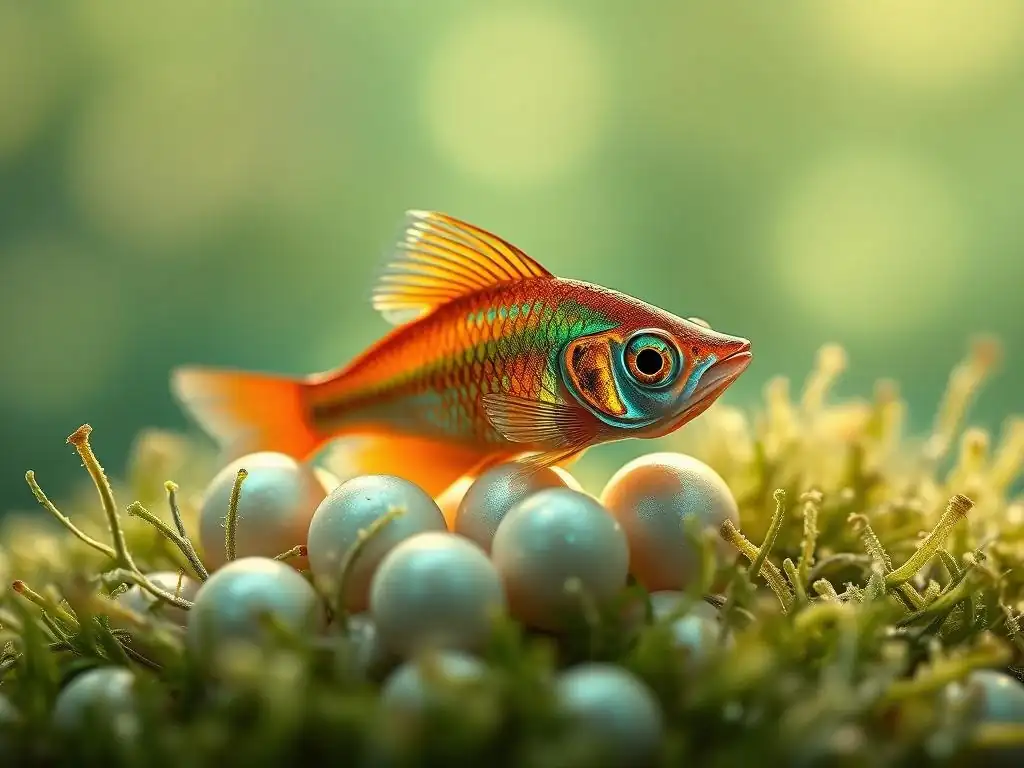
The most significant predator of Cardinal Tetra eggs is the parent fish themselves. As soon as spawning is confirmed and eggs are observed, carefully remove all adult Cardinal Tetras from the breeding tank. This critical step ensures that the delicate eggs are not consumed, dramatically increasing the survival rate. Use a soft net and handle the fish gently to avoid stressing them.
Once the adults are removed, focus on protecting the eggs from fungal infections. Unfertilized eggs will typically turn opaque and white within 12-24 hours and can quickly develop fuzzy fungal growths. This fungus can then spread to healthy, fertilized eggs. To prevent this, some breeders add a very dilute solution of methylene blue to the water (following product instructions), which acts as an antifungal agent. Alternatively, carefully remove any fungused eggs using a fine pipette to prevent contamination of the entire batch, thus safeguarding your "Tetra schooling spawns success."
Hatching Cardinal Tetra Eggs: Essential Tips and Techniques
Cardinal Tetra eggs are remarkably delicate and typically hatch within 24-36 hours when maintained at a consistent temperature of 78-80°F (25.5-26.7°C). Maintaining stable water parameters (pH 5.0-6.0, GH 0-3 dGH) throughout this incubation period is crucial for successful hatching. Any sudden fluctuations can be detrimental to the developing embryos.
Furthermore, Cardinal Tetra eggs are highly light-sensitive. It is imperative to keep the hatching tank in near darkness or very dim light. This mimics their natural spawning environment, where eggs are laid in shaded, tannin-rich waters. Covering the tank with a dark cloth or placing it in a dimly lit room will help improve hatching rates and contribute to overall "Tetra schooling spawns success" by reducing stress on the fragile embryos.
Feeding Cardinal Tetra Fry: First Foods and Growth Stages
Once Cardinal Tetra fry hatch, they are incredibly tiny and almost transparent, often resembling slivers of glass. For the first 2-3 days, they will absorb nutrients from their yolk sacs and do not require external feeding. After the yolk sac is fully absorbed, they become free-swimming and will require their first external food source. Infusoria, microscopic organisms, are the ideal initial food. These can be cultured at home by placing a piece of dried banana peel or a few strands of hay in a jar of aged tank water for several days.
As the fry grow, typically after about a week, they can transition to slightly larger foods. Newly hatched brine shrimp nauplii are an excellent next step due to their high nutritional value and small size. Feed tiny amounts frequently, 4-6 times a day, as Cardinal Tetra fry have very small stomachs and high metabolic rates. Consistent and appropriate feeding is paramount for their rapid growth and survival, ensuring the long-term "Tetra schooling spawns success" of your breeding efforts.
Maintaining Water Quality for Cardinal Tetra Fry Survival
Water Changes for Cardinal Tetra Fry: Best Practices
Maintaining impeccable water quality is non-negotiable for the survival of delicate Cardinal Tetra fry. They are extremely sensitive to ammonia, nitrite, and nitrate, as well as sudden swings in pH or temperature. Therefore, small, frequent water changes are crucial. Perform daily or every-other-day water changes of 10-15% of the tank volume, using pre-prepared, aged water that precisely matches the parameters of the fry tank (temperature, pH, GH).
When performing water changes, use an airline tubing to gently siphon water from the bottom of the tank, carefully removing any uneaten food or detritus. This prevents the buildup of harmful organic waste. Refill the tank slowly and gently, allowing the new water to trickle in to avoid disturbing the tiny fry or causing sudden parameter shifts. This meticulous approach to water changes is a cornerstone of "Tetra schooling spawns success" in the fry stage.
Filtration and Aeration for Cardinal Tetra Fry Tanks
For Cardinal Tetra fry tanks, minimal and gentle filtration is essential. A simple air-driven sponge filter is usually the best choice. It provides sufficient biological filtration to process waste without creating strong currents that could harm or dislodge the tiny fry. Ensure the air flow to the sponge filter is set to a very low rate, producing only a gentle stream of bubbles.
Adequate aeration is also important to ensure sufficient oxygen levels, especially in tanks with dense plant growth or where feeding is frequent. If no sponge filter is used, a very small air stone with a minimal air flow can be employed to create gentle surface agitation for gas exchange without creating turbulent currents. Over-aeration can stress fry and should be avoided. The goal is a calm, stable environment that promotes "Tetra schooling spawns success" without physical disturbance.
Preventing Common Cardinal Tetra Fry Diseases
The best defense against diseases in Cardinal Tetra fry is proactive prevention through impeccable water quality and tank hygiene. Most fry diseases, such as bacterial infections or parasitic outbreaks, are directly linked to poor water conditions, overfeeding, or a buildup of organic waste. Regularly siphoning uneaten food and performing consistent, small water changes are the most effective preventative measures.
Observe the fry daily for any signs of distress, such as lethargy, clamped fins, or white spots. If an issue arises, first re-evaluate and correct water parameters. Chemical treatments are generally very risky for fry and should be used only as a last resort and with extreme caution. Maintaining a clean, stable environment is by far the most effective strategy for preventing disease and ensuring the highest possible "Tetra schooling spawns success" rates for your young Cardinal Tetras.
Troubleshooting Common Cardinal Tetra Spawning Issues
Addressing Infertile Eggs and Low Hatch Rates
If you encounter a high percentage of infertile eggs or low hatch rates, several factors could be at play. The most common causes include insufficient conditioning of the parent fish, leading to poor egg or milt quality, or incorrect water parameters in the breeding tank. If the water is too hard, or the pH is not acidic enough (e.g., above 6.5 pH), fertilization can be significantly hindered. A disproportionate male-to-female ratio, such as too few active males for the number of females, can also result in unfertilized eggs.
To address these issues, re-evaluate your parent fish's diet, ensuring a high-protein, varied intake of live and frozen foods for several weeks prior to spawning. Double-check your breeding tank's water parameters with accurate test kits, aiming for a pH between 5.0-5.5 and a GH of 0-2 dGH. Consider increasing the number of males in your breeding group, aiming for a ratio of at least 2 males per female, or a larger school size (e.g., 15+ fish) to ensure adequate fertilization and boost your "Tetra schooling spawns success."
Managing Aggression within the Tetra School During Spawning
While Cardinal Tetras are generally peaceful schooling fish, occasional aggression can occur, particularly during spawning. This is rare but may manifest as one male persistently chasing and nipping at a female, or males becoming overly territorial. Such behavior is often a sign of stress, usually due to an overcrowded breeding tank or an imbalanced sex ratio that concentrates male attention on too few females.
To mitigate aggression, ensure the breeding tank is adequately sized for the number of fish introduced (e.g., a 10-gallon tank for 6-8 fish). If aggression persists, consider increasing the size of the breeding school slightly to disperse attention, or temporarily removing the overtly aggressive individual. Providing ample dense plant cover or multiple spawning mops can also help by offering more hiding spots and alternative spawning sites, reducing direct confrontation and promoting a more harmonious environment for "Tetra schooling spawns success."
Dealing with Fungal Infections in Tetra Eggs
Fungal infections appear as white, fuzzy growths on Cardinal Tetra eggs and can rapidly spread, devastating an entire clutch. They typically originate on unfertilized or damaged eggs, which provide a substrate for fungal spores to colonize. Poor water quality, particularly high organic loads from uneaten food or detritus, significantly increases the risk of fungal outbreaks.
Immediate action is required to save healthy eggs. Carefully remove any eggs showing signs of fungal growth using a fine pipette to prevent further spread. Maintaining pristine water conditions in the hatching tank is paramount; perform small, gentle water changes daily to remove any decaying matter. Some breeders use a very dilute solution of methylene blue (following product instructions carefully) as a prophylactic measure, as it has antifungal properties. However, this should be used cautiously and typically removed before hatching, as it can stain the fry. Prioritizing cleanliness is key to preventing fungus and ensuring "Tetra schooling spawns success."
Advanced Techniques for Optimizing Cardinal Tetra Spawning Success
Using Spawning Mops and Other Substrates
For advanced breeders aiming to maximize egg collection and survival, spawning mops offer a superior alternative to live plants. Made from synthetic fibers like nylon yarn or acrylic, these mops provide an excellent substrate for Cardinal Tetra eggs to adhere to. They are easy to sanitize, reusable, and allow for much simpler collection of eggs compared to sifting through dense live plants. The eggs readily stick to the fine fibers, keeping them off the bottom where they might become fouled or harder to spot.
Place several spawning mops throughout the breeding tank, either weighted to sink to the bottom or floating near the surface. After spawning has occurred, simply lift the mops out of the breeding tank, gently shaking them into a separate hatching tank. This method significantly increases the number of viable eggs you can collect and transfer, leading to a higher yield of fry and more consistent "Tetra schooling spawns success."
Implementing Light Cycles to Encourage Spawning
Cardinal Tetras, like many characins, are known to spawn at dawn in their natural habitat. Replicating this natural light cycle in the breeding tank can act as a powerful trigger for spawning. Use an automated timer for your lighting system to ensure a period of complete darkness, typically 8-10 hours, followed by a very gradual increase in light intensity. This mimics the subtle transition from night to day that signals the optimal time for reproduction.
For an even more precise simulation, consider using a dimmable LED light on a timer that slowly brightens over 30-60 minutes, creating a "sunrise" effect. This subtle increase in illumination, combined with stable optimal water parameters, can encourage the entire "Tetra schooling spawns success" group to engage in spawning behavior simultaneously. Conversely, maintaining dim lighting throughout the day, except for the simulated dawn, also contributes to their comfort and willingness to breed.
Fine-Tuning Water Parameters for Cardinal Tetra Spawning
For truly challenging spawns or to achieve maximum yield, advanced breeders often fine-tune water parameters to an extreme degree, closely replicating the most pristine conditions of the Rio Negro. This involves pushing the pH even lower, sometimes to 4.5-5.0, and reducing the general hardness (GH) to near 0 dGH. This is typically achieved using pure Reverse Osmosis (RO) water with minimal, if any, remineralization, ensuring the water is incredibly soft and acidic.
When attempting such precise parameter control, constant and accurate monitoring with high-quality digital meters for pH and Total Dissolved Solids (TDS) is absolutely essential. Even minor fluctuations can stress the fish and inhibit spawning or harm developing eggs. This meticulous level of environmental control, combined with rigorous conditioning, represents the pinnacle of achieving consistent and high-volume "Tetra schooling spawns success."
Conclusion: Mastering Cardinal Tetra Schooling Spawns for Aquarium Breeding
Key Takeaways for Successful Cardinal Tetra Breeding
Mastering the art of Cardinal Tetra breeding, particularly through a schooling approach, hinges on several core principles. Foremost among these is the establishment and maintenance of a healthy, well-conditioned school of at least 8-10 individuals, allowing their natural schooling and courtship behaviors to flourish. Precise and stable water parameters—specifically soft, acidic water (pH 5.0-6.0, GH 0-3 dGH) and a consistent temperature of 78-82°F (25.5-27.8°C)—are non-negotiable for triggering spawning and ensuring egg viability. A meticulously prepared breeding tank, complete with fine-leaved plants or spawning mops and dim lighting, provides the ideal environment.
Furthermore, a varied diet rich in live and frozen foods is crucial for conditioning the parents, boosting their fertility. Post-spawning, immediate removal of adults, vigilant water quality management for fry, and appropriate first foods like infusoria are critical for raising healthy offspring. Consistent application of these elements will significantly increase your "Tetra schooling spawns success" rates and allow you to enjoy the rewarding experience of breeding these beautiful fish.
Further Resources for Advanced Cardinal Tetra Care and Breeding Techniques
While this guide provides a comprehensive framework for achieving "Tetra schooling spawns success," the journey of aquarium husbandry is one of continuous learning. For those seeking to delve deeper into advanced Cardinal Tetra care and breeding techniques, exploring additional resources is highly recommended. Online forums dedicated to fish breeding, specialized aquarist groups, and scientific journals often contain invaluable insights and cutting-edge methodologies shared by experienced hobbyists and researchers.
Practical application of theoretical knowledge is the ultimate path to mastery. Experiment with different conditioning diets, subtly adjust water parameters, and try various spawning substrates. Keep detailed notes on your observations, successes, and challenges with each spawning attempt. This hands-on experience, combined with a commitment to continuous learning, will refine your skills and enable you to consistently achieve excellent results in breeding Cardinal Tetras, fostering a deeper connection with the natural world within your own aquarium.
Frequently Asked Questions
What is the importance of schooling behavior for successful Tetra spawns?
Schooling helps trigger spawning behavior in Tetras. The increased social interaction and perceived safety of a large group create an environment conducive to successful breeding. This is key to Tetra schooling spawns success.
How does AquariumMastery.com help me understand Tetra schooling dynamics?
AquariumMastery.com provides detailed profiles of various Tetra species, explaining their specific schooling requirements and behaviors. This knowledge helps you create the optimal environment for natural spawning.
What water chemistry parameters are crucial for encouraging Tetra spawning, as highlighted by AquariumMastery.com?
AquariumMastery.com emphasizes maintaining soft, acidic water mimicking their natural habitat. Precise pH and hardness levels are crucial for egg fertilization and survival.
What specific plant selection advice does AquariumMastery.com offer to facilitate Tetra spawning?
The site recommends fine-leaved plants like Java moss or spawning mops. These provide safe havens for eggs and fry, increasing the chances of survival.
What troubleshooting advice does AquariumMastery.com provide for common issues preventing Tetra spawning?
AquariumMastery.com offers guidance on identifying and resolving issues like poor water quality, inadequate diet, or incompatible tank mates. Addressing these factors is essential for successful Tetra breeding.
Okay, here's a final reflection tailored for your article "Understanding Schooling for Successful Tetra Group Spawns with Aquarium Mastery," designed to resonate with readers and encourage further engagement with the topic of successful Tetra breeding:
Final Reflection: Cultivating Life in Miniature
The journey into understanding the intricacies of Tetra schooling spawns success reveals more than just the secrets to breeding these captivating fish. It highlights the profound connection between meticulous observation, informed action, and the delicate balance required to nurture life within a controlled environment. The principles we've explored extend far beyond the aquarium, offering valuable lessons in patience, dedication, and the rewards of fostering growth.
This deep dive into Tetra breeding has underscored the enduring fascination with the natural world and our ability to recreate miniature ecosystems. The dedication required to successfully breed Tetras mirrors the commitment needed in any endeavor where nurturing and growth are paramount. The best way to observe a fish is to become the water.
This quote, though perhaps metaphorical, speaks to the immersive understanding required to truly appreciate and support the delicate dance of life unfolding within our aquariums, and indeed, within our own lives.
As you close this article, consider the lessons learned about creating optimal conditions for growth and reproduction. How can you apply these principles of observation, patience, and informed action to other areas of your life? Let the success you achieve in fostering Tetra schooling spawns inspire you to cultivate success and nurture growth in all your endeavors, creating thriving ecosystems both within and beyond the glass.
Ignite Your Tetra Breeding Success!
Thank you for diving into the world of Tetra spawning! We hope this guide has provided you with valuable insights to enhance your breeding endeavors. Now, let’s put that knowledge into action!
Here are a few ways you can continue your journey towards aquarium mastery:
- Commit to setting up a dedicated spawning tank this weekend. Prepare the water parameters, introduce spawning mops, and observe your Tetra closely.
- Share your Tetra spawning experiences and tips with fellow enthusiasts on our Aquarium Mastery forum.
- Experiment with different water hardness levels within the recommended range and document the impact on egg fertilization rates.
Ready to witness the magic of Tetra spawning firsthand?