
Lighting for Anthias: Balancing Coral Needs and Fish Comfort in a Reef Setting

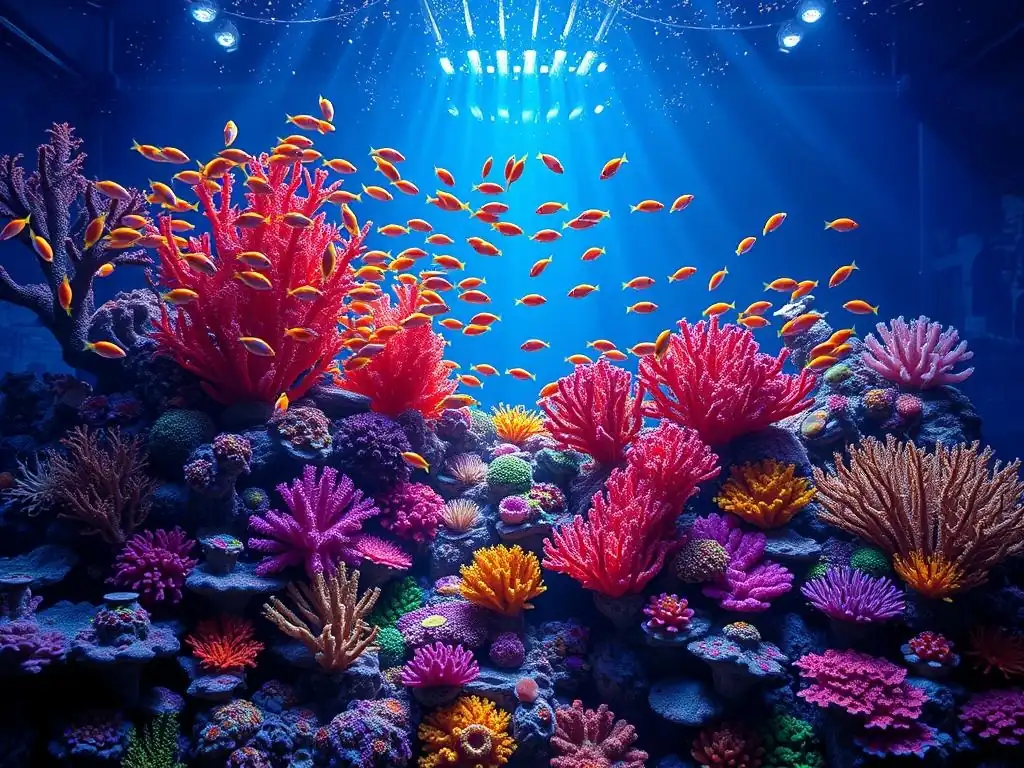
Welcome to Aquarium Mastery, your ultimate guide to thriving aquatic ecosystems!
Ever wondered how to perfectly balance the vibrant demands of your corals with the delicate well-being of your Anthias? This is your starting point! Dive in to discover the secrets of reef lighting for Anthias, unlocking the key to a flourishing reef tank where every creature thrives. Ready to illuminate the path to aquarium success? Let's explore!
- Understanding the Lighting Needs of Anthias in Reef Aquariums
- Deciphering Coral Lighting Requirements vs. Anthias Sensitivity
- Choosing the Right Reef Lighting System for Anthias and Corals
- Implementing a Gradual Lighting Acclimation Strategy for Anthias
- Strategies for Minimizing Stress on Anthias Due to Intense Reef Lighting
- Measuring and Monitoring Light Levels in Your Reef Tank
- Troubleshooting Common Lighting-Related Issues with Anthias
- Recommended Reef Lighting Schedules for Anthias and Coral Health
- Case Studies: Successful Reef Tanks with Anthias and Balanced Lighting
-
Frequently Asked Questions
- What type of lighting is generally recommended for a reef aquarium housing Anthias?
- How can I ensure that my Anthias are comfortable with the lighting intensity in my reef tank?
- What role does the color spectrum of reef lighting play in Anthias health and coloration?
- How often should I replace my reef lighting bulbs or LEDs to maintain optimal conditions for Anthias and corals?
- What are some common mistakes to avoid when choosing reef lighting for Anthias?
- Final Reflection: Illuminating Harmony in the Reef
- Illuminate Your Reef Journey: Start with a Single Click!
Understanding the Lighting Needs of Anthias in Reef Aquariums
Why Proper Reef Lighting Matters for Anthias Health
Proper reef lighting for anthias is not merely about aesthetics; it profoundly impacts their physiological well-being, behavior, and vibrant coloration. Anthias, being highly visual fish, are acutely sensitive to light intensity and spectrum. Incorrect lighting can lead to chronic stress, suppressing their immune system and making them more susceptible to common diseases like marine ich or bacterial infections. For instance, prolonged exposure to excessively bright light can cause constant anxiety, manifesting as clamped fins, rapid breathing, and a reluctance to feed, directly hindering their growth and overall vitality.
Furthermore, appropriate lighting plays a crucial role in maintaining their natural schooling behavior and social hierarchies. In a well-lit environment that mimics their natural habitat, anthias exhibit their full range of natural behaviors, including active schooling, displaying their stunning colors, and interacting within their social structures. Conversely, overly intense or inconsistent lighting can disrupt these behaviors, leading to increased aggression among individuals, territorial disputes, and a general state of unease that compromises the health of the entire group.
Anthias Natural Habitat and Light Exposure
Anthias species typically inhabit the outer reef slopes and deeper sections of coral reefs, often associating with caves, overhangs, and ledges. In these natural environments, the light intensity is significantly lower and more diffused compared to the shallow, sun-drenched reef crests where many SPS corals thrive.
For example, while surface PAR (Photosynthetically Active Radiation) can exceed 1000 µmol·m⁻²·s⁻¹, anthias are accustomed to environments where peak PAR values might range from 50 to 200 µmol·m⁻²·s⁻¹, depending on depth and water clarity. This inherent preference for more subdued lighting is a critical factor when designing reef lighting for anthias in a home aquarium.
Their natural habitat also features a strong presence of blue light, as red and green wavelengths are absorbed more quickly by water. This dominance of blue spectrum light is what their vision is adapted to, and it contributes to their brilliant coloration in the wild. When replicating this in an aquarium, a lighting system that provides a significant blue component, while keeping overall intensity within comfortable limits, is ideal. Understanding these natural conditions is key to providing a stress-free and thriving environment for these beautiful fish.
The Impact of Incorrect Lighting on Anthias Behavior and Coloration
Incorrect anthias reef lighting can have immediate and noticeable negative impacts on their behavior and coloration. When subjected to light that is too intense or too sudden, anthias often exhibit clear signs of stress, such as hiding constantly in rockwork, darting erratically, or displaying faded colors that are a stark contrast to their usual vibrant hues. For instance, a Lyretail Anthias ( Pseudanthias squamipinnis ) known for its brilliant orange and pink, might appear pale yellow or even translucent when stressed by overwhelming light. This fading is a physiological response, as their chromatophores contract to reduce light absorption.
Beyond color changes, behavioral alterations are common. Instead of actively swimming and schooling in the water column, stressed anthias may spend most of their time huddled in shaded areas, refusing to come out even during feeding times. This chronic hiding can lead to malnutrition if they are too timid to compete for food. Furthermore, prolonged exposure to unsuitable lighting can lead to long-term health issues, including increased susceptibility to disease due to a weakened immune system, and in severe cases, even premature mortality. Therefore, carefully calibrating the light intensity and spectrum is paramount for their long-term health and well-being.
Deciphering Coral Lighting Requirements vs. Anthias Sensitivity
High-Intensity Lighting for SPS Corals: A Potential Problem for Anthias
Stony corals with small polyps (SPS corals), such as Acropora and Montipora, are renowned for their vibrant colors and intricate growth forms, but they demand very high light intensities to thrive. These corals often require PAR values ranging from 250 to over 500 µmol·m⁻²·s⁻¹ at the top of the reef.
While essential for their photosynthetic symbionts (zooxanthellae) to produce energy, such intense reef lighting for anthias can be a significant source of stress. Anthias, accustomed to the more subdued light of deeper reef sections, can become overwhelmed by these high PAR levels, leading to constant hiding and a reluctance to swim in open water.
The stark contrast between the bright, open water column and the shaded crevices creates an environment where anthias may feel perpetually exposed and vulnerable. This can trigger their natural instinct to seek refuge, preventing them from exhibiting their natural schooling behaviors and potentially impacting their feeding habits. Consequently, a tank primarily designed for high-light demanding SPS corals might inadvertently create a stressful and unsuitable habitat for anthias, despite offering ideal conditions for coral growth.
Soft Corals and LPS Corals: More Anthias-Friendly Lighting Options
In contrast to SPS corals, soft corals (e.g., Leathers, Zoanthids, Mushrooms) and large polyp stony (LPS) corals (e.g., Euphyllia, Acanthastrea, Lobophyllia) generally have much lower light requirements. Soft corals often thrive in PAR ranges of 50-150 µmol·m⁻²·s⁻¹, while LPS corals typically prefer 75-250 µmol·m⁻²·s⁻¹. These lower light intensities are significantly more compatible with the natural preferences of anthias, making a mixed reef tank featuring these coral types a more suitable environment for anthias reef lighting.
When the overall tank lighting is geared towards the needs of soft and LPS corals, anthias are less likely to experience light-induced stress. They feel more comfortable swimming freely in the water column, exhibiting their natural behaviors and vibrant coloration. This balance allows for a beautiful display of corals without compromising the well-being of the fish. Such setups often provide sufficient light for coral growth while creating a more inviting and less intimidating environment for these sensitive schooling fish.
Finding the Sweet Spot: Balancing Coral Growth and Anthias Well-being
Achieving the ideal balance in reef lighting for anthias and corals requires careful planning and often involves strategic aquascaping and lighting control. The "sweet spot" is typically found by creating a diverse light environment within the tank. This means designing the aquascape with shaded areas, overhangs, and caves where anthias can retreat from direct, intense light, even if certain areas of the tank are brightly illuminated for SPS corals. For instance, an upper shelf might receive 300 PAR for an Acropora colony, while a cave beneath it receives only 80-100 PAR, providing a comfortable zone for anthias.
Utilizing modern LED lighting systems with multiple channels and dimming capabilities is crucial for this balance. These systems allow aquarists to create a gradient of light intensity across the tank, delivering high PAR to light-hungry corals while ensuring that anthias have access to zones with significantly lower PAR. For example, programming a strong blue spectrum for coral fluorescence while maintaining a lower overall white light intensity can benefit both corals and fish, as anthias are often more tolerant of blue light than intense white light. This nuanced approach ensures both coral health and the psychological comfort of your anthias.
Choosing the Right Reef Lighting System for Anthias and Corals
LED Reef Lights: Controllability and Customization for Anthias
LED reef lights are widely regarded as the most versatile option for achieving optimal reef lighting for anthias and corals due to their unparalleled controllability and customization. Modern LED fixtures typically offer multiple channels (e.g., white, blue, royal blue, red, green, UV) that can be individually dimmed from 0% to 100%. This granular control allows aquarists to precisely tailor the light spectrum and intensity across the tank. For example, one can program a high intensity for SPS corals on an elevated rock structure, while simultaneously creating lower PAR zones in other areas for anthias to comfortably school.
Furthermore, many high-end LED systems include sophisticated programming features such as sunrise/sunset simulations, cloud cover effects, and lunar cycles. These gradual ramp-up and ramp-down periods are incredibly beneficial for anthias, as they mimic natural light transitions, reducing stress associated with sudden light changes. The ability to fine-tune both intensity and spectrum means aquarists can provide the specific wavelengths necessary for coral photosynthesis (e.g., strong blue peaks around 450-470nm) while ensuring the overall brightness is not overwhelming for the fish, making them ideal for a mixed reef with sensitive species.
T5 Reef Lighting: A Balanced Approach for Anthias and Coral Growth
T5 fluorescent lighting, while lacking the individual channel control of LEDs, offers a very balanced and diffused light spread that can be advantageous for anthias reef lighting and coral growth. T5 fixtures utilize multiple linear fluorescent bulbs, allowing for a broad and even distribution of light across the tank, minimizing the "hot spots" often associated with some point-source LED fixtures. This even spread can be less jarring for anthias, as they don't experience drastic changes in light intensity as they swim through the water column.
Aquarists can customize the spectrum by selecting different types of T5 bulbs, such as actinic (blue), daylight (white), and specialized coral growth bulbs. A common combination might include 2-4 actinic bulbs and 2-4 daylight bulbs to provide a full spectrum suitable for a mixed reef.
While the overall intensity is set by the bulb wattage, the diffuse nature of T5 light can provide sufficient PAR for most LPS and soft corals, and even some less demanding SPS, without overwhelming anthias. This makes T5s a reliable and often more budget-friendly option for achieving a harmonious balance between fish comfort and coral health.
Metal Halide Reef Lights: Intensity Considerations for Anthias
Metal halide reef lights are known for their immense power and ability to penetrate deep into large aquariums, making them a popular choice for very demanding SPS coral dominant tanks. They provide a very intense, full-spectrum light that can drive exceptional coral growth and coloration. However, this sheer intensity presents significant considerations for reef lighting for anthias. Metal halides often create very high PAR values, sometimes exceeding 600 µmol·m⁻²·s⁻¹ directly under the bulb, which can be far too bright for anthias accustomed to lower light environments.
When using metal halides in a tank with anthias, careful planning is essential. Aquarists often need to position the fixture higher above the water surface to reduce intensity, or incorporate diffusing lenses to soften the light. More importantly, the aquascape must include ample shaded areas, deep caves, and overhangs where anthias can seek refuge from the direct, powerful light.
The sudden on/off nature of traditional metal halides can also be jarring for fish, although some newer fixtures offer dimming capabilities or require a ramp-up period. While effective for corals, managing metal halide intensity is paramount to prevent chronic stress in anthias.
Implementing a Gradual Lighting Acclimation Strategy for Anthias
Introducing Anthias to New Lighting: A Step-by-Step Guide
When introducing anthias to a new reef tank or significantly changing the reef lighting for anthias, a gradual acclimation strategy is crucial to minimize stress. Begin by setting your lights to a significantly lower intensity than their target peak, perhaps 30-50% of the desired maximum PAR for your corals, and shorten the photoperiod to 6-8 hours.
This allows the anthias to adjust to their new surroundings without being overwhelmed by intense illumination. Over the next 2-4 weeks, slowly increase the light intensity by approximately 5-10% each week, while also gradually extending the photoperiod by 30-60 minutes per week until you reach your target duration (e.g., 10-12 hours).
During this period, observe the anthias closely for any signs of stress. If they exhibit hiding behavior, faded colors, or rapid breathing, pause the increase in intensity or even slightly reduce it for a few days before resuming the acclimation process. Patience is key; rushing the acclimation can lead to prolonged stress, impacting their appetite and overall health. For tanks with highly controllable LED systems, utilize the ramp-up and ramp-down features to simulate dawn and dusk, further easing the transition for these sensitive fish.
Monitoring Anthias Behavior During Lighting Changes
Effective anthias reef lighting acclimation relies heavily on vigilant observation of their behavior. As you gradually increase light intensity or duration, pay close attention to any changes in their schooling patterns, feeding habits, and coloration. Healthy, comfortable anthias will typically school actively in the open water column, exhibit vibrant colors, and readily come out to feed when food is introduced. Any deviation from these normal behaviors can be an indicator of light-induced stress.
Specific warning signs include:
- Constant hiding: If anthias spend most of their time tucked away in rockwork or shaded areas, avoiding open water.
- Faded or dull coloration: A noticeable loss of their natural vibrancy, appearing pale or washed out.
- Rapid gill movement or heavy breathing: Indicative of physiological stress.
- Erratic swimming or darting: Unnatural, panicked movements.
- Lack of appetite or refusal to eat: A common stress response that can lead to malnutrition.
- Clamped fins: Fins held close to the body, rather than spread naturally.
If any of these signs are observed, immediately stop increasing light intensity and consider reducing it slightly. Allow the fish several days to recover before attempting further adjustments.
Adjusting Light Intensity and Duration for Optimal Anthias Acclimation
Based on your observations, precise adjustments to both light intensity and duration are crucial for optimal reef lighting for anthias acclimation. If your anthias are showing signs of stress, the first step is to reduce the peak light intensity. For instance, if you increased the light to 60% and noticed stress, drop it back to 50% for a few days to a week. The goal is to find the maximum intensity where your anthias remain comfortable and active.
Similarly, the duration of the peak light period can be adjusted. While corals might benefit from 10-12 hours of strong light, anthias may prefer a shorter peak period, perhaps 8-10 hours, with longer ramp-up and ramp-down phases. Modern LED controllers allow for precise adjustments, often in 1% increments for intensity and 1-minute increments for timing.
Make small, incremental changes, waiting at least 24-48 hours before the next adjustment to allow the fish to respond. The ideal settings will be those that promote vibrant coloration, active schooling, and enthusiastic feeding without any signs of stress, ensuring both coral health and anthias well-being.
Strategies for Minimizing Stress on Anthias Due to Intense Reef Lighting
Creating Shaded Areas and Refuges within the Reef Tank
One of the most effective strategies for mitigating stress caused by intense reef lighting for anthias is to meticulously design your aquascape to include ample shaded areas and refuges. Anthias, in their natural habitat, frequently seek shelter under rock overhangs, within deep caves, or amongst dense coral branches to escape predators and strong currents, as well as intense light. Replicating this in the aquarium provides them with crucial psychological comfort zones.
Strategically placed live rock can form natural caves and tunnels that offer permanent retreats. Taller rock structures can create shadows on lower levels, while shelf-like formations can provide overhead cover. For example, building a large, multi-tiered rock structure with several deep caverns and ledges allows anthias to ascend into brighter areas for feeding or display, and quickly retreat to shaded, lower-PAR zones when they feel overwhelmed. Aim to create several distinct shaded spots throughout the tank, ensuring that even if one area is occupied, other options are available for the entire school.
Utilizing Rockwork and Overhangs to Diffuse Light
Beyond simply creating shaded areas, strategically placed rockwork and large coral colonies can actively diffuse and break up intense light, making the overall anthias reef lighting environment more palatable. Rather than a flat, open aquascape, a more complex, three-dimensional structure with numerous nooks and crannies helps to scatter direct light. Light rays hitting the irregular surfaces of live rock will be reflected and refracted, reducing the direct intensity and creating a softer, more natural light distribution.
Overhangs, whether formed by rock or large, non-light-demanding corals like leather corals, are particularly effective. These structures cast shadows below them, creating zones of significantly lower PAR. For instance, an overhang might reduce PAR from 300 µmol·m⁻²·s⁻¹ at the top to 100 µmol·m⁻²·s⁻¹ directly underneath, providing a comfortable space for anthias. This diffusion not only benefits the fish but can also create interesting visual dynamics within the tank, highlighting certain corals while offering relief to light-sensitive inhabitants.
Introducing Dither Fish to Reduce Anthias Stress
Introducing appropriate "dither" fish can be a surprisingly effective method to reduce stress in anthias, particularly when dealing with moderately intense reef lighting for anthias. Dither fish are typically active, confident, and peaceful species that swim openly in the water column. Their presence signals to more timid fish, like anthias, that the environment is safe and free from immediate threats. When anthias see other fish swimming confidently, they are more likely to overcome their shyness and join them in the open, even under brighter lighting conditions.
Suitable dither fish might include certain species of Chromis (e.g., Green Chromis, Chromis viridis) or even smaller, peaceful tangs (e.g., Yellow Tang, Zebrasoma flavescens), provided the tank size is adequate. It's crucial to select dither fish that are not aggressive towards anthias and do not compete excessively for food or space. Their calm, continuous presence can encourage anthias to spend more time in the open, reducing their reliance on hiding spots and contributing to a more natural and less stressed schooling behavior, even in a brightly lit coral reef environment.
Measuring and Monitoring Light Levels in Your Reef Tank
Using a PAR Meter to Determine Light Intensity
To truly optimize reef lighting for anthias and corals, relying on visual estimation alone is insufficient. A PAR (Photosynthetically Active Radiation) meter is an indispensable tool for accurately measuring light intensity in your reef tank. This device measures the amount of light within the visible spectrum (400-700 nanometers) that is available for photosynthesis, expressed in micromoles per square meter per second (µmol·m⁻²·s⁻¹). Without a PAR meter, you are effectively guessing the light levels your corals and fish are receiving.
To use a PAR meter, simply lower the sensor into the water at various depths and locations within your aquarium. Take readings directly under your light source, at different heights on your rockwork, and especially in the areas where your anthias typically congregate or hide.
For example, you might find a PAR reading of 400 µmol·m⁻²·s⁻¹ at the top of your rock structure, but only 120 µmol·m⁻²·s⁻¹ inside a cave. These precise measurements allow you to quantify the light environment and make informed decisions about light placement, intensity settings, and aquascaping to meet the specific needs of all your tank inhabitants.
Understanding PAR Readings and Their Significance for Anthias
Understanding PAR readings is crucial for balancing the needs of photosynthetic corals with the comfort of light-sensitive fish like anthias. While SPS corals may require high PAR values ranging from 250-500+ µmol·m⁻²·s⁻¹ for optimal growth, and LPS corals typically thrive in 75-250 µmol·m⁻²·s⁻¹, anthias generally prefer areas with significantly lower PAR. For most anthias species, prolonged exposure to PAR levels above 200-250 µmol·m⁻²·s⁻¹ can induce stress, and they will actively seek out areas with PAR values closer to 50-150 µmol·m⁻²·s⁻¹.
The significance of these readings for anthias reef lighting lies in ensuring that even in a brightly lit coral tank, there are sufficient "safe zones" for the fish. If your PAR meter shows uniformly high readings across the entire tank, it's a strong indicator that your anthias are likely stressed. Conversely, if you measure lower PAR in shaded areas, it confirms these spots are serving their purpose as comfortable refuges. This objective data empowers you to create a truly balanced lighting scheme that supports both vibrant coral growth and the well-being of your anthias.
Adjusting Lighting Based on PAR Measurements and Anthias Response
The true power of PAR measurements comes from using them as a basis for intelligent adjustments to your anthias reef lighting. Once you have a clear understanding of your tank's light map, you can begin to fine-tune your lighting system. If your PAR readings are consistently too high for anthias in open areas, consider:
- Lowering the light intensity: If using LEDs, gradually reduce the overall output or specific channels (e.g., white light).
- Raising the light fixture: Increasing the distance between the light and the water surface will naturally lower PAR.
- Adding diffusers: Light diffusers can spread the light more evenly and reduce peak intensity.
Conversely, if corals are not thriving in certain areas, you might increase PAR in those specific zones. However, always cross-reference PAR data with the actual behavior of your anthias. If the PAR meter indicates an ideal range, but your anthias are still exhibiting stress, their behavior takes precedence. It might mean they are particularly sensitive, or other stressors are at play. Regular monitoring, both with the PAR meter and through careful observation of your fish, ensures a dynamically optimized lighting environment.
Anthias Hiding or Refusing to Eat: Potential Lighting Problems
One of the most common indicators of unsuitable reef lighting for anthias is persistent hiding behavior or a refusal to eat. Anthias are naturally active, open-water schooling fish. If your anthias are constantly tucked away in rockwork, staying in shaded areas, or darting frantically when you approach the tank, it's a strong sign they are stressed, and overly intense lighting is a frequent culprit. For example, if a group of Lyretail Anthias that previously swam openly now spends all day huddled in a cave, their light environment likely needs adjustment.
When fish refuse to eat, it's a critical symptom. Stress suppresses their appetite and immune system, making them vulnerable to disease. If your anthias are not eagerly competing for food during feeding times, consider reducing the peak light intensity by 10-20% or shortening the duration of the brightest period by an hour or two. Observe their response over the next few days. Often, a slight reduction in light intensity will lead to a noticeable improvement in their willingness to come out and feed, indicating they are more comfortable in their environment.
Anthias Color Fading or Loss of Appetite: Light Intensity Concerns
Beyond outright hiding, subtle signs like faded coloration or a persistent loss of appetite can also point to light intensity concerns in anthias reef lighting. Anthias are renowned for their brilliant and dynamic colors, which are often indicative of their health and comfort. If your vibrant Squamipinnis Anthias suddenly appear pale, dull, or washed out, it can be a physiological response to chronic stress from excessive light. Their chromatophores contract to reduce light absorption, resulting in a muted appearance.
Similarly, a sustained lack of interest in food, even when offered their preferred diet, is a serious red flag. While various factors can cause appetite loss, an overly bright environment forces anthias into a perpetual state of anxiety, which directly impacts their desire to feed. If these symptoms are observed, measure your PAR levels, especially in the areas where the anthias spend most of their time. If PAR exceeds 200 µmol·m⁻²·s⁻¹ in these zones, consider gradually lowering the overall light intensity or increasing shaded areas to provide them with relief.
Anthias Displaying Stress: Over-Illumination Symptoms
Over-illumination can manifest in several distinct ways, all indicative of stress in anthias. Recognizing these symptoms early is crucial for maintaining their health in a reef setting.
- Rapid Gill Movement (Heavy Breathing): Just like humans, fish breathe faster when stressed. If your anthias' gill movements are noticeably rapid even when at rest, it can signify physiological discomfort from excessive light.
- Erratic or Skittish Swimming: Instead of smooth, schooling movements, stressed anthias might dart suddenly, bump into glass or rockwork, or swim frantically when disturbed.
- Clamped Fins: Fins held tightly against the body, particularly the dorsal and caudal fins, are a classic sign of stress in fish. Healthy anthias typically have their fins spread gracefully.
- Increased Aggression or Shyness: While anthias can be territorial, chronic stress from over-illumination can exacerbate aggression among individuals or make them unusually shy and reclusive, even towards their own species.
If any of these over-illumination symptoms are present, it's a clear signal that the reef lighting for anthias is too intense. Immediate, albeit gradual, corrective action is necessary, such as reducing peak light intensity, shortening the photoperiod, or enhancing shaded refuges within the aquascape. Addressing these issues promptly can prevent long-term health complications and restore the anthias to a state of comfort and vitality.
Recommended Reef Lighting Schedules for Anthias and Coral Health
Simulating Natural Day and Night Cycles
A crucial aspect of effective reef lighting for anthias and corals is the simulation of natural day and night cycles. In the wild, marine environments experience a gradual transition from dawn to full daylight, followed by a slow dimming into dusk and then complete darkness. Replicating this consistent and predictable rhythm in the aquarium is vital for the physiological and behavioral well-being of all inhabitants. A typical photoperiod for a reef tank ranges from 10 to 12 hours of "daylight," followed by 12 to 14 hours of "night" (which may include a short moon phase).
Maintaining a consistent schedule helps regulate the circadian rhythms of both fish and corals. For anthias, a predictable light cycle reduces stress, promotes natural feeding patterns, and encourages their schooling behavior. Corals also benefit, as their zooxanthellae require a period of darkness to respire and recover from photosynthesis. Abrupt changes in lighting, such as turning lights on or off suddenly, can be highly jarring and stressful for anthias, leading to skittish behavior and a reluctance to emerge from hiding.
Implementing a Gradual Ramp-Up and Ramp-Down Lighting Schedule
To simulate a natural day and night cycle effectively, implementing a gradual ramp-up and ramp-down lighting schedule is highly recommended, especially for anthias reef lighting. Modern LED fixtures excel at this, allowing aquarists to program a slow increase in light intensity and spectrum during "dawn" and a gradual decrease during "dusk." A typical ramp-up period might last 60 to 90 minutes, starting with very low intensity blue light, slowly adding white and other colors, and gradually increasing overall brightness to the peak.
Similarly, the ramp-down period should mimic a sunset, reversing the process over 60 to 90 minutes until only a very dim blue "moonlight" remains, or complete darkness. This smooth transition significantly reduces stress for anthias, as they are not suddenly plunged into bright light or darkness.
It allows them to gradually awaken and settle down, mimicking their natural experience in the wild. For example, starting with a 10% blue light at 7:00 AM, slowly increasing all channels to peak intensity by 9:00 AM, holding peak until 7:00 PM, and then gradually dimming back to 10% blue by 9:00 PM, provides a comfortable and natural daily rhythm.
Adjusting Lighting Schedules Based on Coral and Anthias Needs
While general guidelines for reef lighting for anthias and corals exist, the optimal lighting schedule is not a one-size-fits-all solution and often requires ongoing adjustment based on the specific needs and responses of your tank inhabitants. Monitor both coral growth and coloration, as well as the behavior of your anthias, to fine-tune your schedule. If corals are showing signs of insufficient light (e.g., poor growth, browning), you might slightly extend the peak photoperiod by 30-60 minutes or incrementally increase the peak intensity.
Conversely, if your anthias are consistently stressed, hiding, or displaying faded colors, it might indicate that the peak intensity is too high or the peak duration is too long. In such cases, consider reducing the maximum light intensity by 5-10% or shortening the peak photoperiod by an hour.
It's also important to observe how anthias respond during the ramp-up and ramp-down phases; if they appear stressed even then, those periods might need to be longer or start at lower initial intensities. Continuous observation and small, iterative adjustments ensure that the lighting environment remains perfectly balanced for both the photosynthetic needs of corals and the comfort of your light-sensitive anthias.
Case Studies: Successful Reef Tanks with Anthias and Balanced Lighting
One compelling example of successful reef lighting for anthias involves a 180-gallon mixed reef aquarium that houses a school of 15 Lyretail Anthias alongside a diverse collection of SPS, LPS, and soft corals. Initially, the tank utilized high-power LED lights set to deliver an average PAR of 350 µmol·m⁻²·s⁻¹ across the top third of the aquascape, leading to excellent SPS growth.
However, the anthias were consistently hiding in a large central cave, exhibiting faded colors and only coming out reluctantly for feeding. The aquarist used a PAR meter to confirm that even at mid-water levels, the PAR was still around 200-250 µmol·m⁻²·s⁻¹, which was too intense for the anthias.
To address this, the aquarist implemented two key changes. First, the LED programming was adjusted to reduce the overall white light channel intensity by 20%, while maintaining the blue channel intensity for coral coloration. This brought the average PAR at mid-water to approximately 150-180 µmol·m⁻²·s⁻¹.
Second, additional aquascaping was performed, creating more layered overhangs and deeper crevices, particularly in the lower two-thirds of the tank, where PAR readings were now measured at 80-120 µmol·m⁻²·s⁻¹. Within three weeks, the anthias began schooling openly, their colors returned to vibrant orange and pink, and they actively participated in feeding, demonstrating that precise light management and strategic aquascaping can create a harmonious environment for both corals and fish.
Another successful case involved a 120-gallon LPS-dominant tank with a school of eight Bartletts Anthias ( Pseudanthias bartlettorum). The owner initially struggled with the anthias being skittish and prone to flashing (rubbing against rocks), even though the lighting was moderate (peak PAR 180 µmol·m⁻²·s⁻¹). A review of their daily schedule revealed a sudden "on" at 9 AM and a sudden "off" at 9 PM. Despite the moderate intensity, the abrupt light changes were causing significant stress.
The solution involved reprogramming the LED controller to incorporate a gradual ramp-up and ramp-down schedule. The lights now began a 90-minute ramp-up from complete darkness at 7:30 AM, reaching peak intensity by 9:00 AM. Similarly, a 90-minute ramp-down period started at 7:30 PM, fading to total darkness by 9:00 PM.
This gentle transition mimicked natural sunrise and sunset. Within a month, the Bartletts Anthias displayed a remarkable change: they were more confident, swam freely throughout the tank, and their flashing behavior ceased entirely. Their vibrant purple and yellow hues intensified, showcasing how even seemingly minor adjustments to the lighting schedule, when focused on the fish's comfort, can lead to significant improvements in their well-being and overall tank health.
Frequently Asked Questions
What type of lighting is generally recommended for a reef aquarium housing Anthias?
Anthias require moderate lighting. Finding the right balance is key; provide enough light for corals, but not so much that it stresses the light-sensitive Anthias. Consider using a dimmable LED fixture.
How can I ensure that my Anthias are comfortable with the lighting intensity in my reef tank?
Observe your Anthias' behavior. Signs of stress, such as hiding or fading coloration, indicate the light is too intense. Providing plenty of hiding places and gradually increasing light intensity can help.
What role does the color spectrum of reef lighting play in Anthias health and coloration?
A full-spectrum light is beneficial for both corals and Anthias. A spectrum that supports coral growth while not being overly harsh on the fish will promote vibrant coloration and overall health.
How often should I replace my reef lighting bulbs or LEDs to maintain optimal conditions for Anthias and corals?
LED fixtures typically last for several years, but their intensity can decrease over time. Check the PAR (Photosynthetically Active Radiation) levels regularly. Replace bulbs every 6-12 months to maintain optimal light output.
What are some common mistakes to avoid when choosing reef lighting for Anthias?
Avoid overly intense lighting without providing shaded areas. Also, avoid sudden changes in lighting intensity. Gradual acclimation is crucial for the health and well-being of your Anthias and coral.
Final Reflection: Illuminating Harmony in the Reef
The delicate dance between coral health and fish well-being, as highlighted in our exploration of reef lighting for anthias, is not merely a technical challenge, but a testament to the interconnectedness of life within a reef ecosystem. Understanding the specific needs of both corals and anthias, and striving for a balanced lighting solution, is crucial for creating a thriving and sustainable reef aquarium. This pursuit of harmony reflects a broader responsibility we have as stewards of these miniature underwater worlds.
This journey into the nuances of reef lighting has underscored the profound impact our choices have on the delicate balance of a reef environment. It's a reminder that responsible reef keeping extends beyond simply providing the right equipment; it requires a deep understanding and respect for the complex interplay of life within the tank. In the end, we will conserve only what we love; we will love only what we understand; and we will understand only what we are taught.
- Baba Dioum. This quote perfectly encapsulates the importance of continued learning and mindful practice in our pursuit of a healthy and vibrant reef aquarium.
As we conclude this exploration of reef lighting for anthias, I invite you to reflect on the lessons learned and consider how you can apply them to your own reef keeping journey. Let the pursuit of optimal lighting be a catalyst for deeper understanding and a more profound appreciation for the intricate beauty of the reef. Embrace the challenge, experiment with care, and strive to create a harmonious environment where both corals and anthias can thrive, illuminating the beauty of the ocean within your home.
Illuminate Your Reef Journey: Start with a Single Click!
Thank you for diving into the world of Anthias and reef lighting with us! Now that you're armed with the knowledge to create a thriving environment, it's time to take action and watch your reef flourish. Here's how to get started:
- Assess Your Current Lighting: Take a moment to analyze your existing lighting setup. Consider the PAR values, spectrum, and duration, comparing them to the ideal conditions for both your Anthias and coral. Are there adjustments you can make immediately?
- Join our community forum on AquariumMastery.com to share your current lighting parameters and get personalized feedback from experienced reef keepers.
- Experiment with a photo challenge! Take before-and-after photos of your Anthias and coral as you adjust your lighting, documenting their responses and sharing the results with other hobbyists.
What small lighting adjustment will you make this week to better support your Anthias and coral health?