
Why Won't My Anthias School? Troubleshooting Group Dynamics and Tank Setup

Welcome to Aquarium Mastery!
Ever wondered why your Anthias aren't quite the synchronized swimming team you envisioned? Dive in and discover the secrets to a thriving Anthias school. We'll explore the crucial elements of tank setup and group dynamics that can make or break your Anthias community. Unravel the mysteries behind their schooling behavior and learn how to create the perfect environment for these vibrant reef inhabitants. Ready to unlock the Anthias schooling problems setup puzzle? Let's get started!
- Understanding Anthias Schooling Behavior: A Comprehensive Guide
-
Common Causes of Anthias Schooling Problems in Aquariums
- Incompatible Anthias Species: Mixing Aggressive or Solitary Anthias
- Insufficient Tank Size: Overcrowding and Limited Swimming Space
- Inadequate Filtration and Water Quality: The Impact on Anthias Behavior
- Dominance Aggression and Bullying: Identifying and Addressing Anthias Conflicts
- Stress from Tank Mates: Incompatible Species and Predation Risks
- Improper Acclimation and Introduction: Minimizing Initial Stress
- Diagnosing Your Anthias Schooling Issues: A Step-by-Step Approach
-
Anthias Tank Setup Optimization for Schooling Success
- Selecting the Right Anthias Species for Your Aquarium
- Determining the Appropriate Number of Anthias for Your Tank Size
- Designing an Anthias-Friendly Aquascape: Providing Open Swimming Space and Hiding Spots
- Implementing a Robust Filtration System: Maintaining Pristine Water Quality
- Maintaining Optimal Water Parameters: Temperature, Salinity, and pH
-
Troubleshooting Anthias Schooling Problems: Practical Solutions
- Adjusting Tank Size or Aquascaping to Reduce Aggression
- Rehoming Incompatible Tank Mates or Aggressive Anthias
- Implementing a Quarantine Procedure for New Anthias
- Modifying Feeding Strategies to Reduce Competition
- Using Visual Barriers to Break Up Territorial Disputes
- Employing Dither Fish to Reduce Anthias Stress
- Long-Term Anthias Schooling Success: Maintenance and Observation
- Preventing Future Anthias Schooling Problems: Proactive Measures
-
Frequently Asked Questions
- Why are my Anthias not schooling like they should?
- What size tank is recommended for a proper Anthias school?
- How many Anthias should I keep in a school, and what's the ideal male-to-female ratio?
- What water parameters are crucial for Anthias health and schooling behavior?
- What kind of tank setup is best to prevent Anthias schooling problems?
- Final Reflection: Unlocking the Secrets of Anthias Harmony
- Ignite Your Anthias Schooling Success!
Understanding Anthias Schooling Behavior: A Comprehensive Guide
The Natural Schooling Behavior of Anthias in the Wild
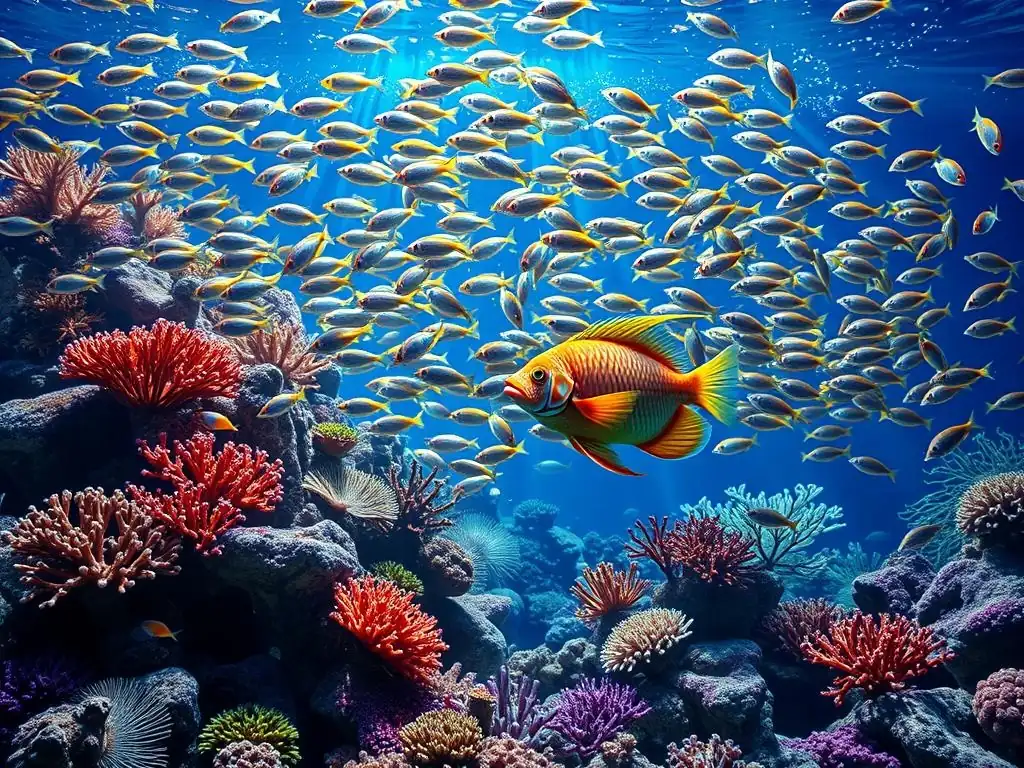
Anthias, a diverse subfamily of reef fish, are renowned for their vibrant colors and captivating schooling behavior in their natural habitats. In the wild, particularly species like the Dispar Anthias ( Pseudanthias dispar) or the Lyretail Anthias ( Pseudanthias squamipinnis), they form large, fluid aggregations that can number in the hundreds or even thousands.
These schools typically hover above coral reefs, often at depths ranging from 10 to 60 meters, feeding primarily on zooplankton drifting in the water column. Their coordinated movements are a primary defense mechanism, creating a confusing spectacle for potential predators and significantly reducing the likelihood of any single individual being targeted.
This natural schooling instinct is deeply ingrained in their survival strategy. Observing a massive school of Anthias pulsing and swirling over a vibrant reef is a testament to their social complexity and reliance on group dynamics for protection and feeding efficiency.
For instance, in regions like the Indo-Pacific, divers frequently encounter dense aggregations of Pseudanthias bartlettorum (Bartlett's Anthias) or Pseudanthias huchtii (Hucht's Anthias) that move as one, demonstrating an intricate communication system that allows for split-second evasive maneuvers. This collective behavior is not merely aesthetic; it is a critical component of their ecological niche, enabling them to thrive in predator-rich environments and efficiently exploit planktonic food sources.
Why Schooling Matters for Anthias Health and Well-being
For Anthias in an aquarium environment, maintaining their natural schooling behavior is paramount for their overall health, stress reduction, and longevity. When Anthias school effectively, it signifies a comfortable and secure environment, directly correlating with lower stress levels. Chronic stress, often induced by solitary confinement or inappropriate tank mates, can severely weaken an Anthias's immune system, making them highly susceptible to common aquarium diseases such as ich or bacterial infections. A healthy, schooling group will exhibit strong appetites, vibrant coloration, and active swimming patterns, indicative of their well-being.
Furthermore, proper schooling reduces inter-species aggression and territorial disputes among the Anthias themselves. In a well-established school, especially a harem with a single dominant male and multiple females, aggression is typically diffused across the group, preventing any one individual from becoming a constant target of bullying.
This stable social structure allows for more equitable food distribution, as competitive feeding can be intense among these fast-moving planktivores. When Anthias schooling problems setup issues are present, such as individuals hiding or exhibiting faded colors, it often points to underlying stress or social imbalance that needs immediate attention to prevent further health decline.
Common Causes of Anthias Schooling Problems in Aquariums
Incompatible Anthias Species: Mixing Aggressive or Solitary Anthias
One of the primary reasons Anthias fail to school in a home aquarium is the introduction of incompatible species within the same genus or even different species of Anthias. While many Anthias are generally peaceful schooling fish, certain species exhibit higher levels of aggression or have different social structures.
For example, male Pseudanthias squamipinnis can become highly territorial and aggressive towards other males, especially in smaller tanks or if multiple males are present without enough females to diffuse aggression. Similarly, some species, like the Pseudanthias bimaculatus (Twospot Anthias), are known to be more solitary or pair-oriented and may not thrive in a large schooling setup, leading to stress for both the individual and the group.
Attempting to mix species with vastly different temperaments or natural schooling tendencies can disrupt the delicate social hierarchy essential for Anthias schooling. For instance, combining a naturally robust and boisterous species like the Lyretail Anthias with a more timid species such as the Ignitus Anthias ( Pseudanthias ignitus) can result in the shyer species being constantly harassed, outcompeted for food, and ultimately failing to school or even thrive. Proper research into the specific social needs and temperaments of each Anthias species is crucial before stocking, as misjudging compatibility is a common cause of Anthias schooling problems setup challenges.
Insufficient Tank Size: Overcrowding and Limited Swimming Space
An inadequate tank size is a significant impediment to successful Anthias schooling and overall Anthias health. While a small group of 3-5 Anthias might temporarily survive in a 75-gallon reef tank, true schooling behavior and long-term well-being typically require much larger volumes.
Anthias are highly active, mid-water column swimmers that need ample open space to perform their natural schooling movements and evade potential aggression from tank mates or dominant individuals within their own group. For a proper Anthias school of 5-7 individuals, a tank of at least 120 gallons is generally recommended, with larger tanks (180+ gallons) being ideal for more extensive groups.
Overcrowding in a small tank intensifies competition for resources like food and territory, leading to increased stress and aggression, which directly hinders schooling. When Anthias feel confined, their natural instinct to school for safety is replaced by a fight-or-flight response, often resulting in individuals hiding, darting erratically, or constantly bickering. This lack of sufficient swimming space prevents the fluid, synchronized movements characteristic of a healthy school and exacerbates any existing Anthias schooling problems setup. The limited volume also makes it more challenging to maintain stable water parameters, adding another layer of stress to these delicate fish.
Inadequate Filtration and Water Quality: The Impact on Anthias Behavior
Pristine and stable water quality is non-negotiable for the health and schooling behavior of Anthias. These fish, being delicate planktivores from clear reef environments, are highly sensitive to fluctuations in water parameters and elevated levels of pollutants. An inadequate filtration system that fails to efficiently remove waste products like ammonia, nitrite, and nitrate can quickly lead to a toxic environment. Even slightly elevated nitrate levels (e.g., consistently above 20 ppm) can cause chronic stress, suppress appetite, and result in faded coloration, making Anthias less inclined to school and more susceptible to disease.
Furthermore, unstable parameters such as rapid swings in temperature, salinity, or pH can severely impact their well-being. Anthias thrive in consistent conditions: temperatures between 74-78°F (23-26°C), salinity between 1.024-1.026 specific gravity, and pH levels between 8.1-8.4. When these parameters fluctuate significantly, Anthias become lethargic, lose their schooling cohesion, and may even exhibit erratic swimming or heavy breathing. Addressing Anthias schooling problems setup often begins with a thorough evaluation of the filtration system and a commitment to maintaining impeccable water quality through regular testing and maintenance.
Dominance Aggression and Bullying: Identifying and Addressing Anthias Conflicts
Anthias exhibit a fascinating social structure known as protogynous hermaphroditism, meaning all are born female and the dominant female can change to male when needed. In an aquarium, a healthy Anthias group typically consists of one dominant male and multiple females forming a harem. However, if multiple males are present, or if the male-to-female ratio is skewed (e.g., too few females for a male), significant dominance aggression and bullying can occur. The dominant male may constantly harass weaker males or even females, preventing them from schooling and causing immense stress, leading to a breakdown in group dynamics.
Identifying this type of aggression is crucial for resolving Anthias schooling problems setup. Signs include a male relentlessly chasing specific individuals, nipping at fins, or preventing others from accessing food or preferred hiding spots. The bullied fish may exhibit clamped fins, faded coloration, rapid breathing, and spend most of their time hiding or darting frantically. This constant stress not only prevents schooling but can also lead to starvation or fatal injury for the targeted individuals. Resolving this often requires re-evaluating the group's composition, potentially removing subordinate males, or adding more females to dilute the aggression.
Stress from Tank Mates: Incompatible Species and Predation Risks
The presence of incompatible tank mates can be a major source of stress for Anthias, directly impacting their ability or willingness to school. Aggressive or overly boisterous fish, even if not directly predatory, can intimidate Anthias and disrupt their natural behavior. For instance, certain angelfish species, triggerfish, or larger wrasses may constantly chase or nip at Anthias, preventing them from congregating in the open water column where they prefer to school. Even fast-moving, competitive feeders like some tangs can outcompete Anthias for food, leading to malnutrition and weakened immunity, which in turn reduces their schooling drive.
Furthermore, the perceived risk of predation, even from non-predatory but large or imposing tank mates, can cause Anthias to remain hidden or scatter rather than school. If Anthias feel threatened, their primary instinct is individual survival, overriding their schooling behavior. This is particularly true for smaller Anthias species or juveniles. When troubleshooting Anthias schooling problems setup, a thorough review of all tank inhabitants is essential to ensure that no other species are contributing to stress, aggression, or competition that prevents the Anthias from exhibiting their natural group dynamics.
Improper Acclimation and Introduction: Minimizing Initial Stress
The initial acclimation and introduction process is a critical phase that can significantly influence whether Anthias will settle in and school successfully. Anthias are notoriously sensitive to changes in water parameters, and a rushed or improper acclimation can lead to severe stress, shock, or even death. Dumping fish directly into a new tank without slowly equalizing temperature, salinity, and pH can overwhelm their systems, causing immediate health issues and long-term behavioral problems. Fish that experience severe stress during introduction are less likely to integrate well into an existing group or exhibit natural behaviors like schooling.
A proper acclimation procedure, typically involving a slow drip acclimation over 1-2 hours, allows the fish to gradually adjust to the new water chemistry. Furthermore, the introduction itself should be done carefully, ideally with dim lights to reduce stress and aggression from existing tank inhabitants. Introducing multiple Anthias simultaneously (if purchased together) can also help them feel more secure and facilitate immediate schooling. Failing to minimize initial stress through proper acclimation and thoughtful introduction is a common oversight that contributes to Anthias schooling problems setup, as stressed fish are unlikely to display their natural group dynamics.
Diagnosing Your Anthias Schooling Issues: A Step-by-Step Approach
Observing Anthias Behavior: Identifying Signs of Stress or Aggression
The first and most crucial step in diagnosing Anthias schooling problems setup is meticulous observation of your fish's behavior. Spend significant time watching the Anthias, not just during feeding, but throughout the day. Look for specific signs that deviate from healthy schooling behavior. Are they constantly hiding in the rockwork instead of swimming in the open water column? Are individual fish exhibiting clamped fins, faded coloration, or rapid breathing? These are classic indicators of stress.
Pay close attention to interactions between individuals. Is one Anthias relentlessly chasing another? Is a particular fish being prevented from eating or accessing certain areas of the tank? This indicates dominance aggression or bullying. Conversely, if all Anthias are scattered and appear listless, it might point to overall environmental stress rather than specific inter-fish aggression. Documenting these observations, including which fish are involved and the frequency of aggressive acts, will provide valuable clues about the root cause of the Anthias schooling problems setup.
Evaluating Tank Parameters: Testing Water Quality and Stability
Once behavioral observations are noted, the next critical step is to thoroughly evaluate your tank's water parameters. Anthias are highly sensitive to water quality, and even slight deviations can cause stress that inhibits schooling. Use reliable test kits to measure:
- Ammonia (NH3/NH4+): Should always be 0 ppm.
- Nitrite (NO2-): Should always be 0 ppm.
- Nitrate (NO3-): Ideally below 10 ppm, certainly below 20 ppm for Anthias.
- pH: Maintain a stable range between 8.1 and 8.4.
- Salinity: Keep it consistent between 1.024 and 1.026 specific gravity.
- Temperature: Stable between 74-78°F (23-26°C).
Beyond just the current readings, consider the stability of these parameters. Are there significant daily or weekly fluctuations? For instance, a pH swing from 8.3 to 7.9 can be highly detrimental. Inconsistent salinity due to rapid top-offs or evaporation without an auto top-off system can also cause stress. Any readings outside of optimal ranges or signs of instability point to potential Anthias schooling problems setup related to water quality that must be addressed immediately.
Assessing Tank Size and Aquascaping: Ensuring Adequate Space and Hiding Places
After water parameters, visually assess your tank's physical environment. Is the tank truly large enough for the number of Anthias you are attempting to school? As previously noted, a group of 5-7 Anthias generally requires at least a 120-gallon tank to thrive and exhibit natural schooling. Overcrowding is a common culprit behind Anthias schooling problems setup.
Beyond volume, evaluate your aquascaping. Does it provide enough open swimming space in the mid-water column for Anthias to school freely? Conversely, does it offer ample hiding spots, caves, and crevices within the rockwork for individual fish to retreat to when feeling stressed or during sleep? A lack of adequate hiding places can exacerbate aggression and prevent subordinate fish from feeling secure enough to join the school. If the tank feels cramped or lacks appropriate structures, it contributes significantly to the breakdown of schooling behavior.
Reviewing Tank Mates: Identifying Potential Aggressors or Predators
The final diagnostic step involves a thorough review of all other inhabitants in your aquarium. Consider every species present:
- Are there any known aggressive species? Even a seemingly small or peaceful fish can become territorial towards new or smaller Anthias.
- Are there any overly boisterous or fast-moving fish? These can outcompete Anthias for food or simply make them feel constantly on edge, preventing them from schooling comfortably.
- Are there any species that could be perceived as predators? Even if they won't actually eat the Anthias, their presence can induce a constant state of fear.
Observe interactions between the Anthias and their tank mates. Do other fish chase the Anthias? Do they prevent the Anthias from accessing food? Sometimes, the problem isn't the Anthias themselves but the environment created by their companions. Identifying and potentially rehoming incompatible tank mates is often a direct solution to Anthias schooling problems setup.
Anthias Tank Setup Optimization for Schooling Success
Selecting the Right Anthias Species for Your Aquarium
Optimizing your Anthias tank setup begins with the careful selection of species known for their schooling tendencies and adaptability to aquarium life. Not all Anthias species are created equal in terms of temperament or ease of care. For beginners or those aiming for a robust school, species like the Dispar Anthias ( Pseudanthias dispar), Bartlett's Anthias ( Pseudanthias bartlettorum), or Squareback Anthias ( Pseudanthias squamipinnis) are often recommended. These species are generally more peaceful, exhibit strong schooling instincts, and are relatively hardy once acclimated.
Conversely, some species, such as the Resplendent Anthias ( Pseudanthias pulcherrimus) or the Bimaculatus Anthias ( Pseudanthias bimaculatus), are known to be more challenging, often preferring to live in pairs or small harems rather than large schools, and can be more prone to aggression or stress in typical home aquariums. Thorough research into the specific social requirements, maximum size, and known temperament of each Anthias species is crucial to prevent future Anthias schooling problems setup. Choosing species that naturally school in large groups and are known for their peaceful disposition significantly increases your chances of success.
Determining the Appropriate Number of Anthias for Your Tank Size
The number of Anthias introduced into an aquarium is critical for establishing and maintaining a healthy schooling dynamic. Too few Anthias can lead to individuals feeling isolated and stressed, while too many can result in overcrowding and increased aggression. For most species, Anthias thrive in groups of at least 3-5 individuals, with larger groups of 7 or more often displaying the most natural and impressive schooling behavior.
When forming a group, it is generally recommended to introduce one male with multiple females (a harem). For instance, a common and effective ratio for species like the Lyretail Anthias is one male to three to five females.
The appropriate number is also directly tied to tank volume. For a group of 5-7 Anthias, a minimum tank size of 120 gallons is highly recommended to provide ample swimming space and dilute potential aggression. Attempting to house a large school in a smaller tank, say a 75-gallon, will inevitably lead to stress, disease, and Anthias schooling problems setup due to overcrowding and limited territory. Always err on the side of caution with tank size, providing more space than the absolute minimum to ensure long-term success and natural behavior.
Designing an Anthias-Friendly Aquascape: Providing Open Swimming Space and Hiding Spots
An optimal aquascape for Anthias balances open swimming space with adequate rockwork for security. Anthias are mid-water column swimmers, meaning they spend most of their time in the open water above the live rock. Therefore, your aquascape should prioritize a large, unobstructed area in the center and upper portions of the tank, allowing the school to move freely and cohesively. Avoid creating a dense "wall" of rock that restricts their movement.
Simultaneously, Anthias require numerous caves, crevices, and overhangs within the rockwork where they can retreat to feel secure, rest, or escape from dominant individuals. These hiding spots are crucial for reducing stress and preventing Anthias schooling problems setup, as they provide a sense of security. Strategic placement of rockwork can also create visual barriers, breaking up lines of sight and helping to diffuse aggression among the group. A well-designed Anthias tank setup ensures both ample open water for schooling and plenty of secure retreats.
Implementing a Robust Filtration System: Maintaining Pristine Water Quality
A robust and oversized filtration system is paramount for any Anthias tank setup, given their sensitivity to water quality. Anthias, as active feeders, produce a significant bioload, and their long-term health and schooling behavior depend on consistently pristine water parameters. A high-quality protein skimmer is essential for removing organic waste before it breaks down into harmful compounds. Consider a skimmer rated for a tank volume 1.5 to 2 times your actual tank size to ensure maximum efficiency.
Beyond skimming, a comprehensive filtration approach should include ample live rock for biological filtration (aim for 1-1.5 lbs per gallon), a refugium (if possible) to cultivate beneficial macroalgae that absorb nitrates and phosphates, and regular use of chemical filtration media such as activated carbon and GFO (granular ferric oxide) to remove dissolved organics and phosphates. This multi-faceted approach ensures that ammonia and nitrite remain at zero, and nitrates and phosphates are kept at minimal levels (ideally <10 ppm nitrates, <0.03 ppm phosphates), providing the stable, clean environment necessary to prevent Anthias schooling problems setup.
Maintaining Optimal Water Parameters: Temperature, Salinity, and pH
Consistent and optimal water parameters are non-negotiable for Anthias. These fish originate from stable reef environments and are highly susceptible to stress from fluctuations.
- Temperature: Maintain a stable temperature between 74-78°F (23-26°C). Use a reliable heater with a controller to prevent daily swings.
- Salinity: Keep salinity between 1.024 and 1.026 specific gravity. An auto top-off (ATO) system is highly recommended to prevent salinity fluctuations caused by evaporation.
- pH: Aim for a stable pH between 8.1 and 8.4. Regular alkalinity, calcium, and magnesium testing and dosing (if needed) are crucial to buffer pH and maintain stability, as Anthias are very sensitive to pH drops.
Regular testing (at least weekly, or more frequently if issues arise) is vital to monitor these parameters. Any deviation or instability can lead to stress, loss of appetite, faded coloration, and ultimately, a breakdown in schooling behavior. Proactive maintenance and a commitment to stability are key to preventing Anthias schooling problems setup related to water chemistry.
Troubleshooting Anthias Schooling Problems: Practical Solutions
Adjusting Tank Size or Aquascaping to Reduce Aggression
If Anthias schooling problems persist, and initial diagnostics point to insufficient space or poor aquascaping, direct adjustments are necessary. If your tank is demonstrably too small for the number of Anthias you are attempting to keep (e.g., trying to school 5 Anthias in a 50-gallon tank), the most effective solution is to upgrade to a larger aquarium. For a healthy school, aim for at least 120 gallons for a group of 5-7 Anthias. This provides the necessary open swimming space and helps dilute aggression.
If an upgrade isn't immediately feasible or if the tank size is adequate but aggression is still an issue, focus on aquascaping modifications. Adding more live rock can create additional hiding spots and visual barriers, breaking up lines of sight that dominant fish use to target subordinates. Create more caves and overhangs, ensuring that weaker fish have safe retreats. Sometimes, simply rearranging existing rockwork to create new territories or open up more mid-water space can significantly reduce stress and encourage natural schooling behavior, addressing a common Anthias schooling problems setup.
Rehoming Incompatible Tank Mates or Aggressive Anthias
When observing persistent aggression that disrupts Anthias schooling, and diagnostics confirm the aggressor is another tank mate or a specific Anthias, rehoming is often the most direct and effective solution. If a non-Anthias species, such as an overly aggressive angelfish or wrasse, is constantly harassing your Anthias, it must be removed from the tank. There's no effective way to train out aggression in such cases, and the stress will eventually kill the Anthias.
Similarly, if you have multiple male Anthias of a species known for male-on-male aggression (e.g., Lyretail Anthias), or if one particular male is relentlessly bullying the entire group, consider rehoming the subordinate or overly aggressive male. Sometimes, an Anthias group simply won't gel, and a single problematic individual can prevent the entire school from thriving. While a difficult decision, rehoming ensures the well-being of the remaining fish and resolves the Anthias schooling problems setup caused by social conflict.
Implementing a Quarantine Procedure for New Anthias
One of the most proactive measures to prevent future Anthias schooling problems setup, and indeed general fish health issues, is to implement a strict quarantine procedure for all new fish, especially Anthias. A dedicated quarantine tank (QT) of at least 20-30 gallons, equipped with basic filtration and heating, allows new fish to acclimate to captivity without the added stress of existing tank mates or the risk of introducing diseases to your main display.
During a 4-6 week quarantine period, new Anthias can be observed for signs of disease, parasites, or stress. This also provides an opportunity to ensure they are eating well and behaving normally. If any health issues arise, they can be treated in the QT without medicating the entire display tank. Proper quarantine minimizes the initial stress of introduction to the main tank, allows the fish to recover from shipping, and prevents the introduction of pathogens that could weaken existing Anthias and disrupt their schooling behavior. This careful introduction is vital for long-term Anthias schooling success.
Modifying Feeding Strategies to Reduce Competition
Anthias are fast-moving, planktivorous feeders, and competition for food can be a significant source of stress that inhibits schooling. In a tank where food is scarce or distributed poorly, dominant individuals will monopolize feeding opportunities, leaving weaker or more timid Anthias undernourished. This can lead to a breakdown in schooling as individuals scatter to find food rather than sticking together. To mitigate this, modify your feeding strategy.
Instead of one or two large feedings per day, offer multiple small feedings (3-5 times daily) of high-quality, varied foods such as enriched frozen mysis shrimp, cyclop-eeze, and finely chopped seafood. This ensures that all Anthias have ample opportunity to eat. Disperse the food widely across the tank to encourage all fish to come out and feed, rather than concentrating it in one spot. This frequent, dispersed feeding reduces competition and ensures all individuals receive adequate nutrition, fostering a healthier, more cohesive school and addressing Anthias schooling problems setup related to resource competition.
Using Visual Barriers to Break Up Territorial Disputes
When dominance aggression or territorial disputes are identified as a cause of Anthias schooling problems setup, especially in tanks where a larger male is constantly harassing specific females or weaker males, strategically placed visual barriers can be highly effective. These barriers can be created using additional live rock, large coral colonies, or even strategically placed artificial decorations (though live rock is preferred for its biological benefits).
The goal of visual barriers is to break up the line of sight between the aggressor and the targeted individual(s). If the dominant fish cannot constantly see its target, it is less likely to pursue and harass it. This provides a temporary reprieve for the bullied fish, allowing them to feel safer, reduce stress, and potentially reintegrate into the school. While not a permanent solution for deeply ingrained aggression, it can significantly alleviate immediate stress and contribute to a more harmonious environment conducive to Anthias schooling.
Employing Dither Fish to Reduce Anthias Stress
In some cases, Anthias may fail to school because they feel insecure or threatened in the open water. This can happen if the tank is very new, lacks established populations, or if existing tank mates, while not aggressive, are large or intimidating. Introducing appropriate "dither fish" can help alleviate this stress and encourage Anthias to come out and school. Dither fish are generally peaceful, active, and confident species that swim in the open water, signaling to more timid fish that the environment is safe.
Good choices for dither fish for Anthias tanks include peaceful chromis species (like Green Chromis, Chromis viridis) or certain types of cardinalfish. These fish are typically hardy, swim confidently in the mid-water column, and do not compete heavily with Anthias for food. Their presence can provide a sense of security for the Anthias, encouraging them to join the open water column and exhibit their natural schooling behavior, thereby helping to resolve Anthias schooling problems setup related to perceived insecurity.
Long-Term Anthias Schooling Success: Maintenance and Observation
Regular Water Changes and Tank Maintenance
Consistent and diligent tank maintenance is the cornerstone of long-term Anthias schooling success and overall aquarium health. Regular water changes are critical for replenishing essential trace elements, removing accumulated nitrates and other pollutants, and maintaining stable water parameters. For an Anthias tank, performing a 10-20% water change every one to two weeks is generally recommended, depending on the bioload and filtration efficiency. Using high-quality salt mix and RO/DI water is essential for consistency.
Beyond water changes, routine tasks such as cleaning protein skimmer cups, rinsing filter socks, siphoning detritus from sumps, and wiping down tank glass are crucial. Neglecting these maintenance tasks can lead to a gradual decline in water quality, which will inevitably stress Anthias and disrupt their schooling behavior. A clean, stable environment directly translates to healthy, active fish that are more likely to display their natural schooling instincts, preventing future Anthias schooling problems setup.
Consistent Monitoring of Anthias Behavior and Water Parameters
Maintaining long-term Anthias schooling success requires ongoing vigilance. Consistent monitoring of both Anthias behavior and water parameters is essential to catch potential problems early. Continue to observe your Anthias daily for any changes in their schooling patterns, feeding behavior, coloration, or interactions. Are they still schooling cohesively? Is any individual showing signs of stress or aggression? Early detection of changes allows for prompt intervention before minor issues escalate into significant Anthias schooling problems setup.
Regularly test your water parameters—at least weekly for nitrates and alkalinity, and monthly for calcium, magnesium, and phosphates. Keep a log of your readings to identify any trends or subtle declines in water quality. Even small, consistent deviations can accumulate and stress delicate Anthias over time. Proactive monitoring enables you to make minor adjustments to your maintenance routine or dosing regimen before parameters swing out of optimal ranges, ensuring a stable and healthy environment for your schooling Anthias.
Addressing Potential Problems Early to Prevent Schooling Disruptions
The key to long-term Anthias schooling success lies in a proactive approach to problem-solving. As soon as you notice any subtle changes in behavior (e.g., one fish hiding more, a slight increase in chasing, or a reduction in schooling cohesion) or a slight deviation in water parameters, investigate immediately. Do not wait for symptoms to worsen or for the entire school to break down.
For example, if you notice a slight increase in nitrate, perform a small water change or check your skimmer. If you see a specific Anthias being picked on, observe more closely to identify the aggressor and consider temporary visual barriers or, if necessary, rehoming. Early intervention can prevent a minor stressor from becoming a chronic condition that completely disrupts Anthias schooling. This proactive mindset is crucial for maintaining a thriving, schooling Anthias population and avoiding significant Anthias schooling problems setup in the future.
Preventing Future Anthias Schooling Problems: Proactive Measures
Thorough Research Before Purchasing Anthias
Preventing future Anthias schooling problems setup begins long before the fish enter your tank: with thorough research. Before committing to any Anthias species, invest time in understanding their specific needs, temperament, maximum size, and natural schooling behavior.
- Species Compatibility: Research which Anthias species are known to school well together and which are prone to aggression. Avoid mixing species with vastly different temperaments.
- Social Structure: Understand if the species prefers large schools, small harems (one male, multiple females), or pairs.
- Dietary Needs: Ensure you can meet their frequent feeding requirements.
- Temperament with Tank Mates: Confirm they are compatible with your existing fish and won't be bullied or be bullies themselves.
This foundational research ensures you select Anthias that are suitable for your tank size, existing inhabitants, and your ability to provide appropriate care, significantly reducing the likelihood of encountering Anthias schooling problems setup down the line.
Careful Planning of Tank Setup and Stocking
Effective prevention also involves meticulous planning of your Anthias tank setup and overall stocking strategy. Do not simply add Anthias on impulse.
- Tank Size: Ensure your aquarium is adequately sized for the number of Anthias you intend to keep and their adult size. A larger tank provides more space for schooling and dilutes aggression.
- Aquascaping: Plan your rockwork to offer both ample open swimming space in the mid-water column and numerous secure hiding spots. Create visual barriers if necessary.
- Stocking Order: Introduce less aggressive, established fish first, and consider adding all Anthias from a purchased group simultaneously to help them settle in as a cohesive unit.
- Tank Mates: Carefully select tank mates that are peaceful, non-competitive feeders, and won't intimidate or stress the Anthias. Avoid overly aggressive or very large fish.
A well-planned Anthias tank setup considers all these factors from the outset, laying the groundwork for a harmonious environment where Anthias are naturally inclined to school, thereby preventing many common Anthias schooling problems setup.
Gradual Acclimation and Introduction of New Fish
The final proactive measure to prevent future Anthias schooling problems setup is a commitment to gradual and low-stress acclimation and introduction procedures for all new fish, especially Anthias. Rushing this process is a leading cause of stress, disease, and behavioral issues.
- Drip Acclimation: Always use a slow drip acclimation method for at least 1-2 hours to gradually equalize water parameters (temperature, salinity, pH) between the shipping bag and your aquarium.
- Quarantine: As emphasized previously, a dedicated quarantine tank for 4-6 weeks is invaluable. This allows new fish to recover from shipping stress, be observed for disease, and regain strength before entering the main display.
- Dim Lights: Introduce new fish to the display tank with the main lights dimmed or off. This reduces stress on the new arrivals and minimizes aggression from existing tank inhabitants.
- Group Introduction: If adding multiple Anthias, introduce them all at the same time to allow them to school immediately and reduce individual targeting.
By prioritizing a careful and stress-free introduction, you set your Anthias up for success, encouraging them to settle in quickly, display their natural schooling behaviors, and avoid the common pitfalls that lead to Anthias schooling problems setup.
Frequently Asked Questions
Why are my Anthias not schooling like they should?
Anthias schooling behavior is heavily influenced by tank size and social hierarchy. Insufficient space or an imbalance in the male-to-female ratio can disrupt their natural schooling instincts.
What size tank is recommended for a proper Anthias school?
A general rule of thumb is a minimum of 125 gallons, but larger is always better. This provides adequate space for the Anthias to establish their social structure and reduces aggression.
How many Anthias should I keep in a school, and what's the ideal male-to-female ratio?
A group of 6-8 Anthias is generally recommended. Aim for a ratio of one male to five or six females to minimize aggression and encourage natural schooling behaviors.
What water parameters are crucial for Anthias health and schooling behavior?
Maintaining stable water parameters is essential. Consistent temperature, salinity, and pH levels are critical for their health and well-being, directly impacting their schooling behavior. Poor water quality will cause stress.
What kind of tank setup is best to prevent Anthias schooling problems?
Provide plenty of live rock for shelter and hiding places, but also ensure open swimming space. A well-established reef system with stable water parameters and a varied diet promotes a healthier and more cohesive Anthias school.
Final Reflection: Unlocking the Secrets of Anthias Harmony
The challenges of achieving a thriving Anthias school in a home aquarium, as explored throughout this article, are not merely technical hurdles but reflections of our understanding of their complex social needs. Successfully navigating Anthias schooling problems requires a commitment to replicating their natural environment and fostering a sense of security and belonging. The delicate balance between tank setup, water parameters, and individual fish personalities ultimately determines whether these vibrant creatures will flourish together or remain isolated, highlighting the profound responsibility we undertake when bringing them into our care.
The pursuit of a harmonious Anthias school extends beyond the confines of our aquariums, mirroring the importance of community and belonging in our own lives. Observing their intricate social dynamics reminds us that creating a supportive environment, free from undue stress and competition, is crucial for the well-being of any group, be it fish or humans. The strength of the team is each individual member. The strength of each member is the team.
– Phil Jackson. This quote resonates deeply when considering Anthias schooling, emphasizing that the health and happiness of the individual fish are inextricably linked to the overall success of the school.
As you consider the information presented in this article, I invite you to reflect on the environments you create, both within your aquarium and in your daily life. Are you providing the necessary resources, stability, and social support for those around you to thrive? Just as a carefully planned tank setup can unlock the beauty of an Anthias school, so too can your conscious efforts foster harmony and well-being in the communities you inhabit. Strive to be a mindful steward, creating spaces where individuals can connect, support each other, and flourish together.
Ignite Your Anthias Schooling Success!
Thanks for diving deep into the world of Anthias! We hope you've gained valuable insights into their schooling behavior and how to create the perfect environment for them. Now it's time to put that knowledge into action and witness the vibrant display you've always dreamed of.
Here are a few steps you can take to further enhance your Anthias keeping journey:
- Reassess your tank's flow and rockwork based on the information provided. Even small adjustments can make a big difference in encouraging natural schooling behavior.
- Share your Anthias setup photos and experiences in our Aquarium Mastery community forum – let's learn from each other and celebrate successes!
- Research alternative Anthias species compatible with your tank size and existing inhabitants. Could a new addition reignite the school?
What specific adjustment to your tank setup are you most excited to implement after reading this article, and why?