
Green Mandarin vs. Spotted Mandarin: Choosing Your Nano Showstopper Wisely

Welcome to Aquarium Mastery!
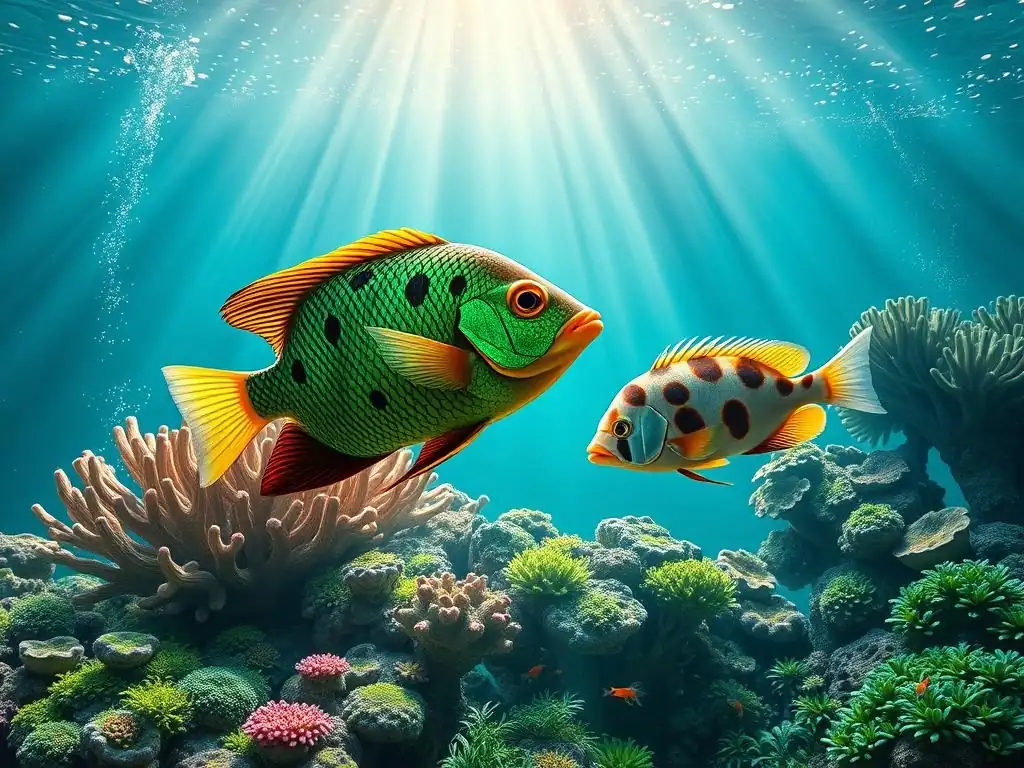
Ever been mesmerized by the vibrant colors and unique personality of a Mandarin fish? These reef-safe beauties can truly transform your saltwater aquarium into a breathtaking underwater world. But are you ready for the challenge, and which Mandarin – Green or Spotted – is the perfect fit for your nano tank? Dive into our latest Mandarin Fish Care Guide to uncover the secrets to successfully keeping these captivating creatures thriving! Let's explore the differences and discover which one will be your nano showstopper.
- Introduction: Selecting the Right Mandarin Fish for Your Nano Reef
- Green Mandarin (Synchiropus splendidus): The Classic Choice
- Spotted Mandarin (Synchiropus picturatus): The Alternative Option
- Comparing Green and Spotted Mandarin Fish: Key Differences Summarized
- Mandarin Fish Care Guide: Essential Tips for Success
- Choosing the Right Mandarin for Your Nano Reef: A Decision Framework
- Conclusion: Responsible Mandarin Fish Keeping in Nano Aquariums
-
Frequently Asked Questions
- How difficult is it to care for Mandarin fish?
- What are the key differences between Green Mandarin and Spotted Mandarin fish?
- Can Mandarin fish be kept in smaller "nano" aquariums?
- What is the most important thing to consider when feeding a Mandarin fish?
- What are some common health issues that affect Mandarin fish?
- Final Reflection: Navigating the Delicate Dance of Mandarin Care
- Ignite Your Nano Reef: Will You Embrace the Vibrant Dance?
Introduction: Selecting the Right Mandarin Fish for Your Nano Reef
The Allure of Mandarin Fish in Nano Aquariums
Mandarin fish, with their dazzling colors and intricate patterns, represent the pinnacle of beauty for many saltwater aquarists. Their slow, deliberate movements and unique personalities make them captivating inhabitants for mature nano reef tanks, often becoming the undisputed showstopper. The mesmerizing blues, greens, oranges, and reds of a healthy mandarin fish can transform a simple reef into a vibrant underwater tapestry, drawing the eye and rewarding the patient observer with endless fascination.
However, the allure of these exquisite fish often overshadows the significant challenges associated with their long-term care. Unlike many common reef inhabitants, mandarin fish have highly specialized dietary requirements that necessitate a well-established and robust ecosystem within the aquarium. Understanding these needs is paramount for any aquarist considering adding one of these jewels to their collection, ensuring their well-being and the success of their Mandarin fish care guide journey.
Green Mandarin vs. Spotted Mandarin: A Comparative Overview
When discussing mandarin fish, the two most commonly encountered species in the aquarium trade are the Green Mandarin (Synchiropus splendidus) and the Spotted Mandarin (Synchiropus picturatus). While both share the iconic body shape and shy demeanor, they possess distinct differences in appearance, temperament, and, most critically, their feeding habits. These distinctions are vital for any aspiring hobbyist to understand before making a selection, as they directly impact the likelihood of success in providing proper Mandarin fish care guide conditions.
This article will delve into the specifics of each species, providing a comprehensive Mandarin fish care guide to help you determine which, if either, is the right fit for your nano reef environment. We will explore their unique characteristics, dietary needs, tank requirements, and compatibility, ultimately offering a framework for responsible decision-making to ensure the thriving health of these magnificent fish.
Green Mandarin (Synchiropus splendidus): The Classic Choice
Green Mandarin Appearance and Identification
The Green Mandarin, Synchiropus splendidus, is arguably the most recognizable and sought-after species of dragonet, famed for its incredibly vibrant and intricate coloration. Its body is adorned with a labyrinthine pattern of electric blue, green, and orange-red lines and spots, resembling a mosaic or a psychedelic painting. These patterns are highly individual, making each fish unique, and are typically more pronounced and labyrinthine than those found on its spotted counterpart.
This species typically reaches an adult size of approximately 3 to 4 inches (7.5-10 cm), with males often being slightly larger and possessing a more elongated first dorsal fin spine, which is used during courtship displays. Their distinctive large, frog-like eyes, small mouths, and two prominent dorsal fins further aid in their identification. The overall visual impact of a healthy Green Mandarin is truly stunning, making it a focal point in any appropriately sized and mature reef aquarium.
Green Mandarin Temperament and Behavior in Reef Tanks
Green Mandarins are known for their exceptionally peaceful and shy temperament, making them ideal candidates for community tanks with non-aggressive tank mates. They spend the majority of their time meticulously foraging among live rock and sand, picking at microscopic organisms. Their movements are deliberate and almost ponderous, characterized by a unique "hovering" ability achieved by rapidly fluttering their pectoral fins. They are primarily benthic, meaning they inhabit the bottom layers of the aquarium.
Despite their beauty, their timid nature means they can easily be outcompeted for food by faster, more aggressive feeders. They rarely bother other fish or invertebrates and are more likely to retreat into the rockwork if threatened. Observing a Green Mandarin methodically exploring its environment, often darting in and out of crevices, is a truly rewarding experience for the patient aquarist dedicated to providing excellent Mandarin fish care guide conditions.
Green Mandarin Diet and Feeding Challenges in Nano Reefs
The primary challenge in keeping Green Mandarins successfully stems from their highly specialized diet. They are obligate micro-predators, meaning their natural diet consists almost exclusively of live copepods and other tiny invertebrates found grazing on live rock and sand. A single Green Mandarin can consume thousands of copepods daily, constantly picking at the substrate and rock surfaces. This continuous grazing behavior is crucial for their survival and is why they are rarely seen eating standard prepared foods in the wild or in newly set up tanks.
Providing a sustainable, abundant, and continuous supply of live copepods is the cornerstone of successful Mandarin fish care guide. Without a thriving, reproducing population of these tiny crustaceans, Green Mandarins will slowly starve, a tragic outcome that is unfortunately common due to their specific dietary needs. This makes them unsuitable for immature or small tanks that cannot support a sufficiently large copepod population.
Cultivating Copepods for Green Mandarin Nutrition
To ensure a continuous food supply for a Green Mandarin, the most effective strategy is to cultivate a robust copepod population within the aquarium system itself. This is typically achieved through the implementation of a refugium, a separate sump-like compartment plumbed into the main display tank. A refugium provides a safe haven for copepods and other microfauna to breed and flourish without the threat of predation from the main tank inhabitants. Chaetomorpha algae (Chaeto) is often used in refugiums as a substrate for copepods to graze upon and hide within.
Regularly dosing the display tank with live copepod cultures, purchased from reputable suppliers, is also an essential practice, especially when initially establishing the population or as a supplemental measure. Species like Tisbe, Tigriopus, and Apocyclops copepods are commonly used. For a typical 30-gallon nano reef, weekly or bi-weekly additions of a 16 oz (approximately 470 ml) bottle of concentrated copepods can significantly bolster the population and ensure enough food is available for a single mandarin.
Acclimating Green Mandarin Fish to Prepared Foods
While Green Mandarins are notoriously difficult to acclimate to prepared foods, it is not entirely impossible, though it requires immense patience and persistence. Success rates are significantly higher with captive-bred specimens, which may already have some exposure to non-live foods. For wild-caught mandarins, the process often involves target feeding small, meaty foods like enriched frozen cyclop-eeze, mysis shrimp, or brine shrimp, sometimes using a pipette to deliver the food directly to the fish's vicinity.
Even if a Green Mandarin begins to accept prepared foods, it should never be considered their sole diet. The natural grazing behavior and consumption of live microfauna remain critical for their long-term health and nutritional completeness. Prepared foods should always be viewed as a supplement to a flourishing copepod population, not a replacement, as part of a comprehensive Mandarin fish care guide.
Green Mandarin Tank Requirements: Size, Water Parameters, and Environment
A minimum tank size of 30 gallons (approximately 115 liters) is generally recommended for a single Green Mandarin, specifically to ensure enough live rock and sand surface area to support a sustainable copepod population. Larger tanks, such as 50 gallons (190 liters) or more, are even better, especially if considering more than one mandarin or a breeding pair. The tank must be well-established and mature, ideally running for at least 6-12 months, allowing beneficial bacteria and microfauna populations to stabilize and proliferate.
Maintaining stable water parameters typical for a reef aquarium is crucial for the Green Mandarin's health. This includes a salinity of 1.023-1.026 specific gravity, temperature between 76-82°F (24-28°C), pH 8.1-8.4, alkalinity 8-12 dKH, calcium 400-450 ppm, and magnesium 1200-1350 ppm. The environment should include ample live rock with numerous crevices and caves for hiding and foraging, as well as a deep sand bed (2-4 inches or 5-10 cm) to support infauna. Low to moderate water flow is preferred, as mandarins are weak swimmers and can be stressed by strong currents.
Green Mandarin Compatibility with Other Nano Reef Inhabitants
Green Mandarins are exceptionally peaceful fish and are generally compatible with most non-aggressive reef inhabitants. Ideal tank mates include other peaceful gobies, blennies, clownfish, and small, docile wrasses. They pose no threat to corals or invertebrates, making them excellent additions to a thriving reef system. Their thick slime coat also provides them with a degree of protection against common parasitic infections like marine ich.
However, caution must be exercised to avoid housing them with aggressive or fast-feeding fish that will outcompete them for food. Large angelfish, aggressive triggerfish, or highly active wrasses can stress a mandarin and prevent it from getting sufficient nutrition. Similarly, other dragonets, especially other male mandarins, should be avoided in tanks under 75 gallons (280 liters) due to potential territorial disputes, although a male-female pair can often coexist peacefully in an appropriately sized system when adhering to proper Mandarin fish care guide principles.
Spotted Mandarin (Synchiropus picturatus): The Alternative Option
Spotted Mandarin Appearance and Identification
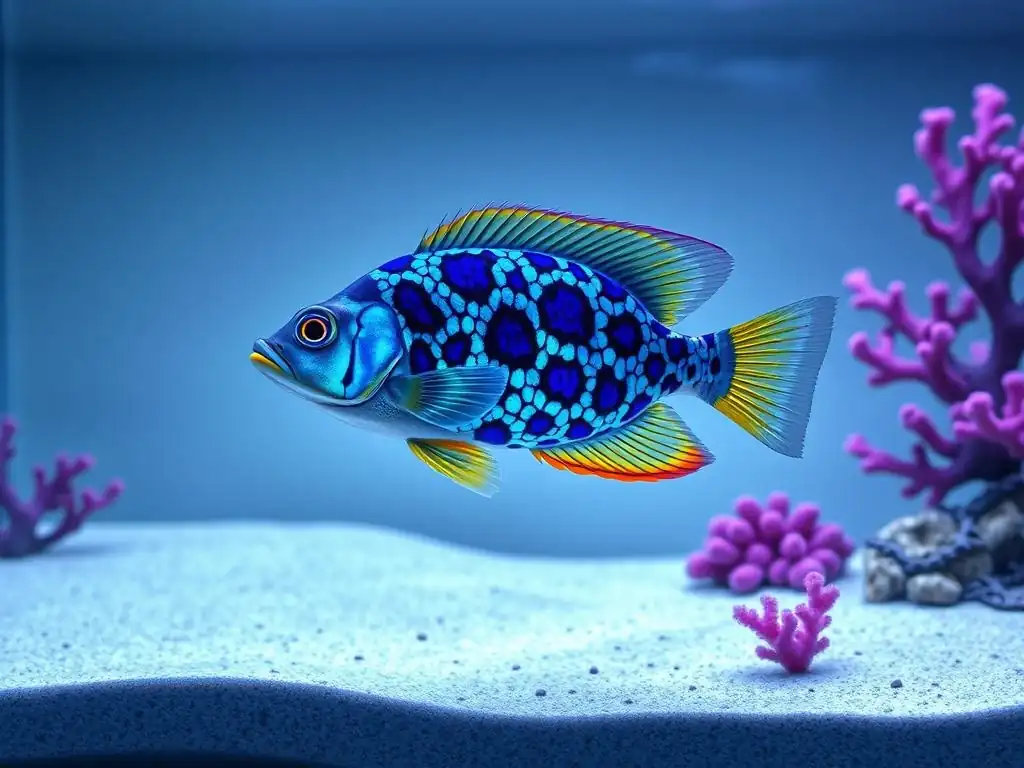
The Spotted Mandarin, Synchiropus picturatus, also known as the Psychedelic Mandarin or Picture Mandarin, shares the same captivating body shape and deliberate movements as its green cousin but features a distinctively different pattern. Instead of intricate labyrinthine lines, its body is covered in a striking array of circular or oval spots, typically in shades of orange, red, and brown, set against a background of green, blue, or sometimes yellowish hues. These spots can sometimes merge, creating larger blotches, but the overall appearance is distinctly dotted rather than striped.
Like the Green Mandarin, the Spotted Mandarin typically grows to about 3-4 inches (7.5-10 cm) in length. Males can also be identified by their elongated first dorsal fin, though this feature might be less pronounced than in Synchiropus splendidus. While perhaps not as universally "splendid" as the Green Mandarin to some eyes, the Spotted Mandarin's unique pattern offers a different, yet equally beautiful, aesthetic for the discerning aquarist seeking a unique focal point in their reef tank.
Spotted Mandarin Temperament and Behavior
The temperament and behavior of the Spotted Mandarin are very similar to those of the Green Mandarin. They are peaceful, shy, and spend the majority of their time foraging on live rock and in the sand bed. Their movements are slow and deliberate, using their pectoral fins for propulsion, and they exhibit the same characteristic "hovering" and darting into rockwork. They are non-aggressive towards other fish and invertebrates, making them suitable for community reef tanks.
Like the Green Mandarin, they are susceptible to being outcompeted for food by more boisterous tank mates. They require a calm and stable environment where they can forage without constant disturbance. Their reclusive nature means they thrive best in tanks with plenty of hiding spots and a well-established ecosystem, reinforcing the importance of a thoughtful Mandarin fish care guide approach.
Spotted Mandarin Diet and Feeding Considerations
The diet of the Spotted Mandarin in the wild is fundamentally the same as the Green Mandarin: live copepods and other tiny benthic invertebrates. They are natural grazers, continuously picking at surfaces to consume the microscopic organisms that inhabit the live rock and sand. This reliance on a live, self-sustaining food source is the primary reason for their reputation as challenging fish to keep.
However, anecdotal evidence and observations from experienced aquarists suggest that Spotted Mandarins may, on average, be slightly more adaptable to prepared foods than Green Mandarins. While still requiring a significant source of live food, there are more reported cases of Synchiropus picturatus eventually accepting frozen mysis shrimp, brine shrimp, or even high-quality pellets. This potential for adaptation can make them a marginally less demanding choice for hobbyists, though it by no means negates the need for a robust copepod population.
Is the Spotted Mandarin a Better Feeder Than the Green Mandarin?
The question of whether the Spotted Mandarin is a "better feeder" than the Green Mandarin is a nuanced one. In their natural environment, both species are obligate micro-predators, consuming live copepods. In captivity, however, some hobbyists report that Synchiropus picturatus appears more willing to transition to non-live foods, or at least supplement their diet with them, compared to Synchiropus splendidus. This perceived difference might be due to subtle behavioral variations or simply the individual adaptability of specific specimens.
It is crucial to emphasize that even if a Spotted Mandarin accepts prepared foods, it should never be considered a guarantee of long-term success without a thriving live food source. The bulk of their nutrition should still come from a naturally reproducing population of copepods. Any acceptance of prepared foods should be seen as a bonus, providing supplemental nutrition and a buffer against starvation, rather than a primary dietary solution in a comprehensive Mandarin fish care guide.
Spotted Mandarin Tank Requirements: Similarities and Differences with Green Mandarin
The tank requirements for a Spotted Mandarin are largely identical to those for a Green Mandarin. A mature, well-established reef tank of at least 30 gallons (approximately 115 liters) is recommended for a single specimen to ensure sufficient foraging area and a stable copepod population. Larger tanks are always preferable, especially if a refugium is not part of the system or if other copepod predators are present.
Stable reef parameters (salinity 1.023-1.026, temperature 76-82°F, pH 8.1-8.4, alkalinity 8-12 dKH, calcium 400-450 ppm, magnesium 1200-1350 ppm) are essential. The aquarium should feature ample live rock with plenty of hiding spots and a deep sand bed to support microfauna. Low to moderate water flow is also preferred, consistent with their weak swimming abilities. The key difference, if any, lies in the degree of copepod dependency; while still high, the Spotted Mandarin's potential for prepared food acceptance might offer a slightly wider margin of error for a new aquarist, though this should not be relied upon.
Spotted Mandarin Compatibility with Tank Mates
Like their Green Mandarin counterparts, Spotted Mandarins are highly peaceful and non-aggressive, making them excellent choices for community reef tanks with other docile inhabitants. They are compatible with most small, peaceful fish, invertebrates, and corals. They will not bother other tank mates and are themselves vulnerable to bullying or outcompetition by more active or aggressive species.
It is important to avoid housing them with large, predatory fish or overly boisterous feeders that might stress them or prevent them from getting enough food. When considering multiple mandarins, particularly males, a significantly larger tank (75 gallons or more) is advised to mitigate territorial aggression, although male-female pairs typically coexist well. Adhering to these compatibility guidelines is a crucial part of any effective Mandarin fish care guide.
Comparing Green and Spotted Mandarin Fish: Key Differences Summarized
Feeding Habits and Dietary Needs: A Crucial Distinction
The most significant and often discussed difference between the Green Mandarin ( Synchiropus splendidus) and the Spotted Mandarin ( Synchiropus picturatus) lies in their feeding habits in captivity. Both species are natural micro-predators, relying heavily on live copepods and other microfauna found in the reef environment. However, anecdotal evidence suggests that Spotted Mandarins may be slightly more adaptable to accepting prepared frozen foods, such as mysis shrimp or enriched brine shrimp, after a period of acclimation.
This potential difference, while not universal for every individual fish, often leads to the perception that the Spotted Mandarin is "easier to feed." It is vital to reiterate that even if a Spotted Mandarin accepts prepared foods, a robust and continuous supply of live copepods remains paramount for its long-term health and survival. The Green Mandarin, by contrast, is generally considered much more challenging to transition to non-live foods, making a dedicated refugium and consistent copepod dosing almost mandatory for its success within a Mandarin fish care guide.
Tank Size and Water Parameter Considerations
In terms of minimum tank size and water parameters, both Green and Spotted Mandarins have very similar requirements. A well-established, mature reef tank of at least 30 gallons (approximately 115 liters) is recommended for a single specimen, primarily to provide sufficient surface area for copepod proliferation. Larger tanks are always beneficial, offering more stable environments and greater foraging grounds.
Both species thrive in stable reef conditions, including specific gravity of 1.023-1.026, temperature between 76-82°F (24-28°C), and typical reef chemistry parameters (pH, alkalinity, calcium, magnesium). The primary consideration for tank size for both species revolves around the capacity of the system to support their continuous live food requirements rather than just spatial needs.
Overall Hardiness and Adaptability
When considering overall hardiness and adaptability, both species are generally considered delicate and require specialized care. Their slow feeding habits and reliance on live food make them susceptible to starvation in tanks that cannot meet their dietary needs. They also possess a thick slime coat, which offers some protection against external parasites like marine ich, but they are still vulnerable to poor water quality and secondary infections if stressed or malnourished.
The slight edge in adaptability, if any, often goes to the Spotted Mandarin due to its reported higher propensity to accept prepared foods. However, this should not be misinterpreted as "easy to keep." Both species demand a highly dedicated aquarist, a mature tank, and a steadfast commitment to providing a continuous supply of live microfauna. Success with either species is a testament to diligent Mandarin fish care guide practices.
Mandarin Fish Care Guide: Essential Tips for Success
Ensuring a Thriving Copepod Population in Your Nano Reef
The cornerstone of successful mandarin fish care is a continuous, thriving population of live copepods. Without this, your mandarin will slowly starve, regardless of how beautiful your tank is. The most effective way to cultivate copepods is by integrating a refugium into your sump system. This separate chamber, lit on a reverse daylight cycle to the main tank, provides a safe haven for copepods to reproduce away from predators. Filling it with marine macroalgae like Chaetomorpha (Chaeto) offers a substrate for copepods to graze upon and hide within.
Beyond a refugium, regular manual dosing of live copepod cultures is highly recommended, especially for the first 6-12 months after introducing a mandarin, or if you notice your mandarin looking thin. Purchase diverse species like Tisbe, Tigriopus, and Apocyclops from reputable suppliers. Dosing 8-16 oz (240-470 ml) of concentrated copepods weekly or bi-weekly into the display tank after lights out can significantly boost the population and ensure enough food is available for your fish. Target feeding areas where the mandarin typically forages can also help.
Quarantine Procedures for New Mandarin Fish
Quarantining any new fish before introducing it to your main display tank is a critical step in preventing the introduction of diseases and parasites. For mandarin fish, a dedicated quarantine tank (QT) of at least 10 gallons (38 liters) is highly recommended. This allows you to observe the fish for signs of stress or illness without endangering your established system. During quarantine, closely monitor the mandarin for signs of starvation, such as a pinched belly, or any visible parasites.
A key challenge during quarantine for mandarins is providing adequate food. Since a QT typically lacks live rock and a sand bed for copepod proliferation, you will need to continuously dose live copepods into the QT. This can be costly and requires daily attention. Attempting to acclimate the mandarin to prepared foods during this period can also be beneficial, though patience is key. A typical quarantine period should last at least 4-6 weeks, ensuring the fish is healthy and eating well before transfer, as per best Mandarin fish care guide practices.
Maintaining Optimal Water Quality for Mandarin Health
Maintaining stable and optimal water quality is paramount for the health and longevity of mandarin fish. While they possess a thick slime coat that offers some protection against certain parasites, they are still highly susceptible to stress and disease caused by fluctuating or poor water parameters. Regular water changes (10-20% bi-weekly) are essential to replenish trace elements and remove accumulated nitrates and phosphates.
Key parameters to monitor diligently include:
- Salinity: 1.023-1.026 specific gravity
- Temperature: 76-82°F (24-28°C)
- pH: 8.1-8.4
- Alkalinity: 8-12 dKH
- Calcium: 400-450 ppm
- Magnesium: 1200-1350 ppm
Ensuring stable parameters through regular testing, reliable equipment, and consistent maintenance routines will significantly reduce stress on your mandarin and contribute to its overall well-being, forming a core part of any effective Mandarin fish care guide.
Recognizing and Addressing Common Mandarin Fish Diseases
While mandarins are somewhat resistant to external parasites due to their thick slime coat, they are not immune to all diseases, and their primary health concern often revolves around nutrition. The most common "disease" encountered is actually starvation, characterized by a severely pinched belly, lethargy, and fading colors. If observed, immediate action to increase live food availability is critical. This might involve increasing copepod dosing, setting up a larger refugium, or, as a last resort, attempting to acclimate the fish to prepared foods in a dedicated feeding station.
Other potential issues include bacterial infections, often secondary to stress or poor water quality, which can manifest as fin rot or cloudy eyes. Fungal infections are less common but can occur. If a mandarin shows signs of illness, it should be moved to a quarantine tank for treatment to avoid medicating the main display tank. Always research medications carefully, as some can be harmful to invertebrates or beneficial bacteria. Consulting with an experienced aquarist or veterinarian specializing in aquatic animals is always advisable for serious health concerns, reinforcing the comprehensive nature of a good Mandarin fish care guide.
Choosing the Right Mandarin for Your Nano Reef: A Decision Framework
Assessing Your Tank's Maturity and Copepod Population
The most critical factor in choosing between a Green and Spotted Mandarin, or indeed deciding to get a mandarin at all, is the maturity and biological robustness of your aquarium. Both species are obligate micro-predators, meaning they require a constant and abundant supply of live copepods. A newly set up tank (less than 6-12 months old) typically lacks the established microfauna population necessary to sustain a mandarin.
Before considering a mandarin, observe your live rock and sand bed for signs of healthy microfauna, such as tiny crustaceans scurrying about. Ideally, you should have a dedicated refugium that has been running for several months, actively culturing copepods. If your tank is young, lacks a refugium, or shows sparse signs of microfauna, it is highly advisable to postpone acquiring a mandarin until your system can reliably support its dietary needs. This assessment is the foundational step in any responsible Mandarin fish care guide.
Considering Your Experience Level as a Reef Keeper
Mandarin fish, regardless of species, are not beginner-friendly fish. Their specialized dietary requirements and susceptibility to starvation make them challenging even for intermediate aquarists. If you are new to saltwater aquariums or have limited experience with highly demanding species, it is recommended to gain more experience with hardier fish before attempting to keep a mandarin.
Experienced reef keepers who understand the nuances of nutrient cycling, refugiums, and copepod cultivation are far more likely to succeed. They are also better equipped to troubleshoot issues like declining copepod populations or subtle signs of stress in the fish. A comprehensive Mandarin fish care guide acknowledges that success is often correlated with the aquarist's knowledge and dedication.
Matching the Mandarin's Needs to Your Tank's Capabilities
Ultimately, the decision to acquire a Green or Spotted Mandarin, and which species, should be based on a realistic assessment of your tank's specific capabilities and your willingness to meet the demanding Mandarin fish care guide requirements.
Consider the following:
- Copepod Production: Can your tank, with or without a refugium, consistently produce thousands of copepods daily? This is non-negotiable for either species.
- Tank Size: Is your tank at least 30 gallons for a single mandarin, offering ample foraging area?
- Tank Mates: Are your current or planned tank mates peaceful and slow-feeding, ensuring the mandarin won't be outcompeted for food?
- Time Commitment: Are you prepared to regularly dose live copepods, maintain a refugium, and potentially attempt target feeding?
- Budget: Are you able to invest in live copepod cultures, especially during the initial establishment phase or if the fish struggles?
If you are confident in your tank's ability to support a robust live food source and are prepared for the ongoing commitment, then a mandarin fish can be a truly rewarding addition. If there's any doubt, prioritizing the fish's well-being by choosing a less demanding species is the more responsible course of action.
Conclusion: Responsible Mandarin Fish Keeping in Nano Aquariums
Prioritizing the Well-being of Your Mandarin Fish
The magnificent beauty of Green and Spotted Mandarin fish is undeniably captivating, making them highly desirable inhabitants for nano reef aquariums. However, their unique and challenging dietary requirements mean that responsible ownership must always prioritize their well-being above their aesthetic appeal. Far too many mandarins succumb to starvation in tanks that simply cannot provide the continuous, abundant supply of live copepods they need to thrive.
Before introducing one of these delicate jewels into your system, a thorough self-assessment of your tank's maturity, copepod production capabilities, and your commitment to their specialized Mandarin fish care guide is absolutely essential. Selecting a captive-bred specimen, if available, can also offer a slightly higher chance of success due to potential pre-acclimation to prepared foods and better resilience. Ultimately, the true reward of keeping a mandarin lies not just in its vibrant colors, but in the satisfaction of providing a healthy, thriving environment where it can live out its full lifespan.
Resources for Further Learning about Mandarin Fish Care
For those committed to providing the best possible Mandarin fish care guide, continuous learning is key. The marine aquarium hobby is constantly evolving, with new insights into fish biology and husbandry emerging regularly. Engaging with online forums and communities dedicated to reef keeping can provide invaluable real-world advice and support from experienced aquarists who have successfully kept these challenging fish.
Additionally, academic papers on dragonet species, reputable aquarium books focusing on fish nutrition and reef tank ecosystems, and detailed articles on refugium setup and copepod culture offer deeper scientific understanding. By leveraging these resources, aquarists can continually refine their Mandarin fish care guide strategies, ensuring their beautiful showstoppers not only survive but truly flourish in their nano reef environments.
Frequently Asked Questions
How difficult is it to care for Mandarin fish?
Mandarin fish are notoriously difficult to keep due to their specialized diet. They primarily feed on live copepods, making a well-established reef tank with a thriving copepod population essential for their survival.
What are the key differences between Green Mandarin and Spotted Mandarin fish?
While both require similar care, Green Mandarins tend to be slightly more common and potentially easier to find in established reef systems. Spotted Mandarins may have different color variations, but their fundamental care requirements remain the same.
Can Mandarin fish be kept in smaller "nano" aquariums?
Yes, they can, but it's not recommended for beginners. A larger nano tank (30 gallons or more) with a mature and stable ecosystem is crucial to sustain a healthy copepod population.
What is the most important thing to consider when feeding a Mandarin fish?
Ensuring a constant supply of live copepods is paramount. Consider a refugium to cultivate copepods and supplemental feeding of live cultures if the tank doesn't produce enough naturally.
What are some common health issues that affect Mandarin fish?
Starvation due to insufficient food is the most common issue. They are also susceptible to internal parasites, which can be difficult to treat. Quarantine is recommended for all new fish.
The journey through the vibrant world of Mandarin fish, as we've explored, underscores the crucial role of informed decision-making in responsible reef keeping. Understanding the specific needs of each species, be it the Green or Spotted Mandarin, is not merely a matter of preference, but a commitment to their well-being. The success of these nano showstoppers hinges on our dedication to providing the right environment and, most importantly, a sustainable food source.
The allure of these fish is undeniable, and their presence in a reef tank can be truly captivating. However, their delicate nature demands a deeper understanding and a willingness to adapt our practices to their needs. This extends beyond just the initial setup; it's about continuous learning and observation. In the end, we will conserve only what we love; we will love only what we understand; and we will understand only what we are taught.
- Baba Dioum. This quote perfectly encapsulates the responsibility we bear as aquarists, urging us to educate ourselves and others to ensure the long-term survival of these magnificent creatures.
As you consider adding a Mandarin fish to your own reef aquarium, remember that the information presented here is just the beginning. Take the time to research thoroughly, observe your tank's ecosystem carefully, and be prepared to dedicate yourself to providing the specialized care these fish require. Let the beauty of the Mandarin inspire you to become a more conscientious and knowledgeable reef keeper, ensuring that these "nano showstoppers" continue to thrive for generations to come.
Ignite Your Nano Reef: Will You Embrace the Vibrant Dance?
Thanks for diving deep into the world of nano reef inhabitants! We hope this guide has illuminated the subtle yet significant differences between the Green and Spotted Mandarin. Now it's your turn to bring that knowledge to life!
- Strategize Your Ecosystem: Plan how you'll culture copepods before you acquire your fish; these picky eaters depend on these microscopic creatures to survive.
- Share your Mandarin aspirations with fellow reef keepers – ask for their experiences and advice in online forums.
- Think beyond the usual. Could you set up a dedicated refugium solely for copepod breeding to support your Mandarin?
Ready to take the plunge and choose the perfect Mandarin for your nano reef? What specific steps will you take this week to ensure your new Mandarin thrives?