
Maroon Clownfish in Reefs: Beauty, Behavior, and Keeping Corals Safe

Welcome to Aquarium Mastery!
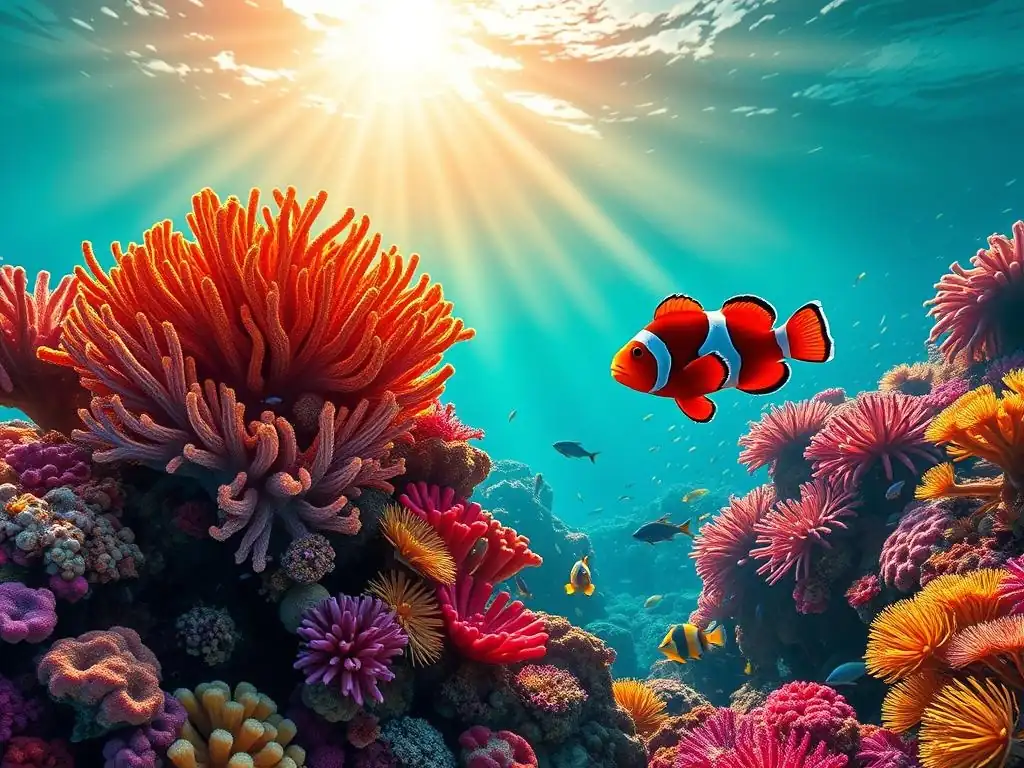
Ever wondered if the dazzling Maroon Clownfish can truly thrive in a reef environment without wreaking havoc on your precious corals? Dive deep with us as we unravel the secrets to successful Maroon Clownfish reef compatibility, exploring their captivating behavior, unique needs, and how to keep your reef ecosystem flourishing. Get ready to master the art of harmonious coexistence!
- Introduction to Maroon Clownfish and Reef Aquariums
- Maroon Clownfish: A Species Profile for Reef Aquarists
- Maroon Clownfish Reef Compatibility: Can They Live with Corals?
- Keeping Corals Safe: Strategies for a Harmonious Reef Tank
- Feeding Maroon Clownfish in a Reef Environment
- Monitoring Reef Health with Maroon Clownfish
- Breeding Maroon Clownfish in a Reef Aquarium
- Common Problems and Solutions: Maroon Clownfish and Reef Incompatibility
- Conclusion: The Rewards of Keeping Maroon Clownfish in a Reef Tank
-
Frequently Asked Questions
- How reef-safe are Maroon Clownfish really?
- What size tank is recommended for keeping a Maroon Clownfish with corals?
- What type of corals are most likely to be harassed by Maroon Clownfish?
- Can you keep multiple Maroon Clownfish in a reef tank?
- How can I minimize the risk of Maroon Clownfish damaging my corals?
- Final Reflection: Harmony in the Reef
- Unveil the Secrets of Your Reef Tank!
Introduction to Maroon Clownfish and Reef Aquariums
Understanding the Allure of Maroon Clownfish in Reef Tanks
The Maroon Clownfish ( Premnas biaculeatus) is a captivating inhabitant that draws many aquarists to consider its inclusion in a reef aquarium. Its striking appearance, characterized by a deep, rich maroon body often adorned with brilliant white or golden stripes, makes it an undeniable focal point.
Beyond their visual appeal, these clownfish exhibit fascinating behaviors, particularly their symbiotic relationship with host anemones, which adds a dynamic and natural element to a reef setup. Many enthusiasts are drawn to their bold personality and the potential for long-term observation of their intricate social dynamics, making them a highly desired species despite the potential challenges related to their Maroon clownfish reef compatibility corals.
Their popularity is also fueled by their robust nature compared to some other clownfish species, often tolerating a wider range of water parameters once established. This resilience, combined with their vibrant coloration, positions them as a top choice for aquarists aiming to create a visually spectacular and behaviorally engaging reef tank.
However, their unique temperament requires careful consideration, especially when integrating them into a diverse coral ecosystem. The desire to witness their characteristic hosting behavior with a Bubble Tip Anemone ( Entacmaea quadricolor) or Sebae Anemone ( Heteractis crispa) within a thriving coral landscape is a primary driver for many reef keepers.
Why Reef Compatibility Matters for Maroon Clownfish Keepers
For any reef aquarist, ensuring the well-being of their coral collection is paramount, and this extends directly to the selection of tank mates, including the Maroon Clownfish. Reef compatibility is not merely about whether a fish will survive in a reef environment, but whether it will coexist harmoniously with the delicate and often expensive corals.
An incompatible fish can cause significant stress or even direct damage to corals through nipping, territorial aggression, or excessive digging. Given that some coral colonies can represent an investment of hundreds or even thousands of dollars and years of growth, understanding the potential risks posed by a Maroon Clownfish is crucial.
The delicate balance of a reef ecosystem relies on stable water parameters, appropriate lighting, and the absence of undue physical stress on corals. A Maroon Clownfish, known for its territorial nature, can disrupt this balance. For instance, an aggressive individual might repeatedly brush against or nip at sensitive corals, leading to tissue recession, bleaching, or even death. Therefore, assessing the Maroon clownfish reef compatibility corals is a fundamental step in responsible reef keeping, ensuring that the beauty of this fish does not come at the expense of the health and vitality of the coral inhabitants.
Maroon Clownfish: A Species Profile for Reef Aquarists
Physical Characteristics and Color Variations of Maroon Clownfish
The Maroon Clownfish ( Premnas biaculeatus) is easily distinguished by its robust, stocky body and a prominent, sharp spine located just below each eye, giving it the common name "Spine-Cheek Clownfish." Adult females, which are significantly larger than males, can reach an impressive length of up to 6 inches (approximately 15 cm), while males typically remain around 3-4 inches (7-10 cm). Their base coloration is a striking deep maroon to reddish-brown, which provides a dramatic contrast to their vertical stripes.
These stripes are a key feature and come in two primary variations: the most common exhibits three brilliant white stripes, while the "Gold Stripe Maroon Clownfish" boasts three vibrant yellow-orange stripes. These color morphs are geographical variations rather than distinct subspecies.
Furthermore, selective breeding has introduced designer variations such as the "Lightning Maroon Clownfish," which features an intricate network of white branching patterns across its body, making each individual unique. This diversity in appearance adds to their appeal for aquarists seeking a visually distinct centerpiece for their reef tank, influencing considerations for Maroon clownfish reef compatibility corals based on their presence.
Natural Habitat and Behavior of Maroon Clownfish in the Wild
In their natural environment, Maroon Clownfish are indigenous to the Indo-Pacific region, spanning a wide geographical range from the Andaman Sea and Sumatra in the west, eastward through Indonesia, Papua New Guinea, and up to Fiji. They typically inhabit shallow to moderate depths, commonly found between 1 to 50 meters (3 to 164 feet) on coral reefs and rocky outcrops, often in areas with strong currents. This natural environment provides them with suitable host anemones, which are critical for their survival and behavior.
The Maroon Clownfish forms an obligate symbiotic relationship almost exclusively with the Bubble Tip Anemone ( Entacmaea quadricolor) and, less commonly, the Sebae Anemone ( Heteractis crispa). In the wild, they are highly territorial and generally solitary or found in established pairs, with the larger, dominant individual being the female. Their aggression is primarily directed towards other clownfish species and often towards newly introduced fish that intrude upon their perceived territory around their host anemone. This inherent territoriality is a significant factor when assessing Maroon clownfish reef compatibility corals and other tank mates in a captive environment.
Taxonomy and Subspecies of Premnas biaculeatus
The Maroon Clownfish holds a unique taxonomic position within the family Pomacentridae (damselfish family), being the sole member of the genus Premnas. Its scientific name, Premnas biaculeatus, literally translates to "sharp-spined, two-spined," referring to the distinctive spine found below each eye, a feature that differentiates it from all other clownfish species in the genus Amphiprion. This monotypic genus status means that Premnas biaculeatus is generally considered a single species without recognized subspecies.
Despite the lack of formal subspecies, geographical variations in coloration are observed and often discussed by aquarists. For instance, the "Gold Stripe Maroon" is a naturally occurring color morph primarily found in certain regions like Sumatra and Papua New Guinea, where the stripes are yellow rather than white. These are not genetically distinct subspecies but rather populations with unique phenotypic expressions. Understanding this taxonomy helps aquarists appreciate the species' unique biological traits and behavioral predispositions, which are essential when considering Maroon clownfish reef compatibility corals and planning a suitable aquarium environment.
Maroon Clownfish Reef Compatibility: Can They Live with Corals?
Assessing the Risk: Maroon Clownfish Interaction with Coral
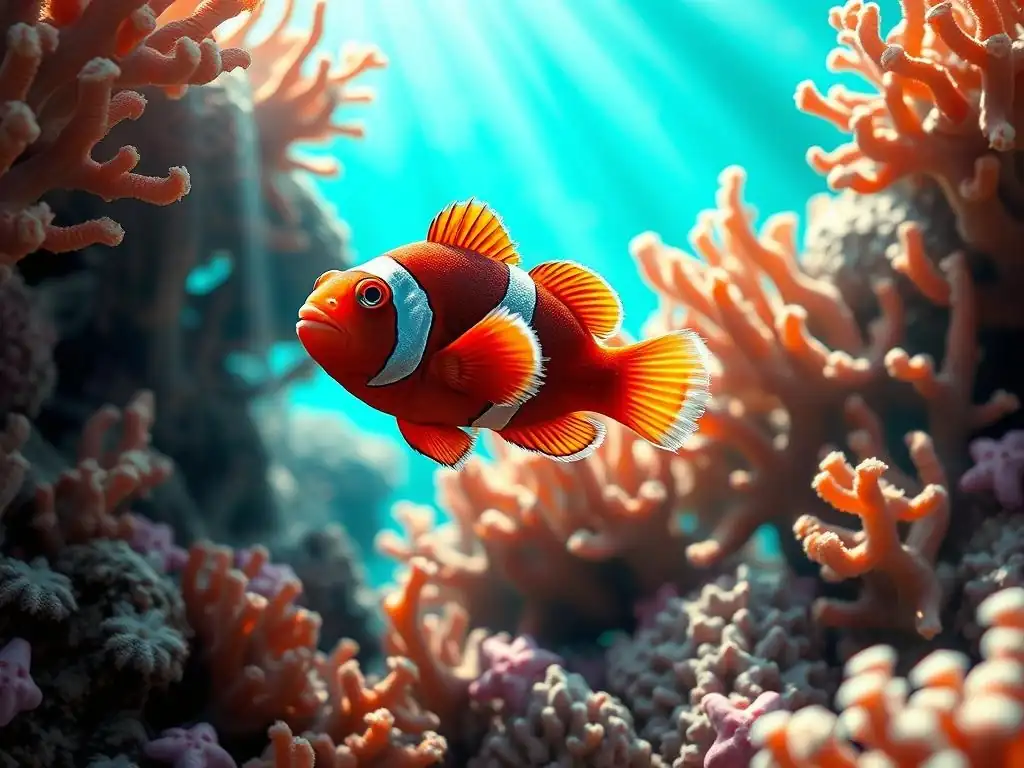
The question of whether Maroon Clownfish can live harmoniously with corals is complex, largely depending on the specific coral species and the individual fish's temperament. While Maroon Clownfish are not obligate coral nippers like some angelfish, their behavior, especially their territoriality and their need for a host, can pose risks to corals.
An aggressive Maroon Clownfish might repeatedly brush against or "host" non-anemone corals if a suitable host anemone is not provided, or even if one is present but the fish prefers a different structure. This constant physical irritation can lead to tissue recession, stress, and eventually, the death of sensitive corals such as LPS (Large Polyp Stony) corals like Elegance ( Catalaphyllia jardinei) or Frogspawn ( Euphyllia divisa).
Furthermore, their tendency to dig in the substrate around their chosen territory or host anemone can dislodge corals, especially frag plugs, or bury lower-lying corals, impeding their light and flow. For example, a large female Maroon Clownfish might excavate a significant pit around a small Bubble Tip Anemone, potentially undermining nearby coral structures. Therefore, a thorough assessment of the individual fish's behavior and the specific coral types in the tank is critical before concluding on Maroon clownfish reef compatibility corals.
Understanding Maroon Clownfish Temperament and Territoriality
Maroon Clownfish are renowned for their bold and often aggressive temperament, particularly the females. They are significantly more territorial than many other popular clownfish species, such as Ocellaris or Percula clowns.
This territoriality is primarily directed towards other clownfish, especially those of the same species or similar size, but can extend to other fish that infringe upon their perceived territory, which often centers around their host anemone or a favored rock structure. For instance, an established pair of Maroon Clownfish in a 120-gallon tank might claim a territory encompassing up to 2-3 square feet around their anemone, aggressively chasing away any fish that ventures too close.
This aggressive nature can also manifest as perceived aggression towards corals. While they don't typically consume coral tissue, their constant "hosting" or rubbing against corals, especially if an anemone is absent or inadequate, can be detrimental. They might also vigorously defend their territory by nipping at or bumping other fish, which can cause stress not only to the targeted fish but also to nearby corals if the chase occurs in close proximity. Understanding and anticipating this strong territorial drive is paramount for ensuring Maroon clownfish reef compatibility corals and overall tank harmony.
Identifying Coral Species Most Vulnerable to Maroon Clownfish
Not all corals are equally susceptible to the potential negative interactions with Maroon Clownfish. Soft corals, such as leathers ( Sarcophyton spp.) and mushrooms ( Rhodactis spp.), tend to be more resilient due to their robust structure and often faster growth rates, though persistent irritation can still cause them stress. However, SPS (Small Polyp Stony) corals like Acropora and Montipora, and especially LPS (Large Polyp Stony) corals, are generally more vulnerable. LPS corals, with their fleshy polyps, are particularly susceptible to tissue damage from constant rubbing or "hosting" by a Maroon Clownfish.
For example, a Maroon Clownfish repeatedly attempting to host in a Hammer ( Euphyllia ancora) or Torch ( Euphyllia glabrescens) coral can cause the polyps to retract, leading to tissue recession and potential secondary infections. Similarly, delicate SPS corals might suffer from broken branches if a large Maroon Clownfish consistently brushes against them or creates strong localized flow disruptions. Therefore, when planning for Maroon clownfish reef compatibility corals, it is advisable to prioritize hardier, less sensitive corals or to ensure adequate space and a suitable host anemone is provided to divert the clownfish's attention away from vulnerable coral colonies.
Keeping Corals Safe: Strategies for a Harmonious Reef Tank
Choosing the Right Tank Size and Aquascaping for Maroon Clownfish
The success of integrating Maroon Clownfish into a reef tank with minimal impact on corals largely hinges on providing an adequately sized aquarium and thoughtful aquascaping. For a single Maroon Clownfish or a pair, a minimum tank size of 75 gallons (approximately 280 liters) is generally recommended, with 120 gallons (450 liters) or larger being ideal for a more diverse reef setup, especially if other fish are present. This larger volume provides ample swimming space and helps dilute any territorial aggression.
Aquascaping should aim to create multiple distinct zones and hiding spots. This can be achieved by building rock structures with caves, overhangs, and open areas. Crucially, if a host anemone is introduced, its placement should be carefully considered to be away from highly sensitive or expensive coral colonies.
For instance, placing the anemone on a dedicated rock island or in a corner of the tank, allowing for at least 12-18 inches (30-45 cm) of clear space around it, can help contain the Maroon Clownfish's territorial zone and minimize its interaction with nearby corals. This strategic placement is key to optimizing Maroon clownfish reef compatibility corals.
Selecting Compatible Tank Mates for Maroon Clownfish in Reefs
Careful selection of tank mates is crucial to prevent aggression from Maroon Clownfish and ensure overall reef harmony. Due to their territorial nature, it's best to avoid other clownfish species, especially those of similar size or body shape, as direct aggression leading to injury or death is highly probable. Similarly, very small, timid fish might become targets of bullying. Instead, focus on larger, semi-aggressive to peaceful fish that are either fast swimmers or possess a robust build, allowing them to hold their own without escalating conflicts.
Good choices often include larger tangs (e.g., Yellow Tangs, Purple Tangs), larger angelfish (e.g., Emperor Angelfish, Majestic Angelfish), or certain wrasses (e.g., Six-Line Wrasse, Melanurus Wrasse) that are not easily intimidated. It's also beneficial to introduce the Maroon Clownfish last into the tank, after other inhabitants have established their territories, as this can sometimes reduce their dominance. By choosing tank mates that complement their temperament, the focus of the Maroon Clownfish remains less on other tank inhabitants and more on their host, thereby improving Maroon clownfish reef compatibility corals.
Managing Aggression: Techniques for Minimizing Maroon Clownfish Dominance
Even with careful planning, Maroon Clownfish aggression can sometimes surface. Several techniques can help mitigate their dominance and protect other tank inhabitants, including corals. One effective method is to ensure the Maroon Clownfish has a suitable host anemone. When a clownfish successfully hosts, much of its territorial energy is directed towards defending that specific anemone, often reducing its roaming and aggression towards other areas of the tank. Providing a Bubble Tip Anemone ( Entacmaea quadricolor) of appropriate size (at least 6-8 inches in diameter for an adult pair) can significantly stabilize their behavior.
If aggression towards other fish or corals persists, rearranging the aquascape can sometimes reset territories, giving other fish a chance to establish new safe zones. Introducing a target fish, such as a robust damselfish (e.g., a Yellowtail Damselfish), which can withstand initial aggression without being seriously harmed, can sometimes divert the Maroon Clownfish's attention.
In extreme cases, a temporary "time-out" in a separate container within the tank for a few days can help break aggressive patterns. Adequate and frequent feeding also plays a role, as a well-fed fish is generally less prone to aggression, further contributing to Maroon clownfish reef compatibility corals by reducing stress.
Feeding Maroon Clownfish in a Reef Environment
Optimal Diet for Maroon Clownfish: Supporting Health and Color
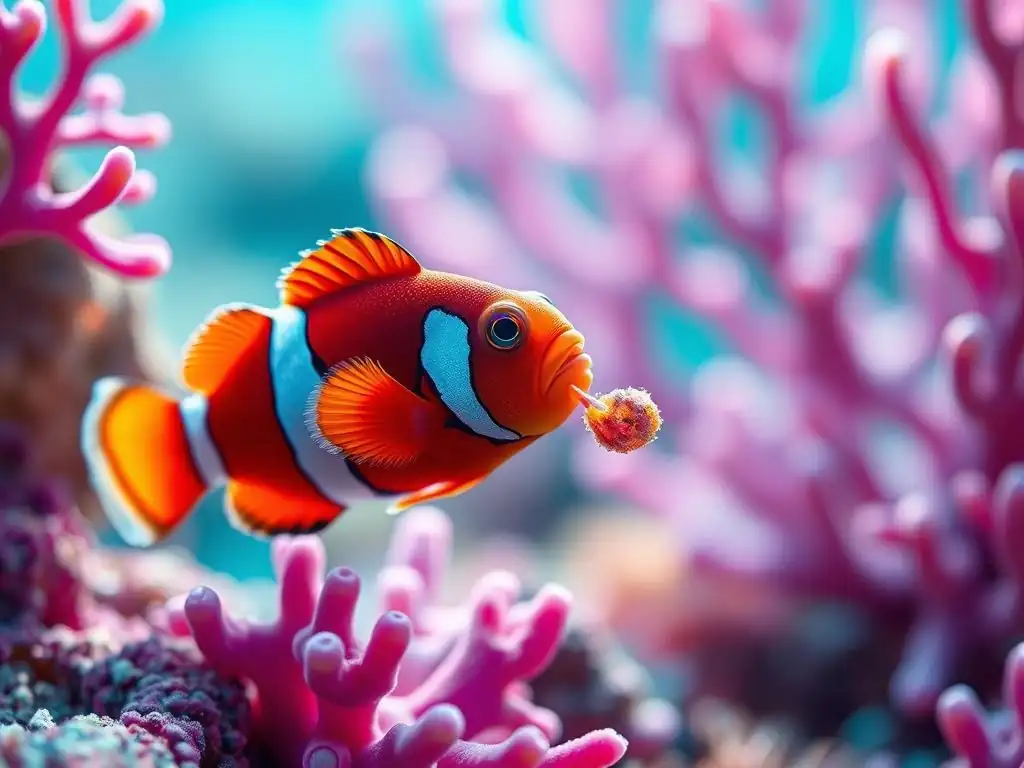
Providing an optimal and varied diet is crucial for the health, vibrant coloration, and overall well-being of Maroon Clownfish in a reef environment. They are omnivores, requiring a mix of meaty foods and vegetable matter. A high-quality diet should consist of a variety of marine-based foods such as mysis shrimp, brine shrimp (enriched), finely chopped krill, and high-quality flake or pellet foods formulated for marine omnivores. For instance, feeding a mix of frozen mysis shrimp and a marine pellet food containing spirulina three times a day is a good starting point.
To enhance their natural maroon and white/gold coloration, foods rich in astaxanthin and other carotenoids are beneficial. Many commercially available clownfish pellets are fortified with these pigments. Aim for 2-3 small feedings per day rather than one large one, as this mimics their natural grazing behavior and reduces the amount of uneaten food that can degrade water quality. A well-nourished Maroon Clownfish is generally healthier, less stressed, and less likely to exhibit undesirable behaviors that could impact Maroon clownfish reef compatibility corals.
Preventing Coral Damage During Feeding Time
While Maroon Clownfish are generally not coral nippers, their enthusiastic feeding behavior can sometimes indirectly impact corals, especially if food particles drift onto sensitive polyps. To prevent this, target feeding is an excellent strategy. Using a turkey baster or a specialized feeding stick, direct frozen or pellet foods directly to the Maroon Clownfish, ensuring they consume the majority of it before it disperses throughout the tank. This minimizes food waste and prevents excess nutrients from settling on corals, which can fuel nuisance algae growth.
Another technique is to turn off strong flow pumps during feeding time for 5-10 minutes. This allows food to remain concentrated in the feeding area, making it easier for the clownfish to consume and reducing the chance of food particles drifting onto nearby corals. For example, if you have a large Euphyllia coral near the feeding zone, temporarily reducing flow ensures that any uneaten food doesn't accumulate in its polyps, which can cause irritation or even necrosis. Implementing these practices helps maintain a clean reef environment and promotes Maroon clownfish reef compatibility corals by preventing indirect harm.
Supplementation and Vitamin Requirements for Maroon Clownfish in Reef Tanks
Beyond a varied diet, proper supplementation can significantly benefit the long-term health and vitality of Maroon Clownfish, especially in a captive reef environment. While a balanced diet provides most essential nutrients, additional vitamins and fatty acids can boost their immune system, enhance coloration, and support reproductive health. For instance, soaking frozen foods in a liquid vitamin supplement designed for marine fish, such as Selcon or Vita-Chem, 2-3 times a week can provide crucial fat-soluble vitamins (A, D, E, K) and highly unsaturated fatty acids (HUFA).
These supplements are particularly important for captive-bred fish and can help them thrive, reducing susceptibility to common diseases. Additionally, ensuring good water quality, with stable parameters, indirectly supports their ability to absorb nutrients effectively. While the primary focus of reef supplementation is often for corals (e.g., calcium, alkalinity), a healthy fish population contributes to a stable ecosystem. A robust, well-supplemented Maroon Clownfish is less likely to show signs of stress or illness, which in turn supports a peaceful environment conducive to Maroon clownfish reef compatibility corals.
Monitoring Reef Health with Maroon Clownfish
Observing Coral Behavior: Early Warning Signs of Stress
The behavior of corals in a reef tank can serve as a vital indicator of overall system health and potential issues arising from tank inhabitants, including Maroon Clownfish. Regular observation for early warning signs of stress is crucial for maintaining a thriving reef. Look for corals that are not fully extended, exhibiting retracted polyps, or showing signs of tissue recession. For instance, if a Fungia plate coral near the Maroon Clownfish's territory consistently remains closed during the day, it could indicate irritation or physical disturbance.
Bleaching, where corals lose their zooxanthellae and turn white, is another severe sign of stress, often caused by light shock, temperature fluctuations, or prolonged irritation. If you notice specific corals consistently retracting or showing tissue loss only in the vicinity of the Maroon Clownfish's primary activity zone, it strongly suggests a direct negative interaction. Documenting these observations and correlating them with the clownfish's behavior can help identify and address issues promptly, ensuring the long-term Maroon clownfish reef compatibility corals.
Water Quality Parameters: Maintaining a Stable Reef Environment
Maintaining stable and optimal water quality parameters is the cornerstone of a healthy reef tank and directly impacts the well-being of both corals and Maroon Clownfish. Consistent parameters reduce stress on all inhabitants, making them more resilient. Key parameters to regularly test and maintain include:
- Salinity: 1.024-1.026 specific gravity (35 ppt). Daily evaporation can increase salinity; regular top-offs with RO/DI water are essential.
- Temperature: 76-82°F (24-28°C). Fluctuations of more than 2°F (1°C) in a day can stress corals.
- pH: 8.0-8.4. Stable pH is crucial for calcification.
- Alkalinity (dKH): 8-12 dKH. This parameter buffers pH and provides carbonate for coral growth.
- Calcium (Ca): 400-450 ppm. Essential for coral skeletal growth.
- Magnesium (Mg): 1250-1350 ppm. Helps maintain calcium and alkalinity levels.
- Nitrate (NO3): <10 ppm (ideally <5 ppm for SPS-dominated tanks). High nitrates can inhibit coral growth and promote algae.
- Phosphate (PO4): <0.03 ppm (ideally undetectable). Even trace amounts can fuel nuisance algae and inhibit calcification.
Regular weekly testing using reliable test kits is recommended. For example, a 10% weekly water change with high-quality saltwater can help replenish trace elements and export accumulated nitrates and phosphates. Consistent monitoring and adjustment of these parameters create a robust environment that supports both thriving corals and healthy Maroon Clownfish, solidifying Maroon clownfish reef compatibility corals.
Maintaining Water Chemistry for a Healthy Reef System
Beyond the core parameters, a holistic approach to water chemistry is vital for a flourishing reef. This includes managing trace elements and nutrient export effectively. Trace elements such as iodine, strontium, and potassium are utilized by corals for various biological processes and are depleted over time. While regular water changes can replenish some, target dosing of specific trace elements may be necessary in mature, heavily stocked reef tanks. For instance, some aquarists dose iodine to help corals shed old tissue and enhance coloration.
Nutrient export mechanisms are equally important to prevent the buildup of nitrates and phosphates, which can negatively impact coral health and foster nuisance algae. This involves methods like protein skimming, which removes organic waste before it breaks down, and the use of chemical filtration media such as GFO (granular ferric oxide) for phosphate removal or activated carbon for organic pollutant absorption.
Implementing a deep sand bed or refugium with macroalgae like Chaetomorpha can also naturally consume nitrates and phosphates. A clean, nutrient-poor water column is paramount for sensitive corals, making it easier for them to coexist with active fish like Maroon Clownfish, thus enhancing Maroon clownfish reef compatibility corals.
Breeding Maroon Clownfish in a Reef Aquarium
Creating a Suitable Breeding Environment for Maroon Clownfish
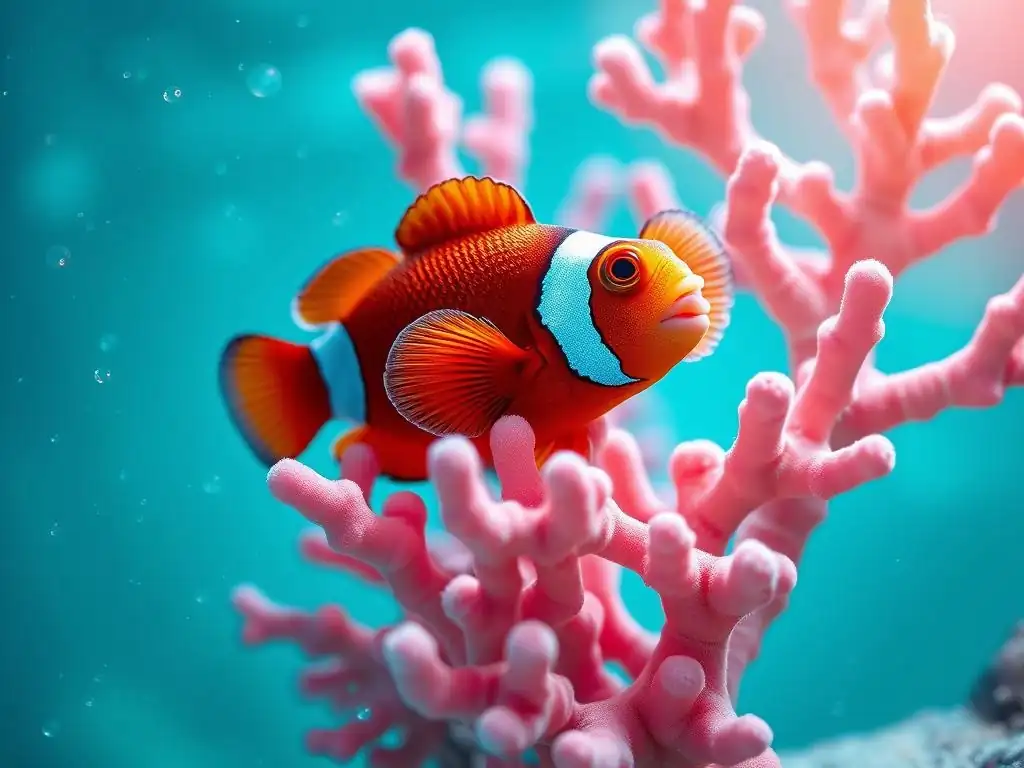
Breeding Maroon Clownfish in a reef aquarium, while challenging, is a rewarding endeavor that can be achieved with specific considerations for their environment. The first step is to establish a compatible pair, which often involves purchasing two juveniles and allowing them to pair naturally, with the larger becoming the female.
A mature, well-established reef tank of at least 75 gallons (280 liters), preferably 120 gallons (450 liters) or more, is crucial to provide ample space and stability. The presence of a suitable host anemone, such as a large Bubble Tip Anemone ( Entacmaea quadricolor), is highly beneficial as it provides a secure spawning site.
The breeding area, typically around the base of the anemone or a flat rock surface nearby, should be free from strong currents and direct disturbance. Water parameters must be exceptionally stable and pristine, mirroring the optimal conditions for coral growth: salinity 1.025, temperature 78-80°F (25-27°C), pH 8.1-8.3, and undetectable nitrates/phosphates. Providing flat, smooth rocks or ceramic tiles near the anemone offers ideal surfaces for egg deposition. While the primary goal is breeding, a stable environment also contributes to overall Maroon clownfish reef compatibility corals by reducing stress on the parents.
Identifying Breeding Pairs and Egg Laying Behavior
Recognizing a breeding pair of Maroon Clownfish involves observing specific behavioral cues. The female will be noticeably larger and more dominant, often exhibiting aggressive displays towards the male or other tank inhabitants if they approach her chosen territory. The male will be smaller and more submissive, often seen "shivering" or displaying a submissive dance around the female. Prior to spawning, both fish will meticulously clean a chosen egg-laying site, often a flat rock surface or the base of their host anemone, sometimes for several days.
Egg laying typically occurs in the morning. The female will make multiple passes over the chosen surface, depositing a clutch of small, oval-shaped eggs, usually numbering between 300 to 700. The male follows closely behind, fertilizing the eggs.
The eggs are initially orange or yellowish and typically hatch within 7-10 days, depending on the water temperature. During this period, both parents, but primarily the male, will diligently guard the eggs, fanning them with their fins to ensure oxygenation and removing any unfertilized or fungal-infected eggs. This protective behavior, while natural, can temporarily increase their territorial aggression, which requires careful monitoring for Maroon clownfish reef compatibility corals in the immediate vicinity.
Raising Maroon Clownfish Fry: From Hatching to Independence
Raising Maroon Clownfish fry from hatching to independence is a demanding but incredibly rewarding process. Clownfish eggs typically hatch within an hour or two after the tank lights go out on the 7th to 10th day. The newly hatched larvae, known as "fry," are tiny (around 3-4 mm long) and planktonic, immediately seeking light and exhibiting positive phototaxis.
For successful rearing, the fry must be gently siphoned or netted from the main tank immediately after hatching and transferred to a dedicated rearing tank. This separate tank should be small (5-10 gallons), bare-bottomed, and equipped with gentle aeration and a heater.
The most critical challenge is providing appropriate first foods. Within hours of hatching, the fry require rotifers ( Brachionus plicatilis) enriched with marine algae (e.g., Nannochloropsis, Isochrysis). They consume rotifers for the first 7-10 days, after which they can be transitioned to newly hatched Artemia nauplii (brine shrimp).
Maintaining pristine water quality in the rearing tank through small, frequent water changes and careful feeding is paramount for high survival rates. As they grow, they can be weaned onto finely crushed flake food. Successfully raising fry demonstrates a deep understanding of marine aquaculture and contributes to sustainable practices, reducing reliance on wild-caught specimens and indirectly supporting Maroon clownfish reef compatibility corals by promoting captive breeding.
Common Problems and Solutions: Maroon Clownfish and Reef Incompatibility
Addressing Aggression Towards Other Fish and Corals
Aggression is a primary concern when keeping Maroon Clownfish in a reef environment. If a Maroon Clownfish is consistently harassing other fish, especially new additions or smaller species, several steps can be taken. Firstly, ensure the tank is adequately sized (75 gallons minimum, 120+ gallons preferred for pairs or diverse setups) and provides ample hiding spots for all inhabitants.
If a host anemone is present, ensure it's large enough for the clownfish and located in an area that doesn't force other fish into the clownfish's primary territory. For instance, if an anemone is placed centrally, it might create a large "no-go" zone for other fish.
If aggression persists, consider rearranging the rockwork. This can disrupt established territories and force the clownfish to re-evaluate its boundaries, sometimes leading to a more peaceful coexistence. Introducing a mirror to the tank for short periods (15-30 minutes) can also sometimes divert their aggression towards their own reflection, potentially tiring them out.
In severe cases, the aggressive clownfish may need to be temporarily removed to a separate quarantine tank for a few days, allowing other fish to settle in. Upon reintroduction, the clownfish may be less dominant. Addressing this aggression is vital for maintaining Maroon clownfish reef compatibility corals and other tank mates.
Treating Common Diseases and Parasites in Maroon Clownfish
While relatively hardy, Maroon Clownfish are susceptible to common marine fish diseases and parasites, especially if stressed by poor water quality or aggressive tank mates. Early detection and prompt treatment are crucial. Common ailments include:
- Ich (White Spot Disease): Characterized by small, white spots resembling salt grains on the body and fins. Often caused by stress or poor water quality. Treatment typically involves hyposalinity (reducing salinity to 1.010-1.012 for 2-4 weeks) or copper-based medications in a separate quarantine tank.
- Velvet (Marine Velvet Disease): A more severe parasitic infection, appearing as a dusty, golden or brownish coating. Extremely contagious and fast-acting. Copper treatments or Chloroquine Phosphate in a quarantine tank are common.
- Bacterial Infections: Symptoms include fin rot, cloudy eyes, or body lesions. Often secondary to stress or injury. Treated with broad-spectrum antibiotics, usually in a hospital tank.
- Internal Parasites: Symptoms like wasting, loss of appetite, or stringy white feces. Can be treated with medicated foods containing metronidazole or praziquantel.
Prevention is key: always quarantine new fish for at least 4 weeks, maintain pristine water parameters, and provide a nutritious diet. A healthy Maroon Clownfish is more resistant to disease, which in turn reduces the risk of pathogens spreading to corals, thus supporting Maroon clownfish reef compatibility corals by maintaining overall tank health.
Controlling Algae Growth and Maintaining Water Quality
Controlling nuisance algae growth and maintaining impeccable water quality are fundamental to the health of any reef tank, including those housing Maroon Clownfish. Excess nutrients, primarily nitrates and phosphates, are the main culprits behind algae blooms (e.g., hair algae, film algae, cyanobacteria). While Maroon Clownfish don't directly cause algae, their waste contributes to the bioload.
Strategies for control include:
- Regular Water Changes: Performing weekly or bi-weekly water changes of 10-20% with high-quality RO/DI water and a reputable salt mix helps export accumulated nutrients.
- Efficient Nutrient Export: Utilize a properly sized protein skimmer that removes organic waste before it breaks down into nitrates and phosphates. Employ chemical media like GFO (granular ferric oxide) for phosphate removal and activated carbon for organic pollutant absorption.
- Appropriate Feeding: Avoid overfeeding. Feed small amounts multiple times a day to ensure all food is consumed, preventing uneaten food from decaying and releasing nutrients.
- Adequate Flow: Ensure strong and varied water flow throughout the tank to prevent detritus from settling on rocks and corals, which can fuel algae growth.
- RO/DI Water: Always use purified RO/DI water for top-offs and water changes, as tap water often contains phosphates and silicates that promote algae.
By diligently managing these aspects, aquarists can maintain a low-nutrient environment that discourages nuisance algae, promotes healthy coral growth, and overall enhances the Maroon clownfish reef compatibility corals within the system.
Conclusion: The Rewards of Keeping Maroon Clownfish in a Reef Tank
Balancing Aesthetics, Behavior, and Coral Health
Keeping Maroon Clownfish in a reef tank presents a unique challenge that, when met with careful planning and diligent husbandry, yields immense rewards. The striking beauty of the Maroon Clownfish, with its vibrant coloration and bold personality, undeniably adds a captivating aesthetic dimension to any reef aquarium. Their intriguing symbiotic relationship with host anemones offers a window into natural marine behaviors, enriching the viewing experience. However, achieving true harmony requires a delicate balance between appreciating their unique characteristics and ensuring the safety and health of the diverse coral inhabitants.
This balance is maintained through meticulous attention to tank size, aquascaping that provides adequate space and territories, and thoughtful selection of tank mates. It also involves continuous monitoring of coral health for any signs of stress or physical irritation caused by the clownfish's territorial displays or hosting attempts. Ultimately, a successful reef tank with Maroon Clownfish is a testament to the aquarist's commitment to understanding the specific needs and behaviors of their chosen species, prioritizing the well-being of the entire ecosystem, and proving that Maroon clownfish reef compatibility corals is achievable with responsible management.
Responsible Reef Keeping Practices for Maroon Clownfish Enthusiasts
Responsible reef keeping goes beyond just maintaining basic water parameters; it encompasses a holistic approach to animal welfare and environmental stewardship. For Maroon Clownfish enthusiasts, this means making informed decisions from the outset. Always source healthy, captive-bred Maroon Clownfish whenever possible, as they are generally hardier and less stressed than wild-caught specimens, and their acquisition supports sustainable aquaculture practices. Before introducing a Maroon Clownfish, thoroughly research its specific needs, including its potential adult size, temperament, and dietary requirements.
Commit to providing a tank environment that meets or exceeds the minimum recommendations, ensuring ample space and appropriate aquascaping to mitigate potential aggression. Be prepared to provide a suitable host anemone, understanding the specific care requirements for both the anemone and the clownfish.
Regular observation of all tank inhabitants, prompt action on any signs of stress or disease, and consistent water quality management are paramount. By adhering to these responsible practices, aquarists not only create a thriving home for their Maroon Clownfish and corals but also contribute positively to the broader marine aquarium hobby, fostering long-term Maroon clownfish reef compatibility corals.
The Future of Captive Bred Maroon Clownfish in Reef Aquariums
The future of Maroon Clownfish in reef aquariums is increasingly leaning towards captive-bred specimens, a trend that holds significant benefits for both the hobby and marine conservation. Advances in aquaculture have made it possible to breed Maroon Clownfish in controlled environments, producing a steady supply of fish that are already accustomed to aquarium life and prepared foods. These captive-bred individuals are generally more resilient to common diseases, less stressed by shipping, and often exhibit less aggression than their wild-caught counterparts, having never established a wild territory.
Furthermore, the development of designer variations like the "Lightning Maroon" and "Gold Stripe Maroon" through selective breeding offers aquarists unique aesthetic choices while reducing pressure on wild populations. As breeding techniques become more refined and widespread, the availability of high-quality, disease-free captive-bred Maroon Clownfish will continue to grow.
This shift directly supports the goal of sustainable reef keeping, allowing enthusiasts to enjoy these magnificent creatures in their reef tanks with a clear conscience, knowing they are contributing to the preservation of wild coral reefs. This emphasis on captive breeding is a crucial step towards ensuring the enduring success of Maroon clownfish reef compatibility corals in home aquariums.
Frequently Asked Questions
How reef-safe are Maroon Clownfish really?
Maroon Clownfish can be territorial and aggressive, potentially nipping at some soft corals. Their compatibility largely depends on the individual fish and the specific coral species present in the reef tank.
What size tank is recommended for keeping a Maroon Clownfish with corals?
A minimum of 30 gallons is generally recommended for a single Maroon Clownfish. Larger tanks are always better, especially when housing corals, to provide ample space and reduce territorial aggression.
What type of corals are most likely to be harassed by Maroon Clownfish?
Soft corals, particularly those with fleshy mantles, are more susceptible to being nipped at by Maroon Clownfish. Large polyp stony (LPS) corals are generally less prone to harassment due to their harder skeletons.
Can you keep multiple Maroon Clownfish in a reef tank?
While possible, it's generally recommended to only keep one Maroon Clownfish or a bonded pair in a reef tank. Housing multiple Maroon Clownfish can lead to extreme aggression and territorial disputes, potentially harming both fish and corals.
How can I minimize the risk of Maroon Clownfish damaging my corals?
Provide a large and established anemone for the clownfish to host. This can redirect their attention away from the corals. Also, ensure the fish are well-fed to reduce the likelihood of them seeking food from corals.
Final Reflection: Harmony in the Reef
The vibrant dance between the maroon clownfish and the delicate corals of a reef ecosystem, as explored in this article, underscores the fragile beauty of nature's interconnectedness. Understanding the nuances of Maroon clownfish reef compatibility corals isn't just about aquarium keeping; it's about recognizing the responsibility we bear in preserving these complex and threatened environments.
This exploration has deepened my appreciation for the intricate balance within a reef. The delicate relationship between these creatures highlights the importance of informed stewardship. In the end, we will conserve only what we love; we will love only what we understand; and we will understand only what we are taught.
- Baba Dioum. This quote resonates deeply, reminding us that knowledge is the first step towards protecting the wonders of the natural world.
Now, I invite you to reflect on your own role in this delicate ecosystem. Consider how your choices, whether in aquarium keeping or everyday life, can contribute to the health and preservation of coral reefs. Let's strive to be informed and responsible stewards, ensuring that the vibrant dance of the maroon clownfish and its coral companions continues for generations to come.
Unveil the Secrets of Your Reef Tank!
Thanks for diving into the captivating world of maroon clownfish with us! We hope you've discovered new insights into their unique beauty and behavior and how they can contribute to a healthy reef ecosystem. Now, let's turn that knowledge into action!
Here are some ways you can deepen your understanding and appreciation of these fascinating fish:
- Begin meticulously observing the interactions of the fish living in your aquarium. Understanding the behavior of each specimen helps in the general care of the ecosystem.
- Research sustainable sourcing options for maroon clownfish and other reef inhabitants. Supporting responsible breeders helps protect wild populations.
- Share this article with fellow reef enthusiasts and spark a conversation about the importance of responsible reefkeeping!
What surprising behavior have you witnessed in your own clownfish, and how did it impact your reef ecosystem?