
The Fascinating World of Crayfish Senses: How They Perceive Your Aquarium


Welcome to Aquarium Mastery!
Ever wondered what your crayfish is really experiencing in its underwater world? Dive into the fascinating realm of crayfish aquarium sensory perception and discover how these intriguing invertebrates navigate their environment. Prepare to be amazed as we unlock the secrets of their senses, offering a new perspective on caring for these captivating creatures. Ready to see your aquarium through a crayfish's eyes? Let's explore!
- Navigating the Aquarium: Sensory Biology of Crayfish
- Understanding Crayfish Sensory Perception in the Aquarium Environment
- Crayfish Vision: Detecting Movement and Shadows
- Crayfish Chemical Senses: Unveiling the Power of Smell and Taste
- Crayfish Tactile Senses: Exploring the Aquarium with Touch
- Crayfish Proprioception: Awareness of Body Position
- Crayfish Sensory Adaptations for Aquarium Life
- Optimizing Your Aquarium for Crayfish Sensory Wellbeing
- Common Misconceptions About Crayfish Sensory Perception
- Conclusion: Enhancing the Crayfish Aquarium Experience Through Sensory Awareness
- Frequently Asked Questions
- Final Reflection: Unveiling the Crayfish's Sensory World
- Unleash Your Crayfish Understanding!
Understanding Crayfish Sensory Perception in the Aquarium Environment
The Importance of Sensory Input for Crayfish in Captivity
For crayfish, sensory input is not merely about experiencing their surroundings; it is fundamental to their survival and well-being. In their natural habitats, these aquatic invertebrates rely on a complex interplay of senses to locate food sources, detect predators, find suitable mates, and identify safe shelter. Without adequate sensory stimulation and the ability to interpret their environment, crayfish in captivity can become stressed, exhibit abnormal behaviors, or fail to thrive. Understanding how they perceive their world allows aquarists to create an environment that truly caters to their biological needs.
By recognizing the critical role of each sense, aquarists can intentionally design and maintain an aquarium that mimics the rich sensory landscape of a natural habitat. This deep understanding of Crayfish aquarium sensory perception enables hobbyists to provide appropriate lighting, water chemistry, substrate, and decor, directly impacting the crayfish's ability to forage effectively, hide securely, and even successfully reproduce. A well-designed sensory environment leads to healthier, more active, and less stressed crayfish, making their observation a far more rewarding experience.
Crayfish Aquarium Sensory Perception: An Overview
Crayfish possess a remarkable array of senses, each finely tuned to their aquatic, benthic lifestyle. Their primary sensory modalities include vision, which is excellent for detecting movement; chemoreception, encompassing both "smell" and "taste" for navigating chemical gradients; tactile senses, crucial for exploring their immediate surroundings; and proprioception, providing awareness of their body's position. These senses do not operate in isolation but rather integrate to form a comprehensive perception of their world.
While their sensory capabilities might seem rudimentary compared to those of mammals, they are highly sophisticated and specialized for life underwater. For instance, their vision might not offer high-resolution imagery, but it is incredibly adept at spotting subtle movements. Similarly, their chemical senses are exquisitely sensitive, allowing them to detect minute concentrations of dissolved substances. This nuanced crayfish sensory perception is what allows them to effectively navigate, forage, and survive in the often turbid and complex aquatic environment of an aquarium.
Crayfish Vision: Detecting Movement and Shadows
Compound Eyes of Crayfish: A Detailed Look
Crayfish possess prominent compound eyes, each mounted on a movable stalk, allowing for a wide field of view. Unlike the single-lens eyes of vertebrates, compound eyes are composed of numerous individual optical units called ommatidia. Each ommatidium functions as a separate light receptor, contributing a small piece of the overall visual mosaic. A single crayfish eye can contain thousands of these ommatidia, typically ranging from a few hundred to over two thousand, depending on the species and size.
This mosaic vision grants crayfish an almost panoramic view, crucial for detecting movement across a broad visual field. While this structure limits their ability to perceive fine details and sharp images, it makes them exceptionally good at detecting changes in light intensity and motion. This specialized vision is a key adaptation for a creature that needs to quickly react to approaching predators or fleeting prey in its aquatic habitat, making it a vital component of their crayfish aquarium sensory perception.
Crayfish Visual Acuity: Perceiving Movement and Shapes
The visual acuity of crayfish is relatively low when it comes to discerning intricate details or stationary objects. Their vision is primarily optimized for detecting movement. Even a slight ripple or shadow cast by a moving object, such as a hand approaching the tank or a fish swimming by, can trigger an immediate response. This motion detection is a critical survival mechanism, allowing them to rapidly identify potential threats or opportunities for food.
In terms of perceiving shapes, crayfish largely rely on recognizing general outlines and silhouettes. They are more likely to perceive a large, dark shape as a potential predator than to identify specific features. This means they can distinguish between a rock, a plant, or another crayfish based on their overall form and how they contrast with the background. For instance, a dark, enclosed space will be visually recognized as a potential hiding spot due to its shape and shadow, influencing their shelter-seeking behavior.
Light Sensitivity and Its Impact on Crayfish Behavior
Crayfish, particularly many common aquarium species like the Electric Blue Crayfish ( Procambarus alleni) or the Marbled Crayfish ( Procambarus fallax), are often nocturnal or crepuscular, meaning they are most active during twilight hours or at night. Their eyes are highly sensitive to light intensity, and prolonged exposure to very bright aquarium lighting can be stressful. This is because bright light can make them feel exposed and vulnerable to predators, even in the safety of a home aquarium.
Consequently, crayfish in brightly lit tanks may exhibit increased hiding behavior, spending most of their time in caves or under decor. Optimal lighting for a crayfish aquarium typically involves a subdued light cycle, often around 8-10 hours of moderate illumination, with ample shaded areas. Excessive light can also interfere with their natural circadian rhythms and potentially impair their ability to adapt their vision for low-light foraging, impacting their overall crayfish sensory perception and well-being.
Crayfish Chemical Senses: Unveiling the Power of Smell and Taste
Crayfish Olfactory Senses: Detecting Food and Mates
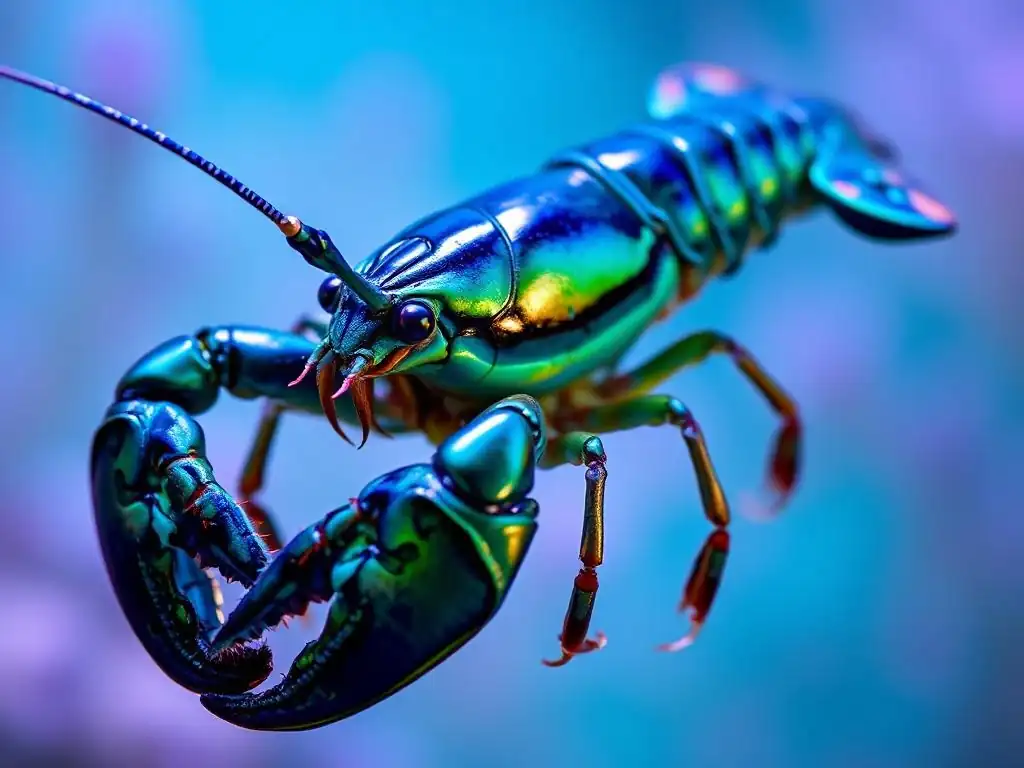
Crayfish possess highly developed olfactory senses, allowing them to detect dissolved chemicals in the water, akin to smelling. Their primary organs for olfaction are the antennules, the smaller pair of antennae located beneath the main antennae. These delicate appendages are covered with specialized chemoreceptors (aesthetascs) that can detect incredibly minute concentrations of chemical compounds. This enables them to locate food sources, such as decaying organic matter, detritus, or even live prey, from a significant distance, guiding them through the water column.
Beyond foraging, chemical cues play a paramount role in crayfish reproduction. Male crayfish can detect pheromones released by receptive females, which are specific chemical signals indicating readiness to mate. These pheromones act as invisible trails, guiding males towards potential partners across the aquarium. This sophisticated chemical communication is essential for species propagation and highlights the intricate nature of their crayfish aquarium sensory perception.
Chemoreceptors: How Crayfish "Taste" Their Environment
In addition to the antennules, crayfish have chemoreceptors distributed across various parts of their body, including their mouthparts, walking legs, and even their chelipeds (claws). These widespread receptors allow crayfish to "taste" objects and surfaces they come into direct contact with. This tactile chemoreception is crucial for close-range discrimination, enabling them to determine if a potential food item is palatable or if a surface is safe to burrow into.
For example, when a crayfish picks up a piece of detritus or a pellet, it will often bring it to its mouthparts, where a dense concentration of chemoreceptors provides detailed information about its chemical composition. This allows them to distinguish between edible and non-edible substances with remarkable accuracy. They can also "taste" the substrate, identifying areas that might contain buried food or be suitable for digging, demonstrating a very granular form of crayfish sensory perception.
Water Chemistry and Its Influence on Crayfish Sensory Abilities
The efficiency of a crayfish's chemical senses is profoundly influenced by water chemistry. Parameters such as pH, hardness, and the presence of pollutants can significantly impact the function of their chemoreceptors. For instance, extreme pH values (either too acidic or too alkaline) can denature the receptor proteins, effectively dulling their sense of smell and taste. Similarly, high concentrations of ammonia, nitrite, or heavy metals can irritate or even damage these delicate sensory structures.
Maintaining stable and optimal water parameters (e.g., pH between 7.0-8.0 for many common species, ammonia and nitrite at 0 ppm, and nitrates below 20 ppm) is therefore not just about general health, but also about ensuring their chemical senses operate at peak efficiency. Poor water quality can lead to a state where the crayfish struggles to locate food, identify mates, or detect potential threats, significantly impairing their overall crayfish aquarium sensory perception and leading to chronic stress.
Crayfish Tactile Senses: Exploring the Aquarium with Touch
Antennae and Sensory Hairs: The Crayfish's Touch Receptors
The long, whip-like antennae of the crayfish are their primary tactile organs, constantly sweeping the environment in front of them. These antennae are equipped with numerous mechanoreceptors that detect direct physical contact with objects, as well as changes in water currents. They act as sophisticated feelers, allowing the crayfish to navigate obstacles, identify the boundaries of their territory, and even locate potential prey or predators in murky water where vision might be limited.
Beyond the antennae, the entire exoskeleton of a crayfish is covered with various types of sensory hairs (setae). These hairs are particularly dense on their legs, claws, and tail. Each hair is connected to nerve endings and can detect subtle pressure changes, vibrations, and direct touch. This extensive network of mechanoreceptors provides the crayfish with a detailed, real-time tactile map of its immediate surroundings, enabling precise movements and interactions within its environment.
Substrate Exploration: How Crayfish Use Touch to Find Food
Crayfish are benthic creatures, spending much of their time on or within the substrate. Their tactile senses are indispensable for foraging in this environment. They routinely use their walking legs and chelipeds to sift through gravel, sand, or detritus. The sensory hairs on their legs and claws provide continuous feedback, allowing them to distinguish between different textures and identify potential food items buried beneath the surface.
For example, a crayfish might methodically probe the sand with its walking legs, using tactile cues to locate a hidden morsel of food, such as a sinking pellet or a small invertebrate. Once detected, the chelipeds are then used to manipulate and excavate the item. This intricate process, driven largely by touch, demonstrates how crucial their tactile crayfish sensory perception is for their feeding behavior and survival in the aquarium.
Crayfish Sensitivity to Vibration: Detecting Predators and Prey
Crayfish are remarkably sensitive to vibrations in the water, a form of remote tactile sensing. Specialized mechanoreceptors, including those within their statocysts (balance organs) and sensory hairs on their body surface, detect pressure waves and subtle movements in the surrounding water. This sensitivity allows them to perceive disturbances that could indicate the presence of a predator or the movement of potential prey.
A sudden, strong vibration, such as the approach of a larger fish or a sharp tap on the aquarium glass, can trigger an immediate defensive response, often a rapid tail-flip to propel them backward to safety. Conversely, the faint vibrations generated by a small snail or insect larva moving on the substrate can alert the crayfish to a potential meal. This acute vibratory crayfish aquarium sensory perception is a vital component of their predatory and anti-predatory strategies.
Crayfish Proprioception: Awareness of Body Position
Maintaining Balance and Orientation in the Aquarium
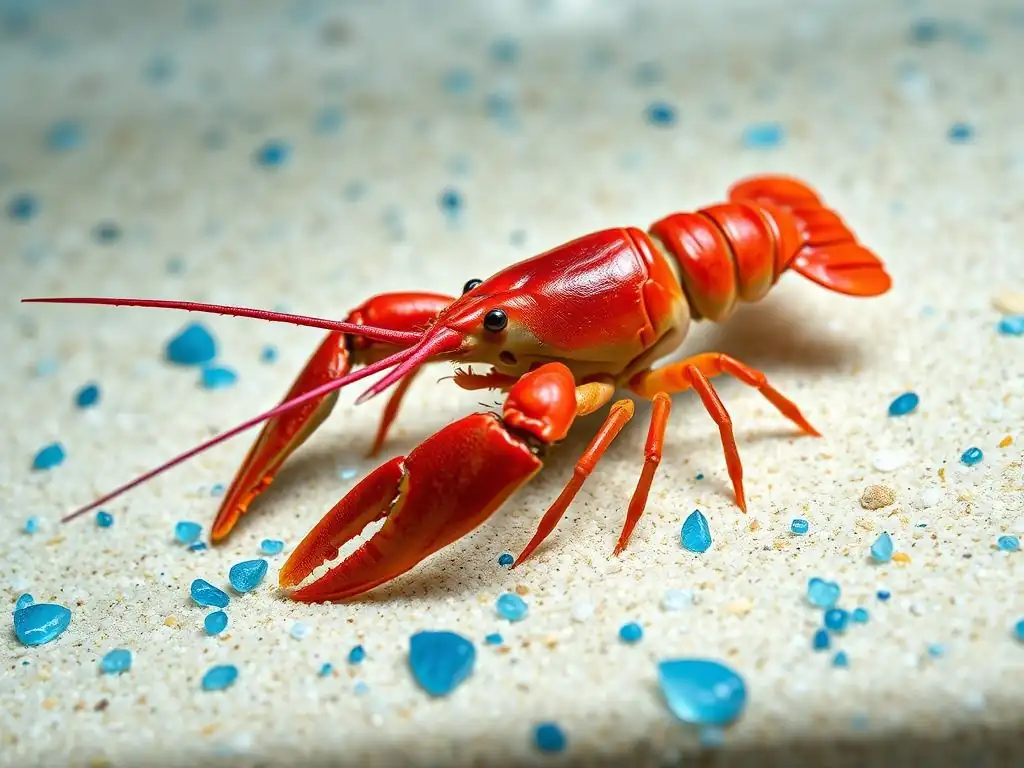
Proprioception is the sense of the relative position of one's own body parts and the strength of effort being employed in movement. For crayfish, this internal sense is crucial for maintaining balance and orientation in their aquatic environment. Located at the base of their antennules are statocysts, small sacs lined with sensory hairs and containing tiny mineral particles called statoliths. As the crayfish moves or changes position, these statoliths shift, stimulating the sensory hairs and providing continuous feedback on their body's orientation relative to gravity.
This internal compass allows crayfish to know if they are right-side up, upside down, or at an angle, even in complete darkness. It is essential for coordinated movements like walking on uneven surfaces, climbing, or even performing their rapid tail-flip escape maneuver. Without accurate proprioceptive input, a crayfish would struggle to maintain its equilibrium and navigate its surroundings effectively, highlighting a subtle yet vital aspect of crayfish sensory perception.
The Role of Proprioception in Crayfish Movement and Coordination
Proprioception is the unsung hero of crayfish locomotion and coordination. It provides the constant, subconscious feedback necessary for the precise control of their numerous legs, claws, and tail. As a crayfish walks across the varied terrain of an aquarium—over rocks, through plants, or across a sandy bottom—proprioceptors in their joints and muscles continuously inform their nervous system about the position and angle of each limb.
This allows them to adjust their gait, apply appropriate force, and maintain a stable posture. For instance, when climbing over a piece of driftwood, proprioception enables the crayfish to accurately place its legs and grip the surface, preventing falls. Similarly, during a powerful tail-flip, proprioceptive feedback ensures that the abdominal segments contract in a coordinated sequence for maximum thrust and directional control. This intricate sensory system underpins all their complex movements.
Crayfish Sensory Adaptations for Aquarium Life
Adapting to Artificial Lighting and Water Conditions
Crayfish exhibit a degree of sensory adaptation to the artificial conditions of an aquarium. While many species are naturally nocturnal or crepuscular, they can adjust their activity patterns to the aquarium's light cycle, often becoming more active during dim periods or after the lights go out. Their eyes possess some ability to adapt to varying light intensities, though prolonged exposure to very bright, unshaded light can still be a source of stress, leading to increased hiding.
Similarly, while stable water parameters are paramount for optimal sensory function, crayfish can adapt to a certain range of water hardness and pH levels, provided these parameters are consistent and within their species' tolerable limits. However, sudden fluctuations or chronic poor water quality (e.g., high ammonia) can overwhelm or damage their chemoreceptors, significantly impairing their crayfish aquarium sensory perception and overall health.
Utilizing Sensory Input to Find Food and Shelter
In the confined environment of an aquarium, crayfish skillfully integrate their various sensory inputs to locate essential resources. To find food, they primarily rely on their acute chemical senses to detect dissolved organic compounds from sinking pellets or decaying plant matter. Once a general area is identified, their tactile senses (antennae, legs) come into play for close-range exploration and manipulation of the substrate to pinpoint the exact location of the food item. Vision might be used to spot larger, stationary pieces or to detect movement of live prey.
For shelter, which is crucial for their security, crayfish combine tactile and visual cues. They will use their antennae and legs to probe crevices and explore potential hiding spots, seeking out snug, enclosed spaces. Visually, they are drawn to dark, shaded areas and silhouettes that signify a safe haven from perceived threats. This multi-sensory approach ensures they can efficiently find and utilize the hiding places provided in their aquarium.
Shelter Seeking Behavior: The Role of Tactile and Visual Cues
Shelter-seeking is a fundamental behavior for crayfish, driven by their instinct to avoid predators and find secure resting spots, especially during their inactive periods. This behavior is heavily influenced by their tactile and visual senses. When a crayfish feels exposed or threatened, it will actively search for a safe refuge. Tactile cues, provided by their antennae and sensory hairs on their legs, guide them into tight spaces, under rocks, or into burrows that offer physical protection and a sense of enclosure.
Visually, crayfish are attracted to dark areas and shadows. A cave, a dense plant thicket, or even a piece of PVC pipe appears as a desirable hiding spot due to its visual obscurity. The combination of feeling a confined space and seeing a dark, protected area reinforces their perception of safety. Providing ample, varied hiding spots in the aquarium directly caters to this crucial aspect of their crayfish aquarium sensory perception and is vital for their well-being.
Optimizing Your Aquarium for Crayfish Sensory Wellbeing
Providing Appropriate Lighting and Hiding Places
To cater to a crayfish's sensory needs, especially their light sensitivity, it is crucial to provide appropriate lighting. A subdued light cycle, typically 8-10 hours of moderate intensity, is generally preferred over very bright, prolonged illumination. Using LED lights with adjustable dimmers or ensuring ample floating plants can help create shaded areas. This allows crayfish to remain active during light hours without feeling overexposed.
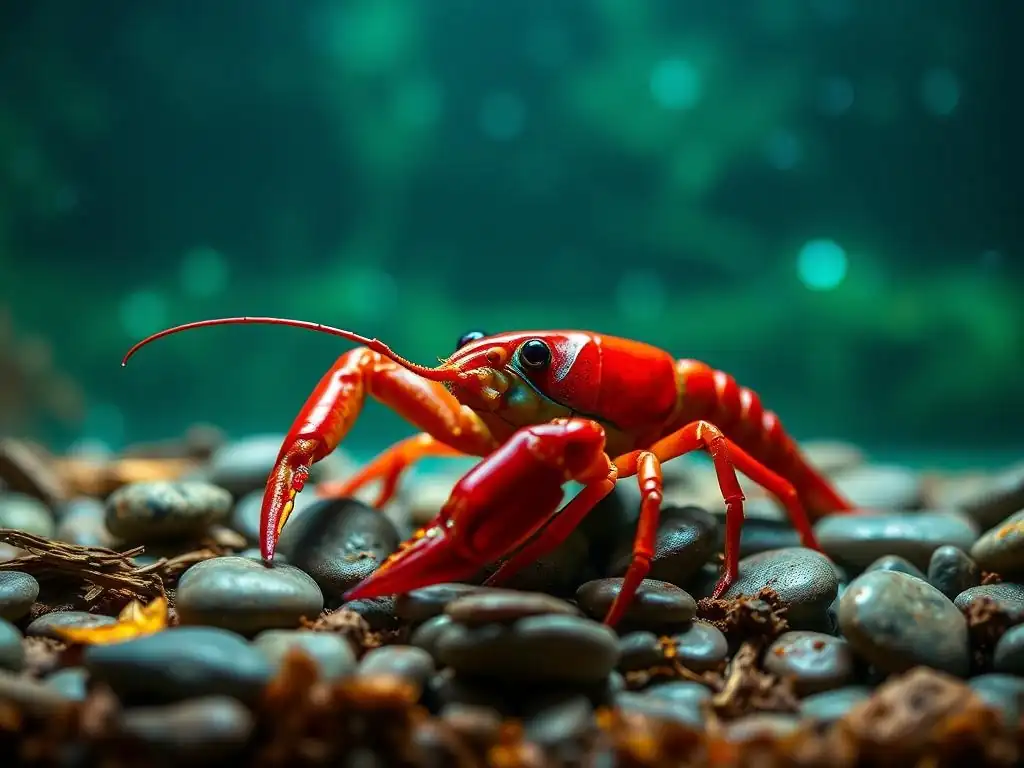
Equally important is the provision of numerous and varied hiding places. Crayfish thrive when they have multiple options for retreat. This includes ceramic caves, PVC pipes, driftwood with crevices, rock formations, and dense thickets of live or artificial plants. These shelters cater to their tactile preference for enclosed spaces and their visual attraction to dark, secure areas, significantly reducing stress and enhancing their crayfish sensory perception by providing a sense of security.
Maintaining Optimal Water Quality for Sensory Reception
Optimal water quality is paramount for ensuring the efficient functioning of a crayfish's chemical senses. Regular water testing for ammonia, nitrite, nitrate, pH, general hardness (GH), and carbonate hardness (KH) is essential. Ammonia and nitrite should always be at 0 ppm, and nitrates kept below 20 ppm through consistent weekly water changes (e.g., 25%). The pH should be stable and within the species' preferred range (e.g., 7.0-8.0 for many common species).
Poor water quality, particularly the accumulation of nitrogenous waste, can overwhelm or damage the delicate chemoreceptors on their antennae and body, effectively "blinding" their sense of smell and taste. Clean, well-oxygenated water ensures that chemical signals (from food, mates, or threats) are transmitted clearly and effectively, allowing the crayfish's crayfish aquarium sensory perception to operate at its best.
Providing Variety in Substrate and Decor
Enriching the aquarium environment with varied substrate and decor elements significantly enhances a crayfish's sensory experience. For substrate, a mix of fine sand in some areas for burrowing and slightly larger gravel or small river stones in others provides diverse tactile stimulation. Crayfish enjoy sifting through sand with their legs, a behavior that engages their tactile senses and mimics natural foraging.
Incorporating diverse decor elements like driftwood, smooth river stones, and live or artificial plants offers a multitude of textures and surfaces for exploration. Driftwood provides climbing opportunities and crevices, while stones offer different tactile sensations. Live plants, in addition to providing shelter, contribute to the water chemistry and offer complex visual and tactile landscapes. This variety encourages natural behaviors and stimulates their tactile, visual, and chemical crayfish sensory perception.
Common Misconceptions About Crayfish Sensory Perception
Debunking Myths About Crayfish Vision and Hearing
A common misconception is that crayfish possess sharp, detailed vision comparable to that of fish or humans. In reality, their compound eyes are primarily adapted for detecting movement and changes in light intensity across a wide field of view, rather than for high-resolution imaging or discerning intricate patterns. They do not "recognize" individual people or complex shapes in the way a pet dog might. Their visual world is more about shadows, motion, and general outlines, which is key to their crayfish aquarium sensory perception.
Another prevalent myth is that crayfish can "hear" in the traditional sense, like detecting airborne sound waves. While they are incredibly sensitive to vibrations transmitted through the water, which some might colloquially refer to as "hearing," they lack specialized auditory organs for detecting complex sound frequencies or airborne sounds. Their perception of vibration is a form of mechanoreception, distinct from true hearing, and is crucial for detecting movements of predators or prey in their aquatic environment.
Understanding the Limits of Crayfish Sensory Capabilities
While crayfish possess highly effective sensory systems for their specific ecological niche, it is important to understand their limitations. For instance, their chemical senses, though acute, can be overwhelmed or impaired by poor water quality, making it difficult for them to locate food or mates. Similarly, their vision, while excellent for motion detection, is poor in conditions of extreme darkness or excessive brightness, and they cannot perceive colors as vividly or broadly as humans.
Their world is largely perceived through a nuanced blend of chemical gradients, direct tactile feedback, and the detection of subtle movements and vibrations, rather than a rich tapestry of detailed visuals and complex sounds. Understanding these inherent limits of crayfish sensory perception allows aquarists to provide more appropriate care, avoiding unrealistic expectations of their abilities and designing an environment that truly caters to their actual sensory needs.
Conclusion: Enhancing the Crayfish Aquarium Experience Through Sensory Awareness
Frequently Asked Questions
How do crayfish primarily sense their environment in an aquarium?
Crayfish rely heavily on their antennae and antennules for sensing their environment. These are covered in sensitive hairs that detect chemical cues and vibrations in the water.
Can crayfish see well in an aquarium?
Crayfish vision is generally considered poor compared to their other senses. They can detect movement and light changes, but their visual acuity is limited.
Do crayfish have a good sense of smell in an aquarium?
Yes, crayfish have a strong sense of smell, which is crucial for locating food and detecting predators. Their antennae are equipped with specialized receptors for detecting chemical signals in the water.
How do crayfish detect vibrations in their aquarium?
Crayfish possess specialized sensory hairs called sensilla that are sensitive to vibrations. These hairs are located on their antennae, legs, and body, allowing them to detect movement and changes in water pressure.
Are crayfish sensitive to light levels in an aquarium?
Yes, crayfish are typically more active during lower light conditions. Providing hiding places allows them to escape bright light, which can cause them stress.
Final Reflection: Unveiling the Crayfish's Sensory World
The exploration of crayfish aquarium sensory perception reveals a hidden world within our own, a world where touch, taste, and chemical cues paint a vibrant picture far beyond our immediate understanding. This understanding isn't just academic; it's crucial for responsible aquarium keeping, allowing us to create environments that truly cater to the complex needs of these fascinating creatures.
This journey into the sensory landscape of crayfish has profoundly changed how I view these often-overlooked inhabitants of our aquariums. It underscores the importance of empathy and informed decision-making in animal care, reminding us that even seemingly simple creatures possess intricate sensory experiences. The question is not, 'Can they reason?' nor, 'Can they talk?' but rather, 'Can they suffer?'
- Jeremy Bentham. This quote resonates deeply, urging us to consider the sensory well-being of every creature under our care.
Now, armed with this newfound knowledge, I invite you to reflect on your own aquarium practices. Consider the sensory environment you've created for your crayfish. Are you providing ample opportunities for exploration, tactile stimulation, and chemical communication? By consciously designing your aquariums with their sensory perception in mind, you can unlock a deeper connection with these incredible animals and ensure their well-being for years to come.
Unleash Your Crayfish Understanding!
Thank you for diving into the sensory world of crayfish! We hope you now have a better understanding of how these fascinating creatures experience their environment. Ready to deepen your knowledge and improve your aquarium?
Here's what you can do next:
- Observe your crayfish's behavior near different aquarium features. Does it react differently to a bubbler versus a rock?
- Share this article with fellow aquarium enthusiasts to spark a discussion about crayfish care.
- Brainstorm and test new enrichment ideas to enhance your crayfish's sensory experiences in the aquarium.
What innovative enrichment idea will you try first to stimulate your crayfish's senses?