🌿 Freshwater Plant Care: Lighting, Substrate, CO2, Fertilizers & Propagation
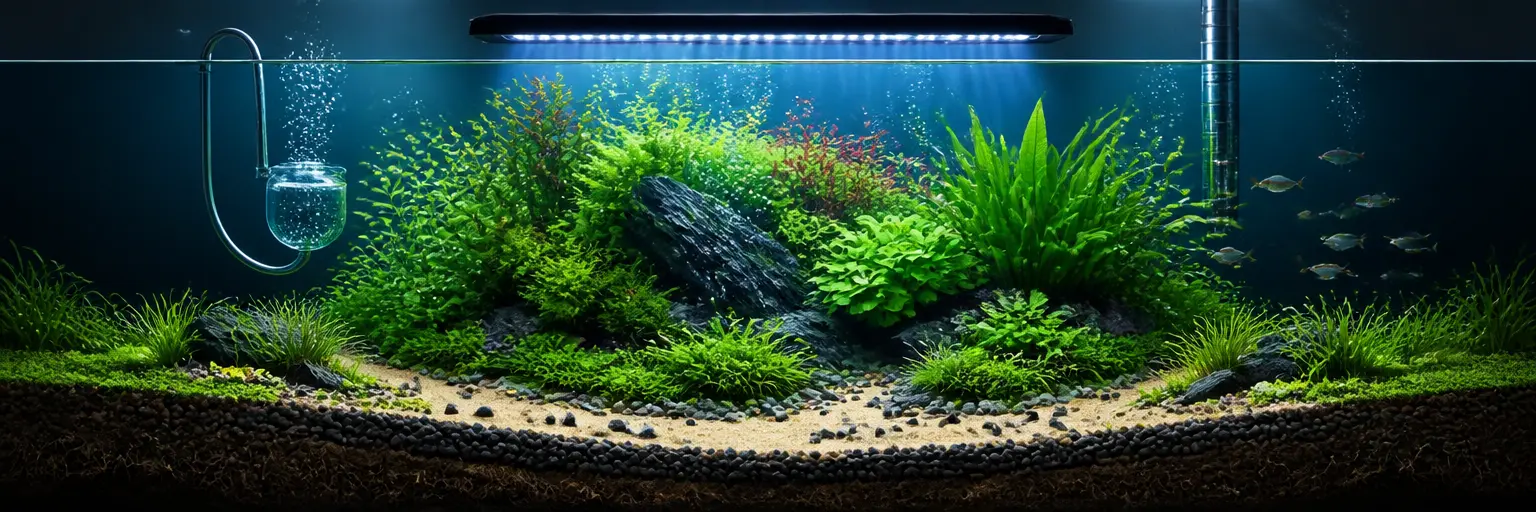
Build a thriving planted aquarium with expert guidance from Aquarium Mastery. This freshwater plant care subcategory explains how to choose aquarium lighting, prepare nutrient-rich substrate, balance CO2 injection, use fertilizers safely, and propagate aquatic plants successfully. Whether you are creating a beginner-friendly low-tech aquarium or an advanced high-tech aquascape, you will find practical information for growing healthy freshwater aquarium plants, preventing algae, and maintaining stable water conditions.
💡 Aquarium Lighting for Healthy Freshwater Plants
Learn how aquarium lighting affects photosynthesis, plant growth, coloration, and algae control. Our guides cover LED aquarium lights, light intensity, color temperature, photoperiods, PAR, and lighting schedules for beginner planted tanks, low-light plants, carpeting species, stem plants, and demanding red aquatic plants.
Readers can expect practical advice on choosing the right freshwater planted tank light and adjusting brightness without stressing fish or encouraging excessive algae. Discover how to recognize signs of too much or too little light, create a consistent lighting routine, and match lighting levels with CO2 availability, plant selection, and aquarium depth.
🪨 Substrate and Root Nutrition for Aquatic Plants
Explore the differences between aquarium soil, inert gravel, sand, and nutrient-rich planted tank substrates. Learn how substrate type influences root development, water chemistry, planting stability, and the long-term health of rooted plants such as Amazon swords, crypts, vallisneria, and carpeting plants.
These resources explain how to layer or prepare aquarium substrate, prevent anaerobic areas, and use root tabs effectively. You will also learn how to plant aquatic species correctly, avoid uprooting, and choose a substrate that supports both attractive aquascaping and reliable freshwater aquarium plant growth.
🫧 CO2 Injection and Carbon Management
Understand how carbon availability influences photosynthesis and growth in planted aquariums. Our CO2 guides cover pressurized CO2 systems, regulators, diffusers, bubble rates, drop checkers, and DIY alternatives, helping aquarists select a setup that suits their tank size, plant demands, and experience level.
Safety and stability are essential when adding CO2 to an aquarium. Learn how to coordinate CO2 injection with lighting, measure approximate concentration, protect fish and shrimp from dangerous fluctuations, and troubleshoot issues such as poor plant growth, surface agitation, or inconsistent CO2 distribution.
🧪 Fertilizers and Aquarium Plant Nutrients
Find clear guidance on the essential nutrients required by freshwater aquatic plants, including nitrogen, phosphorus, potassium, iron, and trace elements. Articles explain the difference between all-in-one aquarium fertilizers, liquid fertilizers, root tabs, and individual nutrient dosing for low-tech and high-tech planted tanks.
Learn how to build a practical fertilization routine based on plant mass, lighting, CO2 levels, fish waste, and water changes. Our advice helps prevent nutrient deficiencies while avoiding unnecessary dosing that may contribute to algae blooms. Discover how to identify yellow leaves, pinholes, translucent foliage, and slow growth.
✂️ Propagating and Pruning Freshwater Aquarium Plants
Master the techniques used to multiply popular aquatic plants and maintain an attractive aquascape. You will find guidance on stem plant cuttings, runners, rhizome division, daughter plants, bulbs, and tissue culture, with advice for species such as java fern, anubias, cryptocoryne, dwarf sag, carpeting plants, and fast-growing stems.
Proper pruning encourages bushier growth, improves water circulation, and keeps plants from shading one another. Learn where to make cuts, how to replant healthy trimmings, how to prevent rhizome plants from rotting, and how to quarantine or clean new plants before adding them to a freshwater aquarium.
🌱 Low-Tech and High-Tech Planted Aquarium Strategies
Compare low-tech planted tanks that rely on moderate lighting and natural carbon availability with high-tech aquariums using strong lights, pressurized CO2, and intensive fertilization. This section helps beginners choose manageable plants while giving experienced aquascapers a framework for growing demanding species.
Expect recommendations for balancing light, CO2, nutrients, substrate, and maintenance rather than treating each factor separately. By understanding this balance, aquarists can create more stable planted aquariums, reduce algae problems, and select equipment that matches their goals and maintenance schedule.
🦠 Troubleshooting Plant Growth and Algae Problems
Diagnose common freshwater plant problems, including melting leaves, yellow foliage, holes, algae-covered leaves, stunted growth, uprooting, and melting crypts. Our troubleshooting content connects visible symptoms with possible causes such as nutrient deficiencies, unstable CO2, poor circulation, unsuitable lighting, or sudden changes in water parameters.
Readers will find practical steps for restoring plant health without making multiple uncontrolled changes at once. Learn how to perform consistent water changes, clean equipment, remove damaged leaves, adjust the lighting period, improve circulation, and maintain healthy conditions for fish, shrimp, beneficial bacteria, and aquatic plants.
❓ Frequently Asked Questions About Freshwater Plant Care
🌿 What do freshwater aquarium plants need to grow?
Freshwater aquarium plants need suitable lighting, carbon from CO2 or natural sources, essential nutrients, stable water parameters, and an appropriate planting environment. The correct combination depends on the plant species and whether the aquarium is low-tech or high-tech.
💡 How many hours should aquarium lights be on?
Most planted aquariums can begin with approximately 6 to 8 hours of light per day. Adjust the photoperiod according to plant response and algae growth. A consistent timer schedule is usually more effective than leaving aquarium lights on for long, irregular periods.
🫧 Is CO2 necessary for a planted aquarium?
CO2 is not always necessary, especially for low-light, low-tech plants such as anubias, java fern, and some cryptocoryne species. However, pressurized CO2 can significantly improve growth, density, and coloration when using demanding plants or strong aquarium lighting.
🧪 How often should I fertilize aquarium plants?
Fertilization frequency depends on plant quantity, lighting, CO2, substrate, fish stocking, and water changes. Follow the product instructions, begin conservatively, and observe plant growth. Regular testing and consistent maintenance are safer than excessive fertilizer dosing.
✂️ How do I propagate aquatic plants?
Propagation methods vary by species. Stem plants are usually multiplied by cutting and replanting healthy tops, while runners produce new plantlets. Rhizome plants such as anubias and java fern can be divided, but their rhizomes should remain above the substrate to prevent rot.