
The Fascinating Locomotion of Freshwater Snails: How Do They Glide So Smoothly?

Welcome to Aquarium Mastery!
Ever wondered how those Freshwater snails seem to effortlessly glide across the glass of your aquarium? Prepare to be amazed! This article dives deep into the fascinating world of Freshwater snail gliding techniques, uncovering the secrets behind their seemingly magical locomotion. Ready to unlock the mysteries of their smooth moves? Let's explore!
- The Fascinating Locomotion of Nerite Snails: How Do They Glide So Smoothly?
- Introduction to Nerite Snail Movement
- The Anatomy Behind the Glide: Snail Foot Morphology
- Nerite Snail Gliding Techniques Explained
- Factors Affecting Nerite Snail Gliding Performance
- Comparing Nerite Snail Movement to Other Aquatic Creatures
- Observing Nerite Snail Gliding in Your Aquarium
- Potential Problems and Solutions Related to Snail Locomotion
- Enhancing Nerite Snail Gliding: Tips for Aquarium Keepers
- Conclusion: Appreciating the Marvel of Nerite Snail Gliding
-
Frequently Asked Questions
- How do freshwater snails achieve their smooth gliding locomotion?
- What is the role of mucus in freshwater snail gliding techniques?
- Do all freshwater snails use the same gliding techniques?
- Can the aquarium environment affect a snail's ability to glide?
- What can I do to optimize my freshwater snail's gliding in my aquarium?
- Final Reflection: The Silent Symphony of Snail Movement
- Unlock the Secrets: Start Your Own Snail-Powered Aquarium Adventure!
The Fascinating Locomotion of Nerite Snails: How Do They Glide So Smoothly?
Introduction to Nerite Snail Movement
Understanding the Unique World of Nerite Snail Locomotion
Nerite snails are among the most popular and beneficial invertebrates in freshwater aquariums, renowned for their incredible algae-eating capabilities and striking shell patterns. Beyond their aesthetic appeal, their method of movement is a marvel of biological engineering. Unlike fish that swim or shrimp that dart, Nerite snails employ a unique, smooth gliding motion across surfaces, seemingly defying gravity as they scale aquarium glass or navigate driftwood. This distinctive form of freshwater snail gliding techniques allows them to efficiently graze on biofilm and algae, playing a crucial role in tank maintenance.
This intricate locomotion is achieved through a specialized muscular foot and the strategic production of a unique mucus. The foot, a powerful organ, undulates rhythmically, while the mucus acts as both an adhesive and a lubricant, enabling the snail to adhere firmly to various substrates while simultaneously reducing friction for forward propulsion. Understanding these fundamental freshwater snail gliding techniques not only deepens our appreciation for these creatures but also provides insights into their overall health and environmental needs within the aquarium ecosystem.
Why Nerite Snail Gliding Techniques Are Important for Aquarium Keepers
For responsible aquarium keepers, observing the freshwater snail gliding techniques of their Nerites offers valuable insights into their well-being. A healthy Nerite snail will exhibit consistent, smooth movement, actively exploring its environment and grazing on surfaces. Conversely, sluggishness, erratic movements, or an inability to adhere to surfaces can be early indicators of stress, poor water quality, or nutritional deficiencies. For example, a snail constantly falling off the glass might be experiencing calcium deficiency, impacting its ability to produce effective adhesive mucus.
Beyond health monitoring, understanding their locomotion influences tank design and maintenance. Knowing how Nerite snails glide helps in selecting appropriate substrates and décor that facilitate their movement and grazing habits. Fine sand or smooth rocks, for instance, are generally more conducive to efficient gliding performance than jagged gravel. Furthermore, ensuring a stable and clean environment directly supports the muscular function and mucus production essential for their characteristic smooth glide, making their care more effective and rewarding.
The Anatomy Behind the Glide: Snail Foot Morphology
The Muscular Foot: The Engine of Nerite Snail Locomotion
At the heart of Nerite snail locomotion is their ventral muscular foot, a highly adaptable organ that serves as their primary means of propulsion. This broad, flattened structure is composed of dense, interwoven muscle fibers that allow for complex contractions and expansions. When observed closely, the foot does not simply slide; rather, it generates rhythmic waves of muscular contraction that travel along its length, creating a series of tiny, temporary adhesions and releases against the surface. These coordinated muscular actions are the fundamental "engine" driving their unique freshwater snail gliding techniques.
The power and flexibility of the muscular foot enable Nerite snails to adhere to and move across a wide variety of surfaces, including smooth glass, rough rocks, and delicate plant leaves. This muscular strength is particularly evident when a snail is dislodged from a surface; it can quickly re-adhere with surprising tenacity. The precise control over these muscle contractions is crucial for their ability to navigate complex underwater landscapes, making their gliding performance both efficient and remarkably versatile within the aquarium environment.
Mucus Production: The Key to Smooth Gliding in Nerite Snails
While the muscular foot provides the power, mucus production is the secret to the Nerite snail's smooth, almost effortless glide. Located primarily at the anterior (front) end of the foot, specialized pedal glands continuously secrete a layer of viscous, protein-rich mucus onto the substrate. This mucus serves a dual, critical purpose: it acts as a powerful adhesive, allowing the snail to maintain a firm grip even on vertical surfaces, and simultaneously as a lubricant, reducing friction as the snail propels itself forward. Without this mucus, the freshwater snail gliding techniques would be impossible.
The rheological properties of snail mucus are fascinating; it exhibits thixotropy, meaning its viscosity changes under stress. When the snail applies pressure, the mucus temporarily thins, allowing for easier movement. When the pressure is released, it thickens again, providing strong adhesion. This dynamic property ensures that the snail can both grip and glide efficiently. A healthy snail will produce a clear, consistent trail of mucus, indicating optimal hydration and nutrient levels, which are vital for maintaining effective gliding performance.
Shell Dynamics: How the Shell Influences Snail Movement
While not directly involved in propulsion, the Nerite snail's shell plays an important role in its overall gliding performance and stability. The shell, though seemingly a passive protective structure, influences the snail's center of gravity and leverage as it moves. A well-proportioned shell provides a stable platform for the foot to operate efficiently, allowing the snail to maintain balance, especially when navigating inclines or uneven surfaces. For instance, the low, broad shell typical of many Nerite species provides a stable base, reducing the likelihood of tipping over during movement.
Snails can subtly adjust the position of their shell relative to their foot to optimize balance and leverage during different movements. When climbing vertically, for example, a snail might slightly tilt its shell to distribute its weight more effectively and maintain a secure grip. Conversely, a damaged or overgrown shell can impede movement, making it more challenging for the snail to maneuver or maintain its balance, thereby affecting its overall freshwater snail gliding techniques. This interplay between shell and foot highlights the integrated nature of snail anatomy in their locomotion.
Nerite Snail Gliding Techniques Explained
Pedal Waves: The Mechanics of Snail Movement
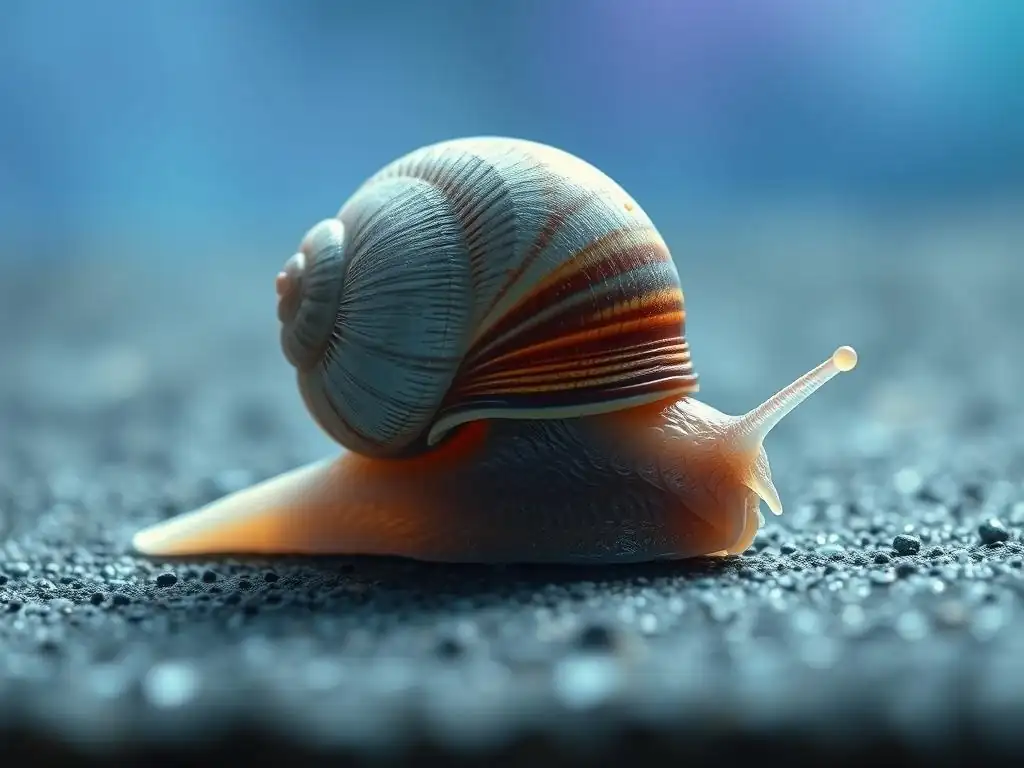
The primary mechanism behind Nerite snail locomotion is the generation of "pedal waves" along the sole of their muscular foot. These waves are not simply smooth glides but rather rhythmic contractions and expansions of the foot's muscles that propagate from the posterior (rear) to the anterior (front) end, or vice versa, depending on the type of wave.
As a wave passes, a small section of the foot is lifted slightly from the substrate and then pressed down again, creating a point of temporary adhesion. This sequential lifting and pressing, combined with the adhesive mucus, effectively pulls or pushes the snail forward.
For Nerite snails, this process is incredibly efficient for their lifestyle. Each wave creates a tiny, forward thrust, and the continuous succession of these waves results in their characteristic smooth, deliberate movement. The frequency and amplitude of these pedal waves can vary depending on the snail's urgency, the substrate type, and its physiological state. This intricate coordination of muscle and mucus allows for continuous grazing and exploration, making their freshwater snail gliding techniques perfectly adapted to their environment.
Direct and Retrograde Waves and Their Impact on Gliding Speed
Gastropods, including Nerite snails, primarily employ two types of pedal waves: direct waves and retrograde waves. In direct waves, the wave of muscular contraction moves in the same direction as the snail's overall body movement. This is the most common form of locomotion observed in Nerite snails when they are moving forward, allowing for a steady and continuous glide. As a wave travels from back to front, the snail is effectively pulled along, with the areas of the foot not involved in the current wave maintaining adhesion.
Retrograde waves, conversely, involve waves of contraction moving in the opposite direction to the snail's body movement. While some gastropods use retrograde waves for specific maneuvers or backward movement, Nerite snails predominantly utilize direct waves for their characteristic forward gliding performance. The speed of a Nerite snail is inherently slow, typically ranging from a few millimeters to a couple of centimeters per minute, depending on the surface and motivation. This slow, deliberate pace is optimized for continuous grazing on microscopic algae and biofilm, rather than rapid escape.
Nerite snails demonstrate remarkable adaptability in their freshwater snail gliding techniques when encountering obstacles within the aquarium. Their muscular foot, coupled with their adhesive mucus, allows them to navigate surprisingly complex terrains. When faced with a small pebble or a slight elevation, the snail will adjust the contours of its foot, effectively molding itself around the obstruction. The pedal waves continue, but their localized application becomes more precise, enabling the snail to "climb" over the impediment.
For larger obstacles, such as driftwood or rocks with significant crevices, Nerite snails can extend and retract portions of their foot, probing the surface to find optimal points of adhesion. They can even adhere to and move along vertical surfaces, including the aquarium glass, with ease, thanks to the strong adhesive properties of their mucus. This ability to adapt their gliding performance to varying surfaces is crucial for their foraging behavior, ensuring they can access algae in almost any part of the tank, making them highly effective cleaners.
Factors Affecting Nerite Snail Gliding Performance
Substrate Type: How Tank Surfaces Impact Snail Locomotion
The type of substrate in an aquarium significantly influences a Nerite snail's gliding performance. Smooth, fine-grained substrates like sand or polished river stones provide ideal surfaces for their muscular foot to generate efficient pedal waves and maintain consistent adhesion. On such surfaces, the snail's mucus can form a continuous, even layer, minimizing friction and allowing for a smoother, more energy-efficient glide. For example, a Nerite snail might traverse a smooth glass panel at a rate of 1-2 cm per minute, whereas on a rougher surface, its speed might be halved.
Conversely, very coarse or sharp gravel can impede a snail's movement. The irregular surfaces make it difficult for the snail's foot to establish full contact and generate effective pedal waves, potentially leading to jerky movements or even minor abrasions on the delicate foot. While Nerites are remarkably adaptable, prolonged exposure to overly abrasive substrates can cause stress or injury, impacting their ability to forage effectively and demonstrating the limitations on their freshwater snail gliding techniques.
Water Parameters: The Influence of Water Chemistry on Gliding Efficiency
Optimal water parameters are paramount for healthy Nerite snail locomotion, as they directly impact the snail's physiological functions, including muscular activity and mucus production. Nerite snails thrive in stable conditions with a pH between 7.0 and 8.5, moderate to hard water (GH 8-18 dGH, KH 5-15 dKH), and temperatures ranging from 72-80°F (22-27°C). Calcium and alkalinity are particularly crucial, as they are essential for shell health and the production of robust, adhesive mucus.
Poor water quality, such as elevated ammonia or nitrite levels, or insufficient calcium, can severely impair a snail's vitality. For instance, a lack of calcium can lead to a weakened shell and an inability to produce adequate, high-quality mucus, resulting in reduced adhesion and sluggish gliding performance. Similarly, extreme temperature fluctuations or highly acidic water can stress the snail, causing it to retract its foot, become inactive, or exhibit erratic freshwater snail gliding techniques. Regular water testing and appropriate water changes are vital to support their natural movement patterns.
The Impact of Algae and Biofilm on Snail Movement
Nerite snails are voracious grazers, and the presence of a healthy layer of algae and biofilm on aquarium surfaces is critical not only for their nutrition but also for facilitating their freshwater snail gliding techniques. The microscopic texture provided by algae and biofilm offers a suitable surface for the snail's foot to grip, allowing for efficient propulsion. In a well-established tank, the consistent growth of green and brown algae provides both a food source and an ideal medium for their pedal waves to engage.
However, an excessive or unhealthy buildup of certain types of algae or cyanobacteria (often misidentified as "blue-green algae") can sometimes hinder movement. While Nerites will graze on these, an overly thick, slimy layer might make it difficult for the snail's foot to establish proper adhesion, potentially leading to slipping or reduced gliding performance. Ensuring a balanced ecosystem where algae growth is healthy but not overwhelming contributes positively to the snail's ability to move freely and effectively.
Comparing Nerite Snail Movement to Other Aquatic Creatures
Snail Gliding vs. Fish Swimming: A Comparative Analysis
The locomotion of Nerite snails stands in stark contrast to the swimming mechanisms of fish. Fish, being vertebrates, primarily use their muscular bodies and fins to propel themselves through the water column, relying on buoyancy control to maintain depth. Their movement is typically fast, agile, and three-dimensional, allowing for rapid evasion or pursuit. For example, a cardinal tetra can dart several feet in seconds, while a Nerite snail might cover only a few inches in the same timeframe.
Snail gliding, on the other hand, is a slow, deliberate, and primarily two-dimensional process, dependent on direct contact with a surface. It's an adaptation for continuous grazing on static food sources like algae and biofilm, where speed is less critical than persistent adhesion and efficient energy use. While a fish expends significant energy in bursts of speed, a snail's freshwater snail gliding techniques are highly energy-efficient for sustained, low-speed foraging, highlighting divergent evolutionary paths optimized for vastly different aquatic niches.
Nerite Snail Locomotion vs. Ramshorn Snail Locomotion
While both Nerite snails and Ramshorn snails are freshwater gastropods that employ a muscular foot and mucus for locomotion, there are subtle differences in their freshwater snail gliding techniques. Nerite snails, with their typically broader, more robust foot and often flatter shell, tend to exhibit a very consistent, smooth, and deliberate glide. Their pedal waves are generally uniform, leading to a steady forward progression, particularly evident when they are meticulously grazing on flat surfaces like glass or large leaves.
Ramshorn snails (e.g., Planorbella species), while also gliding, sometimes display a slightly more varied or "jerky" movement, especially when moving quickly or navigating complex textures. Some Ramshorn species may exhibit a more pronounced "inchworm-like" or "looping" motion, where the anterior and posterior ends of the foot are alternately lifted and adhered. While both are highly effective grazers, the Nerite's consistent, unhurried gliding performance is often perceived as smoother due to their more uniform pedal wave patterns.
The Evolutionary Significance of Snail Gliding
The unique freshwater snail gliding techniques represent a highly successful evolutionary adaptation that has allowed gastropods to colonize and thrive in diverse aquatic and terrestrial environments. This form of locomotion provides several key advantages. Firstly, it offers exceptional adhesion, enabling snails to cling securely to surfaces in challenging conditions, such as turbulent currents in rivers or strong wave action in coastal areas, preventing them from being swept away.
Secondly, gliding allows for continuous, efficient grazing on sessile food sources like algae, detritus, and biofilm, which are often thinly spread across surfaces. The slow, methodical movement ensures thorough foraging. This evolutionary innovation has allowed snails to exploit ecological niches inaccessible to many other aquatic creatures, showcasing the remarkable versatility and robustness of their gliding performance over millions of years of adaptation.
Observing Nerite Snail Gliding in Your Aquarium
Setting Up an Optimal Environment for Observing Snail Movement
To fully appreciate the intricate freshwater snail gliding techniques of your Nerite snails, setting up an optimal observation environment within your aquarium is key. Ensure your tank glass is clean and free of excessive mineral deposits, providing clear viewing. Incorporate varied surfaces such as smooth river stones, pieces of driftwood, and broad-leafed aquatic plants (e.g., Anubias, Java Fern) as these offer different textures for the snails to explore and move across. Good, consistent lighting will also enhance visibility.
Consider strategically placing a small algae wafer or a blanched vegetable slice (like zucchini or cucumber) on a vertical surface, such as the aquarium glass, or on a flat rock. This encourages the snails to move towards the food source, allowing you to observe their adherence, pedal waves, and overall gliding performance up close. A magnifying glass can further enhance the details of their muscular foot in action.
Identifying Different Gliding Patterns in Your Aquarium Snails
Observing your Nerite snails regularly can help you identify healthy freshwater snail gliding techniques versus signs of distress. A healthy snail will typically exhibit a continuous, steady glide, with its foot fully extended and firmly adhered to the surface. It will move with purpose, actively grazing or exploring. You might notice the subtle ripple of the pedal waves moving along the foot's sole. Their movement should be fluid, without sudden stops or frequent falls from surfaces.
Conversely, signs of abnormal movement include jerky, uncoordinated glides, frequent retraction of the foot, prolonged inactivity, or repeatedly falling off the glass or décor. If a snail struggles to adhere, leaves a broken or inconsistent mucus trail, or remains stationary for extended periods, it could indicate underlying health issues such as poor water quality, nutritional deficiencies (especially calcium), or illness. Prompt identification of these abnormal gliding patterns allows for timely intervention.
Understanding Nerite Snail Gliding Characteristics
The characteristic freshwater snail gliding techniques of Nerites are defined by their slow, methodical pace and impressive adhesive capabilities. While they won't win any races, their consistent movement allows them to effectively graze large areas of the aquarium. A typical Nerite snail might move at a speed of approximately 0.5 to 2 centimeters per minute, depending on the surface texture and the presence of food. This seemingly slow speed is an adaptation for thorough, continuous feeding.
Their ability to climb vertical surfaces and even glide upside down along the water's surface film showcases the remarkable efficiency and adhesive power of their pedal mucus. Understanding these inherent gliding characteristics helps aquarists set realistic expectations for their snails' activity levels and appreciate the subtle yet effective nature of their locomotion. A snail that is consistently active, even if slow, is generally a healthy snail.
When Snail Gliding Becomes Erratic: Identifying Underlying Issues
If your Nerite snail's freshwater snail gliding techniques become erratic, sluggish, or if it frequently falls off surfaces, it's a strong indicator of an underlying problem. Common symptoms include:
- Inability to adhere to glass or décor.
- Jerky, uncoordinated movements or constant slipping.
- Prolonged periods of inactivity or withdrawal into the shell.
- Foot appearing shriveled or discolored.
These issues often point to environmental stress, nutritional deficiencies, or illness. For instance, a snail that suddenly stops moving or falls frequently may be suffering from ammonia or nitrite poisoning, or a severe calcium deficiency impacting its shell and mucus production.
If you suspect your substrate is impeding your Nerite snail's gliding performance, there are several solutions. If your tank contains very coarse or sharp gravel, consider adding smoother elements. Introducing flat, smooth river stones, ceramic tiles, or even a section of fine aquarium sand can provide more suitable surfaces for the snails to move across. A mixed substrate can offer variety without a complete overhaul.
Ensure the substrate is regularly cleaned to prevent excessive detritus buildup, which can create uneven surfaces or harbor anaerobic bacteria that might release harmful compounds. While Nerite snails will graze on biofilm on the substrate, a thick layer of sludge can make movement more challenging and hinder their efficient freshwater snail gliding techniques. Regular gravel vacuuming or stirring of sand (if applicable) can mitigate these issues.
Managing Water Quality Issues Affecting Snail Locomotion
Poor water quality is a leading cause of impaired freshwater snail gliding techniques. To address this, consistent water testing is paramount. Regularly check levels of ammonia, nitrite, nitrate, pH, general hardness (GH), and carbonate hardness (KH). For Nerite snails, maintaining stable parameters within their optimal range (e.g., pH 7.0-8.5, GH 8-18 dGH, KH 5-15 dKH) is crucial.
If test results indicate issues (e.g., high ammonia/nitrite, low pH, low GH/KH), prompt action is required. Perform partial water changes (25-50%) to dilute toxins. If calcium or alkalinity is low, consider adding crushed coral or a calcium supplement specifically designed for aquariums to boost GH and KH. This directly supports shell health and the production of robust mucus, both vital for effective gliding performance and overall snail well-being.
Enhancing Nerite Snail Gliding: Tips for Aquarium Keepers
Optimizing Substrate for Efficient Snail Movement
To enhance your Nerite snail's gliding performance, consider optimizing your aquarium substrate. While Nerites can adapt to various substrates, they generally thrive on smoother surfaces. A fine sand substrate (e.g., pool filter sand or specialized aquarium sand) provides an ideal, consistent surface for their muscular foot to generate efficient pedal waves and maintain strong adhesion. This allows for effortless movement and thorough grazing.
If you prefer gravel, opt for smoother, rounded gravel rather than sharp or jagged types that could potentially damage the snail's delicate foot. Introducing smooth, flat rocks, large pieces of driftwood, or broad-leafed plants also offers excellent surfaces for Nerites to explore and demonstrate their natural freshwater snail gliding techniques. Providing varied textures allows them to choose their preferred surfaces for movement and grazing.
Maintaining Ideal Water Parameters for Healthy Snail Locomotion
Consistent and ideal water parameters are fundamental to supporting healthy freshwater snail gliding techniques. For Nerite snails, this means maintaining a stable pH between 7.0 and 8.5, and ensuring adequate water hardness (GH 8-18 dGH) and alkalinity (KH 5-15 dKH). Calcium and carbonate are essential building blocks for their shells and play a role in the production of their crucial adhesive mucus.
Regular water testing (weekly or bi-weekly) allows you to monitor these parameters and make timely adjustments. Perform routine partial water changes (e.g., 20-30% weekly) to keep nitrates low and replenish essential minerals. If your tap water is naturally soft, consider using a calcium carbonate supplement or adding crushed coral to your filter to gradually increase hardness and alkalinity, thereby promoting robust shell health and efficient gliding performance.
Providing Adequate Algae and Biofilm for Natural Gliding
Nerite snails are natural grazers, and a healthy supply of algae and biofilm is crucial for both their nutrition and their ability to perform their characteristic freshwater snail gliding techniques. Encourage the growth of beneficial green and brown algae on your tank surfaces by ensuring adequate lighting and nutrient levels, without letting it become overwhelming. This natural biofilm provides the ideal texture and food source for their pedal activity.
If your aquarium is too clean or heavily stocked with other algae eaters, natural algae might be scarce. In such cases, supplement their diet with high-quality algae wafers, spirulina tabs, or blanched vegetables like zucchini, cucumber, or spinach. Attaching these to the glass or a smooth rock encourages the snails to move towards them, allowing them to maintain active gliding performance and ensuring they receive adequate nutrition to support their muscular foot and mucus production.
Conclusion: Appreciating the Marvel of Nerite Snail Gliding
The Importance of Understanding Snail Locomotion for Responsible Aquarium Keeping
The seemingly simple act of a Nerite snail gliding across an aquarium surface is, in fact, a complex and highly evolved biological process. Understanding the intricate mechanics of their muscular foot, the dual role of their pedal mucus as both adhesive and lubricant, and the influence of factors like substrate and water chemistry, deepens our appreciation for these fascinating invertebrates. These unique freshwater snail gliding techniques are not merely a curiosity but a vital aspect of their survival and well-being.
For responsible aquarium keeping, recognizing healthy gliding performance is a direct indicator of a snail's vitality. An active, smoothly moving Nerite snail signals a thriving environment, while sluggishness or erratic movements serve as crucial early warnings of potential issues. By acknowledging the detailed science behind their movement, aquarists can provide optimal conditions, ensuring their Nerite snails remain healthy, active, and continue to contribute their valuable algae-eating services to the aquatic ecosystem.
Further Research and Observation of Nerite Snail Gliding Techniques
The world of invertebrate locomotion is vast and full of subtle complexities, and Nerite snail gliding is a prime example. While we've explored the fundamental principles, there remains much to discover and appreciate through continued observation. Aquarists are encouraged to spend time watching their snails, noting how they adapt their freshwater snail gliding techniques to different surfaces, how their speed varies, and how their behavior changes in response to environmental cues.
Further scientific research continues to unravel the precise biophysics of snail mucus and the neuro-muscular control of pedal waves, offering deeper insights into this energy-efficient mode of transport. By fostering a curious and observant mindset, aquarium keepers can not only ensure the health of their Nerite snails but also contribute to their own understanding and enjoyment of the subtle marvels of aquatic life, appreciating the silent efficiency of freshwater snail gliding techniques.
Frequently Asked Questions
How do freshwater snails achieve their smooth gliding locomotion?
Freshwater snails utilize a muscular foot that secretes mucus. This mucus acts as a lubricant, allowing them to glide smoothly across surfaces.
What is the role of mucus in freshwater snail gliding techniques?
The mucus provides a slippery surface, reducing friction between the snail's foot and the substrate. This enables efficient gliding movement with minimal effort.
Do all freshwater snails use the same gliding techniques?
While the basic principle is the same, variations exist. The specific muscles and mucus composition can differ, impacting the snail's speed and efficiency.
Can the aquarium environment affect a snail's ability to glide?
Yes, the water chemistry and substrate type can impact gliding. Poor water quality or a rough substrate can hinder their ability to produce and utilize mucus effectively.
What can I do to optimize my freshwater snail's gliding in my aquarium?
Maintain optimal water parameters, provide a smooth substrate, and ensure adequate algae for grazing. This will promote healthy mucus production and efficient gliding.
Final Reflection: The Silent Symphony of Snail Movement
The intricate mechanics of freshwater snail gliding, as explored throughout this article, are not merely a biological curiosity; they represent a profound lesson in adaptive ingenuity and the beauty of subtle engineering. Understanding these "Freshwater snail gliding techniques" reveals a world of microscopic precision that often goes unnoticed, yet plays a crucial role in the delicate balance of freshwater ecosystems.
The seemingly simple act of a snail gliding across a surface underscores the power of evolutionary adaptation. Witnessing this silent, almost ethereal movement inspires a deeper appreciation for the natural world and its countless wonders. The smallest things, well done, make perfection, but perfection is no trifle.
- Michelangelo. This quote perfectly encapsulates the dedication and precision that nature employs, even in the locomotion of a humble snail.
As we conclude this exploration of freshwater snail gliding techniques, I invite you to pause and consider the lessons learned. How can we, like the snail, adapt and innovate to overcome challenges in our own lives? Let the silent symphony of their movement inspire you to find elegance and efficiency in your own endeavors, and to appreciate the beauty hidden within the seemingly mundane.
Unlock the Secrets: Start Your Own Snail-Powered Aquarium Adventure!
Thank you for diving into the fascinating world of freshwater snail locomotion! We hope you've gained a new appreciation for these often-overlooked creatures. Now, it's time to put that knowledge into action!
Here are a few ways to continue your exploration:
- Carefully observe a snail's movement in your own aquarium or at a local aquarium, and document your findings, paying close attention to the muscular waves and mucus trail.
- Share your newfound knowledge! Educate your friends, family, or fellow aquarium enthusiasts about the intricate locomotion of freshwater snails.
- Contribute to citizen science! Photograph and upload images of different snail species to online databases to help researchers track their distribution and behavior.
What surprising adaptation will you uncover when observing the unique movements of freshwater snails?