
Clownfish Fry GrowOut Systems: From Larval Tank to Saleable Juveniles

Welcome to Aquarium Mastery!
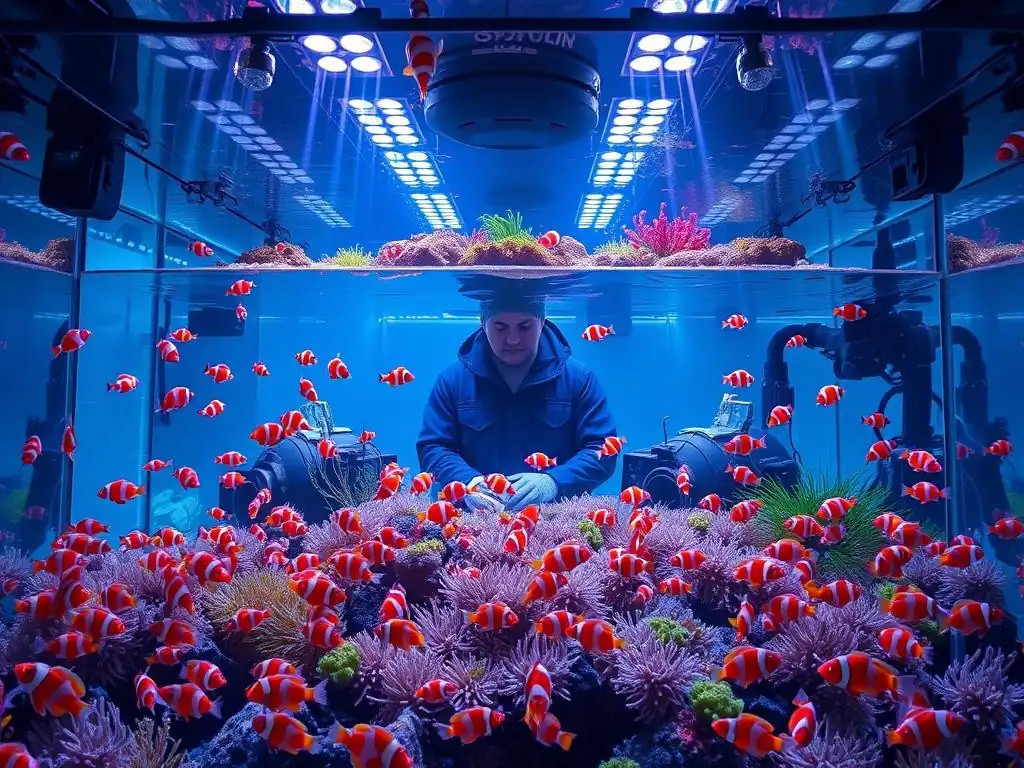
Ever wondered how to successfully raise tiny, delicate Clownfish fry into vibrant, marketable juveniles? Delve into the fascinating world of Clownfish fry growout systems and unlock the secrets to nurturing these captivating creatures from their larval stage. Discover everything you need to know to build a thriving growout setup and witness the magic of Clownfish development! Ready to embark on this rewarding journey?
- Understanding Clownfish Fry Development and Growout Needs
-
Designing Effective Clownfish Fry Growout Systems
- Essential Components of a Clownfish Growout Tank
- Choosing the Right Tank Size and Shape for Clownfish Fry
- Optimizing Water Parameters for Clownfish Fry Growth
- Filtration Strategies for Clownfish Fry Growout
- Lighting Considerations for Clownfish Fry Growout
- Substrate Options for Clownfish Growout Tanks: Pros and Cons
- Setting Up Your Clownfish Fry Growout System: A Step-by-Step Guide
- Feeding Clownfish Fry in the Growout System
- Maintaining a Healthy Clownfish Fry Growout Environment
- Grading and Sizing Clownfish Juveniles for Sale
- Troubleshooting Common Problems in Clownfish Fry Growout Systems
- Advanced Techniques for Clownfish Fry Growout
- Conclusion: Achieving Success with Clownfish Fry Growout
-
Frequently Asked Questions
- What are the essential components of a Clownfish fry growout system?
- What are the critical water parameters for successful Clownfish fry growout?
- What is the best food to feed Clownfish fry during the growout process?
- How often should I perform water changes in a Clownfish fry growout system?
- What are some common challenges in raising Clownfish fry and how can I address them?
- Final Reflection: Nurturing the Future of Reefs
- Ignite Your Clownfish Breeding Journey!
Understanding Clownfish Fry Development and Growout Needs
The Delicate Larval Stage of Clownfish: Initial Care
The initial care for clownfish fry begins immediately after hatching, typically occurring 7-8 days post-spawn for species like Amphiprion ocellaris at a water temperature of 79°F (26°C). At this stage, the fry are incredibly small, often measuring just 3 to 4 millimeters in length, and are highly vulnerable. They possess a yolk sac upon hatching, which provides initial nutrition for approximately 24-48 hours, but after this period, they become entirely dependent on external food sources.
During this critical larval phase, water quality is paramount. Ammonia and nitrite levels must remain at undetectable levels, as even minute concentrations can be lethal to the delicate fry. Many breeders prefer a bare-bottom larval tank to facilitate easy cleaning and prevent detritus accumulation, which can quickly degrade water quality. The larval stage typically lasts between 7 to 10 days for common species, during which time the fry undergo significant developmental changes, transitioning from a planktonic, free-swimming form to a more developed juvenile.
Transitioning Clownfish Fry to Growout: Critical Factors
The transition of clownfish fry from the larval stage to the growout phase marks a crucial period of metamorphosis. This typically occurs around 7 to 10 days post-hatch for Ocellaris clownfish, when they begin to develop their characteristic fins, body shape, and pigmentation. Successful transition hinges on several critical factors, including the availability of appropriately sized and nutritious food, stable water parameters, and a stress-free environment within the clownfish fry growout systems.
As the fry metamorphose, their dietary needs evolve from microscopic rotifers to larger prey like newly hatched brine shrimp nauplii. Maintaining consistent water temperature, ideally between 78-82°F (25.5-27.8°C), and stable salinity (1.020-1.025 specific gravity) is vital to support their rapid development and prevent osmotic stress. Adequate space, often achieved by gradually increasing tank size or splitting batches, helps reduce competition and aggression, which are common challenges when transitioning clownfish fry to growout environments.
Designing Effective Clownfish Fry Growout Systems
Essential Components of a Clownfish Growout Tank
Designing robust clownfish fry growout systems requires careful consideration of several essential components to ensure the health and rapid development of the juveniles. At its core, a growout tank needs to provide stable environmental conditions and efficient waste removal. Key components include the tank itself, a reliable heating system to maintain optimal temperatures, and a gentle yet effective filtration setup.
Beyond these basics, aeration is crucial, often provided by air stones connected to an air pump, ensuring adequate oxygen levels and gentle water movement. Lighting, while not as critical as for photosynthetic organisms, is necessary to establish a consistent day/night cycle. Lastly, a thermometer and accurate test kits are indispensable for continuous monitoring of water parameters, allowing for timely adjustments to the growout environment.
Choosing the Right Tank Size and Shape for Clownfish Fry
The selection of the right tank size and shape is a foundational decision for successful clownfish fry growout systems. For initial growout of a batch of 50-100 clownfish fry, a 10-gallon (approximately 38-liter) or 20-gallon (approximately 76-liter) long breeder tank is often recommended. The "long" dimension provides ample swimming space and a larger surface area for gas exchange and feeding, which is beneficial for the densely stocked fry.
Bare-bottom tanks are overwhelmingly preferred for clownfish fry growout due to their ease of cleaning and maintenance. The absence of substrate prevents detritus accumulation, making it simple to siphon out uneaten food and waste, thereby maintaining pristine water quality. Shallow water depths, typically 6-8 inches (15-20 cm), are also advantageous as they keep food particles suspended within easy reach of the small, developing fry and allow for more efficient cleaning.
Optimizing Water Parameters for Clownfish Fry Growth
Maintaining Stable Salinity and Temperature
Maintaining stable salinity and temperature is paramount for the health and rapid growth of clownfish fry within their growout systems. For salinity, a specific gravity range of 1.020 to 1.025 (or 30-34 ppt) is generally recommended. Fluctuations in salinity can cause significant osmotic stress to the delicate fry, leading to reduced growth, susceptibility to disease, and even mortality. Regular monitoring with a calibrated refractometer is crucial to ensure consistent levels.
Temperature stability is equally vital, with an optimal range typically between 78-82°F (25.5-27.8°C). Consistent temperatures support the fry's metabolic rate, aiding in efficient digestion and nutrient absorption, which directly translates to faster growth. Sudden drops or spikes in temperature, even by a few degrees, can weaken the fry's immune system and make them vulnerable to opportunistic pathogens. Using a reliable heater with an accurate thermostat is essential to prevent such fluctuations.
The Importance of Water Quality: Ammonia, Nitrite, and Nitrate Control
Superior water quality is non-negotiable for successful clownfish fry growout systems, with meticulous control over ammonia, nitrite, and nitrate being critical. Ammonia and nitrite are highly toxic to fish, particularly to the sensitive fry, and must be maintained at undetectable levels (0 ppm). Even concentrations as low as 0.25 ppm ammonia can cause gill damage and internal organ failure in young fish, leading to high mortality rates.
Nitrates, while less acutely toxic than ammonia or nitrite, can still inhibit growth and stress fry if allowed to accumulate. Levels should ideally be kept below 10-20 ppm through regular water changes and efficient biological filtration. High nitrate levels, exceeding 40 ppm, have been linked to stunted growth and increased susceptibility to disease in juvenile fish. Consistent monitoring with accurate test kits and proactive measures like daily small water changes are fundamental to maintaining a pristine growout environment.
Filtration Strategies for Clownfish Fry Growout
Biological Filtration for Fry Tanks
Biological filtration is the cornerstone of any healthy aquatic system, and clownfish fry growout systems are no exception. For fry tanks, the primary goal is to provide a large surface area for beneficial nitrifying bacteria to colonize, converting toxic ammonia and nitrite into less harmful nitrate. Sponge filters are overwhelmingly the preferred method for biological filtration in fry tanks due to their gentle flow, large porous surface area, and ease of cleaning.
These air-driven filters create minimal current, which is crucial for the delicate, weak-swimming fry, preventing them from being swept around or stressed. A seasoned sponge filter, introduced from an established system, can instantly inoculate a new growout tank with beneficial bacteria, significantly reducing the cycling time and mitigating the risk of ammonia spikes. Regular, gentle rinsing of the sponge in old tank water during water changes helps maintain its effectiveness without destroying the bacterial colony.
Mechanical Filtration to Remove Particulate Matter
Mechanical filtration plays a vital role in clownfish fry growout systems by physically removing uneaten food, fish waste, and other particulate matter from the water column. This prevents the decomposition of organic material, which would otherwise contribute to ammonia buildup and cloudy water. While sponge filters primarily serve as biological filters, their porous structure also provides excellent mechanical filtration, trapping larger debris.
For larger growout setups utilizing sumps, fine filter socks or filter floss can be employed to polish the water. However, caution must be exercised to ensure that the flow rate is not too strong for the fry and that the mechanical media is replaced or cleaned frequently. Accumulation of detritus in mechanical filters can quickly become a source of nitrates and other undesirable compounds, making regular maintenance essential for maintaining crystal-clear water and a healthy environment for the developing clownfish fry.
Chemical Filtration Options for Water Clarity
Chemical filtration can be a valuable supplementary tool in clownfish fry growout systems to enhance water clarity and maintain optimal parameters, though it should be used judiciously. Activated carbon is the most common chemical media, effectively removing dissolved organic compounds, odors, and discoloration from the water. This results in visibly clearer water, which can make it easier to observe the fry and detect any issues.
While activated carbon can be beneficial, it must be replaced regularly (e.g., every 2-4 weeks) as it becomes saturated and can leach absorbed compounds back into the water. Other chemical media, such as Granular Ferric Oxide (GFO) for phosphate removal, are generally less critical for fry tanks unless severe algae issues arise, which are typically indicative of underlying problems with nutrient control or lighting. The primary focus for water quality should always remain on robust biological filtration and consistent mechanical removal of waste.
Lighting Considerations for Clownfish Fry Growout
Lighting in clownfish fry growout systems serves several purposes, though it is less about intensity and more about establishing a natural photoperiod. Unlike systems housing photosynthetic corals or plants, intense lighting is not required for clownfish fry. Instead, a consistent day/night cycle, typically 12-14 hours of light followed by 10-12 hours of darkness, helps regulate the fry's circadian rhythm and can reduce stress.
Moderate, diffused lighting is generally sufficient. Overly bright or fluctuating lights can stress the delicate fry and even contribute to issues like "whirling disease" if they become disoriented. LED lights set to a lower intensity are ideal, providing adequate illumination for observation without being overpowering. The goal is to simulate natural conditions, allowing the fry to establish regular feeding and resting patterns within their growout environment.
Substrate Options for Clownfish Growout Tanks: Pros and Cons
When setting up clownfish fry growout systems, the choice of substrate, or lack thereof, significantly impacts maintenance and fry health. The most widely recommended option is a bare-bottom tank. The primary advantage of a bare bottom is unparalleled ease of cleaning; uneaten food and waste are immediately visible and can be quickly siphoned out, preventing the accumulation of detritus that can degrade water quality and harbor pathogens. This cleanliness is crucial for the sensitive fry.
While a thin layer of very fine sand might offer a more natural aesthetic and potentially host some beneficial microfauna, its disadvantages often outweigh the benefits for growout tanks. Sand can trap detritus, making it harder to clean thoroughly without disturbing the fry, and can contribute to higher nitrate levels. Furthermore, sand can be ingested by very small fry, potentially causing impaction. Therefore, for optimal hygiene and ease of management, bare-bottom setups are the practical standard for raising clownfish juveniles.
Setting Up Your Clownfish Fry Growout System: A Step-by-Step Guide
Step 1: Assembling the Tank and Stand
The first crucial step in establishing clownfish fry growout systems is the proper assembly of the tank and its supporting stand. Begin by selecting a sturdy, level surface that can safely bear the full weight of the filled aquarium, which can be substantial (a 20-gallon tank can weigh over 200 pounds when filled). Ensure the stand is designed specifically for aquariums, as regular furniture may not withstand the prolonged weight and moisture.
Once the stand is in place, carefully position the clean, bare-bottom growout tank on top, ensuring it is level in all directions. Using a spirit level can confirm this, as an unlevel tank can put undue stress on the glass seams and potentially lead to leaks over time. Thoroughly rinse the tank with clean freshwater (no soap or detergents) to remove any dust or manufacturing residues before proceeding to the next steps.
Step 2: Installing Filtration and Circulation Equipment
With the tank assembled, the next step for clownfish fry growout systems involves installing the essential filtration and circulation equipment. For fry tanks, gentle sponge filters are typically the primary choice. Place one or more appropriately sized sponge filters directly into the tank, ensuring they rest flat on the bottom. Connect an air line from an external air pump to the uplift tube of each sponge filter.
Next, install a submersible heater, ensuring it is rated for the tank size and positioned where it will provide even heat distribution. A good practice is to place it near the sponge filter's uplift tube to aid in water circulation. Finally, add an air stone connected to the air pump if additional aeration or gentle water movement is desired. Double-check all connections to ensure they are secure and ready for operation once water is added.
Step 3: Establishing the Biological Filter
Establishing a robust biological filter is a critical, albeit time-consuming, step for any clownfish fry growout system to prevent the accumulation of toxic ammonia and nitrite. The most common method is a "fishless cycle," where an ammonia source is added to the water to feed the beneficial bacteria. Dosing pure ammonia (without surfactants) to reach a concentration of 2-4 ppm daily is effective.
Alternatively, and often preferred for fry systems due to urgency, is "seeding" the growout tank with mature biological media from an established, healthy aquarium. Placing a seasoned sponge filter or a handful of ceramic media from an existing sump directly into the new tank can significantly accelerate the cycling process, often allowing the tank to be ready for fry introduction within a few days, rather than weeks. Regular testing of ammonia, nitrite, and nitrate levels is essential to confirm the cycle is complete before adding any clownfish fry.
Step 4: Monitoring Water Parameters and Adjusting as Needed
Once the clownfish fry growout systems are set up and cycling, continuous monitoring of water parameters becomes an ongoing, vital task. During the cycling phase, daily testing for ammonia, nitrite, and nitrate is imperative to track the progress of the biological filter. Ammonia and nitrite levels must consistently read zero before any fry are introduced.
After the fry are added, regular testing, ideally every 1-2 days initially and then 2-3 times per week, for salinity, temperature, ammonia, nitrite, and nitrate is crucial. Salinity should be maintained within a tight range of 1.020-1.025 SG, and temperature at 78-82°F (25.5-27.8°C). Any detectable ammonia or nitrite requires immediate corrective action, usually a small water change. High nitrates (above 20 ppm) necessitate larger or more frequent water changes. Prompt adjustments based on test results are key to preventing stress and disease in the delicate clownfish fry.
Step 5: Introducing Clownfish Fry to the Growout Tank (Acclimation Process)
Introducing clownfish fry to their new growout tank requires an extremely gentle acclimation process to minimize stress and prevent shock. Because fry are so small and sensitive, traditional floating bag methods may not be sufficient. Drip acclimation is the preferred method for clownfish fry growout systems. First, float the bag containing the fry in the growout tank for 15-20 minutes to equalize temperature.
Then, carefully transfer the fry and their original water into a clean container (e.g., a small specimen cup or bowl). Using airline tubing and an air valve, set up a slow drip from the growout tank into the container, allowing the tank water to gradually mix with the fry's original water. Aim for a drip rate of about 1-2 drops per second, doubling the volume of water in the container over 30-60 minutes.
Once the salinity and temperature in the container closely match the growout tank, gently net the fry (or pour them if the container is small enough and the tank large enough) into the growout system, discarding the old water. Avoid exposing the fry to air during this process.
Feeding Clownfish Fry in the Growout System
Live Food Cultures for Clownfish Fry: Rotifers, Copepods, and Brine Shrimp
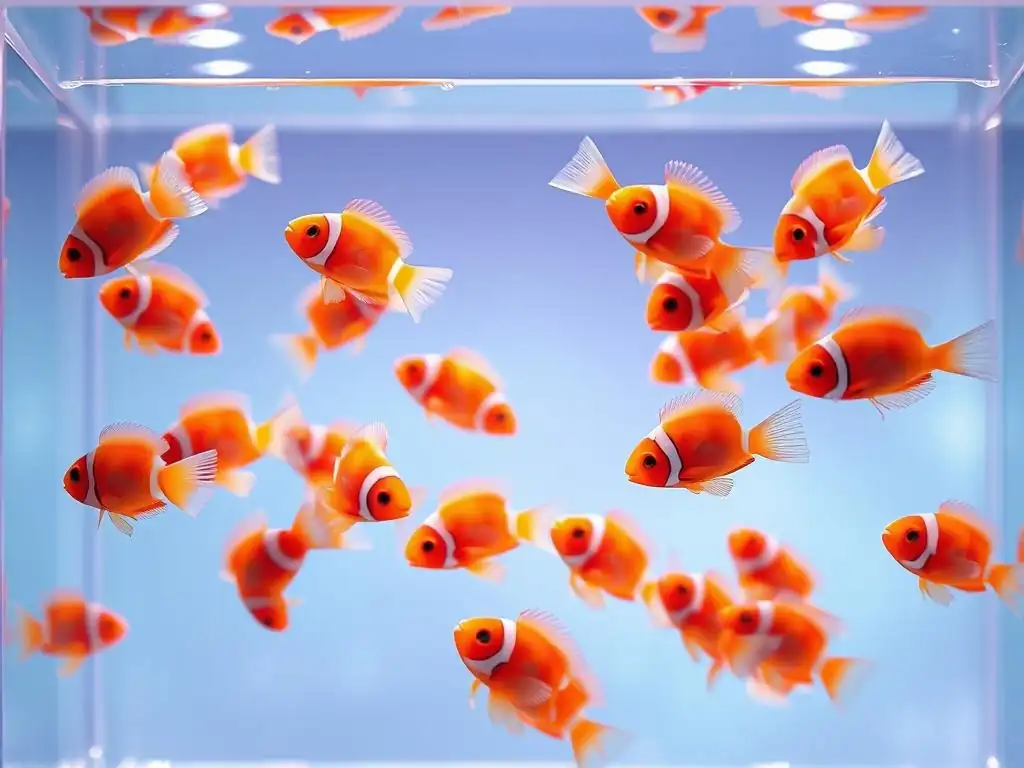
The cornerstone of successful clownfish fry growout systems is a consistent supply of live, highly nutritious food. Newly hatched clownfish fry are obligate planktivores, meaning they require live, swimming prey of appropriate size. Rotifers ( Brachionus plicatilis or B. rotundiformis) are indispensable as the first food for most species due to their small size (50-200 microns) and slow swimming speed, making them easily digestible for the delicate fry.
As the fry grow, typically around 5-7 days post-hatch, their mouths become large enough to consume newly hatched brine shrimp nauplii ( Artemia salina), which are larger (400-500 microns) and highly energetic. Copepods, such as Tisbe or Apocyclops species, can also be introduced as a complementary food source, offering a different nutritional profile. Enriching these live foods with nutritional supplements (e.g., Selco, spirulina, or phytoplankton) before feeding them to the fry significantly boosts their fatty acid and vitamin content, promoting faster growth and improved health in the clownfish fry growout systems.
Culturing Rotifers for Clownfish Fry: A Detailed Guide
Culturing rotifers ( Brachionus plicatilis or B. rotundiformis) is a fundamental skill for anyone operating clownfish fry growout systems, as they are the primary food source for newly hatched fry. To establish a culture, you'll need a starter culture of rotifers, a suitable culture vessel (e.g., a 1-5 gallon bucket or jar), an air pump with an air stone for gentle aeration, and a food source like concentrated phytoplankton paste (e.g., Nannochloropsis or Tetraselmis).
Maintain the culture water at a salinity of 1.015-1.020 specific gravity and a temperature between 75-80°F (24-27°C). Feed the rotifers daily, or as needed, until the water turns a light green color. Harvest rotifers by siphoning water from the culture through a fine mesh sieve (e.g., 50-75 micron) to separate them from the culture water.
The harvested rotifers can then be rinsed and enriched with an appropriate enrichment product for 1-2 hours before being fed to the clownfish fry, ensuring they receive maximal nutritional benefits. Consistent feeding and periodic splitting of the culture are key to maintaining a healthy, productive rotifer population.
Hatching Brine Shrimp for Optimal Nutrition
Hatching brine shrimp ( Artemia salina) is another essential practice for clownfish fry growout systems, providing a vital food source for clownfish fry once they are large enough to consume them, typically from 5-7 days post-hatch onwards. A simple brine shrimp hatchery consists of a conical-bottom container (like a 2-liter soda bottle with the bottom cut off), an air pump with airline tubing and an air stone, and a light source.
To hatch, fill the container with saltwater at a specific gravity of 1.020-1.025 and maintain the temperature between 80-82°F (27-28°C). Add 1-2 tablespoons of brine shrimp cysts per liter of water, ensuring strong aeration to keep the cysts suspended. Hatching typically occurs within 24-36 hours.
Once hatched, turn off the aeration and allow the nauplii to settle to the bottom (they are attracted to light, so shining a flashlight at the bottom helps). Siphon the orange nauplii, avoiding the unhatched cysts and empty shells that float to the top. Rinse the nauplii in freshwater before feeding to the fry, and for optimal nutrition, enrich them with a suitable enrichment product for several hours beforehand.
Weaning Clownfish Fry onto Prepared Foods
Weaning clownfish fry onto prepared foods is a crucial step in clownfish fry growout systems that reduces reliance on live food cultures and prepares them for sale or long-term care. This process typically begins around 2-3 weeks post-hatch, when the fry have grown considerably and are actively swimming and hunting. Starting with very fine, high-quality dry foods is key; options include finely crushed marine flakes, specialized fry pellets, or powdered freeze-dried copepods.
The weaning process should be gradual. Begin by offering prepared foods immediately after live foods, or intersperse them throughout the day. For example, feed live rotifers and brine shrimp in the morning and evening, and offer prepared foods during midday feedings. Slowly increase the proportion of prepared foods while reducing the amount of live food over a period of 1-2 weeks. Consistent success with weaning means the clownfish fry are readily accepting and consuming the prepared foods, showing no signs of distress or starvation.
Feeding Schedule and Quantities for Optimal Growth
Establishing an optimal feeding schedule and precise quantities is fundamental for maximizing growth and health in clownfish fry growout systems. Clownfish fry have incredibly high metabolic rates and small stomachs, requiring frequent, small meals throughout the day. It is generally recommended to feed them 4-6 times per day, or even more frequently for very young fry, ensuring a constant supply of food.
The quantity of food should be sufficient for the fry to have visibly full bellies, but not so much that excess food remains in the water, which can quickly degrade water quality. A good practice is to feed a small amount and observe if it is consumed within 5-10 minutes. Adjust the quantity up or down based on the fry's consumption and the cleanliness of the tank. Overfeeding is a common cause of water quality issues and disease in clownfish fry growout systems, so careful observation and adjustment are always necessary.
Maintaining a Healthy Clownfish Fry Growout Environment
Regular Water Changes and Cleaning Protocols
Maintaining pristine water quality in clownfish fry growout systems is critical, and regular water changes combined with meticulous cleaning protocols are the most effective strategies. Due to the high stocking density and frequent feeding, waste can accumulate rapidly, leading to dangerous spikes in ammonia and nitrite, and a build-up of nitrates. Daily small water changes, typically 10-20% of the tank volume, are often necessary, especially during the initial weeks of rapid growth.
During each water change, it is crucial to siphon the bare bottom of the tank thoroughly to remove any uneaten food, feces, and detritus that have settled. This manual removal of organic waste directly prevents its decomposition and subsequent pollution. The fresh saltwater added must be precisely matched in temperature and salinity to the tank water to avoid shocking the delicate fry. Consistent adherence to these cleaning and water change routines is paramount for preventing disease and fostering robust growth in clownfish fry.
Monitoring Fry Health and Identifying Potential Issues
Diligent monitoring of fry health is a continuous and vital task in clownfish fry growout systems, allowing for early detection and intervention of potential issues. Daily observation of the fry's behavior, appearance, and swimming patterns can provide crucial insights. Healthy clownfish fry are typically active, schooling together, and exhibit a strong feeding response.
Any deviation from these normal behaviors, such as lethargy, erratic swimming, flashing against tank surfaces, or isolating themselves, should immediately raise a red flag. Physical signs like cloudy eyes, white spots, frayed fins, bloated bellies, or abnormal color changes also indicate distress or disease. Prompt identification of these subtle signs can be the difference between successfully treating an issue and experiencing significant fry mortality.
Recognizing Signs of Disease in Clownfish Fry
Recognizing the subtle signs of disease in clownfish fry is critical for timely intervention in clownfish fry growout systems. Due to their small size and delicate nature, diseases can progress rapidly and lead to high mortality if not addressed quickly. One of the earliest indicators is a change in behavior: healthy fry are typically active and have a strong feeding response. Lethargy, hiding, erratic swimming, or "flashing" (rubbing against surfaces) are all warning signs.
Physical symptoms to look for include cloudy eyes, white spots (potentially Ich or Velvet, though less common in pristine fry systems), frayed or clamped fins, red streaks on the body, or a bloated appearance. Loss of color, becoming unusually pale or dark, can also indicate stress or illness. Any noticeable reduction in appetite or refusal to eat, especially when food is readily available, is a serious concern. Regular, close-up observation is essential to catch these signs early.
Common Diseases Affecting Clownfish Fry and Their Treatments
While maintaining pristine water quality significantly reduces disease incidence in clownfish fry growout systems, certain pathogens can still emerge. Marine Ich ( Cryptocaryon irritans) is characterized by white spots resembling salt grains; treatment typically involves copper-based medications at very low, carefully monitored doses or hyposalinity, though both can be stressful for fry. Marine Velvet ( Amyloodinium ocellatum) is highly virulent, causing a dusty, yellowish film and rapid gill damage; immediate treatment with copper, formalin, or chloroquine phosphate is often necessary, but success rates can be low due to its rapid progression.
Bacterial infections, often secondary to stress or poor water quality, can manifest as fin rot, cloudy eyes, or internal infections leading to bloated bellies. Broad-spectrum antibiotics like Furan-2 or Maracyn may be used, but require careful dosing. Nutritional deficiencies, while not a disease, can mimic symptoms of illness and are best prevented by providing a diverse and enriched diet of live foods initially, transitioning to high-quality prepared foods. Prevention through excellent husbandry remains the best defense against these common ailments in clownfish fry.
Preventing Cannibalism in Clownfish Fry Growout
Preventing cannibalism is an important consideration in clownfish fry growout systems, particularly as the juveniles grow and individual size differences become more pronounced. While not as rampant as in some other species, larger, more aggressive fry can prey on smaller, weaker siblings, leading to significant losses. The primary causes of cannibalism are insufficient food, overcrowding, and a wide disparity in size among the fry.
To mitigate this, ensure a consistent and abundant supply of food, feeding multiple times a day so that all fry have ample opportunity to eat. Avoid overcrowding by maintaining appropriate stocking densities; as the fry grow, they will require more space, necessitating transfers to larger tanks or splitting batches. Most critically, regular grading and separation of fry by size, often every 1-2 weeks, helps to minimize aggression and competition among tank mates, thereby promoting uniform growth and reducing instances of cannibalism within the clownfish fry growout systems.
Grading and Sizing Clownfish Juveniles for Sale
Establishing a Grading System for Clownfish Fry
Establishing a systematic grading system for clownfish fry is essential as they grow into juveniles in clownfish fry growout systems. This process allows breeders to categorize their stock, optimize growout conditions, and prepare for market. Grading criteria typically include size, overall health, fin development, and body conformation. For specific patterns like misbars or extreme misbars, these unique characteristics are also noted.
For instance, at 4-6 weeks post-hatch, juveniles might be graded into "small" (under 1 inch), "medium" (1-1.5 inches), and "large" (over 1.5 inches). This not only helps in separating them to reduce competition but also in pricing and marketing. A robust grading system ensures that only healthy, well-formed juveniles are offered for sale, maintaining the reputation of the breeder and the quality of the stock from the clownfish fry growout systems.
Separating Clownfish by Size to Promote Uniform Growth
Separating clownfish by size is a crucial practice in clownfish fry growout systems to promote uniform growth and reduce aggression. Even within a single hatch, individual fry will grow at different rates due to genetics, feeding efficiency, and social dynamics. If left together, larger individuals can outcompete smaller ones for food and space, leading to stunted growth in the less dominant fish and potentially increasing instances of cannibalism.
This size-based separation, often done every 2-4 weeks after the fry have metamorphosed, involves gently netting the larger individuals and moving them to a separate, larger growout tank. This allows the smaller fry to catch up without intense competition, ensuring that a higher percentage of the batch reaches a marketable size. Consistent grading and separation are vital for maximizing the yield and quality of clownfish juveniles produced from growout systems.
Preparing Clownfish Juveniles for Sale or Transfer
Preparing clownfish juveniles for sale or transfer from their clownfish fry growout systems requires careful attention to minimize stress and ensure their well-being during transit. Before shipping or transferring, it's advisable to fast the juveniles for 12-24 hours. This reduces waste production during transport, which can quickly foul the water in a confined shipping bag and elevate ammonia levels.
Ensure the juveniles are visibly healthy, active, and feeding well before preparing them for shipment. For shipping, use sturdy, leak-proof bags with rounded corners, filled with oxygen and packed within an insulated box. Include a heat pack or cold pack as appropriate for ambient temperatures. Provide clear instructions on acclimation and care to the buyer. For transfers to new display tanks, a slow drip acclimation process matching temperature and salinity is essential to prevent shock, ensuring a smooth transition for the clownfish juveniles from the growout system to their new home.
Troubleshooting Common Problems in Clownfish Fry Growout Systems
High Mortality Rates in Fry Tanks: Causes and Solutions
High mortality rates in clownfish fry growout systems are a disheartening but common challenge, often stemming from a few critical issues. The primary culprits are typically poor water quality, inadequate nutrition, and unstable environmental parameters. Ammonia or nitrite spikes, even at very low concentrations, are lethal to delicate fry, often caused by overfeeding or insufficient filtration.
Solutions involve rigorous daily water quality testing and immediate corrective action, such as small, frequent water changes (e.g., 10-20% daily) and meticulous siphoning of detritus from the bare bottom. Ensuring a consistent supply of appropriately sized, enriched live foods (rotifers, then brine shrimp) is vital to prevent starvation. Stable temperature (78-82°F) and salinity (1.020-1.025 SG) are also non-negotiable; fluctuations cause immense stress. Addressing these foundational elements consistently will significantly reduce mortality in clownfish fry growout systems.
Slow Growth Rates in Clownfish Fry: Identifying the Root Cause
Slow growth rates in clownfish fry growout systems can be a frustrating issue, often indicating suboptimal conditions that need immediate attention. The primary causes typically revolve around nutrition, water quality, and environmental stress. Insufficient food quantity, or a lack of highly nutritious, enriched live foods, is a common culprit; fry need constant, high-quality sustenance to fuel their rapid development.
Another significant factor is poor water quality, particularly elevated nitrate levels (above 20 ppm) or fluctuating parameters like temperature and salinity, which can stress fry and divert energy from growth. Overcrowding in the growout tank also contributes to slow growth by increasing competition for food and space, leading to chronic stress. Solutions include increasing feeding frequency and ensuring food enrichment, performing more frequent water changes to maintain pristine conditions, and reducing stocking density by transferring larger fry to separate clownfish fry growout systems as they grow.
Algae Blooms and Their Impact on Fry Health
Algae blooms in clownfish fry growout systems are a clear indicator of an imbalance in the aquatic environment, primarily caused by excess nutrients (nitrates and phosphates) and/or excessive lighting. While some microalgae can be beneficial as food for rotifers, dense blooms, particularly of green or brown algae, can have several negative impacts on fry health. They can rapidly consume oxygen during the night, leading to dangerously low dissolved oxygen levels that stress or even suffocate the fry.
Furthermore, thick algae can coat the fry, their gills, and the tank equipment, potentially impeding respiration and general movement. Blooms also signify poor water quality, often due to overfeeding or insufficient water changes. Solutions involve reducing feeding quantities to prevent nutrient buildup, increasing the frequency and volume of water changes, reducing the duration or intensity of lighting, and ensuring efficient mechanical filtration to remove particulate matter that fuels algae growth. Addressing the root cause of the nutrient imbalance is key to preventing recurring algae issues in clownfish fry growout systems.
Advanced Techniques for Clownfish Fry Growout
Using Ozone and UV Sterilization in Growout Systems
For larger-scale or commercial clownfish fry growout systems, advanced techniques like ozone and UV sterilization can significantly enhance water quality and disease prevention. Ozone (O3) is a powerful oxidizer that breaks down organic waste, improves water clarity, and effectively kills bacteria, viruses, and parasites. It can reduce the organic load, leading to lower nitrate levels and a cleaner environment. However, ozone requires careful dosing and monitoring with an ORP (Oxidation-Reduction Potential) controller to prevent over-ozonation, which can be harmful to fish.
UV (Ultraviolet) sterilization works by passing water through a chamber containing a UV lamp, which emits radiation that disrupts the DNA of microorganisms, preventing them from reproducing. This is highly effective at inactivating free-floating pathogens in the water column, significantly reducing the risk of disease transmission within the growout system. Both ozone and UV add complexity and cost but offer superior biosecurity and water quality control, especially beneficial in high-density clownfish fry growout systems.
Implementing Automatic Water Change Systems
Implementing automatic water change systems represents an advanced technique in clownfish fry growout systems that offers significant benefits in terms of consistency, labor reduction, and improved water quality. Manual daily water changes are labor-intensive and prone to human error in parameter matching. Automated systems, typically involving dosing pumps, reservoirs for fresh saltwater and waste water, and an overflow mechanism, ensure that small, frequent water changes occur consistently without manual intervention.
This continuous or near-continuous replenishment of fresh saltwater helps maintain extremely stable water parameters, preventing the accumulation of nitrates and other dissolved organics that can stress fry. For example, a system might be programmed to remove and replace 1-2% of the tank volume hourly, or 10% daily. While the initial setup cost and complexity are higher, the long-term benefits of superior water quality, reduced labor, and less stress on the delicate clownfish fry make automatic water changes a valuable upgrade for dedicated clownfish fry growout systems.
Exploring Recirculating Aquaculture Systems (RAS) for Clownfish Fry
Exploring Recirculating Aquaculture Systems (RAS) represents a cutting-edge approach for clownfish fry growout systems, particularly in commercial or large-scale breeding operations. RAS are closed-loop systems that continuously treat and reuse water, significantly reducing water consumption compared to traditional flow-through systems. These systems incorporate multiple treatment steps: mechanical filtration to remove solids, biological filtration to convert ammonia and nitrite, protein skimming for organic waste removal, and often UV sterilization or ozone for pathogen control.
The primary benefits of RAS for clownfish fry include exceptional water quality stability, high biosecurity (reducing the risk of external disease introduction), and the ability to maintain optimal environmental conditions year-round, regardless of external climate. While initial setup costs and operational complexity are considerably higher than basic growout tanks, RAS allows for high stocking densities and efficient resource utilization, representing a sustainable and highly productive method for raising clownfish juveniles.
Conclusion: Achieving Success with Clownfish Fry Growout
Key Takeaways for Raising Healthy Clownfish Juveniles
Achieving success in raising healthy clownfish juveniles through clownfish fry growout systems hinges on a few critical takeaways. Firstly, unwavering commitment to pristine water quality is non-negotiable; maintaining zero ammonia and nitrite, and very low nitrates, through rigorous filtration and frequent water changes, is paramount. Secondly, providing a consistent supply of appropriately sized, highly nutritious live foods (rotifers, then brine shrimp) during the initial delicate stages is essential for robust growth and survival.
Thirdly, environmental stability, particularly in terms of temperature and salinity, minimizes stress and supports optimal metabolic function. Lastly, diligent observation of the fry for any signs of distress or disease, coupled with prompt intervention, can prevent minor issues from escalating into major mortalities. Adhering to these principles consistently will significantly increase the yield and quality of clownfish juveniles from any clownfish fry growout system.
The Future of Clownfish Breeding and Growout Techniques
The future of clownfish breeding and growout techniques is poised for exciting advancements, building upon the foundational knowledge of successful clownfish fry growout systems. Ongoing research focuses on developing more nutritionally complete and cost-effective prepared foods, potentially reducing the reliance on labor-intensive live food cultures. Innovations in automation, such as advanced monitoring sensors and robotic feeding systems, are likely to streamline operations and further stabilize growout environments.
Furthermore, selective breeding programs are continually working to enhance desired traits, including vibrant coloration, unique patterns, and disease resistance, contributing to more resilient and aesthetically appealing clownfish. The increasing adoption of sustainable practices, like highly efficient Recirculating Aquaculture Systems (RAS), will also play a crucial role in minimizing environmental impact while maximizing production. These continuous improvements promise to make clownfish breeding more accessible, efficient, and sustainable, benefiting both hobbyists and the aquaculture industry.
Frequently Asked Questions
What are the essential components of a Clownfish fry growout system?
A growout system needs a larval tank for initial hatching, a growout tank for later stages, and proper filtration and water quality maintenance.
What are the critical water parameters for successful Clownfish fry growout?
Maintaining stable water parameters is crucial. Key parameters include temperature, salinity, and ammonia/nitrite/nitrate levels.
What is the best food to feed Clownfish fry during the growout process?
Initially, Clownfish fry require rotifers and then copepods. Later, they can be transitioned to enriched baby brine shrimp and eventually, small pellet food.
How often should I perform water changes in a Clownfish fry growout system?
Frequent, small water changes are better than infrequent large ones. Aim for daily or every other day water changes of 10-20% to maintain water quality.
What are some common challenges in raising Clownfish fry and how can I address them?
Challenges include disease outbreaks, cannibalism, and maintaining proper food density. Addressing them requires strict quarantine protocols, adequate space, and appropriate feeding strategies.
Final Reflection: Nurturing the Future of Reefs
The journey from a tiny clownfish larva to a vibrant, saleable juvenile is a testament to the power of dedicated aquaculture, and as we've explored in this article, the effectiveness of clownfish fry growout systems is paramount to this success. The techniques and considerations discussed are not simply about raising fish; they represent a crucial step in supporting sustainable reef keeping and reducing pressure on wild populations, a goal that resonates deeply in our current environmental climate.
The impact of successful clownfish breeding extends far beyond the aquarium trade. It's about fostering a deeper appreciation for the delicate balance of marine ecosystems and empowering hobbyists to contribute positively to their preservation. The ability to reliably raise clownfish in captivity allows us to educate future generations about responsible stewardship and the importance of biodiversity. In the end, we will conserve only what we love; we will love only what we understand; and we will understand only what we are taught.
- Baba Dioum. This quote perfectly encapsulates the ripple effect of knowledge and passion that stems from understanding the intricacies of clownfish fry growout.
Now, as you consider the information presented here, I invite you to reflect on your own role in this fascinating world. Whether you're a seasoned breeder, a budding aquarist, or simply someone captivated by the beauty of clownfish, consider how you can contribute to the ongoing effort of sustainable aquaculture. Explore the possibilities, experiment with new techniques, and share your knowledge with others. The future of our reefs depends on our collective commitment to responsible practices and a deep-seated love for the ocean's wonders.
Ignite Your Clownfish Breeding Journey!
Thanks for diving deep into the world of clownfish fry grow-out! We hope you've gained valuable insights into nurturing these tiny treasures. Now, it's time to put that knowledge into action.
Here's how you can take the next step:
- Immediately begin researching and planning the construction or purchase of your first grow-out tank. Don't delay, the sooner you start, the sooner you'll be raising happy, healthy clownfish.
- Explore innovative feeding techniques for enhanced growth and coloration – experiment with live feeds like rotifers and copepods for optimal results.
- Share your fry grow-out experiences and insights with fellow breeders on aquarium forums to foster a collaborative learning environment.
What unexpected challenge are you most excited (or nervous) about tackling in your clownfish breeding adventure?