
The Mesmerizing Mating Dance of the Mandarin Dragonet: A Nano Spectacle

Welcome to Aquarium Mastery!
Ever wondered how to unlock the secrets of the Mandarin dragonet's elusive mating dance? These shimmering gems of the reef present unique challenges and rewards to the dedicated aquarist. Dive in as we uncover fascinating Mandarin dragonet mating behavior tips, revealing the nuances of their nano-reef spectacle. Prepare to be captivated and learn how you can potentially witness this breathtaking event in your own saltwater aquarium!
- Understanding Mandarin Dragonet Courtship Rituals in Reef Aquariums
- Deciphering the Mandarin Dragonet Mating Dance: A Step-by-Step Guide
- Optimizing Your Reef Tank for Mandarin Dragonet Breeding
- Mandarin Dragonet Mating Behavior Tips: Increasing Your Chances of Success
- Raising Mandarin Dragonet Fry: Challenges and Solutions
- Common Challenges in Mandarin Dragonet Breeding and How to Overcome Them
- The Future of Mandarin Dragonet Breeding in Home Aquariums
-
Frequently Asked Questions
- How can I tell if my Mandarin Dragonets are ready to mate in my aquarium?
- What specific water parameters are crucial for successful Mandarin Dragonet breeding?
- What size tank is recommended for attempting to breed Mandarin Dragonets?
- What type of food is essential for Mandarin Dragonet fry survival?
- What are some common challenges faced when breeding Mandarin Dragonets and how can I overcome them?
- Final Reflection: Unveiling Nature's Intricate Choreography
- Dive Deeper: Craft Your Own Nano Reef Sanctuary!
Understanding Mandarin Dragonet Courtship Rituals in Reef Aquariums
The Allure of the Mandarin Dragonet: A Nano Reef Gem
The Mandarin Dragonet ( Synchiropus splendidus), often simply called the Mandarin fish, is a true jewel of the marine aquarium, captivating aquarists with its kaleidoscope of vibrant blues, oranges, and greens. Reaching an average adult size of about 2 to 3 inches (5-7.5 cm), these small, peaceful fish are perfectly suited for mature nano reef aquariums, typically 20 gallons or larger, that can provide their specialized dietary needs.
Their unique, almost ethereal swimming style, characterized by the fluttering of their large pectoral fins, adds to their undeniable charm, making them one of the most sought-after species for dedicated saltwater enthusiasts.
Despite their widespread popularity, Mandarin Dragonets are known for their specific care requirements, particularly regarding their diet. Unlike many marine fish that readily accept prepared foods, Mandarins are obligate micropredators, relying almost exclusively on live copepods and other tiny invertebrates found grazing on live rock and sand. This dietary specialization is a critical factor in their long-term health and, crucially, their ability to thrive and engage in their fascinating courtship rituals within the confines of a home aquarium.
Importance of Understanding Mating Behavior for Mandarin Dragonet Care
Understanding the intricate mating behavior of the Mandarin Dragonet is paramount for several reasons, extending beyond mere observation to practical Mandarin dragonet mating behavior tips for successful captive breeding. Firstly, successful spawning indicates a truly healthy and thriving environment, suggesting that all their complex needs—from water quality to nutrition and tank compatibility—are being met. Witnessing their daily courtship is a testament to the aquarist's dedication and the robustness of the reef ecosystem.
Secondly, comprehending their reproductive cycle provides invaluable data for potential captive breeding programs. Wild populations of Mandarin Dragonets face pressure from habitat degradation and collection for the aquarium trade. Successfully breeding these fish in captivity can significantly reduce reliance on wild-caught specimens, contributing directly to conservation efforts. For aquarists aiming to propagate this species, detailed knowledge of their courtship, spawning, and larval development stages is the foundation for overcoming the significant challenges associated with raising their incredibly tiny fry.
Deciphering the Mandarin Dragonet Mating Dance: A Step-by-Step Guide
Phase 1: Initial Attraction and Visual Displays
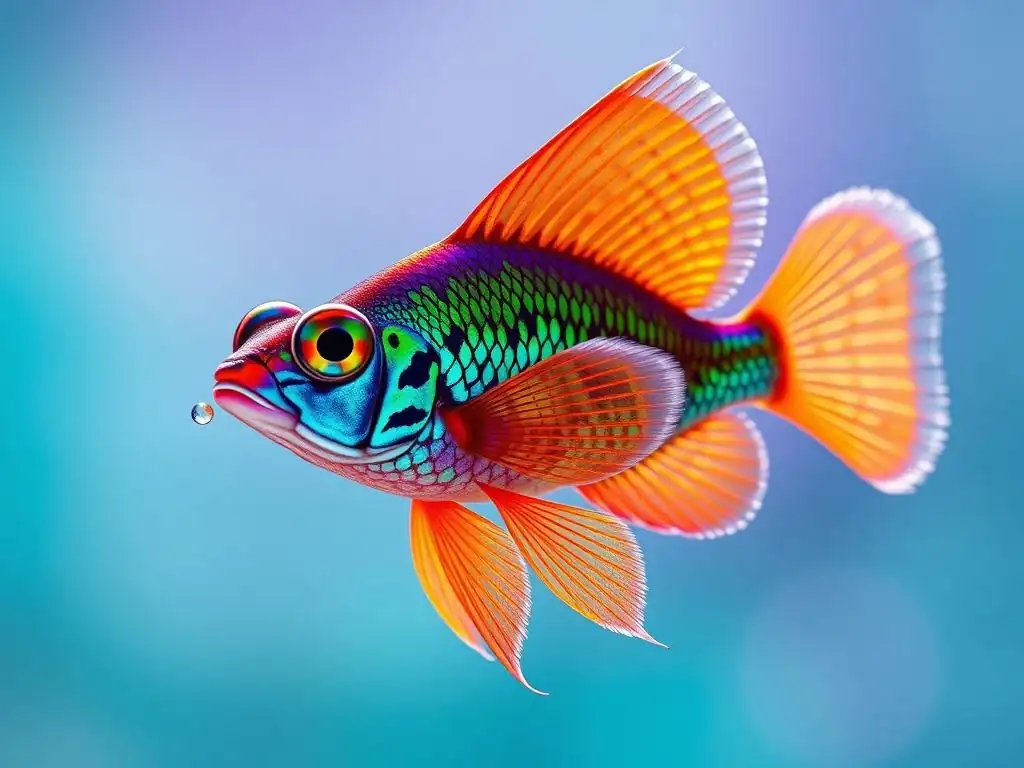
Recognizing Signs of Interest: Fin Flaring and Color Enhancement
The courtship of the Mandarin Dragonet typically commences as dusk approaches, or when the aquarium lights begin to dim, creating a subdued ambiance. The male often initiates the display by swimming alongside the female, engaging in a series of elaborate visual signals.
A key indicator of interest is the male's exaggerated fin flaring, particularly the dorsal fin, which is unfurled to its full extent, showcasing its intricate patterns and vibrant colors. Simultaneously, both the male and female may intensify their coloration, becoming noticeably more brilliant and striking than their usual daytime appearance, a clear visual cue of readiness to mate.
During this initial phase, the male might also exhibit subtle body tremors or quivering as he positions himself close to the female. This display serves to attract the female's attention and communicate his suitability as a mate. It's not uncommon for this initial attraction phase to occur daily for several days or even weeks before actual spawning takes place, as the pair establishes a routine and strengthens their bond, making careful observation a critical Mandarin dragonet mating behavior tip.
The Role of Chemical Signals in Mate Selection
While visual displays are prominent, chemical signals, or pheromones, are also believed to play a subtle yet crucial role in the mate selection process of Mandarin Dragonets, much like in many other fish species. Although specific pheromonal compounds for Synchiropus splendidus have not been extensively identified or quantified, it is widely accepted that fish release chemical cues into the water column to communicate reproductive status, health, and species identification. These olfactory signals can help a female assess a male's genetic fitness and readiness to spawn, even before direct physical interaction.
These chemical interactions likely contribute to the pair's synchronization and willingness to engage in the subsequent stages of the mating dance. A healthy, well-fed Mandarin Dragonet, indicative of a robust system, is more likely to produce and respond to these subtle chemical cues effectively. Maintaining pristine water quality, therefore, is not only vital for general health but also for ensuring that these delicate chemical communications are not obscured or degraded by pollutants, thus enhancing the chances of successful courtship.
Phase 2: The Ascent: A Vertical Ballet
The Synchronized Swimming of the Pair
Following a successful initial attraction, the Mandarin Dragonet pair will transition into the most iconic and visually stunning part of their courtship: the synchronized vertical ascent. With the male positioned alongside the female, often with his pectoral fin gently resting on her flank, they begin a slow, deliberate rise from the substrate towards the water's surface. This ascent is a true display of coordination, with both fish moving in perfect unison, their bodies almost touching, as if performing a graceful, underwater ballet.
The pair maintains this close proximity and synchronized movement throughout the ascent, which can last for several seconds, sometimes even up to a minute, depending on the tank's depth and their comfort level. Their fins flutter gently, propelling them upwards with an almost dreamlike slowness. This intimate, shared journey towards the surface is a critical preparatory stage for the release of gametes, signifying a high level of trust and readiness between the two fish.
The Significance of the Rise in the Water Column
The vertical ascent serves a crucial biological purpose: to facilitate the optimal dispersal of eggs and sperm, thereby increasing the chances of successful fertilization and reducing immediate predation. By releasing their gametes at the apex of their rise, typically just beneath the water's surface, the eggs and sperm are carried by the water currents, scattering them widely. This strategy helps to prevent the eggs from settling immediately onto the substrate, where they would be more vulnerable to benthic predators such as crabs, copepods, or other opportunistic tank inhabitants.
Furthermore, releasing gametes high in the water column enhances the likelihood of successful fertilization by maximizing the contact time between eggs and sperm before they disperse too widely. This strategic spawning position is a common adaptation among many pelagic spawners, highlighting the Mandarin Dragonet's evolutionary drive to ensure the survival of its offspring, even in the challenging environment of a coral reef or a home aquarium.
Phase 3: The Release: Gamete Spawning
The Moment of Spawning: A Nano Reef Spectacle
The climax of the Mandarin Dragonet's mating dance is the rapid, almost explosive release of gametes at the peak of their synchronized ascent. As the pair reaches the highest point in the water column, usually just an inch or two below the surface, their bodies will briefly quiver or contract.
In a fleeting moment, often lasting less than a second, a small, visible cloud of milky white sperm and translucent eggs is expelled into the water. The eggs, typically spherical and extremely small, measuring approximately 0.8 to 1.0 millimeters in diameter, are immediately buoyant and begin to drift with the water currents.
This swift, almost instantaneous release is a marvel to behold, a testament to nature's efficiency. The sheer volume of eggs released can be substantial, with a single spawning event potentially yielding hundreds of eggs, though many will not survive to hatch or develop into fry. This fleeting spectacle underscores the delicate balance required to witness and support Mandarin dragonet mating behavior tips in a captive environment.
Post-Spawning Behavior and Parental Care (Or Lack Thereof)
Immediately after the gamete release, the Mandarin Dragonet pair will quickly separate and descend back towards the substrate, often resuming their individual activities as if nothing extraordinary has occurred. This rapid disengagement is characteristic of many pelagic spawners, where there is absolutely no parental care provided to the eggs or subsequent fry. Once released, the eggs are left entirely to the mercy of the currents and the environment.
The lack of parental investment means that the survival of the eggs and fry is heavily reliant on environmental factors, including water quality, the presence of predators, and the availability of microscopic food sources for the newly hatched larvae. This absence of post-spawning care is a significant challenge for aquarists attempting to raise Mandarin Dragonet fry, as it necessitates immediate intervention to collect and protect the eggs if propagation is the goal.
Optimizing Your Reef Tank for Mandarin Dragonet Breeding
Key Water Parameters for Successful Spawning
Maintaining Stable Salinity and Temperature
Successful spawning in Mandarin Dragonets hinges significantly on maintaining highly stable and specific water parameters, replicating their natural marine environment. For salinity, a consistent specific gravity (SG) between 1.023 and 1.026 is ideal, with 1.025-1.026 often cited as optimal for many marine organisms. Fluctuations should be minimized, ideally less than 0.001 SG per day, as sudden changes can induce stress and inhibit breeding.
Temperature should be kept stable within a range of 76°F to 80°F (24.4°C to 26.7°C), with a target of around 78°F (25.5°C) often being favorable. Consistent temperature is crucial for metabolic processes and reproductive cycles, making precise heating and monitoring essential Mandarin dragonet mating behavior tips.
Achieving this stability requires reliable equipment, including a high-quality thermometer, a refractometer for accurate salinity readings, and a dependable aquarium heater. Regular calibration of testing equipment is also vital to ensure accuracy. Any deviation from these stable conditions can signal stress to the fish, potentially halting spawning activities.
The Importance of Pristine Water Quality
Beyond salinity and temperature, overall pristine water quality is non-negotiable for encouraging Mandarin Dragonet breeding. Low levels of nitrates and phosphates are critical; nitrates should ideally be kept below 10 parts per million (ppm), and phosphates below 0.03 ppm. High levels of these nutrients indicate poor water management and can lead to stress, disease, and a general decline in fish health, thereby inhibiting spawning. Regular partial water changes, typically 10-20% weekly or bi-weekly, are essential for replenishing trace elements and removing accumulated waste products.
Effective biological and mechanical filtration, along with the consistent use of protein skimmers, helps to maintain low nutrient levels. A mature refugium with macroalgae (like Chaetomorpha) is also highly beneficial, as it acts as a natural nutrient export system and provides a breeding ground for copepods, which are vital for the Mandarins' diet. Consistent monitoring of these parameters through regular testing is a foundational element among Mandarin dragonet mating behavior tips.
Nutritional Needs to Support Breeding
Live Food Cultivation: Copepods, Amphipods, and More
The cornerstone of successful Mandarin Dragonet breeding is an exceptionally rich and consistent supply of live food. Mandarin Dragonets are micropredators, meaning they primarily consume tiny invertebrates such as copepods and amphipods grazing on live rock and sand. To support breeding, which is energy-intensive, the tank must have a thriving, self-sustaining population of these organisms.
Species like Tisbe, Tigriopus, and Apocyclops copepods are excellent choices. Many aquarists set up a dedicated refugium, often integrated into the sump, specifically for culturing these live foods. This refugium should be generously stocked with live rock and sand, providing ample surface area and substrate for the copepods to reproduce without being predated upon by the main tank inhabitants.
Additionally, supplementing the tank's natural copepod population with cultured live foods, either through regular additions from external cultures or by growing them in the refugium, is crucial. A well-established refugium can produce hundreds, if not thousands, of copepods daily, providing the continuous, high-energy diet necessary for the Mandarins to be in peak breeding condition. Without this constant supply, Mandarins will quickly become emaciated and cease any breeding attempts.
Ensuring a Consistent Food Supply for Breeding Dragonets
Maintaining a consistent and abundant food supply is perhaps the most challenging, yet vital, aspect of encouraging Mandarin Dragonet breeding. A pair of breeding Mandarins will consume a significant number of copepods daily, potentially hundreds. Therefore, relying solely on the copepod population within the display tank is often insufficient, especially in tanks that are not exceptionally large and mature (e.g., over 50 gallons with extensive live rock). Strategies to ensure a consistent food supply include:
- Dedicated Refugium: As mentioned, a large, well-lit refugium connected to the main display tank is paramount.
- Regular Dosing: Supplementing the refugium or display with purchased live copepod cultures on a weekly or bi-weekly basis.
- Culturing Other Live Foods: While copepods are primary, some aquarists also culture small amphipods or even baby brine shrimp (though less ideal for Mandarins) as supplemental nutrition.
- Avoiding Competitors: Ensure that other tank inhabitants do not outcompete the Mandarins for copepods. Fish like other wrasses or damselfish can quickly decimate a copepod population.
A well-fed Mandarin Dragonet will appear plump and active, a clear sign they are receiving adequate nutrition to support their vibrant health and reproductive efforts.
Creating a Stress-Free Environment for Mating
Minimizing Tank Inhabitants That May Prey on Dragonet Eggs or Fry
A peaceful and stress-free environment is critical for encouraging Mandarin Dragonet mating. One of the most significant factors is carefully selecting tank mates. Aggressive or overly active fish can stress Mandarins, causing them to hide and inhibiting their natural behaviors, including spawning. More importantly, many common reef tank inhabitants are opportunistic predators that will readily consume Mandarin Dragonet eggs and fry. This includes many types of wrasses (even peaceful ones), gobies, and larger invertebrates like crabs or shrimp.
To maximize the chances of successful spawning and, more importantly, the survival of eggs and fry (if aiming to collect them), consider a species-specific tank or a highly specialized nano reef with only the Mandarin pair and perhaps a few very small, peaceful, non-competitive invertebrates. If eggs are to be collected, ensuring no other tank inhabitants can reach the spawning site is crucial. This proactive approach to tank mate selection is a fundamental Mandarin dragonet mating behavior tip.
Providing Ample Hiding Places and Rockwork
Mandarin Dragonets, by nature, are somewhat shy and prefer environments with plenty of cover. Providing ample live rock with numerous crevices, caves, and overhangs is essential for their sense of security and well-being. This rockwork serves multiple purposes: it provides hiding spots from potential stressors, offers surfaces for copepods to graze and reproduce, and gives the Mandarins a sense of territory. A complex rockscape allows the pair to feel safe enough to engage in their open-water spawning dance without perceived threats.
A well-established deep sand bed (DSB) can also contribute to a stress-free environment by supporting a diverse microfauna, including copepods and other detritivores. This natural ecosystem within the tank reduces the need for the Mandarins to constantly search for food, allowing them more energy for courtship and spawning. A tank that mimics their natural reef habitat, complete with abundant live rock and a healthy sand bed, is far more likely to see consistent spawning activity.
Mandarin Dragonet Mating Behavior Tips: Increasing Your Chances of Success
Choosing Compatible Pairs: Size, Age, and Temperament
One of the most critical Mandarin dragonet mating behavior tips is the careful selection of a compatible pair. While it's often said that Mandarin Dragonets are peaceful, males can be territorial, especially towards other males. The ideal pairing involves one male and one female, identified by the male's typically larger and more elongated dorsal fin spine. When introducing a pair, look for individuals that are similar in size and appearance, indicating they are likely of similar age and maturity. Mandarins usually reach sexual maturity around 6-12 months of age.
Observe their temperament carefully; a healthy pair will gradually become accustomed to each other, eventually swimming together and engaging in courtship. Avoid pairing individuals that show immediate signs of aggression, such as nipping, chasing, or constant hiding from each other, as this indicates incompatibility and will hinder any breeding attempts. Introducing them simultaneously or introducing the female first to a larger, established tank can sometimes help mitigate initial aggression.
Monitoring for Signs of Aggression or Stress
Even with a seemingly compatible pair, continuous monitoring for signs of aggression or stress is crucial for successful breeding. Stress can completely inhibit spawning. Signs of stress or aggression include:
- Constant Hiding: One fish is always hidden and rarely comes out, especially during feeding times.
- Nipping or Chasing: One fish (usually the male) actively chases or nips at the other.
- Loss of Coloration: The vibrant colors of the Mandarin Dragonet may fade if they are under chronic stress.
- Refusal to Eat: A stressed fish will often stop feeding, leading to rapid emaciation.
If these signs are observed, immediate intervention is necessary. This might involve increasing hiding spots, ensuring ample food supply (as competition for food can cause stress), or, in severe cases, separating the fish. A peaceful environment where both fish feel secure is paramount for encouraging their natural mating behaviors.
Documenting Your Observations: Tracking Spawning Events
A powerful, yet often overlooked, Mandarin dragonet mating behavior tip is meticulous documentation of your observations. Keeping a detailed log of tank parameters, feeding schedules, and, most importantly, spawning events can provide invaluable insights. Record the date and time of each observed spawning, the duration of the courtship dance, and any specific environmental conditions that seemed to precede or follow the event (e.g., time of day relative to lights, recent water change, specific food offered).
This data allows you to identify patterns and refine your husbandry techniques. For instance, you might discover that your Mandarins consistently spawn at a specific time relative to the lights turning off, or that a particular feeding regimen seems to increase spawning frequency. Such detailed records are not only satisfying for the aquarist but also contribute to the broader understanding of captive Mandarin Dragonet breeding, helping others looking for Mandarin dragonet mating behavior tips.
Raising Mandarin Dragonet Fry: Challenges and Solutions
Setting Up a Dedicated Fry Tank
Raising Mandarin Dragonet fry is notoriously challenging due to their minuscule size and specific feeding requirements. The first critical step is setting up a dedicated fry tank, typically a small, bare-bottom aquarium ranging from 5 to 10 gallons (19-38 liters). This tank should be equipped with gentle aeration, such as an air stone on a very low setting, or a simple sponge filter that won't inadvertently suck in the delicate fry. Strong filtration is avoided to prevent the loss of fry and their microscopic food.
The fry tank should be prepared in advance, filled with water from the main display tank to ensure consistent parameters. It should also be kept meticulously clean, as any detritus can quickly foul the water and harm the sensitive fry. Having a separate fry tank allows for precise control over feeding and water quality, which is impossible in a general display tank, making it a non-negotiable step in Mandarin dragonet mating behavior tips for successful rearing.
Feeding the Fry: Microscopic Food Sources
The most significant hurdle in raising Mandarin Dragonet fry is providing adequate nutrition. Newly hatched fry, which emerge from the eggs within 18-24 hours, are incredibly small (around 1.5 mm long) and possess tiny mouths, requiring live, microscopic food sources. Rotifers, specifically S-type Brachionus plicatilis, are generally the first food offered. These rotifers must be gut-loaded with nutrient-rich phytoplankton to provide essential fatty acids and vitamins to the fry. The density of rotifers in the fry tank needs to be extremely high, often around 10-20 rotifers per milliliter, to ensure the fry encounter enough food.
As the fry grow, typically after 7-10 days, they will transition to larger live foods like copepod nauplii (juvenile copepods). Culturing these live foods constantly and in sufficient quantities is a demanding task, requiring dedicated equipment and time. Feeding must occur multiple times a day (e.g., 4-6 times) to maintain a consistent food density, as the fry have very high metabolic rates and require a continuous supply of nutrition.
Maintaining Optimal Water Quality for Fry Development
Maintaining pristine water quality in the fry tank is as critical as providing adequate food, particularly because of the high density of live food and the rapid metabolism of the fry. Ammonia and nitrite levels must remain at zero, and nitrates should be kept as low as possible, ideally below 5 ppm. Daily small water changes, often 10-20% of the tank volume, are essential to remove waste products and replenish essential trace elements.
Siphoning out uneaten food and detritus from the bare bottom of the fry tank daily, or even twice daily, is crucial to prevent the buildup of harmful compounds. This must be done with extreme care to avoid accidentally siphoning out the tiny fry. Gentle aeration is necessary to provide oxygen, but strong currents should be avoided as they can exhaust or harm the delicate larvae. Consistent monitoring of water parameters with sensitive test kits is paramount for the survival and healthy development of Mandarin Dragonet fry.
Common Challenges in Mandarin Dragonet Breeding and How to Overcome Them
Failure to Spawn: Identifying and Addressing Potential Issues
One of the most common challenges for aquarists is the failure of Mandarin Dragonets to spawn, even in seemingly ideal conditions. This can stem from several underlying issues, and a systematic approach is needed to identify and address them. Firstly, re-evaluate the pair's health and compatibility; ensure they are indeed a male and female, and that they are both well-fed and robust. Secondly, scrutinize water parameters: even minor fluctuations or slight elevations in nitrates/phosphates can inhibit spawning. Ensuring absolute stability and pristine conditions is key.
Thirdly, consider the tank environment. Is there enough live rock and a thriving copepod population? A lack of adequate food or hiding places can stress the fish. Are there aggressive tank mates that might be intimidating the Mandarins? Minimizing stress from other fish or environmental factors is crucial. Finally, patience is essential; sometimes it simply takes time for a pair to acclimate and begin spawning regularly, which can be influenced by seasonal changes or lunar cycles in their natural habitat.
Low Fry Survival Rates: Strategies for Improvement
Even if spawning occurs, low fry survival rates are the biggest hurdle in captive Mandarin Dragonet breeding, with many hobbyists experiencing near-zero survival without specialized setups. The primary reasons for low survival are insufficient or inappropriate food, and poor water quality in the fry tank. To improve survival:
- Consistent Live Food Supply: Ensure a continuous, high-density culture of appropriately sized rotifers (S-type) for the first week, followed by copepod nauplii. This is non-negotiable.
- Fry Tank Management: Maintain impeccable water quality in the fry tank through frequent, small water changes and gentle removal of detritus. Avoid strong currents.
- Preventing Predation: Ensure no other organisms (even tiny copepods or snails) are in the fry tank that could prey on the delicate larvae.
- Enrichment: Gut-load all live foods with highly nutritious phytoplankton or enrichment products to provide essential fatty acids (e.g., DHA, EPA) vital for larval development.
Improving these aspects, even incrementally, can significantly boost the survival rate from negligible to a small, but encouraging, percentage.
Preventing Diseases and Parasites in Young Dragonets
Young Mandarin Dragonets, especially the fry, are extremely susceptible to diseases and parasites due to their undeveloped immune systems and tiny size. Prevention is paramount, as treating diseases in such delicate creatures is incredibly difficult and often fatal. Key strategies for prevention include:
- Quarantine: Strictly quarantine all new live food cultures, broodstock, and any new equipment before introducing them to the breeding setup or fry tank.
- Pristine Water Quality: As mentioned, maintaining optimal and stable water parameters in both the breeding tank and the fry tank is the best defense against disease. Clean water reduces stress and strengthens the fish's natural immunity.
- Nutritional Health: A varied and abundant diet, rich in essential nutrients (through gut-loaded live foods), ensures the fry develop strong immune systems. Malnourished fry are much more prone to illness.
- Sterile Practices: Use dedicated equipment for the fry tank and practice good hygiene (e.g., washing hands before handling equipment) to avoid introducing pathogens.
By focusing on preventive measures, aquarists can create the healthiest possible environment for the vulnerable young Dragonets, significantly increasing their chances of survival into adulthood.
The Future of Mandarin Dragonet Breeding in Home Aquariums
Advancements in Breeding Techniques
The field of captive breeding for challenging marine species, including the Mandarin Dragonet, has seen significant advancements over the past decade. Researchers and dedicated hobbyists are continually refining techniques for larval rearing, which has historically been the major bottleneck. This includes improved methods for culturing high-density, nutritionally complete live foods like specific strains of rotifers and copepods, tailored to the Mandarin fry's tiny mouthparts and specific nutritional requirements. Innovations in fry tank design, such as kreisel tanks that maintain fry suspended without damage, and specialized feeding protocols are also contributing to higher survival rates.
Furthermore, a deeper understanding of the Mandarin Dragonet's reproductive physiology and environmental triggers for spawning is emerging. This knowledge allows aquarists to fine-tune water parameters, lighting cycles, and feeding regimens to optimize breeding success. As information becomes more accessible through online communities and scientific publications, the collective knowledge base for Mandarin dragonet mating behavior tips continues to grow, making breeding more feasible for advanced hobbyists.
The Role of Captive Breeding in Conservation
The successful captive breeding of Mandarin Dragonets holds immense importance for marine conservation. Wild populations of these strikingly beautiful fish are under increasing pressure from over-collection for the aquarium trade, as well as habitat degradation from coral reef destruction. Many wild-caught Mandarins struggle to adapt to aquarium life, often succumbing to starvation due to their specialized dietary needs.
By establishing sustainable captive breeding programs, whether in commercial facilities or dedicated home aquariums, the demand for wild-caught specimens can be significantly reduced. This not only alleviates pressure on natural populations but also ensures that aquarists receive healthier, hardier fish that are already accustomed to aquarium life and prepared foods (if gradually weaned). Captive breeding efforts contribute directly to the long-term sustainability of the aquarium hobby and play a vital role in protecting these mesmerizing creatures in their natural habitats, offering a tangible positive impact through dedicated Mandarin dragonet mating behavior tips and practices.
Frequently Asked Questions
How can I tell if my Mandarin Dragonets are ready to mate in my aquarium?
Look for key behavioral changes like increased hovering, chasing, and the male displaying a brighter coloration. The rising behavior is a strong indicator.
What specific water parameters are crucial for successful Mandarin Dragonet breeding?
Maintaining pristine water quality is vital. Pay close attention to stability in salinity and temperature, and ensure extremely low nitrate levels.
What size tank is recommended for attempting to breed Mandarin Dragonets?
A larger nano aquarium or a small reef tank is recommended. A minimum of 30 gallons is suggested to provide enough copepod populations to sustain the fry.
What type of food is essential for Mandarin Dragonet fry survival?
Mandarin Dragonet fry are incredibly small and require specialized food. Culturing live copepods is absolutely essential as they are the primary food source.
What are some common challenges faced when breeding Mandarin Dragonets and how can I overcome them?
Fry survival is the biggest hurdle. Consistent copepod cultivation and a dedicated nursery tank can significantly improve the chances of success.
Okay, here's a final reflection designed for your article "The Mesmerizing Mating Dance of the Mandarin Dragonet: A Nano Spectacle," optimized for the keyword "Mandarin dragonet mating behavior tips," and following the structure you provided:
Final Reflection: Unveiling Nature's Intricate Choreography
The detailed observations and practical Mandarin dragonet mating behavior tips presented in this article are not just academic curiosities; they are vital tools for responsible aquarists and conservationists alike. Understanding these delicate rituals allows us to better replicate their natural environment, ensuring the survival and thriving of these nano spectacles within our care and, ultimately, contributing to the preservation of their wild populations.
The intricate dance of the Mandarin dragonet serves as a powerful reminder of the beauty and fragility of marine ecosystems. Witnessing their courtship, whether in the wild or within the controlled environment of an aquarium, fosters a deeper appreciation for the interconnectedness of life and the importance of responsible stewardship. As Sylvia Earle eloquently stated: Even if you never have the chance to see or touch the ocean, the ocean touches you with every breath you take, every drop of water you drink, every bite you consume. Everyone, everywhere is inextricably connected to and utterly dependent upon the existence of the sea.
Now, armed with a deeper understanding of the Mandarin dragonet's mating behavior, consider how you can contribute to their well-being. Whether you're a seasoned aquarist, a budding marine biologist, or simply a curious observer, let the mesmerizing dance of these creatures inspire you to champion the cause of marine conservation and to act as a responsible custodian of our planet's precious biodiversity.
Dive Deeper: Craft Your Own Nano Reef Sanctuary!
Thank you for exploring the fascinating world of the Mandarin Dragonet! We hope you've gained a newfound appreciation for this nano reef gem. Ready to bring that inspiration to life?
Here’s how you can take the plunge:
- Start Planning: Design a thriving nano reef aquarium that mimics the Dragonet's natural habitat.: Consider the specific needs of the fish you intend to keep, especially in a small environment.
- Share Your Dream Reef: Sketch out your vision and post it on our forum! Get feedback and inspiration from fellow aquarists.
- Expand your Knowledge: Delve into our care guide for the Mandarin Dragonet's specific needs and learn about the essential requirements to ensure a healthy and vibrant environment.
What unique element will you incorporate into your nano reef to make it a true underwater masterpiece?