
Quarantining Dragonets: Essential Steps for Protecting Your Nano Ecosystem

Welcome to Aquarium Mastery!
Ever wondered how to truly safeguard your delicate saltwater ecosystem, especially when introducing new, captivating creatures like Dragonets? This guide delves into the often-overlooked, yet vitally important, Dragonet quarantine protocol setup. Discover the essential steps to ensuring a healthy and thriving environment for your new additions, and avoid potential disasters. Let's dive in and unlock the secrets to successful Dragonet acclimation!
- Quarantining Mandarin Dragonets: Essential Steps for Protecting Your Reef Ecosystem
- Understanding the Importance of a Mandarin Dragonet Quarantine Protocol
- Setting Up Your Mandarin Dragonet Quarantine Tank: A Step-by-Step Guide
- The Mandarin Dragonet Acclimation Process in Quarantine
- Mandarin Dragonet Quarantine Observation: Detecting and Addressing Potential Issues
- Mandarin Dragonet Feeding Strategies During Quarantine: Encouraging Healthy Eating Habits
- Mandarin Dragonet Quarantine Period Length and Release Procedures
- Maintaining a Healthy Reef Ecosystem After Mandarin Dragonet Introduction
-
Frequently Asked Questions
- What is the primary reason for quarantining a dragonet before introducing it to my main display tank?
- What size quarantine tank is recommended for a dragonet, considering their specific needs?
- What specific water parameters should I monitor closely during the dragonet's quarantine period?
- How long should a dragonet typically remain in quarantine before being introduced to the main display tank?
- What feeding strategies are crucial for dragonets during quarantine, considering their often picky eating habits?
- Final Reflection: Safeguarding the Future of Nano Reefs
- Ignite Your Nano Reef's Resilience
Quarantining Mandarin Dragonets: Essential Steps for Protecting Your Reef Ecosystem
Understanding the Importance of a Mandarin Dragonet Quarantine Protocol
Why Quarantine New Mandarin Dragonets is Crucial for Reef Tanks
Introducing any new fish to an established reef aquarium carries an inherent risk of introducing pathogens that could devastate the entire ecosystem. Even seemingly healthy fish can harbor dormant parasites or bacterial infections that only manifest under stress, such as during transport or acclimation. Diseases like marine Ich ( Cryptocaryon irritans), Velvet ( Amyloodinium ocellatum), and Brooklynella ( Brooklynella hostilis) can spread rapidly through a main display tank, leading to significant fish loss and immense stress for the aquarist. The highly delicate nature of a reef tank, with its sensitive corals and invertebrates, means that widespread disease treatment often involves complex and potentially harmful medication regimens for the entire system, or the arduous process of removing all fish for treatment.
Mandarin Dragonets (Synchiropus splendidus and Synchiropus picturatus), in particular, are exceptionally vulnerable to stress and disease due to their unique physiological characteristics. They have no scales, making them highly susceptible to external parasites and harsh medications. Their slow metabolism and often finicky eating habits further compromise their immune system, making them less resilient to pathogens compared to other marine fish.
Therefore, a meticulously followed Dragonet quarantine protocol setup is not merely a recommendation; it is a critical safeguard. It provides a controlled environment where the new Mandarin can recover from the rigors of transport, be observed for signs of illness, and receive necessary treatment without endangering the existing inhabitants of your established reef.
Preventing Parasite Introduction: The Key Benefit of Mandarin Dragonet Quarantine
The primary objective of a robust Dragonet quarantine protocol setup is to break the life cycle of common marine parasites before they can establish themselves in your display tank. Many external parasites, such as marine Ich, have a free-swimming stage that must find a host within a specific timeframe (often 24-48 hours) or die.
By isolating the new fish in a quarantine tank for a sufficient period, typically 4 to 6 weeks, any dormant parasites are given the opportunity to emerge and be identified. During this time, the parasites' life cycle is interrupted, as their free-swimming stage cannot find new hosts, and any parasites on the fish can be effectively treated with targeted medications.
Consider the potential costs: treating a widespread Ich outbreak in a 100-gallon (approximately 380-liter) reef tank could necessitate removing all fish, applying expensive medications (e.g., copper treatments costing $50-$100 or more, plus the cost of test kits), and enduring weeks of stress for both the aquarist and the remaining livestock. In contrast, setting up and maintaining a 10-gallon (approximately 38-liter) quarantine tank typically involves a one-time equipment cost of around $100-$200 and minimal ongoing expenses for salt mix and water testing.
This proactive investment in a dedicated quarantine period for your Mandarin Dragonet is a small price to pay to prevent a potentially catastrophic and costly disease outbreak in your main display system.
Minimizing Stress: Acclimation and Observation in Quarantine
The journey from a collection point in the wild to a local fish store, and then to your home aquarium, is incredibly stressful for any fish, and especially so for delicate species like Mandarin Dragonets. During this period, fish are subjected to fluctuating water parameters, confinement, and often inadequate feeding, which severely compromises their immune system.
A dedicated quarantine tank provides a stable, low-stress environment where the Mandarin can recover from this ordeal. It allows the fish to gradually acclimate to new water parameters, find secure hiding spots, and begin feeding consistently without competition or harassment from established tank mates.
Stress is a significant precursor to disease. When a fish is stressed, its immune response is weakened, making it far more susceptible to opportunistic pathogens that it might otherwise easily fend off. The quarantine period offers a crucial buffer, allowing the Mandarin Dragonet to regain its strength, coloration, and natural behaviors.
This period of calm observation is integral to any effective Dragonet quarantine protocol setup, enabling the aquarist to monitor the fish's overall health, feeding habits, and activity levels. A well-rested, unstressed Mandarin is significantly more likely to thrive when eventually introduced to the bustling environment of a main reef tank.
Setting Up Your Mandarin Dragonet Quarantine Tank: A Step-by-Step Guide
Quarantine Tank Size and Design Considerations for Mandarin Dragonets
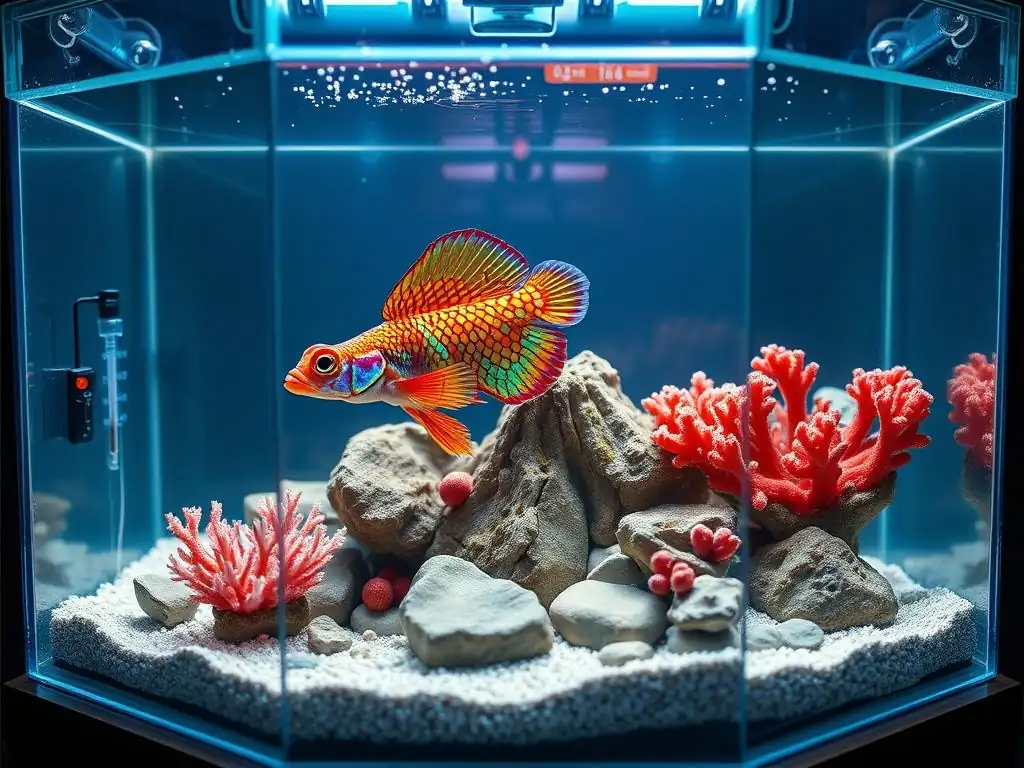
For a single Mandarin Dragonet, a quarantine tank of 10 to 20 gallons (approximately 38 to 76 liters) is generally sufficient. A 10-gallon tank can be adequate for observation and treatment, but a 20-gallon offers more stable water parameters and swimming room, especially for a slightly longer quarantine period. The most crucial design aspect is to keep the tank bare-bottom. This simplifies cleaning, allows for easy observation of the fish's waste (which can indicate internal parasites), and prevents medications from being absorbed by substrate or live rock, which can render them ineffective or toxic.
The design should prioritize functionality and the fish's comfort over aesthetics. Provide simple, non-porous hiding spots, such as PVC pipes or elbows (e.g., 1-inch to 2-inch diameter sections cut to 4-6 inches in length). These offer secure retreats for the Mandarin without interfering with medication dosages or harboring pathogens. Avoid using live rock or substrate from your main tank, as this defeats the purpose of quarantine by potentially introducing unwanted organisms. A basic lid is also recommended to prevent jumping and reduce evaporation, helping maintain stable salinity.
Essential Equipment for a Mandarin Dragonet Quarantine Setup: [Heater, Protein Skimmer, PVC Pipe]
A successful Dragonet quarantine protocol setup relies on a few key pieces of equipment. Firstly, a reliable heater is indispensable for maintaining a stable water temperature, typically between 76-78°F (24.4-25.5°C), which is crucial for the fish's metabolism and immune function. Use a heater with an external thermometer for accurate monitoring.
Secondly, while not strictly essential for very short-term (e.g., less than 2-week) quarantine, a small hang-on-back protein skimmer or an air-driven skimmer significantly improves water quality by removing organic waste. This is particularly beneficial if the quarantine period extends for several weeks or if heavy feeding of live copepods occurs, as it helps prevent ammonia and nitrite spikes.
Thirdly, simple PVC pipes, as mentioned, are perfect for providing hiding spots. They are inert, easy to clean, and do not absorb medications. In addition to these, you will need a small air pump with an air stone for oxygenation, a small powerhead for water circulation (especially important for even heat and medication distribution), and a basic light source. A simple LED light or even ambient room light is sufficient, as Mandarin Dragonets are not highly light-sensitive and prolonged intense lighting is unnecessary and can be stressful. The focus should be on creating a stable, clean, and secure environment.
Maintaining Optimal Water Parameters in the Quarantine Tank
Maintaining stable and optimal water parameters is paramount in a Mandarin Dragonet quarantine tank, as these fish are highly sensitive to fluctuations. Target parameters include a salinity of 1.023-1.025 specific gravity (33-35 ppt), a consistent temperature of 76-78°F (24.4-25.5°C), and a pH between 8.1 and 8.4. Regular testing, ideally daily, for ammonia, nitrite, and nitrate is critical, especially in a new or uncycled quarantine system. Even a slight ammonia or nitrite spike can be lethal to a delicate Mandarin.
To manage waste and maintain water quality, frequent small water changes are far more effective than large, infrequent ones. For instance, performing 10-20% water changes every 2-3 days, or even daily if medicating or if ammonia/nitrite are detected, helps keep parameters stable. Always use pre-mixed, aged saltwater that matches the quarantine tank's parameters. If the tank is uncycled, consider using an ammonia-detoxifying product like Seachem Prime, or, in some cases, a small piece of established biological media from a known healthy, disease-free main tank (if available) to kickstart the nitrogen cycle, though this carries a slight risk.
The Mandarin Dragonet Acclimation Process in Quarantine
Gradual Acclimation Techniques for Mandarin Dragonets: Reducing Stress
The acclimation process for Mandarin Dragonets into their quarantine tank must be slow and gentle to minimize stress. The drip acclimation method is highly recommended for such sensitive species. Begin by floating the sealed bag containing the Mandarin in the quarantine tank for 15-20 minutes to equalize temperature.
After this, carefully open the bag, roll down the edges to form a float, and use an airline tube with a knot or valve to slowly drip water from the quarantine tank into the bag. The drip rate should be very slow, aiming to double the volume of water in the bag over a period of 30-60 minutes.
During this process, keep the lights dim or off to reduce sensory overload for the fish. Once the water volume has doubled, gently net the Mandarin Dragonet from the bag and place it into the quarantine tank, discarding the bag water. Never introduce the water from the shipping bag into your quarantine tank, as it may contain high levels of ammonia, nitrates, or even pathogens. This careful, gradual acclimation is a fundamental step in ensuring the success of your Dragonet quarantine protocol setup.
Monitoring Water Chemistry During Acclimation: Ammonia, Nitrite, Nitrate
During and immediately after the acclimation of a new Mandarin Dragonet into a quarantine tank, rigorous monitoring of water chemistry is paramount. A newly set up quarantine tank is often uncycled, meaning it lacks the beneficial bacteria necessary to process fish waste. This can lead to rapid and dangerous spikes in ammonia and nitrite, both of which are highly toxic to fish, particularly delicate ones like Mandarins. Daily testing for ammonia, nitrite, and nitrate using reliable liquid test kits is absolutely essential for the first two weeks, and regularly thereafter.
If ammonia or nitrite levels are detected, immediate action is required. Perform a small (10-20%) water change using pre-mixed, matched saltwater. Consider using an ammonia-detoxifying product that temporarily neutralizes ammonia without interfering with the nitrogen cycle. While some aquarists opt to cycle their quarantine tank prior to use, others rely on daily water changes and chemical detoxifiers. The goal is to maintain ammonia and nitrite at zero parts per million (ppm) at all times to prevent undue stress and potential poisoning of the new arrival.
Initial Observation Period: Identifying Signs of Stress or Disease
The first 24 to 48 hours after introducing the Mandarin Dragonet to the quarantine tank are critical for initial observation. During this period, minimize disturbances to allow the fish to settle into its new environment. Look for immediate signs of stress: clamped fins, rapid breathing (gilling), dull or darkened coloration, erratic swimming, or excessive hiding. While some hiding is normal for a new fish, constant hiding or showing no interest in its surroundings can be a red flag.
Conversely, positive signs include the Mandarin actively exploring its new tank, exhibiting its natural vibrant colors, and showing interest in the tank's surfaces, indicative of its natural foraging behavior. This initial observation phase is crucial for establishing a baseline for the fish's health and behavior within the controlled environment of your Dragonet quarantine protocol setup. Any deviations from normal behavior should be noted and closely monitored, as they could be early indicators of underlying issues.
Mandarin Dragonet Quarantine Observation: Detecting and Addressing Potential Issues
Recognizing Common Mandarin Dragonet Issues: [Malnutrition, Internal Parasites, Secondary Infections]
During the quarantine period, diligent observation is key to identifying and addressing potential health issues in Mandarin Dragonets. Three common problems frequently encountered are malnutrition, internal parasites, and secondary infections. Malnutrition is often evident by a sunken belly, lethargy, and dull coloration, as Mandarins are notoriously difficult to feed initially, often refusing anything but live copepods. Internal parasites can manifest as stringy white feces, continued weight loss despite apparent feeding, or unusual swelling. Secondary infections, which often capitalize on a weakened immune system, can appear as cottony growths (fungal), cloudy eyes, fin rot, or red sores (bacterial).
Early detection of these issues significantly improves the chances of successful treatment. Regularly inspect the Mandarin Dragonet closely, ideally several times a day. Pay attention to subtle changes in its physical appearance, swimming patterns, and waste products. Keep a detailed log of your observations, including feeding activity, any symptoms noticed, and medication dosages. This systematic approach to observation is an indispensable component of any effective Dragonet quarantine protocol setup.
Observing Mandarin Dragonet Feeding Behavior: Ensuring Adequate Nutrition
A critical aspect of Mandarin Dragonet quarantine observation is diligently monitoring their feeding behavior. Mandarins are micro-predators, constantly picking at surfaces for tiny copepods and other microfauna. In the quarantine tank, you should observe them actively "hunting" on the glass, PVC pipes, and any other surfaces. Note whether they are showing interest in and consuming the food you offer. A healthy Mandarin will exhibit constant foraging behavior; a lack of interest in food or a refusal to eat for more than 24-48 hours is a severe warning sign.
If the Mandarin is not eating, immediate action is required. This may involve increasing the frequency of live copepod additions, trying different species of copepods, or attempting to entice them with highly enriched frozen foods like cyclop-eeze or baby brine shrimp. A sunken belly is a clear indicator of insufficient food intake and requires urgent intervention. Ensuring consistent and adequate nutrition is paramount for their recovery and long-term survival, making careful feeding observation a core pillar of your Dragonet quarantine protocol setup.
Treating Mandarin Dragonet Parasites During Quarantine: Choosing the Right Medications
Should parasites or diseases be detected during the quarantine period, the isolation of the Mandarin Dragonet allows for targeted and effective treatment without harming the main display tank's inhabitants, especially sensitive corals and invertebrates. For external parasites like marine Ich or Velvet, copper-based medications such as Copper Power or Seachem Cupramine are highly effective. Alternatively, Chloroquine Phosphate can also be used. For suspected internal parasites, medicated foods containing Metronidazole or Praziquantel are often the preferred approach, as they deliver the medication directly to the gut.
It is crucial to exercise extreme caution when medicating Mandarin Dragonets, as their scaleless bodies make them particularly sensitive to many common fish medications. Always start with a half-dose and carefully observe the fish for any adverse reactions. Follow the medication instructions precisely regarding dosage, duration, and water change protocols. Remove any carbon filtration during treatment, as it will absorb the medication. The ability to safely and effectively treat illnesses in isolation is one of the most significant advantages of a well-executed Dragonet quarantine protocol setup.
Mandarin Dragonet Feeding Strategies During Quarantine: Encouraging Healthy Eating Habits
Providing a Varied Diet: Live Copepods and Frozen Alternatives for Mandarin Dragonets
The cornerstone of successful Mandarin Dragonet husbandry, particularly during quarantine, is a consistent supply of live copepods. These fish are highly specialized micro-predators, and their unique feeding mechanism is adapted for hunting tiny, live crustaceans. Species such as Tisbe, Tigriopus, and Apocyclops are excellent choices. For a Mandarin to thrive, it is almost always necessary to provide live copepods daily, especially in the initial stages of quarantine. A single Mandarin can consume thousands of copepods per day, so a robust supply is vital.
Once the Mandarin is consistently and enthusiastically consuming live copepods, you can gradually attempt to introduce frozen alternatives. Highly enriched frozen foods like Cyclop-eeze, enriched brine shrimp, and small mysis shrimp are often accepted. Some aquarists have success with finely chopped frozen clam or rotifers. However, it's important to understand that many Mandarins may never fully transition to frozen foods, and live copepods will remain a staple of their diet. The goal is to provide as varied a diet as possible, always prioritizing what the fish will readily eat. This comprehensive feeding strategy is a critical element of a successful Dragonet quarantine protocol setup.
Addressing Picky Eaters: Culturing Copepods and Offering Live Food
If a Mandarin Dragonet proves to be a particularly picky eater, refusing anything but live food, culturing your own copepods becomes an invaluable strategy. Copepod culture kits and starter cultures are readily available, allowing you to establish a continuous supply of live food. This ensures that even the most finicky Mandarin has access to its preferred diet, preventing starvation and promoting recovery. Basic copepod culture typically involves using a phytoplankton culture as a food source for the copepods in a dedicated vessel.
When feeding live copepods in the quarantine tank, consider introducing them in small batches several times throughout the day rather than one large dump. This mimics their natural foraging environment and ensures a continuous supply. For very shy or stressed Mandarins, using a "copepod drip" system can be effective, slowly releasing copepods into the tank over an extended period. Some aquarists also introduce a small, known-clean piece of live rock with an established copepod population to encourage natural foraging, though this does carry a minimal risk of introducing other organisms.
Monitoring Food Intake and Adjusting Feeding Strategies as Needed
Continuous monitoring of the Mandarin Dragonet's food intake is non-negotiable throughout the quarantine period. The most reliable indicator of adequate nutrition is the fish's belly; a well-fed Mandarin will have a rounded, full appearance, while a hungry or malnourished one will exhibit a concave or sunken belly. Observing the frequency and enthusiasm of its foraging behavior is also key. If the fish appears to be losing weight or is not actively hunting, adjustments to the feeding strategy are immediately necessary.
This might involve increasing the quantity or frequency of live copepod additions, trying different copepod species, or attempting to offer different frozen foods. It's often better to slightly overfeed copepods in the quarantine tank than to risk malnutrition, especially since the bare-bottom design allows for easy removal of uneaten food. Regularly assess the Mandarin's condition and adapt your feeding regimen accordingly to ensure it receives sufficient sustenance, a vital step in any thorough Dragonet quarantine protocol setup.
Mandarin Dragonet Quarantine Period Length and Release Procedures
Determining the Appropriate Quarantine Duration for Mandarin Dragonets
The appropriate quarantine duration for Mandarin Dragonets, as part of a comprehensive Dragonet quarantine protocol setup, is generally a minimum of 4 to 6 weeks. This period allows sufficient time for common external parasites like marine Ich ( Cryptocaryon irritans) to complete their life cycle and become visible, enabling detection and treatment. If any signs of disease are observed, or if medication is administered, the quarantine clock should effectively "reset" after the last day of treatment. For example, if a fish is treated for Ich for 14 days, the 4-6 week observation period should ideally begin after the completion of that treatment.
The duration also depends heavily on the individual fish's health and behavior. A Mandarin that is eating consistently, active, vibrant in color, and shows no signs of stress or illness after the minimum observation period, and after any necessary treatments have concluded, is ready for transfer. Some highly cautious aquarists extend the quarantine to 8 weeks for delicate species like Mandarins, particularly if they were initially very stressed or underweight, to ensure maximum recovery and resilience before introduction to the main display.
Final Health Check Before Introducing Mandarin Dragonets to the Main Tank
Before initiating the transfer of your Mandarin Dragonet from the quarantine tank to the main display, a thorough final health check is imperative. Visually inspect the fish for any lingering signs of illness: ensure its eyes are clear, fins are intact and not clamped, coloration is vibrant and natural, and there are no spots, lesions, or unusual growths on its body. Observe its swimming behavior; it should be strong, purposeful, and coordinated. Most importantly, confirm that the Mandarin has a full, rounded belly, indicating consistent and adequate feeding.
In addition to the visual inspection, ensure that the water parameters in the quarantine tank closely match those of the main display tank. Perform a final set of water tests for salinity, temperature, and pH in both tanks. Gradual adjustments can be made to the quarantine tank's parameters over a day or two if significant discrepancies exist, to minimize physiological shock during the transfer. This meticulous final check is a crucial last step in your Dragonet quarantine protocol setup.
Gradual Introduction to the Main Tank: Minimizing Stress and Competition
Introducing the Mandarin Dragonet to the main display tank requires a careful, gradual approach to minimize stress and potential aggression from existing inhabitants. One effective method is to float the Mandarin in a clear plastic container (like a specimen cup with holes) in the main tank for several hours. This allows the Mandarin to visually acclimate to its new surroundings and for the existing fish to see the new arrival without direct physical interaction, potentially reducing territorial disputes.
Ideally, introduce the Mandarin when the main tank lights are dim or off, preferably at night. This provides the fish with an opportunity to explore its new environment and find hiding spots without immediate harassment or competition. Ensure that your main tank has ample hiding spots and, critically, a robust, thriving copepod population to support the Mandarin's dietary needs. Directly introduce the fish near a known copepod-rich area, such as a refugium outflow or established live rock, to encourage immediate foraging and reduce stress.
Maintaining a Healthy Reef Ecosystem After Mandarin Dragonet Introduction
Ongoing Observation: Monitoring Mandarin Dragonet Behavior and Health
Even after the successful completion of your Dragonet quarantine protocol setup and the introduction of the Mandarin to the main display tank, ongoing observation remains crucial for its long-term health and the overall well-being of your reef ecosystem. Continue to monitor the Mandarin's behavior daily. Look for consistent foraging activity, vibrant coloration, and a full belly. Pay attention to any changes in its swimming patterns, interactions with other tank mates, or signs of stress such as hiding excessively, clamped fins, or rapid breathing.
Observe how the Mandarin integrates with the existing fish community. While Mandarins are generally peaceful, aggressive tank mates could potentially outcompete them for food or stress them, leading to a decline in health. Early detection of any issues, whether related to health or social dynamics, allows for timely intervention, such as providing supplemental feeding in a designated area or, in rare cases, considering the removal of an overly aggressive tank mate.
Regular Water Testing and Maintenance: Preventing Parasite Outbreaks
Maintaining pristine and stable water quality in the main reef tank is paramount for the continued health of your Mandarin Dragonet and the prevention of future disease outbreaks. Even with a thorough Dragonet quarantine protocol setup, a healthy environment is the best defense against opportunistic pathogens. Conduct regular water testing for essential parameters such as salinity (1.025-1.026 SG), temperature (76-78°F), pH (8.1-8.4), alkalinity (8-12 dKH), calcium (400-450 ppm), and magnesium (1250-1350 ppm). Also, monitor nitrates and phosphates, keeping them at low, acceptable levels for a reef system.
Consistent maintenance, including regular water changes (e.g., 10-20% weekly or bi-weekly depending on bioload), proper protein skimming, and efficient filtration, helps to reduce organic waste and maintain a stable environment. A clean and stable system strengthens the immune systems of all inhabitants, making them more resilient to environmental stressors and less susceptible to disease should any low-level pathogens be present.
Ensuring a Sustainable Copepod Population: Supporting the Mandarin Dragonet's Diet
For the long-term success of your Mandarin Dragonet, ensuring a sustainable and thriving copepod population within the main display tank is absolutely critical. Mandarins are constant grazers and can quickly deplete copepod populations in tanks without sufficient microfauna production. A mature refugium plumbed into the main system, cultivated with macroalgae like Chaetomorpha or Gracilaria, is highly recommended. Refugiums provide an ideal habitat for copepods to breed and multiply without predation, constantly seeding the main display with a fresh supply of food.
Even with a refugium, it is often beneficial to supplement the tank with live copepod additions every 1-2 months, especially in smaller reef tanks (under 50 gallons) or tanks with multiple copepod-eating fish. This helps to replenish the population and ensure the Mandarin has constant access to its natural food source. Observing the Mandarin's belly condition regularly will serve as your best guide; a consistently full belly indicates a healthy and thriving copepod supply, ensuring the Mandarin's continued health and vibrant coloration.
Frequently Asked Questions
What is the primary reason for quarantining a dragonet before introducing it to my main display tank?
The primary reason is to prevent the introduction of parasites and diseases into your established aquarium, which can be devastating to your entire ecosystem. Quarantine allows for observation and treatment in a controlled environment.
What size quarantine tank is recommended for a dragonet, considering their specific needs?
A 10-gallon tank is generally recommended, providing sufficient space for the dragonet to establish itself and forage. It should be appropriately cycled before adding the dragonet.
What specific water parameters should I monitor closely during the dragonet's quarantine period?
Closely monitor ammonia, nitrite, and nitrate levels. Maintaining stable and healthy water parameters is crucial for the dragonet's survival and the effectiveness of any medication or treatment.
How long should a dragonet typically remain in quarantine before being introduced to the main display tank?
A quarantine period of 4 to 6 weeks is generally recommended. This allows ample time to observe for signs of illness and administer any necessary treatments effectively.
What feeding strategies are crucial for dragonets during quarantine, considering their often picky eating habits?
Offer a variety of small, live foods, such as copepods and amphipods, to encourage feeding. Observe the dragonet closely to ensure it is actively eating and not losing weight.
Final Reflection: Safeguarding the Future of Nano Reefs
The meticulous steps outlined in this article, focused on establishing a robust dragonet quarantine protocol, are not merely theoretical exercises. They represent a crucial defense against the introduction of disease and parasites into the delicate balance of our nano reef ecosystems, a reality that becomes increasingly vital as the popularity of these miniature underwater worlds continues to grow. Neglecting these precautions can have devastating consequences, impacting not only individual dragonets but the entire health and stability of the reef.
The practice of quarantining, while seemingly tedious, underscores a deeper understanding of our responsibility as stewards of these fragile environments. It's a testament to our commitment to ethical reef keeping, acknowledging that the well-being of these creatures is inextricably linked to our own actions. The greatness of a nation and its moral progress can be judged by the way its animals are treated.
- Mahatma Gandhi. This quote, though not directly about reef keeping, resonates deeply with the spirit of responsible aquarium management, urging us to prioritize the health and welfare of the animals under our care.
Now, as you embark on or continue your journey in nano reef keeping, consider the profound impact of your choices. Will you embrace the discipline of quarantine, ensuring the long-term health and vibrancy of your dragonets and the entire ecosystem they inhabit? Let this article serve as a reminder that diligent preparation and proactive care are not just best practices, but acts of profound respect for the delicate beauty and interconnectedness of life within your nano reef.
Ignite Your Nano Reef's Resilience
Thanks for diving into the world of dragonet care! We hope you found valuable insights to ensure a thriving nano ecosystem. Now, let’s transform that knowledge into action to protect your fascinating creatures.
Here's how you can make a difference:
- Immediately establish a dedicated quarantine tank. This is absolutely critical for isolating new dragonets and preventing potential disease outbreaks in your main display tank.
- Share this article with fellow nano reef enthusiasts. Help spread awareness about responsible dragonet care.
- Document your quarantine process and share your observations online! Your experiences can help others facing similar challenges.
What specific signs of stress or illness are you most concerned about observing in your quarantined dragonets, and what's your planned response?