
Snails, Crabs, and Beyond: The Unsung Heroes of Reef Tank Maintenance

Welcome to Aquarium Mastery!
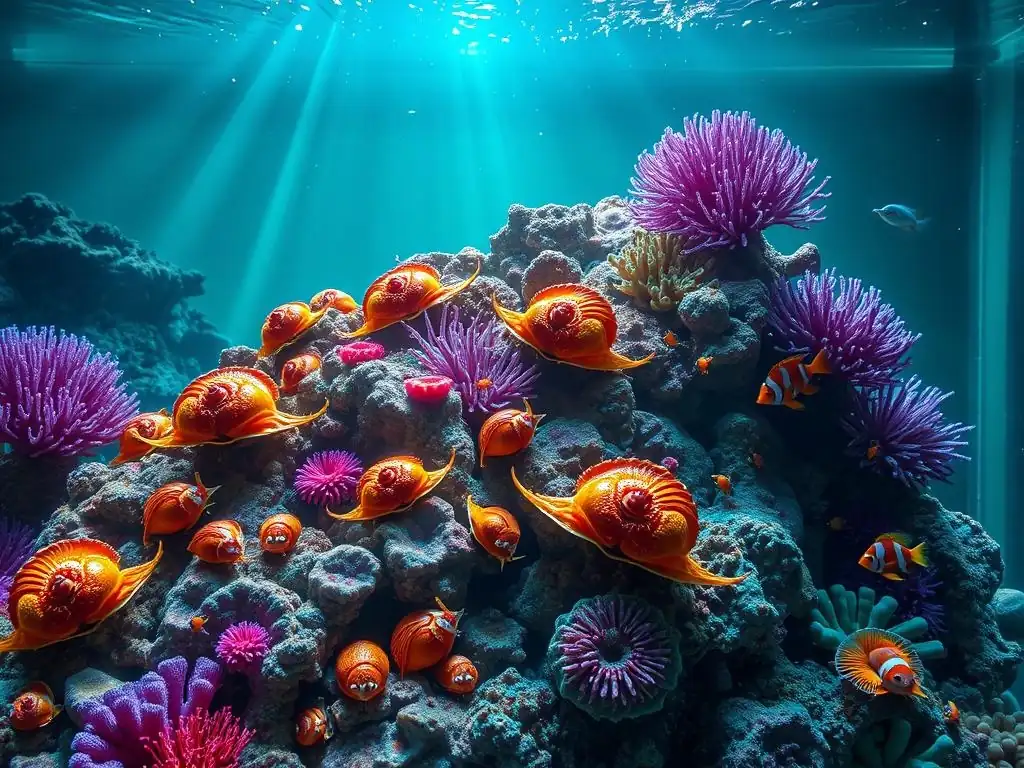
Ever wondered how to keep your reef tank sparkling clean and thriving without endless scrubbing? Dive into the fascinating world of Reef Tank Snail Care and discover the unsung heroes that work tirelessly to maintain a balanced ecosystem. Learn how these little critters, along with their crustacean companions, can revolutionize your reef keeping experience. Ready to unlock the secrets to a pristine and vibrant reef? Let's explore!
- Reef Tank Clean-Up Crew: Maintaining a Healthy Ecosystem
- Understanding the Importance of a Clean-Up Crew
- Reef Tank Snail Care
- Reef-Safe Crabs
- Selecting Crab Species
- Caring for Reef Crabs
- Other Beneficial Invertebrates
- Integrating Invertebrates into the Reef Tank
- Maintaining a Balanced Reef Ecosystem
- Troubleshooting with Invertebrates
- Maximizing Clean-Up Crew Effectiveness
- Conclusion: Invertebrates and Reef Tank Success.
- Frequently Asked Questions
- Final Reflection: The Silent Symphony of Reef Health
- Transform Your Reef Tank Today!
Reef Tank Clean-Up Crew: Maintaining a Healthy Ecosystem
Understanding the Importance of a Clean-Up Crew
The Role of Invertebrates in Reef Health
A thriving reef aquarium relies on more than just fish and corals; it depends heavily on its unsung heroes: the clean-up crew (CUC). This diverse group of invertebrates, including snails, crabs, and various other species, plays a vital role in mimicking the natural processes found on wild coral reefs. They act as the tank's biological janitors, consuming detritus, uneaten food, and nuisance algae, thereby preventing the accumulation of organic waste that can degrade water quality.
By actively grazing and scavenging, these invertebrates contribute significantly to the overall stability and health of the reef ecosystem. Their continuous activity helps break down organic matter, making nutrients available for beneficial bacteria or removing them from the water column entirely. This natural form of waste management reduces the burden on mechanical filtration and chemical media, creating a more balanced and resilient environment for sensitive corals and fish.
Biological Filtration and Waste Removal
The clean-up crew directly supports the biological filtration system by actively consuming organic waste before it can break down into harmful compounds. Detritivores like certain crabs and snails efficiently process uneaten food, fish waste, and decaying plant matter, converting them into less toxic forms or simply removing them from the system. This proactive removal prevents the initial stages of the nitrogen cycle from becoming overwhelmed, thereby reducing the likelihood of ammonia and nitrite spikes.
Furthermore, the continuous consumption of organic debris by the CUC can significantly reduce the overall nutrient load in a reef tank. For instance, a well-balanced clean-up crew can help mitigate nitrate accumulation by an estimated 10-20% compared to tanks lacking sufficient invertebrate populations. By removing the source material for nitrate production, they lessen the demand on water changes and denitrification processes, contributing to a more stable and cleaner aquatic environment.
Preventing Algae Blooms and Maintaining Aesthetics
One of the most visible and appreciated roles of the clean-up crew is their relentless effort in preventing and controlling nuisance algae blooms. Herbivorous snails and crabs are specialized grazers that target various types of undesirable algae, including unsightly diatoms, green hair algae, and film algae that can quickly coat rocks, sand, and glass surfaces. Their constant foraging helps keep these photosynthetic pests in check.
The consistent grazing activity of these invertebrates maintains the pristine aesthetics of a reef tank, allowing the vibrant colors of corals and fish to truly stand out. For example, a robust population of Nerite snails can keep the front glass of a 75-gallon tank visibly clearer for several weeks without manual scrubbing. Without a dedicated clean-up crew, algae can rapidly proliferate, outcompeting corals for light and space, and diminishing the visual appeal of the entire aquarium.
Reef Tank Snail Care
Selecting Appropriate Snail Species
Choosing the right snail species is a crucial aspect of effective reef tank snail care and forms the foundation of a successful clean-up crew. It's essential to select species that are truly reef-safe, meaning they will not harm corals, other invertebrates, or fish. A diverse selection of snails is often more effective than a monoculture, as different species specialize in consuming different types of algae or cleaning specific areas of the tank, from the glass to the deep sand bed.
Consider the specific needs of your reef tank when making your selections. For instance, a tank prone to film algae might benefit more from Trochus or Nerite snails, while one with a thick sand bed would greatly benefit from Cerith or Nassarius snails. Understanding each species' preferred diet, size, and behavior is key to building an efficient and harmonious clean-up crew that addresses your tank's unique challenges.
Trochus Snails: Efficient Algae Grazers
Trochus snails (e.g., Trochus histrio, T. maculatus) are highly regarded in reef tank snail care for their exceptional ability to graze on various types of nuisance algae. Recognizable by their conical, spiraled shells, they are robust and can right themselves if they fall upside down, a significant advantage over some other snail species. They are particularly effective at consuming film algae, diatoms, and even some hair algae from live rock, powerheads, and tank glass.
These industrious grazers are active day and night, making them constant contributors to algae control. A single Trochus snail, typically growing to 1 to 1.5 inches in diameter, can effectively graze an area of approximately 1-2 square feet of rock surface, making them highly efficient for a standard 50-gallon reef tank with a stocking density of 5-7 individuals. Their consistent grazing prevents algae from establishing a firm foothold, maintaining a cleaner and healthier environment.
Nerite Snails: Algae Control on Glass and Decorations
Nerite snails (marine species like Neritina natalensis) are another cornerstone of effective reef tank snail care, particularly valued for their precision in cleaning smooth surfaces. Their small size, typically under an inch, and hardy nature make them excellent additions. They are exceptionally good at consuming green film algae and diatoms from the aquarium glass or acrylic, as well as powerheads and other tank equipment, leaving distinctive squiggly grazing trails.
Unlike some other snails, Nerite snails rarely venture onto the sand bed, preferring vertical or smooth surfaces. This specialization makes them indispensable for maintaining crystal-clear viewing panes. A common stocking density for effective glass cleaning is 1-2 Nerite snails per 10 gallons of water, ensuring that even stubborn film algae is kept in check. They generally have a lifespan of 1-2 years in optimal reef tank conditions.
Cerith Snails: Sandbed Cleaners
Cerith snails ( Cerithium spp.) are essential for comprehensive reef tank snail care, especially for tanks with a sand bed. These snails are easily identified by their elongated, conical shells and their characteristic burrowing behavior. They spend much of their time sifting through the sand, performing a dual role as both detritus consumers and substrate aerators.
As they burrow, Cerith snails consume detritus, uneaten food, and microalgae that settle in the sand, preventing nutrient buildup. Their constant movement also helps aerate the sand bed, significantly reducing the risk of anaerobic pockets forming, which can release harmful hydrogen sulfide gas. A healthy stocking rate of 1-2 Cerith snails per square foot of sandbed ensures consistent sand turnover and detritus removal, and they are also known to graze on cyanobacteria, making them a versatile clean-up crew member.
Acclimation to the Reef Tank
Proper acclimation is a critical step in reef tank snail care, as snails are particularly sensitive to sudden changes in salinity, temperature, and pH. A slow drip acclimation method is highly recommended to minimize stress and ensure their survival. This process allows the snails to gradually adjust to the new water parameters, preventing osmotic shock.
To perform drip acclimation, place the snails and their shipping water in a clean bucket. Using airline tubing and a knot or airline valve, create a slow drip from your display tank into the bucket, aiming for 1-2 drips per second. Allow this process to continue for at least 30-60 minutes, or until the volume of water in the bucket has quadrupled.
Crucially, avoid exposing snails directly to air during transfer, as they can trap air bubbles in their shells, which can be fatal. Gently scoop them into the tank using a small cup or by hand, placing them on the rockwork or sand bed.
Maintaining Optimal Water Parameters for Snails
Consistent and stable water parameters are paramount for successful reef tank snail care and the long-term health of your clean-up crew. Key parameters include salinity (1.024-1.026 specific gravity), temperature (75-80°F / 24-27°C), alkalinity (8-12 dKH), calcium (400-450 ppm), and magnesium (1250-1350 ppm). Fluctuations outside these ranges can severely stress snails, leading to reduced activity, shell erosion, or even death.
Alkalinity, calcium, and magnesium are particularly vital for the development and maintenance of healthy shells, as snails utilize these elements for calcification. If these parameters are consistently low, snail shells can become pitted or thin, making them vulnerable. Regular testing, ideally weekly for alkalinity and calcium, ensures these elements remain within optimal ranges. Maintaining stability over absolute target numbers is often more beneficial, as consistent conditions allow snails to thrive without constant environmental shock.
Troubleshooting Snail Issues
Even with diligent reef tank snail care, issues can arise that impact the health and effectiveness of your snail population. Common problems include shell erosion, predation, and insufficient food. Identifying the symptoms early and understanding the underlying causes is crucial for prompt and effective intervention, ensuring your clean-up crew remains a vital asset to your reef ecosystem.
When troubleshooting, begin by observing the snails' behavior and appearance. Are they active, or are they withdrawn into their shells? Are there any visible signs of damage or deterioration? Next, review your water parameters, feeding habits, and tank inhabitants. Often, a small adjustment to one of these factors can resolve the issue before it escalates into a larger problem for your entire clean-up crew.
Shell Erosion: Causes and Prevention
Shell erosion in snails is a common issue in reef tanks, primarily caused by prolonged exposure to suboptimal water parameters, particularly low pH, low alkalinity, or insufficient calcium levels. When the pH consistently drops below 8.0, the water becomes more acidic, slowly dissolving the snail's calcareous shell. Symptoms include a pitted, bleached, or thinned appearance on the shell, especially near the apex.
Prevention hinges on maintaining stable and optimal water chemistry as discussed previously. Regularly test and dose alkalinity, calcium, and magnesium to ensure they remain within the ideal ranges for calcification. Additionally, ensure snails are not left stranded above the waterline for extended periods during maintenance or due to strong flow, as air exposure can also contribute to shell degradation. Addressing the root cause will halt further erosion and allow the snail to potentially repair its shell.
Predation: Identifying and Mitigating Threats
Predation is a significant threat to reef tank snail care, leading to unexplained disappearances or the discovery of empty, damaged shells. Common predators include certain fish species like puffers, triggers, and some wrasses, as well as opportunistic crabs like large Mithrax species (beyond the standard Emerald crab) or even hungry Arrow crabs. Symptoms often include perfectly drilled holes in snail shells or completely missing snails.
Mitigation involves careful selection of tank mates. Research the compatibility of all fish and invertebrates before introducing them. If a specific predator is identified, consider its rehoming to a more suitable environment. For instance, a single hungry Emerald crab, if not adequately fed, can decimate a snail population in a 20-gallon tank within days, turning from a beneficial algae eater into a destructive predator. Observing interactions closely, especially with new additions, is vital.
Insufficient Food: Supplementing Diet
In mature, ultra-clean reef tanks with minimal nuisance algae, snails may suffer from insufficient food, leading to inactivity, retraction into their shells, or even starvation and rapid die-off. While the primary role of snails is to consume natural algae and detritus, an overly efficient clean-up crew or a tank with very low nutrient input might not provide enough sustenance for a large snail population.
Symptoms of insufficient food include snails congregating near powerheads or overflow boxes (seeking flow-borne food particles), or simply becoming inactive and not grazing. To supplement their diet, offer algae wafers, spirulina flakes, blanched vegetables (like zucchini or nori), or even small pieces of marine pellets. Place food near inactive snails, ideally after lights out. In a tank with very low natural algae, even a small population of 5-10 snails might require supplementation 2-3 times per week to remain healthy and active.
Reef-Safe Crabs
Emerald Crabs: Bubble Algae Control
Emerald crabs ( Mithraculus sculptus) are a popular choice for reef tanks, primarily revered for their ability to consume nuisance bubble algae ( Valonia spp.). These distinctive green crabs, typically growing to about 2 inches, are one of the few invertebrates that consistently graze on this stubborn form of algae, which can quickly spread and become an eyesore in a reef system.
While their primary diet consists of algae and detritus, individual preferences can vary; some Emerald crabs are more enthusiastic bubble algae eaters than others. A single Emerald crab can often clear a moderate bubble algae outbreak in a 50-gallon tank within a few weeks, though it's important to monitor their behavior as some individuals can become opportunistic predators if underfed or if the tank lacks sufficient natural food sources. Providing supplemental food can help keep them focused on algae.
Hermit Crabs: Detritus Removal and Sand Bed Aeration
Hermit crabs, particularly species like Blue Leg Hermit Crabs ( Clibanarius tricolor) and Red Leg Hermit Crabs ( Paguristes cadenati), are common and highly beneficial members of the clean-up crew. They are opportunistic scavengers, constantly sifting through the sand and rockwork in search of detritus, uneaten food, and decaying organic matter. Their continuous foraging helps keep the tank substrate clean and free of accumulating debris.
Beyond detritus removal, many hermit crab species contribute to sand bed aeration as they burrow and move. This activity helps prevent the formation of anaerobic pockets within the sand, which can release harmful gases. A population of 5-10 small hermit crabs in a 30-gallon tank can significantly reduce detritus accumulation on the substrate, making them invaluable for maintaining a healthy and balanced reef environment. Remember to always provide a selection of empty shells for them to move into as they grow.
Porcelain Crabs: Filter Feeding and Symbiotic Relationships
Porcelain crabs ( Porcellanidae family) are unique and fascinating members of the clean-up crew, distinct from true crabs due to their flat bodies and specialized feeding methods. These small, often strikingly patterned crabs are primarily filter feeders, using specialized feathery appendages (setae) to sieve plankton and particulate matter from the water column. They are generally peaceful and pose no threat to corals or other invertebrates.
Many species of porcelain crabs form symbiotic relationships with anemones or corals, seeking protection within their stinging tentacles while benefiting from the water flow that brings them food. They are excellent at maintaining water clarity by removing suspended particles, contributing to the overall health of the ecosystem without actively grazing on algae or detritus from surfaces. They are a delicate addition, requiring stable water conditions and a mature tank with ample micro-plankton.
Selecting Crab Species
Tank Size and Compatibility Considerations
When selecting crab species for your reef tank, it is paramount to consider the size of your aquarium and the compatibility with existing inhabitants. While many crabs are beneficial, some can grow quite large or exhibit aggressive tendencies, making them unsuitable for smaller tanks or those with delicate fish and invertebrates. A crab that is peaceful in a 100-gallon system might become a nuisance or predator in a 20-gallon nano tank due to limited space and resources.
Researching the adult size and temperament of each crab species is crucial. For example, while the standard Emerald crab is generally reef-safe, larger Mithrax species can become opportunistic predators of snails, small fish, or even corals. Ensuring that a crab's potential size and behavior align with your tank's capacity and community will prevent future conflicts and maintain a harmonious environment.
Avoiding Problematic Crab Species
Not all crabs are suitable for the communal environment of a reef tank; some species can be highly problematic and should generally be avoided. Large, predatory crabs such as some true crabs (e.g., certain stone crabs or large shore crabs) can easily decimate fish and invertebrate populations. Even some commonly sold "reef-safe" crabs can become problematic under certain conditions.
For instance, Arrow Crabs ( Stenorhynchus seticornis), while sometimes touted for their appetite for bristle worms, can also prey on small fish, ornamental shrimp, and feather duster worms, making them a risky addition to a diverse reef tank. Similarly, some Sally Lightfoot crabs ( Percnon gibbesi) can become predatory, especially in smaller tanks or if underfed, attacking snails and even small fish. Always err on the side of caution and prioritize truly reef-safe, non-aggressive species to maintain the integrity of your ecosystem.
Understanding Crab Behavior and Requirements
A thorough understanding of specific crab behavior and their environmental requirements is vital for their successful integration into a reef tank. Different crab species have unique needs, such as burrowing capabilities, hiding preferences, or the necessity for additional shells for hermit crabs. Neglecting these requirements can lead to stress, aggression, or even the loss of the crab.
For hermit crabs, providing an ample supply of empty shells of various sizes (at least 2-3 shells per crab, slightly larger than their current one) is critical. Without suitable shell options, hermit crabs are known to attack and kill snails to acquire their shells, turning a beneficial clean-up crew member into a destructive force. Observing their natural behaviors, like molting (shedding their exoskeleton), and ensuring stable conditions during these vulnerable periods will contribute to their long-term health and effectiveness.
Caring for Reef Crabs
Providing Suitable Habitat and Substrate
Proper habitat and substrate are essential for the well-being of reef crabs, influencing their activity, feeding behavior, and overall health. Most reef-safe crabs benefit from ample live rock, which provides numerous crevices and hiding spots. These hiding places offer security and a retreat during molting periods, when crabs are particularly vulnerable.
For species that burrow or sift, such as many hermit crabs, a suitable sand bed is crucial. A deep sand bed (3-4 inches) allows them to engage in natural behaviors, contributing to the aeration of the substrate. Ensuring a varied landscape with both open areas and protected zones will encourage natural foraging behaviors and reduce stress, promoting a healthier and more active clean-up crew.
Supplementing Crab Diets
While many reef crabs are excellent scavengers and detritivores, relying on uneaten food and naturally occurring algae, supplementing their diet can be beneficial, especially in very clean tanks or if you notice them becoming overly aggressive towards other tank inhabitants. A well-fed crab is less likely to become an opportunistic predator on your snails or other invertebrates.
Offer small amounts of meaty foods such as mysis shrimp, brine shrimp, or finely chopped seafood a few times a week. This supplemental feeding not only ensures their nutritional needs are met but also helps curb any predatory tendencies they might develop due to hunger. Supplementing their diet 2-3 times per week can significantly reduce instances of crabs harassing other clean-up crew members or even nipping at corals.
Monitoring Crab Health and Addressing Issues
Regularly monitoring the health and behavior of your reef crabs is an important aspect of their care. Observe for signs of stress, inactivity, or unusual aggression towards tank mates. A healthy crab should be active, foraging, and exhibiting natural behaviors for its species. One common and healthy behavior to observe is molting.
When a crab molts, it sheds its old exoskeleton, which might appear as a complete, intact shell. It is crucial not to remove this shed exoskeleton immediately, as the crab may consume it to reabsorb valuable calcium for hardening its new shell. During this vulnerable period, ensure water parameters are stable and provide ample hiding spots. If a crab becomes consistently inactive, loses limbs without molting, or exhibits abnormal behavior, it may indicate poor water quality, insufficient food, or the presence of a predator, warranting further investigation.
Other Beneficial Invertebrates
Shrimp: Cleaner and Peppermint Shrimp
Shrimp are highly valued members of the reef tank clean-up crew, adding both utility and visual interest. Cleaner shrimp ( Lysmata amboinensis), such as the Skunk Cleaner Shrimp, are renowned for their symbiotic relationship with fish, setting up "cleaning stations" where they remove parasites and dead skin from fish. This behavior not only helps maintain fish health but also provides fascinating interactions for observation.
Peppermint shrimp ( Lysmata wurdemanni) are another popular choice, primarily for their documented ability to consume nuisance Aiptasia anemones. While their effectiveness can vary between individuals, they are often successful in controlling small outbreaks of these stinging pests, with a reported success rate of around 60-70% for minor infestations. Both cleaner and peppermint shrimp are generally peaceful, adding a dynamic element to the reef environment.
Starfish: Sand Sifting and Brittle Stars
Starfish can be valuable additions to a reef tank's clean-up crew, performing specialized roles. Sand sifting starfish ( Archaster typicus) are excellent at aerating and cleaning the sand bed, constantly sifting through the substrate to consume detritus and uneaten food. However, they require large, mature sand beds (typically a minimum of 100 gallons with a 3-inch sand bed) to find sufficient food, as they can quickly starve in smaller or nutrient-poor systems.
Brittle stars ( Ophiocoma spp.) and serpent stars are highly efficient scavengers, with long, slender arms that allow them to reach into crevices and across large areas of rockwork and sand. They consume uneaten food, detritus, and decaying organic matter, making them invaluable for nutrient control. Most brittle stars are reef-safe and can grow quite large (4-10 inches in diameter), but are usually very reclusive, emerging primarily after lights out.
Sea Cucumbers: Detritus Removal
Sea cucumbers, while less common in general reef tanks due to their sensitivity, can be incredibly efficient detritivores. Species like the Tiger Tail Sea Cucumber ( Holothuria hilla) or the Sand-Sifting Sea Cucumber ( Holothuria edulis) are specialized in processing large amounts of sand or substrate to extract organic matter and detritus. They act as living sand filters, converting waste into less harmful forms and contributing to the overall cleanliness of the tank.
However, sea cucumbers require very stable water conditions and are highly sensitive to sudden changes in salinity, temperature, and particularly to medications containing copper. If stressed or dying, some species can release toxins that may harm other tank inhabitants, making careful selection and monitoring crucial. A single medium-sized sand-sifting sea cucumber can process several pounds of sand per day, significantly reducing detritus buildup in the substrate.
Integrating Invertebrates into the Reef Tank
Quarantine Procedures
Implementing strict quarantine procedures for all new invertebrates is a crucial step to prevent the introduction of diseases, parasites, and unwanted pests into your established reef tank. Even seemingly harmless snails or crabs can harbor flatworms, Aiptasia anemones, or other undesirable organisms that can quickly spread and wreak havoc in your main display.
A simple quarantine setup, consisting of a small tank (5-10 gallons), a heater, and a small powerhead for circulation, is sufficient. Observe new invertebrates in this separate system for a period of 2-4 weeks, checking for any signs of illness, parasites, or the presence of hitchhiking pests. This proactive measure, while requiring patience, significantly reduces the risk of costly and frustrating outbreaks in your main display tank.
Gradual Introduction
Once new invertebrates have successfully completed their quarantine period, a gradual introduction to the main reef tank is recommended. This approach minimizes stress on the new arrivals and allows existing inhabitants to adjust to the new additions without sudden territorial disputes or competition for resources. Rushing the introduction can lead to aggressive interactions or stress-related issues for the invertebrates.
For larger groups of clean-up crew members, introduce them in smaller batches over several days or weeks. This allows you to monitor their behavior and observe how they interact with your existing fish and corals. Gradual introduction also prevents a sudden spike in bioload from a large influx of new animals, maintaining overall system stability and allowing your filtration to adapt to the slightly increased demands.
Monitoring Behavior and Adjusting Stocking
Continuous monitoring of your clean-up crew's behavior is vital for the long-term success of your reef tank. Regularly observe your snails, crabs, and other invertebrates for signs of activity, feeding, and any unusual interactions. Look for signs of aggression, predation, or if certain species are becoming inactive or disappearing. These observations provide valuable insights into the health of your clean-up crew and the overall balance of your ecosystem.
Be prepared to adjust stocking levels or even rehome individuals if problems arise. For example, if your snails are disappearing rapidly, investigate potential predators or a severe lack of food, and consider reducing the number of problem crabs or supplementing diets. Conversely, if algae or detritus accumulation persists, it might indicate a need for more clean-up crew members or a different mix of species to address specific issues. Proactive adjustments based on observation ensure your clean-up crew remains effective and your tank stays healthy.
Maintaining a Balanced Reef Ecosystem
Avoiding Overstocking
While a robust clean-up crew is essential, avoiding overstocking is equally important for maintaining a balanced reef ecosystem. This applies not only to fish and corals but also to your invertebrate clean-up crew. An excessive number of snails, crabs, or other scavengers can lead to intense competition for food resources, ultimately stressing the animals and potentially leading to starvation and die-off, which then contributes to nutrient problems.
Overstocking increases the overall bioload of the tank, leading to higher waste production, nutrient accumulation (nitrates and phosphates), and a greater likelihood of nuisance algae blooms. A general guideline for a moderately stocked reef tank might be 1-2 small snails or hermit crabs per gallon, but this should be adjusted based on the tank's maturity, feeding habits, and existing nutrient levels. A well-balanced clean-up crew is one that effectively manages waste without outcompeting each other or becoming a source of excess bioload themselves.
Regular Water Changes and Testing
Regular water changes and consistent water parameter testing are the cornerstones of successful reef tank maintenance and are critical for the health of your clean-up crew and the entire ecosystem. Water changes replenish essential trace elements that are consumed by corals and invertebrates, while simultaneously removing accumulated nitrates, phosphates, and other dissolved organic compounds that can fuel nuisance algae growth.
Consistent testing of key parameters such as salinity, temperature, alkalinity, calcium, magnesium, nitrates, and phosphates helps you identify potential issues before they become problematic. For instance, low alkalinity can lead to shell erosion in snails, while high nitrates and phosphates will encourage algae blooms. Regular testing (e.g., weekly for alkalinity, calcium, and magnesium; bi-weekly for nitrates and phosphates) allows for timely adjustments, preventing stress on your clean-up crew and maintaining optimal conditions.
Monitoring Algae and Detritus Levels
Actively monitoring algae and detritus levels in your reef tank serves as a vital indicator of the system's overall health and the effectiveness of your clean-up crew. If you notice a persistent increase in nuisance algae (like film algae, hair algae, or diatoms) or an accumulation of detritus in low-flow areas, it's a clear sign that something is out of balance. This could indicate overfeeding, insufficient clean-up crew, or high nutrient input.
If your clean-up crew isn't keeping up, review your feeding habits first – are you feeding too much or too often? Next, assess the diversity and numbers of your clean-up crew. Perhaps you need more specific grazers for film algae or more sand sifters for detritus. A persistent film algae accumulation, for example, might indicate a need for more Trochus or Nerite snails, while excessive detritus suggests more Cerith snails or hermit crabs are needed. Adjusting these factors will help bring the ecosystem back into balance.
Troubleshooting with Invertebrates
Addressing Algae Blooms
Even with a dedicated clean-up crew, algae blooms can still occur, signaling an underlying issue with nutrient control in the reef tank. If your reef tank snail care efforts are not sufficient to keep algae in check, it often points to an excess of nitrates and phosphates, which are primary fuel sources for nuisance algae. Simply adding more snails or crabs might provide a temporary fix but won't solve the root cause.
To effectively address algae blooms, first scrutinize your feeding regimen; overfeeding is a common culprit. Next, evaluate your source water quality (RO/DI unit performance). Then, consider increasing your clean-up crew, focusing on species that target the specific type of algae present. For example, adding more Trochus or Nerite snails is effective for film and diatom algae. Finally, implement nutrient export methods like increased water changes, GFO (granular ferric oxide) for phosphates, or a refugium to bring phosphate levels below 0.03 ppm and nitrates below 10 ppm.
Reducing Detritus Buildup
Persistent detritus buildup, even with a clean-up crew, indicates either insufficient flow, an inadequate number of detritivores, or excessive waste production. Detritus, composed of uneaten food, fish waste, and decaying organic matter, can break down and release nutrients, contributing to algae problems and poor water quality. It often accumulates in low-flow areas, like behind rockwork or in corners of the sand bed.
To reduce detritus, first, optimize your tank's flow patterns. Adjust powerheads to create turbulent flow that keeps detritus in suspension, allowing it to be drawn into your mechanical filtration (filter socks, sponges). Second, increase the population of efficient detritivores, such as Cerith snails, Nassarius snails, or various hermit crab species. These invertebrates actively sift through the sand and rockwork, consuming and breaking down detritus, preventing its accumulation and the subsequent release of nutrients.
Preventing Cyanobacteria
Cyanobacteria, often referred to as red slime algae or cyano, is a common nuisance that clean-up crews can assist with, but it's primarily an indicator of specific water quality issues, often linked to low flow, high phosphates, and sometimes even very low nitrates. While some Cerith snails and hermit crabs might graze on it, they are rarely a complete solution for a widespread outbreak.
Prevention and treatment of cyanobacteria involve addressing its root causes. Ensure adequate water flow reaches all areas of the tank, eliminating stagnant zones. Test for phosphates and nitrates, and take steps to reduce them if elevated (e.g., GFO, water changes, reduced feeding). Some aquarists have found success with treatments that target the bacteria directly, but these should be used as a last resort after addressing water parameters. A healthy, diverse clean-up crew can help manage minor patches, but consistent monitoring of nutrient levels is key to long-term prevention.
Maximizing Clean-Up Crew Effectiveness
Creating a Diverse and Balanced Ecosystem
To truly maximize the effectiveness of your clean-up crew, it's crucial to create a diverse and balanced ecosystem of invertebrates rather than relying on a single species. Different invertebrates specialize in different tasks and target various types of algae and detritus in specific areas of the tank. A varied clean-up crew provides comprehensive coverage, ensuring that no niche is left uncleaned.
For example, a robust reef tank snail care strategy involves combining Trochus snails for their rock and glass grazing, Nerite snails specifically for glass surfaces, and Cerith snails for sandbed aeration and detritus consumption. Supplementing these with detritivorous hermit crabs and specialized shrimp (like peppermint shrimp for Aiptasia) creates a multi-layered defense against waste and nuisance organisms. This synergistic approach ensures every part of your reef tank receives attention, leading to a cleaner and more stable environment.
Regular Observation and Maintenance
Regular observation and consistent maintenance are paramount for maximizing the effectiveness of your clean-up crew. Your invertebrates are living indicators of your tank's health; their activity levels, numbers, and appearance can provide early warnings of imbalances. Daily visual checks allow you to monitor their foraging habits, identify any losses, and spot early signs of algae or detritus accumulation that the crew might be struggling with.
Beyond observation, proactive maintenance ensures their long-term effectiveness. This includes promptly removing any dead clean-up crew members to prevent nutrient spikes, supplementing diets if natural food sources are scarce, and replacing any losses to maintain optimal stocking levels. Regularly assessing if your current clean-up crew is adequately handling the bioload and nutrient input, and adjusting as the tank matures or needs change, is key to their sustained success.
Essential Water Parameters for Invertebrate Health
Maintaining precise and stable water parameters is absolutely essential for the long-term health and effectiveness of your clean-up crew. Invertebrates, particularly snails and crabs, are highly sensitive to fluctuations in water chemistry, as these parameters directly impact their ability to grow, molt, and maintain their shells. Consistency is often more important than hitting exact numbers, as rapid shifts are more stressful than slightly off but stable parameters.
Key parameters critical for invertebrate health include stable salinity (ideally 1.025 specific gravity), consistent temperature (around 78°F), and robust levels of alkalinity (8-12 dKH), calcium (400-450 ppm), and magnesium (1250-1350 ppm). These elements are vital for calcification and shell formation. Regular testing and careful dosing, if necessary, to keep these parameters within optimal ranges will ensure your clean-up crew remains healthy, active, and capable of performing their vital roles in your reef ecosystem.
Conclusion: Invertebrates and Reef Tank Success.
Frequently Asked Questions
What types of snails are best for reef tank maintenance?
The best snails for reef tanks include Trochus snails, known for their algae eating ability, and Nassarius snails, which help clean up detritus and uneaten food. These snails contribute significantly to a healthy reef ecosystem.
How many snails should I add to my reef tank?
The number of snails depends on your tank size and algae/detritus levels. A general guideline is 1 snail per gallon for smaller tanks, but you should monitor algae growth and adjust accordingly. Overstocking can lead to starvation.
What do I do if my snails are constantly upside down?
Snails that are frequently upside down might be stressed due to poor water quality, lack of food, or predation. Check your water parameters and consider adding more algae or detritus for them to consume. Quarantine and observation are recommended in case of disease.
How do I prevent snails from climbing out of my reef tank?
Some snails may climb out of the tank in search of food or due to unfavorable water conditions. Ensure your water parameters are stable and consider a tight-fitting lid to prevent escape. Regular feeding can also deter them from leaving.
Are there any snails that are harmful to reef tanks?
Yes, certain snail species, like pyramid snails, can be parasitic and harm corals. Research any snails thoroughly before adding them to your reef tank. Careful identification is crucial to avoid introducing unwanted pests.
Final Reflection: The Silent Symphony of Reef Health
The intricate ecosystems we strive to replicate within our reef tanks are far more delicate than they appear, and as we've explored, the often-overlooked cleanup crew, particularly snails and crabs, are absolutely vital to their long-term health and stability. Understanding their specific needs and contributions is not just about maintaining a pristine environment; it's about fostering a thriving, balanced microcosm of the ocean within our homes.
This journey into the world of Reef tank snail care has highlighted the profound interconnectedness of life, even within the confines of a glass box. It's a reminder that even the smallest creatures play a crucial role in the grand scheme of things, both in nature and in our carefully curated aquariums. In nature, nothing exists alone.
- Rachel Carson. This quote perfectly encapsulates the symbiotic relationships that are essential for a healthy reef tank, and the responsibility we bear as stewards of these miniature ecosystems.
So, as you gaze upon your own reef tank, consider the silent symphony of life unfolding within. Let this exploration of reef tank snail care inspire you to look beyond the vibrant corals and flashy fish, and appreciate the unsung heroes diligently working to maintain balance. Take the time to research, observe, and understand the needs of your cleanup crew, and you'll be rewarded with a healthier, more vibrant, and ultimately more fulfilling reef tank experience.
Transform Your Reef Tank Today!
Thank you for diving into the world of reef tank custodians! We hope you've gained valuable insights into the crucial role these often-overlooked creatures play in maintaining a thriving ecosystem. Now, it's time to put that knowledge into action and create an even healthier environment for your aquatic pets.
Here’s how you can take the next step:
- Introduce at least one new cleanup crew member to your tank this week, focusing on a species you learned about in the article. Observe its behavior and the impact on your tank's health.
- Share your experiences and successes with cleanup crew members in the comments section below! What are your favorite species, and what tips do you have for others?
- Dive deeper! Research the specific dietary needs and environmental preferences of your existing cleanup crew to ensure they're thriving.
What unexpected reef tank hero have you had success with, and how did you discover its unique talents?