
Common Mistakes in Clownfish Breeding (And How to Avoid Them for Fry Survival)

Welcome to Aquarium Mastery!
Ever dreamt of seeing your clownfish pair successfully breed, only to face heartbreak when the fry don't survive? You're not alone. Dive into our in-depth guide to Clownfish Breeding Survival Tips and learn how to sidestep the common pitfalls that plague even experienced aquarists. Discover the secrets to raising healthy, thriving clownfish fry and turn your aquarium into a breeding success story. Ready to unlock the mysteries?
- Introduction: Maximizing Fry Survival in Clownfish Breeding
- Mistake #1: Neglecting Water Quality for Clownfish Fry
- Mistake #2: Inadequate Clownfish Fry Nutrition and Feeding Strategies
- Mistake #3: Ignoring the Importance of Clownfish Fry Tank Setup
- Mistake #4: Overlooking Disease Prevention and Treatment in Clownfish Fry
- Mistake #5: Failing to Provide Adequate Clownfish Fry Enrichment and Lighting
- Mistake #6: Poor Parental Care Management During Clownfish Breeding
- Mistake #7: Inadequate Knowledge of Clownfish Breeding Cycles and Timing
- Mistake #8: Ignoring Ammonia and Nitrite Spikes in Fry Tanks
- Clownfish Breeding Survival Tips: A Summary of Best Practices
-
Frequently Asked Questions
- What are some common mistakes beginners make when trying to breed clownfish?
- What role does water quality play in clownfish fry survival?
- What is the ideal diet for clownfish fry to ensure their growth and survival?
- How important is the tank environment for successful clownfish breeding?
- What are some signs that clownfish breeding attempts are failing, and what can be done?
- Final Reflection: Nurturing Life in Miniature Oceans
- Unleash Your Inner Clownfish Breeder!
Introduction: Maximizing Fry Survival in Clownfish Breeding
Clownfish breeding, while rewarding, presents a unique set of challenges, particularly when it comes to ensuring the survival of their delicate fry. Many aspiring aquarists embark on this journey with enthusiasm but often stumble upon common pitfalls that drastically reduce clownfish fry survival rates. From the microscopic world of their first meals to the unseen threats lurking in water parameters, every detail matters.
This article delves into the most frequent mistakes made during the clownfish breeding process and, crucially, provides actionable clownfish breeding survival tips to overcome them. By understanding these common errors and implementing proven strategies, you can significantly enhance your success in rearing healthy, vibrant clownfish from egg to juvenile.
Mistake #1: Neglecting Water Quality for Clownfish Fry
The Importance of Pristine Water for Clownfish Fry Health
Newly hatched clownfish fry are incredibly sensitive to their environment, far more so than adult fish. Their osmoregulation systems are still developing, making them highly vulnerable to fluctuations in salinity, temperature, and especially the presence of metabolic waste. Maintaining pristine water quality is not just a recommendation; it is the single most critical factor for high clownfish fry survival. Ideal parameters include a stable salinity of 1.024-1.026 specific gravity, a consistent temperature between 78-82°F (25.5-27.8°C), and a pH level of 8.1-8.4. Even slight deviations outside these ranges can induce severe stress or prove fatal within hours.
The metabolic rate of clownfish fry is surprisingly high, and coupled with their constant feeding, this leads to rapid accumulation of waste products. Unlike established adult tanks with robust biological filtration, fry rearing tanks are often newly set up and lack the mature bacterial colonies needed to process these wastes efficiently. This necessitates an extremely proactive approach to water management to prevent the buildup of toxins that can decimate a clutch of fry overnight.
How Poor Water Quality Impacts Clownfish Fry Development
Poor water quality has devastating and often irreversible impacts on clownfish fry development. The most immediate threat comes from ammonia and nitrite, which are highly toxic. Ammonia, even at concentrations as low as 0.1 ppm, can cause severe gill damage, leading to respiratory distress and rapid mortality.
Nitrite, while less acutely toxic than ammonia, can interfere with oxygen transport in the blood, leading to "brown blood disease" and eventual suffocation. Beyond direct toxicity, elevated nitrates, fluctuating pH, or unstable salinity can cause chronic stress, stunt growth, lead to deformities such as bent spines, and significantly increase susceptibility to bacterial infections.
These stressors divert precious energy that should be used for growth and development towards simply surviving. Fry exposed to suboptimal conditions often exhibit lethargy, abnormal swimming patterns, and a general failure to thrive. This not only reduces the number of surviving fry but also impacts the long-term health and vigor of those that do make it, making water quality a paramount concern in all clownfish breeding survival tips.
Solutions: Maintaining Optimal Water Parameters for Clownfish Fry
To maintain the pristine water quality essential for clownfish fry survival, a rigorous daily routine is necessary. Small, frequent water changes are far more effective than large, infrequent ones. For the first two weeks post-hatch, performing daily 10-20% water changes is crucial. The replacement water must be aged, aerated, and precisely temperature and salinity matched to avoid shocking the delicate fry. Utilizing a gentle air-driven sponge filter is highly recommended, as it provides biological filtration without creating strong currents that can harm the fry.
Regular, even twice-daily, testing of critical water parameters—ammonia, nitrite, nitrate, pH, and salinity—is non-negotiable during the initial sensitive period. Ammonia and nitrite should always read zero. If any levels are detectable, an immediate and larger water change (up to 50%) is warranted. Beyond these practices, ensuring that the water used for mixing saltwater is free of contaminants (e.g., using RO/DI water) and that all equipment coming into contact with the fry tank is meticulously clean will further safeguard your efforts.
- [ ] Perform daily 10-20% water changes using aged, matched saltwater.
- [ ] Test ammonia and nitrite levels at least once daily for the first two weeks.
- [ ] Use gentle sponge filtration to maintain biological stability without strong currents.
Mistake #2: Inadequate Clownfish Fry Nutrition and Feeding Strategies
Choosing the Right First Foods for Clownfish Fry
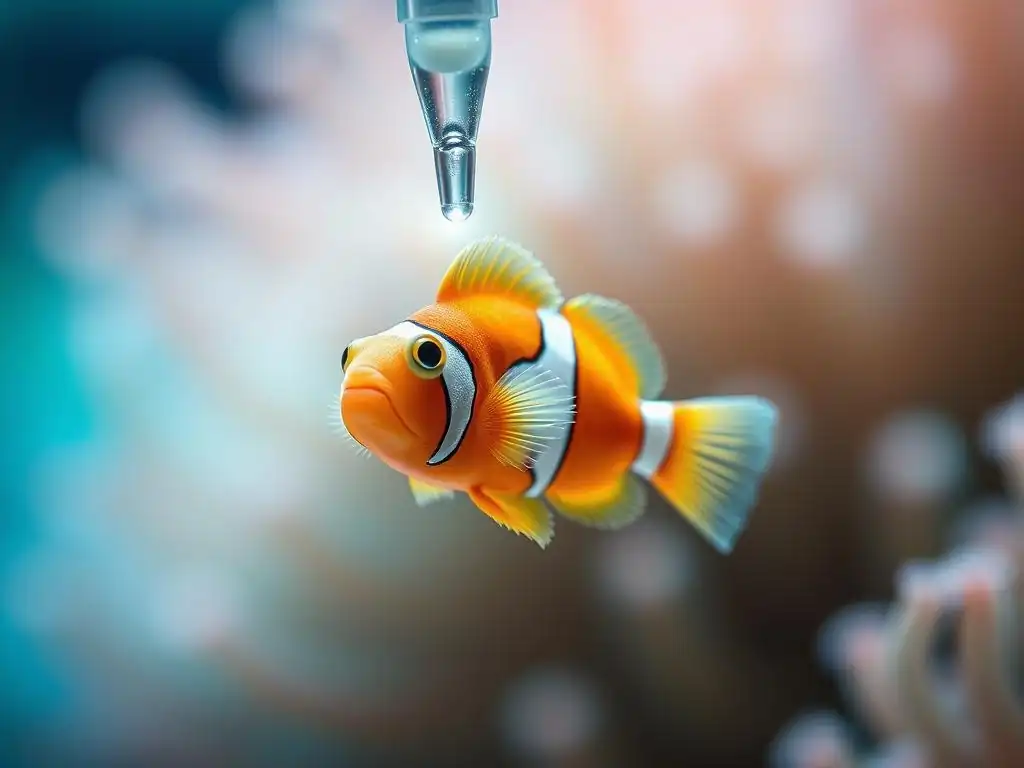
The critical first days of a clownfish fry's life are entirely dependent on receiving the correct type and size of food. Newly hatched clownfish fry are incredibly small, typically measuring only 2-3 millimeters in length, with equally tiny mouthparts. This means they cannot consume standard aquarium foods or even newly hatched brine shrimp (Artemia nauplii) immediately. The universally accepted first food for clownfish fry is the L-type rotifer, Brachionus plicatilis. These rotifers are typically 50-200 microns in size, making them perfectly digestible for the minute fry.
Beyond size, the nutritional quality of the rotifers is paramount. Rotifers themselves are only as nutritious as what they consume. Therefore, "gut loading" or enriching rotifers with highly nutritious phytoplankton (such as Nannochloropsis oculata or Chlorella vulgaris) is essential. This process ensures that the rotifers provide the necessary proteins, lipids, and essential fatty acids (like DHA and EPA) crucial for rapid growth and development. Without this specific, nutritionally complete first food, clownfish fry survival rates plummet due to starvation and malnutrition.
Overfeeding vs. Underfeeding Clownfish Fry: Finding the Balance
Finding the balance between overfeeding and underfeeding is a perpetual challenge in clownfish fry rearing. Underfeeding leads to obvious problems: starvation, stunted growth, and high mortality rates, particularly as competition for food increases. Fry need constant access to food during their initial developmental stages, as their digestive systems are highly inefficient and they have very little energy reserve. Conversely, overfeeding, while seemingly beneficial, rapidly degrades water quality. Excess food decomposes, leading to dangerous spikes in ammonia and nitrite, which, as discussed, are lethal to fry. It can also lead to bacterial blooms that deplete oxygen and stress the fry.
The solution lies in feeding small amounts frequently throughout the day, or ideally, implementing a continuous drip-feeding system for live foods like rotifers. The goal is to maintain a visible but not excessive density of food organisms in the water column, typically around 5-10 rotifers per milliliter. This ensures that fry always have access to food without overwhelming the tank's fragile biological filtration or polluting the water. Observing the fry's bellies—a slightly rounded appearance indicates adequate feeding—can help fine-tune the feeding regimen.
Live Food Cultures for Clownfish Fry: Rotifers, Copepods, and More
Successful clownfish breeding hinges on the ability to consistently provide a variety of live foods, transitioning as the fry grow. Rotifers (Brachionus plicatilis) remain the staple for the first 7-10 days post-hatch. Maintaining a robust rotifer culture is a continuous commitment, requiring regular harvesting and feeding of the culture itself with phytoplankton. As the fry grow, typically around day 7-10, they become large enough to consume slightly bigger prey. This is when copepods, such as Tisbe or Apocyclops species, should be introduced. Copepods are larger, more nutritionally complete, and provide a greater caloric density than rotifers, supporting faster growth.
By day 10-14, depending on growth rate, newly hatched Artemia nauplii (brine shrimp) can be gradually introduced. It is crucial to note that newly hatched Artemia are not nutritionally complete and must be enriched (e.g., with Selco or other lipid-rich enrichment products) for several hours before feeding to the fry. This sequential introduction of increasingly larger and more nutritious live foods is a cornerstone of clownfish breeding survival tips, ensuring the fry receive optimal nutrition at each developmental stage.
Advanced Feeding Techniques for Enhanced Fry Growth
Beyond simply providing the right foods, employing advanced feeding techniques can significantly enhance clownfish fry growth and survival. Co-feeding, the practice of offering multiple food types simultaneously (e.g., rotifers and small copepods), ensures that fry with varying preferences or developmental stages always have an appropriate food source. For rotifers, a continuous drip-feeding system can maintain a consistent food density, minimizing peaks and troughs in availability and reducing water quality fluctuations associated with batch feeding. This can be achieved with a peristaltic pump or a simple airline tubing with a flow control valve.
As fry mature, typically around 3-4 weeks post-hatch when they reach 1-2 cm, they can begin to transition to finely crushed dry foods designed for marine fry, such as high-quality flakes or micro-pellets. This transition should be gradual, mixing live foods with dry foods until they readily accept the prepared diet. Proper nutrition throughout these stages is paramount for robust development and is a key component of effective clownfish breeding survival tips.
Mistake #3: Ignoring the Importance of Clownfish Fry Tank Setup
Bare Bottom Tanks vs. Decorated Tanks for Clownfish Fry
The choice of tank setup for clownfish fry is critical for their survival and ease of maintenance. Bare-bottom tanks are overwhelmingly preferred and recommended by experienced breeders. The primary reason is hygiene: a bare bottom prevents the accumulation of uneaten food, detritus, and waste, which can quickly decompose and lead to dangerous ammonia spikes and bacterial blooms. Without substrate, cleaning is simplified to daily siphoning of the tank bottom, ensuring a consistently clean environment. This direct removal of waste dramatically reduces the biological load and the potential for pathogenic bacteria to proliferate, which is vital for clownfish fry survival.
In contrast, tanks with substrate, even fine sand, or extensive decorations can become "detritus traps." Uneaten food particles and waste can settle into crevices or within the substrate, becoming inaccessible to siphoning and creating anaerobic pockets. These areas become breeding grounds for harmful bacteria and can release toxins, making it incredibly difficult to maintain stable, pristine water quality. For the delicate nature of clownfish fry, the simplicity and cleanliness of a bare-bottom tank far outweigh any aesthetic considerations.
Proper Filtration and Circulation for Clownfish Fry Tanks
Selecting the right filtration and ensuring appropriate circulation are crucial elements of the fry tank setup. Powerful mechanical filters, such as hang-on-back filters or canister filters, are typically unsuitable for fry tanks due to their strong intake currents, which can easily suck in and injure or kill the tiny fry. Instead, air-driven sponge filters are the gold standard. They provide gentle mechanical filtration by trapping particulate matter, and more importantly, they offer a vast surface area for beneficial bacteria to colonize, establishing crucial biological filtration without creating turbulent water flow.
Circulation within the fry tank should be minimal but sufficient to prevent dead spots and ensure that food organisms remain suspended in the water column for the fry to access. A gentle airstone placed strategically can provide adequate oxygenation and subtle water movement without stressing the fry. The goal is to create a calm, stable environment where fry can swim and feed without being buffeted by strong currents, optimizing their energy expenditure for growth rather than fighting flow.
Avoiding Substrate Traps and Maintaining Hygiene
Beyond the decision to use a bare-bottom tank, active measures to avoid substrate traps and maintain rigorous hygiene are paramount. Even in a bare-bottom tank, detritus can accumulate in corners or against the walls. Daily siphoning of the tank bottom using a small, flexible airline tube or a turkey baster is essential to remove uneaten food and waste. This meticulous cleaning prevents the decomposition of organic matter, which is a primary cause of water quality degradation.
Regularly wiping down the tank walls to prevent the buildup of algae or bacterial films is also important. These films can not only harbor unwanted organisms but also trap fry or obscure observations. Maintaining a strict cleaning schedule for all equipment used in the fry tank – including nets, feeding tubes, and water change hoses – by rinsing them thoroughly with RO/DI water and allowing them to air dry will prevent the introduction of pathogens. This relentless focus on cleanliness is a non-negotiable clownfish breeding survival tip.
Mistake #4: Overlooking Disease Prevention and Treatment in Clownfish Fry
Common Clownfish Fry Diseases and Their Symptoms
Clownfish fry, like all young aquatic organisms, are highly susceptible to diseases, and an outbreak can quickly decimate an entire batch. Bacterial infections, particularly those caused by Vibrio species, are among the most common and devastating. Symptoms often include rapid, unexplained mortality, cloudy eyes, fin erosion, or red lesions, and can wipe out a clutch within 24-48 hours.
Another significant threat is Oodinium (Velvet disease), which appears as a fine, golden or rust-colored dust on the fry's body, accompanied by rapid breathing and "flashing" (rubbing against surfaces). Protozoan issues, though less common than bacterial outbreaks in pristine fry tanks, can also occur, manifesting as general lethargy or difficulty swimming.
Diagnosing diseases in tiny fry is challenging due to their small size and the rapid progression of illness. Often, the first sign of a problem is a sudden increase in mortality. Therefore, understanding the common culprits and their subtle indicators is crucial for early intervention, though prevention remains the most effective strategy for clownfish fry survival.
Quarantine Protocols for New Clownfish Fry
While "new clownfish fry" are typically hatched in your own dedicated rearing tank, the principle of quarantine still applies to anything introduced into that environment. This means any new equipment, live food cultures, or even water from your main display tank must be considered potential vectors for disease. Sterilizing all equipment (nets, tubing, containers, siphons) that will touch the fry tank is paramount; a simple rinse with RO/DI water and air drying is often sufficient, but for higher risk items, a dilute bleach solution followed by thorough rinsing and dechlorination can be used.
Furthermore, if you are culturing live foods like rotifers or copepods, ensure their cultures are healthy and free of contaminants. Some breeders even UV sterilize the water used in live food cultures before adding it to the fry tank, or rely on clean, laboratory-grade starter cultures. Maintaining completely separate equipment for your fry rearing setup versus your main aquarium minimizes the risk of cross-contamination and introduces a critical layer of protection for the vulnerable fry.
Safe and Effective Treatments for Sick Clownfish Fry
Treating diseases in clownfish fry is exceptionally challenging due to their small size and extreme sensitivity to medications. Many common aquarium treatments are too harsh for fry and can do more harm than good, often leading to further stress or death.
For bacterial infections, broad-spectrum antibiotics (e.g., Furan-2) may be considered, but they can severely impact the beneficial bacteria in the biological filter, leading to ammonia spikes, and must be used with extreme caution and precise dosing. Formalin dips, highly diluted and for very short durations, might be used for external parasites like Oodinium, but the stress of handling and the medication itself often prove fatal to already weakened fry.
Given these limitations, prevention remains the most effective and safest approach. Maintaining impeccable water quality, providing optimal nutrition, and ensuring a stress-free environment are the best defenses against disease. Once disease takes hold, recovery rates are often low, making proactive husbandry the most important of all clownfish breeding survival tips related to health.
Prevention is the cornerstone of clownfish breeding survival tips when it comes to disease. Once disease takes hold in a fry tank, recovery rates are often low.
Mistake #5: Failing to Provide Adequate Clownfish Fry Enrichment and Lighting
The Role of Lighting in Clownfish Fry Development
Lighting plays a surprisingly significant role in clownfish fry development and feeding success. Newly hatched clownfish fry are phototactic, meaning they are attracted to light. This natural instinct can be leveraged to their benefit: a low-intensity light source placed directly above the fry tank, especially during the first few days, helps to concentrate food organisms (like rotifers) in the water column where the fry can easily find them. This makes feeding more efficient and reduces the energy expenditure of the fry in searching for food.
Beyond aiding feeding, a consistent light cycle is important for establishing natural rhythms. Maintaining a photoperiod of around 16 hours light and 8 hours dark mimics natural daytime conditions and encourages consistent feeding behavior. Avoid harsh, direct lighting, which can stress the delicate fry. A simple, dim LED light is usually sufficient to provide the necessary illumination without causing discomfort or overheating the water.
Enrichment Techniques to Stimulate Clownfish Fry Growth
While "enrichment" for clownfish fry doesn't involve elaborate decorations or hiding spots as it would for adult fish, it refers to optimizing their immediate environment to stimulate natural behaviors and promote robust growth. The primary form of "enrichment" for fry is providing a consistent, abundant, and varied food source. As discussed, transitioning from rotifers to copepods and then to enriched Artemia nauplii ensures a complete nutritional profile and encourages active hunting. This varied diet directly contributes to stronger, faster-growing fry.
Secondly, gradually increasing the size of the rearing tank as the fry grow provides more space for swimming and reduces competition. While starting with a smaller volume (e.g., 5-10 gallons) is beneficial for concentrating food in the initial days, overcrowding can quickly lead to stress and stunted growth. Transferring larger fry to progressively larger tanks (e.g., 20 gallons or more) as they mature, typically after the first 3-4 weeks, provides the necessary space for continued healthy development.
Avoiding Stressful Environments for Optimal Clownfish Fry Survival
Stress is a silent killer in clownfish fry rearing. Any factor that causes stress can weaken their immune system, inhibit growth, and increase susceptibility to disease. To create an optimal, stress-free environment, several factors must be carefully managed. Avoid sudden fluctuations in water parameters (temperature, salinity, pH) by performing slow, carefully matched water changes. Minimize vibrations and loud noises near the fry tank, as these can startle and stress the delicate fry.
Keep handling to an absolute minimum. If fry need to be moved, use a soft, fine-meshed net or gently siphon them into a container with tank water. Ensure no aggressive or overly active tank mates are present (though fry are typically in dedicated rearing tanks). Providing a calm, stable, and consistent environment allows the fry to focus their energy on growth and development, significantly boosting clownfish fry survival rates.
Mistake #6: Poor Parental Care Management During Clownfish Breeding
Observing and Managing Parental Behavior
Clownfish parents typically exhibit strong parental instincts, diligently guarding and fanning their eggs. It's crucial to observe their behavior during the spawning and incubation period. Parents will meticulously clean the spawning site (often a terracotta pot, flat rock, or even the base of an anemone) before laying eggs. The male clownfish usually takes on the primary role of fanning the eggs, removing infertile ones, and defending the clutch from perceived threats.
While most pairs are excellent parents, some might be overly aggressive towards other tank mates in a community tank during this period. If your breeding pair is in a community setting, ensure they have ample space and a secure spawning site that offers some protection from other fish. Monitoring their behavior can also help predict hatching times, as the eggs will become silver and the fry's eyes will be visible a day or two before hatching.
Removing Eggs or Fry: When and How
For maximum clownfish fry survival, most breeders opt to remove the eggs or newly hatched fry from the parental tank. This is because adult clownfish, while generally not preying on their own fry intentionally, may accidentally consume the tiny, free-swimming larvae, mistaking them for food, or simply out of curiosity. Removing them also allows for precise environmental control in a dedicated fry rearing tank, which is impossible in a larger display tank.
The most common method is to remove the eggs on their substrate (e.g., the terracotta pot) 1-2 days before they are due to hatch, typically around day 7-9 post-spawn. Carefully transfer the entire spawning site into the prepared fry rearing tank. If the eggs hatch in the main tank, the fry should be siphoned out immediately after hatching, ideally at night when they become phototactic and swim towards a light source, making them easier to collect with a small, soft net or airline tubing.
Preventing Parental Aggression Towards Fry
Parental aggression towards their own fry is rare in clownfish. The primary reason for separating eggs or fry from parents is not due to direct aggression, but rather to prevent accidental consumption and to provide the highly specialized conditions required for clownfish fry survival. However, stressed or inexperienced parents might occasionally consume eggs or even newly hatched fry, particularly if the eggs are infertile or if the parents feel threatened or lack adequate nutrition themselves.
Ensuring the breeding pair is well-fed with a high-quality, varied diet (including frozen foods like mysis shrimp, enriched brine shrimp, and high-protein pellets) and maintained in stable, optimal water conditions can help mitigate any stress that might lead to egg consumption. Once the eggs or fry are removed, the parents can continue their spawning cycle without interruption, often laying another clutch within 10-14 days.
Mistake #7: Inadequate Knowledge of Clownfish Breeding Cycles and Timing
Understanding Clownfish Spawning Triggers
Successful clownfish breeding begins long before the eggs are laid. Understanding and providing the correct spawning triggers is fundamental. The most crucial triggers include excellent and stable water parameters, a high-quality, varied diet rich in protein and essential fatty acids, and a consistent photoperiod. Maintaining temperatures slightly on the higher end of their comfort zone (e.g., 80-82°F or 26.7-27.8°C) can often encourage spawning. A consistent light cycle, typically 14-16 hours of light, mimics natural tropical conditions.
The presence of a suitable spawning site, such as a terracotta pot, a flat piece of slate, or even an artificial anemone, is also vital. Clownfish are substrate spawners and require a clean, secure surface for egg deposition. Patience is key; it can take months or even years for a clownfish pair to mature and begin spawning regularly, but consistent optimal conditions will eventually trigger their natural breeding instincts.
Recognizing Signs of Impending Spawning
Experienced breeders learn to recognize the subtle signs that indicate an impending clownfish spawn. One of the most common indicators is increased cleaning activity by both parents at their chosen spawning site. They will meticulously mouth and rub the surface, preparing it for the eggs. The female's belly will become noticeably distended with eggs, and her ovipositor (a small tube near the anal fin) will become more prominent. The male's papilla (a small genital papilla) will also become more pointed.
Spawning typically occurs in the late afternoon or early evening. The female will make multiple passes over the spawning site, depositing rows of eggs, while the male follows closely behind, fertilizing them. Observing these behaviors helps breeders prepare the fry rearing tank in advance, ensuring everything is ready for the delicate newly hatched fry and contributing to overall clownfish breeding survival tips.
Optimizing Conditions for Successful Spawning
To optimize conditions for successful spawning and subsequent clownfish fry survival, focus on consistency and nutrition. Feed your breeding pair a diverse diet several times a day, including high-quality marine pellets, various frozen foods (mysis shrimp, enriched brine shrimp, spirulina-enriched formulas), and occasionally live foods. This ensures they have the energy and nutrients required for egg production and parental care.
Maintain impeccable water quality in the breeding tank through regular water changes and robust filtration. Ensure there are no stressors, such as aggressive tank mates or unstable parameters. Providing a secure, private spawning location will also make the pair feel more comfortable and likely to reproduce. While some pairs may spawn weekly once they start, others might be less frequent. Consistency in husbandry is the most reliable path to regular spawning and a steady supply of eggs for rearing.
Mistake #8: Ignoring Ammonia and Nitrite Spikes in Fry Tanks
The Deadly Effects of Ammonia and Nitrite on Clownfish Fry
Perhaps the most lethal mistake in clownfish fry rearing is failing to adequately address ammonia (NH3) and nitrite (NO2-) spikes. These nitrogenous compounds are highly toxic to aquatic life, but their effects are particularly devastating on clownfish fry due to their underdeveloped biological systems and small size. Ammonia, even at concentrations as low as 0.05 ppm, can cause immediate and severe damage to gills, leading to respiratory distress, internal organ damage, and rapid death. It is essentially a chemical burn to their delicate tissues.
Nitrite, while slightly less acutely toxic than ammonia, is also extremely dangerous. It interferes with the blood's ability to carry oxygen, leading to a condition often called "brown blood disease," where the fry essentially suffocate. The combination of rapid feeding, high metabolic rates, and the small water volume of fry tanks means that ammonia and nitrite can accumulate to lethal levels within hours if not properly managed. This vulnerability makes diligent monitoring and control of these toxins a paramount clownfish breeding survival tip.
Cycling Fry Tanks Properly
Traditional aquarium cycling, which takes weeks to establish a robust nitrifying bacterial colony, is impractical for a fry tank that needs to be ready for newly hatched fry immediately. Instead, breeders employ several strategies to "instantly cycle" or manage the nitrogen cycle in fry tanks. One common method is to use mature sponge filters that have been running in an established, healthy aquarium for weeks or months. These sponges are teeming with beneficial bacteria and can be transferred directly to the fry tank, providing immediate biological filtration.
Another approach is to dose the fry tank with commercially available beneficial bacteria products. While results can vary, high-quality products can help kickstart the nitrogen cycle more rapidly. Alternatively, and often in conjunction with these methods, daily, large water changes (e.g., 50% or more) for the first 1-2 weeks are essential to dilute any accumulating ammonia and nitrite until the biological filter can fully establish itself. This proactive dilution is a cornerstone of clownfish breeding survival tips for the initial critical period.
Monitoring and Controlling Ammonia and Nitrite Levels
Vigilant monitoring of ammonia and nitrite levels is non-negotiable for the first 2-3 weeks of a clownfish fry's life. Daily testing using reliable liquid test kits is essential. Any detectable levels of ammonia or nitrite (i.e., anything above zero) should trigger an immediate and significant water change, typically 50-75%, using temperature and salinity-matched, aged saltwater. The goal is always to maintain these parameters at absolute zero.
If spikes are persistent despite water changes, consider slightly reducing the feeding frequency (while still ensuring fry have enough food) and re-evaluating your filtration. In emergency situations, ammonia-binding products can provide temporary relief, but they are not a substitute for proper biological filtration and consistent water changes. Establishing a routine of daily water quality checks and immediate corrective action is perhaps the most critical component of ensuring high clownfish fry survival rates.
Clownfish Breeding Survival Tips: A Summary of Best Practices
Key Takeaways for Successful Clownfish Fry Rearing
Successfully raising clownfish fry from egg to juvenile is a meticulous process that demands attention to detail and consistent effort. By avoiding common mistakes and implementing best practices, you can significantly boost your clownfish breeding survival tips and enjoy the rewarding experience of seeing your fry thrive.
- Maintain pristine water quality through daily, small water changes and gentle sponge filtration. Ammonia and nitrite must always be zero.
- Provide appropriate live foods, starting with enriched rotifers, then transitioning to copepods and enriched Artemia nauplii, ensuring continuous availability.
- Utilize bare-bottom tanks for easy cleaning and to prevent the accumulation of detritus that can degrade water quality.
- Prioritize disease prevention through rigorous hygiene, equipment sterilization, and maintaining a stress-free environment, as treatments for fry are limited.
- Optimize lighting (low intensity, consistent photoperiod) and minimize external stressors to promote healthy development and feeding.
- Separate eggs or newly hatched fry from the parental tank to provide a dedicated, controlled rearing environment and prevent accidental consumption.
- Understand and support the breeding pair's spawning triggers and cycles, providing high-quality nutrition and stable conditions in the breeding tank.
- Vigilantly monitor and control ammonia and nitrite levels in the fry tank, relying on daily testing and immediate, large water changes if any levels are detected.
Patience, observation, and a proactive approach to husbandry are your greatest assets in achieving high clownfish fry survival rates. Every batch of fry offers a learning opportunity, and with dedication, you can become a successful clownfish breeder.
Further Resources for Clownfish Breeders at Aquarium Mastery
For those looking to delve deeper into the specifics of clownfish breeding and advanced fry rearing techniques, Aquarium Mastery offers a wealth of additional resources. Explore our detailed guides on culturing rotifers and copepods, setting up dedicated fry systems, and specific profiles on various clownfish species to further enhance your knowledge and success in this fascinating endeavor.
Frequently Asked Questions
What are some common mistakes beginners make when trying to breed clownfish?
Beginners often fail to provide the correct water parameters for spawning and fry development. They also frequently neglect the importance of a stable environment and proper diet for the breeding pair and their offspring.
What role does water quality play in clownfish fry survival?
Water quality is critical. Poor water quality, specifically high ammonia or nitrite levels, can be lethal to delicate clownfish fry. Maintaining pristine water conditions is essential for their survival.
What is the ideal diet for clownfish fry to ensure their growth and survival?
Clownfish fry require a specialized diet consisting of rotifers initially, followed by copepods and enriched brine shrimp. Gradual introduction of high-quality flake food is important as they grow.
How important is the tank environment for successful clownfish breeding?
A stable and stress-free environment is crucial. This includes adequate hiding places for the pair, consistent temperature and salinity, and minimizing disturbances that could disrupt spawning or fry rearing.
What are some signs that clownfish breeding attempts are failing, and what can be done?
Signs include egg fungus, lack of hatching, or high fry mortality. Adjusting water parameters, improving filtration, and addressing any potential disease outbreaks are crucial steps to improve breeding success.
Final Reflection: Nurturing Life in Miniature Oceans
The journey of breeding clownfish, as we've explored, is fraught with challenges, but also brimming with the potential for immense reward. The fragility of fry survival underscores the delicate balance required for success, a balance that demands meticulous attention to detail and a deep understanding of these captivating creatures. The insights shared here, from water quality management to proper feeding techniques, are not merely tips, but rather a roadmap to increasing the chances of successfully raising these iconic fish.
This endeavor, more than just a hobby, reflects a deeper connection to the natural world and a commitment to responsible aquarium keeping. Witnessing the transformation from tiny eggs to vibrant juveniles is an experience that fosters a profound appreciation for the intricacies of life. As the renowned marine biologist Sylvia Earle once said, Even if you never have the chance to see or touch the ocean, the ocean touches you with every breath you take, every drop of water you drink, every bite you consume. Everyone, everywhere is inextricably connected to and utterly dependent upon the existence of the sea.
This connection compels us to strive for excellence in our care, ensuring the well-being of these animals and contributing to the sustainability of the aquarium trade.
Now, armed with these clownfish breeding survival tips, we invite you to reflect on your own approach. Consider how you can refine your practices, deepen your understanding, and ultimately, become a more responsible and successful breeder. The future of these miniature ecosystems lies in our hands. Embrace the challenge, learn from your mistakes, and celebrate the triumphs. Your dedication can make a significant difference in the lives of these fascinating fish, contributing to a thriving and sustainable future for clownfish in captivity.
Unleash Your Inner Clownfish Breeder!
Thanks for diving into the world of clownfish breeding with us! We hope you’ve gained valuable insights into avoiding common pitfalls and boosting your fry's survival rate. Now, it's time to put that knowledge into action.
Here’s how you can take the next steps:
- Implement one of the avoidance strategies discussed in the article in your breeding setup and document the changes. This is the most crucial step!
- Explore advanced reef keeping topics on AquariumMastery.com to boost your knowledge.
- Share your most effective tip for clownfish breeding success in the comments below – let’s learn from each other!
What specific change will you make to your clownfish breeding setup this week to improve fry survival?