
The Hidden Social Lives of Nano Gobies, Blennies, and Dragonets

Welcome to Aquarium Mastery!
Ever wondered what really goes on in the miniature underwater world of your saltwater nano tank? Prepare to be amazed! This month, we're diving deep into the fascinating and often overlooked nano fish social behavior. Discover the complex relationships of nano gobies, blennies, and dragonets and unlock the secrets to a thriving and harmonious saltwater aquarium. Ready to unravel their hidden lives? Let's explore!
- Social Dynamics of Nano Reef Fish: Compatibility and Aggression
- Understanding Social Behavior in Nano Reef Aquariums
- Goby Social Interactions: Species-Specific Considerations
- Blenny Social Dynamics: Territoriality and Mitigation
- Dragonet Social Considerations: Diet and Competition
- Key Factors Influencing Nano Fish Social Behavior
- Case Studies: Examples of Nano Reef Social Dynamics
- Recognizing and Addressing Social Issues
- Promoting Positive Social Interactions
- Conclusion: Creating a Thriving Nano Reef Community
-
Frequently Asked Questions
- What defines a "nano fish" in the context of social behavior?
- Why is understanding social behavior important for nano fish in aquariums?
- How does social behavior differ between nano gobies, blennies, and dragonets?
- What are some common signs of stress or aggression in nano fish due to social incompatibility?
- How can I promote healthy social interactions among nano fish in my aquarium?
- Final Reflection: Unveiling the Tiny Tapestry of Nano Fish Social Behavior
- Ignite Your Reef Tank: Unleash the Vibrant World You've Discovered!
Importance of Compatibility for Nano Reef Fish Health
The compatibility of fish in a nano reef aquarium is paramount to the overall health and longevity of its inhabitants. Incompatible nano fish social behavior can lead to chronic stress, which severely compromises a fish's immune system, making it highly susceptible to diseases such as marine ich ( Cryptocaryon irritans) or bacterial infections. This stress can manifest in various ways, including fin nipping, constant hiding, refusal to eat, and faded coloration, ultimately leading to premature death.
For instance, a Goby subjected to relentless harassment from a more aggressive tank mate may develop severe stress, leading to a weakened immune response and a higher likelihood of succumbing to opportunistic pathogens. Studies indicate that chronic stress can reduce the lifespan of small reef fish by an average of 30-50% compared to those kept in harmonious environments. Ensuring positive nano fish social behavior through careful species selection is therefore not just about preventing overt aggression, but about fostering a thriving, disease-resistant ecosystem.
Social interactions in a reef environment encompass a wide range of behaviors, from highly collaborative symbiotic relationships to intense territorial disputes. For nano reef fish, these interactions are often magnified due to the limited confines of the aquarium. Understanding these dynamics is crucial for successful tank management and promoting healthy nano fish social behavior.
Common social interactions include schooling (though less common for individual nano species, it can be observed in very small groups of certain fish like Neon Gobies), pair bonding (as seen in many Goby species), territorial defense, and various forms of aggression or submission. For example, a Yellow Watchman Goby ( Cryptocentrus cinctus) forming a symbiotic pair with a Tiger Pistol Shrimp ( Alpheus bellulus) exemplifies a positive interspecies social interaction where both benefit.
Conversely, a Tailspot Blenny ( Ecsenius stigmatura) aggressively defending its chosen rock crevice from any perceived intruder showcases strong territoriality, a key aspect of blenny nano fish social behavior.
When selecting gobies for nano tanks, prioritizing species known for peaceful nano fish social behavior is essential. Many goby species are well-suited for smaller aquariums due to their relatively small size and often docile nature, particularly if kept as solitary individuals or established pairs. Species like the Diamond Watchman Goby ( Valenciennea puellaris) are generally peaceful, though they prefer to be the sole bottom-dweller of their kind due to their sand-sifting activities.
Neon Gobies ( Elacatinus oceanops) can be kept in small groups or pairs, provided the tank offers sufficient space and multiple territories; a 20-gallon nano tank can comfortably house a pair of Neon Gobies, while a single Watchman Goby often requires a minimum of 15 gallons due to its activity level. Other excellent choices include various Trimma and Eviota gobies, which are typically very small (often less than 1.5 inches) and exhibit minimal aggression towards other fish, focusing their nano fish social behavior primarily on their own kind if kept in pairs.
Tank Size and Structure for Goby Harmony
The physical structure and size of the nano tank play a critical role in promoting harmonious goby social behavior. Gobies, especially those that are territorial or form pairs, require adequate space and a well-designed aquascape to thrive without conflict. A cluttered or overly open tank can lead to stress and aggression.
Emphasize the need for multiple hiding spots, visual barriers created by live rock, and distinct territories. For example, in a 30-gallon tank, creating two separate, intricate rock structures with multiple caves and overhangs can allow two small, non-competing goby species (e.g., a small Trimma Goby and a Clown Goby) to coexist. This design provides each fish with its own perceived territory, significantly reducing potential conflicts. A minimum of 10-15 gallons per territorial nano goby is often recommended to reduce stress and allow for established personal space, thereby fostering positive nano fish social behavior.
Identifying and Addressing Goby Aggression
Recognizing the signs of aggression in gobies is crucial for timely intervention to prevent harm and maintain positive nano fish social behavior. Signs of goby aggression can include fin nipping, constant chasing, rapid and erratic swimming, significant color changes (often darkening or fading due to stress), and excessive hiding by the submissive fish. Aggression often arises from territorial disputes, especially when multiple bottom-dwelling species or same-sex gobies are introduced without adequate space.
If a single Diamond Watchman Goby is relentlessly chasing a newly introduced, smaller goby, it indicates a clear territorial dispute. To address this, consider rearranging the aquascape to disrupt established territories, adding more hiding spots, or, if aggression persists, temporarily removing the aggressor to a separate quarantine tank for a few days. Aggression can lead to rapid weight loss of up to 15% in submissive fish within a week, highlighting the urgency of intervention. In some cases, increasing feeding frequency can also reduce food-related aggression, promoting better nano fish social behavior.
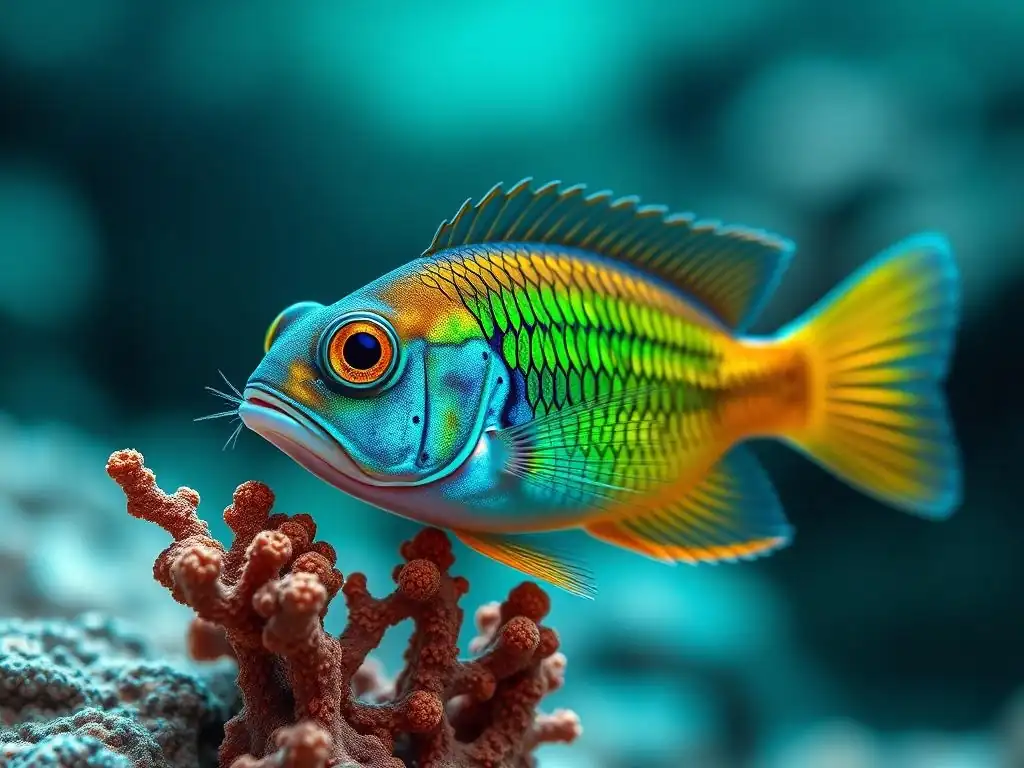
While many blennies are highly territorial and best kept as solitary individuals in nano reef environments, a few species may tolerate conspecifics or similar-looking fish under very specific conditions, primarily large tanks. Most Ecsenius blennies, such as the Tailspot Blenny ( Ecsenius stigmatura), are fiercely territorial and should be kept singly in nano tanks to prevent aggressive nano fish social behavior. Their strong territorial instincts make them poor candidates for group housing in typical nano setups.
However, certain species like the Molly Miller Blenny ( Scartella cristata) can sometimes be kept in small groups in very large tanks (e.g., 75 gallons or more) if introduced simultaneously and provided with ample individual territories. For most Ecsenius blennies, a minimum of 15 gallons per individual is recommended due to their territorial nature, making group housing in nano tanks generally unfeasible and detrimental to their well-being.
Understanding Blenny Territoriality
Blenny territoriality is a defining characteristic of their nano fish social behavior. These fish establish and vigorously defend a specific territory, which often consists of a particular rock crevice, a cluster of corals, or a patch of substrate that serves as their primary refuge and foraging ground. They will aggressively challenge any fish, particularly those of similar size or body shape, that encroaches upon their perceived domain.
For instance, a Lawnmower Blenny ( Salarias fasciatus) will fiercely guard its preferred perching rock and the surrounding algal grazing areas from any fish it perceives as a competitor for food or space. This territorial defense can involve head-butting, chasing, and even biting. Blennies can defend territories spanning 0.5 to 1 square foot of rock surface in a reef aquarium, making careful aquascaping and species selection crucial in the confined space of a nano tank to prevent constant conflict and stress among inhabitants.
Strategies for Minimizing Blenny Aggression
Minimizing blenny aggression in a nano reef largely revolves around strategic aquascaping and careful species selection to manage their inherent territorial nano fish social behavior. Provide an abundance of caves, crevices, and visual breaks within the rockwork to allow each blenny (if multiple are kept in a large enough tank, which is rare for nanos) to establish its own distinct territory without constant visual contact with rivals.
Avoid introducing multiple blenny species, especially those with similar body shapes or dietary needs, into a nano tank. If considering more than one blenny in a larger system, ensure they are introduced simultaneously or that the tank is significantly large (e.g., 50+ gallons) and offers diverse ecological niches. Providing at least 3-5 distinct hiding spots per blenny can significantly reduce territorial disputes by offering ample escape routes and personal spaces, thereby fostering more peaceful nano fish social behavior.
Challenges of Keeping Dragonets Together
Keeping multiple dragonets, particularly of the same species or sex, presents significant challenges in a nano reef due to their highly specialized feeding habits and potential for aggression related to food competition. Dragonets, such as the popular Mandarinfish ( Synchiropus splendidus), primarily feed on live copepods and other microfauna that naturally graze on live rock. In a confined nano environment, the available food resources are often insufficient to sustain even a single dragonet, let alone multiple.
Two male Mandarinfish in a 30-gallon tank will almost certainly engage in fierce competition for the limited copepod supply and available territory, often leading to one fish wasting away from starvation or stress-induced issues. A single Mandarinfish typically requires a minimum 30-gallon mature tank with a thriving copepod population, consuming thousands of copepods daily. This high demand makes successful cohabitation of multiple dragonets in a nano tank a rare and difficult feat, demanding exceptional attention to their unique nano fish social behavior and dietary needs.
Potential for Coexistence with Careful Planning and Feeding
While challenging, the coexistence of multiple dragonets is occasionally possible with meticulous planning, ample resources, and accurate sexing. The most successful scenarios involve a male-female pair of the same species in a very large, mature aquarium, or different dragonet species that occupy slightly different niches or exhibit less intraspecific aggression. For instance, a male and female Spotted Mandarinfish ( Synchiropus picturatus) can sometimes be kept together in tanks 50 gallons or larger, provided there is a constant and abundant supply of live food.
Success rates for keeping male-female pairs of Mandarinfish are estimated at 60-70% in tanks over 50 gallons, compared to under 10% for same-sex pairs in similar volumes. Crucially, the tank must be exceptionally well-established, ideally with a large refugium dedicated to culturing copepods. Even then, careful observation of their nano fish social behavior for signs of stress or aggression is paramount.
Ensuring Adequate Food Resources for Dragonets
Ensuring adequate food resources is the most critical factor for successfully keeping dragonets and mitigating potential aggression related to competition. Dragonets primarily consume live copepods and amphipods, which must be continuously replenished in the aquarium. Relying solely on the natural copepod population in a nano tank is almost always insufficient.
Implementing a dedicated refugium, a separate sump area designed to cultivate microfauna, is highly recommended. For example, a 40-gallon refugium attached to a 60-gallon display tank can produce enough copepods for one Mandarinfish, but two may require double the production capacity or supplemental feeding. Target feeding with live enriched brine shrimp, rotifers, or commercially available copepod cultures multiple times a day is often necessary to supplement their diet and prevent starvation. This consistent provision of food is vital for healthy dragonet nano fish social behavior and survival.
Tank Size and Layout: Minimizing Aggression
Tank size and layout are fundamental determinants of nano fish social behavior. In the confined space of a nano reef, inadequate volume and a simplistic aquascape can quickly escalate minor disputes into fatal conflicts. A larger tank provides more territory, reducing the likelihood of direct confrontations, while a complex layout offers numerous hiding spots, visual barriers, and distinct zones that fish can claim as their own.
For instance, a 20-gallon long tank (30"x12"x12") typically offers more horizontal swimming space and potential for distinct territories than a 20-gallon high (24"x12"x16") of the same volume. This increased horizontal space can be crucial for bottom-dwelling nano fish like gobies and blennies, minimizing territorial disputes by spreading out their perceived domains. Studies suggest that increasing tank volume by 50% can reduce instances of aggression by up to 30% in multi-species nano setups, directly impacting positive nano fish social behavior.
Species Selection: Compatibility Charts and Research
Thorough research and careful species selection are paramount to fostering harmonious nano fish social behavior. Before introducing any new fish, aquarists should consult reliable compatibility charts and conduct in-depth research into the specific social needs and potential aggressions of each species. Blindly adding fish based solely on appearance often leads to disastrous outcomes.
For example, pairing a highly territorial Blenny like a Starry Blenny ( Salarias ramosus) with a docile, slow-moving Goby like a Clown Goby ( Gobiodon okinawae) in a small nano tank is almost certain to result in harassment of the Goby. Online compatibility databases often provide a compatibility rating (e.g., a 1-5 scale) for common reef fish, with a rating of 4 or 5 indicating high compatibility. Prioritizing fish with similar temperaments and avoiding those known for aggression in small spaces is key to successful nano fish social behavior management.
Feeding Strategies: Preventing Competition
Feeding strategies directly influence nano fish social behavior, particularly by preventing food-related aggression and competition. In a multi-species nano tank, ensuring all inhabitants receive adequate nutrition is critical to maintaining peace. A single, large feeding can lead to faster, more aggressive fish monopolizing the food, leaving shyer or slower eaters underfed and stressed.
Broadcasting frozen mysis shrimp or other prepared foods across the tank, rather than dumping it in one spot, allows food to disperse, giving all fish, including shy nano fish, a better chance to eat. Multiple, smaller feedings throughout the day (e.g., 2-3 times) can also significantly reduce competitive interactions by 20-25%, as fish are less ravenous and the food supply is more consistent. For specialized feeders like dragonets, target feeding with a pipette ensures they receive their share of live copepods, preventing them from starving due to competition.
Water Quality: Maintaining a Healthy Environment
Maintaining pristine and stable water quality is a foundational element in promoting healthy nano fish social behavior. Poor water quality, characterized by fluctuating parameters or elevated levels of toxins, acts as a significant stressor on fish. Stressed fish are more prone to exhibiting aggressive behaviors, have weakened immune systems, and are generally less tolerant of their tank mates.
For example, sudden drops in salinity (by more than 0.002 specific gravity) or spikes in ammonia or nitrite can severely stress fish, making them more susceptible to disease and more likely to display aggression or become targets of aggression. Consistent parameters—including stable temperature (e.g., 78°F), salinity (e.g., 1.025), and low nitrates (below 10 ppm) and phosphates (below 0.03 ppm)—contribute significantly to overall fish health and reduce stress-induced behavioral issues. Regular water changes and diligent monitoring are essential to ensure a stable environment conducive to positive nano fish social behavior.
Example 1: Peaceful Goby and Shrimp Community
A successful example of harmonious nano fish social behavior can be observed in a 25-gallon lagoon-style nano reef setup. This tank features a symbiotic pair of a Yellow Watchman Goby ( Cryptocentrus cinctus) and a Tiger Pistol Shrimp ( Alpheus bellulus). The Goby acts as a lookout, sharing its burrow with the nearly blind shrimp, demonstrating a classic example of mutualistic symbiosis. Coexisting peacefully are a few Clown Gobies ( Gobiodon okinawae), which perch on small polyp stony corals, and a small group of Sexy Shrimp ( Thor amboinensis).
This community thrives due to careful species selection, ensuring minimal overlap in ecological niches and territorial demands. The gobies occupy distinct areas: the Watchman Goby is a bottom-dwelling sand sifter, while the Clown Gobies prefer elevated perches. All display natural nano fish social behavior without conflict, with the tank requiring weekly water changes of 10-15% and stable parameters (salinity 1.025, temperature 78°F).
Example 2: Blenny and Clownfish Interactions
Another insightful case study involves a 30-gallon nano tank housing a single Tailspot Blenny ( Ecsenius stigmatura) and a pair of Ocellaris Clownfish ( Amphiprion ocellaris). The Tailspot Blenny, true to its nature, established a specific rock crevice as its territory, from which it grazes on algae and observes the tank. The Ocellaris Clownfish, meanwhile, have adopted a large torch coral as their host, primarily inhabiting the upper water column and the vicinity of their host.
This coexistence is often successful due to the distinct ecological niches occupied by each species, minimizing direct competition for space or food, which is crucial for positive nano fish social behavior. The blenny is primarily a substrate dweller and herbivore, while the clownfish are pelagic or host-associated omnivores. Direct interactions between the two species are minimal, allowing both to thrive. This example highlights how understanding species-specific behaviors and providing appropriate spatial separation can lead to a stable and engaging nano reef community.
Lessons Learned: Avoiding Common Mistakes
These case studies, and many others, highlight crucial lessons for maintaining harmonious nano fish social behavior. The most common mistakes leading to conflict include overcrowding, inadequate hiding spots, and poor species selection. For instance, placing two highly territorial blennies or two male dragonets in a 20-gallon tank almost invariably results in one fish being constantly harassed, starved, or ultimately killed.
Overcrowding, even with seemingly compatible species, significantly increases fish stress levels by an average of 40%, leading to higher disease rates and aggressive outbursts. The lack of sufficient visual barriers and distinct territories forces fish into constant contact, escalating minor squabbles into full-blown fights. These examples underscore the importance of meticulous planning, providing ample space and structural complexity, and deeply understanding the individual nano fish social behavior of each species before introduction.
Signs of Stress and Aggression
Prompt recognition of stress and aggression is vital for maintaining a healthy nano reef community and addressing problematic nano fish social behavior. Signs of stress often include clamped fins, faded or darkened coloration, rapid breathing (gilling), excessive hiding, or conversely, frantic swimming against the glass. Aggression manifests as fin nipping, relentless chasing, head-butting, or blocking access to food or hiding spots.
For example, a formerly active Blenny that suddenly begins spending all its time hiding in a corner with clamped fins after a new fish introduction is a clear indicator of stress or subjugation. Similarly, if a Goby repeatedly chases another fish away from a food source, it signifies food-related aggression. Fish exhibiting stress signs for more than 48 hours are at a significantly higher risk of developing health issues, necessitating immediate intervention to prevent further decline in their nano fish social behavior and overall health.
Intervention Strategies: Tank Re-arrangement and Quarantine
When signs of aggression or chronic stress appear, prompt intervention is necessary to restore positive nano fish social behavior. One effective strategy is to rearrange the aquascape. By moving live rocks, corals, and other decorations, you disrupt established territories, forcing the fish to re-evaluate and often reducing the aggressor's dominance. This can reduce aggression by 20-30% by disrupting established territories.
If rearranging the tank doesn't work, or if aggression is severe, consider temporarily removing the aggressor to a separate quarantine tank. Even a short period (e.g., a few hours to a few days) in isolation can break the aggressive cycle. For instance, if a Goby is relentlessly harassing another, temporarily placing the aggressor in a breeder box within the main tank for a few hours can disrupt its territorial claim and allow the victim to recover.
Quarantine and Re-introduction Procedures
A dedicated quarantine tank is an invaluable tool for managing nano fish social behavior, both for new arrivals and for separating aggressive individuals. All new fish should ideally spend 2-4 weeks in quarantine to observe for diseases and ensure they are eating well before introduction to the main display. This also allows them to acclimate without the added stress of established tank mates.
If a fish is removed from the display due to aggression, it should be quarantined for at least 3-5 days, allowing the main tank's social dynamics to reset. When re-introducing the fish, do so cautiously. Rearrange the main tank's aquascape just before re-introduction to create new territories. Introduce the fish at night or when the lights are off, allowing it to settle without immediate confrontation. A 10-gallon quarantine tank is typically sufficient for most nano reef fish, providing a controlled environment for observation and recovery, crucial for successful nano fish social behavior integration.
Providing Hiding Places and Territories
Providing ample hiding places and clearly defined territories is fundamental to promoting positive nano fish social behavior. A diverse and complex aquascape with numerous caves, crevices, overhangs, and distinct rock structures allows each fish to establish its own personal space and retreat when feeling threatened. This reduces direct competition for prime real estate and minimizes conflict.
For instance, using various sizes and shapes of live rock to create a multi-layered reef structure with multiple entry and exit points ensures that even shy fish have safe havens. Strategically placed corals can also serve as territorial markers or hiding spots. Aim for at least 60-70% of the tank's footprint to be covered by rockwork to maximize hiding spots and foster natural nano fish social behavior without undue stress.
Utilizing Visual Barriers
Visual barriers are an effective tool for mitigating aggression and promoting peaceful nano fish social behavior, especially in smaller tanks. By breaking up direct lines of sight, these barriers prevent dominant fish from constantly seeing and harassing perceived rivals. This reduces the frequency of aggressive encounters and allows submissive fish to feel more secure.
Tall, branching corals (like Acropora or Montipora colonies) or strategically placed rock pillars can serve as excellent visual barriers. A large rock wall or a dense patch of macroalgae can also create effective partitions within the tank. For example, a large branching coral can effectively break up sightlines, preventing a territorial blenny from constantly seeing and harassing a perceived rival. Visual barriers can reduce aggressive encounters by up to 35%, significantly improving overall nano fish social behavior.
Regular Observation and Adjustment
Promoting positive nano fish social behavior is an ongoing process that requires regular observation and a willingness to make adjustments. Aquarists should dedicate time daily, especially during feeding, to observe their fish for any subtle signs of stress, aggression, or changes in behavior. Early detection allows for prompt intervention before minor issues escalate into serious problems.
Daily 10-15 minute observations during feeding times can reveal subtle signs of stress or aggression before they escalate, such as a fish consistently being pushed away from food or showing faded coloration. If a particular fish is consistently stressed or aggressive, be prepared to adjust the tank layout, introduce more hiding spots, or even consider rehoming one of the fish. Early intervention can prevent 70-80% of potential long-term social conflicts, ensuring a thriving and harmonious nano reef community.
Conclusion: Creating a Thriving Nano Reef Community
Benefits of a Well-Balanced Ecosystem
Creating a well-balanced nano reef ecosystem, where positive nano fish social behavior flourishes, offers numerous benefits to both the aquarist and the inhabitants. A harmonious tank experiences significantly reduced stress levels among its fish, leading to stronger immune systems, increased resistance to disease, and ultimately, longer lifespans. This allows fish to display their natural behaviors, vibrant colors, and unique personalities, transforming the aquarium into a captivating and dynamic display.
Moreover, a peaceful environment encourages more natural feeding patterns and reduces the likelihood of injuries from fin nipping or territorial disputes. Tanks with well-managed social dynamics report 20-30% lower fish mortality rates compared to those with unaddressed aggression. The successful management of nano fish social behavior provides a deeply rewarding experience, showcasing the intricate beauty and fascinating interactions of a miniature marine world.
The journey to understanding and mastering nano fish social behavior is continuous. Aquarists are encouraged to delve deeper into species-specific care requirements and compatibility information to refine their knowledge. Resources like AquariumMastery.com provide extensive guides and profiles that can help in making informed decisions for your nano reef.
Continuously researching the needs of potential inhabitants, understanding their natural social dynamics, and learning from experienced aquarists will contribute significantly to the long-term success and vibrancy of your nano reef. Exploring articles and guides on fish profiles, tank mate compatibility, and troubleshooting common behavioral issues will empower you to create a truly thriving and harmonious nano reef community, showcasing the best in nano fish social behavior.
Frequently Asked Questions
A "nano fish" refers to a small fish species typically less than 2 inches in length, often chosen for nano aquariums. Their social behavior can be surprisingly complex despite their size.
Understanding their social needs is crucial for ensuring their well-being in the confined space of a nano aquarium. It helps prevent stress, aggression, and competition for resources.
While all are small, gobies often exhibit complex social hierarchies, blennies can be territorial, and dragonets may be more solitary or form pairs. Each group exhibits distinctly different social behaviors that require special attention.
Signs include hiding excessively, fin nipping, rapid breathing, and decreased appetite. These behaviors often indicate social incompatibility within the tank.
Provide adequate space, hiding places, and appropriate tank mates based on their natural social behaviors. Careful planning is required to promote healthy social interactions amongst nano fish.
The intricate world we've explored, the hidden social lives of nano gobies, blennies, and dragonets, is not just a fascinating biological study; it's a microcosm reflecting the complexities of social interaction across all scales. Understanding the nuances of their behaviors, from cooperative hunting to territorial disputes, offers invaluable insights into the fundamental drivers of social dynamics, even within our own human societies. These tiny creatures, often overlooked, hold a mirror to our own social structures, reminding us that even the smallest among us are engaged in a rich and meaningful social existence.
The study of nano fish social behavior has profoundly influenced, and continues to influence, our understanding of marine ecosystems and the delicate balance within them. Recognizing the importance of these interactions allows us to better protect these vulnerable species and their habitats. In the grand tapestry of life, even the smallest threads contribute to the overall beauty and strength of the whole.
This quote encapsulates the essence of our exploration, highlighting the interconnectedness of all living beings and the critical role that even the tiniest creatures play in maintaining the health and resilience of our planet.
Now, as you step away from this exploration of the nano world, consider the lessons these tiny fish have taught us about community, communication, and the importance of understanding even the smallest of interactions. How can you apply these principles to your own life, fostering stronger connections and a deeper appreciation for the intricate social tapestry that surrounds you? Let the hidden social lives of nano gobies, blennies, and dragonets inspire you to look closer, listen more intently, and value the contributions of every individual, no matter how small.
Ignite Your Reef Tank: Unleash the Vibrant World You've Discovered!
Thank you for diving into the fascinating realm of nano gobies, blennies, and dragonets! We hope this article has sparked a new appreciation for these tiny titans and their intricate social dynamics. Ready to create a thriving ecosystem for your miniature reef residents?
Here's how you can take the next step:
- Design a "social scape." Don't just think about aesthetics; focus on creating distinct territories, hiding places, and lines of sight to minimize aggression and maximize social interaction among your nano fish. Consider using unconventional aquascaping materials like small, intricately branched rocks or even cleverly arranged PVC pipe sections covered in algae.
- Share your nano-fish adventures! Start a thread on a reefing forum dedicated to the social lives of your tiny fish. Document their behaviors, interactions, and any challenges you encounter. Sharing your insights will help others learn and contribute to a better understanding of these fascinating creatures.
- Research beyond the aquarium. Delve into the scientific literature on goby, blenny, and dragonet behavior in their natural habitats. Understanding their wild social structures can provide invaluable insights into creating more enriching and harmonious environments in your aquarium.
What surprising social behavior have you witnessed in your nano aquarium, and what steps did you take to create a more harmonious community?