The Real Cost of Owning an Oscar: A Comprehensive Budget Breakdown
😊 Discover the true Oscar fish tank costs with our detailed budget breakdown, covering setup, maintenance, and hidden expenses. AquariumMastery.com offers expert…
Read article
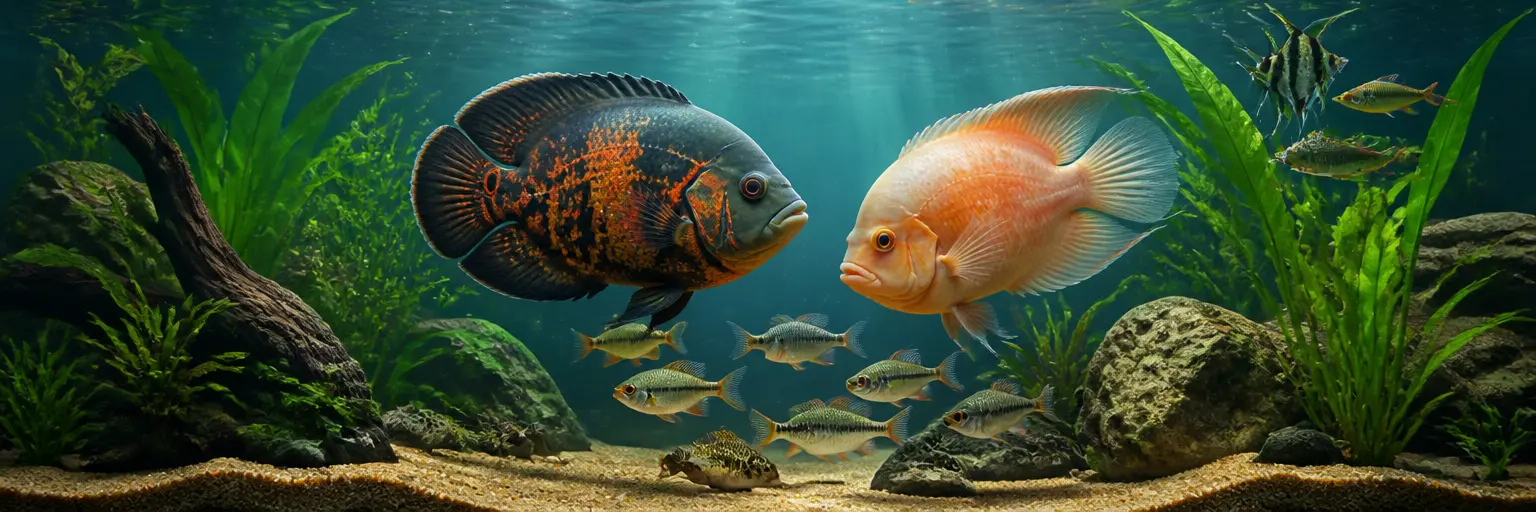
Discover expert guidance for New World cichlids such as Oscars and Severums 🐠—from aquarium setup, water chemistry, and feeding to large cichlid care, health, behavior, and compatible tank mates. Aquarium Mastery helps aquarists create a thriving freshwater habitat with practical tips for filtration, maintenance, enrichment, and responsible stocking.
😊 Discover the true Oscar fish tank costs with our detailed budget breakdown, covering setup, maintenance, and hidden expenses. AquariumMastery.com offers expert…
Read article
🐟 Ensure a stress-free Oscar fish relocation with expert tips from AquariumMastery.com. Discover essential strategies for safe transport, tank preparation, and acclimation…
Read article
🌟 Discover the pros and cons of keeping an Oscar fish alone tank versus community setups. AquariumMastery.com offers expert advice on creating…
Read article
🐟 Discover the common causes behind your Severum hiding behavior and learn effective solutions to ensure your fish feels safe and comfortable.…
Read article
🌡️ Ensure your cichlids thrive with expert cichlid aquarium temperature control tips. Proper heating solutions for large aquariums are essential for maintaining…
Read article
🌟 Discover the ultimate Oscarspecific tank setup guide to create a thriving environment for your Oscars. Learn the pros, cons, and essential…
Read article
🌟 Discover the essential Severum tank filtration requirements to maintain pristine water quality. AquariumMastery.com offers expert guidance on setting up, maintaining, and…
Read article
🌿 Discover how to recreate the Severum tank natural habitat by mimicking the Amazonian environment in your aquarium. Learn essential tips on…
Read article
🌟 Struggling with stubborn algae in Oscar and Severum tanks? Discover expert tips for effective Oscar Severum algae control, ensuring a healthy,…
Read article
🌟 Discover the ultimate Healthy Oscar buying guide at AquariumMastery.com, helping you identify vibrant, robust fish. Learn essential tips on selecting the…
Read article
🌿 Discover the beauty and care of the Green Severum with our comprehensive Green Severum care guide. Learn expert tips on maintaining…
Read article
🌟 Discover the essentials of Severum care for beginners with AquariumMastery.com. This guide simplifies setting up and maintaining charming Heros Cichlids, covering…
Read articleWelcome to Aquarium Mastery’s guide to New World cichlids, including popular large freshwater fish such as Oscars, Severums, Jack Dempseys, Green Terrors, and other Central and South American cichlids. This subcategory covers large cichlid care, aquarium setup, water parameters, feeding, behavior, disease prevention, breeding, and compatible tank mates. Whether you are planning your first Oscar aquarium or improving an established cichlid tank, our detailed species profiles and practical aquarium advice can help you create a stable, healthy environment.
Oscar fish are intelligent, interactive freshwater cichlids that can become the centerpiece of a large home aquarium. Learn how to choose the correct tank size, filtration system, heater, substrate, lighting, and durable decorations for these powerful fish. Our guides explain why Oscars produce substantial waste and how oversized filtration, regular water changes, and careful stocking are essential for long-term health.
Readers can also expect advice about Oscar fish water temperature, pH, ammonia, nitrite, and nitrate management. Discover practical feeding routines, safe foods, signs of stress, growth expectations, and common Oscar diseases. With the right aquarium maintenance schedule, you can support vibrant coloration, healthy development, and natural behavior.
Severum cichlids are attractive South American fish known for their rounded body shape, peaceful temperament compared with many large cichlids, and appealing color varieties. This section explains Severum tank requirements, adult size, water chemistry, aquascaping preferences, and feeding needs. You will learn how to provide open swimming space, hiding areas, and sturdy plants or decorations that can withstand occasional digging and nibbling.
Our Severum care information also covers behavior, social dynamics, sexing, spawning, and compatibility with carefully selected community fish. Stable water quality and adequate aquarium space are especially important because Severums can become territorial during breeding or when kept in cramped conditions.
Large New World cichlids require aquariums designed around their adult size, activity level, territorial behavior, and heavy bioload. Explore recommendations for selecting a suitable tank, arranging open swimming areas, and creating territories with caves, driftwood, rocks, and smooth aquarium-safe ornaments. Proper aquascaping can reduce aggression while giving fish places to retreat and establish boundaries.
Filtration is one of the most important parts of large cichlid care. Learn how to combine mechanical, biological, and optional chemical filtration, along with reliable water circulation and routine gravel cleaning. A well-cycled aquarium, consistent maintenance, and appropriately sized equipment help prevent cloudy water, dangerous ammonia spikes, and recurring health problems.
Choosing tank mates for Oscars and Severums requires more than matching fish by size or appearance. Our compatibility guides examine temperament, adult dimensions, swimming level, water requirements, predatory behavior, and territorial needs. You will find guidance for evaluating potential companions such as large peaceful catfish, robust characins, other compatible cichlids, and specialized bottom-dwelling fish.
Learn why small community fish, delicate species, slow-moving fish, and fin-nipping tank mates may be poor choices for large cichlid aquariums. We also explain how to introduce new fish safely, monitor aggression, provide visual barriers, and respond when compatibility changes. Always plan for the largest adult size rather than the size of a fish at the time of purchase.
A balanced diet supports strong growth, coloration, immunity, and natural behavior in Oscars, Severums, and related species. Discover how to select quality cichlid pellets, offer appropriate frozen or prepared foods, and avoid overfeeding. Our feeding guidance considers fish age, body size, activity level, water temperature, and the number of fish in the aquarium.
Because large cichlids can be enthusiastic eaters, uneaten food can quickly degrade water quality. Learn how to recognize healthy body condition, adjust portions, and establish a feeding schedule that limits waste. Variety and moderation are key to preventing nutritional deficiencies, obesity, digestive problems, and unnecessary nitrate accumulation.
This subcategory provides practical information about common freshwater fish health concerns, including ich, fin damage, bacterial infections, fungal growth, parasites, hole-in-the-head disease, stress, and poor appetite. Learn how to identify early warning signs such as clamped fins, rapid breathing, color loss, hiding, flashing, lethargy, and unusual swimming.
Prevention begins with quarantine, stable water parameters, clean equipment, appropriate nutrition, and low-stress aquarium conditions. Our troubleshooting guides help you investigate problems systematically by testing ammonia, nitrite, nitrate, pH, and temperature before choosing treatment. Accurate diagnosis and prompt action can significantly improve the chance of recovery.
Breeding large cichlids can be fascinating, but it often requires substantial aquarium space, excellent water quality, compatible pairs, and preparation for increased aggression. Learn about courtship behavior, spawning surfaces, egg care, parental behavior, fry development, and the differences between bonded pairs and unproven adult fish.
Our breeding resources also explain how to protect eggs and fry, provide suitable foods for young fish, and manage territorial behavior during spawning. Have a plan for separating aggressive adults and rehoming offspring, since successful cichlid breeding can produce more juveniles than a typical aquarium can accommodate.
A single adult Oscar generally needs a large aquarium, with many experienced aquarists recommending at least a 75-gallon tank as a starting point and a larger aquarium for additional fish or long-term comfort. Oscars grow quickly, produce heavy waste, and require open swimming space. Choose the aquarium based on adult size, filtration capacity, and tank-mate plans, not the fish’s juvenile size.
Oscars and Severums usually thrive in stable tropical freshwater conditions with a temperature around 24–28°C (75–82°F), low ammonia and nitrite, and controlled nitrate. Their preferred pH can vary, but stability is generally more important than frequent adjustments. Test water regularly and perform consistent partial water changes to maintain healthy conditions.
Oscars can live with suitable large, robust tank mates, but compatibility is never guaranteed. Avoid very small fish, delicate species, and fish that cannot tolerate the Oscar’s size or temperament. Large catfish and carefully selected cichlids may work in spacious aquariums. Provide strong filtration, plenty of swimming room, and a backup plan if aggression develops.
Adult Oscars and other large cichlids are commonly fed once daily or on a carefully managed schedule, while juveniles may need smaller meals more frequently. Offer only what the fish can consume quickly and remove uneaten food. A high-quality cichlid pellet should form the nutritional foundation, supplemented with suitable frozen or prepared foods.
Hiding, faded coloration, and appetite loss can result from poor water quality, stress, aggression, illness, inadequate temperature, recent relocation, or an unsuitable diet. Begin by testing ammonia, nitrite, nitrate, pH, and temperature, then inspect the fish for physical symptoms. Correct environmental problems first, quarantine affected fish when appropriate, and seek species-specific treatment guidance before adding medication.